Travel fiction
A “beach read” is defined as “a book, usually fiction, that one might enjoy during a vacation or a day at the beach because it is engaging, entertaining, and easy to read.” And without doubt a subgenre of the beach read is the vacation saga, the “let’s run away from our lives for a while and see what happens” theme, or what I like to call the sub-subgenre “travel fiction.”
The question you have to answer, with this subgenre, is how much bad writing you are willing to endure in order to have the escapist experience because, let’s face it, books that carry their British or American or Irish protagonists away from their various unfortunate events (break-up, lost job, eviction) and their inhospitable environments (damp, gloomy weather, or a small town where they can’t avoid their ex-whatever) are turned out without a lot of editing by a bunch of publishers on a quest to score the next Emily Henry or Elin Hilderbrand or Jenny Colgan novel.
Even with the bad writing contained by those novels not written by the top 10 authors in this field, it’s hard to stay immune to their charms. All of us have a fantasy of what we would do should we decide to abruptly leave our mundane lives behind and simply refuse to come home when our dream vacation is supposed to end.
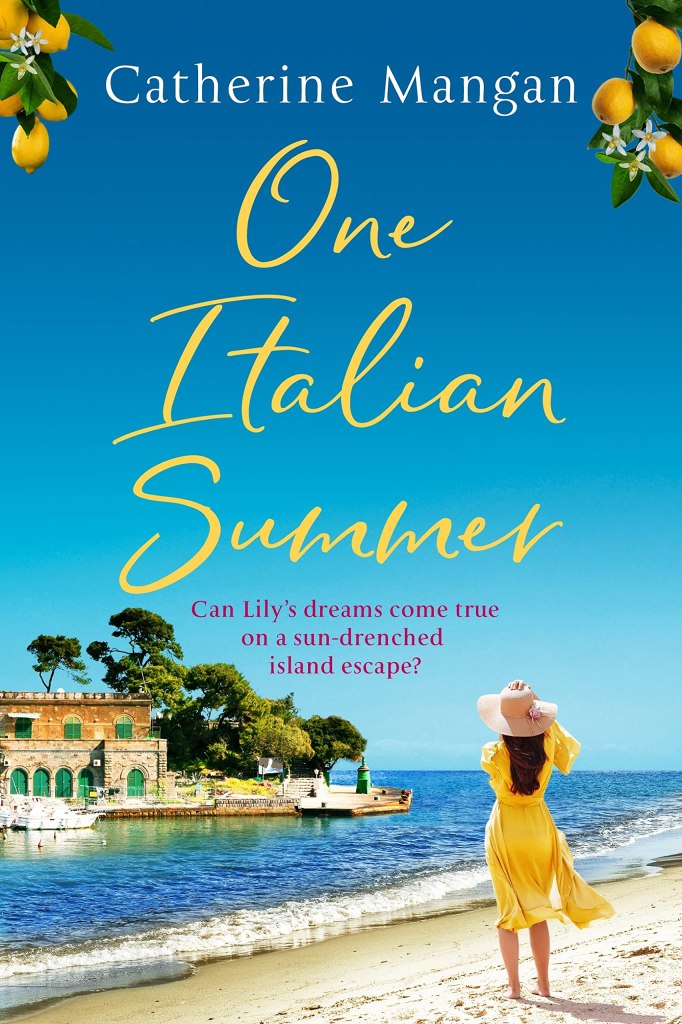
I recently read two such novels, and have to say that I extended my tolerance for bad writing almost to the breaking point in order to go with the transporting experience of escaping to an unfamiliar and potentially beguiling part of Italy. The two books were One Italian Summer, and The Italian Escape, both by Catherine Mangan, and the constant balancing act was the repetitive language and clichéd sentiments expressed by and about the characters on the one hand, versus the heft of lyrical descriptions of the balmy atmosphere, delectable food, and romantic prospects.
I have never understood why writers make such heavy work of finding original language with which to tell their story—it’s sloppy. I, myself, when writing a book review, an essay, or a paper, simply read each sentence and paragraph aloud to discover if I have used the same word twice (or three times or half a dozen) within the given piece of writing, and then I go back and find another word or another way to express the sentiment, using a thesaurus to good purpose to give my writing the variation necessary to make it feel fresh. Furthermore, if the writer isn’t up to this task, the editor needs must.

I therefore laughed out loud, after reading the painfully repetitive prose of the first chapters of One Italian Summer, when I came to an exchange on pages 70-71. The main character, Lily, having escaped from a break-up in New York City to be maid of honor at a “destination” wedding, is breakfasting alone early on her first day at an Italian resort on the island of Ischia. At a nearby table is an American named Matt, who murmurs “Cranky person. Ten letters.” She asks if he is talking to her, and he replies that he’s two clues away from finishing the New York Times crossword puzzle. She supplies the word “Curmudgeon,” and he expresses doubt that that’s even a real word.
“It’s my job to know words,” she replied matter-of-factly.
“You’re a writer?”
“No, but I write for a living.”
“Okay, is that supposed to be cryptic? How can you write for a living but not be a writer?”
“I’m a copywriter. I write for a living, but it’s just blurb for adverts and products, so I honestly can’t call myself a writer, not in the true sense of the word.”
Then she goes on to provide his final word, which is “capricious.”
“You’re like some sort of crossword Olympic champion!”
“I just need to know a lot of words in my line of work because you can’t keep saying the same thing over and over.”
Lily, p. 71
I laughed because this came after pages of heavy-handed, somewhat pedantic scene-setting narrative and excessive use of the words “so,” “like,” and “really,” not to mention describing someone as a “hot sweaty mess,” then a “shiny mess,” then a “pathetic mess,” in the space of six consecutive paragraphs.
If you can get past such pet peeves, the basic story lines of both of these books are sufficiently escapist to entertain anyone seeking a light read about a fantasy trip; in addition, the location of said trips, slightly off the beaten path of the usual retreats (Ischia rather than Capri; and Liguria, rather than Milan), make for some entertaining speculation about exploring them for yourself someday.
Both books include a little romance for their protagonists, but that is refreshingly not the main theme; rather, it’s the discovery of unexpected depths that lead to life changes. The first book details a week-long itinerary surrounding a lesbian wedding celebration, all of it fraught with way too many drunken evenings described in excruciating detail, while the second is the transformation of a Dublin girl who’s been dating her boss at a business with which she has little affinity who decides, after she’s dumped, that a big change is in order, and refuses to go home when her week in paradise is up. There’s a bit too much interference of a deus ex machina in the form of a wealthy, powerful, and indulgent older woman who takes a liking to protagonist Niamh and smooths her way to a ridiculous degree for a chance-met stranger, but hey, who doesn’t dream of a fairy godmother and wish to immerse themselves in this kind of fantasy?
Bottom line: Not too demanding, pleasantly diverting and, if you’re a foodie, way too provocative!
Discover more from The Book Adept
Subscribe to get the latest posts sent to your email.

 The Book Adept