Old-fashioned feel
I have always enjoyed the books of Rosamunde Pilcher, although she wrote so few that I have had to resort to re-reading each of them multiple times (which is no hardship). I was therefore delighted when someone in the Friends and Fiction Facebook group mentioned that British author Marcia Willett wrote in a similar vein but that she liked Willett’s even better than Pilcher’s. I went to the Los Angeles Public Library website to see if they carried any of hers as e-books, given that I don’t get out much but can order books through Overdrive straight to my Kindle. I was happy to find a few, and checked out Indian Summer, which was almost immediately available.
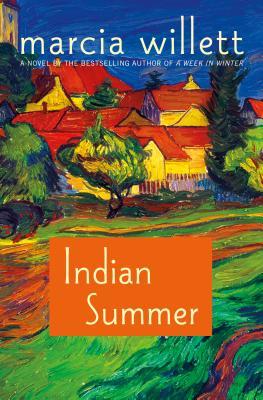
After having read about 25 percent of the book, I logged onto Goodreads to enter it as my “currently reading” title and was shocked to discover that it had just been published in 2014, a mere 10 years ago. The book’s setting and characters and particularly the writing style are old-fashioned to the point that they remind me of some of my favorite authors of the 1940s-1960s—Rumer Godden, Elizabeth Goudge, Daphne du Maurier, James Hilton and Dodie Smith. In fact, this book reminds me particularly of Smith’s lesser known It Ends with Revelations, probably because of the theatrical connections of the books’ protagonists.
Willett’s earliest novel appears to have been published in 1995 (which may seem aeons ago to some of my younger blog-followers, but is just yesterday to someone born 40 years before that), and she didn’t begin writing until she was 50 years old; but that makes her about 80, not nearly elderly enough to channel this particular sensibility in her novels. It’s not just the setting, in rural Devon, that makes it feel this way; it’s the characters, who are generational landowners and tenants on the one hand and theater people and writers on the other, and in the way they relate to one another and to their environment. There is still that unspoken, unacknowledged consciousness of class that hasn’t existed to this degree in England for a while now (or at least I don’t think it has!) but is definitely still alive in this story. Additionally, there is a certain focus with which some of the writers from the era I mentioned approached their story-telling that includes a specific attention to nature and a leisurely and appreciative approach to the organic cycles of life that you simply don’t come across much in modern works.
The book revolves around a central character, Mungo, a retired theater actor and director whose primary residence is London but who also has a place in Devon, a part of the larger property owned by his brother. I say “revolves around” because while all the characters have at least a tenuous connection with Mungo, he mostly facilitates, rather than stars in, the little stories portrayed here. Mungo’s brother, Archie, inherited from their father, a conservative man who didn’t appreciate either Mungo’s profession or his sexual identity. Archie and his wife, Camilla, are struggling to make ends meet on the estate by renting out their two cottages. Philip and Billy are brothers who inherited the running of the “Home Farm” (a portion of Archie’s estate) from their father and will pass it to Philip’s son, unless Archie decides to sell up. Staying in the two cottages—one updated and the other dilapidated and awaiting repairs—are Emma, an army wife with two children, Joe and Dora, and a six-month lease; and James, a writer, who is wandering around Dorset for part of the summer, researching locations for his second book. Completing the cast are Kit, a friend of Mungo’s who has come down to consult with him on what to do about the reappearance of a figure from her past; and Marcus, a military friend of Emma’s husband who is trying to make time with her while her husband is away in Afghanistan.
Each of these characters or groups of characters stars in their own vignette within the larger picture of this Indian summer in Devon. Although there is one secret from the past that turns out to be rather shocking, for the most part the events are only exciting to those directly involved, being ponderings about what will or may happen in the future based on choices made now. There is a gentle humor revealed in the obliviousness of the author, who has met all the other locals but has not only completely misconstrued their personalities and concerns but has arrived at the assumption that life here in Devon is constant, unchanging, and bucolic, when in fact there are many tempestuous passions hiding behind the façades of everyone in the story.
While I could not agree with the woman who considered Willett superior to Rosamunde Pilcher in her authorial abilities, I did enjoy this gentle, rather charming tale of friendships and secrets in the English countryside.
Discover more from The Book Adept
Subscribe to get the latest posts sent to your email.

 The Book Adept