Revisiting a classic
I believe that I have only read The Adventures of Huckleberry Finn once, somewhere around 6th grade, but I might have read it in high school as well. Certainly, though, it was all before I was 20 years old, so it’s been decades. I revisited it now because I decided I wanted to read James, by Percival Everett, but didn’t feel like I sufficiently remembered the events of the original to move directly to reading this updated story.

Although there are parts that drag (the lengthy saga involving the king and the duke) and parts that are actively irritating (the Tom Sawyer segment), I was surprised at how much I enjoyed the book as a whole. Hemingway famously labeled it as seminal to American fiction, and although I’m not sure I would agree as regards American fiction as a whole, it certainly is both masterly and intermittently brilliant as regards its own era. The breadth of subjects Mark Twain addresses in this book, supposedly a sequel to The Adventures of Tom Sawyer but in reality light-years beyond that “boys’ story,” is amazing: racism, of course, but also friendship, war, religion, and freedom, in some truly profound passages. The genius of it is that he refrains almost completely from proselytizing or moralizing, but conveys his message through the thoughts, actions, and dialogues of the people of the time.
The profundity of the story rests almost entirely in who Twain casts as his protagonists—first, an adolescent boy at the very bottom of white society, the uneducated, shiftless, indigent son of the town drunk, one whose morals should have been most suspect, given his upbringing in an atmosphere of alternating brutality and neglect. And of course, the second main character, because of the historical setting, is rated by other characters as even lower than Huck, because he is a man of color and therefore considered no more than a piece of property, in some instances valued less than a piece of land, a gun, or even a hunting dog. These two adventurers turn out to be the most honorable characters of the story, in contrast to the so-called “good people,” the supposed salt of the earth who are (with a few exceptions) seen to be primitive, ignorant, bigoted, and cruel.
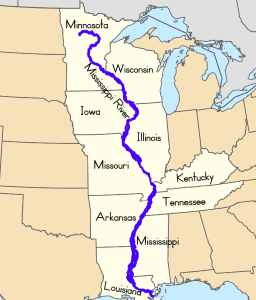
But it’s not just a story that was progressive for its day, shining a spotlight on the upside-down morals of the slavery-era South and poking at a society based on exploitation. It’s also a collection of frequently lyrical descriptions of the beauty of the world (Twain’s enduring love for the Mississippi River shines through), combined with sometimes hilarious tongue-in-cheek humor and poignant moments of reflection and self-realization that contrast beautifully with the specific historical context. The ultimate significance of the story is the moment when Huck decides that although the “right” thing for him to do, according to societal mores, would be to report the runaway slave Jim to his white mistress, he is willing to take “sin” upon himself by breaking the law, ignoring the common view, and refusing to turn in his friend. He firmly believes he is in the wrong, but is willing to embrace those consequences because the empathy he has developed by his daily existence living on a raft with this sweet man who has treated him with nothing but kindness is stronger than the “norms” to which he has been conditioned.
This book is frequently banned from schools and libraries, for one of two reasons: Either that segment of our society wishes to bury the shameful history of this era under a rug and refuse to acknowledge it, or (ironically) it wishes to make an example of it by citing the lack of political correctness inherent in the book’s language and attitudes. Both reasons, it should be obvious, miss the point of keeping this book in the classics lexicon. It takes place at a specific moment in time, and is voiced by a narrator with a perspective, an ideology, and a language consistent with that moment. We should rather be illuminating it for its honesty and using its characters as examples.
People are fond of saying we’ve come a long way from those times, but in many aspects that progress can be seen to be exceedingly superficial (particularly in the current political climate that is an excuse for misogyny and racism), and the perusal of this novel should point that out to us in a powerful manner. I am hoping that the book James that I plan to read after this will make best use of Mark Twain’s look at the hypocrisy of the America of his day, contrasted with Huck Finn’s astonishing moral evolution.
One Goodreads reviewer made the point that a classic is “a book that can still inspire discussions in a classroom some 135 years after its initial publication.” Another added that we are living in an era wherein this discussion would get a teacher fired in any number of states. All we can hope is that there are teachers still brave enough to bring the message of this book to their students, while pointing up the continuing diminishment of people of color in much of current American history and literature.
Discover more from The Book Adept
Subscribe to get the latest posts sent to your email.

 The Book Adept
good review! I’m reading it after reading James!
LikeLike