Presumption
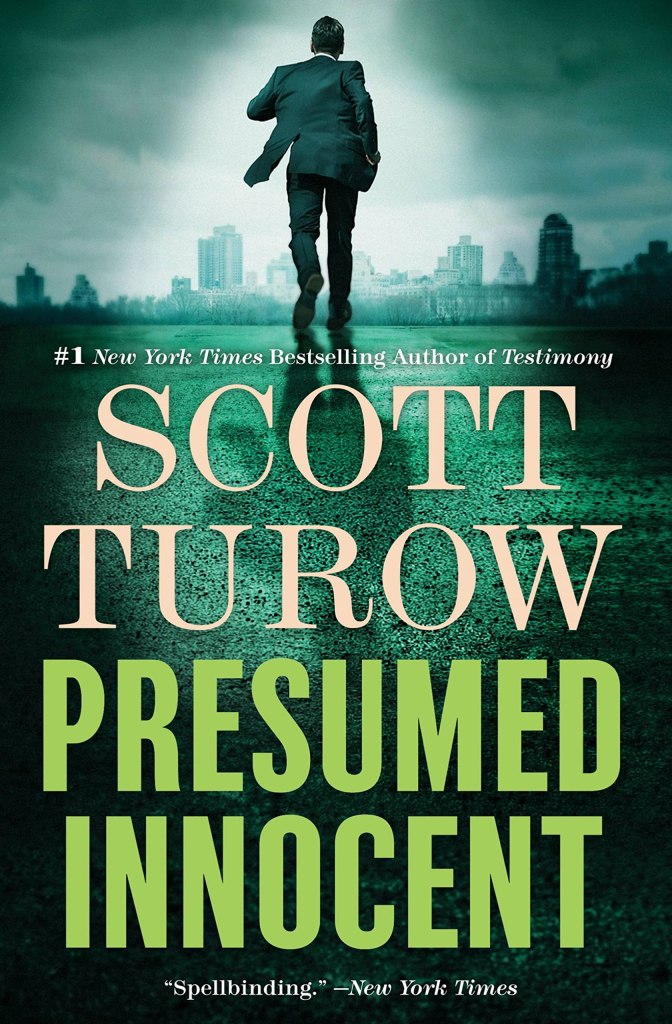
I recently watched the 2024 miniseries revamp of Presumed Innocent, based on the 1987 book by Scott Turow. I had seen the original movie, made in 1990, starring Harrison Ford, Raul Julia, and Greta Scacchi, so I was intrigued to see what Jake Gyllenhaal would make of the lead role as Rusty Sabich, and how an eight-episode miniseries would differ from a two-hour movie. My reactions were mixed: Gyllenhaal and Ruth Negga, who plays Barbara Sabich (the wife) were amazing in their roles; but I thought the woman cast as the notorious Carolyn Polhemus was so mundane and uninteresting compared to Greta Scacchi, for whom that role seemed to be custom-made, from her manner to her appearance.
Watching the miniseries brought up another whole series of questions, however; I believe I did read the book at some point, but the 1990 movie took precedence in my memory and the only way I really recalled the plot was from that. Since the miniseries has a couple of extra characters not in the movie, alters the gender of some of the original characters (which in one instance shifts the plot), and also ends differently, I was curious enough to find out whether I was remembering the book correctly by checking it out of the library for a re-read.
For those who don’t know the story: Rusty Sabich is the chief deputy prosecuting attorney, working directly under boss prosecutor Raymond Horgan, in 1980s Chicago. It’s an election year, and one of Sabich’s colleagues, Nico Della Guardia, is running against Horgan. Just a few months before the election, another colleague, Carolyn Polhemus, is murdered in her apartment, and Horgan, busy with the election, details Rusty to cover the case, hopeful that it will be a quick solve that will boost his campaign. It’s a complicated tale with a lot of stuff I don’t want to reveal because that is the main pleasure of the book—discovering the details as they unfold—but things get distinctly sticky for Sabich.
Turow has a pleasing way of combining suspenseful story-telling with the necessary legal details to create an engrossing courtroom drama. Although there were a few “wince” moments when it came to the language used around both racial and sexual identity (which surprised me a little, given when the book came out), I guess it’s easy to forget when certain language exited the approved lexicon of political correctness, and otherwise the book was not heavy-handed. Over all, it was enjoyable to experience the story one more time, and I confirmed that the first movie was more true to the book. That doesn’t take away from the impact of the miniseries, but it is a different kind of tale in some ways.
I have never read any of the follow-up books (I believe there are eight set in this universe, at least a few of them also starring Sabich), but I may do so now, because I enjoyed the characters Turow created and would like to see what happened to them after this part of their lives was over.
Discover more from The Book Adept
Subscribe to get the latest posts sent to your email.

 The Book Adept