Pratchett

I don’t know how, in my decade-long exclusive pursuit of all things science fiction and fantasy, I managed to miss out on Terry Pratchett. I discovered some of the contemporaries to whom he is frequently compared (Douglas Adams, Piers Anthony), but it took another 30-some years and a degree in library information studies before I was introduced to him via the Tiffany Aching portion of the Discworld books. As a teen librarian, Pratchett came to my attention through the offices of The Wee Free Men; I was really taken aback when my high school book club didn’t love it as much as I did, but I didn’t let that deter me. I read every Tiffany Aching book (five total) that was out or came out thereafter, and loved them all, but for some reason I still didn’t go back (as I normally would) and explore all the other Discworld books.
Perhaps it was because of the sheer volume of the series—41 books is a lot to tackle, and I no longer read with the obsessive one-track mind that I did in my 20s, when I let nothing stop me from completing a series start to finish. But I was at extreme loose ends this week after finishing In This House of Brede; I initially moved on to another Rumer Godden but discovered that i was satiated for the moment and was craving something different. None of my holds are even close to arriving, so I went searching for something else by running my eye down my “Want to Read” list in Goodreads.
This is when I most miss being mobile; my finding process used to entail going to the library and looking at the new books and the just-returned shelves, and then wandering down aisles of my favorite genres—mystery, fantasy, science fiction—to see if old authors had new (or older) works I hadn’t yet discovered. It’s a lot easier to find an unknown treasure that way than it is to scroll through lists on the internet, as I do now that I am essentially housebound. There are the visual, physical, tactile elements of cover art, author quotes, flap summaries, the feel of the paper, the choice of font, the smell of the book, all of which yield up something that helps me make a decision. By comparison, it’s a sterile (and also endless) process to scroll through (sometimes erroneous) Goodreads descriptions, look at the ratings posted by other people, and speculate about whether I can choose something just based on these paltry factors.

This is partially what took me to Terry Pratchett—there was at least some experience, some familiarity with his story-telling and writing style, his characters, his world-building. I did pay heed to several people who said the first two books in the Discworld series, while introductory, were not his best writing, and that to start with #3 was a good beginning, particularly because it is also the debut of Granny Weatherwax, with whom I was already familiar from the Tiffany Aching books. So I acquired a copy of Equal Rites from Kindle Unlimited, and began my exploration of Discworld.
One thing you forget, if you go long periods between Pratchett tales, is his sense of humor and how he exploits old sayings, puns, wordplay. And even though Pratchett’s powers developed exponentially as he wrote each subsequent book, the humor is here from the beginning. The first one I wanted to write down the instant I read it was when Granny Weatherwax decides to find accommodations in a new town; she comments that she has specifically elected to live in an apartment next door to a talented and successful purveyor of stolen articles, because she has heard that good fences make good neighbors. Ba dum bum.
Equal Rites is the story of young Eskarina, who is mistakenly selected to be an heir to wizardry. A wizard comes to Granny Weatherwax’s village of Bad Ass seeking the child to whom he is to hand over his staff before his imminent demise; the smith of the town is an eighth son whose wife is about to give birth to his eighth son, which is highly propitious. So when the wizard realizes he has six minutes to live and Granny, having just delivered the baby, carries it into the room, the wizard places the child’s tiny fingers on his staff to claim it, and then expires before he can discover that the eighth son is actually a girl.
On Discworld, gender equality is a dream—at least for women. Only men are wizards, just as only women are witches. Men have, of course, tried being witches (because they don’t take no for an answer), but it has never worked out well; but those same men have banded together and insisted that “the lore” absolutely forbids women to be wizards, and no woman has ever been admitted to Unseen University as a candidate. Granny W, however, is determined that Esk should at least have the chance (as is Esk herself), so the two set out on a journey to the city of Ankh-Morpork, for Esk to try her luck. This is the basis for the chaotic hijinks that ensue for the remainder of the book.
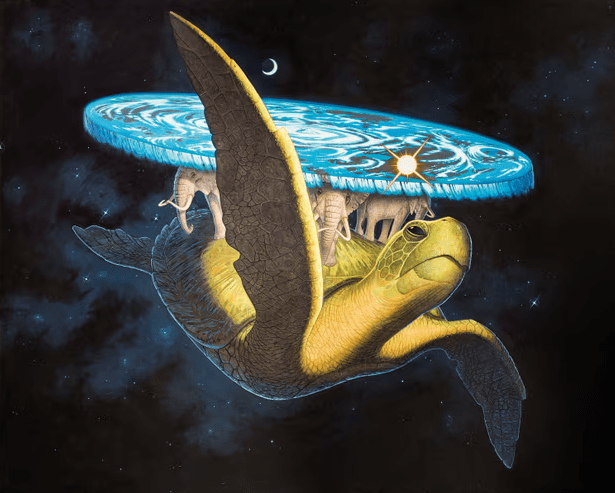
I really enjoyed both the introduction to Discworld and the reacquaintance with Granny W. (and with Pratchett). I think I will continue on for a while; they say you can just read the “witch” books (of which there are six) on their own, but I might also branch out into other characters’ tales set on this flat world carried on the back of a giant turtle and four elephants.
Discover more from The Book Adept
Subscribe to get the latest posts sent to your email.

 The Book Adept