Molly
I just finished reading Nita Prose’s first two books about Molly the Maid (The Maid and The Mystery Guest) and had planned to read the third, but three other books abruptly became available from my holds list at Los Angeles Public Library, so I’ll be putting that off for a while…or maybe forever?
(I actually thought I had already read these books, but had confused them with The Housemaid series by Freida McFadden. I much preferred these to those.)
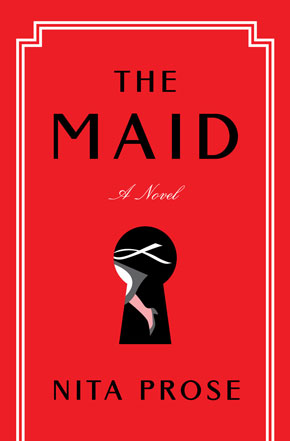

I initially felt positive about the Molly books because I do appreciate and enjoy stories about neurodivergent people; two of my favorites have been Eleanor Oliphant is Completely Fine, by Gail Honeyman, and The Good Sister, by Sally Hepworth. I also liked the Rosie books (actually about genetics professor Don Tillman) by Graeme Simpsion. But I had a few more problems with these books than I had with any of those, and that diminished my enjoyment somewhat.
Most of that was not to do with the character herself, but with how the author wrote other people’s reactions to her, which were both ignorant and cruel. In the other books I mentioned, it was fairly obvious to everyone around these people that they were fundamentally different in their perception of the world, but in the Molly books many of the characters simply treated her as an object to mock and bully rather than understanding that something more was going on, and although I’m sure that may sadly be the case in real life, it felt both too pointed and too oblivious here, and I don’t think that viewpoint added to the story. It came across as if the author felt the need to be heavy-handed in order to ensure that we “got it,” but she had already made her point with her detailing of Molly’s functional attitudes and abilities, so it just became wearying and kind of ugly, and most of the other characters were too stereotypical to be genuinely effective as a foil for Molly.
I find myself overlooking the mystery aspect to these books in my fixation with the characterizations, which is ironic considering that that is how they are presented, genre-wise; I did enjoy the puzzles themselves, which presented good levels of frustration and vindication as they proceeded.
I sort of wish I had written this review in that five minutes after I finished the first book rather than waiting to react to the entire series, because my response was much more about the positive than the negative at that point. I can’t refuse to see the deficits, but I enjoyed the book more in that moment than in retrospect, which is too bad.
Although I found many of the same flaws in the second book, it did have something interesting going for it, in that we got to find out more about Molly as a child, and the history of her grandmother that brought both of them to where they ended up. I liked the flashbacks to the past that explained what was going on in the present, and in some ways preferred the second book because of the greater depth of development. But it couldn’t compete with the initial reaction to Molly that was elicited in the first encounter, so I’d have to say I liked The Maid the best of the two. Perhaps I will read the third at some point and see what has changed.
Discover more from The Book Adept
Subscribe to get the latest posts sent to your email.

 The Book Adept