The Proving Ground
I picked up the latest from Michael Connelly with a teensy bit of trepidation, because I haven’t really enjoyed the last three novels he has put out into the world, whether about Bosch, Ballard, or the new guy Stillwell. They felt forced, they felt a little stale, they felt like his heart wasn’t really in it when he wrote them. But I adore the Lincoln Lawyer, so I got this one from the library and embarked on it as my first read of 2026.
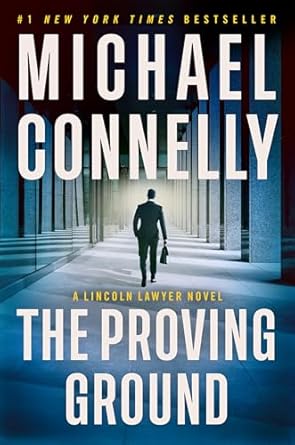
Although the title references the area in front of the jury’s box where the lawyer stands to make his opening and closing arguments, it was also prophetic for me, because with this novel I felt like Connelly proved he could still write a compelling book involving one of his regular characters. But if you are expecting the self-same iteration of Mickey Haller that we have seen in past novels, you might be disappointed.
Mickey had an epiphany that led him out of criminal defense and into civil court practice, this being his first case to actually go to trial. And it’s a big one: A mother is suing a billion-dollar Artificial Intelligence company because the boyfriend of her teenage daughter, under the influence of the company’s chatbot they claim was designed as a companion for teenagers, shot and killed the girl when she broke up with him, after the chatbot told him he should “get rid of her.” So although both gun control and murder are issues, they are not the center of this lawsuit, which is focused on the bigger picture of who should be held responsible. The premise is that the chatbot had faulty input and insufficient guardrails in place, especially when it was ostensibly designed to deal with impressionable young teens who haven’t, themselves, developed a moral compass; tragedy was the result.
I like that Connelly is addressing a current and urgent area of concern by showcasing this courtroom battle that isn’t just about guilt or innocence but about accountability. In so many aspects of our culture now, technology seems to be outpacing ethics in alarming ways, and Connelly has poured extra fuel on the battle over gun control in the United States by taking it to another level. A gun was, once again, too readily available to a teenager (his father kept the gun in the house), and his fantasies of revenge on a girl who “hurt him” (she was alarmed by his internet-driven attitudes and broke up with him) flowered into violence with support from a machine created to interact like a human
support system.
The court persona of Mickey Haller is still front and center: He manages to insert some of his trademark theatrics, although the civil court judge is quicker to reign him in than was normal in criminal court; but underlying the flamboyant drama is dogged research, a constantly evolving strategy, and then ultimately his willingness to gamble everything in the courtroom to get that lynchpin response from a witness that will make his case.
There is a fair amount of both legal-speak and technical discussions about artificial intelligence that might deter some readers. But despite some of those intricacies, this is still courtroom drama, with everything that can ensue—witness intimidation, manipulation of voir dire, attempted bribery, and plenty of dirty tricks from a corporation desperate to be held blameless and to retain control of one of its most lucrative products. Civil court is something of a misnomer here.
There is participation in preparation for the case from another character in the Connelly oeuvre not recently heard from, which was fun. There is also a personal, events-driven aspect to this book, when ex-wife Maggie’s house burns in the Eaton Fire and she moves in with him while waiting on insurance and trying to decide what to do next. Since Mickey made the move from criminal to civil court he has fewer direct clashes with Maggie “McFierce,” now the Los Angeles District Attorney, and obviously hopes that they can reconcile permanently—but that’s left for another day. Some Goodreads reviewers took issue with Connelly setting this at the time of a particular landmark event, since it dates the narrative, but as a Los Angeles resident I liked the local context he always provides.
Although I wasn’t completely in love with the way the book ended, for me this was a satisfying return to Michael Connelly showing what he can do when he’s on his game.
Discover more from The Book Adept
Subscribe to get the latest posts sent to your email.

 The Book Adept