Spooky reads for October
There are a lot of requests on Facebook reading pages for haunted tomes to make their month more enjoyable (and more chilling). So I decided to comb through my “horror” and “paranormal” categories on Goodreads to see if I could find some good reads to recommend. I am not much of a horror aficionado, so those are in short supply, but I do like a good ghost story. Here’s a list of a few I have enjoyed, both new and classic, with some young adult stuff thrown in because it is also entertaining for we grownups.
The Haunting of Hill House, and We Have Always Lived in the Castle, by Shirley Jackson. Very different vibes in these two, but I can say that they are both truly creepy. Don’t judge the first by its movie(s), it’s so much more nuanced and weird than anything Hollywood managed to put onscreen.
Starling House, by Alix E. Harrow. Southern gothic horror. Here is my review.
Vampire books by Anne Rice (the first two are the best). Classic paranormal. I also liked Sunshine, by Robin McKinley, a completely different take. And if you like sex and diners with your vamps, there is, of course, the “Sookie Stackhouse” series by Charlaine Harris.
The Harper Connelly books, also by Charlaine Harris, recently reread and commented on by me here. You could also try the “Midnight, Texas” series, though they are not my faves apart from my love for their protagonist.
The Graveminder, by Melissa Marr. “Sleep well, and stay where I put you!”
The Library of the Dead, by T. L. Huchu. Ghosts with a Zimbabwean twist. I reviewed this one too.
A Certain Slant of Light, by Laura Whitcomb. A dreamy, unusual ghost story. There is a sequel I haven’t read, called Under the Light.
Hold Me Closer, Necromancer, by Lish McBride, a somewhat comedic take on a modern necromancer and his paranormal pals. Big fun. There is a sequel called Necromancing the Stone.
The “Visions” series by Lisa McMann.
Also, please enjoy the following excellent ghostly tales, which I reviewed here for a previous Hallowe’en post:
Meet Me at the River, by Nina de Gramont
The “Lockwood & Co.” series, by Jonathan Stroud.
The “Shades of London” series, by Maureen Johnson.
…and a few more.

American classic
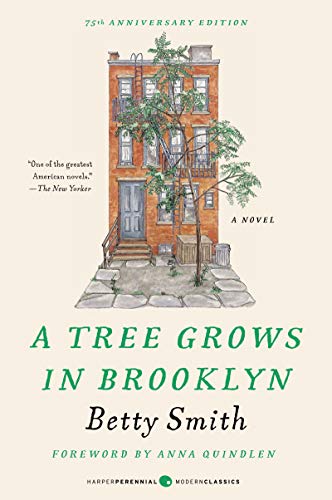
I don’t have much to say about A Tree Grows in Brooklyn, by Betty Smith, that hasn’t already been said. This is probably my third or fourth time reading it, but I haven’t done so for a couple of decades so I decided to revisit it. I remembered the brilliant, colorful depiction of life in Brooklyn in the early 20th Century, but had forgotten the simple yet elegant and nuanced language with which it is described. I remembered most of the details of Francie Nolan’s life, but some of the wonderful details of the outlying characters—her sexy Aunt Sissy, the interactions of Willie with his horse, Drummer, the English teacher who praised Francie’s artificial flights of fantasy but denigrated her realistic portrayals of Broolyn life—I happily rediscovered.
The story is funny and tragic, lighthearted and heartfelt, emotional, a little sentimental, inspiring. It kept my attention throughout, and I loved sitting down each day to another chapter. I would hand it to almost anyone over the age of 12—most girls, some boys—who wanted to be both entertained by and enlightened about the human condition.
One warning: If you have never read it and happen to pick up the edition with the forward by Anna Quindlen, save that to read later, because it delivers a few spoilers.
The long way
I just finished reading The Long Way to a Small, Angry Planet, by Becky Chambers, author of the Wayfarers and the Monk & Robot books. This one is the first of four in the Wayfarers series, but it’s not obvious at all while reading it that it’s the start to a longer story. The only reason I might have surmised that is the overwhelmingly character-driven nature of this book, in which many things happen and lots of people/races are introduced but there is not a truly cohesive story line. That’s not to say that there isn’t a kind of evolution from the beginning to the end, but…is it a story? It feels more like a bunch of separate people’s narratives coming together simply because they are co-located in the enclosed space of a ship and a voyage, but while they do have an impact on one another, there isn’t the same kind of resolution that there is to a typical beginning-middle-end kind of tale with a sole protagonist.
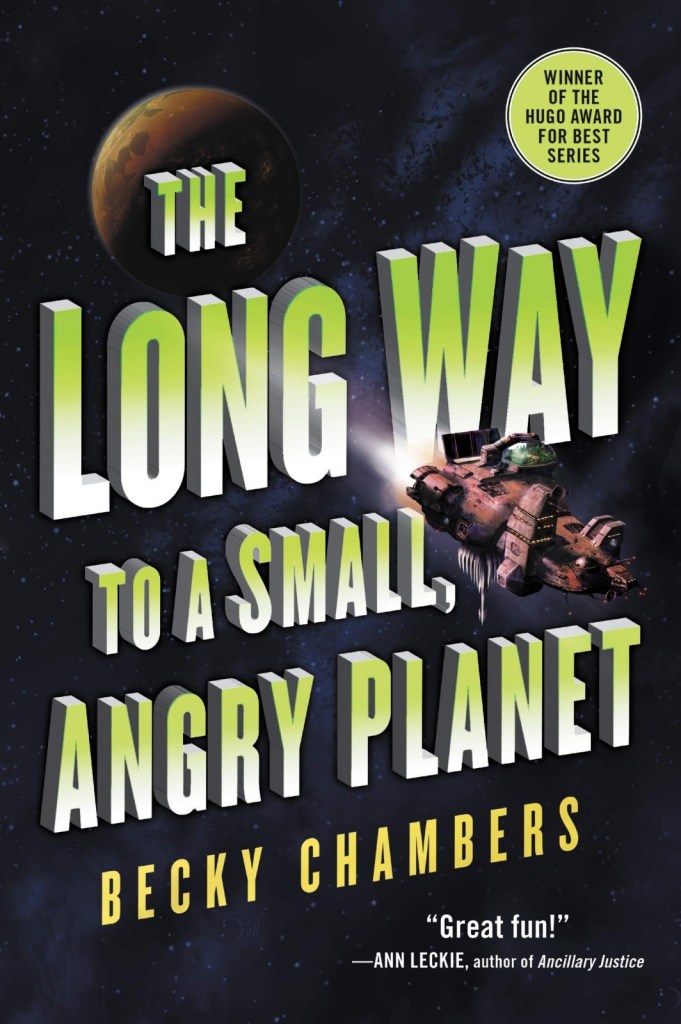
The event for which the book is named takes up not very much space in the overall timeline, which is kind of odd. Can you tell that I’m finding it a bit hard to review this book? I think it’s because, while I liked many of its diverse elements (including its diversity!), they didn’t gel for me in a way that would have made me love it. And although I liked and had empathy for its characters, I’m not sure any of them made the kind of impression that will make me want to read more about them in subsequent volumes. I finished the book with a certain degree of satisfaction, but it was more the feeling of “I’m good” than a compelling desire to keep going.
That is both the strength and the weakness of this book; because the story is about half a dozen (okay, maybe eight or nine) individuals who alternate in carrying the narrative, you learn a surprisingly extensive amount about the various kinds of “people” populating the universe without thoroughly investing in any of them. There are a few characters that have more page time and are therefore more engaging and involving than the others, but it’s a bit didactic in the way it goes about portraying everyone, and some of them end up being more cliché than person.

On the other hand, the number of issues and the depth and breadth with which they are explored is impressive, and not too heavy-handed. The involvement between species readily lends itself to discussions about topical and complicated subjects, from identity, sexuality, and violence to safety and defense, the implications of sentient artificial intelligence, and what constitutes “community.” I enjoyed the many variations of people (both their inner natures and outer appearances) that Chambers created, and the fact that none of them was stereotypical or relied excessively on science fiction that has gone before.
I guess I should give a brief synopsis, to be thorough, in case someone finds this blah blah intrigues them! It begins with Rosemary Harper, a human who is fleeing some personal issues and answers an ad for a position as clerk on the Wayfarer. It’s a tunneling ship, a kind of spaceship that creates wormholes to connect distant points in the universe so travel and trade can more easily take place between species. The story is set in a galaxy of aliens, with the humans being a sort of on-tolerance, minor group. There are a couple of older races with a history of expansion, cooperation, and development who have created the Galactic Confederation and brought in other member species at various points in their own maturity. There is a fair representation of these different species amongst the crew of the Wayfarer, and the philosophical bits of this “space opera” vehicle are about how they learn to cooperate and to appreciate one another. The ship is offered a contract to create a tunnel near the galaxy core that connects to a previously interdicted warlike species, and the build-up to and resolution of this contract is what drives the action, although this takes place late in the story (maybe at the 75 percent mark?).
The book isn’t for everyone; if you enjoy character-driven stories and envisioning complex alien cultures, you will like it, and the adventures of the Wayfarer gang do somewhat satisfy that yen for more stuff like Firefly. Despite its slow pacing, it was a fairly quick read, interesting and thoughtful but not taxing. Even though I’m not feeling it in this moment, I wouldn’t rule out continuing to follow the adventures of the Wayfarer crew in subsequent volumes, sometime later in my reading life.
Gunnie Rose continues!
At the end of my review of the third book in this series, I devoutly hoped there would be more, and I discovered last week that Charlaine Harris has come through with two more volumes while I wasn’t looking! Imagine my delight at getting to continue this entertaining dystopian historical fantasy mash-up for not one book but two!
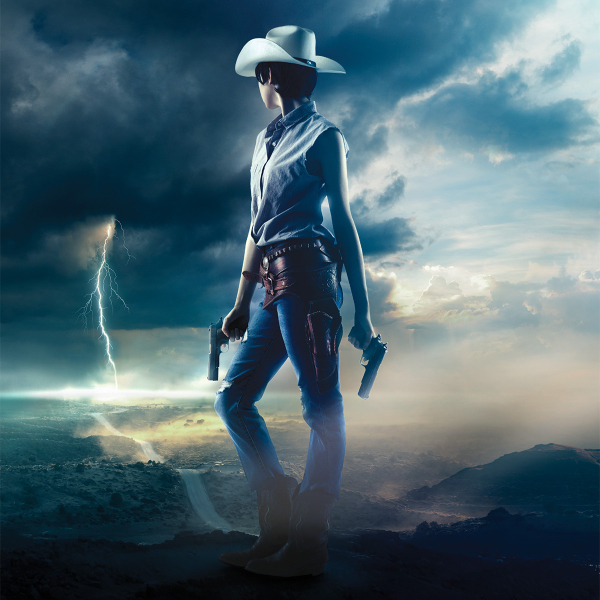
You can read my entire review of the first two here, and the third one here, but just to quote myself to give a reaction to those too impatient to do so,
“This series is pure delight, from the elaborate world-building to the laconic Western flavor of Texoma, and the characters are so alive they could step off the page. Harris has written this with just the amount of detail you crave, without drowning you in either description or explanation, and the pace of this mystery/adventure story is perfect. The minute I finished the first book, I jumped without hesitation into the second one.”
You really should read at least my review of the first two, because it gives a thorough description of a rather complicated world-building exercise. But even there, Harris achieves the maximum in understanding with the minimum of detail. She is apparently no more a fan of the info-dump than am I, for which I am thankful.
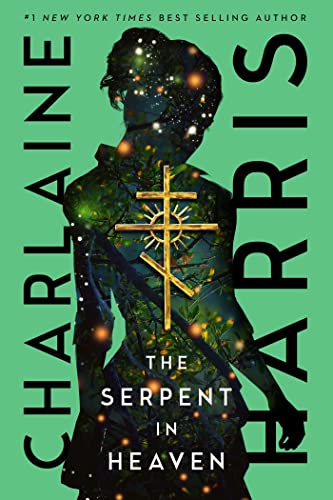
The fourth book, The Serpent in Heaven, picks up pretty much where the third left off; Felicia is now a school boarder at the Grigori academy in San Diego. She was initially admitted as a sort of honorary student because of the need to keep her safely squirreled away, since she is one of the few blood donors remaining who can save young Tsar Alexei’s life should he have a mishap (he’s a hemophiliac). But in this book, due to some unexpected hazards at the school, Felicia reveals the true scope of her wizardy powers and gets promoted to the “real” classes to learn to control, direct, and expand them, mentored by the curmudgeonly Victor.
This book was told from the first person viewpoint of Felicia herself, which added an extra element to the story, since in the course of her narration you get to know her much better and understand her background, upbringing, and level of skill. Lizbeth (Gunnie) and Eli are mostly missing from this chapter, because they have married and gone off to live in Texoma after the disastrous coup that disgraced parts of Eli’s family in the last book. We get news of them only through an occasional letter or telegram or word-of-mouth message. I thought this would be upsetting to the narrative, but I was completely absorbed in Felicia’s story and didn’t miss them, for the most part, compelling characters though they are.

Harris makes up for this in book #5, All the Dead Shall Weep, when Felicia, accompanied by Eli’s brother Peter, goes to visit Lizbeth and Eli in Texoma, mostly to get away from an ongoing threat of kidnapping by various factions who have figured out her value as a wizard and want to (either voluntarily or forcibly) marry her into their bloodline to amp up their descendants’ talent pool. But bad fortune follows Felicia like a hungry stray dog, and there’s also a new military rebellion beginning to muster, with which the sisters and their men must contend. This book is told by alternating narrators Lizbeth and Felicia, which was initially jarring when I didn’t realize the voice had changed, but actually really helpful in giving all the behind-the-scenes thoughts and feelings you craved from these characters.
And this fifth book ends on a truly ominous cliffhanger, historical in nature, which bodes well for more sequels, though ill for their contents! Still a fan. Check them out!
Interesting, but…
I’m going to finish that phrase with “not compelling.”
I started a new series by J. J. Marsh called the DI Beatrice Stubbs mysteries, and although the first book, Behind Closed Doors, has much to recommend it, I found myself reacting somewhat tepidly to its charms. There were three books on offer at a discount as a boxed e-book set (with another three-book set if you liked these), and the description—a team of Interpol agents led by a detective inspector from Scotland Yard, trying to solve a bunch of murders camouflaged as suicides—sounded intriguing.
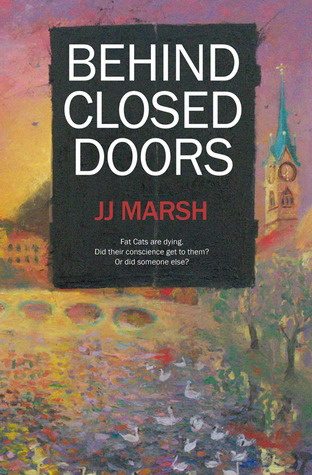
The tip-offs that they were not suicides were two, the first being that DNA from the same individual was found at all the death sites, and the second that these were all singularly unpleasant characters, responsible between them for a lot of dirty dealing and corruption in the world. Obviously, the team feels, someone has targeted them for elimination and has gone to great lengths to do so both thoroughly and cleverly—and also what would have been undetectably save for the DNA. The conclusion is ultimately drawn that the DNA is purposefully planted to give a hint that these were, indeed, diabolically successful revenge killings.
The set-up sounds wonderful: The killings take place across Europe, mostly at glamorous and diverse locations (a luxury hotel, a ski run, a dam) and by creative methods (freezing, asphixiation, beheading). Because the victims are villains, mostly from the world of international finance, no one seems to excessively regret their deaths.
The team of investigators is what should be an interesting crew made up of three women and three men of various ranks and nationalities from several countries and organizations, brought together to definitively determine whether those who initially dealt with the deaths are right to be suspicious. There is a thinly disguised villainess who is either personally or professionally connected to all of the victims, but against whom nothing has been proven. The home base of the team is Zurich, with side trips to all the destinations where the killings took place, and there is a lot of name-dropping of cities and their tourist attractions—museums, opera houses, parks, resorts—to give everything an air of glamour. And yet…
I had a lot of trouble investing in anyone in this book. The main character, Detective Inspector Beatrice Stubbs, is supposed to be the primary driver of the action and thus, presumably, the sympathetic character, and she is nicely rendered as a person of brilliance who has just come back to work after a period of instability during which she may have attempted suicide herself. She is not painted as a tragic figure, though; she has a stable home life with a supportive partner, is committed to regular visits with her therapist, and has a boss who wants her to succeed and has her back. She’s a little older and a bit less fashionable than the other women on the team, which gives her both authority and vulnerability, and she has moments of both darkness and joy in the course of her days.
Other than her, however, I found the members of the team to be opaque. Each of them has a quirk or two that is played up in the course of their interactions, but you never really get to know the people behind those quirks. There’s just not enough detail provided to make you care about them one way or another and, in some cases, the element of personality chosen for them is actively irritating, making you not want to know them.
Similarly, the way the victims are described is probably accurate; since they are all from a certain class of wealthy, ruthless men, one might assume that they would each be likely to fall prey to flattery and deceit by the young women who set out to entrap them— but after a while the stereotypical behavior verges on misandry and becomes both unpleasant and repetitive.
When she’s not writing, J. J. Marsh works as a language trainer in four languages, so her prose is mostly fluid and descriptive. But despite all of this (and high praise from some readers), I found this book to be only okay, and probably won’t read the next two. Another near miss for my reading preferences.
Reiteration

I got frustrated this week by my seeming inability to pick a winner of a book, and fell back on a sure thing by rereading Charlaine Harris’s four-book series about Harper Connelly, victim of a lightning strike, who uses the ability given her by this event to make a new life for herself. And now, once again stymied by a new-to-me book series that isn’t grabbing my attention or enthusiasm, I’ve been considering rereading Harris’s other series about dystopian gunslinger Lizbeth “Gunnie” Rose. So imagine my delight, after going to Goodreads to remind myself which book was first in the trilogy, at discovering that Harris wrote two more in this series while I wasn’t paying attention!
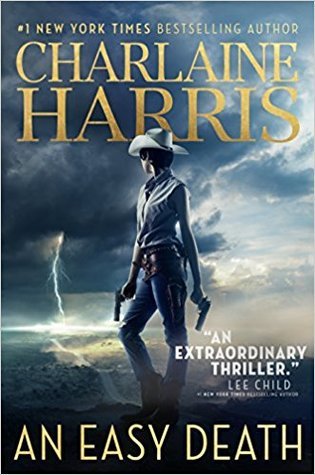
If you’d like a more thorough dissection of these two favorite series of mine by Harris, go here and read all about them. This post reviews the third book in the Gunnie Rose series. And stay tuned for reviews of The Serpent in Heaven, and All the Dead Shall Weep.
Dog Day Afternoon

No, this isn’t a post about a 1975 bank robbery movie. But the title seemed appropriate, given that it’s National Dog Day and also that I am getting such a late start that my post won’t be available until after noon, one of those hot, sleepy afternoons when dogs (and people) prefer to lie around and languish (i.e., read!) during the summer heat. I did some pre-planning for this post by making a list of some pertinent dog-oriented books, but then my distracted brain failed to follow up, so a list is pretty much all you’re going to get this time. But don’t discount it just because it’s not elaborated upon; these are some great reads, encompassing fantasy, mystery, dystopian fiction, science fiction, some true stories, and a short list for children.
NOVELS FOR ADULTS (AND TEENS)
The Beka Cooper trilogy (Terrier, Bloodhound, Mastiff),
by Tamora Pierce
A Boy and His Dog at the End of the World, by C. A. Fletcher
Iron Mike, by Patricia Rose
A Dog’s Purpose, by W. Bruce Cameron
First Dog on Earth, by Irv Weinberg
The Companions, by Sheri S. Tepper
The Andy Carpenter mysteries, by David Rosenfelt
The Dog Stars, by Peter Heller

DOGGIE NONFICTION
Marley and Me: Life and Love with the World’s Worst Dog,
by John Grogan
Best Friends: The True Story of the World’s Most Beloved
Animal Sanctuary, by Samantha Glen
James Herriot’s Dog Stories, by James Herriot
A Three Dog Life, by Abigail Thomas
Inside of a Dog: What Dogs See, Smell, and Know,
by Alexandra Horowitz

CHILDREN’S BOOKS WITH DOGS
Sounder, by William H. Armstrong
No More Dead Dogs, by Gordon Korman
Harry the Dirty Dog books, by Gene Zion
(illustrator Margaret Bloy Graham)
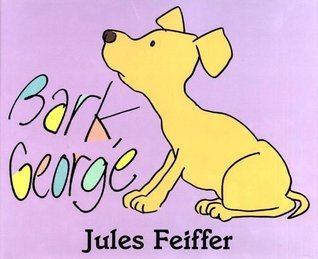
Bark, George, by Jules Feiffer (one of the best for reading aloud!)
And for those who wanted more, here is an annotated list of more dog days books from a previous year, along with some suggestions for dog lovers that go beyond reading about them.
Bafflement and outrage
Have you ever read a book that, in the end, you wished was even worse than it was? I have just had that experience.
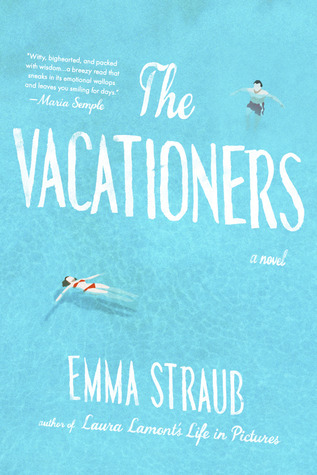
The real wish is, of course, that you had never read it in the first place, but that ship has sailed, to indulge in a cliché for the sake of staying on point with this book’s entire raison d’être. The Vacationers, by Emily Straub, should come printed with a disclaimer at the front that says, Please check the Goodreads reviews before assaying this!
No, I’m not usually this vindictive when reviewing a book I didn’t like, because, I reason, perhaps someone else will like it better. But despite a couple of pre-publication glowing reviews (how much were you paid?), no one does, and people need to know that!
The characters were a group of the most repellently dislikable people I have encountered since trying to read The Casual Vacancy, by J. K. Rowling, which can serve as the perfect example of that book I mentioned in my first sentence—bad enough to make me stop reading by Chapter 4. Unfortunately, these people had enough of an initial tinge of normalcy that I was bamboozled into believing that this story could go somewhere and be something, so I kept reading, wondering when that might happen, only to arrive at the end and say, “What? What?” As a reviewer on Goodreads who is rendered even more bitter than I observed,
“I kept reading in the hopes that
someone would drown.”
—Meghan
So, you’re wondering, what is so terrible? It’s kind of hard to explain. The Vacationers is basically a book about a family who go on vacation together in Mallorca. There are the parents, New Yorkers Franny and Jim, who are having a crisis in their relationship that happened after the reservations were made, so they decide to go through with the vacation anyway; there are the children, 28-year-old Bobby (lives in Florida, sells real estate with a sideline in health supplements) and 18-year-old Sylvia (about to leave for college, desperate to lose her virginity); there is Bobby’s cougar girlfriend, Carmen (who everyone resolutely dislikes); and there is the best friend of Franny, gay Charles, and his husband, Lawrence (hoping to adopt a baby), all brought together in a beautiful house in the hills for a two-week sojourn. The potential family dynamics could, and should have, proved interesting, but…they didn’t. All the things under scrutiny mostly happened or have at least been substantially foreshadowed before the trip began, which causes tension and a lot of talking. Let me amend that: whining, over-dramatizing, obsessive dwelling on he-said she-said I should’ve you could’ve why didn’t you, if only? “White people problems!” should be printed on the cover as one of those shorthand blurbs offered up by other authors to help out their friend’s book sales. There is a load of privilege, entitlement, and snobbery accompanied by a faint whiff of racism, a bit of misogyny and, as some reviewers noted, the reader keeps wondering if this is a send-up but concludes that unfortunately,
it is not.
I’m not going to dwell on everything that was wrong with this “slice of life” disaster (Definition: “A storytelling technique that presents a seemingly arbitrary sample of a character’s life, which often lacks a coherent plot, conflict, or ending”) except to give a small spoiler by way of illustration: When girlfriend Carmen walks out on the vacation (and on Bobby) and makes her own way back home rather than stay and be subjected to any more of this, I should have followed her out the door. But that unfortunately happens too late in the story to have made a significant difference.
I gave it one star on Goodreads. I wavered around two, simply for the descriptions of the locale and the food, but no. Those were merely unfairly employed lures to keep me reading.
Choices
As I have mentioned before, I am an enthusiastic reader of mysteries of all kinds. I enjoy series featuring one lead detective or partners, with private eyes or amateur sleuths; and I enjoy police procedurals, legal mysteries, stuff that might be considered thrillers rather than straight-out mysteries, and even the occasional cozy. In short, my mystery tastes are pretty eclectic. And in general I am not one to shy away from stuff that can be graphic, although I don’t specifically seek it out. But everybody has their limits, and mine seems to be that I don’t want to read things that are unrelentingly dour and depressing.
After discovering the Will Trent series on TV and thoroughly enjoying it, I decided to check out Karin Slaughter’s original creation of this character and his world, and although I found the writing and story-telling to be good, I struggled with all the differences between the written and televised versions, ultimately deciding that I vastly prefer the TV show to the books and choosing not to read any more of them. This is almost sacrilegious for me, but…there it is.
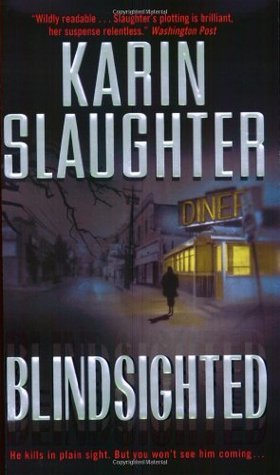
I did, however, decide that I would explore some of Slaughter’s pre-Will books, so I picked up Blindsighted, the first in the Grant County series featuring pediatrician and part-time small-town coroner Sara Linton. The description sounded intriguing, and I always enjoy a female protagonist. The fact that she’s a doctor rather than a detective is a nice twist, and the connection to the law via her ex-husband, police chief Jeff Tolliver, keeps everything legitimate in terms of solving cases. In short, it sounded like something I might like. But there were a few words in the Goodreads description to which I should have paid more attention: brutal, twisted, macabre, sadistic, malevolent.
I didn’t, unfortunately, and once I got started I felt obligated to give the book a shot. In the absence of any other book waiting in the wings, I kept reading and finished it, but I have decided that the books of Karin Slaughter aren’t for me; the subject matter is just too much. This being the first in the series, I can only wonder where she goes next, after a story this grueling. I used to like Patricia Cornwell’s Kay Scarpetta books—likewise headed by a medical examiner—but had to stop reading them when they got too dark. This one was too dark out of the gate.
I think there also has to be a balance in books like this: If there are going to be horrifying murders committed by deranged serial killers, you need a certain amount of balance provided by a stable and focused protagonist. That was what ultimately made me turn aside from Cornwell and, now, Slaughter: Not only were the murders gruesome and strange, but the protagonists and all those surrounding them were angry, sad, depressed, and distressed. I can take one or the other, but the entire experience can’t be an unrelenting downer.
While I have always believed that people should read outside their comfort zones in order to discover things they never knew they loved, I also believe that it’s good to be able to narrow your choices by deciding what’s okay with you and what’s not. I just found one author who is unfortunately not, even though she seems talented and writes prolifically. Too bad, but sometimes despite doing everything right, a writer isn’t for you. I’ll move on and keep looking.
Sweetness and lies
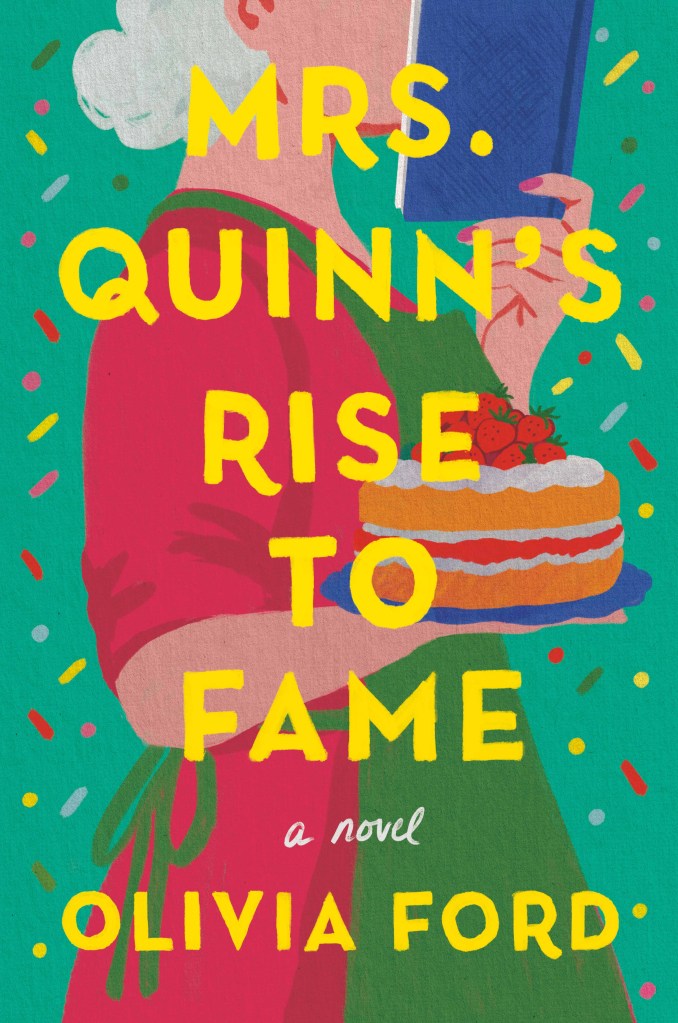
The description of Mrs. Quinn’s Rise to Fame gives off major cozy vibes: Jenny, a woman of 77, happily part of a couple for 59 years with her beloved Bernard, 83, feels a little restless settling further and further into the undeviating routine of their retirement. She takes an unexpected opportunity to apply to be a contestant on the television show “Britain Bakes” (yes, think The Great British Bake-off), to see if life still offers the potential for meaning and adventure. She enjoys the new-found independence of her choice, but it brings up some old memories that begin to affect both her and her relationship…
It sounded ideal: I like baking and recipes, and I like seeing older people charging towards life rather than sinking into it. But…I’m going to quote another Goodreads reviewer here:
“I feel tricked. I wanted ‘elderly woman finds herself through entering a baking contest.’ Instead, I got ‘elderly woman reminisces about the most traumatic thing that ever happened to her (which she’s kept a secret for 60 years) while participating in a baking contest.'”
The trouble started for me when Jenny decides to keep her application a secret from her husband until she knows for sure that she got in, or at least has a good chance. I didn’t have such a problem with that—you don’t want to get people’s hopes up, or deal with their expectations, for that matter—but the way she went about it was inconsiderate and rather thoughtless (not to mention incredibly inept), and leads her husband to believe that she’s hiding something serious, like a life-threatening illness. And when she realizes that is the conclusion he has drawn, she doesn’t come clean and put his mind at ease! I began to like and respect Jenny a little less.
Then we discover that there’s a much bigger secret she’s been keeping from Bernard (and everyone else) for the entire 59 years of her marriage, as the baking of some of her old family recipes brings up memories of her life at 17. She claims that she has kept the secret all this time in order to protect him, but we figure out pretty quickly that it’s to protect herself from being looked at differently by him and by her other close family members. Which didn’t track at first for me, because the secret would explain so much—but once I realized in what way the trauma has shaped their subsequent lives, I liked Jenny even less.
I would really, really like to go into the specifics of why I was kind of horrified by the ramifications of her secret, but I don’t want to give away a central plot point. I will say that I felt like she robbed her beloved (and charmingly portrayed) husband of his agency in a particularly cruel way by never taking him into her confidence.
But…I did thoroughly enjoy the baking narrative, with its descriptions of such delectables as Battenburg Cake and Treacle Tarts; the interactions with her extended family and with the people she met and in some cases befriended on the show; and the descriptions of the filming of the show’s production. Reading those parts immersed me in the bake-off experience, and if the book had been exclusively about that I think I might have liked it better. Many people gave this book five stars, with few being as curmudgeonly as I have been here. Perhaps I am overreacting…but I didn’t like the lies, the implications of Jenny’s emotions about the traumatic event, or the way it finally resolves, which seemed a little too pat.

You will have to decide for yourself whether you want to allow yourself to be whisked away into this story, pun intended.

An addendum: This is my 500th post on The Book Adept Blog!

 The Book Adept