Reading in virus time
I’m sorry for the gap between posts—I, like most people, have been self-quarantining, and in my concentration on reading up about various issues on social media I haven’t spent a lot of time on recreational reading. I have been more drawn to making art during this time, simply because I have many artist friends who are doing likewise and it’s fun to share it in various groups.
 I haven’t quit reading entirely, however, and this past week I continued my exploration of children’s books, but this time instead of revisiting old favorites I read one that I somehow missed when it was first published back in 2007—The Mysterious Benedict Society, by Trenton Lee Stewart. I probably missed it because that was the year I graduated from library school at UCLA. Nothing like getting a degree to prevent you from reading what you want!
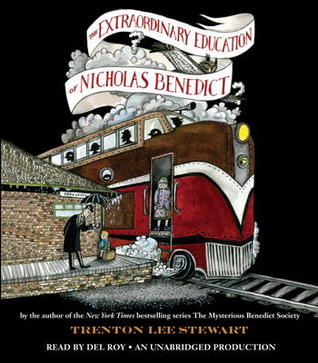
We read the prequel to this book, entitled The Extraordinary Education of Nicholas Benedict, when I was running the 6th and 7th grade book club at Burbank Public Library. It follows the fortunes of Mr. Benedict when he was nine, an orphan with a pickle-shaped nose and an unfortunate habit of falling asleep at the drop of a hat. In this book he was sent to a new orphanage, where he had to use his peculiar genius to evade bullies, pull the wool over the eyes of the pompous adults, and solve a mystery.
When I finished reading that book, I wrote on Goodreads:
“I sort of hate how much I love this book, because now I’m going to have to read all the others. And while that is a delightful prospect, it’s also a daunting one, given that there are three of them, each of which is 400+ pages, and
I have many other things in life to do besides read!”
The rest of my reaction was equally laudatory:
 This was such a well done, engaging, literary book.
I was worried that it wouldn’t be mature enough for 6th- and 7th-graders, given that the protagonist is nine years old (the “wisdom” in reading for children and teens is that most kids like to read about people who are at least a year or two older than they themselves are), but given the vocabulary, the descriptions, the scene-setting and world-building, and the wonderful dialogue, I think this book would appeal to almost anyone who likes this sort of thing.
It made me think about Counting by 7s, by Holly Goldberg Sloan, simply because the protagonist in that one is also a precocious genius, and because I was continually debating with my colleagues over the audience for that book. The publishers described it as a middle-grade novel, but the subtleties of the concepts conveyed by Willow’s story are more mature. Similarly, although Nicholas is nine, this book is universal in its appeal. Also, there’s just something about the boarding school/orphanage trope that is immediately attractive,
isn’t there?
Although that book is not a prerequisite for the rest of the series, I was glad that I had read it first, since it gave me a little more context for who Mr. Benedict was and what one could expect from him. I really enjoyed The Mysterious Benedict Society; I particularly liked the beginning where the children take the tests that are all puzzles designed to ferret out the truly innovative from the merely smart.
I also enjoyed the interactions of Reynie, Sticky, Kate, and Constance, and how they went from acting separately to functioning as a team, bringing all their complementary assets to bear on the various problems they encountered. Although the story has many ridiculous and exaggerated aspects (mass hypnotism, world domination, highly unlikely physical feats), underlying those is a sweet tale of neglected children who are enabled to find each other and form lasting bonds, with the aid of some compassionate adults. It has an old-fashioned flavor but in the best way possible. In fact, I was somewhat surprised when I looked up the publication date because, based on both the story-telling and the writing, I was convinced it dated from back in
my childhood!
I can’t leave this review without complimenting the illustrations of Carson Ellis—quirky and delightful, they add substantially to both the story and the mood.
Although I bought all three volumes of the Benedict trilogy, I think I will leave the other two for now and read some adult fare. I have two Ruth Galloway mysteries by Elly Griffiths lined up waiting on my Kindle.
If you are curious about my artistic escapades, please take a look at my art blog, at https://theslipcover.blogspot.com.
Love across the Pond
When I heard the plot summary of Red, White & Royal Blue, by Casey McQuiston, all I could think was, What a gimmick. And when I saw the cover, I thought, Oh, I get it, “chick lit” for gay guys.
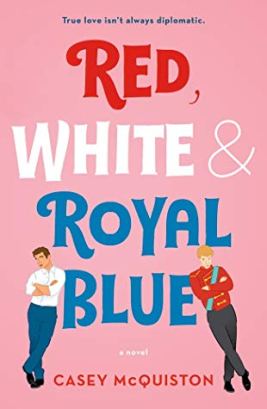 Alex Claremont-Diaz’s mother is the President of the United States, so her family members are under heavy scrutiny. Alex is inevitably cast as the handsome and charismatic “First Son” that everyone romanticizes.
Prince Henry of England (not the heir, but the spare—the second son) is likewise a glittering image of royalty, close to the same age as Alex and with all the advantages and a similar fixation by the public on his every move.
When word gets around, after a couple of meetings, that the two dislike one another, consternation apparently erupts on both sides of the Pond, and diplomatic relations people hastily put together a meet-cute opportunity for the two to prove that the rumors are false and everything is copacetic between the youth of these two allied nations. But the diplomats had no idea, when they encouraged friendship between the royal and the First Son, what a hornets’ nest they would be stirring up!
When I asked a librarian friend of mine if she’d read the book, she tossed off a casual recommendation, saying simply “It was cute!” so I figured it would be just another lightweight romantic comedy for gay teens. Nope. Red, White & Royal Blue wasn’t what I was expecting…and I’m so glad!
I swiftly got past the first part of the book, which was a little cute, if not cutesy, with the I-hate-him-I-love-him turnaround from Alex, and into the relationship proper, which was intense, deep, and precarious, given that one lover was the son of the first female President of the United States and the other was a Prince of England, and there was a lot invested by both sides in remaining discreet. Henry has, perhaps, the most to lose, since the royal façade doesn’t allow for deviation from the hetero pattern of marriage and babies to keep the descendents coming; but Alex likewise faces a certain amount of jeopardy on behalf of his mother—being the first woman president carries the presumption that everyone in the family will act at all times with transparent perfection. His mother, however, doesn’t cherish the same expectations for her children as do the royals. She just wants them to be sure of themselves, and to be happy.
The author was so effective in writing all the things that needed to be here—the sexual awakening of Alex, and Henry, too, to some degree; the non-awkward, rather compelling sex scenes; the wonderful banter (amongst all the fleshed-out characters, not just between the protagonists); the properly scaled-down but still ever-present politics; the romance and joy of falling in love (not in lust or in crush); and, ultimately, the painful but necessary pursuit of the truth of who these two young men want to be.
Casey McQuiston, well done! I’ll look forward to more books from you.
Readers please note: I didn’t realize at first that this book is aimed more at the new adult (18-25) market than at the teen (12-18), so I was a little taken aback at how frankly the sex was described. Not over the top, not explicit to the point of discomfort, but still real and honest beyond most teen fiction. So if you are recommending it, my advice would be not to drop below the senior-in-high-school mark.
Heroes
It’s hard for me to review Robin McKinley books, because although they have (sometimes many) obvious flaws, the beauty and fluidity of the language and the tangibility of the setting and characters is so overwhelming that I am always mesmerized by it.
 In The Hero and the Crown, Aerin is the daughter of the king of Damar, a country that has been led in previous centuries by woman rulers…but the thought of Aerin as ruler of Damar is laughable to anyone who knows her—shy, clumsy, inept, magically ungifted, and daughter of a witch woman from the North who, it was rumored, cast a spell over Damar’s king to insinuate herself into its royal line. Aerin grew up with the story that her mother turned her face to the wall and died in despair when she discovered she had borne a daughter instead of a son to King Arlbath. Her jealous and vindictive relatives, who wish they were the sol of the kingdom instead of in second or third place, never let her forget this story or her own shortcomings. Aerin is essentially alone, with support from her serving woman, her cousin Tor (who is slated to inherit), and her distant but fond father.
But accident and destiny combine to push Aerin out of the shadows and enable her to become the hero of her own story, as well as the savior of her people, the bearer of the blue sword Gonduran and the rescuer of the lost crown of Damar.
This book is a wonderful evocation of an uncertain girl lacking confidence in herself, alienated from all those “normal” people around her and painfully aware of her outsider status, but despite her self-doubt persisting in learning, growing, bettering herself, and turning into a champion in the truest sense of the word. Some of the other characters are slighted a bit when it comes to character development, but McKinley makes up for it with the personality and charm of Aerin’s elderly, injured warhorse, Talat, whose progress mirrors that of Aerin as they quest together.
Two major flaws I see in this book: The abrupt appearance and understanding of Luthe as a character is more than a bit bewildering; and McKinley yanks the bad guy out of a hat, never having mentioned him before, never speculating on his existence, his intentions, or his power, and then gives him one big scene in which he is defeated, somewhat accidentally! As another reviewer on Goodreads mentioned, if you asked readers of Lord of the Rings who Sauron was, they would all know; but with this guy, it’s hard to even recall his name being mentioned, let alone how he came about and the purpose for his existence.
But…despite her glossing over some details that in another writer would be fatal mistakes, McKinley’s prose and imagery and the sympathetic characters upon whom she does focus make this book a triumph.
 Although she wrote The Blue Sword first and The Hero and the Crown second, this book takes place some centuries before the events in The Blue Sword, so you can read them in either order. And if you love high fantasy and were charmed by this book, you should definitely read the other one set in Damar, about Harry Crewe, the unlikely heiress to Gonduran. I don’t love Robin McKinley’s books equally–some are amazing, some are okay, and one or two I actively dislike—but The Blue Sword is one of her best.
READERS’ ADVISORY NOTES: These books would most likely appeal to someone who enjoyed Laini Taylor’s Strange the Dreamer, Kristin Cashore’s Graceling realm books, Melina Marchetta’s Lumatere Chronicles, or some of the books of Margaret Mahy and Patricia McKillip. These books all share protagonists who are unlikely as the heroes of their own tales but who manage to rise to many challenges, and all these writers are in some sense wordsmiths of high fantasy language. For those who love fantasy (or those who are recommending it), it is always a smart idea to look to the books of the past as well as to the hits of today.
Fresh look: old book
Continuing this occasional feature…
Barbara Kingsolver achieved her greatest fame with the book
I honestly like the least of her entire list—The Poisonwood Bible, nominated for a Pulitzer and multiple other awards. But before she wrote this serious tome, Kingsolver penned several shorter books that caught my imagination:
Taylor Greer grew up poor in Kentucky, with the dual goals of avoiding pregnancy and getting out. On her drive west to seek her fortune, she is unexpectedly “gifted” with a three-year-old American Indian girl, who is dumped in her car in obvious need of mothering and more. So Taylor’s plans change abruptly, and she puts down roots and begins to build a community to help her care for her new foster daughter, Turtle. This is the story of The Bean Trees; in the sequel, Pigs in Heaven, Turtle witnesses an event that has repercussions for her life with Taylor, exposing her to her heritage and her past. These two books are a wonderful combination of charming and heartfelt, with lots of humor but also with a serious message about the family you inherit and the family you choose.


The third book Kingsolver wrote right around the same time period is Animal Dreams, a love story, an environmental inquiry, and an exploration of Native American culture. I was captivated by all three of these books and have revisited them several times. If you are looking for short but intense fiction with an American southwest setting and eccentric characters, try any or all of these three by Kingsolver.
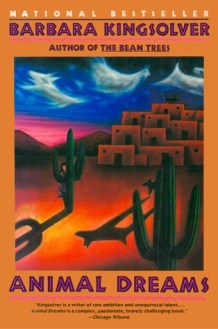
I featured the original covers here, because they are the ones with which I am familiar (and also, I really like them), but all three of these books have been re-released in trade paperback and are easily obtainable, if in a more bland, less culturally celebratory package.
 The Book Adept