Chefs of the gods
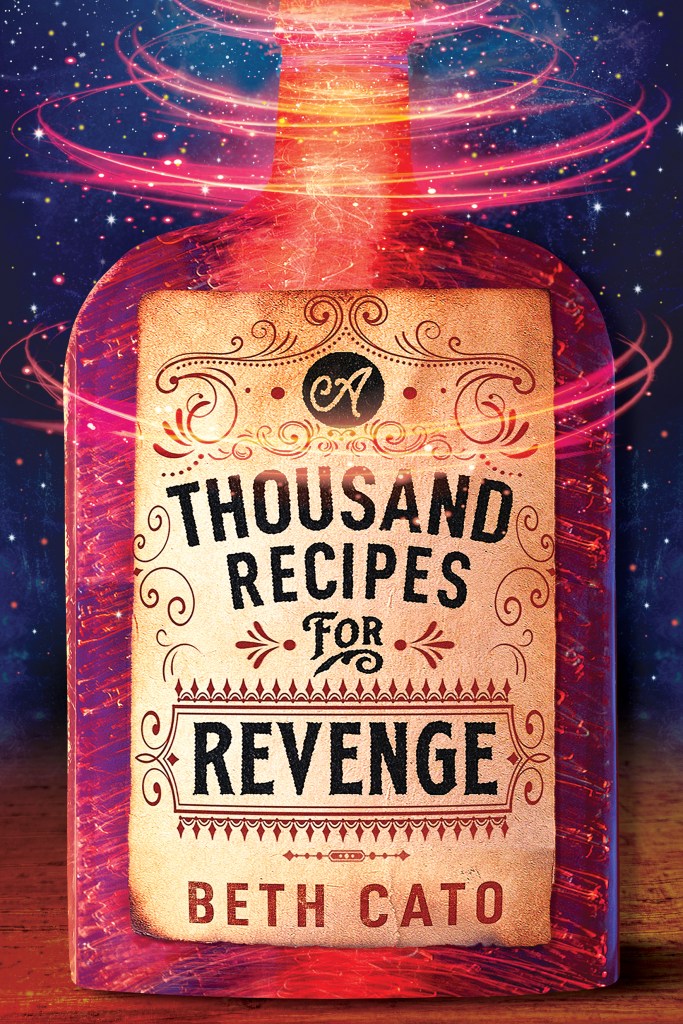
I picked up A Thousand Recipes for Revenge, by Beth Cato, as a bargain book through BookBub. This sometimes indicates that book sales haven’t been that great, but in this case it seems that it was simultaneously published in three formats (paperback, Kindle, and audio book) all on June 1st, so perhaps it was just a promotional gimmick. It’s a fantasy, and as such I found it immediately immersive.
The premise is intriguing: The tag line is “Chefs of the Five Gods #1,” and it’s about people who are born with the special gift of an empathic connection to food and wine—a magical perception of aromas, flavors, and ingredients and, in special cases, the actual ability to intuit what dishes, with what seasonings in kind and quantity, would best please the palate of the diner with whom they are confronted. Needless to say, this ability is highly prized, with the result that while the Chefs, as they are known, are treated like royalty, they are also constrained in their freedom. There are several kingdoms in this story, and in one of them (Verdania) the chefs are “in service” to the gods-ordained rulers of the country, another way to say they are virtual prisoners, not allowed to go elsewhere or work for anyone but the crown. (This is reminiscent of the children born with two different colored eyes and some innate gift in the world of Graceling, by Kristin Cashore.)
The story is told from two points of view, the first being that of Adamantine Garland, who escaped 16 years ago from the position forced upon her, and is living under the radar with her grandmother, both of them rogue Chefs. Since the punishment for abandoning the post of Chef is either death or to lose your tongue (and therefore your gift), they have good reason to take care not to reveal themselves, especially by cooking too well! But circumstances that transpired just before Ada disappeared from the court of Verdania are about to bring her perilously out of hiding.
Solenn is the princess of Braiz, a neighboring land to Verdania, and a marriage has been arranged between her and Verdania’s prince, a 14-year-old boy still more concerned with his friends and amusements than with girls and weddings. It is hoped by the union of these two children and countries that together they will be able to withstand the greater might of another nearby more powerful kingdom, Albion. Something unexpected happens, however, during Solenn’s ceremonious and extended welcome to Verdania—her own magical perceptions awaken (this usually happens at a much younger age), and make her aware that there is a plot by Albion to kill the prince. This unexpected kindling of power (as far as she knows, there are no Chefs in her ancestry) sets in motion several plot twists that will bring together unlikely players in the attempt to save civilization from destructive forces.
I enjoyed the story for several reasons. I liked the world-building: The background felt like a French court from the 17th Century, with musketeers, fancy dress, and court intrigue. But the principle characters who played things out against this backdrop were refreshingly ordinary in their thoughts, actions, and priorities. I liked that there was a wide span of age groups represented in the participants—a few teenagers, some middle-aged adults, and elderly relatives with infirmities that must be regarded. I enjoyed the set-up of the Five Gods of these kingdoms, their various affinities connecting to both food and the greater world (for instance, Selland is associated both with salt and with the sea), and the relationships people maintained with a specific god they considered their patron or guardian. The gods were also refreshingly arbitrary and human in their behavior, which made things more interesting. I enjoyed all the plot twists and, although I’m not sure this was intended as a young adult novel, I felt like this was an example of a book that would appeal equally to teens and to grown-ups who enjoy fantasy. I did not enjoy the somewhat abrupt ending with the realization that I would have to wait for the sequel!
It seems the plan is for the next book to come out in the same three formats next January. This one has been nominated for a Nebula Award, and Beth Cato has apparently also written another duology and a trilogy that I will have to check out. She also has a blog called “Bready or not” (I love a good pun, I used to have a bread-baking business called “Friends in Knead”), and an Instagram page (@catocatsandcheese) featuring gardening, bread, cheese, and cats. I could definitely be friends with this person!
Discover more from The Book Adept
Subscribe to get the latest posts sent to your email.

 The Book Adept