Quiet transformation
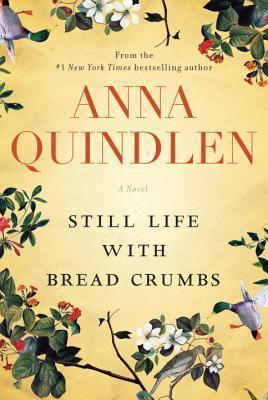
Still Life with Bread Crumbs, by Anna Quindlen, is a book that doesn’t have an initially heavy impact, but it sticks with you. It’s about a woman in a situation to which many of us in our 60s can relate: We were “somebody” once (or if we weren’t exactly prominent, we were at least identified as a certain kind of person who does a specific kind of thing, whose identity is wrapped up with that activity), and now we’re beginning a downsizing of that role; and this narrowing could be an end, or it could be an avenue for change, depending on how we react to it, how we see it through, what we are willing to allow.
Rebecca Winter was a famous photographer who produced iconic images relating to womanhood and motherhood—views of common items that grew in importance to express a certain kind of lifestyle or mindset in those who viewed them. Once, she was revered, sought out, exhibited, solicited for new works, invited to lecture, sometimes even recognized on the street. But now her sales are dropping off while her responsibilities (and bills) are growing, so she has chosen to solve the problem of her scant bank balance by renting out her costly Manhattan apartment and moving to a cheap rental in a small town in the middle of nowhere in particular. This will allow her to pay for her parents’ old age care until she can figure out what her next step should be.
It’s initially difficult for her to adapt to the dramatic change in circumstances, and she finds herself unprepared for the solitude, the immersion in nature, the lack of stimulation formerly provided her by big-city living, the inability to solve her problems by throwing money at them. But gradually she sinks into her place in this small community, finds regular routines, changes her expectations about what constitutes a success, and begins to tentatively create something different for herself. And these shifts in perspective also allow her to look at herself, her work, and her relationships in a way that finally breaks down the wall she has built between the idealized world of a woman behind a camera and the everyday experience of someone with nothing between herself and reality. It is a kind of coming-of-age story, but at the end, rather than at the beginning, of the spectrum.
Some reviewers really pick this book apart, belittling the transformative experience of the main character and calling it overly sentimental or even trite. Some also focus heavily on the May-December (well, perhaps July-December) romance, which to me was only one small element in the bigger picture being presented, not nearly as important as all the rest of it. Perhaps I am just a naive reader, or easily satisfied, but I would call this book a sort of “comfort food” read on the surface, but with strong underlying themes that give it a universal affect. I enjoyed both the superficial story and the deeper ruminations. I liked the storytelling, and tapped into the emotion, and I liked Rebecca’s authenticity and transparency, as well as the humorous side stories and anecdotes that keep the narrative lively and unexpected. It may not be to everyone’s taste, but for me, where I find myself in life, it was just the thing.
Discover more from The Book Adept
Subscribe to get the latest posts sent to your email.

 The Book Adept
Thank you for your review. I seldom depart from my preferred fare of suspense, mystery, and SF&F to read general fiction, but you motivated me to pick up a book that I found exotic (the life of an artist in New York city!) yet relatable given my age and background. It underscored my belief that many important events are random or accidental however firmly we try to plan for and control a path through life. I read and appreciate all your reviews that arrive in my mailbox, even those for books I am unlikely to read myself.
LikeLike