Books to TV (or movie)
I am usually quite critical of how a favorite book is translated to television or movie form, and in the past I would most likely have favored the book over the visual version almost every time. But in this day of bountiful offerings on a dozen pay channels, the properties are bought and transformed at such a rapid rate that I have found myself getting to know stories and characters on my television screen ahead of reading their origin stories, and in some cases I have to confess that I have enjoyed them far more than I later did the books.
Some for-instances: The writing is sharper and more clever in Shonda Rimes’s Bridgerton than in the books, so much so that I didn’t even finish reading the first book. The racial themes and the character motivations depicted in the Hulu production of Celeste Ng’s Little Fires Everywhere were less enigmatic and more relateable than in the written version. And although I read it first and gave five stars to Liane Moriarty’s suspenseful and engaging Big Little Lies, I equally loved the HBO version for the sheer star power represented and how well they pulled the whole thing off.
I also have to give exceedingly belated and somewhat awed credit to the team of Denis Villeneuve, John Spaihts, and Eric Roth (co-writers) and Villeneuve again as the director of the new version of Dune. After suffering through David Lynch’s 1984 version and Sci-Fi Channel’s three-part miniseries in 2000, I found myself devoutly hoping that no one else would try to take on the depiction of this classic on film or television, but the new one feels, finally, like the intentions of Frank Herbert have been realized.
This all brings me to my latest book-vs.-television experience, which has been quite a bit bumpier and more jarring than anything I have yet mentioned.
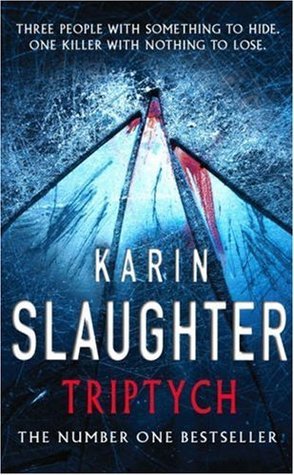
I started watching the ABC TV show Will Trent with its premier episode, and immediately fell in love with the protagonist, his dog, and the rest of the excellent cast. I didn’t even realize, until near the end of Season Two, that the material came from a series of novels by author Karin Slaughter; the minute the season ended I decided I would spend the time until Season Three reading the original stories. And what a shock it was….
First of all, let me say what things are similar about the series. Will Trent and Angie Polaski grew up as lifelong friends in the foster child system. Will now works for the Georgia Bureau of Investigation (GBI), while Angie is a police officer (Vice) for Atlanta PD. Will’s boss is named Amanda, and she knows a lot about him. Her secretary’s name is Caroline. There is a police officer named Michael Ormewood. And there is a cheeky chihuahua named Betty, an adorable but somewhat ludicrous pet for Will. And…that’s pretty much it.
In the TV series, Will is short, compactly built, and Latino. In the books, Will is tall, blond, and blue-eyed, with significant facial scarring. In the TV series, Angie is tough on the surface but exceedingly vulnerable not too far beneath; she is struggling desperately to stay clean from a severe drug habit, and is involved with Will in a sexual relationship that occasionally verges on emotional. In the book, Angie is tough almost through and through, with a tiny bit of her left open to caring for her friend Will; they “broke up” almost two years ago, because Angie knows she’s not good for him and needs to leave him alone if he’s ever to achieve happiness with someone else. On TV, Will is almost immediately paired with Faith Mitchell as his new partner, while in the books she is still on the horizon by the end of book #1. On TV, Michael Ormewood is Angie’s partner on the police force and also works frequently with Will. He’s not entirely likeable, being reckless and kind of a chauvinist, but he’s basically not a bad guy. In the books, well, that would be a spoiler, but Ormewood isn’t who he seems. He’s also short, compact, and dark-complected in the books, while he’s tall, blond, and blue-eyed in the TV show—the exact opposite of the Will-to-Will transition! The only consistent character between the two mediums is Betty.

After having loved the TV show so much, I struggled for the first third of the book with the written versions of these characters. I came to terms most quickly with the character of Will, because despite the physical differences, the inside person is consistent, from the crippling guilt to the dyslexia to the brilliant insights, and the outside Wills both wear three-piece suits as armor. But I mourned the loss of the vulnerable friend/lover Angie, and when I read in the afterword that there is a “legitimate” love interest for Will starting with book #2, I wasn’t sure I wanted to continue. As for Ormewood…I don’t know how I can look at TV Michael the same after reading about Book Michael. By the end of Triptych I had subconsciously decided that it was worth continuing with Slaughter’s written version, but I honestly don’t think I’ll ever find these people either as likeable or as engrossing as the TV characters, and that’s a real departure for me!
Someone in my “Friends and Fiction” Facebook group told me that I should go back and read the series Slaughter wrote before she arrived at the first Will Trent book in order to thoroughly understand the back story; perhaps I will do that and see where it gets me.
Discover more from The Book Adept
Subscribe to get the latest posts sent to your email.

 The Book Adept