New series from Connelly
I am a steady reader of mysteries. I’m not a fanatic, and I prefer fantasy and science fiction, but it’s my number one category in terms of number of books read, probably because when I find a writer whose detective and style I like, I stick with them until I have read the entire series (and mystery writers are generally pretty prolific). I enjoy different kinds of mysteries: cozies, historical, thrillers, police procedurals. When I first heard the title of that last category, I thought “procedural” made it sound dull, but the truth is that, in skillful hands, all the minute details of how a case is built and a murder is solved can be fascinating to the reader, as well as to the detective.
With Los Angeles County Sheriff’s Detective Stilwell as its lead character, Michael Connelly is starting a new series featuring someone other than Harry Bosch, Renée Ballard, or the Lincoln Lawyer. While he could still be termed loosely within the “Bosch Universe,” which is based in Los Angeles, Detective Stilwell, or “Stil,” as his friends and colleagues call him, is off the beaten path; he is the detective presiding over the police substation on Santa Catalina Island, 22 miles off the coast of Southern California. He has two subordinates and an office manager who work directly under him, and liaises with a coroner’s department and with the Harbor Master (who is also his girlfriend).

He’s been on Catalina for a year; he was exiled there from the L.A. Homicide desk after he crossed horns with another detective and was deemed at fault in their dispute. His duties now consist mostly of dealing with petty thefts and drunk-and-disorderly cases that proliferate on the weekends when the tourists come to the island to let off a little steam. While he was initially somewhat bitter about his demotion and didn’t appreciate being shunted to this backwater, he has come to love the island and seems to feel that he’d like to stay there, at least for a good long while. But when a shrouded, weighted-down body washes up into the bay, Stilwell refreshes his skills at solving a murder, despite resistance from both his boss and his old nemesis at LAPD Homicide, who is assigned the case.
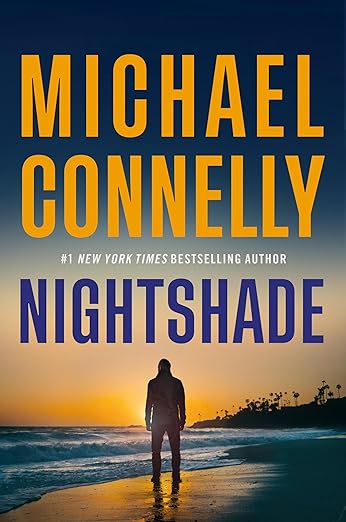
About halfway through this book, I became increasingly irritated by several things. First, although it’s fine that the guy has been nicknamed “Stil” from Stillwell, it would seem normal and necessary to know the detective’s actual first name, but that hasn’t been revealed. Are we going to have to wait to meet his mother (if he still has one—we also know nothing about his family situation or past associations) to find out his given name?
Second, while there is a wealth of detail about what differentiates a ketch from a regular sailboat (I couldn’t care less), or what color hair dye the victim used for the streak in her hair (“Nightshade” purple), we have absolutely no physical description of the main character. The only hint is that when he feels he may need to overpower a guy in his custody, he notes that he is taller than the 5-foot-eight-inch perp by at least four inches, and outweighs him by 25 pounds. So we know that he is about six feet tall, and has more meat on his bones than this slender, wiry criminal Connelly does bother to describe. But we don’t know how old he is, whether he is dark- or light-skinned, color of eyes, color of hair, whether he has a big nose or his ears stick out—not one measly iota of physical description is vouchsafed by the author.
Some people might see this as an advantage and, based on experience from other book series that have later been turned into movies or television, I can understand that viewpoint. People were outraged when Tom Cruise was cast as the protagonist in the first Jack Reacher movie, and quite vocal with their approval when the makers of the television series picked the taller, blonder, and more muscular Alan Ritchie, who conforms quite closely to the description of Reacher in the novels. And the reverse can also happen: I have been watching Will Trent on TV since the series began, and that led me to try one of Karin Slaughter’s books, since I enjoyed the TV series so much; but I simply couldn’t get past the fact that on TV, Will is short, compactly built, and Latino, while in the books he is tall, blond, and blue-eyed. I was really looking forward to exploring the stories in depth after seeing the show, but I stopped after book #1. Since Connelly’s other books have been optioned for movies or TV, perhaps he is thinking ahead to casting.
There is a difference, however, between giving a few details and giving absolutely none. For instance, knowing the approximate age of the character and how long he has been on the job will clue you in to how much experience he has and whether he’s plausible as an authority, but we don’t know if Stilwell is 28 or 50. Except for the exceedingly indirect clue I mentioned above (which would have been easy to miss), we don’t know any physical details. These are the idiosyncracies that help readers begin to build a picture of the character in their minds. In a lone-policeman or lone-detective type mystery series, it’s crucial that readers be able to identify with the lead character, who is the sole arbiter of each story. If that person is essentially faceless, it’s hard to care.
The third thing that bothered me—and this one may end up being the most significant—is that from the get-go Detective Stilwell comes off as Harry Bosch “lite.” Everyone who has read the Bosch books knows that Harry is a renegade, a person who, without fail, puts his own values and integrity first and therefore eventually runs afoul of almost every boss and many of his co-workers, who are either motivated by politics or tend to be lax about the work, seeing it as a job rather than as a calling. So when Stilwell turns out to have been sent to Catalina because he has burned down relationships at LAPD Central, that sounds too similar to Harry’s many reassignments to the wilds of the San Fernando Valley or the dead end of the cold-case bureau. It inevitably follows that he will have a problem with his fellow officers who are not as punctilious as he is about dogged follow-up, and that he will break rules and cross lines to get at the information he needs. Classic Bosch, which isn’t a problem for that character but is a problem (for me, at least) when Connelly claims to be launching a brand-new protagonist who bears all the characteristics of the old one except that he is presumably not near retirement age! It made the story seem stale from the outset.
As for the two mysteries in this book, they had their moments, but in light of the characters who seemed either stereotyped or kind of blah, it was hard to invest. I will try another when he writes it, but I’m afraid this “fresh start” isn’t different enough to pry people away from their Bosch worship and keep them reading Connelly. We will see.

Discover more from The Book Adept
Subscribe to get the latest posts sent to your email.

 The Book Adept
I agree. Also, Bosch has a strong moral compass. If he felt like he knew someone was guilty, but didn’t have sufficient legal evidence, he might take justice into his own hands. But here, Stillwell has all the evidence in the world against Spivak, including a kidnapped sheriff’s deputy as a witness, and recordings regarding Spivak’s crimes. Instead of using this damning evidence, with an unarmed Spivak standing still with his hands on his hips, Stilwell shoots him in the head, killing him. When I read that, I just thought “Lazy lowlife. No different than Spivak.” Totally lacking a moral compass like Harry Bosch.
LikeLike