A Heller of a book, until…
Peter Heller has written a couple of books that are favorites. The top one is (predictably) The Painter, and I loved The Dog Stars. I can also say that I tremendously enjoyed The River, The Guide, and Celine. So choosing to read his latest was predictable for me. It started strong, and parts of it remained strong, but…
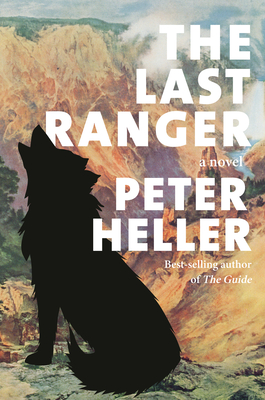
Yeah, there’s that dot-dot-dot. Heller’s writing about nature in The Last Ranger was as beautiful and lyrical as ever. He creates a sense of awe and wonder that is contagious—even if it is his protagonist who is expressing these feelings, they gradually seep into your own consciousness as if you are experiencing that environment and the engendered response firsthand. I could never find fault with that aspect of his writing.
I also liked the characters he created for this book, and enjoyed absorbing knowledge from them about how the various people in and around Yellowstone spend their days. The protagonist, Ren, is a park ranger for whom the reward of living a solitary, blissed-out life in the midst of nature must be balanced by preventing parents from taking photos of their adorable three-year-old cozying up to a baby moose while its mama is ready to kill everyone within charging distance. He breaks up traffic jams caused by too many tourists trying to photograph something-or-other by the side of the road, he prevents the wildlife from being shot by “individualists” with no respect for the boundaries of the park or the laws of the land, and everything in between those extremes. His life is sort of predictable and sometimes irritating, but ever-changing and therefore not boring.
Ren’s best friend is Hilly, a biologist who finds herself up against both man and nature when advocating to protect the wolves of Yellowstone. There are a host of other characters, both local and transient, whose descriptions and actions are meaningful and/or entertaining even when the scene or description is fleeting. That is the power of Heller’s writing.
This time, however, the big lack is in the plotting and especially the resolution of the “mystery.” As the story develops, the focus centers on the brazen actions of a local poacher and then transitions towards the end to the discovery of a large semi-secret group of wealthy men who are at odds with the goals of a national park and are inciting rebellion amongst suggestible locals. But there are so many segues from these threads into a sort of “day in the life of” narrative about both Ren and Hilly, so many outtakes about fistfights between tourists, and ignorant sightseers putting themselves and others in jeopardy, and an unexpected and exceedingly awkward romance that the story line gets lost. And just when you think it’s going to resolve itself in the last 100 pages, you get some directional hints, you get a few minor questions answered, but everything else is simply left hanging.
I’d say there’s a sequel coming, but Heller hardly ever writes sequels, let alone initiates a series, and has not indicated one here. Given that, I feel like as readers we are owed the resolution to at least three plot threads, and no amount of euphonious language has made up for that in The Last Ranger. Disappointing.
A pirate and a serial killer
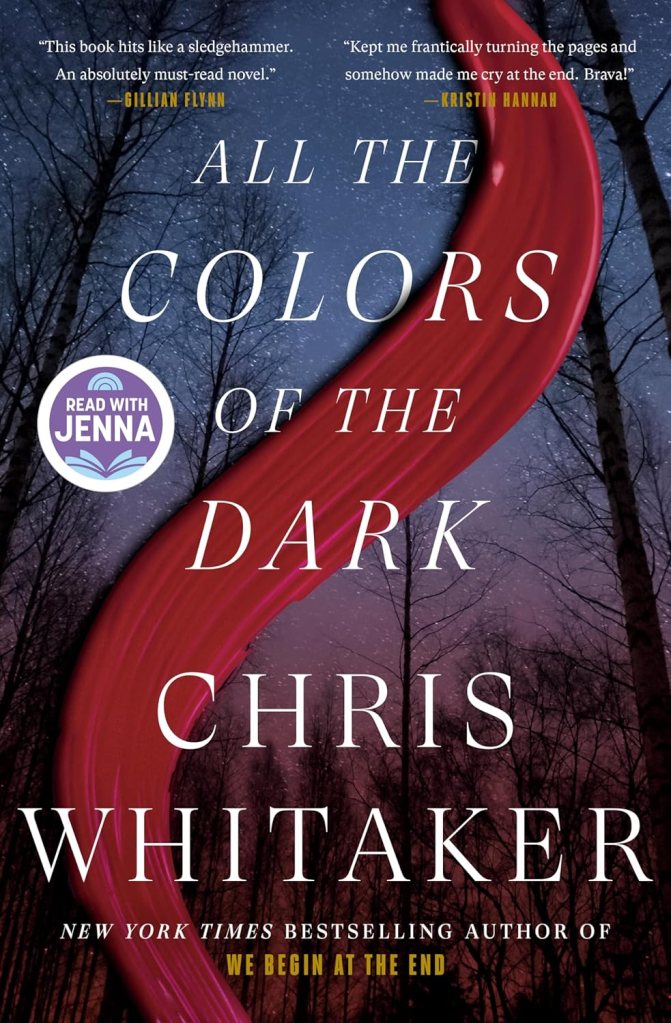
All the Colors of the Dark has been widely touted on all the Facebook readers’ pages I frequent, yet never really explained. The title alone made me curious, so I put it on the holds list at the library and waited a very long time for it.
When I started it, I was immediately filled with a sense of dejá vu; it reminded me forcefully of another dark, complex book I had read a few years back, but I couldn’t remember the name. I looked on Goodreads because I knew I had listed that book in my “coming of age” section, and then laughed; it was by the same author, Chris Whitaker, whose novel We Begin at the End bowled me over when I read it four years back.
I looked up my review of that book, and was not surprised to see that my description would pretty much do for both books:
“It is the saga of multiple people caught up despite themselves in various forms of tragedy they are mostly unable to avert.”
There are other similarities: The main characters begin as young teens with absent or derelict parents; they live in a small town and are outliers in their peer group; and they have an odd array of adults who try to look out for them but are mostly no match for what’s coming to them.
There are two characters around which the story revolves. The first is Joseph “Patch” Macauley, a boy born with one eye. His mother tried, in his younger years, to ameliorate this by sewing him a series of eye patches and buccaneer vests to let him play the pirate, but that may have made him even more of an outcast. The second is his best friend, Saint, a girl raised by her grandmother to be uniquely herself. In a small Missouri town where 13-year-old girls are mostly yearning to dress up, wear makeup, and start going on dates, Saint is more inclined to wearing overalls and keeping bees. The two are pretty much inseparable, each for their own reasons. Saint loves Patch and also wants to help him; Patch believes that Saint’s primary emotion for him is pity, because she invites him to dinner as often as she can, knowing that his mother can’t seem to hold down a job or keep the electricity on and the refrigerator stocked.
There is a girl at their school named Misty, a girl so far out of Patch’s league that even to speak to her might be considered sacrilege by her crowd of friends, a rich girl, a beautiful girl, a girl who takes life lightly—until the day she is kidnapped. Patch becomes her unexpected rescuer, and this act is like the butterfly that causes the tornado, enveloping everyone in his vicinity in chaos.
This book, like the other, is a complex interweaving of mystery, thriller, love story, and coming of age—or perhaps not that, but coming into one’s own. It’s about friendship, love, obsession, degradation, inspiration, hope. As with the first book of Whitaker’s, I don’t want to say too much more about the plot, partly because it’s too complicated to describe, but mostly because when you read it you need to do so without knowing what’s going to happen.
The thing that makes me know this is a great book is that it has some flaws that I would normally have been critical (or even scathing) about in a review. It’s far too long; at one point I thought I must be at least three quarters done, but looked at my Kindle gauge and discovered I was only 52 percent in. It has vastly unbelievable details and plot twists that, again, in another book I might have scoffed at. And he does what I dismissed in my review of the book Things You Save in a Fire as unforgiveable: He writes what feels like the end, but there are five more chapters, each of which also feels like the end until you finally get to the end. I usually hate that, but here I wanted so much to know what happened in every circumstance that I was grateful to turn a page and find more book behind it.
It’s not an easy book to read, for many reasons. There is a lot of tragedy and, just when you feel like you have encountered the worst, there’s more. But it’s also a book full of unexpected lightness and even humor, and if you are a fan of beautiful language and imagery, you will be captivated.
I won’t say it’s not a challenging read; but for me it was all-enveloping and, in the end, vastly satisfying. I will think about it for a long time.
Re-reads
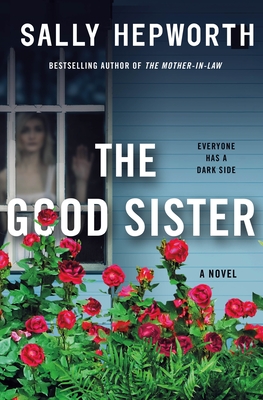
I got frustrated by the length of time I was having to wait for new library books and decided to do some rereading this week, since older books are easily obtainable. I chose the first book, The Good Sister by Sally Hepworth, because I had just reread Eleanor Oliphant and their protagonists share some things in common.
Although I remembered the story pretty well, there are always things that you don’t pick up on the first time through. One of the ones I enjoyed this time was protagonist Fern’s description of her mode of dress. She starts out by saying she is a librarian, and at 28 years old she is much younger than the average librarian (apparently the average is 45!). She comments that many librarians tend to be stodgy dressers, but Fern likes to express herself, so her typical outfit is a rainbow T-shirt topping a long, swirly skirt in some bright color (that day’s was sunshine yellow) with a pair of rainbow- and glitter-covered “trainers” (Brit for sneakers or tennis shoes) to match. She tops off all of this by putting her long strawberry blonde hair into two braids and then rolling them up above each ear for a Princess Leia look-alike effect, although she asserts that she is not copying that style; it is merely a handy way to keep her hair out of her face while working.
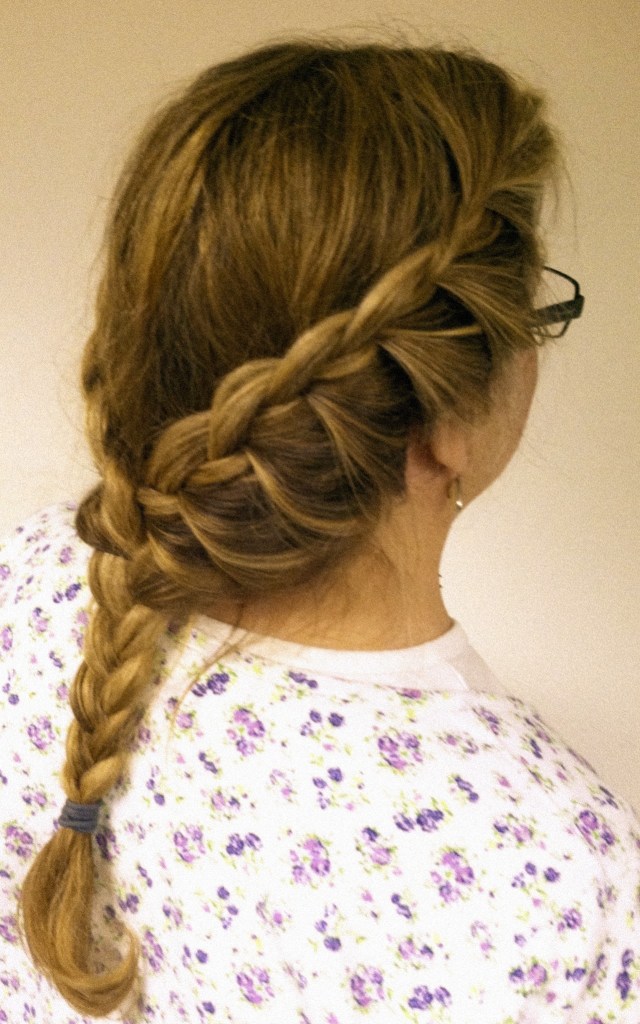
As a person who went to library school at 48, I was definitely up in that core demographic, but I did share some characteristics with Fern. I liked wearing colorful, full, knee-length skirts (flowered, striped) with matching solid-color leggings, black boots, and a T-shirt or sweater on top, depending on the season, and although I never did the Princess Leia ‘do, I did wholeheartedly embrace braiding during my 11-year career as a teen librarian.
I enjoyed this book as much this time around—it definitely held up. The characters are either delightfully quirky or deliciously sinister, and the action and narrative are nicely balanced to hold your interest. If you would like to read my initial full review, you can find it here.
The second book I picked up was one I hadn’t read since 2015 when it first came out, and I didn’t remember a lot about the story. It’s The Reversal, by Michael Connelly, and it was the book where he shook things up in several ways: Mickey Haller (the Lincoln Lawyer) crosses the aisle to become a prosecutor for one case; he partners up with his (first) ex-wife, Maggie McPherson, an assistant district attorney for Los Angeles; and instead of his usual investigator, he hires his half-brother, LAPD detective Harry Bosch, to help put a child-killer behind bars for the second time.
I looked forward to reading it again because I liked that all my favorite characters were in one place. But in the end, I didn’t find this to be one of his better stories. I did enjoy having Haller, Bosch, and McPherson all working together on a case that Mickey was prosecuting, but there was a bit too much courtroom (without enough drama). The man they are prosecuting has spent 24 years in jail for the crime and everyone is still convinced he is guilty. But some new DNA evidence proves compelling enough for the courts to grant him a retrial, and in the meantime he’s out in the world while the trio tries to find enough evidence to put him back in prison.
I felt like not enough happened “in the field” in this book, and I also didn’t enjoy the guy in the role of defense attorney; he was whiny and not sufficiently developed in comparison to his opponents. There is also a huge foreshadowing element with the murderer that never comes to fruition, which was both disappointing and annoying, and the ending is both rushed and anticlimactic, after a big build-up. I actually dropped my rating on this one from four stars to three after rereading it. I’m still a loyal Connelly fan, but in certain books he seems off his game, and this was one for me.
Two of my “new” (to me) books just came in and got transferred to my Kindle, so there will be fresher reviews coming soon.
We All Live Here
I just finished JoJo Moyes‘s latest, We All Live Here, published just under a year ago. In looking at the list of her books that I have read, most have received four or five stars from me; but there’s always one…and this seems to be it.
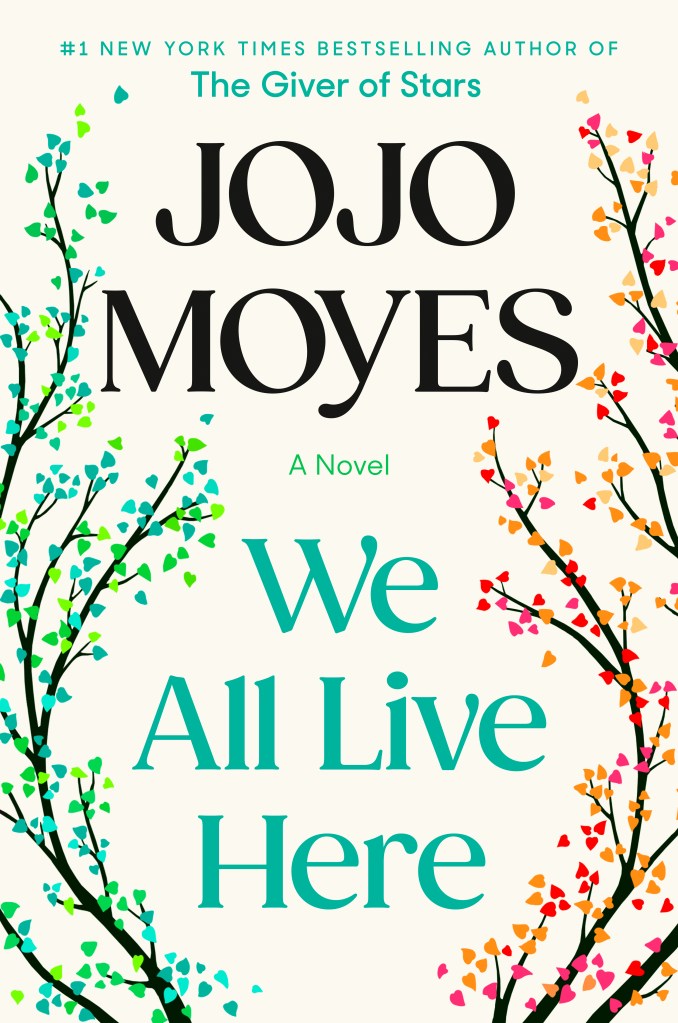
I thought, after reading the blurb, that I would relate to this protagonist. After all, both of us were left by our husbands, ostensibly to take a time out to consider the relationship but in actuality to hook up with someone younger and more fit. I didn’t have the burden of raising two children (we didn’t have any), and neither of my parents moved in with me (although my mother did insist that I should move home, back into my childhood room, after my seven-year marriage was over!), but still…empathy, right? (BTW, I did not move back in with my parents!)
Unfortunately, this book reads more like those ubiquitous “AITA” (Am I the A$$hole?) videos on Facebook, where someone tells a story in which someone behaves badly and then wants validation about whether or not they are the, er, bad guy. In the context of the book, I decided, fairly early in the story, that Lila the protagonist was the a$$hole, despite the fact that yes, she had a lot to endure: A philandering husband who left her to raise her two daughters while he started a new family with a new model; a stepfather who was recently widowed (Lila’s mother died) and seemed to have moved in with Lila and her daughters without invitation; and an absent father she hadn’t seen since she was a teenager, who showed up on the doorstep expecting to inhabit the spare room and weasel his way into the hearts of his granddaughters.
It would seem to be easy to have sympathy, at least, for someone so beleaguered, and yet Lila makes it so difficult. She is self-centered, self-pitying, and whiny, and she dwells inside her own story with total disregard for those around her for a good part of the book. The final self-realization epiphany comes so late that I just didn’t care. Also, there was one incidental detail in the story that drove me mad until it was solved, and there was no resolution until the last 40 pages of the book.
Even though I have enjoyed some of her books much more than others, I never thought I’d read one and simply say “Don’t bother.” Who knows—maybe your reaction to Lila etc. will be materially different from mine. But don’t say I didn’t warn you.
I’m fine

That’s everyone’s socially acceptable response when someone asks “How are you?”, right? But how often is it actually true?
My initial reaction to the first third of Eleanor Oliphant is Completely Fine, by Gail Honeyman (despite some clues in the opening pages that would have led me elsewhere had I been paying sufficient attention), was that it reminded me of The Rosie Project, by Graeme Simsion. Socially awkward protagonist with no friends, wedded to routine, on whom a random suggestion acts as a catalyst to start changing things up, check. Protagonist meets someone completely outside their wheelhouse and makes an unexpected connection, check. But that’s not quite how this book ended up going. The two books share a sense of humor, and their protagonists share the quality of being literal and inept at human relations as they attempt to navigate their way through life. But the reasons behind their similar states are different, as are the resolutions.
There are lots of books out there (fiction and nonfiction) about various kinds of mental health issues. Not many of them, however, address the situation of loneliness as either a cause or an outcome. Eleanor believes that she is completely self-sufficient—after all, her physical needs are being met, and in all her years in the foster care system she didn’t get a chance to indulge any emotional needs, or even recognize that she had any. But when she has two chance encounters that change her focus, these events and the people connected with them worm their way into her formerly solitary existence and begin to show her that she had very little idea what a full life could be like.
Eleanor is, in many ways, profoundly broken, and her metamorphosis depends on courage that she wouldn’t have found without making some human connections, but it is not a romantic book, for which I was grateful. This is a book about Eleanor, and Gail Honeyman doesn’t fall into the trap of leading her out of her unhappiness by making her fall in love—in fact, quite the contrary. Her story is told in a tender, sweet, and humorous way that isn’t manipulative and never descends into mawkishness, that pulls both Eleanor and the reader out of melancholy into hopefulness. I was impressed that this was the author’s debut novel: The language, the characters, and the world in which she places them are smart and engaging, and she writes with confidence.
I have encountered only a few books that, the minute I turned the last page, I wanted to go back and re-read to see what I missed or to re-experience the emotions brought forth by the story. This was one of them.
Note: This was a re-read for me—I originally read this in 2018 and had the impulse to revisit it. The above was my review from 2018. Nothing materially changed from the reread, except that I found the book, if anything, more emotionally moving. If you enjoyed this book as I did, you might also like to read The Good Sister, by Sally Hepworth.
Saving the library
My next book on the library holds list was The Last Chance Library, by Freya Sampson, and I’m happy to report that I am now two for two (two good reads in a row) for 2026.

This was Sampson’s debut novel, and it might be my favorite. I hate to be predictable, but I do love a book about books. I don’t, however, always love books about libraries and librarians, for the simple reason that the authors don’t do their research to understand what role is filled by degreed librarians as opposed to assistants, circulation staff, shelvers, etc. But Freya Sampson is among the few who get it absolutely right. She acknowledges the need for a degree in order to be a librarian, she describes the duties of her main character, June, a library assistant, perfectly and consistently, and no one ever calls June “the librarian.” She hasn’t had the requisite schooling to be acknowledged as a librarian, and the lines in this book are always clear. That may sound elitist to those who are not librarians, but as someone who worked hard for two years to get my masters degree in order to be one, it’s so demoralizing when anyone who has a job at the library is assumed to possess the same abilities. It would be like going to your lawyer’s office and believing that everyone working there must be a lawyer, or that the people who staff the reception desk at your doctor’s office are qualified to diagnose.
Anyway…with that out of the way, let me say that this was a delightful book, although not as lighthearted as some of hers. Sampson has a gift for characterization that makes the plot situations believable and engrossing. You like (or dislike) these people, you get to know them pretty thoroughly, and you therefore invest in their circumstances. Despite the fact that the characters may fall into standard categories—curmudgeonly old lady, nosy neighbor, old friend turned love interest, etc.—Sampson fleshes them out so that you don’t mind the use of a common trope.
In this case, the protagonist, June, has been a library assistant at a rundown stand-alone library in a small town since she started there part-time as a teenager. She is now 28 years old, and seems frozen in place; her mother, who was the librarian for most of June’s life, died of cancer eight years ago, and since then June’s life has turned into a predictable round of work, frozen lasagna or takeout, and reading. She gave up all thought of college when her mother got sick, staying home to nurse her, and now she lives in the house in which she grew up, and has changed nothing since her mother passed. She has no friends and relies on library patrons for any form of human contact, but retreats into her silent solitude whenever she isn’t shelving books or helping seniors log into their email accounts on the library computers. In a word, she’s stuck.
She is also almost debilitatingly shy, so nothing seems likely to change—until outside circumstances interrupt her cycle. The local council has signified that they will be considering closing up to six libraries in her town, Chalcot, and five other adjacent townships, due to budget cuts, and replacing them with a once-a-week visit from a bookmobile. The regular patrons of the library are immediately up in arms and ready to do whatever is necessary to save their library, but June is told by her boss that as an employee she is forbidden from participating in any of these activities. June unhappily acquiesces, but a chance comment from someone new in her life causes her to think of ways she can subvert this order and help keep her beloved library open.
There is a nice incipient romance in this book but, as with Sampson’s other books, it isn’t the dominating theme; that is more nuanced, and brings insight to various aspects of the human condition and the best ways in which we interact when important issues are on the line. I really enjoyed this and read it in two days. Sampson’s books couldn’t be considered “literature,” but they are certainly good stories that provoke both feelings and reactions. I will continue to read them.
The Proving Ground
I picked up the latest from Michael Connelly with a teensy bit of trepidation, because I haven’t really enjoyed the last three novels he has put out into the world, whether about Bosch, Ballard, or the new guy Stillwell. They felt forced, they felt a little stale, they felt like his heart wasn’t really in it when he wrote them. But I adore the Lincoln Lawyer, so I got this one from the library and embarked on it as my first read of 2026.
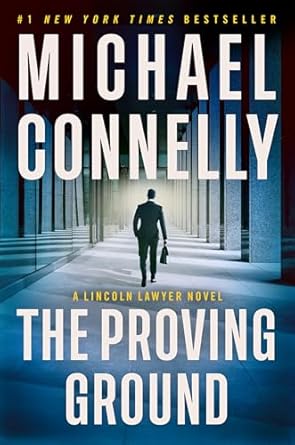
Although the title references the area in front of the jury’s box where the lawyer stands to make his opening and closing arguments, it was also prophetic for me, because with this novel I felt like Connelly proved he could still write a compelling book involving one of his regular characters. But if you are expecting the self-same iteration of Mickey Haller that we have seen in past novels, you might be disappointed.
Mickey had an epiphany that led him out of criminal defense and into civil court practice, this being his first case to actually go to trial. And it’s a big one: A mother is suing a billion-dollar Artificial Intelligence company because the boyfriend of her teenage daughter, under the influence of the company’s chatbot they claim was designed as a companion for teenagers, shot and killed the girl when she broke up with him, after the chatbot told him he should “get rid of her.” So although both gun control and murder are issues, they are not the center of this lawsuit, which is focused on the bigger picture of who should be held responsible. The premise is that the chatbot had faulty input and insufficient guardrails in place, especially when it was ostensibly designed to deal with impressionable young teens who haven’t, themselves, developed a moral compass; tragedy was the result.
I like that Connelly is addressing a current and urgent area of concern by showcasing this courtroom battle that isn’t just about guilt or innocence but about accountability. In so many aspects of our culture now, technology seems to be outpacing ethics in alarming ways, and Connelly has poured extra fuel on the battle over gun control in the United States by taking it to another level. A gun was, once again, too readily available to a teenager (his father kept the gun in the house), and his fantasies of revenge on a girl who “hurt him” (she was alarmed by his internet-driven attitudes and broke up with him) flowered into violence with support from a machine created to interact like a human
support system.
The court persona of Mickey Haller is still front and center: He manages to insert some of his trademark theatrics, although the civil court judge is quicker to reign him in than was normal in criminal court; but underlying the flamboyant drama is dogged research, a constantly evolving strategy, and then ultimately his willingness to gamble everything in the courtroom to get that lynchpin response from a witness that will make his case.
There is a fair amount of both legal-speak and technical discussions about artificial intelligence that might deter some readers. But despite some of those intricacies, this is still courtroom drama, with everything that can ensue—witness intimidation, manipulation of voir dire, attempted bribery, and plenty of dirty tricks from a corporation desperate to be held blameless and to retain control of one of its most lucrative products. Civil court is something of a misnomer here.
There is participation in preparation for the case from another character in the Connelly oeuvre not recently heard from, which was fun. There is also a personal, events-driven aspect to this book, when ex-wife Maggie’s house burns in the Eaton Fire and she moves in with him while waiting on insurance and trying to decide what to do next. Since Mickey made the move from criminal to civil court he has fewer direct clashes with Maggie “McFierce,” now the Los Angeles District Attorney, and obviously hopes that they can reconcile permanently—but that’s left for another day. Some Goodreads reviewers took issue with Connelly setting this at the time of a particular landmark event, since it dates the narrative, but as a Los Angeles resident I liked the local context he always provides.
Although I wasn’t completely in love with the way the book ended, for me this was a satisfying return to Michael Connelly showing what he can do when he’s on his game.
My Year in Books 2025
I managed to read quite a few more books this year than last (95 to 2024’s 66), but I don’t know that I realized much advantage from doing so, beyond just clocking the reading time. My stats, according to Goodreads, were:
95 books
28,425 pages read
Average book length: 346 pages (longest book 908 pages!)
Although I discovered some enjoyable reads, there wasn’t one single book that truly bowled me over or made me immediately check out another book by that author or settle in to read a lengthy series. And most of the books I did like were the lightweight ones that I ended up reading as a sort of relief between the tougher titles. Here’s a list:
The Lost Ticket, by Freya Sampson
The Busybody Book Club, also by Freya Sampson
Vera Wong’s Guide to Snooping (On a Dead Man),
by Jesse Q. Sutanto
Finlay Donovan Digs Her Own Grave, by Elle Cosimano
My favorite science fiction book was The Road to Roswell, by Connie Willis.
My new discovery in YA fantasy, with an intriguing Egyptian-like setting, was His Face is the Sun, by Michelle Jabes Corpora. I look forward to the sequel(s).
I read a few books that were award-winners, or by well-known literary authors, or touted by other readers as amazing reads, but found most of them problematic in some way, and therefore didn’t feel wholeheartedly pleased to have read them. They were:
James, by Percival Everett
The Seven Husbands of Evelyn Hugo, by Taylor Jenkins Reid
Horse, by Geraldine Brooks
The Mare, by Mary Gaitskill
Horse Heaven, by Jane Smiley
Three Days in June, by Anne Tyler
Gentlemen and Players, by Joanne Harris
These have all been reviewed on this blog, so do a search for the title or the author if you want the specifics. None of them received a thumbs-down, but none of them lit up my imagination either.
The most disappointing part of the reading year was the letdown I felt each time I finished the next book in a bestselling series I had previously enjoyed. I read two books by Michael Connelly—The Waiting, and Nightshade—and had a “meh” reaction to both. The Grey Wolf, by Louise Penny, didn’t deliver the characteristic Gamache love, and was filled with tangents and extraneous story lines. Perhaps the least successful (for me, at least) was The Hallmarked Man, by “Robert Gabraith,” aka J. K. Rowling, which was so endlessly convoluted that I felt the need to reread it—but so long, wordy, and unsatisfying that I didn’t! I’m really hoping these authors rally in the new year, but it’s more of a “fingers crossed” than an actual expectation.
Honestly, my best and most sustained reading took place when I got fed up enough to revisit beloved books from decades past by such authors as Rumer Godden, Georgette Heyer, and Charlaine Harris.
Today I am starting on 2026, two days ahead of schedule! Onward, readers!
Last book of the year

My last book of the year was The Secret Christmas Library, by Jenny Colgan, and I almost didn’t read it. I usually love discovering a new Colgan book, especially the ones that take place up in the wilds of Scotland (which this did), but then I found out it was a sequel to last year’s novella The Christmas Book Hunt, which wasn’t one of my favorites because of the exceedingly obnoxious male lead and, sure enough, that character was equally distasteful in this one.
Fortunately, he wasn’t the only guy on the scene for Mirren, the female lead in both, to moon over, but it took about 85 percent of the story to get to the romance. The setting and atmosphere saved it for me, since it took place in a remote rundown castle on a loch, with its own train stop and maze, and had a resident poverty-stricken laird in search of a rare book hidden somewhere in the “pile.”
The major bone I had to pick with this one was the lack of editing and proofreading. I came across at least five misspellings and/or misuses of words, and it was also apparent that neither the author nor the editor had gone back and perused the work for repetition; on the very first page there was a sentence repeated verbatim twice, just two paragraphs apart, and about 30 pages later she used the word “immaculate” to describe three separate things, again all on one page. The overall impression was that this was dashed off to satisfy the holiday market.
Colgan has written many Christmas books (most as sequels to various series), and any of those is preferable.
Molly
I just finished reading Nita Prose’s first two books about Molly the Maid (The Maid and The Mystery Guest) and had planned to read the third, but three other books abruptly became available from my holds list at Los Angeles Public Library, so I’ll be putting that off for a while…or maybe forever?
(I actually thought I had already read these books, but had confused them with The Housemaid series by Freida McFadden. I much preferred these to those.)
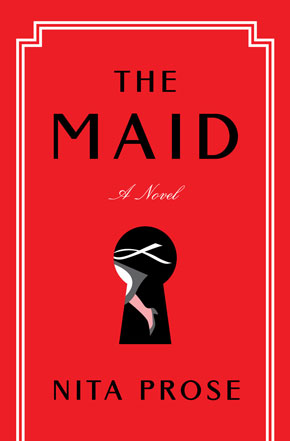

I initially felt positive about the Molly books because I do appreciate and enjoy stories about neurodivergent people; two of my favorites have been Eleanor Oliphant is Completely Fine, by Gail Honeyman, and The Good Sister, by Sally Hepworth. I also liked the Rosie books (actually about genetics professor Don Tillman) by Graeme Simpsion. But I had a few more problems with these books than I had with any of those, and that diminished my enjoyment somewhat.
Most of that was not to do with the character herself, but with how the author wrote other people’s reactions to her, which were both ignorant and cruel. In the other books I mentioned, it was fairly obvious to everyone around these people that they were fundamentally different in their perception of the world, but in the Molly books many of the characters simply treated her as an object to mock and bully rather than understanding that something more was going on, and although I’m sure that may sadly be the case in real life, it felt both too pointed and too oblivious here, and I don’t think that viewpoint added to the story. It came across as if the author felt the need to be heavy-handed in order to ensure that we “got it,” but she had already made her point with her detailing of Molly’s functional attitudes and abilities, so it just became wearying and kind of ugly, and most of the other characters were too stereotypical to be genuinely effective as a foil for Molly.
I find myself overlooking the mystery aspect to these books in my fixation with the characterizations, which is ironic considering that that is how they are presented, genre-wise; I did enjoy the puzzles themselves, which presented good levels of frustration and vindication as they proceeded.
I sort of wish I had written this review in that five minutes after I finished the first book rather than waiting to react to the entire series, because my response was much more about the positive than the negative at that point. I can’t refuse to see the deficits, but I enjoyed the book more in that moment than in retrospect, which is too bad.
Although I found many of the same flaws in the second book, it did have something interesting going for it, in that we got to find out more about Molly as a child, and the history of her grandmother that brought both of them to where they ended up. I liked the flashbacks to the past that explained what was going on in the present, and in some ways preferred the second book because of the greater depth of development. But it couldn’t compete with the initial reaction to Molly that was elicited in the first encounter, so I’d have to say I liked The Maid the best of the two. Perhaps I will read the third at some point and see what has changed.

 The Book Adept