Clandestine

That’s the word most descriptive of the third “episode” in Cynthia Harrod-Eagles’s newish series about the inhabitants of Ashmore Castle. This one is called The Mistress of Ashmore Castle, although I was a bit puzzled, by the end, at the name, since the book seems to divide its attention equally between multiple “actors” without focusing particularly on Kitty, aka the new Lady Stainton.
Lord Stainton, Giles, has rejected the stifling existence at the castle to resume his chosen avocation excavating tombs in Egypt, leaving poor Kitty behind to cope with their young son, the house, and the rest of his family, while longing for him to return. Kitty seems to be the only one in her family-by-marriage (my mother always called them “the outlaws,” which works here) to love the person with whom she is paired; Giles remains enamored of Kitty’s best friend Nina, who is married to the elderly and smitten businessman Joseph Cowling but who returns Giles’s affections. Both must keep their forbidden feelings a secret from their respective spouses and from everyone else; Nina attempts to deflect her energies towards a pursuit of women’s rights, while Giles is reunited in Egypt with Julia, the daughter of an old friend on a previous dig, who was six years old when he met her but is now in the full flower of sultry Italian womanhood. He is enjoying what he thinks is the simple resumption of their friendship, but his attentions may be giving Julia other ideas. (Giles is kind of a dick.)
Meanwhile, Giles’s sister, Rachel, is having her coming-out season in London. Fueled by Kitty’s money, Giles’s mother has thrown a lavish ball for the richly attired and vivacious Rachel, at which she is supposed to fall in love with a suitable suitor and make a marriage; instead, she succumbs to an infatuation for her cousin Angus, who reciprocates her passion despite his father instructing him to propose to Diana, a wealthy heiress. Thus ensues much wailing and angst and a convoluted letter-writing campaign (Angus resides in Scotland) enabled by their sisters’ connivance.
Meanwhile, Giles’s other sister, Alice, still harbors a doomed passion for the hunky woodsman on the Ashmore estate despite his inherent unsuitability; his uncle Sebastian continues his hopeless pursuit of the castle’s seamstress, who loves him but already has a husband somewhere in London; and his brother Richard hasn’t given up on persuading their father’s former mistress to come away with him to Europe, if only he can find the funds to support them both. There is even a romance (of sorts) in the offing for Giles’s formidable mother, Maud, the previous Lady Stainton, who is much affronted by anyone daring to approach her in this way, but is also considering the alternative—no longer ruling the roost of her former home, and collapsing into grandmotherhood—and wondering if a second marriage could be tolerated if enough wealth came along with it.
In short, there is not one truly happy individual in the entire bunch, either above- or below-stairs. And non-romantic drama is also brewing amongst the staff, as Mr. Moss (the butler) suffers a loss that is taken advantage of by the dastardly footman James Hook, who covets money and position and will ruthlessly exploit his position to gain both.
The ins and outs of all the relationships are simultaneously enthralling and exhausting, and while I enjoyed reading this one as much as I did the first two, Ms. Harrod-Eagles has once again dropped the ending amidst multiple cliffhangers, causing me to swear audibly at breakfast when I turned the next page only to find a listing of “other books written by Cynthia Harrod-Eagles.” And once again I have read the latest volume of this series mere days after its release, so a long year of anticipation for the next will again ensue. Sigh.
On an up note, a friend on Facebook just told me that Elly Griffiths has just published the last in her series about archaeologist Ruth Galloway, in which she finally resolves the relationship between Ruth and her baby-daddy, DCI Harry Nelson. Since I hadn’t yet read what turns out to be the next-to-last book, I’m perusing it now, so I can get on to the big finish.
Day for cats
A friend’s post on Facebook reminded me that today is International Cat Day, which I dare not let go by unremarked, lest Gidget do some big-time scolding (at which she is quite proficient!). So here are some titles guaranteed to appeal to readers of various types who are also cat lovers.

MISCELLANEOUS STUFF YOU WON’T WANT TO MISS
The Dalai Lama’s Cat, by David Michie, in which the Tibetan Buddhist leader’s cat offers insights on happiness and meaning.
The Rabbi’s Cat, by Joann Sfar, a graphic novel about a cat who eats the family parrot, gains the ability to speak, and demands a Bar Mitzvah, by a celebrated French comic artist.
James Herriot’s Cat Stories, by, you guessed it, James Herriot! Celebrating his feline friends…
On Cats, by Charles Bukowski, the irreverent and profane poet whose primary subjects of women and booze also apparently expand to include his take on cats.
The Travelling Cat Chronicles, by Hiro Arikawa, in which Nana the cat and her person, Satoru, go on a road trip, for what purpose Nana isn’t quite sure. Be prepared to cry.
The Cat Who Went to Paris, by Peter Gethers, the story of how a Scottish Fold kitten named Norton turned a curmudgeonly cat hater into a compassionate human.
A Street Cat Named Bob: How One Man and His Cat Found Hope on the Streets, by James Bowen. It’s all there in the very long title.
I Could Pee On This, and Other Poems by Cats, by Francesco Marciuliano. From the singular minds of housecats.
Old Possum’s Book of Practical Cats, by T. S. Eliot, in which the author describes cats each by their distinct personality.
The Tribe of Tiger: Cats and Their Culture, by Elizabeth Marshall Thomas, a naturalist and anthropologist who explores the worlds of lions, tigers, pumas, and housecats.

MYSTERIES
The Cat Who… mysteries, by Lilian Jackson Braun, in which a reporter and his cat solve mysteries. First book: The Cat Who Could Read Backwards.
The Mrs. Murphy mysteries, by Rita Mae Brown & Sneaky Pie Brown, in which Mrs. Murphy and her human companion solve mysteries. First book: Wish You Were Here.
The Joe Grey mysteries, by Shirley Rousseau Murphy, in which there are talking cats and also a human who discovers an ability to morph into a cat. First book: Cat on the Edge.
SCIENCE FICTION/HORROR
Catfantastic: Nine Lives and Fifteen Tales, by Andre Norton, editor, in which sci fi and fantasy writers tell tall tales about furry felines. (Short stories.)
The Chanur novels, by C. J. Cherryh, in which a leonine species—the Chanur—take in a human refugee and by so doing threaten the interspecies Compact. First book: The Pride of Chanur.
The Cinder Spires books, by Jim Butcher, in which there are also cat clans and some naval airship action. First book: The Aeronaut’s Windlass.
The Cult of the Cat books, by Zoe Kalo, in which Trinity is left with a dead grandmother and a thousand grieving cats. A sort of Egyptian urban fantasy. First book: Daughter of the Sun.
Pet Sematary, by Stephen King. I always have trouble with the spelling of this one, seeing as how it’s spelled “cemetery.” Hm. But if you like to be scared by revenants, this one’s for you.
FOR SMALL, MEDIUM, AND LARGE CHILDREN:
Millions of Cats, by Wanda Gág, in which a lonely old couple acquires companions. This is known as the original picture book for children.
The Owl and the Pussycat, by Edward Lear. A classic.
Time Cat, by Lloyd Alexander. He can talk, he can time travel…what’s not to like? By the wonderful author of The Prydain Chronicles.
The Fur Person, by May Sarton. Yes, that May Sarton. A charming tale about a Cat About Town who decides to become a Fur Person instead. It could be read as either a children’s book or a novelty book for adults.
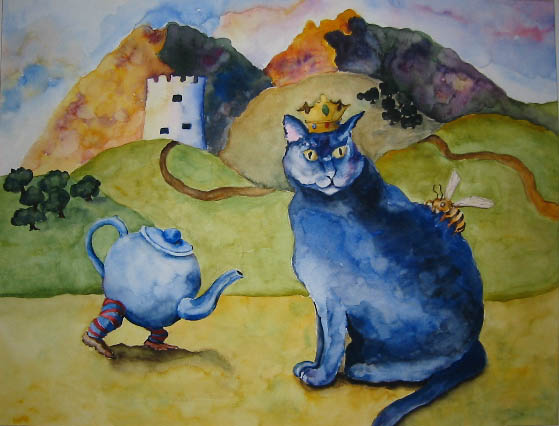
The Warriors books, by Erin Hunter, in which a house cat discovers clans of cats living in the wild in the forest…. First book: Into the Wild.
The Wildings books, by Nilanjana Roy, in which a small band of cats lives in the alleys and ruins of Nizamuddin, an old neighborhood in Delhi, India.
The Feline Wizards series, by Diane Duane, in which feline wizards time travel to avert disasters. First book: The Book of Night with Moon.
Tales of the Barque Cats, by Anne McCaffrey, in which cats are essential members of the crews of space vessels…until an epidemic threatens their extinction.

For many, many more books with or about cats, hit up this gargantuan list on Goodreads of Great Cat Books (1,511).
Invested

How to weigh the investment
I have made in the ongoing relationship that is still not a “relationship” between Cormoran Strike and Robin Ellacott against the increasingly lengthy tomes that, while well written and intriguing, still need the hand of a ruthless editor to bring them in under a thousand pages? It’s a toughie. I refer to the latest by “Robert Galbraith,” aka J. K. Rowling, The Ink Black Heart, #6 in this series, each book anticipated with both excitement and dread.
On the positive side, I love the effortless way she paints a picture of the inner workings of each character, lets us in on what each is thinking, and then shows us how they choose to respond on the outside regardless of their inner conclusions. The understanding of the misunderstandings inherent in human relations is masterful, and never on better display than in the interplay between Cormoran and Robin. This skill carries over to the rest of the characters that inhabit this somewhat sordid world observed by London’s private detectives, and it’s hard not to get caught up in the drama Rowling, er, Galbraith provides.
This particular book assays some formidable subjects. The seamy side of social media is on full display as people in chat rooms and on Twitter grab rumor and turn it into accusations and abuse. Some sincerely believe what they have read and are addressing it, while others are just meanly happy for the drama or are using it to manipulate situations for their own purposes. It’s also a political book, showcasing as it does the use extremists make of naive folk online, and the determined denigration of women by incels and just about everyone else.
The negative side is, well, the page count. The book is more than a thousand pages and, while I am not opposed to a lengthy story, there is something to be said for not turning over every single rock on the beach. This book could have been about 25-30 percent shorter and still been just as (or perhaps more) effective. I also simultaneously applaud the ingenuity of including the chatroom interchanges to thoroughly explore the largely anonymous characters in the game, any one of whom could be a murderer, while also bemoaning how repetitive and lengthy is that back-and-forth documentation. Sheesh!
The basic plot: Two people, Edie and Josh, have created a popular online cartoon, The Ink Black Heart. Two other anonymous parties came along afterwards and made a game (Drek’s Game) to accompany that cartoon, which features all the characters from the cartoon and also hosts chat rooms. There has been hostility between one of the creators of the game (and from his minions who play and enjoy it) and the people who made the original cartoon ever since the female creator, Edie Ledwell, expressed dislike for the game. The trolls have been out in full force, and the level of abuse is toxic. Edie is desperate to find out the identity of the creator, Anomie, who is out to get her, especially because now that the cartoon has gained interest from Netflix and will be made into a film, new rumors and abuse are flying. Edie approaches Robin to try to hire the agency to discover her nemesis, but Cormoran, Robin, and their subcontractors are already overwhelmed with work and Robin turns her away. A few days later, Edie turns up stabbed to death in Highgate Cemetery, the setting where the cartoon takes place. Through another client, Robin and Cormoran are drawn into the investigation to uncover Anomie’s identity, but considering the number of suspects with both motive and affiliation to the dead creators, it will be a long, tedious, and ultimately dangerous search.
Both the suspense and the level of frustration are doubled in this book because not only are they trying to unmask a villain, but—before they are able to do so—they must also unmask all the anonymous online personae.

And speaking of levels of frustration, the growing consciousness between Robin and Cormoran that there is something more to their partnership than friendship and work is definitely still present and ongoing, but I felt like it stalled out significantly in this book. I am beginning to fear that Rowling will drag this out for as long as Elly Griffiths has milked the connection between Ruth Galloway and DCI Harry Nelson in her series, and if Rowling and Griffiths don’t get on with it, their fans are going to start dropping off.
This book won’t cause me to do so, but I would love to say to Rowling, empower both your editor and your romance next time!
Literary fiction
As I get older, read more, and spend a lot of time and energy reviewing what I have read, I am beginning to realize that I am not, despite aspirations, a particularly sophisticated reader. Beyond that, I have recently concluded that I tend not to trust my own reactions when it comes to reading and reviewing books that are deemed “literary” by other critics and/or readers. My priority in my reading life has always been to find and experience good story, but when I am confronted with something that doesn’t feel that way to me, rather than judge the book as being lacking, I judge myself as a reader. I think I am going to aim to change that in future.
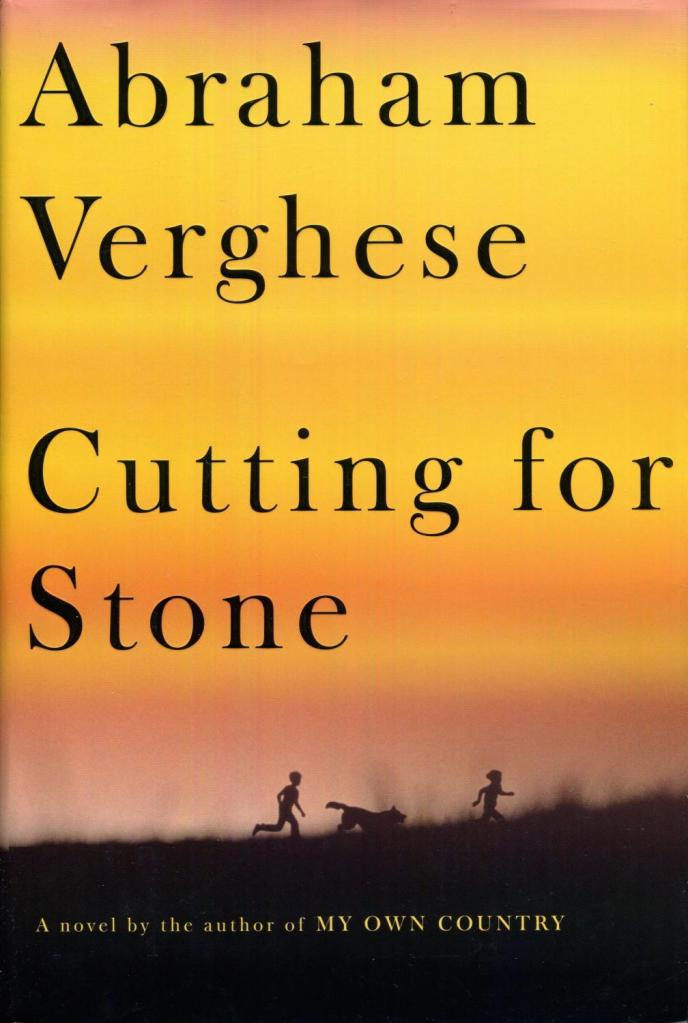
I have experienced this twice in the past six months, and the way I came to realize it was to read others’ extremely perceptive (and much more objective) reviews on Goodreads. I just finished reading Cutting for Stone, by Abraham Verghese, and at some point during its perusal I remarked that I found it nearly as hard going as Demon Copperhead, by Barbara Kingsolver. This observation should have revealed more to me than it did; but it took the remarks of “Ayaz,” on Goodreads, who gave the book a measly two stars (indicative of “it was okay”) to make my thoughts suddenly gel on the whole subject of literary fiction.
First, a description of the book: The protagonist, Marion, is a twin. He and his brother, Shiva, are the offspring of a brilliant but flawed British surgeon and his surgical assistant, a young and extremely devout Indian nun, whose pregnancy is only revealed to her colleagues (including the father) when she goes into labor. Their mother dies and, unable to cope with either the loss of Sister Mary Joseph Praise or the unexpected manifestation of offspring, their father abandons them; the twins are raised by a loving foster family made up of the remaining staff members (and their servants) of the mission hospital in Ethiopia in which they were born. Given the circumstances of their birth and that they are constantly exposed by their foster parents to both talk about and observation of medical procedures, it’s nearly inevitable that the two will grow up to become doctors, although the twins take entirely different paths towards this end. Personal conflicts and political events serve to separate the twins for an extended period, until tragedy reunites them.
I always have high hopes at the beginning of a book that has come recommended for its voice, its story, and/or the quality of its writing. Sometimes, as with Demon Copperhead, I recognize those merits for myself, while nonetheless being somewhat dragged down by both the intensity and longevity. But sometimes, as with Cutting for Stone, I struggle to recognize the merit as I grapple with the completion of the reading.
I’m not saying this is a bad book; although I breathed a small sigh of relief and reduced my rating from five stars to three after coming to certain realizations about my reaction to the book, I still found much to admire. But there were also unacknowledged problems with its narrative that I didn’t trust myself to articulate but that I could plainly see when someone else pointed them out for me.
One observation that resonated was a problem with a sustained development of the characters. When I reviewed Demon Copperhead, I noted that even though the book took me more than a month to read—having put it down for extended intervals to peruse more light-hearted works—I never lost sight of who the characters were, because their portrayal was so strong. With Verghese’s book I came to recognize that part of my frustration that caused me to drag out its completion was that there were certain key characters about whom I wanted to know more, but the author’s promising start in developing them was, over and over again, truncated or abandoned in favor of a sensationalistic denouement in the story as it transitioned from one stage to the next. His female characters are particularly clichéd, but even the men sometimes become indistinguishable one from another because of the similarity of their language, sentiments, and presentation. There were a couple of characters who stood out, but for the most part they were all subsumed by their careers.
Although Verghese is himself a medical doctor, I discovered that having that expertise and perspective were not enough for his descriptions to transport me into the lives of his characters. There were certain compelling moments in the throes of a complex operation that were exciting and involving, but the rest of it felt both clinical and too educational, for want of a better word, for a novel.
The purpose of this book was clearly to illustrate the depth and breadth of the idea of family amongst people who are unrelated but bonded, and although that was, to an extent, achieved, I grew first exasperated with and then bored by Marion’s viewpoint. And although this is ultimately a coming-of-age story like Demon Copperfield, I never perceived from Marion the same quality of voice that carried us from childhood to manhood. There was a certain sameness about the narration that caused it to be more tedious than it should have been.
The part I think I enjoyed most, and where I felt Verghese shone, was in the presentation of Ethiopia as a country and culture, caught up in the politics of change that were sweeping that nation in the upheaval of multiple revolutions. The world-building felt fresh and genuine.
Because of my realization about the sometimes excessive reverence I have for literary fiction, I will freely admit that I may have gone too far the other direction in judging this book. Certainly there are many readers out there who find its language, characters, and story completely compelling and who have freely awarded it top marks. If you still have a desire, after my comments, to read it for yourself, then by all means do so. We are all gripped differently by our reading, and you may agree with many that this is a masterpiece. But as for me, I’m going to try, in future, to tune in better to my innate sense of the quality of the story itself, which is my ultimate criteria, and let that lead me when evaluating any book, literary or otherwise.
Catching up
I have read so very many series that I can’t keep track any more when a new book from one of them comes out, particularly if it’s a writer who is irregular in their production. With Louise Penny, you can always plan on a new Gamache hitting the bookstores somewhere between August and November each and every year, but others (such as Deborah Crombie) produce one so seldom that it’s depressing to go check up on what’s (not) happening.

Cynthia Harrod-Eagles is a fairly prolific writer, especially when one considers she has at least three different series going, and in different genres to boot. I discovered her first as a writer of police procedurals in the Bill Slider mystery series, but she’s more well known for her Morland Dynasty saga, and is now writing a new historical fiction series as well. I found out via my Kindle membership that there was a new Bill Slider, so this week I embarked on a read of #24, Before I Sleep.
The past few Sliders of late have been somewhat uneven, so I was pleased to discover that this was a particularly good one. Slider is tasked by the bumbling but good-natured Detective Superintendent Porson with a missing persons case, even though it’s not in his district and that’s not what he does (he generally solves murders), because word has come down from “on high” that this is a case that needs solving pronto. A woman has disappeared, and her husband is old school chums with the big boss, so Slider, who has an impressive solve rate and is also sometimes tiresome enough for the politicos to want to be rid of him, gets stuck with it. If he solves it, the glory redounds, and if he doesn’t, maybe he loses his job, so there’s a lot on the line.
Felicity Holland is a settled middle-aged woman married to a successful author, with an active social schedule and lots of hobbies and charities. One Tuesday after breakfast, when the husband has gone upstairs to begin his day of writing, she heads out for her weekly pottery class, but according to her husband she didn’t come home that night and hasn’t been heard from since. Being a vague, self-centered guy, he doesn’t remember the name of where she takes the class, has no idea who her after-class lunching friends are, and is basically unable to provide any useful information to the police, but expects immediate results nonetheless. His rather hysterical theory that she has been snatched up by a serial killer is causing him to make himself a nuisance, while Slider and his team have to buckle down to do the plodding police work that will ultimately trace her movements—check the CCTV cameras, the bus passes, the taxi services, talk to her relatives, find her friends, maybe delve a little into her past.
I liked how this evolved from a nuisance case into a legitimate “misspers” and from there to a probable murder mystery. The usual team is on duty, with a few new people added; Porson continues with his malapropisms, now enabled by Slider, who somewhat ironically inserts his own into the conversation to enjoy watching Porson struggle with the thought that what he said just isn’t right. Atherton is quick with the puns, and also has a new, possibly more permanent love interest at last. There’s not a whole lot about Joanna and the family in this one, but enough to keep things going. I figured out a key plot point quite a while before it was revealed, but it didn’t spoil my enjoyment of its revelation at the end. All in all, a satisfying read. Keep them coming, Ms. Harrod-Eagles!
Miscellaneous reads
In general, I try to blog about every book I read, but sometimes either there’s not much to say, or there’s something to be said that isn’t positive, either of which can stop me. But in the interest of an even flow of content…

I read the next book in Dana Stabenow’s Kate Shugak mysteries set in Alaska, and liked it quite as well as the first two, if not more. In Dead in the Water, Kate has to join up as a crew member of a fishing boat in search of expensive and difficult to harvest crabs in the Bering Sea in order to get a handle on a missing persons case she inherited from her former employer, the Anchorage District Attorney. The author’s own youthful experiences on an Alaskan fishing boat inform this volume with a real feel for what the life is like, and taking Kate out of her normal setting and putting her at a disadvantage among strangers ups both the tension and the quality of the storytelling. I will continue with this series anon.

I then picked up a young adult novel, in an attempt to get some new titles onto my “read” list; I will be teaching Young Adult Literature again at UCLA’s library school next spring, and since I retired from my job as a teen librarian I have fallen woefully behind with my reading. Unfortunately, I won’t be recommending The Upside of Falling Down, by Rebekah Crane to anyone. It had an interesting premise—Clementine Haas is the sole survivor of a plane crash, and wakes in a hospital in Ireland with trauma-induced amnesia that stubbornly hangs on for weeks. Her father’s imminent arrival from Chicago to take her home provokes a panicked response as she worries that she won’t recognize him or any part of her life in America, and she runs away, falling in with a kind young man who takes her back to his small Irish village and gives her license to stay there for as long as she needs. And then, of course, stuff happens…
I thought the book was only okay. The characters were all suspect—untrustworthy, and not particularly likeable. The best character in the book was, ironically, neither of the main protagonists; the “mean girl” sister stole every scene in which she appeared. And the events of the last third of the book were just too pat to be either believable or entertaining. Give it a miss. There’s a multitude of better YA novels out there, some of which I will hopefully be reading and reviewing soon.
A book about books

If you, like me, enjoy reading books featuring a bookstore, a library, an author, or, in this case, a bookbinder, you might enjoy the one I just finished—The Echo of Old Books, by Barbara Davis. I last encountered Davis as the author of The Keeper of Happy Endings, which featured another of my passions (Paris), and although that one wasn’t a favorite, it was well written enough that I was willing to give another book of hers a try, particularly given the theme.
Ashlyn Greer is a dealer in rare books, whose small, eclectic New Hampshire shop sits in the front room of her real income-generating activity, the restoration of old or damaged volumes. In addition to doing custom work by request, Ashlyn is constantly on the lookout for some rare find in a remainders box at the local library or thrift shop that she can restore and sell. Ashlyn has a secret gift whose scientific name is psychometry…
the ability to discover facts about an event or person by touching inanimate objects associated with them.”
In Ashlyn’s case, this extrasensory perception is limited to books. She can feel an echo of the owner or reader of the book, if their emotions were strong enough while the book was in their possession.
One day Ashlyn lucks into a find of two beautifully bound books that present something of a mystery: There are no authors listed, nor publishers nor dates, and the books are apparently the story of a doomed romance told from either side, one by the woman, the other by the man involved, each addressing the other in the first person as if writing a long letter. Ashlyn is intrigued by what purpose these books could have served, and overwhelmed by the raw emotion she feels pulsating from both of them.
She starts to investigate the mystery, first by reading the books and then by attempting to find out where they came from before she found them in a box of otherwise worthless donations at her friend Kevin’s store. The dual story takes her back four decades (The Echo of Old Books is set in 1984, and the books in the story were written in 1941) to a love affair between unequal partners—a pampered heiress and a footloose newspaperman—and also leads her to a descendent of one of these lovers, in the course of her quest to get more information.
I really liked the way the book was laid out—the scene-setting in 1984, followed by alternating chapters of the two mystery books and then a new chapter with Ashlyn’s reaction to what she has read. There are powerful themes expressed in the two old books: They explore the growing anti-Semitism amongst some wealthy and influential Americans in the ramp-up to World War II, and also comment extensively on the roles of affluent women, who seemingly had it all but were in fact marriageable chess pieces used by their fathers to capture more wealth and power.
The book was a little long, and the beginning was drawn out to the point where I almost lost interest, but that interest was renewed by some book-binding details and the introduction of an intriguing new character, and I’m glad I kept reading this story about tragic endings and second chances. I will happily add it to my Goodreads list of “books about books.”
Book art
From my whimsical artist friend, Deb Middleton-Hope…

Completist?
My reading habits have changed over the years, partly because I’m not as willing as I was when younger to stick out a book I am not enjoying, and partly because (I like to think) I’ve become a bit less of a control freak. It used to be that if I found an author I liked, I had to read absolutely every book they had ever written, so as to know their complete catalog. I learned that this was sometimes a mistake; it can become disillusioning if you have idealized or even idolized that author to read, for instance, one of their early, less well formed works, or (in the case of some long-time authors) one of the later ones when they quit trying and phoned it in. So I have become more interested in reviews, and I look for red flags to warn me off certain books.
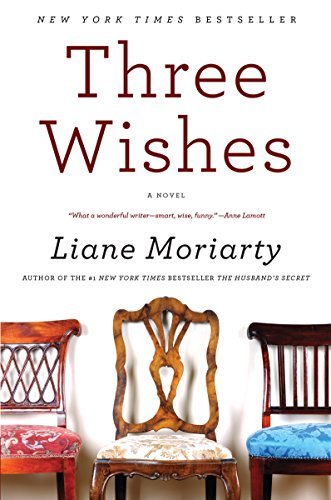
I missed that cue on a book I read lately, and it wasn’t a catastrophe—I enjoyed the book for what it was—but when I belatedly looked it up on Goodreads and found out that Three Wishes was Liane Moriarty’s first novel, I wasn’t surprised.
The book is about the Kettle sisters, Lynn, Cat, and Gemma—
a set of triplets who have just turned 33—and follows the lives of each of them as they confront challenges separately and together. Moriarty also cleverly includes in the narrative some “remote” views of the triplets at various ages from the perspective of outsiders who run into them at the park or see them in a restaurant and then comment about the experience to someone else.
Although I found all the various relationships—between the sisters, with their spouses, children, parents, outsiders—involving, there were a few things not to like about the book, that echoed my response to the early works of another novelist, Jenny Colgan. Whenever I recommend Colgan’s books, which I like very much, I always add hastily, read everything after 2012. That seemed to be a turning point for her, when she quit writing about shallow, artificial, unlikeable characters and started embracing her now-trademark touching, empathetic, and charming ones. I’m not saying she went over the sappy line, just that they quit being actively annoying and started exhibiting positive qualities. That was the main problem I had with Three Wishes: I didn’t much like any of the three sisters, so it was hard to invest and sometimes even to keep reading about them. I also felt like one of them got a raw deal from the other two that didn’t get resolved by the end, and since she was the one with whom I had the most sympathy, that was off-putting.
There’s none of the intrigue or thrill of Big Little Lies or the unexpected plot twist of What Alice Forgot here; it’s a simple relationship novel. (I did prefer it to Nine Perfect Strangers, however!) There’s nothing wrong with that; I have just come to expect a little something extra from Moriarty. But I’d say it’s worth reading, with the words “first novel” always in the back of your mind.
Chefs of the gods
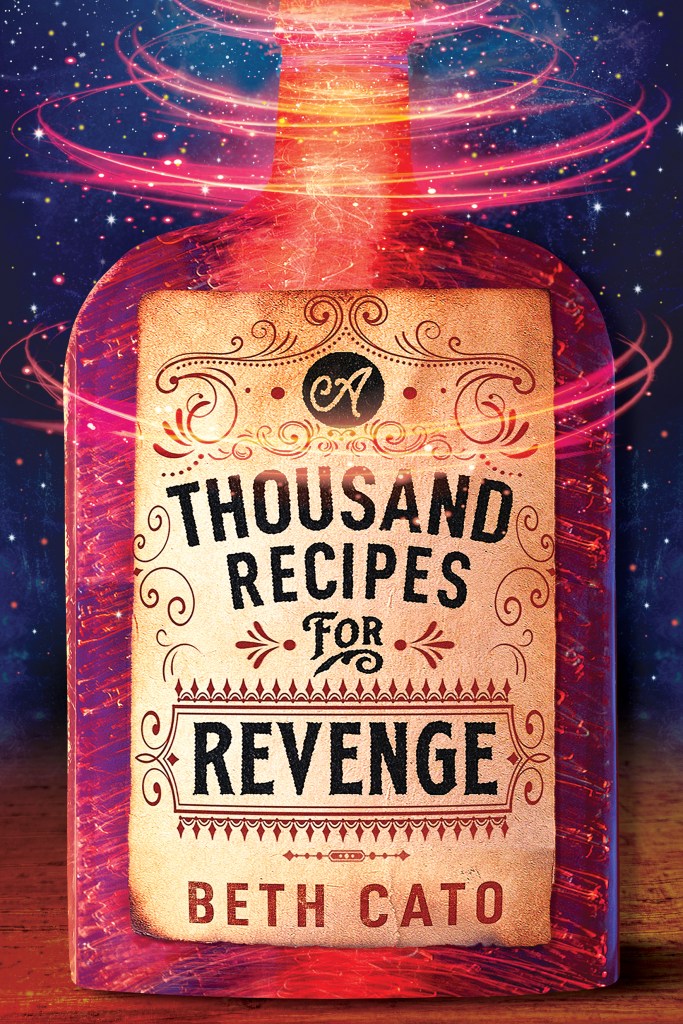
I picked up A Thousand Recipes for Revenge, by Beth Cato, as a bargain book through BookBub. This sometimes indicates that book sales haven’t been that great, but in this case it seems that it was simultaneously published in three formats (paperback, Kindle, and audio book) all on June 1st, so perhaps it was just a promotional gimmick. It’s a fantasy, and as such I found it immediately immersive.
The premise is intriguing: The tag line is “Chefs of the Five Gods #1,” and it’s about people who are born with the special gift of an empathic connection to food and wine—a magical perception of aromas, flavors, and ingredients and, in special cases, the actual ability to intuit what dishes, with what seasonings in kind and quantity, would best please the palate of the diner with whom they are confronted. Needless to say, this ability is highly prized, with the result that while the Chefs, as they are known, are treated like royalty, they are also constrained in their freedom. There are several kingdoms in this story, and in one of them (Verdania) the chefs are “in service” to the gods-ordained rulers of the country, another way to say they are virtual prisoners, not allowed to go elsewhere or work for anyone but the crown. (This is reminiscent of the children born with two different colored eyes and some innate gift in the world of Graceling, by Kristin Cashore.)
The story is told from two points of view, the first being that of Adamantine Garland, who escaped 16 years ago from the position forced upon her, and is living under the radar with her grandmother, both of them rogue Chefs. Since the punishment for abandoning the post of Chef is either death or to lose your tongue (and therefore your gift), they have good reason to take care not to reveal themselves, especially by cooking too well! But circumstances that transpired just before Ada disappeared from the court of Verdania are about to bring her perilously out of hiding.
Solenn is the princess of Braiz, a neighboring land to Verdania, and a marriage has been arranged between her and Verdania’s prince, a 14-year-old boy still more concerned with his friends and amusements than with girls and weddings. It is hoped by the union of these two children and countries that together they will be able to withstand the greater might of another nearby more powerful kingdom, Albion. Something unexpected happens, however, during Solenn’s ceremonious and extended welcome to Verdania—her own magical perceptions awaken (this usually happens at a much younger age), and make her aware that there is a plot by Albion to kill the prince. This unexpected kindling of power (as far as she knows, there are no Chefs in her ancestry) sets in motion several plot twists that will bring together unlikely players in the attempt to save civilization from destructive forces.
I enjoyed the story for several reasons. I liked the world-building: The background felt like a French court from the 17th Century, with musketeers, fancy dress, and court intrigue. But the principle characters who played things out against this backdrop were refreshingly ordinary in their thoughts, actions, and priorities. I liked that there was a wide span of age groups represented in the participants—a few teenagers, some middle-aged adults, and elderly relatives with infirmities that must be regarded. I enjoyed the set-up of the Five Gods of these kingdoms, their various affinities connecting to both food and the greater world (for instance, Selland is associated both with salt and with the sea), and the relationships people maintained with a specific god they considered their patron or guardian. The gods were also refreshingly arbitrary and human in their behavior, which made things more interesting. I enjoyed all the plot twists and, although I’m not sure this was intended as a young adult novel, I felt like this was an example of a book that would appeal equally to teens and to grown-ups who enjoy fantasy. I did not enjoy the somewhat abrupt ending with the realization that I would have to wait for the sequel!
It seems the plan is for the next book to come out in the same three formats next January. This one has been nominated for a Nebula Award, and Beth Cato has apparently also written another duology and a trilogy that I will have to check out. She also has a blog called “Bready or not” (I love a good pun, I used to have a bread-baking business called “Friends in Knead”), and an Instagram page (@catocatsandcheese) featuring gardening, bread, cheese, and cats. I could definitely be friends with this person!

 The Book Adept