Unreliable narrator(s)
Typically, a third-person narrative offers (at best) a picture of objective reality, or at least a world-view that is easily identified as biased in a particular way. But a first-person narrator has no obligation to offer the facts of a recognizable history—that person is free to substitute his or her own perceptions and interpretations, given without third-party corroboration to demonstrate them as accurate. Personal bias is included in those perceptions, but is not recognized by the narrator, who treats his own view as if it is “the truth,” and the reader must then decide whether to believe it.
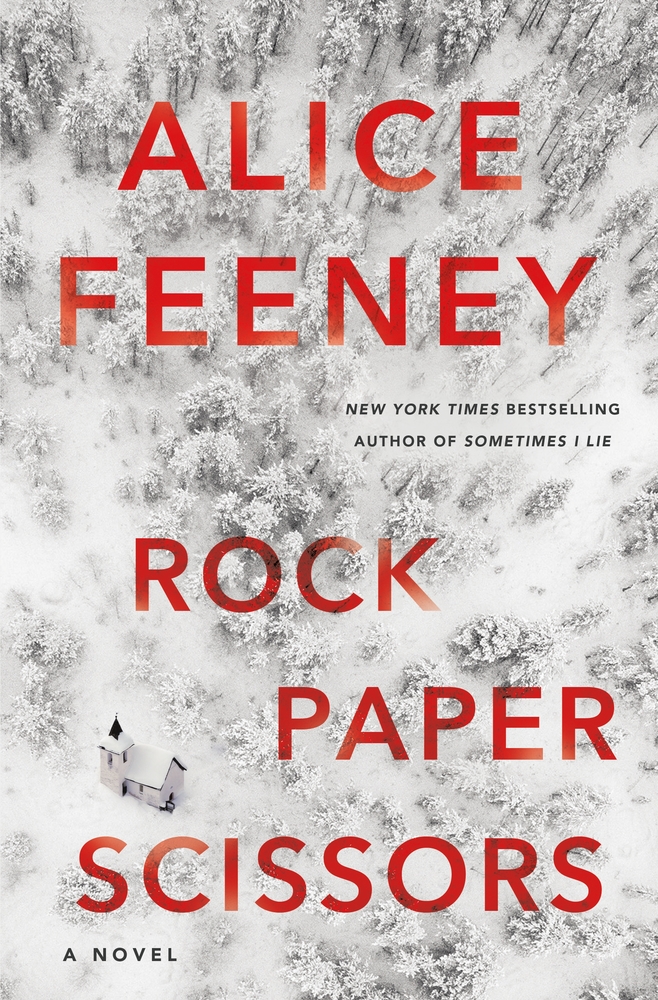
In Alice Feeney’s book Rock Paper Scissors, we have three personal narratives—those of Adam and Amelia Wright, a married couple who are (supposedly at least) both attempting to put their floundering marriage right with the help of a weekend “away,” and also that of a third person who comes along later in the story. The narrative jumps back and forth between Adam and Amelia for the first half or so of the book before broadening to include this third person, and we are serially treated to each character’s view of “the facts” about the other person, the relationship, and their individual and shared back history.
This is a nice set-up for what is supposed to be a rather dark tale of suspense. In a good suspense novel, the protagonists become aware of danger only gradually, with a subtle build influenced by the setting and mood, and with conflict present in every scene. The characters must start out in a state of slight uneasiness that builds to confusion, upset, and perhaps terror. And a good suspense book, of course, builds in a series of reveals or surprises up until the final one, keeping the reader uncertain about the outcome. The whole thing is about what may happen, about anticipation.
The tricky balance to this kind of book—and where Rock Paper Scissors lost me—is the reader’s identification with one or more of the narrators. In a suspense novel, the narrators are by definition unreliable, because that’s how the story arrives at its twists. But just because they are unreliable, does it follow that they must also be unlikeable? Adam Wright is a pompous, self-involved screenwriter with little regard for anything outside the boundaries of his ambition. Amelia Wright, apart from her work at the Battersea Dog Shelter, is equally narcissistic, expecting more from Adam than he is willing or able to give and therefore living in a constant state of disappointment with her life and her marriage. The idea that a weekend alone together in picturesque Scotland, in a converted chapel on the shores of a loch, could fix what’s wrong with these two is laughable. But that’s the scene when the story opens, as the two drive Amelia’s ancient car through a blinding snowstorm trying to reach their destination before they run out of gas or the snow strands them miles from civilization.
From the first page, each is cataloging the negligence, insensitivity, and mean little tricks of the other. By the end of the first couple of chapters I already heartily disliked the both of them, and almost put the book down at the point where they reach their destination, because it seemed like things would just continue to disintegrate. Curiosity about the back story that landed them here kept me going, but I should have listened to my first intuition and stopped reading.
It wasn’t just that Adam and Amelia were so dislikeable; the writing, too, and the pacing of the story were subtly off. The situation at their weekend retreat is purposely amped up to the point where I kept saying “Oh, c’mon!” at regular intervals. There were too many hints from both sides that each knew something that would fatefully impact the other, but the portents seemed too extreme and too abrupt to happen during a weekend in the country; also, the revelations didn’t unfold until so late in the book that I honestly think the author forgot she had inserted some of them, because they just never jelled, provoking an anticlimactic feeling about the entire story. And while the big twists were definitely momentous, given to whom they were happening, I just didn’t care.
Also, I thought the epilogue was idiotic.
I always struggle with whether to write a negative review, especially when it is a book that has been enjoyed and acclaimed by many. This one receives a preponderance of four stars on Goodreads, probably due to the fact that the “twists” are powerful. But the writing was clunky and full of clichés, the pacing alternated between maddeningly slow and overly dramatic for about 50 percent of the book, and the characters seemed flat and boring to me. The worst part was the many ominous hints that never panned out.
So the question for you is, when you are reading a psychological novel of suspense, is it more important to you that the writing, characters, and plot be of a certain quality, or that the author is able to pull off one or more true surprises? I obviously came down on the side of the former, but perhaps most people who are reading suspense appreciate the latter enough to be forgiving about the rest? I am personally feeling a bit disgruntled with Alice Feeney at the moment, because I wish I hadn’t invested the time and attention on her story.
And finally, I just want to say that everyone knows how to win or lose at rock-paper-scissors, so the idea of using it as a decider with someone you know so well that you can predict their response is, well, dumb.
Books about/with books, writers
I picked up a bargain e-book last week, a “relationship fiction” novel by author Susan Mallery. I hadn’t read Mallery before, but she’s quite popular, apparently. Most of her books seem to edge over the line into romance, but some are more story- or character-driven. She has quite a few short series and some stand-alones, one of which I chose from the BookBub E-book Deals that arrive in my inbox each day, because I was drawn in by the title: Boardwalk Bookshop. I am a sucker for any book that includes bookstores, libraries, readers, and writers in its title or content, so it was inevitable.
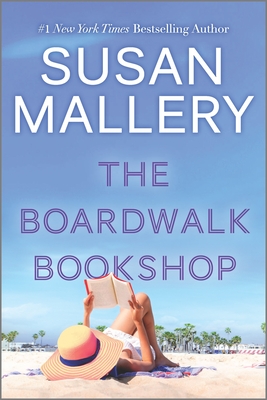
Although supposedly about a bookshop, the store in question is actually one large space divided up into three separate retail establishments (bookstore, bakery, and gift shop) shared by three women who wanted shops on the beachfront but neither needed the larger space nor could afford the price tag on their own. Despite not knowing one another, they impulsively team up to lease the place, installing their three enterprises side by side, each operating independently with their own employees and cash registers but benefitting greatly from the cross traffic of the other two businesses.
Mikki, the gift store owner, is a recently divorced 39-year-old who has two almost-grown children and a comfortable co-parenting arrangement with her ex-husband. Although they have been apart for three years, Mikki has not really moved on; right after the divorce she went on three separate but equally disastrous dates with various partners and gave up. A planned solo trip to Europe has suddenly awakened her to the fact that she could live another 40 or 50 years and doesn’t want to do so alone, but she’s not sure she has it in her to put herself forward again as a single, datable woman, with all the trial-and-error that involves.
Ashley, the baker, is swoonily in love with her live-in boyfriend Seth, who seems like the perfect man and mate except for one large flaw that, when it manifests, throws Ashley for a loop and has her doubting him, herself, and what will ultimately become of their relationship.
Bree, the book purveyor, raised by indifferent, self-involved author parents, met a man equally as brilliant as they were but who seemed to promise what they never gave her—love and a sense of belonging. Instead, he betrayed her rather spectacularly and then died, leaving her a young widow whose walls don’t come down for anyone—even Ashley’s persistently interested brother, Harding (who is also a writer).
The three women, initially bonded over their joint enterprise, slowly become friends and weigh in on each other’s options for romance, personal growth, and more. There is a dynamic, well-fleshed-out cast of secondary characters to interact with them, and the Los Angeles seaside setting is well utilized.
I liked this book, with some reservations: I thought both the narrative and the language could have been more nuanced. I found each of the women in turn to be dithery about her choices and actions. The three kept circling around to the same indecisiveness again and again, and while this may be how real life goes, in a novel it became repetitive and a little irritating. But the growth and change ultimately exhibited by each of them, while uneven, did move along to satisfying conclusions for all, and I mostly enjoyed the reading experience. I could be persuaded to try some other Mallery titles, probably when I am looking for a light, fast read as a palate cleanser between more serious novels.
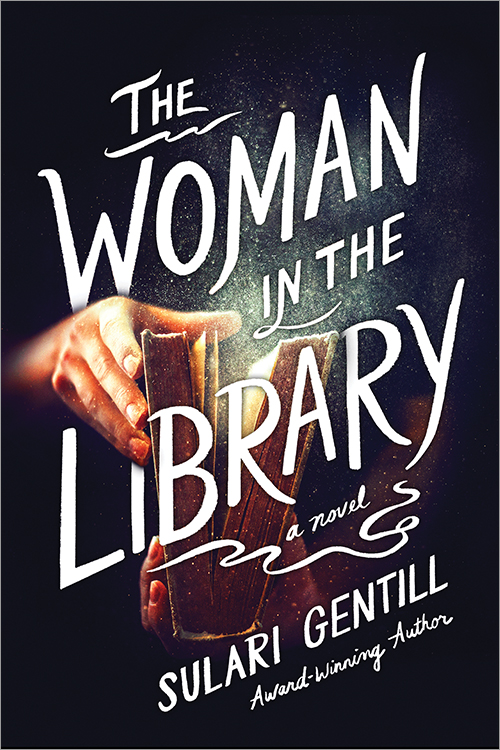
The second book-oriented story I read this week was The Woman in the Library, by Sulari Gentill, and it was a cat of a different color! I don’t remember where I came across this—it might have been on the readers’ Facebook group—but I’m so glad I picked it up, although others were not so happy with it. This is one of those books that (on Goodreads) either gets a five-star exclamation of “Yes!” from its reader, or a one-star “too weird for me.” I fell into the former group, with a few reservations—but mostly I was enthralled.
This book is the ultimate in meta, and the jump between reality and fiction is what kept me reading. The real-life set-up is that an Australian author of mysteries, Hannah Tigone, is writing a novel set in Boston, but she can’t travel from Sydney to do any on-site research due to Covid quarantine restrictions. Enter email pen pal Leo Johnson. Leo is initially introduced as an author trying to get his book published and reaching out to Ms. Tigone, a writer he admires, for suggestions or, preferably, actual assistance with finding an agent. But then Leo moves on to suggest that since he lives in Boston, he can easily assist with on-the-ground research, acting as a beta reader to give her information about locations and also vetting her language, since American slang differs markedly from Australian and it’s easy to slip up (calling a sweater a jumper, for instance) if you’re not paying attention.
After Leo’s initial email, the book moves into Hannah’s writing of her mystery. Her protagonist is Australian Winifred “Freddie” Kincaid, working on her own novel, living in Boston courtesy of the Marriott Scholarship, a writer’s grant that comes with a brownstone in Carrington Square. In the opening, Freddie has gone to the Boston Public Library for the day, planning to work on her book in its famous Reading Room, but is distracted by the three other people sitting at her table. She idly jots down notes on each of them as possible characters—she calls them Handsome Man, Heroic Chin, and Freud Girl—but then all four, along with the rest of the library users, are startled by a terrified scream coming from somewhere nearby. The library is locked down while security searches for the woman who cried out, and the four begin to chat about their immediate circumstance and a little about themselves; when they are released, they decide to go together to get something to eat, and this is the beginning of a four-way friendship.

It becomes harder as you go on to remember that Freddie is not the true protagonist, nor are these others real people—all are a part of Hannah’s story—but at the end of each chapter, the reader is yanked back to that reality by Leo’s comments on the last chapter Hannah has sent to him. Leo becomes increasingly invested in the contents of Hannah’s book, and…but that would be telling, and I have revealed enough. There are two stories here (or are there three?) and their juxtaposition and relation to one another kept me reading to finish this book in 48 hours.
The reservations I mentioned: The pacing wavers here and there, and sometimes the characters are a little flat—not well enough fleshed out. Also, insta-love rears its weary head. But these things didn’t bother me because they are, after all, part of a first draft of a manuscript! Remembering that as you go along makes everything completely believable, because Hannah still has the opportunity to come back and fix or change any of the details.
Hoping you pick this one up and are as delighted by it as I was, rather than falling into the group who considered it “weird.” The truth is, it IS weird and that’s what I liked!
Over the top is okay!
The latest installment of Elle Cosimano’s Finlay Donovan series dropped on January 31st, and I started reading it a few days later when I discovered it on my Kindle (I had prepaid for the e-book dump and then forgotten all about it).
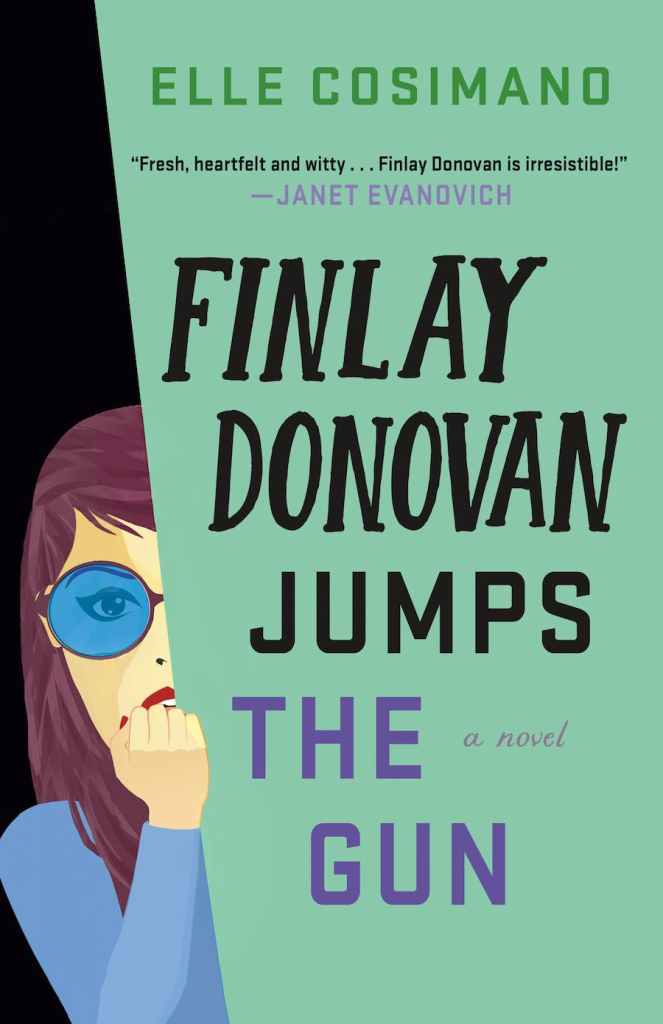
Finlay Donovan Jumps the Gun carries on fairly precisely where the last book left off: Finlay and her sidekick, nanny/ accountant Vero, are indebted to Feliks Zhirov (the local Russian mob boss) for saving them from an embarrassing and dangerous situation, and he (of course) wants something in return. There’s a person called “EasyClean” who is operating online as a paid assassin; Feliks wants to know this person’s identity, and believes that Finlay can deliver that to him. Being impatient (as mob bosses often are, don’t you know), he gives her a two-week deadline, which doesn’t make her one-week time limit with her agent for the final manuscript of her latest novel any easier to achieve, especially since the contents of the book are so close to the circumstances of her personal life that she has run head-on into writer’s block trying to resolve them.
Meanwhile, Vero has a deadline of her own—she’s delinquent on a gambling debt with a loan shark out of Atlantic City, and his enforcers are hot on her heels. What’s the solution? Finlay and Vero decide it’s to enroll in a one-week civilian police academy training. After all, they have come to believe that EasyClean may actually be a cop, so where better to figure it all out than from in amongst ’em? And where else could they be sure that pesky flunkies for the mob won’t be able to touch them? Finlay hands over the kids to Steven for a week, and the two move into the police academy dormitory to see what they can see. And, since it’s Finlay Donovan, chaos immediately ensues. Did I mention that Finlay’s crush, Detective Nick, is running the thing? and that both of his slightly suspicious partners and Finlay’s police officer sister are in attendance? And that the supposedly well-guarded barriers to the facility turn out to be as porous as swiss cheese when it comes to characters, suspicious or otherwise, making their way to the window of Finlay’s room?
In short, this is yet another frenetic flourish of Cosimano’s pen in pursuit of the author/single mom/accidental hit woman, and carries the franchise along nicely. I had been under the impression, for some reason, that this series would be a trilogy, but that’s not the case—this one ended on yet another cliff hanger, ensuring there are more books to come. (If all of this description has intrigued you, read the series in order from the beginning or you will be lost.)
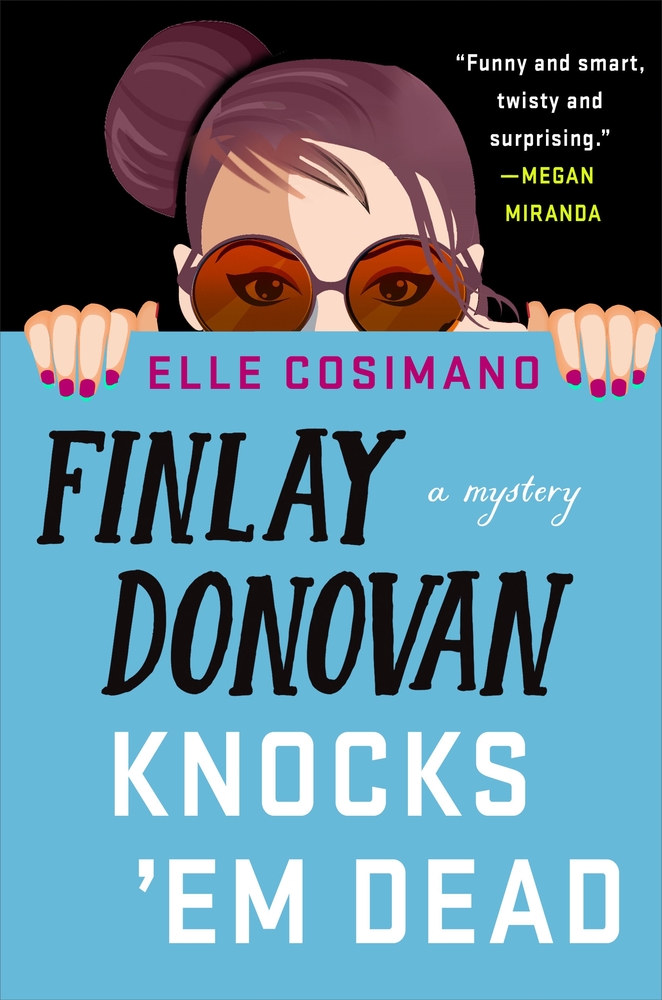
I’m a little torn on my rating for this book. I gave the first one five stars, and the second one got four; I’m tending towards four stars on this one as well. Although it had moments that were totally brilliant (the opening scene with toddler Zach comes to mind), it also had some repetitive stuff (the continued misunderstandings about poor Javi); and the restriction of the scene-setting to the police academy means we miss out on some of the fun interactions with unsuspecting civilians that were so important to the first two books. But I did enjoy the thought processes behind figuring out EasyClean, and Cosimano is an expert at writing the hapless, accidental escalation into total mayhem that feels like Lucy Ricardo has landed in the middle of a murder mystery! I will definitely look forward to the next installment in Finlay’s overwrought journey, particularly the resolution of so many relationships: Will she finally put Steven firmly in his place? Will they ever get Vero out of debt and able to show her face again? Will Finlay be able to have a relationship with Nick without revealing all her (mostly inadvertent) criminal activities? Will Georgia find a girlfriend? Will Zach complete potty training? For these and many other crucial details, we once again await you, Elle Cosimano!
Hiatus, nostalgia, TV
I haven’t published anything here for a while because I started reading Demon Copperhead, the new book from fave author Barbara Kingsolver, and it has been taking forever. I am enjoying the voice of the protagonist and the high quality of her descriptive writing and somewhat quirky scene-setting, but the combination of the length of the book and the depressing quality of the narrative finally got to me at about 83 percent, and I set it aside to take a quick refreshment break.
I re-read two books by Jenny Colgan—Meet Me at the Cupcake Café, and The Loveliest Chocolate Shop in Paris—for their winning combination of positivity, romance, and recipes, and enjoyed them both. My plan was to go back to Kingsolver today, but instead I found myself picking up Dying Fall, the latest Bill Slider mystery by Cynthia Harrod-Eagles, which has been in my pile for months. I will get back to Demon Copperhead at some point, but the mood isn’t yet right.

Meanwhile, Netflix made me happy this weekend, having come out with season one of Lockwood & Co., adapted, partially written, and directed by Joe Cornish, and based on the young adult paranormal mystery series by author Jonathan Stroud. This has been a favorite series of mine since I read book #1 with my middle school book club and eagerly perused all the rest as they emerged from his brain onto the page (there are five books and a short story in it).
The series is set in a parallel world where Britain has been ruled for 50 years by “the Problem”—evil ghosts that roam freely, but can only be dealt with by children and teenagers young enough to be in touch with their perceptive gifts. Adults can be harmed by them but can’t see or even sense them, while the youth still see, hear, and sense their presence and fight them by discovering their “source” (the place or object to which they are attached) and either securing or destroying it.
The mythology seems to have evolved at least partially from faerie, vampire, and werewolf lore: The main weapons are iron chains, silver containers, running water, salt bombs, lavender, and longswords! The ghost-hunting teens are most of them employees operating under the supervision of corporate, adult-run agencies, but Lockwood & Co. is independent of adult supervision. It’s a startup existing on the fringes, run by two teenage boys—Anthony Lockwood, the putative boss and mastermind, skilled sword fighter and ingenious planner, and George Karim, the brainy researcher who provides background for their cases from the city’s archives. The two have advertised for and just recently acquired a girl colleague, Lucy Carlyle, who is new to London and technically unlicensed, but more psychically gifted than anyone they have ever met. This renegade trio is determined not just to operate on their own but to outdo the agency blokes in all their endeavors, so they take risks no adult at the corporations (or at DEPRAC, the Department of Psychical Research and Control) would sanction, in order to gain both notoriety and clients.

Cornish and his colleagues have nicely captured both the flavor of the overwrought atmosphere of beleaguered London and the perilous camaraderie of the principal characters—Lockwood, George, and Lucy—in their series. Season one covers the events from books #1 (The Screaming Staircase) and #2 (The Whispering Skull), so one assumes there will be at least one and perhaps two more seasons, if viewers make it popular enough for renewal. I certainly hope they do! But in case that doesn’t happen (or even if it does), the books are out there, and well worth your attention (and I don’t just mean middle-schoolers!).
Subversive, epic
This week when my Kindle ran out of juice and I wanted something to read before bed, I impulsively picked up a book I have read several times before (although it inexplicably remained uncatalogued on Goodreads): The Terrorists of Irustan, by Louise Marley. I have mentioned it at least twice before on this blog, but after reading it for, I think, the fourth time, I wanted to give it a space of its own, because I think it’s that important.
This book is hard to classify. It is science fiction, set as it is on a planet distant from Earth, colonized for the purposes of mining a precious material (rhodium) that is sold back to the industries on the parent planet; it is also powerfully dystopian; and it is definitely a feminist manifesto.

Lest any of those put you off from reading it, it is also a grippingly told story with powerful scene-setting and characters you won’t easily forget. If none of those themes sounds appealing to you, read it for the story!
The book takes place in the future on a planet that was settled by humans long ago, but the society on Irustan is ruled by the Second Book of the Prophet, and mirrors (and expands upon) the claustrophobic (especially for women) religions of middle eastern countries today. Everything is governed according to this restrictive religion, and as long as the rhodium keeps coming, Earth’s Port Authority on the planet refuses to intervene.
On Irustan, the men dominate every aspect of the culture, while the women remain virtually invisible: They do not appear outside the home without being wrapped head to foot in veils, and may not communicate directly with any man save their husband and the servants of their household, nor be seen by them. They may not own property, drive, or use a wave-phone. Their husbands have complete control over their destinies and those of their children. The highlight of their lives is “Doma Day,” once a week when the husbands all go to the temple and the wives and children are allowed to gather at the homes of their close friends to socialize, trade gossip, and share a meal.
The main character is Zahra IbSada, one of the women on the planet with a tiny portion of independence. In this world of male dominance, there is a strong taboo against even the acknowledgment by men of illness or infirmity, so any kind of medical treatment has to fall to a small group of women (fewer than 100 for the entire population of the planet) who are trained as “medicants.” They are a somewhat poor excuse for doctors, because their training is severely restricted, but they are aided by amazing medical technology from Earth, where machines have been developed that can diagnose illness and provide remedies directly into the bloodstream. The medicants are instructed in the use of these machines and most go no farther in their development as doctors.
Zahra is one such medicant, with better training than most due to the woman with whom she apprenticed, and also because of her own insatiable appetite for medical knowledge. The medicants treat the colonists injured in the rhodium mines, dosing them regularly with a drug therapy that prevents them from contracting a deadly prion disease from inhaling the dust, and also minister to any others who are sick or injured. This gives them an extraordinary knowledge of the private lives of those on their clinic list, and ultimately provokes Zahra to make a controversial personal decision in the course of her duties that will have unexpectedly wide ramifications.
Zahra is aided in this course of action by a Port Authority employee, a longshoreman who is in charge of delivering the medical supplies shipped from Earth to the various women’s clinics. Jing-Li comes from the ghettos of Hong Kong and used a job working for Port Authority as a way to leave Earth without having to go to college or obtain a career that would qualify a person for interplanetary travel, an option that was unavailable to someone from Jing-Li’s social class. The collaboration between the two is slight but powerful, and their fates end up being intertwined as Zahra seeks a way to change the oppressive social structures of her world.
Somewhere in The Handmaid’s Tale, Margaret Atwood comments about how extremist Eastern religions are not that different from extremist Western religions; The Terrorists of Irustan is Louise Marley’s example of a faux Middle Eastern counterpart to Atwood’s book, and I believe should be read with the same attention given to that classic. (And yes, it would make an amazing series as well!)
Atmospheric
For my first two reads of 2023, I chose mysteries set in the Shetlands, by new-to-me author Ann Cleeves. I got Raven Black as a Kindle deal, and then followed up with White Nights. There are six more books in the series. I think I had heard her name before, but had never come across her books, although they are apparently popular—this series, and also her Vera Stanhope books, were both made into TV shows, possibly still accessible via Netflix or other networks (Shetland aired first in 2012, and the Vera Stanhope TV show, with three seasons, is older than that). She started writing a new series, Two Rivers, in 2019.

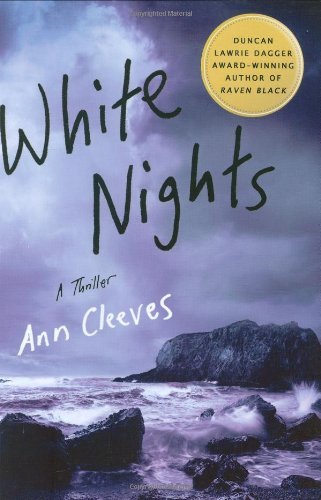
The primary appeal of these novels is location. The Shetland archipelago lies between Orkney, the Faroe Islands, and Norway, and is the northernmost part of the United Kingdom; there are 16 inhabited islands. They used to be owned by Norway, and there is a heavy Norse influence on the population’s culture, including fire festivals and music. They are also known for both the Shetland sheep dog and the Shetland pony, and many of the islands are seabird refuges.
Cleeves has done an excellent job of giving her books a dual atmosphere: There is the free, wild aspect of being so close to nature, buffeted by the elements, with ocean on all sides; and then there is the somewhat claustrophobic experience of living on an island with a small, fixed population where everyone knows everyone else and secrets are hard to keep. All of this plays perfectly into the mysteries she creates—murders and missing persons investigated by a local police officer with assistance from a supervisor transplanted from the mainland.
Detective Inspector Jimmy Perez, descended from a shipwrecked member of the Spanish Armada, is the laconic native son who is responsible for law and order in his small island community. In complete contrast, the impatient, forceful, and fidgety DI Roy Taylor has been sent from Inverness to coordinate when a murder takes place, bringing most of the forensic people along with him by boat or by air. Although the two initially struggle a bit for dominance, since one has both the authority and the overwhelming personality while the other knows the community intimately, they eventually figure out a way to work side by side to discover why and how murder has invaded the Shetlands.
These are not slick, fast-paced mysteries; they are slow-moving, with lots of intricate low-key exploration of the island personalities, and the solutions to the crimes evolve with each revelation rather than yielding an explosive disclosure. They are, to an extent, police procedurals, although the team is small and most of the focus comes from DI Perez. But if you enjoy arriving at a conclusion simultaneously with your “host detective,” you will like these very well. There are also some romantic elements for various characters, Jimmy among them, and lots of beautiful descriptions of the environs. I found them quietly enjoyable and will at some point continue the series.
The books we keep
I live in a pretty small house, and I have a LOT of stuff, including books. I have always hung onto most of my books, but as I am looking to clear out some space, I’m drastically revising what I keep and what I release.
I have:
One bookcase in my studio, which has writing and art books, both how-to and inspirational, plus the books I use to research and teach my UCLA courses. I also have an entire packed shelf of Dover clip-art books from back in the day when you needed to paste down some vector art (or a photostat of same) in order to insert art into your newsletter, flyer, or whatever. Those could go, although I’d probably sit down and scan art from a large number of them, to save on my computer for future projects. Four shelves.
One bookcase in my living room, containing all my gardening and home arts books—architecture, building techniques (such as straw bale construction), interior design, quilting, and some art books that are also garden-related. Four shelves.
One china cabinet/hutch in my bedroom, that contains all my Young Adult Fiction books in the top half. Three shelves.
Three floor-to-almost-ceiling bookshelves, also in the bedroom, that contain all my other books, separated out into science fiction/fantasy, regular fiction, and nonfiction. Six shelves per bookcase = 18 shelves.
And then there are the piles of books—on the kitchen table, the dining room table, two side tables in the living room, the floor of the studio…
I keep accumulating them, but haven’t significantly cleared them out for several decades. Every once in a while I will put together about a box worth of those I didn’t enjoy or simply decided not to read, and give them to the library or to Vietnam Veterans to sell. But since I accumulate at almost the same speed, it hasn’t helped much.
Since the beginning of the pandemic, I have been either checking out or buying many e-books to read on my Kindle, so that has saved some shelf space. But it’s finally time to confront the overflow, eliminate the extraneous, and reorganize the rest tidily on (hopefully fewer) shelves.
My new deciding factor for whether to keep a book is going to be whether I realistically and sincerely believe that I will ever read it again. I have books that I have read multiple times and anticipate going back to a few more; I have books that I have read once and might enjoy reading again; and then there are the books I know I will never revisit.
It’s difficult, sometimes, because of things like sets. I have a complete set of similarly bound books by Elizabeth Goudge that I remember being so thrilled to discover at The Last Bookstore in downtown Los Angeles about three decades ago; but although they look pretty on the shelf, I expect I may reread one at most—I have outgrown my regard for them. So should I let the entire set go? I’m thinking yes, but it gives me a pang. I also have a few gifts from people looking to appeal to my hobby, but…my mom, for instance, never understood the difference between a reader and a collector, so she would go find me some beautiful old first edition of, say, the poems of Longfellow that I admire esthetically for its beautiful cover and ancient pages but will never read. And then there are a few beloved children’s books from my youth that I remember fondly but will probably never read again, and since I don’t have children with whom to share them…what to do?
When I embraced science fiction in my 20s, I collected every single title of such authors as Robert Heinlein, Frank Herbert, and Isaac Asimov, and it’s difficult (and nostalgic) to pick and choose the ones I really like vs. the ones I have just kept because it’s nice to feel like you have the entire oeuvre. But again, if I examine them in terms of what may be a re-read, then I can let go of most.
My hope is that when I box up everything I no longer need and the dust clears, I can actually get rid of one of the three big bookcases in the bedroom, to give me a little more room for other pursuits, like setting up my free-standing painter’s easel in the empty space.
One problem I foresee: When I really examine what’s on the shelves, there are also a number of missing volumes I’d selfishly love to fill in, especially in my young adult fiction collection. Since I worked in a library in the YA section for 11 years, I would mostly check out the books I wanted to read, with the result that I have numerous series for which I only own, say, #1 and #3 out of four books, or the first book but not its sequel. So—do I get rid of all, and simply pick them up from the library should I get the yen to read them? or do I fill in the set? Filling in could have a large impact!
This does seem like a proper task to ponder, initiate, and accomplish at the beginning of a new year. I’ll let you know how it goes…and if you have advice or a fresh perspective for me, feel free to comment!
My year in books

I finished my Goodreads Challenge a week early this year—115 books—and they sent me my stats, so I thought I’d share them, and look back on the things I read this year to see what stood out, what disappointed, and what was engaging but not overly compelling.
First of all, out of those 115 books, the shortest was 78 pages (an “in-between” novella inserted into a series by the author), and the longest was 848 pages. My total number of pages for the year was 37,627—but since I read another book after the challenge was over, I can up that to 38,001 just in time for the new year.

My “most shelved” book (meaning the one more people on Goodreads read than any other on my list) was It Ends With Us, by Colleen Hoover, which was emphatically not a favorite, but got the need to read at least one of her books (to see what the fuss is about) right out of my system. I have actually read two of them (Verity was the other), and that was enough. I am not her people, nor is she mine.

The “least shelved” (meaning, I guess, that no one on Goodreads knows who this author is, at least in this context) was The Affairs of Ashmore Castle, by Cynthia Harrod-Eagles, an author I know primarily for her mystery series featuring British detective Bill Slider (which I love). She is quite well known in her own country for writing a long saga, The Morland Dynasty, which family is established in book #1 during the Wars of the Roses and continues, as far as I can tell—barring any new books—to #35, which takes place between the World Wars in 1931. The Ashmore books are a new series for her.
My average rating over 115 books was 3.8, which seems generous in retrospect, considering that not many of those books were huge stand-outs for me; but I do tend to be kind with ratings except in the few instances when I am not! On Goodreads, the highest rated book that I read was Godsgrave, by Jay Kristoff, which somewhat surprises me; it’s a walloping good tale to which I personally gave five stars, but it’s both an oddball variant of fantasy and also incredibly violent and bloody, so it doesn’t seem like it would escape those to become highest rated. Kristoff’s fans are legion, however, so perhaps that’s the answer.
I only re-read 11 books this year, which is low for me, but belonging to the “What Should I Read Next?” Facebook group has influenced me in the direction of reading more new books and revisiting fewer nostalgia reads. As usual, about a third of my re-reads were by the inimitable Georgette Heyer.
So, let’s get into some specifics. FIVE-STAR STAND-ALONE BOOKS, in no particular order, were:

AKATA WITCH and its sequel, AKATA WARRIOR, by Nnedi Okorafor
MARY JANE, by Jessica Anya Blau (a coming-of-age charmer set in the years of my youth)
WE BEGIN AT THE END, by Chris Whitaker (tragically compelling)
THE ONCE AND FUTURE WITCHES, by Alix E. Harrow
THE TEN THOUSAND DOORS OF JANUARY, also by Alix E. Harrow
BOOK LOVERS, by Emily Henry (turning a trope on its head)
LITTLE SECRETS, by Jennifer Hillier (best suspense/thriller I’ve read in a while!)
JAR OF HEARTS, also by Jennifer Hillier
HOLDING SMOKE, by Elle Cosimano (a re-read of a YA fave)
BIG LIES IN A SMALL TOWN, by Diane Chamberlain
FIVE-STARS that were PART OF A SERIES included:
NEVERNIGHT, by Jay Kristoff (first in an intense science fiction trilogy)
DRAGON AND THIEF, by Timothy Zahn (first in a delightful space opera YA series)
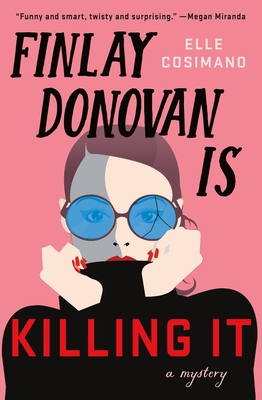
FINLAY DONOVAN IS KILLING IT, by Elle Cosimano (#1 of a trilogy about an author who is mistaken for a contract killer, 3rd book to come out January 31st)
The INTERDEPENDENCY trilogy, by John Scalzi (science fiction that is both thoughtful and humorous)
OTHER BOOKS I particularly enjoyed, even though they had lower ratings, for various reasons:

The ASHMORE CASTLE series (I read the first two books, which is all there are for now), by Cynthia Harrod-Eagles
The CHESAPEAKE BAY SAGA (four books), by Nora Roberts
STATION ELEVEN, by Emily St. John Mandel (love a good dystopian)
MOXIE, by Jennifer Mathieu (YA girl empowerment)
Dervla McTiernan’s stand-alone, THE MURDER RULE
THINGS WE DO IN THE DARK, by Jennifer Hillier
and my last book of the year, RAVEN BLACK, by Ann Cleves, first in her Shetland Island series.
And those are the highlights of my year in reading! I have written/published reviews of all of the books I mentioned here, so if anything piques your interest, go to the search box (“Search this site” at the top right under my logo and description), put in a title or an author, and find out why I called out these favorites.
Interdependency
The empire in John Scalzi’s series by that name takes interdependence to new heights (pardon the pun, it’s set in space). As Wil Wheaton, narrator of the audiobooks, comments, “The Collapsing Empire [first book in the trilogy] works as a wonderful SF tale…but it also has important allegory, metaphor, and commentary on some things that are going on right now, for readers who are open to that sort of thing. For those who aren’t, it doesn’t beat you over the head with it, which is a neat trick.”
The few planets and many human habitats of various construction that are flung across the universe are connected by something called the Flow, which confounds natural physics by providing a river-like network between all the settlements. To use it for travel, spaceships must have a field that creates a “bubble” around them, whereupon they can onramp into the Flow, which carries their ship until they pop out at their destination, days, weeks, or sometimes months later—it’s somewhat predictable, but not reliably so.
The Interdependency has a top-down, static structure of emperox (the non-gendered term for their emperor), noble houses, trade houses, and everybody else. To keep all these widely spaced settlements together and avoid interstellar war, both necessities and luxuries have been assigned to or co-opted by the “houses,” which have monopolies on certain goods and services, for which the other houses trade and bargain, to the extreme that there are built-in fail-safes to ensure no one impinges on the monopolies. For instance, if a particular kind of fruit is sold, one would imagine that the seeds from that fruit could be collected by the buyer and grown elsewhere, thus disrupting the monopoly; but in anticipation of this, the produce has been designed so that the seeds go sterile after a short period of time, preventing anyone else from benefitting. (Don’t ask me how, just go with it.) The monopolies are jealously guarded, and there is a certain amount of jockeying for dominance amongst the nobles, but the empire’s structure is mostly stable, and lends itself to centralized control.
This has all worked for millions of years, barring an occasional assassination of an emperox, or a change in fortune for one of the houses. But all of that is about to change, for the simple and terrifying reason that the Flow has become erratic and, in fact, is about to fail in spectacular fashion, according to one lone physicist on the planet End, the furthest planet in the universe from the Hub, the center of the empire. When it collapses, most of the human habitats will be isolated within their systems and, without the cooperative network of supplies and services set up and supplied by the Interdependency through the Flow, they will fail to support their populations in fairly short order, presenting a stark fate of death by starvation or faltering life support systems.
Compounding this, the emperox who commissioned the physicist to research and report on the Flow has just died and, contrary to his plans and those of one of the other predominant noble houses, his illegitimate daughter, Cardenia Wu, has succeeded to the throne. She is naive, inexperienced, and not a particularly willing heir; but when the physicist sends his son, Marce, from End to the Hub to report the problem with the Flow to the emperox, Cardenia realizes she must rise to the challenge of saving as many as possible of the billions of people dependent on her empire. The noble and trade houses, of course, have other ideas, including eliminating Cardenia and putting one of their own clever but venal people in her place, and saving themselves (and their money, goods, and dominance) first, while leaving the commoners to their fates.
This is the rather long set-up and partial story of The Collapsing Empire, The Consuming Fire, and The Last Emperox.


This has been deemed a “space opera” by many reviewers and readers; I tend to think of space operas as the wild west played out in space, with smuggling, chases, and shoot-em-ups being more prevalent than, say, the thoughtful dissection of an empire into its component parts and the contemplation of what will happen to it, should no one take responsibility. The books definitely have some aspects of space opera, as there is a lot of adventure, multiple coups and assassinations (both attempted and achieved), and various exploding ships (due to both battles and sabotage). But along with all that are some amazing characterizations of both heroic and nefarious figures, along with some truly labyrinthine plotting, so the trilogy is a pleasure to read for both adventure-seekers and philosopher-anthropologists. Along with the clever, sometimes laugh-out-loud triumphs of one character over another, there is also much to consider from both an intellectual and practical viewpoint, with parallels, as Wheaton noted, to many aspects of our own culture’s functionality and possible future.
Scalzi has pulled off a coup, himself, by managing to marry the level of detail contained within his Old Man’s War series with the humor and humanity of his more lighthearted works (such as my favorite, The Android’s Dream). The dialogue is witty, the descriptions are engaging, the world-building is thorough, and the group of main characters who tell the story—the Flow physicist, the new emperox, the trade representative of a major family, and the wannabe traitor—are quirky, endearing, and profane. (If crass language bothers you, this is not the series for you!) I thoroughly enjoyed this three-part story, and couldn’t wait to see what happened.

 The Book Adept