A dark one
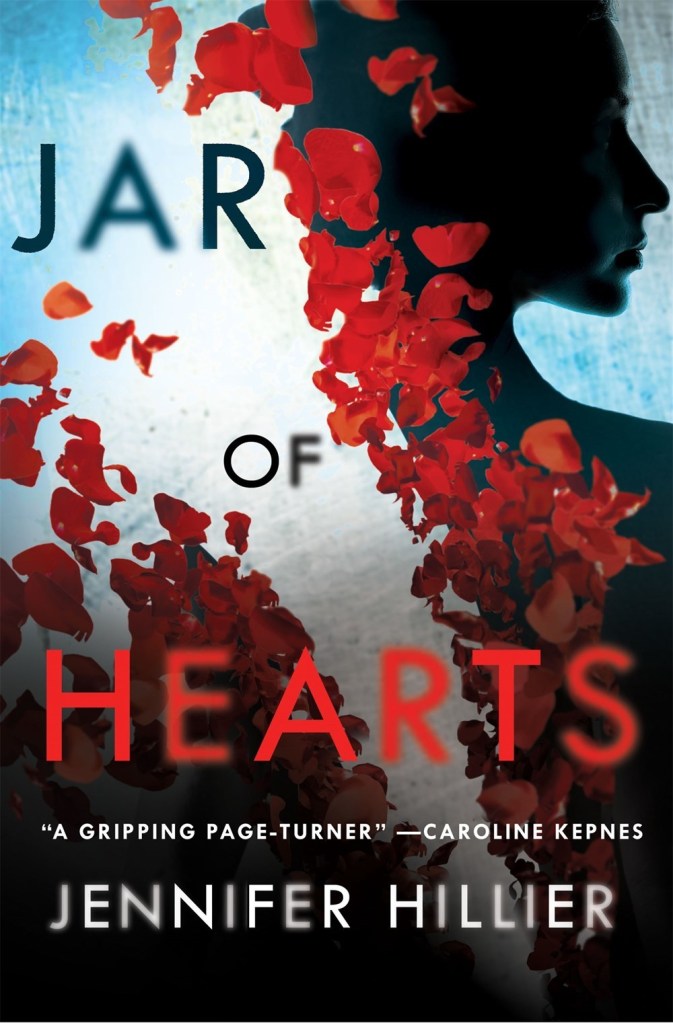
I just finished Jar of Hearts, by Jennifer Hillier, and it definitely lives up to that quote I used two books back about Hillier imagining the worst and then writing about it. Lest you should be taking the title seriously, based on that information, let me reassure you that there is not a jar filled with literal hearts—they are the cinnamon red-hot variety. But if you are a person, like the main character Georgina (nicknamed Geo), who associates tastes or smells with particular events from life and is thus permanently put off from ever enjoying them again, you will probably not be eating red-hot cinnamon candies any time soon. I will say up front that this book is not for the sensitive or squeamish. It is gritty, explicit, and dark. I have a fairly strong stomach when it comes to reading this kind of story and still found it challenging. So now that I have given you the “trigger warning”…
Jar of Hearts is ultimately about three friends: Angela Wong, the popular girl—cheerleader, guy magnet, gorgeous and charismatic; Geo Shaw, the otherwise engaging one whose light is slightly dimmed by keeping company with her best friend, Angela; and Kaiser Brody, who follows in Geo’s wake like a smitten puppy dog. This is who they were in high school; but when this story begins, Angela is 14 years dead, Geo is the star witness (and accused accessory), and Kaiser is the arresting officer of Calvin James, serial killer, Geo’s former boyfriend and the one being tried for Angela’s murder.
This is a book about friendship, obsession, jealousy, and death—but all the assumptions are out the window from the first page. No one is innocent among the interconnected friends and lovers whose actions doom one another to various fates, and although at least two of them would like events from the past to remain buried forever, the others will actively or passively guarantee that’s not going to happen.

The story’s pacing is designed to keep you looking for answers throughout its five parts, with clearly defined jumps from past to present and back again, and new elements to the story that have you second-guessing absolutely everything you know about everyone involved. It explores the question of nature vs. nurture, and highlights the theory of the deficiency of the underdeveloped teenage brain and the psychology behind ideas about compartmentalization and deflection. It is chilling, involving, and more than a little messed up. In other words, Jennifer Hillier delivers again.
Masquerade
Having read others of Sally Hepworth’s books, I have now figured out that they are relationship fiction masquerading as mystery/thriller. That doesn’t make them bad; let’s face it, dysfunctional family drama is always engaging (particularly if it reminds you of your own!). But to market them as thrillers is a little over the top, regardless of the shocking ending on this one.
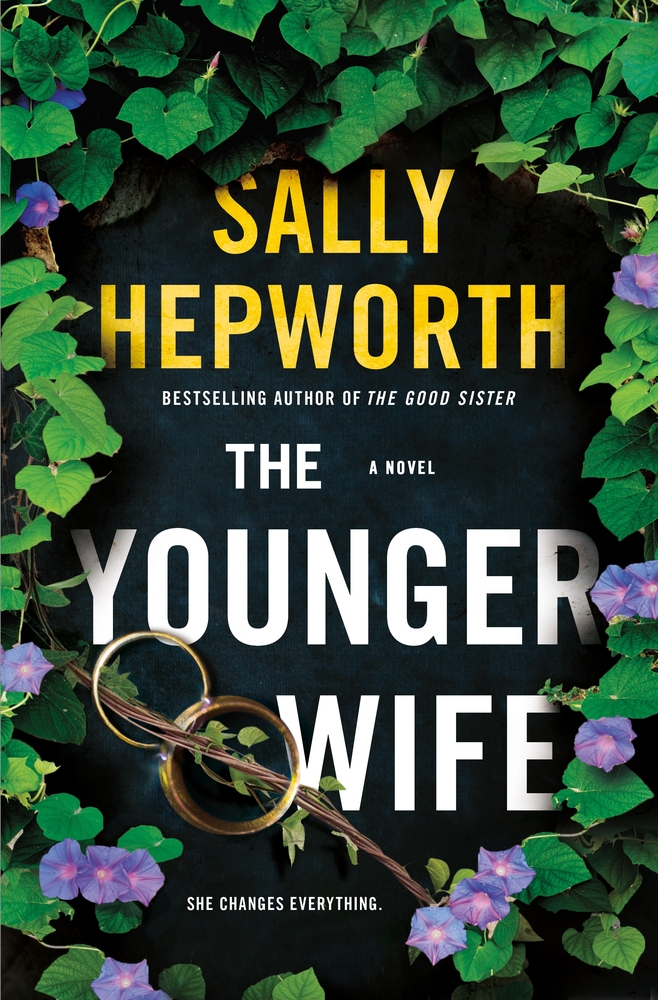
Stephen Aston is a prominent doctor in his 60s, with a wife (Pamela) who is suffering from fairly advanced Alzheimer’s, and has within the past year been moved into a care facility. Early in that same year, Stephen and Pamela had hired Heather (an interior designer) to re-imagine their home, but in light of the fact that Pam will now never enjoy it, the plans were changed midstream, and Heather has instead fitted the house out to Stephen’s specifications. In the process of working together, the two fell into a relationship (are they in love? hm), and have decided to marry—once Stephen divorces his wife.
The book opens on the events of that wedding, which promise some major drama—but we quickly cut away to flash back to the recent past.
The main opening scene is a luncheon at which Stephen announces his intentions to his two daughters, Tully and Rachel, who are both of them older than his new fiancée. Needless to say, neither is thrilled by the prospect of having a stepmother their own age, not to mention having this happen while their mom is still alive. At first, the story is focused on the daughters’ speculations about why this woman even wants to marry their dad, who is 30 years older than she is—his money? his social position? but then things take a turn as we learn about the personal issues Tully and Rachel are already dealing with in their own lives, and the picture expands to include all that extra angst.
Some characters were carefully developed—I thought the daughters and their issues were both unique and fascinating—while the author’s revelations about other people were more circumspect, which worked in some instances and not at all in others. (Fiona! don’t be a stranger!) The secrets were interesting, the hints of bigger doings along the way kept me reading, and the reveals and the ending…well, you’ll have to decide for yourself.
But…to call this a thriller seems a little over the top.
I have so far read five books by Sally Hepworth, and my reactions have been mixed. I loved one (The Good Sister), disliked one (The Mother-in-Law), and was a fan (with some reserves) of the other three (this being one). But just to be clear, regardless of how breathless you become at the revelation of the secrets, my contention is that these are relationship fiction, not thrillers or suspense; they just don’t meet the criteria. So read and enjoy them for what they are (except for The Mother-in-Law, which I thought was fairly dreadful, although I am in the minority), but don’t expect them to be more.
It’s thriller time
I’m not usually an avid reader of thrillers, but after my extremely positive reaction to Jennifer Hillier’s Little Secrets, I wanted to see if she (and I) could repeat the experience, so I checked out Things We Do In the Dark. And although I didn’t love it quite as much (I liked the set-up and characters in Little Secrets better), it turned out to be a similarly riveting read with some fascinating characters, unexpected twists, and a great ending.
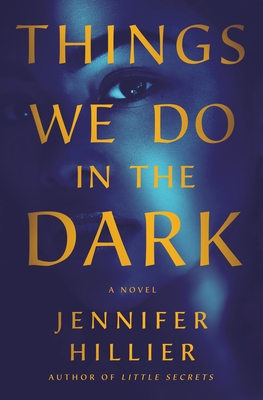
Things look bad for Paris Peralta. She’s been married to a wealthy, successful man more than 30 years her senior for just a few short years, and now he’s dead and she’s been accused of his murder. But as horrifying as this is to Paris (especially since she didn’t do it), it’s not the worst eventuality she is anticipating as a result of all the publicity surrounding Jimmy’s death. Paris has a past full of secrets she doesn’t want exposed, and there is one specific person who knows who she was and what she did. Paris thought she was safe from Ruby Reyes, who was serving a life sentence for committing a murder of her own, 25 years ago, but now Ruby is unexpectedly out of prison early and is all too ready to exploit her knowledge about Paris’s past to get what she wants. And she may not be the only person from back then who is a threat to Paris—having your picture on the cover of every magazine in town when you’re trying to maintain a low profile can be hazardous!
The minute I finished this, I went to the online library to put a hold on the e-book for Hillier’s Jar of Hearts. She has a new fan.
Secrets and twists
It’s been a really long time since I was so riveted by a story that I made a conscious decision to stay up at night until I had finished it. I started Jennifer Hillier’s Little Secrets two days ago, and at bedtime tonight I was at 71 percent (Kindle). At 79 percent and 1:30 a.m., when I probably would have turned out the light on a normal reading night, I got back out of bed, made myself a snack (dinner was a long time back at 6:30 p.m.!), sat down in my chair and kept going. Luckily for me, as happens with Kindle books, the publisher had included a bunch of stuff at the end, including book club questions, author notes, and a preview for her next book, so I only had to read to 90 percent instead of 100. But I would cheerfully have gone that extra 10 percent, after the turns this book took in Part Three.

The book opens with that nightmare of all parents holding their child’s hand in a crowded place—for just one second, struggling to juggle packages and her cell phone, Marin let go of four-year-old Sebastian’s hand in Pike’s Peak Market in Seattle at the height of the Christmas rush. For a few seconds more, she felt him pressed up against her side and then, as she pulled her attention away from her phone and looked around, he was just gone. As is the initial expectation with any mom with a lost kid, she thinks the crowd will open and he’ll be standing there, turning in place, looking for her and panicking a little, and she can sweep him up and reassure him. But he’s not.
Six weeks later, the FBI tells Marin and her husband, Derek, that they have followed every lead and have turned up absolutely nothing new since day one, and that although the case will, of course, remain open, they will now turn their focus to the cases of other missing children. Marin’s response is to attempt suicide. Once she recovers some balance, she decides she will hire a private investigator to keep going with the case; Derek feels it’s a vain effort, so she allows him to believe she has let the P.I. go after a month, but instead she keeps Victoria on the job and, while seeking out some tenuous leads, one of Victoria’s employees spots Derek with a young art student with whom he is apparently having an affair.
Roused from her stupor of despair by a surprisingly strong flash of rage, Marin realizes that she has lost her son, but she’s not going to lose her husband, too; this girl is an enemy with a face, and Marin decides she’s going to fix this problem and keep intact what’s left of her family.
Jennifer Hillier’s author blurb on Goodreads says, “Jennifer Hillier imagines the worst about people and then writes about it.” Boy, does she ever! I kept thinking I was one step ahead and had figured something out, only to be shocked into a delighted exclamation as each secret revealed itself and led to five more. Nine times out of ten, I am disappointed by the latest book lauded for psychological suspense, but this one was definitely an exception. I’m hoping now that her other five books are also exceptional, because I’m headed right for the digital library for Kindle reservations (at 2:30 a.m.)!
Time out for lighter fare
After reading that somewhat grisly dystopian, I have been in the mood for less intensity; I picked up and started reading two separate fantasy books—one a continuation of a series I loved last year, the other a stand-alone quirky one that’s been on my TBR list for a while—and couldn’t get into either one. So I went instead for a combination of relationship reads and light mysteries.

First up was An Island Wedding, #5 in the series of books Jenny Colgan set on the island of Mure, in Scotland. It was lovely to be back with a cast of familiar characters in a magical (not literally, just in terms of pristine scenery) place where I have enjoyed previous stories so much. In this one, Flora and Joel are finally to be wed; but Joel, product of a violent childhood followed by a long line of foster homes, doesn’t seem to “get” what it means to Flora, only daughter of a large and affectionate family and member of an extended community to which she has belonged since birth, to have a traditional wedding. Unmeeting wishes become exacerbated when another “daughter” of the island, a glamorous trend-setter, decides to hold her wedding on Midsummer’s Eve (the same day as Flora’s) at the grand hotel Flora manages, and Flora has to put up with Olivia’s overboard plans while being distinctly underwhelmed by her own. Since it’s Jenny Colgan, you know that it will all work out, but it’s fun to experience it along with your favorites. There is also movement in a side story involving the island’s immigrant doctor and its favorite schoolmistress.
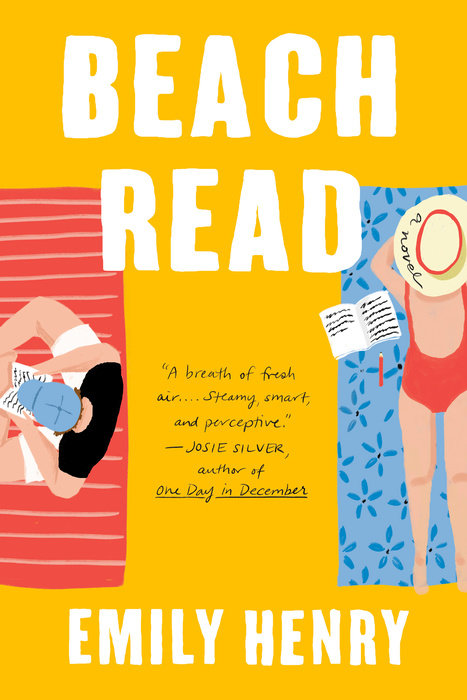
After listening to a student in my readers’ advisory seminar wax poetic about Beach Read, by Emily Henry, in last week’s book-talk for the class, I picked that up and read it one more time, and enjoyed it again by noticing different things this time through. I do have to agree with Taylor, though, that neither the title nor the book cover is appropriate, considering the beach in question is the shore of one of the Great Lakes in Michigan, and it’s mostly too cold to go there for more than 15 minutes! And if the title was meant to reference one of the books that the two author protagonists were writing, that was off base as well. Still a good read, though.
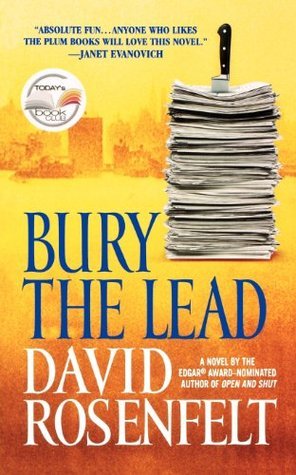
Then I jumped back to the mystery series I started at the recommendation of a librarian friend a few weeks back, and read the next two books in the Andy Carpenter legal thrillers by David Rosenfelt, First Degree and Bury the Lead. I am continuing to enjoy these, despite my initial reluctance to tackle a legal mystery series. As another person on Goodreads commented, Rosenfelt (i.e., his character, Andy) is “quick with a quip,” and I am enjoying the mix of humor, exasperation, frustration, bafflement, and creative thinking that seems to propel him towards the solution of these mysteries. I do wonder how many more books in this series Carpenter can sustain by presenting a defense of SODDIT (“some other dude did it,” acronym made famous by Dismas Hardy)—his clients can’t all be the victims of frame-ups…can they? But so far he has done it well…
Given my preoccupation with the last few weeks of my readers’ advisory class combined with some recent health challenges that make me tend to lose patience with long, intricate narratives, I may keep reading this kind of distracting, pleasurable fare for the rest of this year! We will see if the mood turns…but in the meantime Andy Carpenter #4 (Sudden Death—he’s fond of the sports metaphor) is next on my list.
Dystopian YA

The Grace Year, by Kim Liggett, has been variously compared to The Handmaid’s Tale, The Hunger Games, and Lord of the Flies, by reviewers and readers alike. I can see some parallels: The subjugation of women, with their fixed roles and color-coded hair ribbons, by men who use fear and ignorance to stifle female individuality; pitting the young girls against one another in a contest for supremacy; the artificially created isolation while waiting to see who survives. But this book is both more and less than any of those—more frightening in its depiction of the virulence that comes out when these girls are made to understand (or led to believe) that they will thrive only at the expense of other girls; yet less intense in the sense that the threats they encounter are many of them manufactured, some existing only in their minds. Certainly the relentless bullying of one group by another, and the ganging up of the many on the one, are true to form for all the books.
The story: Garner County is ruled by a strict form of religion, mostly unspecified although pseudo-Christian in some aspects. But there is a magical component that feels like it was introduced directly from the Salem Witch trials: Young girls are believed to have an uncanny set of powers that gradually come to fruition following puberty, and the girls are sent away to live together in isolation in a guarded compound for an entire year when they turn 16, supposedly so they can dissipate their magic into “the wild” and return to the County ready for marriage and motherhood. Their society is ruled by a council of men, and punishment for the flouting of rules includes banishment, stoning, hanging, and death by fire, further perpetuating the Salem reference. It’s baffling that most of the girls will compete so hotly to be a part of such a society, but if you know nothing else and are all too aware of the alternatives (banishment includes prostitution on the outskirts of the county, for instance, and that’s one of the less fatal destinies), it makes more sense.
Tierney James has other plans for herself. She has no desire to wed just to be controlled by man and motherhood, and has calculated that her best bet is to become a field worker, so she can be outdoors and remain as free of constraint as possible. But her hopes are shattered when she is given a veil, the symbol of being claimed by a man as soon as she returns from her “grace year.” This news is likewise unwelcome to other girls in her year who thought they were much more likely to claim one, so Tiffany is set up from the beginning of the year as a victim for bullies and malcontents. Tiffany is, because of her former tomboy ways, better prepared than most to survive in the wilderness to which they are all conveyed, and she soon realizes that the threat to her happiness—and safety, and survival—isn’t the wilderness, the woodland creatures, the poachers, or the guards, it’s the other girls. But she is unprepared for the mad intensity with which she is pursued…
They can call it magic.
THE GRACE YEAR
I can call it madness.
But one thing is certain:
There is no grace here.”
The narrative by Tierney is atmospheric and consuming. The fears of the girls are stoked up to exploding point by the little knowledge they are given, coupled with their dismay upon seeing other groups of girls, greatly decimated in number and also in health and looks, returning to the County from their own grace years. The dread and anticipation are palpable, and the greatest horror is the way the women and girls all act against one another, fueled by misogynistic feelings of insecurity and doubt about their futures. Tierney does her best to combat these knee-jerk reactions and pull some of the girls out of the mob mentality, but her success is sporadic and limited. I don’t want to tell too much about the plot or the individual events or relationships, because it’s something that should be experienced first-hand by the reader, but there are many unexpected twists, especially in the last third of the book, that will keep you guessing to the end.
This book is terrifying enough to qualify as a horror read as well as a dystopian one. (Who decided that a pink cover was appropriate?!) I can’t say it’s exactly enjoyable, because it’s so brutal; but it’s definitely a book you won’t forget, and one that deals in a graphic manner with more subtle currents in society that should be addressed, from stereotypical roles to religion gone awry. I particularly liked that the resolution of the book wasn’t neat and tied up with a bow, but left some room for both despair and hope.
This book came out in 2019, yet seems to be on everyone’s radar now, for some reason. Maybe it’s the delaying effect of the pandemic, or perhaps readers were subconsciously influenced by the attacks on our democracy and personal freedoms to read about this oppressive, unpleasant society as a warning. For whatever reason, you might want to pick it up while enthusiasm is running high.
Fictional Food
I guess that should really be “food in fiction,” because there’s nothing fictional about the food except that it appears in a novel.
Are you one of those readers who has to ration your supply of cozy mysteries because every time the author describes some sumptuous treat in the pages of your book, your tendency is to fetch some to enjoy yourself while reading? It’s all too easy to put on a pound or two if you let fiction be your guide, and the food to which I am specifically referring on this Hallowe’en day is, of course, that treat traditional to Thisby Island, the infamous November cakes created by Maggie Stiefvater for the pages of her book The Scorpio Races.

Every October on the island of Thisby, the capaill uisce, or water horses, emerge from the sea like foam made flesh. The giant horses are a danger to anyone who comes near, being both predatory and carnivorous, but the islanders have a yearly tradition of capturing and training them to run a race along the beach on the first day of November. Winning the Scorpio Races yields both fame and substantial fortune, but the races also take many lives. Katherine (called Puck) has decided to enter her land mare in the races to earn the money to save her home, while Sean Kendrick is competing for the right to buy the water-horse stallion Corr. The two teens, both orphaned by capaill uisce, become both allies and competitors in this race for glory or death.
In the cold and damp that is a Thisby November (think Wales or Ireland climate), there is nothing more welcome than a cup of salted butter tea (thanks, I’ll stick to English Breakfast) and a hot, sweet, buttery November cake. Here is a link to the recipe, created by Maggie. They are not simple to make, nor are they cheap, but they are well worth the trouble. The description from the book:
Finn finds my left hand, opens my fingers, and puts a November cake in my palm. It oozes honey and butter, rivulets of the creamy frosting joining the honey
The Scorpio Races
in the pit of my hand.
It begs to be licked.”
Maggie Stiefvater

If your food plan doesn’t allow for such treats, at the least you can make a yearly tradition of reading The Scorpio Races, one of my favorite books by Maggie Stiefvater and perhaps soon to be one of yours as well.
Reverse the trope
We’ve all read the book or seen the (probably Hallmark) movie: The protagonist is a successful young executive of a major corporation; his assets include a tasteful wardrobe, a midtown rent-controlled loft, a sports car that screams big money with every rev of its engine, and the perfect girlfriend, from the top of her sleek chignon to the tips of her Louboutins. She shows up to work every day at the publishing house or the art gallery, dressed in a pencil skirt and crisp white blouse, manages her business with a firm hand while terrorizing her subordinates, and at the end of the day orders Thai take-out, because she never bothered to learn to cook. Everything in their mutual world seems well ordered and meant-to-be, if a bit regimented.
Then our man is sent by his employer to a picturesque small town, probably to either acquire or shut down some competing business, and while he’s there he meets her: The One. She is the antithesis of everything he thought he wanted—she has long, curly hair, wears sundresses and flip-flops, and is earnest about protecting her home and family from the rapacious big-city villain. Despite apparent incompatibilities, they fall in love, and the young executive suddenly decides that giving up the city for the country, the tense 60-hour work week for the laid-back life of a construction worker/baker/shepherd, is the way to go, if only he can be with his true love.
And of course he is also giving up the city girlfriend, the icily perfect career woman whose urges and drives he once wholeheartedly shared. He pretty much dumps her without compunction, and that’s the last we hear of her in this story, because it’s all about his renaissance as a man of the people living in a one-horse town and making babies with his soul mate.

In Book Lovers, by Emily Henry, Nora Stephens is that woman—a literary agent known as the Shark for her ruthless bargaining on behalf of her clients—and she has been summarily dumped for the country girl not one, not two, but three times. So when her beloved younger sister, Libby, comes up with the idea of a sisters’ vacation, a month’s retreat to Sunshine Falls, North Carolina, Nora acquiesces for the sake of spending time with her sister before Libby is subsumed, yet again, into motherhood with the birth of her third child, but has no illusions about the lure of the small town. She is a city girl, born, bred, and determined to remain.
Libby has other ideas: She has designed the trip as a transformation for Nora, and hopes to lure her away from her business-first attitude to become a more well-rounded person with an actual personal life. (It’s hard to love again after the multiple humiliations, so Nora puts it all into her job.) Libby has visions of Nora picnicking with a hunky country doctor, but instead, almost the first person Nora encounters is Charlie Lastra, a handsome but surly editor who rejected one of her clients’ books a couple of years back, thereby earning Nora’s abiding dislike. What he is doing there in Sunshine Falls is just one of the mysteries Nora finds herself confronting as she tries and fails to find any redeeming qualities about rural bliss. She misses the coziness of her apartment, the sound of car horns, and her Friday night Tom Yum Goong, and nothing is going to keep her from them, beyond this month-long time-out. But Libby (and maybe Charlie) have other ideas about Nora’s fate.
I have to say that I loved this book unreservedly. The clever ploy of turning the cliché upside down and telling the story of the city “girl” who was (repeatedly) left behind was brilliant, but only the first of the twists and turns this story takes as Nora explores the depths of her inner self and makes some surprising but not at all clichéd discoveries. And it certainly didn’t hurt that with protagonists who are a book editor and a literary agent, the story revolved around books. I loved the characters, the setting, and the emotional energy, and wanted to read it all over again the minute I rather hastily finished it (not being able to shut off my Kindle until 2:17 a.m. when I arrived at the last word).
I enjoyed two other books by Emily Henry, but when I reviewed them I used words like “meet-cute” and “feel-good,” and while I extolled the witty banter and the chemistry between the protagonists, I also saw the predictability inherent in those two wish-fulfillment stories. Book Lovers is different—I wouldn’t call it a parody, but it certainly has those moments, and the point isn’t the happily ever after but the acquisition of self knowledge. There is also both banter and romantic sizzle, but they aren’t exactly the point—or at least they are far from being the main or only one.
I don’t always have a lot of respect for either romance or relationship reads in terms of their originality or their ability to hold my attention, but this one was a five-star.
Legal luck
I was talking, this past week, with my Readers’ Advisory students about the peculiarities of mystery fiction, one of them being the prevalence of the series. I’m sure some are saying to themselves, But, fantasy! and yes, other genres, notably fantasy and science fiction, are also heavy on series. The difference is, the series exists in those genres specifically to advance the story, while in mystery fiction that’s not true or, at least, true in a different way.
Mystery readers love their series because they get attached to the protagonist. If you think of some of the series out there that have not just been popular on the page but also on the television or the big screen, it is the character who is the prevalent element around which everything else circles. Harry Bosch, Kinsey Milhone, Walt Longmire, Stephanie Plum—in every case, readers keep reading (or watching) because they find the character compelling. It doesn’t seem to matter so much what the story is, as long as the dynamic and charismatic detective is at the center of it.
For this reason, mystery readers can be more forgiving than readers of some other genres. If the character is one they like and with whom they identify, and if more details are revealed about this character in each subsequent book in the series, mystery readers may go along a book or two or even three further even if the mysteries themselves—the plots—aren’t so great, just because they enjoy the familiarity of the character’s world and person.
This doesn’t mean that mystery readers can’t be hypercritical of a poorly plotted novel—a clumsy reveal, a red herring that doesn’t go anywhere, an epilogue for an ending instead of the direct action that they crave—but they will hang in, hoping for a renaissance of their writer’s story-telling skills, just to be with the character.
I have found myself being a perfect example of this with several mystery series over the years (Elly Griffiths, I’m looking at you), none more obvious than my abandonment of John Lescroart’s legal mysteries that all take place in the courtroom long after the (initial) crime was committed. The masters of this oeuvre are, of course, Grisham and Turow, but Lescroart’s Dismas Hardy definitely held his own until…he didn’t. The first two-thirds of the series was fresh and exciting, starting with #1, Dead Irish; I liked the protagonist, the side characters, and the setting (San Francisco). But after a while I could have written many of the scenes myself, because they were based on and exceedingly repetitive of similar scenes in every single volume. I think I finally gave up at about #17. To give him credit, Lescroart did try to shake things up by going with different characters from the same world (Abe Glitsky, Wyatt Hunt), but since they all worked in the same or adjacent venues that had already been exhaustively portrayed (and ate lunch in the same dismal hole that had been described at excessive length in each and every volume), it just didn’t work, and I gave up on Lescroart.

This soured me for quite a while on the subgenre of legal thrillers itself, but I’m happy to say I may have discovered a new one for which I can muster enthusiasm. I read the first book—Open and Shut—in David Rosenfelt’s Andy Carpenter series, and found it fresh, somewhat humorous, and possessed of a mystery both satisfying and entertaining, so now it’s only incumbent on me to keep reading and see how long it lasts—there appear to be at least 25 more books behind that one.
Open and Shut introduces Andy, a brash young defense attorney whose choice of profession pleases neither his father, a formidable former District Attorney for New Jersey, nor his financially and politically ambitious (and temporarily estranged) wife, Nicole. Then, after asking Andy to take on a seemingly unwinnable appeal for a man on death row who was convicted seven years previous, his father drops dead at a Yankees game, leaving Andy with two puzzles: Why would his dad, who was heavily involved in convicting the guy himself, put Andy in this position; and why did he hide the fact that when he died, his son would be inheriting 22 million dollars? It slowly becomes clear that these two seemingly unrelated facts are somehow tied together; but does Andy really want to know how his father acquired $2 mil almost 37 years ago, but never mentioned it or touched a dime of it for all this time?
Some things I liked about this book: The protagonist, a down-to-earth, pragmatic guy with his share of issues; his associates—sharp (though pessimistic) investigator and potential love interest Laurie; Kevin, who gave up the law to run a laundromat because he was too good to lose and felt guilty no matter who he prosecuted or defended; and of course Andy’s golden retriever, Tara, who is his best friend and tends to garner more attention than most of the humans in Andy’s vicinity.
I liked it well enough to keep reading the series; we’ll see how long it takes for Andy to wear out his welcome.


 The Book Adept