Literary fiction
As I get older, read more, and spend a lot of time and energy reviewing what I have read, I am beginning to realize that I am not, despite aspirations, a particularly sophisticated reader. Beyond that, I have recently concluded that I tend not to trust my own reactions when it comes to reading and reviewing books that are deemed “literary” by other critics and/or readers. My priority in my reading life has always been to find and experience good story, but when I am confronted with something that doesn’t feel that way to me, rather than judge the book as being lacking, I judge myself as a reader. I think I am going to aim to change that in future.
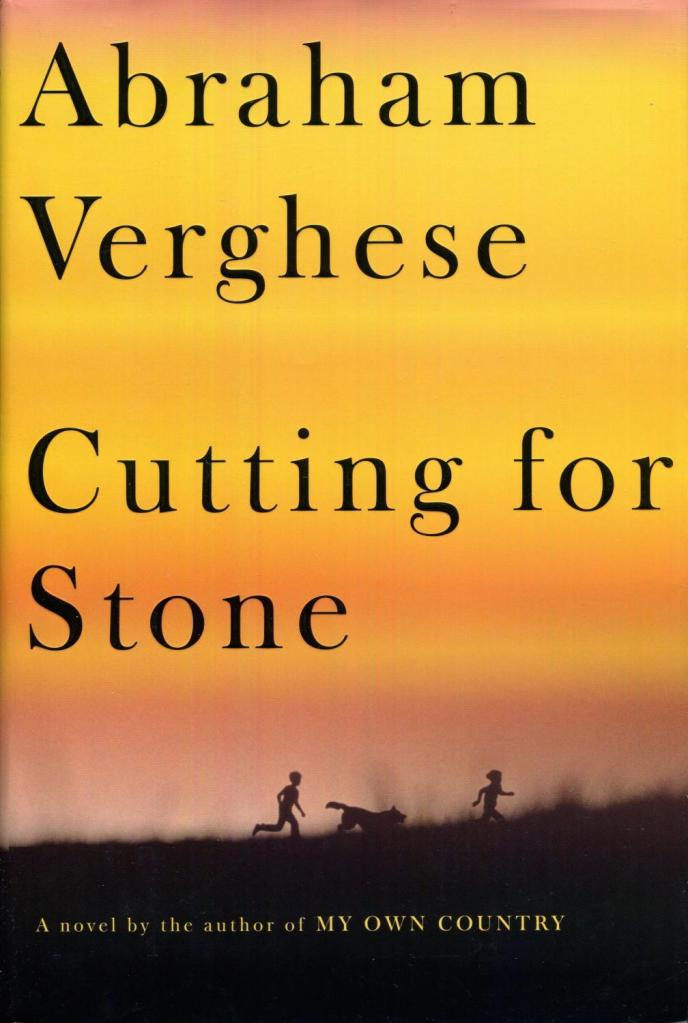
I have experienced this twice in the past six months, and the way I came to realize it was to read others’ extremely perceptive (and much more objective) reviews on Goodreads. I just finished reading Cutting for Stone, by Abraham Verghese, and at some point during its perusal I remarked that I found it nearly as hard going as Demon Copperhead, by Barbara Kingsolver. This observation should have revealed more to me than it did; but it took the remarks of “Ayaz,” on Goodreads, who gave the book a measly two stars (indicative of “it was okay”) to make my thoughts suddenly gel on the whole subject of literary fiction.
First, a description of the book: The protagonist, Marion, is a twin. He and his brother, Shiva, are the offspring of a brilliant but flawed British surgeon and his surgical assistant, a young and extremely devout Indian nun, whose pregnancy is only revealed to her colleagues (including the father) when she goes into labor. Their mother dies and, unable to cope with either the loss of Sister Mary Joseph Praise or the unexpected manifestation of offspring, their father abandons them; the twins are raised by a loving foster family made up of the remaining staff members (and their servants) of the mission hospital in Ethiopia in which they were born. Given the circumstances of their birth and that they are constantly exposed by their foster parents to both talk about and observation of medical procedures, it’s nearly inevitable that the two will grow up to become doctors, although the twins take entirely different paths towards this end. Personal conflicts and political events serve to separate the twins for an extended period, until tragedy reunites them.
I always have high hopes at the beginning of a book that has come recommended for its voice, its story, and/or the quality of its writing. Sometimes, as with Demon Copperhead, I recognize those merits for myself, while nonetheless being somewhat dragged down by both the intensity and longevity. But sometimes, as with Cutting for Stone, I struggle to recognize the merit as I grapple with the completion of the reading.
I’m not saying this is a bad book; although I breathed a small sigh of relief and reduced my rating from five stars to three after coming to certain realizations about my reaction to the book, I still found much to admire. But there were also unacknowledged problems with its narrative that I didn’t trust myself to articulate but that I could plainly see when someone else pointed them out for me.
One observation that resonated was a problem with a sustained development of the characters. When I reviewed Demon Copperhead, I noted that even though the book took me more than a month to read—having put it down for extended intervals to peruse more light-hearted works—I never lost sight of who the characters were, because their portrayal was so strong. With Verghese’s book I came to recognize that part of my frustration that caused me to drag out its completion was that there were certain key characters about whom I wanted to know more, but the author’s promising start in developing them was, over and over again, truncated or abandoned in favor of a sensationalistic denouement in the story as it transitioned from one stage to the next. His female characters are particularly clichéd, but even the men sometimes become indistinguishable one from another because of the similarity of their language, sentiments, and presentation. There were a couple of characters who stood out, but for the most part they were all subsumed by their careers.
Although Verghese is himself a medical doctor, I discovered that having that expertise and perspective were not enough for his descriptions to transport me into the lives of his characters. There were certain compelling moments in the throes of a complex operation that were exciting and involving, but the rest of it felt both clinical and too educational, for want of a better word, for a novel.
The purpose of this book was clearly to illustrate the depth and breadth of the idea of family amongst people who are unrelated but bonded, and although that was, to an extent, achieved, I grew first exasperated with and then bored by Marion’s viewpoint. And although this is ultimately a coming-of-age story like Demon Copperfield, I never perceived from Marion the same quality of voice that carried us from childhood to manhood. There was a certain sameness about the narration that caused it to be more tedious than it should have been.
The part I think I enjoyed most, and where I felt Verghese shone, was in the presentation of Ethiopia as a country and culture, caught up in the politics of change that were sweeping that nation in the upheaval of multiple revolutions. The world-building felt fresh and genuine.
Because of my realization about the sometimes excessive reverence I have for literary fiction, I will freely admit that I may have gone too far the other direction in judging this book. Certainly there are many readers out there who find its language, characters, and story completely compelling and who have freely awarded it top marks. If you still have a desire, after my comments, to read it for yourself, then by all means do so. We are all gripped differently by our reading, and you may agree with many that this is a masterpiece. But as for me, I’m going to try, in future, to tune in better to my innate sense of the quality of the story itself, which is my ultimate criteria, and let that lead me when evaluating any book, literary or otherwise.
Catching up
I have read so very many series that I can’t keep track any more when a new book from one of them comes out, particularly if it’s a writer who is irregular in their production. With Louise Penny, you can always plan on a new Gamache hitting the bookstores somewhere between August and November each and every year, but others (such as Deborah Crombie) produce one so seldom that it’s depressing to go check up on what’s (not) happening.

Cynthia Harrod-Eagles is a fairly prolific writer, especially when one considers she has at least three different series going, and in different genres to boot. I discovered her first as a writer of police procedurals in the Bill Slider mystery series, but she’s more well known for her Morland Dynasty saga, and is now writing a new historical fiction series as well. I found out via my Kindle membership that there was a new Bill Slider, so this week I embarked on a read of #24, Before I Sleep.
The past few Sliders of late have been somewhat uneven, so I was pleased to discover that this was a particularly good one. Slider is tasked by the bumbling but good-natured Detective Superintendent Porson with a missing persons case, even though it’s not in his district and that’s not what he does (he generally solves murders), because word has come down from “on high” that this is a case that needs solving pronto. A woman has disappeared, and her husband is old school chums with the big boss, so Slider, who has an impressive solve rate and is also sometimes tiresome enough for the politicos to want to be rid of him, gets stuck with it. If he solves it, the glory redounds, and if he doesn’t, maybe he loses his job, so there’s a lot on the line.
Felicity Holland is a settled middle-aged woman married to a successful author, with an active social schedule and lots of hobbies and charities. One Tuesday after breakfast, when the husband has gone upstairs to begin his day of writing, she heads out for her weekly pottery class, but according to her husband she didn’t come home that night and hasn’t been heard from since. Being a vague, self-centered guy, he doesn’t remember the name of where she takes the class, has no idea who her after-class lunching friends are, and is basically unable to provide any useful information to the police, but expects immediate results nonetheless. His rather hysterical theory that she has been snatched up by a serial killer is causing him to make himself a nuisance, while Slider and his team have to buckle down to do the plodding police work that will ultimately trace her movements—check the CCTV cameras, the bus passes, the taxi services, talk to her relatives, find her friends, maybe delve a little into her past.
I liked how this evolved from a nuisance case into a legitimate “misspers” and from there to a probable murder mystery. The usual team is on duty, with a few new people added; Porson continues with his malapropisms, now enabled by Slider, who somewhat ironically inserts his own into the conversation to enjoy watching Porson struggle with the thought that what he said just isn’t right. Atherton is quick with the puns, and also has a new, possibly more permanent love interest at last. There’s not a whole lot about Joanna and the family in this one, but enough to keep things going. I figured out a key plot point quite a while before it was revealed, but it didn’t spoil my enjoyment of its revelation at the end. All in all, a satisfying read. Keep them coming, Ms. Harrod-Eagles!
Miscellaneous reads
In general, I try to blog about every book I read, but sometimes either there’s not much to say, or there’s something to be said that isn’t positive, either of which can stop me. But in the interest of an even flow of content…

I read the next book in Dana Stabenow’s Kate Shugak mysteries set in Alaska, and liked it quite as well as the first two, if not more. In Dead in the Water, Kate has to join up as a crew member of a fishing boat in search of expensive and difficult to harvest crabs in the Bering Sea in order to get a handle on a missing persons case she inherited from her former employer, the Anchorage District Attorney. The author’s own youthful experiences on an Alaskan fishing boat inform this volume with a real feel for what the life is like, and taking Kate out of her normal setting and putting her at a disadvantage among strangers ups both the tension and the quality of the storytelling. I will continue with this series anon.

I then picked up a young adult novel, in an attempt to get some new titles onto my “read” list; I will be teaching Young Adult Literature again at UCLA’s library school next spring, and since I retired from my job as a teen librarian I have fallen woefully behind with my reading. Unfortunately, I won’t be recommending The Upside of Falling Down, by Rebekah Crane to anyone. It had an interesting premise—Clementine Haas is the sole survivor of a plane crash, and wakes in a hospital in Ireland with trauma-induced amnesia that stubbornly hangs on for weeks. Her father’s imminent arrival from Chicago to take her home provokes a panicked response as she worries that she won’t recognize him or any part of her life in America, and she runs away, falling in with a kind young man who takes her back to his small Irish village and gives her license to stay there for as long as she needs. And then, of course, stuff happens…
I thought the book was only okay. The characters were all suspect—untrustworthy, and not particularly likeable. The best character in the book was, ironically, neither of the main protagonists; the “mean girl” sister stole every scene in which she appeared. And the events of the last third of the book were just too pat to be either believable or entertaining. Give it a miss. There’s a multitude of better YA novels out there, some of which I will hopefully be reading and reviewing soon.
A book about books

If you, like me, enjoy reading books featuring a bookstore, a library, an author, or, in this case, a bookbinder, you might enjoy the one I just finished—The Echo of Old Books, by Barbara Davis. I last encountered Davis as the author of The Keeper of Happy Endings, which featured another of my passions (Paris), and although that one wasn’t a favorite, it was well written enough that I was willing to give another book of hers a try, particularly given the theme.
Ashlyn Greer is a dealer in rare books, whose small, eclectic New Hampshire shop sits in the front room of her real income-generating activity, the restoration of old or damaged volumes. In addition to doing custom work by request, Ashlyn is constantly on the lookout for some rare find in a remainders box at the local library or thrift shop that she can restore and sell. Ashlyn has a secret gift whose scientific name is psychometry…
the ability to discover facts about an event or person by touching inanimate objects associated with them.”
In Ashlyn’s case, this extrasensory perception is limited to books. She can feel an echo of the owner or reader of the book, if their emotions were strong enough while the book was in their possession.
One day Ashlyn lucks into a find of two beautifully bound books that present something of a mystery: There are no authors listed, nor publishers nor dates, and the books are apparently the story of a doomed romance told from either side, one by the woman, the other by the man involved, each addressing the other in the first person as if writing a long letter. Ashlyn is intrigued by what purpose these books could have served, and overwhelmed by the raw emotion she feels pulsating from both of them.
She starts to investigate the mystery, first by reading the books and then by attempting to find out where they came from before she found them in a box of otherwise worthless donations at her friend Kevin’s store. The dual story takes her back four decades (The Echo of Old Books is set in 1984, and the books in the story were written in 1941) to a love affair between unequal partners—a pampered heiress and a footloose newspaperman—and also leads her to a descendent of one of these lovers, in the course of her quest to get more information.
I really liked the way the book was laid out—the scene-setting in 1984, followed by alternating chapters of the two mystery books and then a new chapter with Ashlyn’s reaction to what she has read. There are powerful themes expressed in the two old books: They explore the growing anti-Semitism amongst some wealthy and influential Americans in the ramp-up to World War II, and also comment extensively on the roles of affluent women, who seemingly had it all but were in fact marriageable chess pieces used by their fathers to capture more wealth and power.
The book was a little long, and the beginning was drawn out to the point where I almost lost interest, but that interest was renewed by some book-binding details and the introduction of an intriguing new character, and I’m glad I kept reading this story about tragic endings and second chances. I will happily add it to my Goodreads list of “books about books.”
Book art
From my whimsical artist friend, Deb Middleton-Hope…

Completist?
My reading habits have changed over the years, partly because I’m not as willing as I was when younger to stick out a book I am not enjoying, and partly because (I like to think) I’ve become a bit less of a control freak. It used to be that if I found an author I liked, I had to read absolutely every book they had ever written, so as to know their complete catalog. I learned that this was sometimes a mistake; it can become disillusioning if you have idealized or even idolized that author to read, for instance, one of their early, less well formed works, or (in the case of some long-time authors) one of the later ones when they quit trying and phoned it in. So I have become more interested in reviews, and I look for red flags to warn me off certain books.
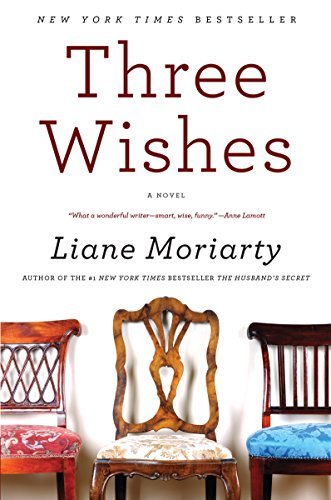
I missed that cue on a book I read lately, and it wasn’t a catastrophe—I enjoyed the book for what it was—but when I belatedly looked it up on Goodreads and found out that Three Wishes was Liane Moriarty’s first novel, I wasn’t surprised.
The book is about the Kettle sisters, Lynn, Cat, and Gemma—
a set of triplets who have just turned 33—and follows the lives of each of them as they confront challenges separately and together. Moriarty also cleverly includes in the narrative some “remote” views of the triplets at various ages from the perspective of outsiders who run into them at the park or see them in a restaurant and then comment about the experience to someone else.
Although I found all the various relationships—between the sisters, with their spouses, children, parents, outsiders—involving, there were a few things not to like about the book, that echoed my response to the early works of another novelist, Jenny Colgan. Whenever I recommend Colgan’s books, which I like very much, I always add hastily, read everything after 2012. That seemed to be a turning point for her, when she quit writing about shallow, artificial, unlikeable characters and started embracing her now-trademark touching, empathetic, and charming ones. I’m not saying she went over the sappy line, just that they quit being actively annoying and started exhibiting positive qualities. That was the main problem I had with Three Wishes: I didn’t much like any of the three sisters, so it was hard to invest and sometimes even to keep reading about them. I also felt like one of them got a raw deal from the other two that didn’t get resolved by the end, and since she was the one with whom I had the most sympathy, that was off-putting.
There’s none of the intrigue or thrill of Big Little Lies or the unexpected plot twist of What Alice Forgot here; it’s a simple relationship novel. (I did prefer it to Nine Perfect Strangers, however!) There’s nothing wrong with that; I have just come to expect a little something extra from Moriarty. But I’d say it’s worth reading, with the words “first novel” always in the back of your mind.
Chefs of the gods
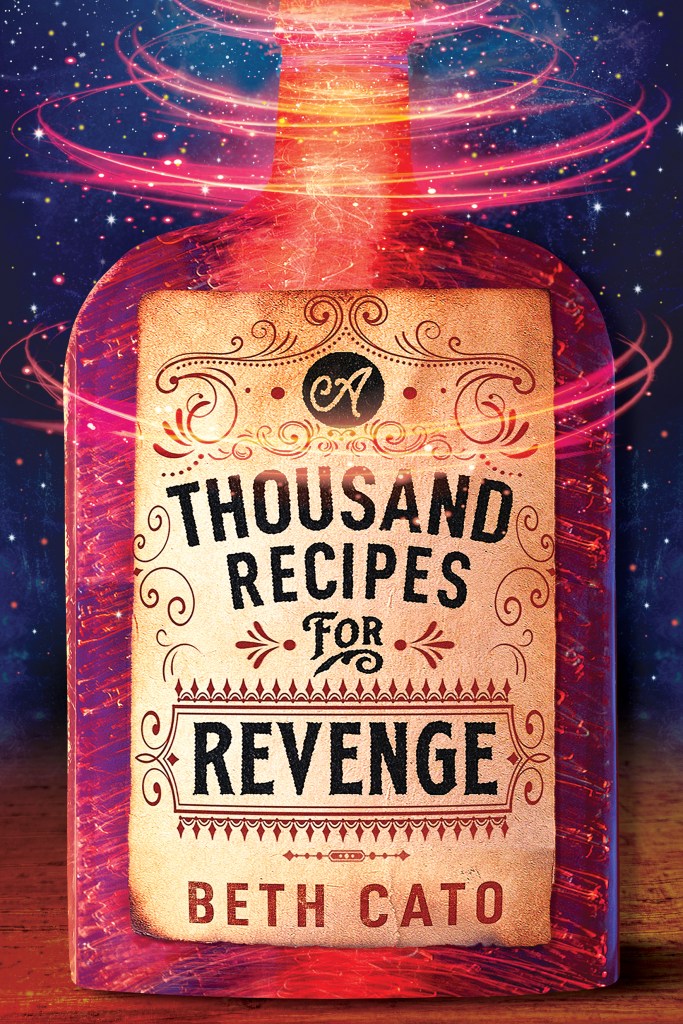
I picked up A Thousand Recipes for Revenge, by Beth Cato, as a bargain book through BookBub. This sometimes indicates that book sales haven’t been that great, but in this case it seems that it was simultaneously published in three formats (paperback, Kindle, and audio book) all on June 1st, so perhaps it was just a promotional gimmick. It’s a fantasy, and as such I found it immediately immersive.
The premise is intriguing: The tag line is “Chefs of the Five Gods #1,” and it’s about people who are born with the special gift of an empathic connection to food and wine—a magical perception of aromas, flavors, and ingredients and, in special cases, the actual ability to intuit what dishes, with what seasonings in kind and quantity, would best please the palate of the diner with whom they are confronted. Needless to say, this ability is highly prized, with the result that while the Chefs, as they are known, are treated like royalty, they are also constrained in their freedom. There are several kingdoms in this story, and in one of them (Verdania) the chefs are “in service” to the gods-ordained rulers of the country, another way to say they are virtual prisoners, not allowed to go elsewhere or work for anyone but the crown. (This is reminiscent of the children born with two different colored eyes and some innate gift in the world of Graceling, by Kristin Cashore.)
The story is told from two points of view, the first being that of Adamantine Garland, who escaped 16 years ago from the position forced upon her, and is living under the radar with her grandmother, both of them rogue Chefs. Since the punishment for abandoning the post of Chef is either death or to lose your tongue (and therefore your gift), they have good reason to take care not to reveal themselves, especially by cooking too well! But circumstances that transpired just before Ada disappeared from the court of Verdania are about to bring her perilously out of hiding.
Solenn is the princess of Braiz, a neighboring land to Verdania, and a marriage has been arranged between her and Verdania’s prince, a 14-year-old boy still more concerned with his friends and amusements than with girls and weddings. It is hoped by the union of these two children and countries that together they will be able to withstand the greater might of another nearby more powerful kingdom, Albion. Something unexpected happens, however, during Solenn’s ceremonious and extended welcome to Verdania—her own magical perceptions awaken (this usually happens at a much younger age), and make her aware that there is a plot by Albion to kill the prince. This unexpected kindling of power (as far as she knows, there are no Chefs in her ancestry) sets in motion several plot twists that will bring together unlikely players in the attempt to save civilization from destructive forces.
I enjoyed the story for several reasons. I liked the world-building: The background felt like a French court from the 17th Century, with musketeers, fancy dress, and court intrigue. But the principle characters who played things out against this backdrop were refreshingly ordinary in their thoughts, actions, and priorities. I liked that there was a wide span of age groups represented in the participants—a few teenagers, some middle-aged adults, and elderly relatives with infirmities that must be regarded. I enjoyed the set-up of the Five Gods of these kingdoms, their various affinities connecting to both food and the greater world (for instance, Selland is associated both with salt and with the sea), and the relationships people maintained with a specific god they considered their patron or guardian. The gods were also refreshingly arbitrary and human in their behavior, which made things more interesting. I enjoyed all the plot twists and, although I’m not sure this was intended as a young adult novel, I felt like this was an example of a book that would appeal equally to teens and to grown-ups who enjoy fantasy. I did not enjoy the somewhat abrupt ending with the realization that I would have to wait for the sequel!
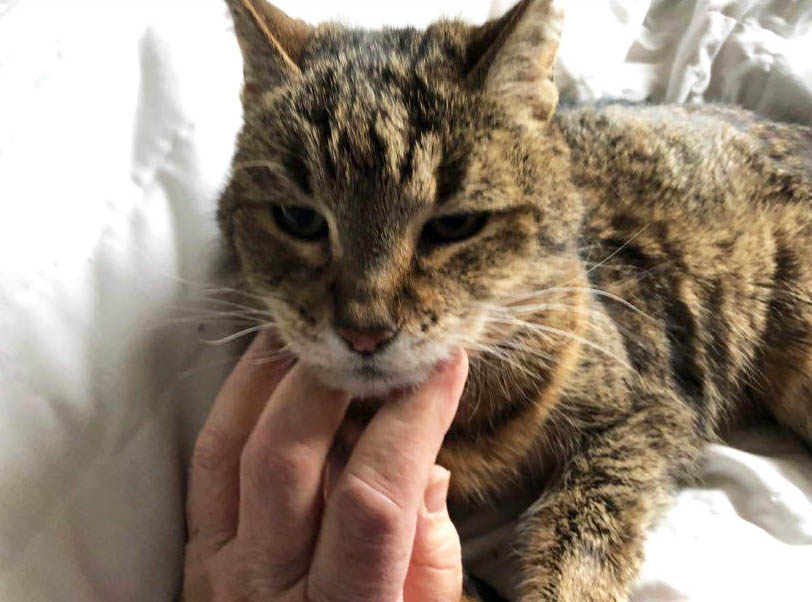
It seems the plan is for the next book to come out in the same three formats next January. This one has been nominated for a Nebula Award, and Beth Cato has apparently also written another duology and a trilogy that I will have to check out. She also has a blog called “Bready or not” (I love a good pun, I used to have a bread-baking business called “Friends in Knead”), and an Instagram page (@catocatsandcheese) featuring gardening, bread, cheese, and cats. I could definitely be friends with this person!
Cozy
I felt the need to read something simple and comforting after my unexpected discovery that Miss Benson’s Beetle was anything but (see previous post), so when someone on the Facebook reading page asked for cozy mystery recommendations, I decided to do likewise and find a new author in a gentler genre.

I ended up with the Julia Bird mysteries by Katie Gayle, beginning with An English Garden Murder. I’m a sucker for anything with small quaint British villages, cottage gardens, and hey, a chocolate labrador puppy named Jake as one of the main characters.
Julia Bird has fled London after a somewhat unexpected retirement from a career as a social worker and an extremely surprising divorce in which her husband Peter leaves her for a garden designer named Christopher. She ends up in a picturesque and cozy cottage in the Cotswolds, and settles into a life she expects to contain no bigger excitement than adding a chicken coop and some laying hens to her backyard potagère. But when the local handyman and his son tear down a garden shed in order to replace it with the coop, they find a dead body buried underneath, apparently for decades. No one in the village (including the police) has a clue who it could be, so Julia decides to do her own investigation, which leads, dismayingly, to another dead body! Oops. Someone in the village has apparently killed twice—is Julia in peril as she moves closer to the truth?
I enjoyed the delineation of the characters in this series quite a bit. They are all individuals, with enough detail given about appearance, mannerisms, and possible agendas that you don’t have to keep reminding yourself who is whom, sometimes a problem when there is a fairly large cast. The scene-setting details likewise gave a complete picture of the surroundings, which is always pleasing. There is, every once in a while, a passage filled with so much detail that it seems over the top—a description, say, of the person’s entire morning routine with all the minutiae included, that has no bearing on the story—but this was a fairly minor flaw in what proved an enjoyable read. So, I went on to the next two books: Murder in the Library, and A Village Fete Murder.


This is when I started to think that I would have done better to seek out a more well known cozy series instead of this trio of quickly turned out (all three within nine months!) books by what turns out to be two authors (Katie and Gayle) working together. Say, the Stephanie Plum books by Janet Evanovich or, hey, Agatha Christie! That’s because each of the next two had almost the identical formula to the first. Julia finds the bodies; Julia can’t resist being a busybody by soliciting local gossip and visiting possible suspects on her own without benefit of police oversight; and her poking around then results in another body because someone has caught on to something as a result of the extra attention, and doesn’t want to be found out. No blame to poor Julia, of course (although some of the villagers have nicknamed her the Grim Reaper).
In the second book, the minute one character confided, in front of three other people, that she needed to talk to Julia about something, I knew she was body #2. In the third, Julia carries on a conversation with the local police officer on her cell phone in a public place, and I knew that someone was listening (wasn’t sure who, but someone) who would benefit from the indiscreet conveyance of important information.
So…while I continued to enjoy both the character creation and the descriptions of both the surroundings and the small-town events, the fact that I had solved the crime a while before Julia in each book was a bit off-putting. If you are a person who enjoys having the advantage in this way, you may really like these books, but as for me, even in a cozy genre I prefer my stories to be more challenging. (There will be a fourth book, but I think I’m done with Julia. But if you are intrigued, it’s called Murder at the Inn, due out in August.)
Quirky?
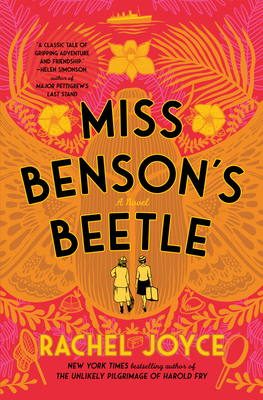
On the strength of enthusiastic comments on What Should I Read Next?, I picked up Miss Benson’s Beetle, by Rachel Joyce. I haven’t read anything by her before, but saw some raves for two of her previous books, and I’m usually a fan of quirky characters—Eleanor Oliphant, Fern Castle, Don Tillman, Leonard Peacock, A. J. Fikry, have all figured on the list of characters’ stories I have enjoyed.
While there were parts of this book in which the characters rose to the level of those, some of the events of the story, paired with uneven character development, made it not quite my cup of tea.
Margery Benson owns a certain level of eccentricity (for instance, in the seminal moment when she steals a pair of lacrosse boots from a fellow teacher), but she is largely too dour and sad to be considered quirky. The assistant she ultimately hires to go with her to New Caledonia in search of the golden beetle is obviously written to up the quirkiness factor exponentially, but Enid Pretty is so frenetically over the top for about 90 percent of the book that rather than being engaging, she just makes you tired. And the story line takes the serendipity one would expect in an offbeat novel and turns it into caricature or farce, with aspects that are simply unbelievable, not to mention contradictory. I know I’m sounding like a curmudgeon here, and perhaps it just wasn’t my week to read this book, but honestly it was all too much.
The story isn’t without its merits; there are some genuinely amusing situations, and also some truly touching moments. The best part about it is the evolution of the friendship between the unlikely adventurers (Margery and Enid), and I would have enjoyed learning more about the two of them, as well as about Gloria, and even Dolly. But there was also a subplot involving a former prisoner of war who became obsessed with and was stalking Miss Benson that I found both unpleasant and unnecessary, and I ended up highly resentful of how this ultimately affected the plot. So while I appreciated the beautiful language Ms. Joyce uses to describe Margery’s experience of the natural world, and really liked the evolution of Margery from a passive, uptight, somewhat frightened person into the take-charge, open individual she becomes, my reaction to the novel as a whole was a little sad with a touch of frustration. Over all, not a particularly pleasant experience.

Misspers
Quite by chance, I ended up reading two books in a row about missing persons. The first was Force of Nature, by Jane Harper, one of her Aaron Falk series, and the second was Liane Moriarty’s latest, Apples Never Fall. I didn’t plan it that way (maybe the library did?), but it made for some fun comparing the two as regards suspense, the form of the narrative, and so on. I enjoy the works of both authors, so it wasn’t really a quality comparison, although they brought different things to the table despite their common theme. They are also both set in Australia, another coincidence? Synchronicity strikes again.
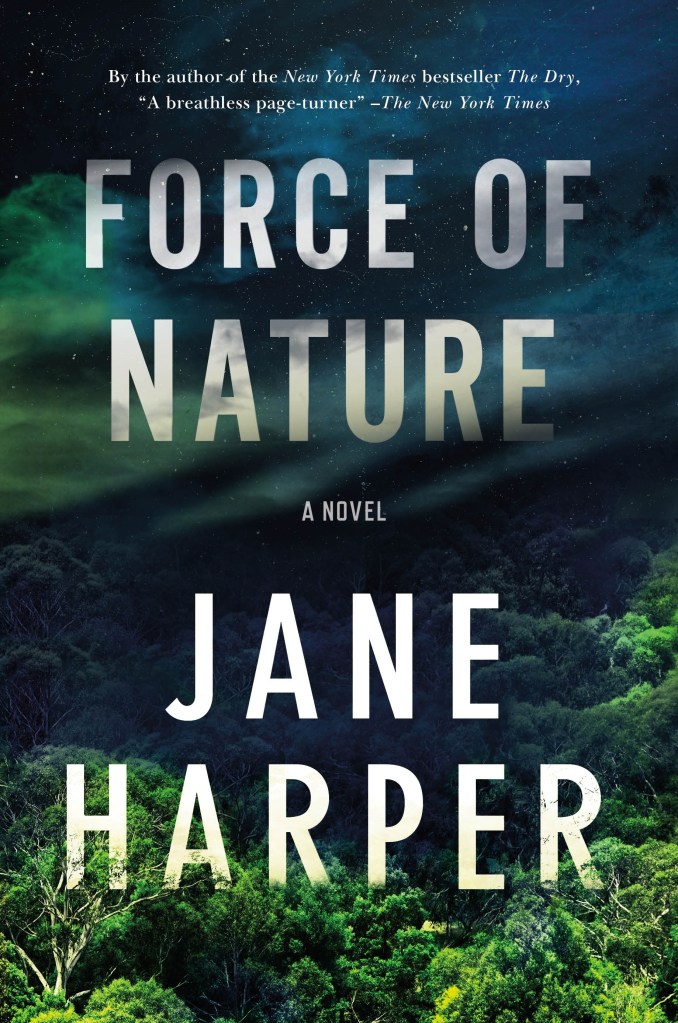
In the first, a company that is secretly being examined by Aaron Falk and his partner for financial crimes sends 10 of its personnel—five men, five women—on a retreat into the wilderness of the Australian bush that is intended as a character-building and bonding exercise. The groups are divided by gender, the men taking one route, the women another. They pack in enough supplies for the first day, and the rest of their food and fuel is stashed for them at two way-stations, each of which they are supposed to reach within a day’s hike. The men successfully complete their retreat and emerge at the expected time, but the women are significantly delayed and, when they do turn up, are exhausted, starving, slightly hysterical, and missing one of their number, Alice Russell. Vague and conflicting accounts are given by the four remaining women and, as the rangers and regular police set up for a comprehensive search of the Giralang range, Federal Police investigator Falk tries to puzzle out whether the missing woman could possibly have met with foul play due to her clandestine connection with his investigation.
I enjoyed the personalities that Harper created—they were both original and yet clichéd in the best manner, in that you could see reflected in them all the characteristics, positive and negative, of the people you yourself might have worked with in a corporate setting—the bully, the ambitious but obsequious assistant, the entitled boss, the low-level couldn’t-care-less data entry clerk, and so on. I also really liked the chemistry and interplay between Aaron Falk and his partner, Carmen. And, as in her novel The Dry, the scene-setting is excellent; you soon feel overwhelmed by the claustrophobic closeness of the trees and the sense that perhaps something is watching from beyond the light of your fire. The book did take a long time to get where it was going, but the jumps from present to past and between multiple narrators/points of view keep it interesting and vibrant. I will continue with this series.

Moriarty’s book is a much more conventional misspers narrative, in that she’s a retired businesswoman and mom from the suburbs. The story opens with a cinematic shot of a deserted bicycle by the side of the road, with a flat front tire and a bunch of apples spilling out of its basket. Then someone comes along and steals the bike, and we realize that a key piece of evidence has just gone missing in a way that guarantees misdirection.
Stan and Joy Delaney, married for 50 years and also partners in a tennis coaching enterprise, have just sold their business and retired, and it’s not going so well. Their four grown children are largely oblivious to this, although certain incidents let them know the marriage is no longer as amicable as they would hope. Then Joy sends the kids a garbled text saying she’s going “off-grid” for a while, and disappears, but Stan doesn’t know anything about where she’s gone or for how long, and has scratches on his face that look like they were inflicted in a struggle. As Joy remains missing day after day with no word and the police seem ever more inclined to look at Stan as their prime suspect in his wife’s disappearance, their children try to come to terms with what they will do if their mother remains missing and if, indeed, their father is the one responsible.
The story is told from a “now” viewpoint and also via a series of flashbacks that cover the past six months or so. Complicating the narrative is the appearance, six months previous, of a stranger—the elfin and bedraggled Savannah—on Stan and Joy’s doorstep, asking for temporary shelter from her abusive boyfriend. The couple welcome her in, but soon her extended stay coupled with her lack of a substantial back story has the Delaney children worried that their kind and gullible parents are being taken in by a grifter.
Moriarty is, as always, a master at creating and developing her characters, and by the end of this you feel like you know each of the Delaneys well enough to predict their actions in any situation. Less predictable is the enigmatic Savannah, and Stan is likewise tough because he holds everything inside and presents a gruff and seemingly uninterested façade to everyone. Although the book probably could have been a bit shorter and still succeeded, I did like the jumping around, as in Harper’s book, from time period to time period and to all the variety of narrators. The one weird thing about the book was its ending, which I should characterize as endings, plural. I read a chapter and the final sentence seemed to put a period on both the scene and the book; then I turned the page to find another chapter, which also seemed conclusive; and this went on for about five more chapters! When the end finally came, it was almost surprising, because Moriarty had dragged it in so many different directions. I found it kind of irritating, but since it also imparted a bunch of information we wouldn’t otherwise have had, I ultimately couldn’t find fault with it, though I feel like it might have been more effective to reveal it all as more a part of the story instead of as a series of addendums, which is how it read. Still, I liked the book a lot, and don’t understand why so many of her readers found it disappointing compared to some of her others. No, it’s not Big Little Lies—but it’s not Nine Perfect Strangers (which I found both weird and unsuccessful) either!


