Light but clever
Looking for a time-out from some of the more intense stories I have been reading lately, I picked up science fiction author John Scalzi’s latest stand-alone, The Kaiju Preservation Society, for some light relief, and it was just the break I needed.
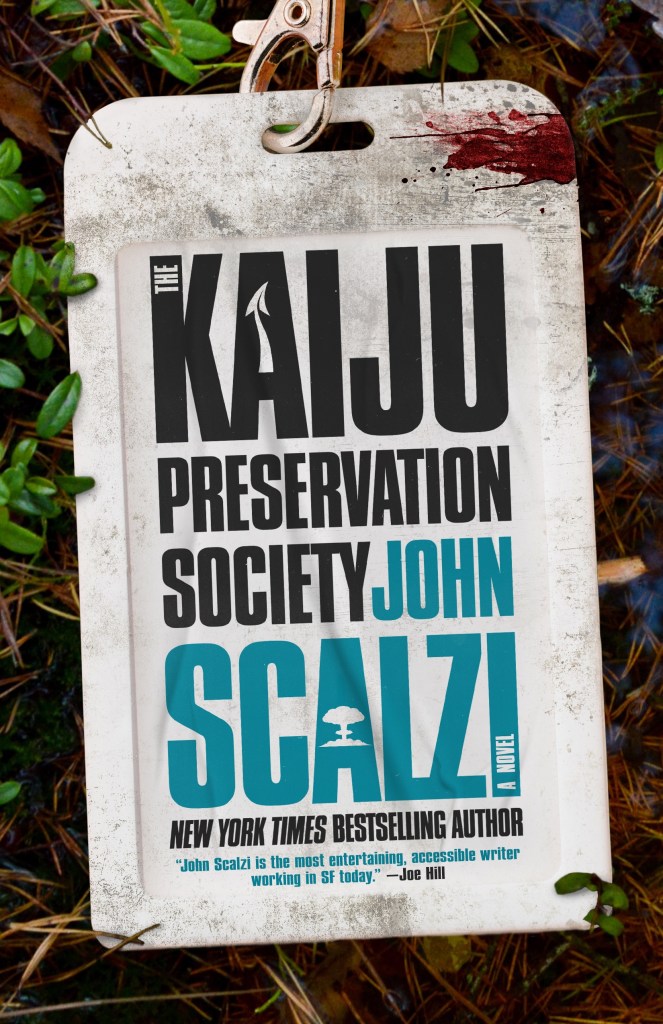
Protagonist Jamie Gray, a mid-level executive of the food delivery service füd-müd (you do get the significance of the umlauts, right?), is laid off during the Covid 19 pandemic with the option to take up a “career” as a delivery driver for that same company—which he does, because there’s nothing else on offer in the closed-door economy. He is saved from this mundane and less-than-lucrative existence when he makes multiple deliveries to a former college classmate, Tom, who solicits Jamie to join his team to work at an “animal rights organization” that is targeted towards “large animals.”
Tom has all the big-brained doctors of various subjects that he needs; what he doesn’t have, due to a last-minute dropout, is someone to do the grunt work of “lifting things,” which Jamie decides is a step up from pizza guy. Tom is a little cagey about the precise details, and Jamie will have to make a six-month commitment, but it still sounds better than what he has going on. So Jamie accepts Tom’s offer, only to discover that the endangered animal actually exists on an Earth that is an alternate, parallel reality to this one, and his job is to help the team keep the animals safely on their side of the border.
The Kaiju are the creatures who served as models for the movie monster Godzilla, and they’re not just big and hangry, they also happen to carry the capacity for nuclear explosions in their guts. Naturally, there are people in our Earth reality who are wanting to exploit this, and it’s the team’s mandate to protect “the universe’s largest and most dangerous panda.”
“KPS is not, and I say this with absolutely no slight intended, a brooding symphony of a novel. It’s a pop song. It’s meant to be light and catchy, with three minutes of hooks and choruses for you to sing along with, and then you’re done and you go on with your day, hopefully with a smile on your face.”
— Scalzi’s Author’s Note.
This book is every bit as goofy as it sounds, and the suspension of disbelief is gigantic, but it’s also witty, clever, and surprisingly relevant, with great world-building, a diverse cast, some fun science talk, and a lot of entertaining banter as a counterpoint to the crapfest that was the height of the pandemic. Finally, it was refreshing, in our current context, to have the rich and entitled tool of a bad guy get his comeuppance in several ways (minor spoiler). One Goodreads reviewer described this book as “Guardians of the Galaxy meets Jurassic Park,” and that’s a pretty solid vision of this cathartic distraction.

It’s not my favorite stand-alone by Scalzi (that would have to be The Android’s Dream, which is one of the consistently most entertaining books ever), but it’s definitely a pop treat.
Hanging chads
In case you don’t get the reference: In the 2000 presidential election between Al Gore and George W. Bush, portions of the state of Florida used a punch-card type ballot that was easily misread; during the furor that followed the initially indeterminate election, the public soon became familiar with references to hanging, dimpled, and pregnant “chads,” which were the little pieces of the punch-card that were, in theory, supposed to be removed by the punch tool, but instead either hung by a corner or, worse, looked like they had been pressed on with intent, but not punched out. The recount in Florida resulted in a bunch of wrangling, with many lawsuits and counter suits between the parties, until ultimately Gore conceded, although he had won the popular vote. It’s a controversy to this day, and one wonders on what trajectory our country would be now had Gore, and not Bush, become President.
I reference it here because I just had a reading experience that reminded me of the bewilderment of the Florida election officials trying to discern the intent of the voters by interpreting the various states of chads.

You will recall that at the beginning of July I decided to go beyond her Bill Slider mystery series to explore the other genre of author Cynthia Harrod-Eagles, by reading the first book in a new series, The Secrets of Ashmore Castle, an enjoyable Upstairs / Downstairs, Downton Abbey read-alike. In that review, I mentioned that the ending was “somewhat abrupt,” and bemoaned the fact that the sequel wouldn’t be available for more than a month. Well, I have just completed the sequel—The Affairs of Ashmore Castle—and it is this that has given me the unsettling feeling provoked by hanging chads!
Lest you should think I am panning the book, I am emphatically not—I quite enjoyed it. In fact, the deepening stories of all the main and subsidiary characters provided an even richer and more involving experience than did the first book in the series. The various marriages and matches made in the first volume by the ruling classes were developed and took interesting turns, the world of the servants likewise became more transparent, and I followed all the story lines with anticipation. That anticipation carried on up to the very last page, when one character asks another, “What do you really come here for, Lady Alice?” and, swiping my finger impatiently across the face of my Kindle to turn the page and discover the answer, I was instead treated to Amazon’s “Before You Go…review this book” prompt! I was in such disbelief that that could possibly be the end of the book that I actually went back to the beginning, checked the number of chapters, and clicked on the last one to see if there had been some glitch with my Kindle that had caused the last third of the book to disappear!

Nope. She really did end it there. She used the last few chapters to set up some truly urgent situations with both the “upstairs” and “downstairs” protagonists, and then left them all hanging, or dimpled, or pregnant, and JUST. STOPPED. WRITING. I haven’t been this disconcerted since I read Connie Willis’s gargantuan time travel duology, Blackout and All Clear; at the end of Blackout—or I should say, where Blackout stopped—I looked up articles about the two books and discovered that Willis had originally intended it as one gigantic tome, but that the publisher convinced her she must split it in two (the first book being 491 pages, while the second is 656, published within nine months of one another). And split it in two she did, with no warning, no wrap-up, no transition whatsoever—book one simply stopped on a page, and book two took up on the next page. It made me nuts.
What makes me even more dissatisfied with the abrupt stoppage of the Ashmore story is that I read the second volume a mere day after it was published, and will presumably have to wait a year (or more, depending on what other series she has on the boil) to discover the fates of all involved! And by then I will have read so many books in the meantime that it will probably mean a reread. Sigh. You wound me, Ms. H-E.
New York Historical
Several people on the “What Should I Read Next?” Facebook page have recently requested recommendations for historical fiction, but hastened to say, “But not World War II please!” and it does seem like that conflict has dominated recently published popular historical fiction for a while now. I just discovered (through one of those BookBub daily deals on e-books) an author who specializes instead in a past/present focus on the important landmarks of New York City and the people who were somehow significant in their history or creation. I picked it up not so much for the connection to days of yore but because the story was art-related, but I was ultimately drawn in by the history.
Fiona Davis definitely has a formula. I have read two of her books now, and the introductory chapters of a third, and she plots them all similarly: Two protagonists, one living in the late 19th or early 20th century (1880-1940), the other in a more contemporary decade (1970s forward), who are either directly related or tangentially connected through the device of an iconic New York building and also through the ploy of a mystery to be solved. They remind me in this way of Kate Morton’s books, although they are neither as lengthy nor as literary in their language.
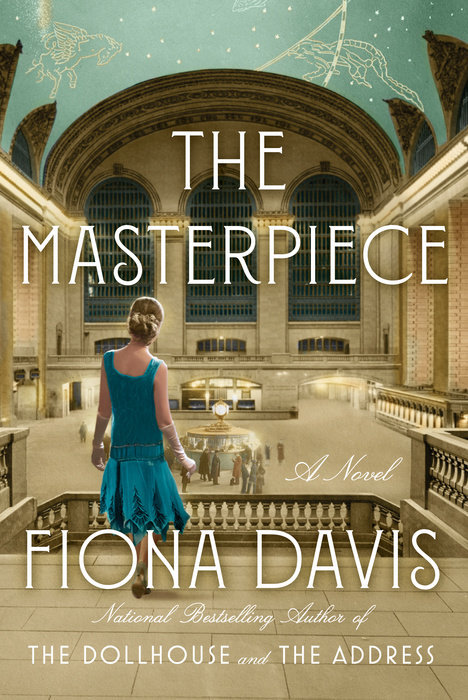
The first that I read, The Masterpiece, follows the fortunes of Grand Central Terminal, featuring little-known details of its history. The “early” protagonist, Clara Darden, is a struggling artist who has managed to snag a position as a temporary teacher of illustration at the prestigious Grand Central School of Art, an uncommon feat for a young woman in 1928. But Clara is determined that her drawings will, someday soon, grace the cover of Vogue magazine, and she uses every opportunity, including the influence of the two men in her life—one a wealthy poet, the other a bohemian painter—to make her ambitions come true. None of them knows that the Great Depression looms in their immediate future.
Nearly 50 years later, in 1974, Virginia Clay is recently divorced and desperate for work. After failing as a lawyer’s secretary, she reluctantly takes a job in the information booth of the rundown, grimy and dangerous Grand Central, and becomes invested in the fate of the once splendid building, whose historic status is now being challenged in the courts by a group who wishes to build a skyscraper on top of it. One day she takes a wrong turn and discovers an abandoned art school on a top floor of the building, where she finds a powerful watercolor hidden behind a cabinet and is introduced to the mystery of the artist Clara Darden, who disappeared in 1931. Virginia becomes determined to discover her fate, but there are several people who don’t wish her to succeed.

The second book, The Address, is centered around the famous Dakota apartment house, “the” address at which to live. The first part of the story takes place in 1884, when Sara Smythe, a young housekeeper in a London hotel, is lured to the United States by one of the Dakota’s architects, Theodore Camden, with the promise of a managerial position at the brand new building on the verge of opening its doors. Theo, his wife and three children occupy one of the luxury apartments, and regular contact between Sara and Theo soon leads to a forbidden association that will have long-lasting implications for all of them
The second protagonist is Bailey Camden, descendent of a ward of Theodore Camden and his wife, Minnie, a hard-partying young interior designer whose addictions have caused her to squander her chances with a major design firm. Just out of rehab in September of 1985, Bailey is floundering, trying to keep herself from drinking while looking for any kind of work in her field, in a town where her name is synonymous with disaster. She turns to her cousin, Melinda, a direct descendent and heir of the Camden family, who hires her to supervise the redecoration of Melinda’s apartment at The Dakota. There’s no money in it until Melinda comes into her inheritance at age 30 (still a few months away), but at least Bailey has a place to stay (the servants’ quarters of the apartment), a job to keep her mind engaged, and a local daily AA meeting. But while finding storage down in the basement for some of the classic ornamentation Melinda is insisting be ripped from the walls of the apartment so it can be modernized, Bailey discovers some artifacts in an old trunk that indicate the past history of her family may not be at all what she has been led to believe.
Other books feature backdrops such as the New York Public Library, the Chelsea Hotel, the Frick mansion/museum, and the Barbizon. They all seem to stay true to form, with two protagonists separated by half a century, and a mystery to be solved that connects the two through the agency of the building. But despite this repetitive device, the books are enjoyable reads, with engaging characters and vividly painted scenes; Davis seems to rigorously research the entire history, not just that of the buildings but also the habits, mores, clothing, hairstyles, and other minute details of the time periods involved. I also enjoyed the diversity in age and occupation of her main characters—they are of all stages and all life situations, and their vulnerabilities and failures are poignant and ring true.
I have never been to New York City (though I’ve always wanted to go), but I imagine these books would be particularly impactful for those to whom these buildings are familiar sights in their daily travels. Even never having been there, the books make it easy to picture. I don’t know whether I will read on, but those teaser chapters at the end of the previous e-book definitely snare your attention before you know it, so more Fiona Davis may be in my future.
Readers (and artists) in the family
For the past few months, my cousin Kirsten has been perfecting the art of making paper flowers from the pages of her favorite books. The Arcana Chronicles, by Kresley Cole, is a post-apocalyptic young adult series (five books in total), and she’s just starting a read-along with a fan group on Facebook (it’s a re-read for her).
In the first book, Poison Princess, in which tarot cards come to life, activated by an event called the Flash, red roses have a special significance for the Empress card, which plays a primary role in the series.
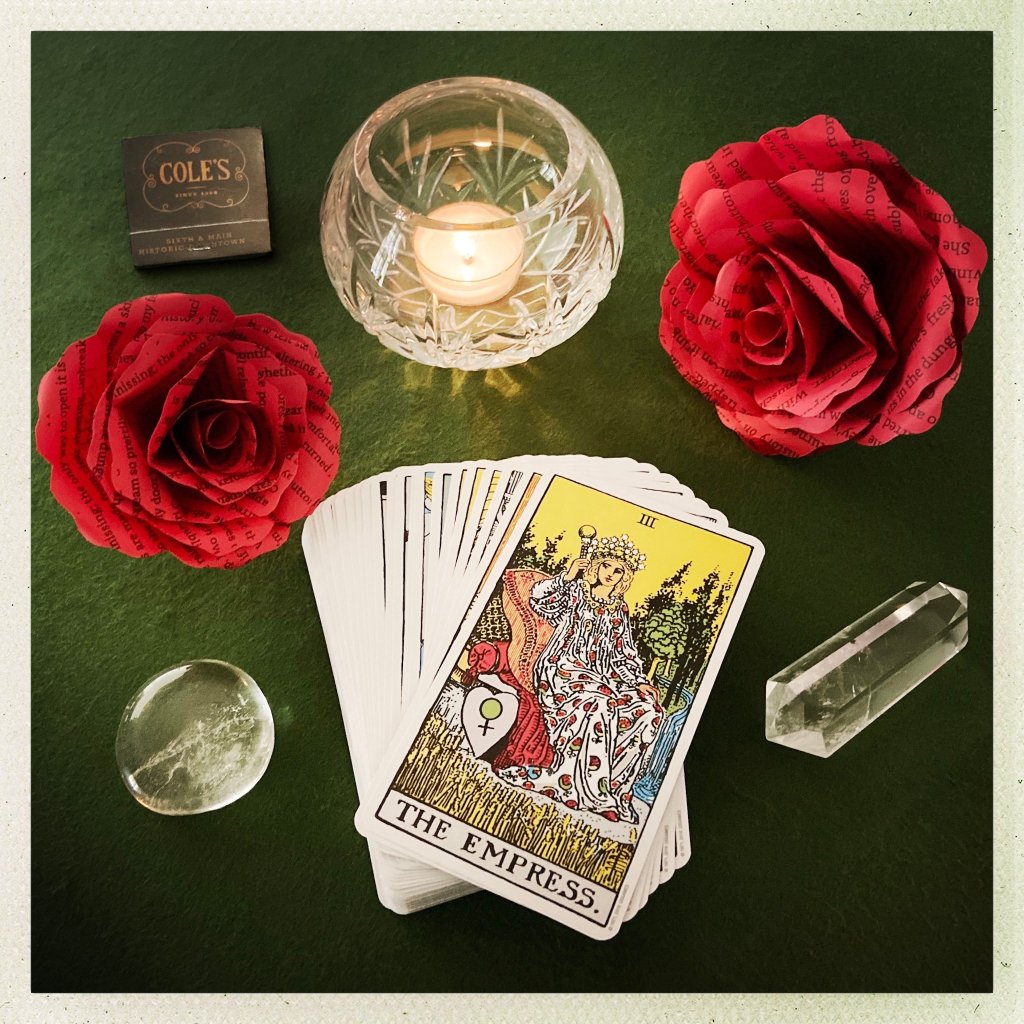
I haven’t read the Arcana Chronicles (or any of the books), and on Goodreads it seems to be one of those polarizing series that gets either five stars or one, but I couldn’t resist featuring Kirsten’s beautiful roses, for which she “used a basic technique for the flower, but created my own pattern for the curves and the underside (so as to display the title page), then used a pre-fab pattern for the sepals and leaves, but modified it slightly.”
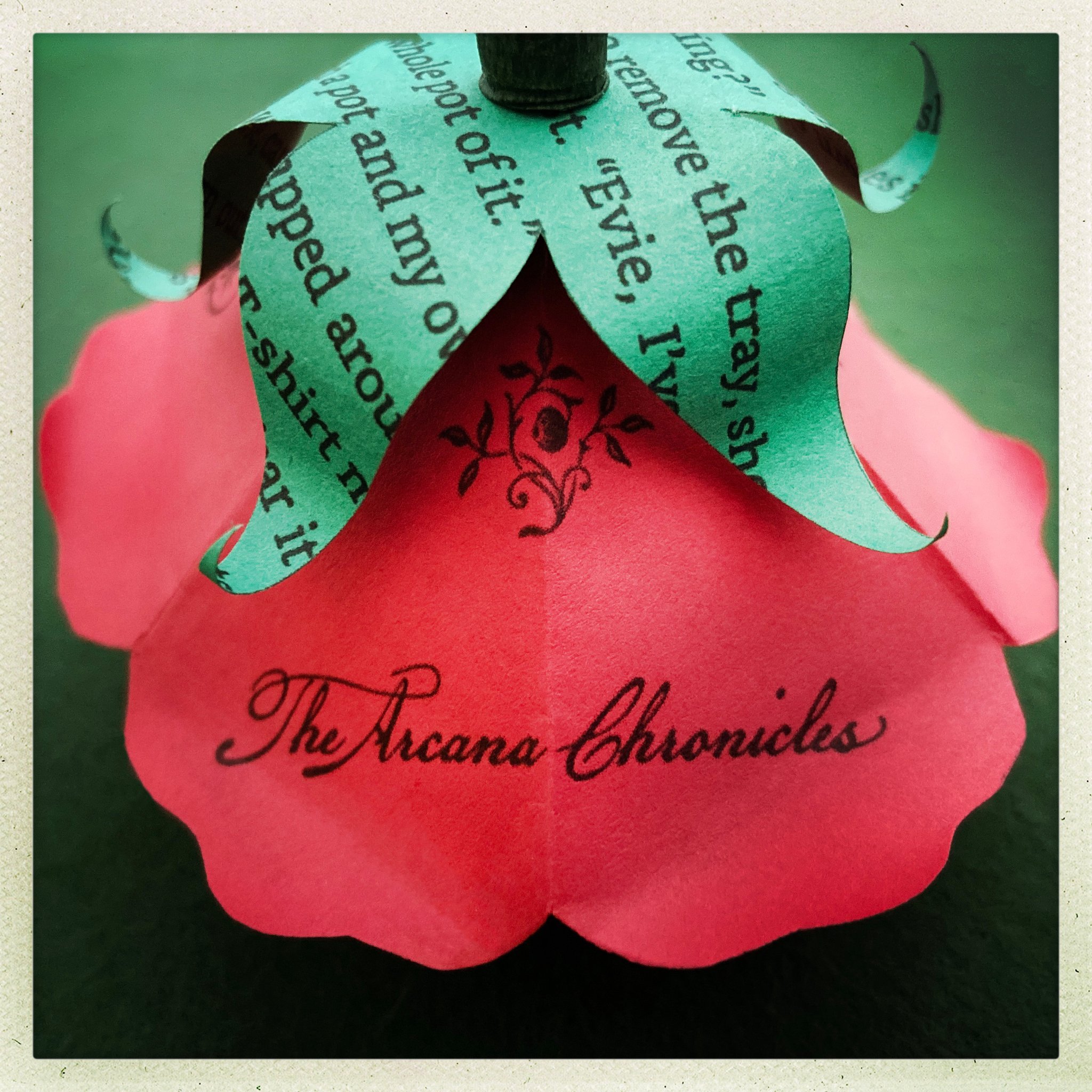

So creative! Thanks, Kirsten, for allowing me to show them off.
Intricate plotting
My next book came recommended from the Facebook readers’ group (What Should I Read Next?), but I was careful not to find out too much about it before I read it. As it turns out, it wouldn’t have made too much difference (unless somebody really wanted to ruin it with spoilers), because We Begin at the End, by Chris Whitaker, is such a complex story that it would be hard to encompass everything contained within its pages in a simple book-talk.
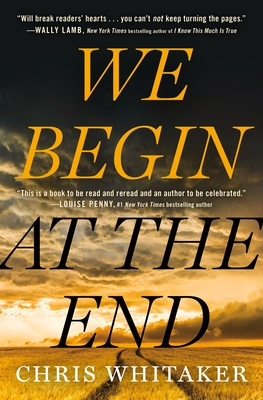
Everyone in this book, and I mean everyone, has some sort of agenda, major or minor—some are obvious, some are hidden, some seem obvious but are quite the opposite—and following them all occasionally proved challenging but also definitely worthwhile. And along with these agendas go many secrets, a lot of misunderstanding, massive amounts of lying, and some catastrophic assumptions.
There are many ways in which one could characterize this book: It is a murder mystery, it is a coming-of-age story, it is the saga of multiple people caught up despite themselves in various forms of tragedy they are mostly unable to avert. Let me see if I can outline the basic story in some sort of coherent form…
There’s a guy called Walk (last name Walker), who grew up in the small coastal California town of Cape Haven of which he is now, at 40-something, chief of police. There’s another guy named Vincent King, who was Walk’s best friend until the age of 15 when he went to prison, partly sent there by Walk’s testimony. Star Radley is a friend of Walk’s and was also Vincent’s girlfriend before he went away, and she has two children, Duchess, 13, and Robin, five, but can’t (or won’t) disclose the names of their fathers. She’s a chronic alcoholic and drug abuser, with the result that Duchess, a necessarily tough girl with a perpetually bad attitude (picture a young Ruth Langmore from Ozark), is raising Robin and keeping an eye on her mother in an atmosphere of poverty and uncertainty. Walk tries to keep tabs on Star and the kids and help them out however he can, but Star seems determined to self-destruct.
The catalyst for the story is that Vincent is finally getting out of prison, after 30 years away, which precipitates all kinds of events, both expected and unexpected. There is a further panoply of significant secondary characters, mostly connected to Star and the kids but peripherally to others, including a couple of weird neighbors, an estranged grandfather living in Montana, a boyfriend with criminal connections, and a lawyer and former girlfriend of Walk’s; and then there are the tertiary characters—friends, social workers, helpful strangers—who enter and leave the story as needed. It’s a complex cast to juggle, but it’s masterfully done, and Whitaker manages to preserve the reader’s assumptions throughout the book, right up to the revelations of the unexpected conclusion. And what he does even better than keeping track of his plot is make you care about the fate of everyone involved.
This is a heartbreaking and frustrating story on so many levels—history repeats itself, love is mostly unavailing, and revenge and retribution are dealt out with a heavy and sometimes arbitrary hand. But it also speaks to the search for absolution and redemption, and the sacrifices people are willing to make for the people who are family, whether blood-related or not.
I won’t say much more than this, because the experience of reading it is so engrossing that I wouldn’t want to take away from that for anyone who chooses to do so. I was trying to think of other books that might be comparable to the complexity and drama of this one, and couldn’t. Stylistically, it’s a story about real people in a particular context; the closest I could come is This Tender Land, by William Kent Kreuger, but I liked this so much better (and I liked that one a lot). It also put me in mind of a little gem of a book called She Rides Shotgun, by Jordan Harper, a much shorter and simpler story but with a protagonist who reminded me a lot of Duchess Day Radley, self-styled outlaw.
Don’t miss this one.
Genre confused
I am a big fan of Peter Heller’s work. I have read all of his novels and haven’t disliked a one of them, although I do have favorites. So I was delighted to discover that he has a “new” book out (almost a year old, now).

The Guide has the trademark lyrical descriptions of nature that one expects from Heller. The theme is fly-fishing, and although I don’t fish and am not a fan of early morning activities, his narrative of the terrain was so lovely that it calmed my breathing as I read it, making me long for wide open spaces with the sound of flowing water in the background and the dawn vista of a still pool with mayflies rising and rings spreading outwards as the sun heats the surface and the fish rise to feed.
Although this book can certainly be read as a stand-alone, it is, in fact, a sequel to Heller’s book The River, in that the protagonist is Jack, a few years on from that tragic adventure. Although it enhanced the experience to know the back story referenced periodically throughout this book, it wasn’t such a direct continuation that anyone would feel the need to go back and review the previous story in order to feel caught up. It’s made plain that Jack has been damaged by an event in his past, and that he sees this term of employment as a guide at one of the most exclusive fishing resorts in the country as an escape from his everyday life, in which he suffers from silence and too much free time.
Jack is taken on by the Kingfisher Lodge, on a pristine stretch of protected waters near the town of Crested Butte, Colorado, to replace a guide who left abruptly. The resort caters to the über-wealthy and the camera-shy celebrity, and provides an all-encompassing interlude of comfortable quarters, gourmet dining, camaraderie, and sport. His first assigned client is Allison K., a woman Jack vaguely recognizes as a hugely famous country western singer (he’s not really into music). She also turns out to be gifted at and dedicated to fly fishing, and the two share what’s described as an almost spiritual out-of-body state as they roam up and down the river, casting their lures.
But there’s something weird going on in this paradise, and soon Jack is nervous and on the defensive as minor violations of some resort rules result in some out-of-proportion reactions and repercussions. He and Allison begin first to speculate and then to research what they’ve been told, as anomalies crop up and their status becomes ever more perilous.
Although I enjoyed this book over all, there seemed to be a profound disconnect between the scene setting and the behind-the-scene activities. Heller’s other books certainly contain elements of mystery and suspense, but for some reason this one didn’t feel organic. For one thing, the “nature documentary” aspect of the book dominates for about 80 percent of the book, with only small hints and incidents thrown in here and there to increase the reader’s feelings of disquiet, and then all of a sudden, in the last 20 percent, it becomes all about the alter ego mystery of the story. Nature buffs will enjoy the setting and melodic language about fishing, while thrill seekers will get their payoff with the bizarre back story, but the genre blending that took place here needed a few more spins of the Kitchenaid to work properly. I was still fairly happy with the book, however, until I reached the last few pages. There are few things I dislike more than a book that shows the entire story, only to punt at the end by “telling what happened” after the significant events occur, instead of taking the reader directly through them, and that’s sort of what happened here.

Primarily as a result of that ending, I would have to recommend Heller’s other books over this one, although the prevailing narrative was the verbal equivalent of the glorious imagery experienced in the 1992 film A River Runs Through It; if you are susceptible to words that so graphically paint a picture, you will enjoy this book no matter what.
Ambivalence…
After having rated TJ Klune’s book The House in the Cerulean Sea as one of my favorite discoveries last year, I was greatly anticipating reading this year’s Under the Whispering Door. I ended up mostly enjoying it, but it was a bit of a struggle to do so.

Although they have different themes, the books do share certain characteristics: an initially unlikeable protagonist (although I mostly felt sorry for Linus in Cerulean, while Wallace in Door was simply an asshole); a quirky gang of main and secondary characters to surround him and serve as foils for his transformation; equally fanciful world-building; and a gay romance. I was intrigued by the subject matter—death and transition—and couldn’t wait to see how this creative author would deal with it. Unfortunately, I had to wait…and wait…and wait some more.
I almost put this book down a couple of times during the first 60 percent of it, simply because nothing much happened. Don’t get me wrong—there are events taking place, they simply don’t appreciably move the plot along, and also can’t compete with the constant, repetitive introspection of the exceedingly annoying protagonist, who protests, whines, and throws tantrums as each of them transpires.
Wallace, a successful and rather egomaniacal big-city attorney, has a blackout moment in his office, and when he wakes up, he’s at a funeral, which turns out to be his own. There are distressingly few people in attendance, none of them kindly disposed towards him, and it’s almost with relief that he notices one well-dressed and intriguing person he’s never met. Mei turns out to be his Reaper, the person who has been sent to retrieve him, now that he’s dead, and to convey him to the Ferryman to make his transition to whatever’s next. This turns out to be Hugo, owner of a tea shop on the outskirts of a small, out-of-the-way town whose inhabitants enthusiastically line up for his and Mei’s croissants and scones, oblivious to the presence of both resident and guest ghosts on the premises.The living quarters are upstairs from the shop and, on the fourth floor, there is a mysterious door in the ceiling that leads, well, somewhere else.
Wallace, however, isn’t yet willing to admit that he’s dead and it’s all over, let alone passively float through that door. He’s angry, he’s resistant, he’s all the many stages of Elisabeth Kubler-Ross, and he’s going to fight with anyone who tries to pressure him into something for which he isn’t ready.
This is a book about what it means to be alive and how to come to terms with death. I appreciated the marked lack of religious symbology and the unique ways in which Klune imagines that all this happens, but was less a fan of the repetitive mantras surrounding the subject matter. There were definitely both ahah! and touching moments throughout the story, and I did invest fairly heavily in most of the characters by book’s end, but there were some things that didn’t feel organic (the romance wasn’t there and then it was, and it was hard at times to understand why) and others that felt extraneous. I ended up enjoying it quite a bit, but the irritation level at pushing through all of the preliminaries that seemed to last way too long brought the pleasure quotient down a bit.
My ultimate verdict would be to read it, but go into it knowing it’s a slow burn of a read and you will have to persist to find gratification.
Indigenous mystery

The Firekeeper’s Daughter, by Angeline Boulley, was mentioned by one of my students in my Young Adult Literature class this past quarter as a book both by and about an indigenous voice from the Ojibwe tribe. It caught my attention because I have read several books set within the same locale (Sault St. Marie, in Michigan’s upper peninsula) and culture (Anishinaabe), though none that made that culture a central feature of the plot, and none written by a person from within the Ojibwe tribe, so I was particularly interested.
The first part of the book does a wonderful job of immersing the reader in the protagonist’s current life and giving the background necessary to set the scene and understand the issues. Daunis Fontaine is the product of a daughter from a wealthy white family who falls for a charismatic Objibwe hockey player, but her origins are something of a scandal, since her mother’s family forbade the relationship and her father ended up with someone from his tribe, who made a rather calculated play for him and also got pregnant, with the result that Daunis has a half-brother, Levi, who is almost her same age. Her mother courageously insisted, after Daunis was born, that she not be kept by her white family from her Ojibwe roots, so Daunis has grown up a part of both cultures, although she identifies more closely as one of the Anishinaabe, embracing native values both religious and secular.
The author also effectively embeds her story in the racism and atrocities historically visited on the tribes, as well as being immensely informative about such topics as traditional medicine, rituals and ceremonies, tribal elders and councils, contemporary politics, and the sense of family and community that characterize this culture; and she (mostly) manages to do so without being too didactic.
She uses the vehicle of a new boy at school, a recruit for the hockey team who needs to be introduced to all the nuances of life in the “Soo,” and has Daunis’s half-brother Levi, captain of the team, designate Daunis as Jamie Johnson’s “ambassador” who will tell him what he needs to know. The text is thus salted with indigenous words, concepts, and teachings that are explained by Daunis from within that context.
All of this makes the book sound more like an educational piece of nonfiction than a complex and multilayered mystery, but the wealth of scene-setting detail actually makes the puzzle to which Daunis is addressing herself much more plausible and compelling.
Daunis was supposed to be on her way up to Ann Arbor to start her college career at the University of Michigan, but two personal tragedies—the death by overdose of her beloved Uncle David, and her maternal grandmother’s debilitating stroke—keep her at home, with a plan to enroll instead in the local community college so as to be there to support her rather fragile mother through these twin losses. One person who is thrilled that she’s staying is her best friend, Lily, who will now be attending college with her.
They say tragedies always come in threes, and as a devastating event shocks Daunis into realizing that there is something dark destroying her native community from within, it is revealed to her that there are also outside interests attempting to solve the dual mysteries of addiction and suspicious deaths that are plaguing the people of Sugar Island; she makes the pivotal decision to get involved with ferreting out that solution.
The story is tense and suspenseful, with a protagonist facing many complications—perhaps too many. There is so much going on within this plot and surrounding this one person: Daunis’s biracial identity, her sick grandmother and dead uncle and father, her best friend’s meth-addicted boyfriend, her inexplicably ended hockey career, her new boyfriend’s secrets…it’s a lot. I do think the author does a good job of keeping all the balls in the air, but perhaps it would have been a better story with a few of these details ironed out of it. Because Daunis (and the author) has so much to juggle, some parts of the book become repetitive as the reader is reminded several times of the various elements in play. This is a first-time author with a slight tendency to over-explain, with the result that there are a few jarring moments in the book when Daunis suddenly seems to channel a third-person voice that is commenting on the action from an omniscient place outside the story line. A little more editorial notice should have been paid.
Having said all that, it truly is a riveting and emotionally realistic read, with a wealth of detail about the Anishinaabe peoples that you won’t stumble across in many places, and I applaud the author for managing to write a gripping tale while including such a rich, in-depth setting for it. This is definitely a book to add to your YA reading list.
In case it wasn’t made plain by my description of the story, there are many gritty, explicit events in this book that may prove overwhelming for the sensitive, so keep that in mind when recommending it—it’s definitely for older teen readers, not the middle school crowd.
Deception
The Murder Rule, the latest book by Dervla McTiernan, departs from her mystery series starring Detective Cormac Reilly to stand alone. The supposed theme of the book is revenge, but it turns out to be more about misplaced trust.

Hannah Rokeby is a law student at the University of Maine, the self-sufficient daughter of a fragile and damaged single mother. Her father died before she was born, and she has no other relatives who acknowledge her; it’s always been just the two of them, with Hannah knowing from an early age that it will be her job to be the adult in the relationship. Her mother, Laura, has sought all her life to conquer her PTSD using the crutch of alcohol, and Hannah patiently stands by during her ups and downs and encourages her in a daily routine whose predictability helps to combat her volatility and maintain her sobriety.
That all changes during Hannah’s third year in law school. When Hannah was a teenager, she discovered and read Laura’s diary telling the story of the summer of 1994, when Laura found and then lost a boyfriend and was brutalized by his best friend, a man who has since been convicted of the rape and murder of a young mother. When Hannah discovers that a prisoners’ rights group called the Innocence Project at the University of Virginia is seeking to overturn the conviction of the man responsible for damaging her mother so thoroughly, she concocts a scheme to insert herself into the process, posing as an idealist who seeks to help them with their mission so as to undermine it and consign him permanently to prison. But as she maintains her disingenuous façade and digs deeper into the case history, disquieting details come to light that throw everything she knows into question.
I thoroughly enjoyed this book, although there were some implausible bits, legally speaking, that might not happen in an American courtroom (McTiernan was an Irish lawyer for 12 years before turning to writing). Some readers have complained as well about the unlikeable protagonist, Hannah, and in general I prefer a sympathetic character, but in this book her cynicism and duplicitousness work perfectly to set up the story, as well as giving the character added depth. As events unfold, it becomes clear why Hannah is who she is, and enriches the story of her gradual awakening to different possibilities.
I don’t want to give away too many of the plot points here, since a big part of enjoying this book is arriving at them at the same time Hannah does, but the twists and turns as the story unfolds kept me reading enthusiastically from beginning to end. I was initially disappointed to discover that this wasn’t another of her Cormac Reilly series but, having read it, am duly impressed with her ability to write a compelling and entertaining stand-alone mystery/thriller outside of her proven formula.
Another chance
There are certainly authors to whom I have remained intensely loyal who have written one book I absolutely loved but have also written others that I didn’t. And because I read the book worth loving first, I kept them on my roster of excellent authors despite the downfalls and shortcomings of other works. So this week I decided that just because I had read two books by an author neither of which had particularly wowed me or stuck with me didn’t mean I should dismiss the author out of hand; that perhaps she was worth one more go.
The author to whom I refer is Diane Chamberlain. I first read her book The Dream Daughter, about which many people expressed doubts since time travel was not something they felt was appropriate to her oft-labeled “hometowns and heartstrings” style of writing. Since I love a good time travel book, however, this was prime motivation for me to read it, and I did enjoy it, although not as much in retrospect as my initial reaction might indicate. So I went on to choose another of her books, hoping to get the “traditional” Diane Chamberlain experience, and was vastly disappointed; I didn’t connect with (or even like) any of the characters, felt the narrative was lackadaisical and the plot deficient in sense, and decided, based on Cypress Point, that I wouldn’t read anything more written by her.
But, as sometimes happens, I had placed another of her titles for Kindle on hold at the library a while back, and it popped up as “available” just when I had finished something else and was at loose ends for the next, so I read it. I’m so glad I did, and can say that it may change my attitude about at least some of the rest of her inventory.

The book is Big Lies in a Small Town, and I must confess, first of all, that I was predisposed to like it, despite my previous experience, because this one was about art. As regular readers of this blog can attest, I have special collections on Goodreads of “books about art” and “books about reading,” and am always looking for another to add to those lists. I found one in this book, and also found it compelling for more reasons than just its theme.
First of all, this book also steps outside that “hometowns and heartstrings” narrative and into the realm of historical fiction, although I’m not sure how much of it is real and how much made up. The point is, it all could have happened, and its setting in a true-to-life context, especially including the financial situations and the state of race relations in a small southern town in the 1940s, made it particularly evocative.
The book has two main protagonists, one in 1940, the other in 2018, connected by a Work Progress Administration (WPA) mural painted after the Great Depression by one artist and restored almost 80 years later by another. Anna Dale is the artist from New Jersey who enters a WPA mural contest; she loses out to someone else for the mural she wished to paint in New Jersey, but is instead awarded a smaller project for the post office in Edenton, North Carolina. She takes a trip to scope out both the community and the placement of the mural, planning to stay only a few days to try to capture the flavor of the town and its people upon which she will base the mural but, being somewhat at loose ends in her life with no employment or attachments to prevent her, allows herself to be persuaded by the town’s “movers and shakers” to stay in town to execute the entire project. She soon realizes she is a fish out of water, a Yankee not used to dealing with the prejudices and ubiquitous racial undertones of a small Southern community. And to complicate matters, the town has its own artist who tried for the same assignment and lost out to Anna, so there are some people in town who are already predisposed to dislike her. Anna is determined to achieve her goal, but vastly underestimates the obstacles she faces.
Nearly 80 years later, in 2018, Morgan Christopher, who is in prison for three years for a crime she didn’t commit, is given an opportunity to curtail that sentence if she agrees to certain conditions: Jesse Jameson Williams, a prominent artist from Edenton, North Carolina, has died, and in his will he specifies that Morgan is to be offered the job of restoring a mural that will hang in the gallery containing his paintings and those of his protegés. Morgan is an artist but has no experience with the complex skills required for restoration, but she is desperate to leave prison, so she accepts and is paroled contingent upon her completing this project. In the process of working on the mural, she discovers disturbing design elements that pique her interest about the unknown fate of Anna Dale.
This story was masterfully plotted to keep the reader turning the pages. The perspective switches back and forth between past and present with a cliffhanger at the end of each chapter to make it irresistible, and Chamberlain is wonderfully cagey about how and when she reveals the plot points that connect all the players. I read it in two days, and when I say days I mean until 2:30 a.m. when I could no longer keep my eyes open. In addition to complex plots for both time periods, the narrative contains interesting technical information about the restoration process as well as fascinating personal details about life in the South after the Depression. It addresses such issues as mental illness, injustice, poverty, and racism, but incorporates those themes into its riveting and emotionally engaging story line without being preachy or didactic.
Can you tell that I liked the book?
Reading this made me immensely curious about the WPA mural program; here is a look at some of the artists who were defining American art “after the fall,” that is, after the Great Depression’s socioeconomic devastation, and here is an interesting contemporary speculation on whether anything similar to this project could ever again happen in the United States. Below is one mural, by artist Ben Shahn, entitled “The Meaning of Social Security.” It’s on a wall of the Wilbur J. Cohen Federal Building, in Washington, D.C.

A little “if-then” referral: If you read this and find that you enjoyed learning about the technical processes of restoration, another book you might enjoy is The Art Forger, by B. A. Shapiro, which also includes many fascinating technical details, although it is much less respectful of the original artist! My review is here.

 The Book Adept