Jane
“I declare after all there is no enjoyment like reading! How much sooner one tires of any thing than of a book!”
—Pride and Prejudice, by Jane Austen, born on this day in 1775.
The Kitchen House
I’m having trouble processing this book.

On the one hand, Kathleen Grissom found the raw materials for a rich and powerful historical novel, with the perfect illustration of white privilege over black, even in the most extreme of conditions. It’s an interesting angle—an orphaned Irish child whose parents died owing the ship’s master for their passage is taken and put to work among the slaves on his tobacco plantation, in order to pay off their debt. We get to see by turns the lack of color and class perception on her part, as a naive and frightened seven-year-old who embraces the people around her first as refuge and then as family without understanding status or life situation, versus the total privilege that even a juvenile white indentured servant would be granted above the rights of the adult slaves with whom she lives.
Unfortunately, although the writing is good (if a little repetitive), with several narrative voices meant to showcase the story from all sides, the story quickly slips into stereotype and melodrama. The most genuine part of the book is the voice of the child Lavinia, while the contrapuntal voice of the slave, Belle, who is given initial charge of the young intruder, seems put there simply to fill in background information of which Lavinia wouldn’t be aware—a big flaw in the flow of the narrative. There is a level of personality that doesn’t sufficiently emerge to make Belle a truly compelling character, especially as she mostly disappears from the story in the latter half and only snippets of her thoughts are shared from that point on.
Then, although many (many!) tragic and shocking events take place, the author never seems to get past what is happening to the characters externally. Even though there is some reflection by Lavinia, because she is a child for the first part of the book none of it reflects the truly horrific plot points in any in-depth emotional or philosophical way. It’s observational rather than analytical, and after a while all the bad things become repetitive and predictable, making the reading a slog to get through them and out the other side.
Another big issue I had with the book is the herding of characters into stereotypical positions—inept, passive, hysterical white women; evil, abusive, or at best oblivious and officious white men; black women whose focus is to be mothering; black men who are either pacifist and ineffectual or rebellious and dead; and although some of these stereotypes were assuredly true, this writer presents them all as extreme cases that don’t allow for alternate behavior.
Ultimately, for me there was too much sequential telling about too many events with little reflection or nuance, and it turned into a horror show to be endured while hoping for a happy ending, which of course isn’t going to be there in a book about slavery! So while the details held my attention enough that I finished the book, and it discussed well-illustrated examples of events that typically took place in the antebellum South, I don’t think I could recommend it sheerly as a story, which is a shame, given the themes that could have been developed to better advantage.
Author vs. Genre

I picked up The Dream Daughter, by Diane Chamberlain, because it is a time travel book. But as I examined reviews on both Goodreads and in the Facebook group “What Should I Read Next?” I found that I was a member of a tiny minority when it came to motivations: Apparently Diane Chamberlain is a big deal with a certain kind of reader, and many/most of the reviewers confided that they read this book despite its science fiction content, because they read everything by Diane Chamberlain.
My first thought was, Who doesn’t love a good time travel story? Apparently a lot of people! But since this is the one and only Diane Chamberlain novel I have ever read, I am judging her and her writing by the contents of this book about time travel, so my review will be differently framed than most.
When you type “If you like Diane Chamberlain…” into Google, you come back with a whole slew of names, most of whom are listed as authors who write “feel-good fiction with a twist,” “romantic women’s fiction,” and “hometowns and heartstrings.” There is also an occasional mention of historical fiction. But my experience of The Dream Daughter didn’t fit so much into those categories, perhaps because I was so focused on the mechanics of the time travel—whether the author would make it believable, workable, and without unnecessary paradoxes. And although the discovery of the mechanics of it were a little fuzzy, the carrying-out of the process was quite satisfactory. I don’t know whether she borrowed it or came up with it on her own, but the methodology is similar to that in the movie Kate and Leopold, in which the traveler must find both an ideal moment in time and a height off which to step in order to reach the proper destination. The portal timing and location is essential to the plot, since it is the main source of tension in the book—will she/won’t she (or he or they) make it to the location in time, will they land where and when they planned, and what happens when they run out of return options?
The plot begins fairly simply: Carly is a physical therapist in her early twenties. She helps Hunter, a previously uncooperative patient, to regain his health, and introduces him to her sister; he subsequently becomes her beloved brother-in-law. A few years later, in 1970, Carly learns two heart-breaking pieces of news: Her young husband, Joe, won’t be returning from the Vietnam War; and her as-yet-unborn baby daughter has a heart defect that will almost certainly prove fatal once she is born. The baby is all she has left of Joe, and Carly is devastated. But Hunter, a physicist, tells Carly there may be a way the baby’s life can be saved. If she believes him (instead of urging her sister to have him committed to the psych ward), Carly can take a leap of faith that may lead to a healthy daughter.
I really enjoyed this book. It’s definitely more relationship fiction than it is sci fi, but even a “soft” sci-fi element can materially contribute to an otherwise regular story if it’s thought through and properly integrated, which this definitely was. There were a few unexplained plot points that remained puzzling to me (such as the impatience and coldness displayed by Hunter’s mother on several key occasions), but for the most part all the characters were well developed and understandable, as were the situations and narrative, and it has just the right level of suspense and complexity to keep you reading. It shares with books such as 11-22-63, by Stephen King, that dire warning about avoiding changes to history by minimizing interactions, but then (like that book) allows its characters to ignore that warning in certain circumstances, to the benefit of the plot (if not necessarily to history). And this was definitely a gentler read than that angst-filled tome, but no less enjoyable in its more personal focus, and with plenty of similarly entertaining historical details as well.
I feel like this book could appeal equally to fans of relationship fiction, time travel and, of course, to most Diane Chamberlain devotees! I don’t know if I would enjoy her other, “straight” fiction as much as I did this one, but I may give one a try after this.
Ruth, Ruth, Ruth
Every time Elly Griffiths comes out with another Ruth Galloway forensic archaeology mystery, I read it, I throw a fit, I swear off all future books in the series, and then…I read the next one. There is something charismatic about the awkward archaeologist that I apparently find hard to resist. So I’m loathe to say again that I’m fed up, but…well…
This is #13 in the series, and the personal angst has gone into overtime long since. In the first book, Ruth was called in to help out at a crime scene, met Detective Inspector Harry Nelson, and fell hard for him despite his abrupt manner. By book #3 she’s returning to work from maternity leave, but DI Nelson is still with his wife. In #13, Ruth’s daughter, Kate, is just about to enter secondary school, and yet the mooning goes on. There have been ultimatums, there have been selfless renunciations, Ruth has moved away and moved back again…but their relationship remains distressingly the same—tauntingly unattainable. And for at least the second time in the series, this book ends on a relationship cliffhanger that will definitely lure me to pick up the next, scheduled for summer of 2022, but I will once again do so with a (justified!) sense of outrage that we’re.still.waiting.

The Night Hawks continues the theme of murder entwined with archaeological finds on the marshy north Norfolk coast. Ruth has moved back, after her brief sojourn with Frank in Oxford, and is now head of the archaeology department at the college. This time a body is found lying in close conjunction to a Bronze Age stash of weapons and other doodads. It’s discovered by some “metal detectorists,” a nocturnal bunch of guys who go out as a club looking for artifacts on the beach. Ruth finds this hobby super sketchy, since it impinges on her real work and threatens to disturb legitimate archaeological finds, but she can’t be too vocal about it, considering her replacement lecturer at the college is a member.
After this initial discovery, the bodies start to pile up; one wonders what it is about north Norfolk that apparently causes it to be the new murder capitol of England! There’s what looks like a murder-suicide plus three other deaths, all centered around the ominous Black Dog Farm, named for the Black Shuck, a gigantic hound with red eyes who appears to people when they’re about to meet their fate, according to Norfolk legend. The usual participants all make an appearance—Judy, Tanya, Cathbad—alongside some new characters who lend themselves ably to Nelson’s suspect list. And there is, of course, the endless continuation of Ruth’s wistful longing for Nelson, and Nelson’s conflicted loyalty to his wife and original family up against his attachment to Ruth and Kate. But I have said enough about that!
All in all, it’s a pretty good mystery—much more satisfying in both development and content than a few of the series’ more recent ones—so I’m going to forgive Griffiths for the rest, lean hard on that cliffhanger, and foolishly and optimistically hope for the best for Ruth and Nelson in 2022.
Note regarding the cover: Why the publishers didn’t take advantage of the Black Shuck legend to put a big ole black Rottweiler or Dobie on the cover, instead of this innocuous picture of a life ring hanging on a post (which has no bearing on the story) is beyond me! Hound of the Baskervilles, guys! Why?!
Tragic
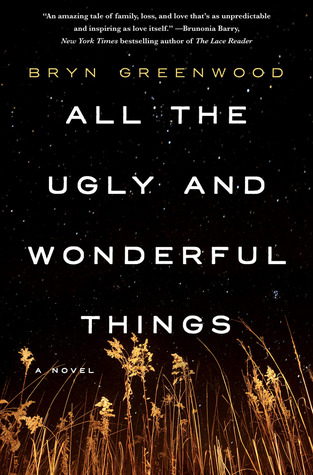
I opened All the Ugly and Wonderful Things, by Bryn Greenwood, with no knowledge and few expectations except those provoked by the prescient title. By the end of the book I was insulted on behalf of the author by those book blurbs praising her for a wonderful debut; this was a wonderful book, regardless if it was her first or her 30th. It was also ugly.
I don’t want to reveal too much about the plot, because it was such an anguished kind of pleasure to discover it as it went along. It is a truly unique (and I don’t use that word casually) coming-of-age tale about a child who has not one advantage and many crippling obstacles in life and somehow, as some rare children do, manages to survive and to eke out an existence with happy moments in it despite everything.
Wavonna, known as Wavy, is the daughter of a violent, abusive, sexually prolific meth dealer and his drugged-out, paranoid, obsessive-compulsive wife. Neither of them has had a single regard for her since the day she was born, and in fact the idiosyncrasies of her personality that have resulted from ill treatment have caused her father to avoid her company. Wavy rarely speaks; she won’t eat in front of others; and she actively dislikes being touched in any way. At eight years old she trusts no one, depends on no one, owns nothing, and is struggling on her own to raise her baby brother, as the only “responsible adult” in the family.
Then she meets Kellen, a gruff young man who does occasional work for her father between his stints as a mechanic, and the two recognize one another’s blank spots. Kellen is appalled by the level of neglect surrounding this little girl, and starts stepping up to help her, from twin motives of compassion and loneliness. He registers her for school and takes her back and forth on his motorcycle; he brings groceries; he washes dishes; but more than these practical deeds, he offers Wavy both friendship and respect. In return, she sees him for who he is, rather than judging him by the story some of his bad deeds tell about him, and gives him the love and attention that have been missing from his life—and hers.
This is where the story hits a controversial twist, and it is a testament to your flexibility and understanding whether you continue to follow it with empathy or slam it shut with swift condemnation.
The best thing about this book is its unsentimental storytelling. It is a dark portrayal of abuse and dysfunction, yet it neither dramatizes nor trivializes any of it—it’s not manipulative. The reader is allowed to come to the material on her own terms and react to it with sadness, outrage, disgust, compassion, whatever emotion that emerges. Somehow this author is able to write a beautiful story about ugly events and still allow readers to draw their own conclusions.
The book is told from multiple perspectives—I believe there are 16—including chapters narrated by Wavy’s brother, her aunt, her cousin, the sheriff, a judge, a teacher, and of course by Wavy and Kellen themselves. I don’t ordinarily care for books split into so many viewpoints, but in this case it works brilliantly as a reflection of all the possible opinions about these two that might come up, depending upon your perspective. And all of the characters are distinctive and beautifully drawn.
Wavy’s story is stark, controversial, emotional, and unsettling. It’s in-your-face explicit in its descriptions, and will probably leave you feeling conflicted and uneasy, maybe outraged. It’s also some of the finest story-telling I have read in a long, long time. It won’t be for everyone; but if you resonate with a tale about raw human emotion, heartbreak, and resilience, it will continue to echo in your mind as it does in mine.
Note: It’s also well worth reading the author’s comments about content and choices at the end of the book.
The conundrum of re-reading
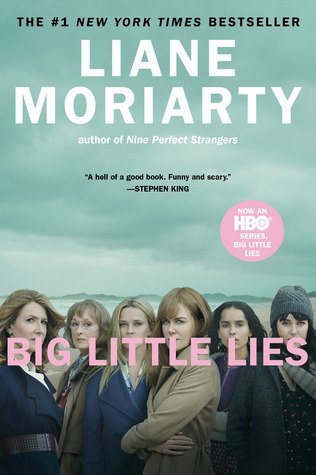
I gave in to an impulse this week to read something for a second time. I felt like I needed a break from all the new and an encounter with something familiar. I read Big Little Lies, by Liane Moriarty, two years ago when everyone was buzzing about it, and reviewed it favorably on this blog, but when it grabbed my attention again this week, I decided to have another go.
Given that this is a novel of suspense with an ultimate revelatory moment, you would think that re-reading it would fall flat…but it didn’t. It’s amazing to me how the mind will recall some things and (purposely?) shut others out. I remembered vaguely who died and when and why, but completely forgot the specific circumstances and immediate chain of events, so I got to be gobsmacked again, even though I knew it was coming! That scene is powerful—I read it a couple of times.
I know that there are people out there who never re-read, some because there are just too many new books coming down the pipeline to “waste your time” with one you have already consumed, and others because their reading consistently transfers into their long-term memory and they can’t imagine repeating an experience. I feel fortunate that although I do have a good memory for story, I am also able to be entertained by the nostalgic review of a narrative.
There are books that you will read once and, even if you liked them, never want to repeat. There are books that might stand up to one re-reading, both to confirm your liking for them and also to allow you to gather in the images and nuances you might have missed the first time when you were in a headlong rush to finish. And there are the books that become old friends, comfort zones, the recitation and repetition of a feeling you liked the first time and want to have again multiple times.
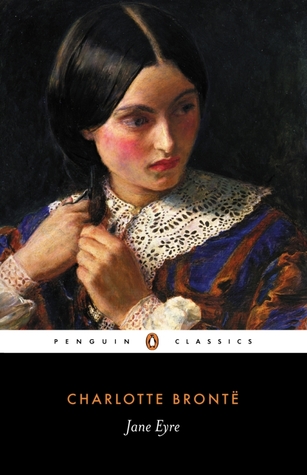
I will say that these criteria do shift and change over time. When I was in my teens, probably between ages 14 to 18, I was for some reason obsessed with Jane Eyre. I read the book conservative estimate about 15 times in that four-year period. About 10 years ago, prompted by helping a teen girl at the library find a classic off her Honors English list that she thought she could bear to read, I decided to make another visit to Thornfield Hall. I was dumfounded by my experience: What had I seen in this book that made me read it repeatedly and obsessively? I had to look back to the circumstances of my teen years to understand: I was a shy, quiet, romantic girl, with few friends and no dating experience, and my background as a fundamentalist Christian at that impressionable age guaranteed that the themes of sacrifice and self-denial (as represented both by Jane and by the sanctimonious St. John Rivers) would profoundly move me. Coming forward multiple decades to my current status as an agnostic self-supporting adult with a marriage and a tragic love story of my own behind me, I could clearly see that my obsession was uniquely tied to a particular iteration of my personality.
The criteria I use for whether a book remains in my personal collection is whether I think I might ever re-read it. If it’s a no, it goes. If it’s a yes—maybe once—I will keep it if it was a truly special experience (and if I have the shelf space) but otherwise rely on accessing it from the library when I want it. If it’s a yes, I can imagine enjoying this again and again, then it stays.
I’m happy to be the kind of reader who can appreciate all of these reading permutations.
Exciting discovery
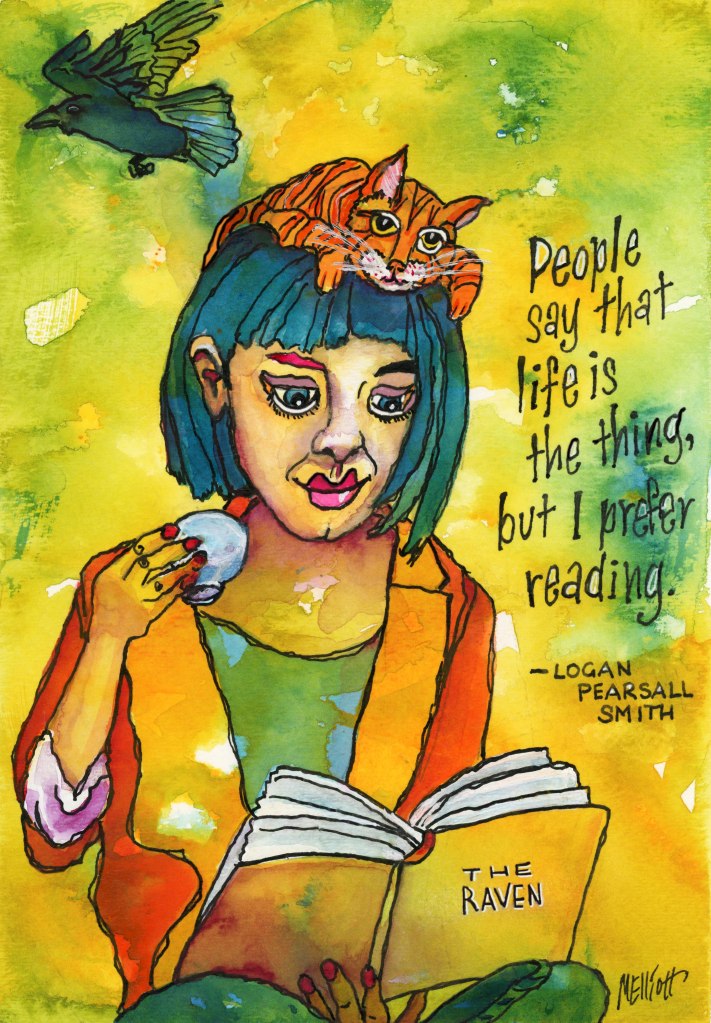
I am back to pondering people’s personal tastes in reading. I was thinking about the fact that, despite the many books I read every year (my Goodreads total is approaching my year’s goal of 120 quickly enough that I may add on books to carry me through December), it’s rather seldom that I discover an author who perfectly meets my needs and expectations when it comes to preferred reading.
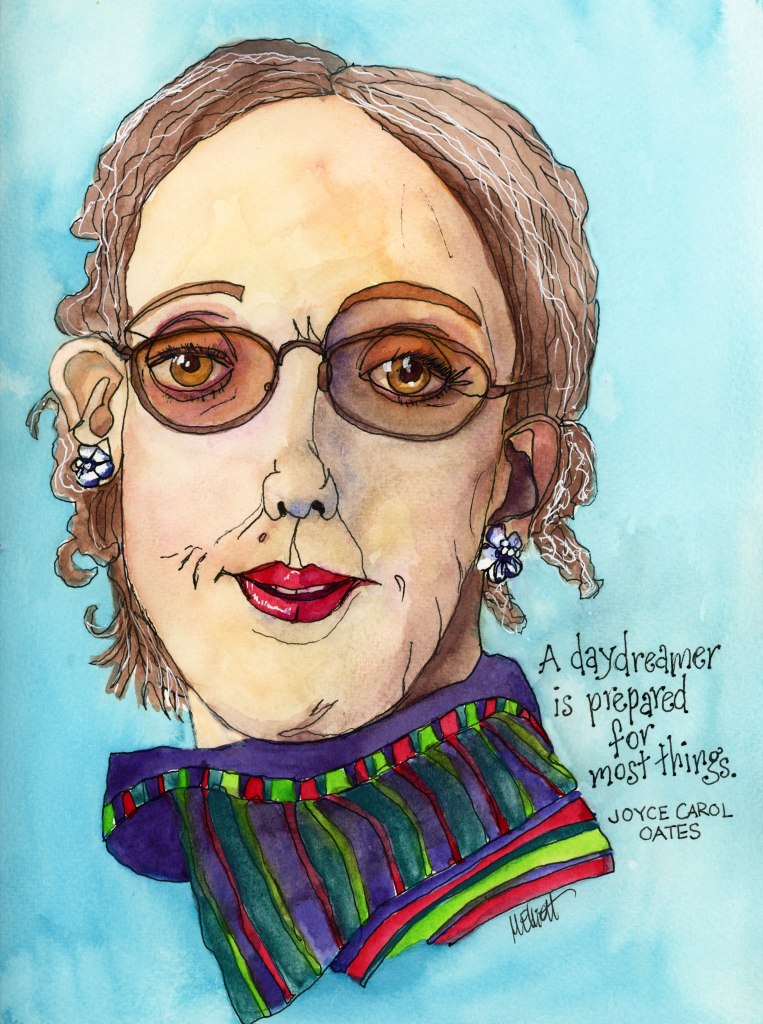
It takes us back to the eternal conundrum of “good” versus “popular,” and also to thinking about how many people are exposed to which kinds of books and why. For instance, I heartily acknowledge that Joyce Carol Oates is a fine writer. But despite my great admiration for her immense skill with words and her always eclectic choice of subject matter, I have never read a single one of her books from beginning to end, even while making sure to purchase copies for the library where I worked—and believe me, I have tried. But…novels, short stories, poems, essays—they all leave me cold. She’s not “my” author.
On the other hand, I have somehow been able to make it through the admittedly creative but nonetheless poorly written and quite clichéd oeuvre of Stephenie Meyer, mistress of sparkly vampires. Okay, yes, partly for my job…but I didn’t really have to read all four volumes of the Twilight saga in order to maintain credibility with my teenagers—the first book probably would have done nicely. And that willingness to persist despite the obvious flaws makes me wonder about the relative readership (and sales) of each of these authors.
This is not to initiate a discussion over whether books are objectively good or bad; as Betty Rosenberg, first editor of Genreflecting (classic textbook for readers’ advisors), first said in 1982, “Never apologize for your reading tastes.” My goal here is rather to discuss the fact that there are authors in the world about whom you have never heard, but when you venture to read one of their books you immediately recognize them as one of yours—a person who makes up a character, builds a world, tells a story just as you would do if only you could, a person who writes specifically for you, whether they know it or not.
There are, of course, levels to this. There are authors whose works I read over and over, either gaining something new or reveling in the precious familiarity every time I approach them again. There are others whose works I will never re-read, but will always remember with happiness whenever I reflect on the experience of discovering them.
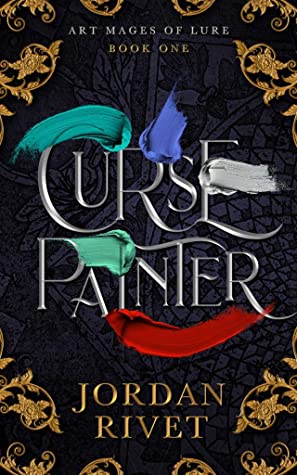
I had that experience this week, from an e-book I got for free as part of my Kindle Unlimited subscription. These books have been such a mixed bag of unexpectedly excellent (The Good Sister, by Sally Hepworth) to truly tedious (Her Perfect Family, by Teresa Driscoll) that I am deeply suspicious of every book on offer for free. But occasionally I grab one anyway (I do pay for the subscription!), either intrigued by its blurb or pulled in by the reviews of others. This week I read Curse Painter, by Jordan Rivet, and am now deep into the sequel of the Art Mages of Lure series, Stone Charmer, with no cessation of delight.
I am always surprised that there are still fantasy and science fiction writers whose names are totally unknown to me; while I certainly can’t claim to have read every one, I nonetheless usually recognize the name. But I have never previously come across Jordan Rivet, which is wild since she writes in not one but two of my favorite genres and, on the science fiction side, specifically pens post-apocalyptic fiction!
This series I am reading however, is pure fantasy, and what a fun concept and execution it is. I was initially drawn to the title, being a painter myself, then to the description of the protagonist and her rather controversial calling—using her skills as an artist to curse both objects and people. I adore the idea of magic being based around different types of art, the art mages being painters, singers, fortune-tellers, and sculptors. But I think the point at which Rivet really sold me was when her main character, Briar, started explaining the Three Laws of Curse Painting. Ever since reading Isaac Asimov as a teenager and absorbing the Three Laws of Robotics, I have adored writers who develop new magical or science systems to explain their world. Having to work with the Law of Wholes, the Law of Proximity, and the Law of Resonance makes for some entertaining story-telling as curse painters feel their way around magic’s limitations. Rivet also evolves a system of paint colors and explains to what curse or action they each correspond. I get so tired of both fantasies and sci fi that are either sloppy about their methodology or just flat-out glaze over any explanation of the science in favor of the action, so when I come across someone who understands the importance of rooting their fantasy in solid ground, I’m both thrilled and intrigued.
These books have a solid Robin Hood vibe, with their band of thieves and opportunists led by Archer, co-protagonist and a former noble turned rogue who puts the people’s interests above those of the elite. But although I appreciated that aspect of the books as well, for me the artistry is in the artistry. The descriptions of the pictures and runes Briar applies, the haunting and devastating effects of the voice mages as they sing protection or destruction, and the creativity of the stone charmer, are the heart of the stories.
I am so pleased to know that when I am done with this series, there are five others by this same author to experience. While they don’t (so far) quite rival the immersive quality of Robin Hobb’s FitzChivalry books, they come damn close, and it’s so exciting to be flailing around acquiring books at random only to discover one of “your” authors in the mix.
Christmas thriller
It’s that time of year when all the people in the Facebook group “What Should I Read Next?” are asking for Christmas- or holiday-themed books. The presumption, of course, is that these will be cozy, feel-good, Hallmark-type stories to foster that precise experience of flannel pajamas and plucked heartstrings by the fire. But who’s to say that a Christmas story can’t be perilous and full of drama?

On the recommendation of Ivy-the-Librarian (one of my colleagues also on FB), I picked up the Libby (OverDrive ebook app) global Big Library Read community book for the month of November, Five Total Strangers, by Natalie D. Richards. It’s categorized as Young Adult, although it should properly be New Adult, since all the characters but the main protagonist are college students. Mira, however, is 18 and still a senior in high school, so I guess that was the determiner. Honestly, though, this book could be enjoyed by anyone who likes a heart-pounding suspenseful ride.
“Ride” is used literally in this case: The back story is that Mira, who has been living in California with her father while going to an arts-based high school, is returning to her mom’s in Pittsburgh for Christmas. While she usually gives herself a lead of three or four days before the holiday to travel, this year she pushed it to the last minute and is flying in on Christmas Eve morning. Unfortunately, due to the onset of a record-breaking snowstorm, she arrives in Newark to discover that her connecting flight has been cancelled and the airlines are sending passengers to local hotels until the skies clear. But Mira is determined to make it home for Christmas with her mom—it’s the first year they will be without her Aunt Phoebe, her mother’s twin sister who passed away a year ago from cancer, and Mira knows that her mother will need support to get through it. So when her seatmate on the flight into Newark says she is renting a car with three other friends and will be happy to drop Mira off in Pittsburgh, Mira jumps at the chance to be a part of the ride-along with Harper, Brecken, Josh, and Kayla.
Harper seems to be a reassuringly mature and well organized person, as well as friendly to and protective of Mira, so Mira feels confident climbing into the SUV with her and her friends. What she shortly learns, however, is that none of the others knows each other—they met at the airport and agreed to share the rental car—and now she is living out any parents’ worst nightmare, your child in a car with four strangers. Who knows what could happen?
In fact, more disasters and drama occur than one could imagine, even in these adverse circumstances. Above and beyond the tension created by the truly terrible weather and the constant driving hazards it presents is the gradual realization that someone in the car is actively trying to sabotage the trip, making such essentials as cell phones and maps disappear just when they are needed the most. But why? This is essentially a locked-room (in a car) mystery, and the ramp-up of stress is palpable. I especially identified with Mira’s conflicting feelings as she went from being determined to make it home to be with her mom to realizing that perhaps her own safety was going to have to take precedence over a picture-perfect Christmas, could she but bring herself to run screaming from the car.
I had some basic caveats as the story progressed: There is too much speculation with no progress or resolution on at least one character, while another is left too vague, considering a role as a major actor in the plot. I was also a bit irritated by some of the too-pat coincidences. But overall, the suspense is well maintained, the red herrings are effective, the breathless quality keeps amping up throughout, and you are poised to let out a tension-generated shriek should a housemate tap you on the shoulder or a pet jump in your lap at a pregnant moment.
If you want a book with a Christmas vibe but without the hearts and flowers, Five Total Strangers is definitely a Yule tale with a different effect! Because this is the Libby book for November, most larger libraries have unlimited copies of the e-book available for remote checkout. Access it, curl up with your cocoa, and prepare to be traumatized.

Hits, misses, ?
This week has been a real mixed bag in the reading department. I started out with a book whose description was really exciting—A History of What Comes Next, by Sylvain Neuvel—only to end up with a did-not-finish (DNF) rating. I then started Beach Read, by Emily Henry, as some light relief, because my Kindle said I had read only 11 percent of it…only to realize partway through that everything was sounding quite familiar. And I finished up with a second book by an author where my first experience was excellent, only to realize that this was a different kind of story than I had expected.

The book by Sylvain Neuvel came highly hyped by many Goodreads folk. Having just finished 11-22-63 by Stephen King, it appealed to me as having a faintly similar premise: There were “people” (aliens) interfering with history to direct humankind to a particular path (in this case, leaving Earth for the stars). I am a big science fiction fan and, unlike some, don’t have a problem with hard science in my fiction. I am also a liker of alternate histories. This book includes science-heavy narrative, historical fiction, stuff about space exploration, a treatment of invisible minorities, mother-daughter relationships, and an intriguing take on aliens. It sounded perfect.
But…for me, at least, it was the most intriguing set-up with the most stultifyingly dull execution ever. The characters were one-dimensional, self-involved, and isolated amongst the true humans, so that you only got to know them through the conversations they had within their own minds. There was angst and personal insecurity (the protagonist is a teenager), a lot of violence, and not much in the way of story. The chain of mothers and daughters that culminates in this book with the 100th generation is relentless in pursuing their goal to send humans to the stars, but they have completely forgotten their origins, as have the other malevolent aliens who are sworn to stop them, so there is no interesting back story to be had, just the endless detailing of their day-to-day battle. Admittedly, I say all of this having read only 45 percent of the book, at which point I decided to cut my losses and give it a DNF. Goodreads people rave about some of the other books by this author, and maybe I will try one someday, but this one left me cold, tired, and impatient.

My experience with Beach Read was pretty funny; when I began it and started to get a feeling of déja vu, I chalked it up to having read books like it before. It wasn’t until a particular meet-cute scene that the light dawned and I realized I had read the book in its entirety about a year ago, and even reviewed it for the blog! I went ahead and finished the second read and enjoyed it this time around as well.
My third experience this week was The Mother-In-Law, by Sally Hepworth. I greatly enjoyed her book The Good Sister, particularly for the development of the character Fern, who really came to life on the page. That book, although billed as something of a thriller, turned out to be more of a family or domestic drama, although it had its tense moments at the resolution. With the description of this book, I was expecting more of a legitimate thriller, since the protagonist’s complicated relationship with her mother-in-law ends in murder…but that doesn’t end up being the case.
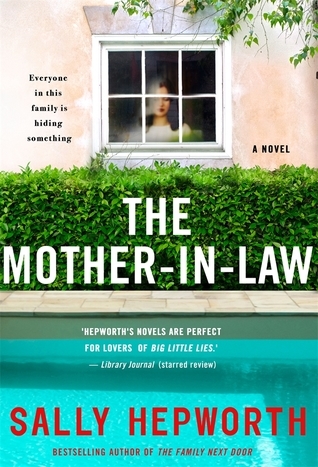
The book is presented (mostly) from two points of view—the wife, Lucy, and her husband’s mother, Diana. It is told by both characters in an equal division between “past” and “present,” the specific time periods sometimes not being noted but at other times being given as a particular year in the life. Because of the set-up, I was expecting a creeping sense of unease about the mother-in-law, culminating in her death and whatever would happen in the aftermath; instead, what is presented is two women with different goals and outlooks who are the victims, in their relationship with one another, of “unmeeting wishes.” Lucy lost her mother early in life and wants nothing more than to bond with a mother figure for a fulfilling relationship, while Diana is a rather aloof and self-contained person, due to her own background in which rejection played a large part, and doesn’t care to engage with Lucy in this way. Lucy sees Diana as cold and uncaring, while Diana regards Lucy (when she thinks of her at all) as self-indulgent and overly emotional.
The supposed central piece of the book—the murder—doesn’t factor much into the rest of the story, and the pool of potential suspects is small enough that I had a good guess fairly early on, though it wasn’t enough of a certainty for me to stop wondering until it happened. I frankly found that whole thread distracting—the book was trying to be too many things at once. There was domestic drama, there were specific agendas it seemed the author wanted to highlight through her characters—and adding the murder into the mix seemed like the author was trying to turn the path of this family saga in a direction it wouldn’t naturally go. (And presenting it as a fait accompli up front took any pizzazz out of its potential as a plot point!) The result, for me, was that I was alternately enthralled and bored, and in the end would have liked more back story and more relationship details and less of the somewhat forced nature of the “thriller” aspect.
I don’t feel strongly enough about it to wish I hadn’t read The Mother-in-Law, but it was definitely not the experience I was either expecting or craving, based on either the book’s description or because of my reaction to her other novel. She is a good enough writer that I will go on to try others of her books, but perhaps without reading the misleading blurb next time!
Another McTiernan

I just finished The Good Turn (Cormac Reilly #3), the third offering from Irish writer (although she now lives in Australia) Dervla McTiernan. I’m not going to have a lot to say in this review, except to note that McTiernan continues this excellent series with no momentum lost, and this third book is exponentially better than the previous, as I had both hoped and predicted.
This one has multiple threads running through it, with stories for both Cormac Reilly and Peter Fisher, and she braids them together seamlessly into one enthralling police procedural. There’s a potentially career-ending disaster for Fisher, followed by exile to his home village and a stint working under his small-town Garda father (whom he loathes); Reilly is caught up in this and scapegoated as a ploy to get him out of Galway for good; and there are story lines with missing girls, drugs, police corruption, villains masquerading as saviors…I love how all the characters are evolving, growing, becoming more clear as people and as officers, and the extra background development she has given to this one makes the story that much richer. Looking forward to the next one!


