
Grave Talk
I am always a fan of a good title, and this one works on a couple of levels. Nick Spalding has created an interesting premise for discussing life and death and grief in this book that documents the interaction of two people who have recently lost loved ones and are having an impossible time moving past the experience.
Alice’s husband Joe died of a heart attack in his early 40s, and she didn’t make it to the hospital in time. She has a feeling that something or someone messed up when Joe came into the emergency room for treatment, because why else would such a young man go like that? Ben’s brother Harry, a rising young surgeon, was diagnosed with leukemia and succumbed rather abruptly, and Ben, who is struggling with his need to live up to the rest of his family (they’re all doctors), is especially bereft because Harry was the one who was there for him when his parents were absent or too busy for their younger son. One day, the two mourners visit the cemetery where their people are buried, and the coincidence of the grave sites being closely adjacent brings them together in an oddly freeing ritual of friendship.

There is a certain comedic element to the book, based on Harry’s last wish left for Ben in his will. Harry asks Ben to visit the cemetery yearly, dressed each time as a different character dictated by Harry and carrying out a ritual that is meaningful to the two of them. So on that first fateful day when Ben meets Alice, she is prodded out of her focus on her own all-encompassing grief by the unusual experience of sharing the cemetery with a man dressed in a Kermit the Frog costume, standing at attention and humming the song “We Are the Champions” under his breath. Once Ben manages to convince her that he’s not a weirdo but rather the victim of his sadistic dead brother’s practical joke, the two of them have a meaningful conversation about their losses and agree to meet up at the graves on the same day each year to check in on each other.
This goes on for some time, and the once-a-year encounter showcases for Ben and Alice and also for the reader how uneven is the movement away from grief and how prolonged it can be, far beyond the expectations of those who haven’t experienced bereavement firsthand.
I liked the characters and felt that for the most part their development over the once-yearly visits was believable. I would have liked a little more detail about each of them than the bits they were able to convey in that annual conversation with one another, but the characters did develop and grow and remain interesting. Their respective resolutions felt a tiny bit facile to me, but over all I empathized with them and found the story engrossing, if not riveting. Er, ribbeting?
Slog in the woods
I just finished The God of the Woods, by Liz Moore, and perhaps my headline has telegraphed my reaction?
It’s not a bad book. It’s actually an intriguing story, at least initially. It takes place at a summer camp in the Adirondacks owned by the wealthy Van Laar family. This summer is the first time in three generations that any Van Laar child has ever expressed a desire to attend the camp, and ordinarily the family wouldn’t encourage their offspring to mix with the mundanes; but Barbara Van Laar has been such a problem for the past year or so that her parents are happy to put her in this controlled environment at a certain distance from home. She’s still close by—the camp is on one-half of the vast acreage owned by the family—but she’s not underfoot, sulking about in her all-black punk get-up, provoking her father and slamming doors, so all parties are happy with this solution. Until, that is, she goes missing.
Then we get the previous history of the family, which includes a son, Bear, who himself went missing (though not from camp) before Barbara was born, and was never found. A local man was blamed for his disappearance and assumed death, only to himself die before anything could be proved. The family believed he was the culprit, and let the whole thing go until Barbara’s disappearance sparks new interest in that similar set of circumstances, leading to speculation that someone else might have been at fault and is still out there preying on Van Laar children.
The problem is not with the storyline, it’s with how we glean each small morsel of information a teaspoonful at a time. There are seven points of view in this novel, and also a timeline that jumps from the ’50s to the ’60s to the ’70s (present day is 1975) to “day one” etc. of the search for Barbara, and both the narrator and the timeline switch in almost every one of the rather short chapters.
We get the story from the POV of Barbara’s camp counselor, Louise; from her bunkmate Tracy; from Bear and Barbara’s mother, Alice; from Judyta, a junior inspector on the case; from the widow of the presumed kidnapper of Bear; from the manager of the local motel at which the inspector is staying…. And it’s not just the current story regarding Barbara, or even the past story of Bear, it’s also the events leading up to the marriage of Alice into the Van Laar family, the relationship between that family and the managers (current and past) of the camps and with the police officers (current and past) of each investigation. The suspects include a boyfriend of Louise’s who is also the son of the Van Laars’ closest friends, who may have been double-dipping (or taking smorgasbord) in the pool of available females (including Barbara); we get the perspective of Jacob Sluiter, a serial killer (and an initial suspect in Bear’s disappearance) who has escaped from jail and is headed for the Van Laar preserve…kitchen sink doesn’t begin to describe the cast of characters here. The jumping around from person to person and era to era is disconcerting and ultimately offputting—or at least it was to me.
The resolution has a tender, ah-hah moment attached to it that made me momentarily soften toward the story, but there is also an implausibility about it that stuck with me longer than did that small detail, and I finished the book feeling frustrated—unsatisfied by the consequences meted out (or not) to various characters and dismayed by the cynicism surrounding the treatment of the rich vs. the “regular” people, even though I know that differentiation to be all too true in real life.
I do think that this is one of those books to which reactions will be diverse; certainly there are many people who adored it and gave it top marks. I will say that the writing is good, and the characters she develops beyond a certain point are believable and sympathetic; but much of the supporting cast struck me as cardboard clichés who took away from the total effect and made me wish they had either been developed more fully or left out altogether. I think a final pass by an editor determined to trim about 100 pages would have greatly benefited this book. It felt like the author couldn’t quite decide whether to write literary fiction, a mystery, or a full-on thriller, and cutting out some of the extraneous material might have propelled it towards a more defined identity. I was sufficiently engaged that I pushed to finish the book today before it went to the next person on the library check-out list tomorrow when my turn is up, but not so much that I will necessarily seek out this author again.
Meant to be
I don’t in general believe that anything is “meant to be.” But if anything could convince a cynic that there is such a thing as destiny, it would be one of Jenny Colgan’s novels. Close Knit was particularly illustrative of that theme, in that it was perhaps a little more transparent than its author might have intended in telescoping the story. I pretty much knew who the protagonist would end up with from about the third chapter (despite various rather transparent red herrings), and spent the rest of the book waiting for her to figure it out for herself and/or for the author to put her and her intended in the right kind of meet-cute circumstances to make it happen.
I didn’t know that there is a book—The Summer Skies—that precedes this one and stars another main character (the pilot) as its protagonist. But this read perfectly well as a stand-alone, and now I can go back and enjoy that one too.
As is usual with Colgan’s books, the beautiful, bare, wind-swept islands of northern Scotland are as much a character as anybody else in the book, and reading her lyrical descriptions almost persuades me that I would love to live in a locale that is fairly constantly beset by frigid winds, in almost total darkness during the winter and perpetual light in summer due to its place far above the equator. Likewise, the people with whom she populates the small towns and villages of the islands are in equal parts ordinary and distinctive, most of them sounding like the perfect neighbors and friends, with a curmudgeon or a crank thrown in here and there for ballast.
Authors should have to vet the copy written to describe their books on Goodreads (or does it come from the publisher? if so, shame on them!), because there were many inaccuracies in the details of this one. First of all, it’s described as a summer novel, which I suppose you could marginally support, since some of the action takes place in May; but in a clime where May can bring rain, hail, or even snow, it’s not exactly a typical summer vacay beach read! Second, the main character is described as having many friends, but the truth is, everyone in her knitting club is her mother’s age (or older), and Gertie is more their pet project than their contemporary. She is actually rather isolated, being a shy, dreamy “girl” of 30 who has no girlfriends or dates her own age. Third, when Gertie decides to take on a new job, it’s described as air stewardess on a small plane, but in fact her actual primary task is to run the desk at the tiny terminal, checking in the passengers and their belongings and making sure everything goes smoothly in the run-up to each flight. She is required to go up in the plane in order to understand aspects of her job and to occasionally serve as crew, but that’s a much less important function.
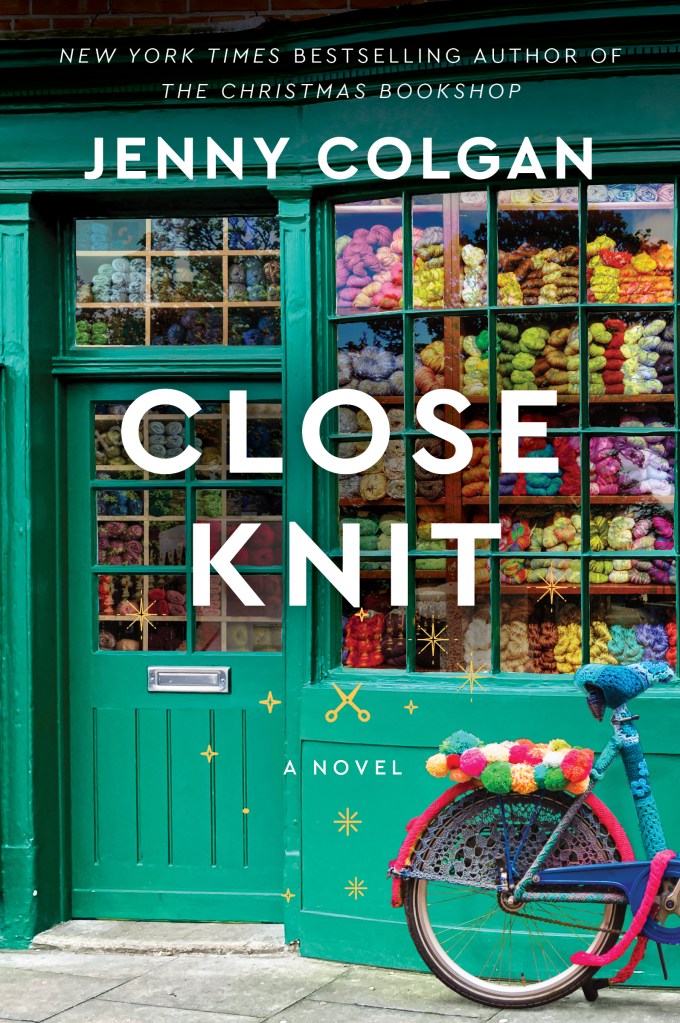
A final pet peeve is the cover design: While there is a knit shop in the village similar to the one depicted on the cover, the women of the knitting club have a persistent feud with its owner and, in fact, hardly frequent it, so to give it pride of place as the cover design is as bad as the stationary bookstore on a street corner that appears on one of Colgan’s other books about a mobile bookmobile that travels around an island supplying reading wherever it goes.
The story line that propels the action of Close Knit is that Gertie has somehow let her life slip through her fingers. She lives at home with her mother and grandmother, and her friends are their knitting club ladies, so she has no significant men in her life. She got a job 10 years ago at the local market and somehow the time has passed her by while she unloaded groceries, dusted shelves, and worked the till. Her only real entertainment is knitting beautiful scarves, socks, and hats, and the only place she experiences excitement is in her romance novel-driven dreams. Then she’s given the opportunity to switch jobs, which she does partly because there is a handsome and charismatic airline owner whose planes and helicopters use the terminal and she thinks this might be an opportunity to get to know him. But fate has something different in mind for Gertie…
Even knowing what would probably happen, I thoroughly enjoyed going through the process, as one enjoys a cup of cocoa and some warm slippers at the end of a long, cold afternoon. That’s probably more than half the appeal of a Colgan novel—the tactile and culinary descriptions set in the perfect atmosphere in which to enjoy them. The designation “cozy” was meant for her books.
Slow burn
I just finished Rainbow Rowell’s newest novel for adults, called Slow Dance. Back when I was a brand-new teen librarian, her book Eleanor and Park hit the top of the chart for teen novels, and I read it with my high school book club and fell in love—with her characters and their story, and with her writing. This book could be about Eleanor and Park at 33, if they followed certain trajectories that first took them away from one another and then brought them back together after a fair number of life experiences, although Eleanor and Park had the sense to figure out just how much they liked each other, while Shiloh and Cary (despite one experience during their college-age years) are frustratingly obtuse about their feelings.
This is a longer novel than it needs to be, and I say that out of a fair amount of impatience at certain points with the sheer pigheaded insistence both characters show when it comes to misunderstanding one another’s motives, thoughts, and feelings. But at the same time, I got it; if you have ever been in a one-sided relationship—or even one that you thought was one-sided—and struggled with how much or how little to reveal, and whether to go for it or keep it to yourself forever, you will get it too.
Shiloh and Cary were best friends in high school, part of a steadfast trio with their pal Mikey, and while they were inseparable and had secret feelings for each other, they never managed to make it out of the “friend zone,” except for a weekend of bliss coupled with massive misunderstandings during Shiloh’s college years. They grew up on the poor side of Omaha, and both had plans to escape; Shiloh was going to be an actress and probably head for New York City, while Cary’s exit plan was to join the Navy. Cary fulfilled his objective, but Shiloh dabbled in theater until she met an acting teacher with partner potential, then produced two children followed by a divorce, and remained stuck in Omaha, living with her mom and kids in the house where she grew up. Fourteen years later, they both attend a second wedding for their friend Mikey, and reconnect—sort of. The old feelings resurface, along with the misunderstandings, the ambivalence, the life conflicts, the water under the bridge…in short, they have a lot to get over and get past if they are ever to share something meaningful. The will-they won’t-they, combined with the flashback story of how they got to this point in their lives, is the story here.
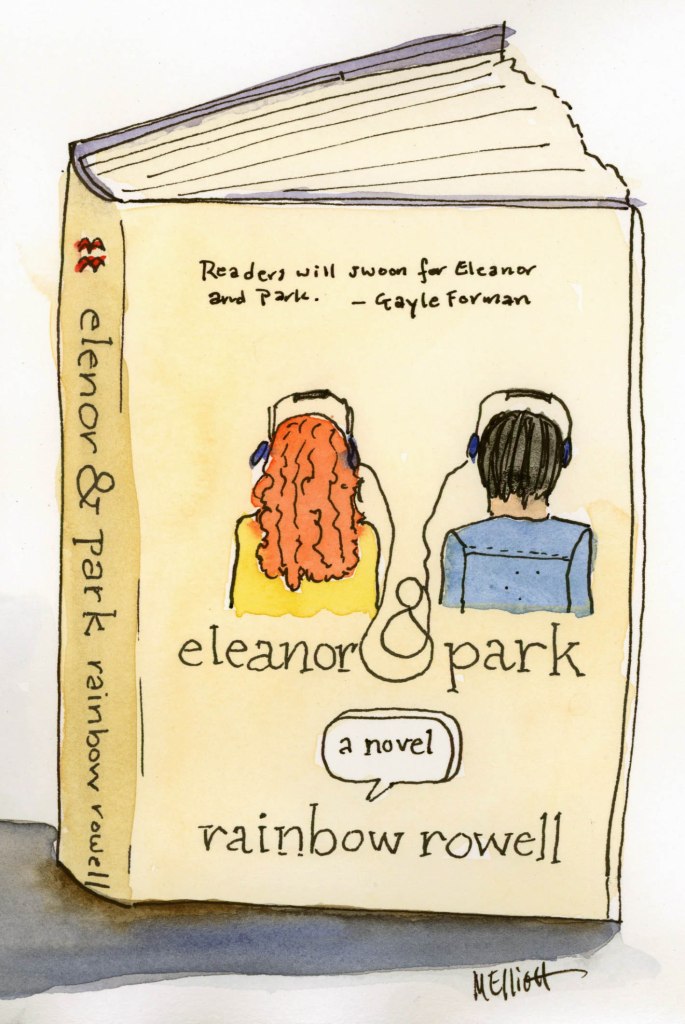
The saucy banter, the genuine emotions, and the honesty of expression brought back the best parts of Eleanor and Park; and although there are moments when you want to take one or both of them by the shoulders and give them a good shake, you’re mostly rooting for Cary and Shiloh to get it together and succeed at this second-chance romance. (And you also want a happily ever after for Shiloh’s extremely engaging children, Juniper and Gus.) A solid entry for Rowell’s adult realistic fiction shelf.
Impossible

I picked up this book mainly because I thought I had read Matt Haig’s previous book, The Midnight Library. And at some point I must have actually believed I had read it, because I gave it a five-star rating on Goodreads. But there is no accompanying book review, which is unheard of for me since about 2012, so I looked through all my back posts and discovered that I had planned to read it, but somehow ended up instead with The Left-Handed Booksellers of London, by Garth Nix!l Anyway, that means The Life Impossible is the first book by this author that I have read, which means I came to it under false pretenses.
I may still read The Midnight Library, because I did enjoy parts of this one, and that one is better, according to the reviews of countless others.
I was initially drawn to this one by the description, which was about Grace Winters, a retired teacher who has been experiencing a dreary sameness to her days. (I related to this, being a retired librarian of a certain age who is mostly housebound.) Then she discovers that someone with whom she had a brief friendship decades before has left her a house on the island of Ibiza (one of the Balearic islands off the coast of Spain in the Mediterranean). There is some mystery about what happened to this friend—she is presumed dead, but no one can give Grace a clear account of how—and Grace decides, impulsively, to go to Ibiza and find out.
Up to that point, the story seemed like it was going to be one of those books where somebody who is stuck hits a turning point and changes her life, and that is, indeed, Grace’s story; but the magical bit to this tale isn’t that she discovers herself by embracing a different lifestyle in a fresh locale, or that she meets someone or acquires a new and exciting avocation. The magical bit is, indeed, magic—it’s something that is described by those who introduce her to it as a natural phenomenon that is the next step along the way for the evolution of humans’ innate powers or abilities that just looks like magic. And the explanation of its source is even more bizarre. So, this is a story for which you have to be willing to suspend disbelief, which at some moments feels easy and natural and at others may cause you to say “What?!” and put down the book.
I don’t know whether to characterize this story as magical realism or as a metaphysical metaphor or what. It has some uplifting and ah-hah moments, but I had as hard a time embracing them as Grace does. I appreciated the setting and the beautiful descriptions of Ibiza, about which I have been fascinated ever since I read about the place in a Rosamunde Pilcher novel 25 years ago, and I liked the eco-consciousness the author promotes; but some of the elements of the story were just too weird for me, and the narrative becomes borderline didactic in its zealous promotion of self-actualization.
Also (and some may find this too nit-picky, but so be it), I didn’t like the vehicle that caused Grace to write down her saga: She receives an email from a former student who is having a really hard time—Maurice has lost his mother, lost his job, been dumped by his girlfriend, and is in despair—and instead of doing something concrete to assist him, such as sending him an encouraging response, or engaging in a series of helpful phone conversations during which she listens and is supportive, or referring him to a therapist and following through to make sure he is okay, she makes it all about herself. She tells him “I know what you’re going through” and then writes a 300-page manuscript about her own issues and how she resolves them, and sends it to him as if that will somehow fix things. I mean, he might find that it briefly diverts him from his own problems, but short of going to Ibiza himself and trying to replicate her experience, it certainly doesn’t address his crisis, particularly because what did happen to her could cause him to think she’s lost her mind.
Hmm. Have you ever started out writing a book review thinking that you had enjoyed the book and discovered, by the time you dissected all of its elements for your readers, that maybe you weren’t so thrilled by it after all? Yeah. Well.
Positives:
• Some truly epic descriptions of the character and beauty of the island of Ibiza
• Some engaging characters
• A protagonist with whom some may closely identify (at least initially)
• A useful portrayal of how capitalism is destroying nature
• Some lyrical writing and a few memorable moments and quotable quotes
Negatives:
• A lot of angst and some petulant indignation
• Meandering narrative that prolongs the story to no purpose
• Magical elements that start out appealing but end up being pretty weird
• A certain self-centeredness on the part of the protagonist and several of the other characters
I guess you will have to decide for yourself on this one.
Revisiting Mount Polbearne
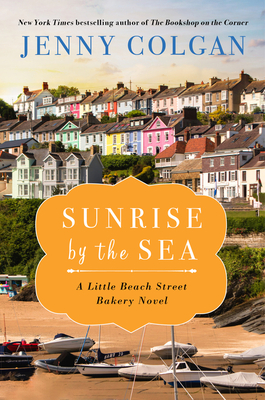
I just finished reading Sunrise by the Sea, the fourth book by Jenny Colgan set on the fictional island of Mount Polbearne, modeled on St. Michael’s Mount in Cornwall with its tide-bound causeway from the mainland. The first book, Beach Street Bakery, tells the story of Polly Waterford, who moves to the island to get over a bad relationship and ends up turning her avocation for bread-baking into a job, then meets Huckle, a local bee keeper with hidden depths. The two subsequent volumes (Summer at the… and Christmas at the…) continue their story. This fourth chapter definitely includes Polly and Huckle and their quirky twins, Avery and Daisy, but it is primarily the story of a newcomer to Mount Polbearne, and could probably be read as a stand-alone, although you would miss some of the nuance contained in Polly and Huckle’s back story.
Marisa Rosso’s grandfather has died and, although he lived in Italy and she saw him rarely (she lives in England), her cherished childhood memories from their time together have sidelined her with grief. The two of them were similar in demeanor and had a quiet but close relationship in the midst of their loud Italian family, and soon the grief has metamorphosed into something bigger; Marisa feels that along with her grandfather she has also lost an essential piece of herself. Grief turns into anxiety and then agoraphobia, and soon Marisa is working her job remotely from the confines of her sublet bedroom and curtailing every other activity. Her rather self-centered landlord thinks he’d prefer a less fraught home existence, and decides that Marisa has to go, to make room for more fun-loving roommates, but he speaks to a wealthy friend of his and manages to get her a place to live in a holiday rental on Mount Polbearne. Once the overwhelming anxiety of getting to Cornwall and out onto the island is past, Marisa thinks she could enjoy the solitude of the tidy little apartment, until her next-door neighbor moves in. He’s large, loud, Russian, and teaches piano lessons from morning to evening, then plays melancholy discordant compositions late into the night, and the constant clamor keeps Marisa in a state. Something has got to give…
This is the usual charming signature Colgan mixture of beguiling location, delightful characters, some life challenges, and lots of cooking and baking. I enjoyed catching up with the protagonists from the other books, and Marisa’s passage through grief is both revelatory and cathartic. It’s not “great literature,” but what can I say—I’m a fan.
Prescience
I have always been confused by how this word is pronounced; the syllables divide up as pre•science, but according to the dictionary, you pronounce it PRESH•ens. Before I looked it up the first time, I was pronouncing it “pre-science,” because the definition is “the fact of knowing something before it takes place,” so it made sense to me that it would be pre-, or before, science, because that would mean it was something known “before the fact.” In other words, a prediction, which is another weird word (previous to speaking it?). The English language is wild and wonderful.
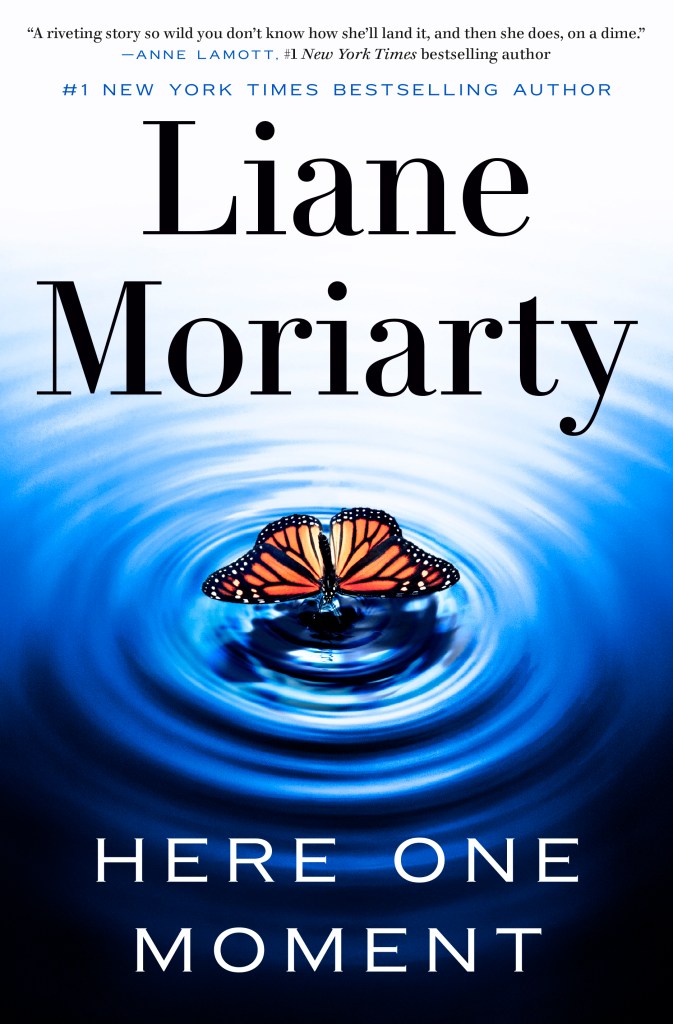
Anyway, I thought it was an appropriate title for a review of Liane Moriarty’s most recent book, Here One Moment. A bunch of people get on a plane—parents, children, young people, middle-aged, elderly, all caught up in their own plans—and among them is an unremarkable older lady who rises to her feet during the long delay before takeoff and, pointing her finger at each passenger, methodically predicts their deaths (age and cause). Some laugh as if it’s a good joke (mostly those whose prediction is for 96 or 103, of old age), while others panic as she details disease, accident, or violence at a young age or in the immediate future. When the short flight is over and they all disembark, the incident is put out of the minds of most, whether it’s skeptically, uneasily, or forcefully, but when the first passenger dies exactly as the “Death Lady” predicted, the rest are no longer so dismissive.
After the events of the flight, the story jumps between multiple story-lines detailing the lives and reactions of half a dozen passengers, interspersed with chapters from the lady’s life, and we wait to see whether she is a delusional fraud or a true clairvoyant, worrying right along with those passengers with imminent and uncertain ends as they pretend normalcy, choose avoidance, or change their lives to avoid their fate.
The question for the reader is, of course, if you knew your death date, would you do anything differently? Would you try to defy fate, manipulate the statistical likelihoods, shift your timeline? The germane quote Moriarty used in the book was from Elisabeth Kubler-Ross:
“It is only when we truly know and understand that we have a limited time on Earth and that we have no way of knowing when our time is up that we begin to live each day to the fullest, as if it were the only one we had.”
I enjoyed the exploration of the Butterfly Effect idea and, of course, drew parallels with that movie and also with Final Destination. It’s also been compared with The Measure, by Nikki Erlick, which I have not read (except for the Goodreads summary). This book dragged a bit during the detailing of Cherry Lockwood’s life (the lady with the pointing finger), but suspense was maintained in the sections about each person who was dealing with the prospect of an imminent demise, of causes mostly not under their control. So although the book seemed to take me an inordinate amount of time to get through, I would recommend it for those who find this question philosophically intriguing. Not my favorite book of Moriarty’s, but also not my least favorite!
Readalike

Usually when someone asks for a “readalike,” they mean that they like a particular author and would like to find another author or two who write in the same way, whether because that author publishes infrequently, or has died and won’t be producing any more books, or whatever. But I’m afraid I mean this in a less flattering way, in that the entire time I was reading A Calamity of Souls by David Baldacci, I was thinking about all the ways in which it echoed a favorite Grisham book (and movie), A Time to Kill. The setting is a similar one (the South in the 1960s), the issue is a similar one (a black defendant with a white lawyer trying to get him a fair trial), and there is even the civil rights “savior” who arrives from the North to help the southern lawyer navigate this tricky case in front of a judge and jury who are blatantly racist. (One could also draw parallels with To Kill A Mockingbird, specifically in what ends up happening to one of the main characters.)
Although the cases are different (in ATTK, the defendant has killed his daughter’s rapist, while in this one the black man has been accused of murdering and then robbing his white employers), and although in one the legal genius from the North is a Jewish law student from New York while in the other she’s a black civil rights lawyer and hails from Chicago, the dynamic is very much the same. The difference is, I found Grisham’s story completely gripping, while Baldacci’s has some interesting moments as the two lawyers set about discovering who could have done the crime and then put their client in the hot seat to take the blame, but other than that element of mystery, a lot of the book reads like a Civics lesson.
The author takes pains to mention significant cases (Loving v. Virginia), racially charged props (the Green book, which the author has to find a roundabout way to include because it had ceased publication by 1968), sundown cities, and the like, and much of it seemed both heavy-handed and beside the point. This book presumes that the reader has no first-hand knowledge of the history of racism in the South and its manifestations in the 1960s when laws had been passed to end it but southern whites were dragging their feet to implement them. The characters are mostly one-dimensional, presenting as either a hero(ine), conflicted and confused, or irredeemably evil, with little nuance. One reviewer on Goodreads said they were uncomfortable with the portrayal of the black characters and actually felt that the author perpetuated some stereotypes while trying to do the opposite; I would have to agree.
It’s not an irredeemably bad book, but it’s not very good. It’s my first experience reading Baldacci, as far as I remember (I might have read one back in my 20s?), and to be fair I might try another of his without the obvious agenda and see if I enjoy it more, since so many people rave over his books. But…I’m certainly not on the library website looking for my next one right this minute!
Alien encounters
John Scalzi is a funny guy. It took me awhile to reach this conclusion, because when I began reading his books, I didn’t approach them in chronological order; my first experience was with his robot/murder-mystery book Lock-In, and after that I read the whole “Old Man’s War” series, which (apart from a few bad puns and tongue-in-cheek moments) is relatively serious in nature. But then I found Fuzzy Nation, Redshirts, and The Android’s Dream, and realized he has a well developed sense of humor. And this past week I perused his backlist and found his very first novel, called Agent to the Stars, which both solidified that opinion and also reminded me of a whole vein of science fiction (alien encounters) that I have consistently enjoyed. Some of them take the subject seriously, while others (like this one) treat it with a fun and refreshing lack of gravitas.
Agent to the Stars follows a premise that I first encountered in Sheri S. Tepper’s book The Fresco—
the question of what would happen should extraterrestrials make contact with one ordinary human, rather than going the more accepted route of approaching the government of some country or the Secretary-General of the United Nations, i.e., an official body or representative. In this case, said extraterrestrials arrive at the conclusion, after long-term absorption of radio and television and movie broadcasts, that Hollywood is the all-powerful entity in our world, and the best way, therefore, to spring themselves upon mankind is to get the entertainment industry to pay attention; they therefore hire themselves an agent to represent them (as one would).
They first contact the head of a powerful agency, but his visibility may attract too much attention while decisions are being made about how to make palatable a group of aliens who are essentially shaped like big piles of Jello with extrudable tendrils and smell really bad, so he passes the responsibility down to his most successful brash young agent, Tom Stein. One of the Yherajk thus becomes Tom’s constant companion in the quest to exchange knowledge between the two races, and this association becomes a comedy of errors that encompasses an aging golden retriever, a vapid young starlet, a persistent tabloid journalist, and a completely implausible but thoroughly entertaining series of events, as Tom and the alien representative try to figure out how to introduce the Yherajik to the world at large.
If this topic appeals to you, here is a small sampling of alien encounter fiction in several categories, both serious and humorous, that you might also like to explore:
TYPICAL EVIL ALIEN SCENARIOS:
The War of the Worlds, by H. G. Wells—In this classic, an army of invading Martians seeks to end human civilization. Extensively treated on radio and film as well.
Starship Troopers, by Robert A. Heinlein—A space opera drama pitting the Terran Mobile Infantry against “the Bugs.”

Ender’s Game, by Orson Scott Card—A much more nuanced version of Heinlein’s story, with young children playing computer-simulated war games that refer to the 100-year-long war with the “Buggers.” The difference here is, there are sequels in which Ender speaks and acts against xenophobia…
Binti, by Nnedi Okorafor—portrays an encounter with the Meduse, “an alien race that has become the stuff of nightmares.” (two sequels)
The Three-Body Problem, by Liu Cixin—A secret military project seeks to contact aliens, but the ones they find are on the brink of destruction and decide to invade Earth and take it over. (two sequels)
EQUIVOCAL ENCOUNTERS
(the aliens are “good,” or at least well-intentioned, but seek to alter the humans somehow):
Childhood’s End, by Arthur C. Clarke—the classic “aliens as interventionists” story that arguably begat all the others…
Dawn, by Octavia E. Butler—The Oankali save humanity from atomic destruction, but want to genetically merge with their “primitive civilization” to create a new species. (two sequels)
Human 0.4, by Mike A. Lancaster (YA)—a twist on an “invasion of the body-snatchers” scenario. Smart, fast-paced, thought-provoking. (one sequel)

The Host, by Stephenie Meyer—She’s not the greatest writer, but she is a good storyteller. The Earth has been invaded by a species that take over the minds of human hosts while leaving their bodies intact. A treatise on cooperation vs. autonomy.
The Sparrow, by Mary Doria Russell—One could argue about the category for this one, but it’s a mesmerizing tale, regardless. A scientific expedition of Jesuits make first contact with extraterrestrial life. (one sequel)
BENIGN/POSITIVE AND/OR HUMOROUS ENCOUNTERS:
The Left Hand of Darkness, by Ursula K. LeGuin—LeGuin wrote a group of books called “the Hainish Cycle,” which depict humans’ absorption into a growing intergalactic civilization (the Ekumen). One of the most famous—and arguably the best in terms of intellectual science fiction (it won both the Hugo and the Nebula)—is this book about a human envoy sent to conduct a first encounter with the inhabitants of the planet Gethen, a race of genderless, intersex beings. It’s fascinating, thought-provoking, but also deeply emotional.
The Hitchhiker’s Guide to the Galaxy, by Douglas Adams—extremely silly and inventive. (five-book series)

The Long Way to a Small, Angry Planet, by Becky Chambers—my review of the first book is here. (five-book series)
The Fresco, by Sheri S. Tepper—This is the one I immediately remembered when I started reading the Scalzi book I just reviewed. Latina single mom Benita Alvarez-Shipton is approached by a pair of aliens who ask her to be the sole liaison between their race and humans. First up, she has to contact the Powers That Be in Washington and convince them she’s not crazy.
I hope you find something here that will cause you to enjoy this aspect of the science fiction galaxy!
Old-fashioned feel
I have always enjoyed the books of Rosamunde Pilcher, although she wrote so few that I have had to resort to re-reading each of them multiple times (which is no hardship). I was therefore delighted when someone in the Friends and Fiction Facebook group mentioned that British author Marcia Willett wrote in a similar vein but that she liked Willett’s even better than Pilcher’s. I went to the Los Angeles Public Library website to see if they carried any of hers as e-books, given that I don’t get out much but can order books through Overdrive straight to my Kindle. I was happy to find a few, and checked out Indian Summer, which was almost immediately available.
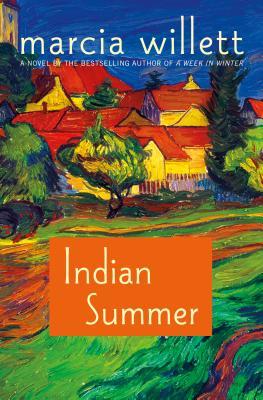
After having read about 25 percent of the book, I logged onto Goodreads to enter it as my “currently reading” title and was shocked to discover that it had just been published in 2014, a mere 10 years ago. The book’s setting and characters and particularly the writing style are old-fashioned to the point that they remind me of some of my favorite authors of the 1940s-1960s—Rumer Godden, Elizabeth Goudge, Daphne du Maurier, James Hilton and Dodie Smith. In fact, this book reminds me particularly of Smith’s lesser known It Ends with Revelations, probably because of the theatrical connections of the books’ protagonists.
Willett’s earliest novel appears to have been published in 1995 (which may seem aeons ago to some of my younger blog-followers, but is just yesterday to someone born 40 years before that), and she didn’t begin writing until she was 50 years old; but that makes her about 80, not nearly elderly enough to channel this particular sensibility in her novels. It’s not just the setting, in rural Devon, that makes it feel this way; it’s the characters, who are generational landowners and tenants on the one hand and theater people and writers on the other, and in the way they relate to one another and to their environment. There is still that unspoken, unacknowledged consciousness of class that hasn’t existed to this degree in England for a while now (or at least I don’t think it has!) but is definitely still alive in this story. Additionally, there is a certain focus with which some of the writers from the era I mentioned approached their story-telling that includes a specific attention to nature and a leisurely and appreciative approach to the organic cycles of life that you simply don’t come across much in modern works.
The book revolves around a central character, Mungo, a retired theater actor and director whose primary residence is London but who also has a place in Devon, a part of the larger property owned by his brother. I say “revolves around” because while all the characters have at least a tenuous connection with Mungo, he mostly facilitates, rather than stars in, the little stories portrayed here. Mungo’s brother, Archie, inherited from their father, a conservative man who didn’t appreciate either Mungo’s profession or his sexual identity. Archie and his wife, Camilla, are struggling to make ends meet on the estate by renting out their two cottages. Philip and Billy are brothers who inherited the running of the “Home Farm” (a portion of Archie’s estate) from their father and will pass it to Philip’s son, unless Archie decides to sell up. Staying in the two cottages—one updated and the other dilapidated and awaiting repairs—are Emma, an army wife with two children, Joe and Dora, and a six-month lease; and James, a writer, who is wandering around Dorset for part of the summer, researching locations for his second book. Completing the cast are Kit, a friend of Mungo’s who has come down to consult with him on what to do about the reappearance of a figure from her past; and Marcus, a military friend of Emma’s husband who is trying to make time with her while her husband is away in Afghanistan.
Each of these characters or groups of characters stars in their own vignette within the larger picture of this Indian summer in Devon. Although there is one secret from the past that turns out to be rather shocking, for the most part the events are only exciting to those directly involved, being ponderings about what will or may happen in the future based on choices made now. There is a gentle humor revealed in the obliviousness of the author, who has met all the other locals but has not only completely misconstrued their personalities and concerns but has arrived at the assumption that life here in Devon is constant, unchanging, and bucolic, when in fact there are many tempestuous passions hiding behind the façades of everyone in the story.
While I could not agree with the woman who considered Willett superior to Rosamunde Pilcher in her authorial abilities, I did enjoy this gentle, rather charming tale of friendships and secrets in the English countryside.

 The Book Adept