Fictional memoir
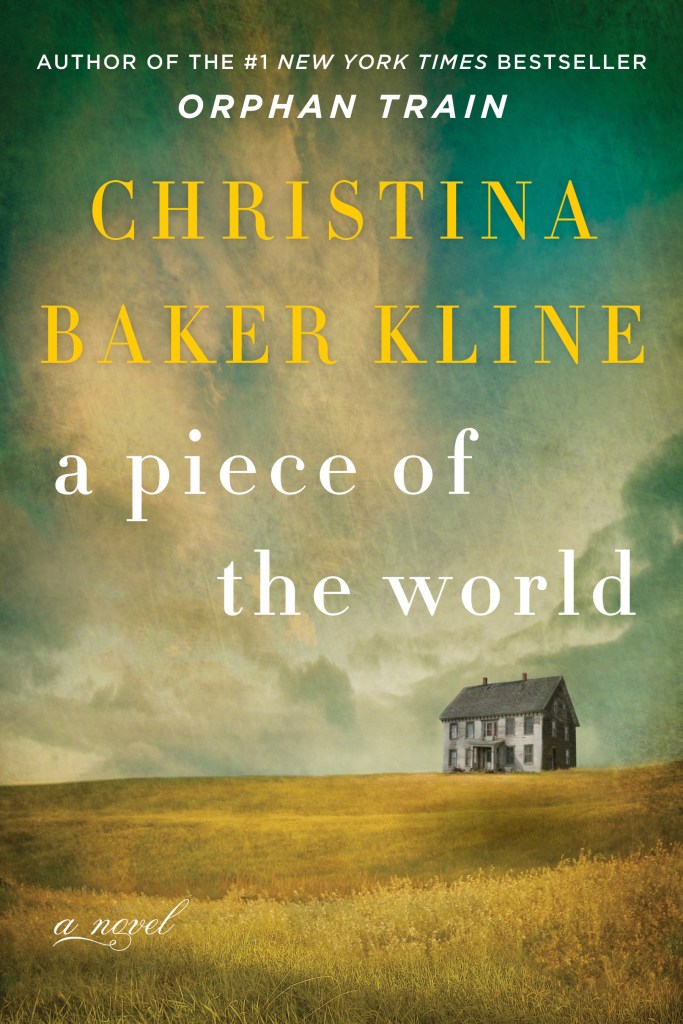
A Piece of the World, by Christina Baker Kline, is in a special category: Although the overall story is fiction, it is based on facts about real people, and reads like memoir.
The book is based on Andrew Wyeth’s painting called Christina’s World, pictured here. People have always noticed something slightly odd about the figure in this one—she’s not just reclining in that field, she looks like she’s wanting to get to that house, or perhaps even pushing or dragging her body along in the attempt. This is the germ of the idea for the entire book, which, although it does showcase some of Wyeth’s career, is primarily about the subject of the painting, Christina Olson of Cushing, Maine.

The book documents Christina’s entire life, which turns out to be a small one except insofar as she serves as muse to the famous painter. Christina suffers some kind of illness at age three (they never state what, but my thought was polio) that twists her legs up and makes her awkward and clumsy in all her movements. This and her own pride and self-reliance make her an outsider, both in her family and in her community, with the result that the chances others have for happiness seem to pass her by, no matter how hard she tries to grasp them. She grows up in the house previously occupied by generations of her ancestors; she cares for her brothers and her aging, ailing parents as her disability gradually worsens; and she is finally left with one brother to live out her days in an ever-diminishing daily routine circumscribed by her physical condition…until one day Andrew Wyeth’s young wife, Betsy, a family friend, brings him to visit, and he becomes fascinated with Christina, her brother Alvaro, and their house and farm in all its aspects. No detail is too large or too small for him to tackle in his art—he paints the rusty padlocks and spiderwebs, the sheer curtains blowing in the breeze from an upstairs window, Alvaro smoking his cigar—and this begins an almost 20-year relationship between himself and the two remaining Olsons, resulting in possibly his most famous picture/portrait.
“Later he told me that he’d been afraid to show me the painting. He thought I wouldn’t like the way he portrayed me: dragging myself across the field, fingers clutching dirt, my legs twisted behind. The arid moonscape of wheatgrass and timothy. That dilapidated house in the distance, looming up like a secret that won’t stay hidden.”
CHRISTINA OLSON
In some ways this is a dark, dour portrayal, but it is rescued from being too depressing by Christina’s will and strength of spirit, and by wanting to know what happens next. The book deals with complex issues; resentment, shame, lost dreams, family challenges, and social classes are explored, and the writer makes us realize that there is depth and intensity to even such a simple existence devoid of major events. There are some fine lyrical moments of expression, and Kline paints pictures with the words she chooses. I didn’t expect to like this book as much as I did—it kept me reading through one sleepless night, and I was a little sorry when it ended. It’s a great example of what an author can do with the kernel of a story, some thorough research, and a vivid imagination to bring them both to life.
Theories, bees
It strikes me that the difference between a nonfiction vs. a fiction reader is subject vs. type. That is to say, a nonfiction reader may be intrigued by a particular subject and then read widely and eclectically on that topic for information, whereas a fiction reader is more driven by the type of fiction that she likes.
For instance, in my most recent rare burst of serendipitous nonfiction reading, the subject was bees. The peril to pollinators has figured prominently in the news recently, and I have been distressed to find more than one dead bee in my driveway. While I haven’t used a pesticide in my garden in 38 years, I am confident that my neighbors and their gardeners are not so nice in their gardening behavior. Now that this is becoming a worldwide problem, with colony collapse disorder threatening not just the bee population but also the pollination of essential crops, I wanted to know more.
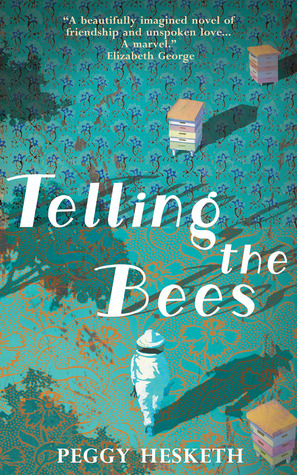 Being primarily a fiction reader, I first instinctively gravitated to a recent novel on the subject. The author’s mentor is Elizabeth Gilbert, and it was blurbed by Elizabeth George and heralded as a national bestseller. But I found Telling the Bees, by Peggy Hesketh, a disappointing read, not so much because it didn’t contain some information that I wanted, but because of the fictional aspects. The details about bee-keeping were surprisingly well detailed and quite informative, but the way the main character was written seemed so far from reality that I was dumfounded when I realized, more than halfway through the book, that he couldn’t have been more than 50 when the flashback part of the story began, while I had assumed he was in his late old age based on his affect. The book took more than 170 pages out of its 300 to get going (a murder takes place early in the book and then isn’t addressed again except tangentially for more than halfway through), and even then the progress of the story was glacier-like. There is a “secret” that is revealed to the clueless protagonist at the very end, but I guessed it less than halfway through, making the time spent waiting for this guy to “get it” an excruciating exercise. The story was also rather depressing, being a tale of missed chances, miscommunication, and a life not lived to the full.
The reason I had picked up this book was the recollection of a memoir I had liked almost 20 years ago. I was hoping for a similar experience to reading A Country Year: Living the Questions, by Sue Hubbell, but alas. The only thing I took away from Telling the Bees was some rather riveting folklore about communicating with bees, which I did enjoy.
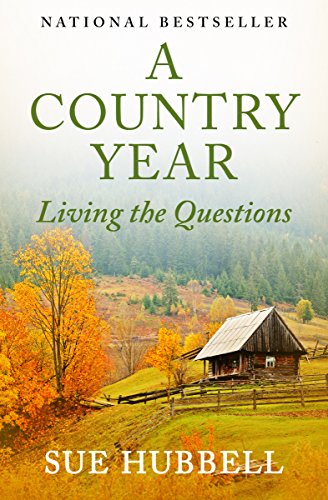 I then decided to go back and reread the Hubbell book, and received nearly as much pleasure from it that I did the first time. The seasonally dictated round of farm, field, barn, and house, as she cares for her bees and harvests their honey, accompanied by her minute, delighted and delightful observations of the wildlife surrounding her acreage in the Ozarks of Missouri, was simultaneously soothing and inspirational. It led me to consider moving to the country to pursue bee-keeping, or at the very least made me want to drive immediately to my local nursery and get busy planting some bee-friendly foliage.
After this, having had a lengthy discussion with my cousin about a book she had recently, coincidentally, read, I addressed myself to a polemical debate that claims to reveal the inner lives of bees and calls for their better, more sensitive treatment. I found Song of Increase, by Jacqueline Freeman, a bit of a tough sell, even though my cousin asked me to keep an open mind to the end. I was quite impressed with Freeman’s observations and understanding of bees, and liked and appreciated her “bee-centric” approach to beekeeping, putting the welfare of the bees ahead of their “product.” She shows a lot of insight and makes intelligent observations, and her writing is pleasant and evocative.
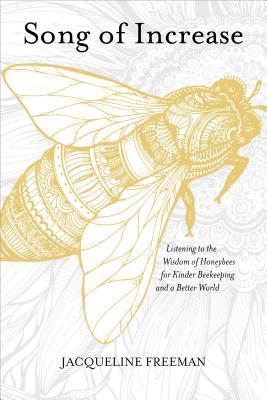 What I had trouble with was her interpretation of the spiritual aspect of her relationship with them. I understood that she believed she was “channeling” messages from the bees, and I think I could have swallowed that content more easily if it had been presented as such—the bees as communicators with her as interpreter. But when she divided the book into parts and implied that the bees had literally and directly communicated certain parts in human words (in one case she uses phrases such as “the bees call themselves” this, and the bees “use the word” that), it put me off. The information about the bees was sufficiently fascinating that I didn’t believe there was a need to embellish by giving them human language or feelings. It’s not hard to believe that humans can be attuned with bees; I have read enough anecdotal evidence from other beekeepers who can translate the sounds the bees make into specific moods and intentions and who can figure out from pitch and intonation when, for instance, a new queen is about to start a swarm. But the way Freeman writes about it will set off some people’s BS meters, which is a shame.
Looking at the differences between these three books was instructive. The first, although fiction, was obviously written by someone who had a fair knowledge of bees and bee-keeping, and was filled with rather clinical descriptions of procedures accompanied by the aforementioned folklore. Sue Hubbell’s book was an interesting contrast to Jacqueline Freeman’s, in that both authors spent extensive time living with and trying to understand bees, but Hubbell’s conclusions were more along the line of “the longer I keep bees, the less I understand them,” while Freeman’s were to claim specific knowledge communicated to her directly by the bees themselves, which was seductive and in some cases completely plausible, but ultimately somewhat suspect. Also, Hubbell’s humility in disclaiming knowledge was contradicted by her humane practices, which agreed with Freeman’s conclusions, such as refusing to kill an old queen once a swarm was rehived, despite common commercial wisdom that to do so was the only way to promote an efficient honey yield. Hubbell was willing to do without that yield for a year, in order to accommodate the bees’ natural processes, which was precisely the kind of behavior being advocated by Freeman. I imagine if you could put the two authors in a room together, they would have much to share and agree on.
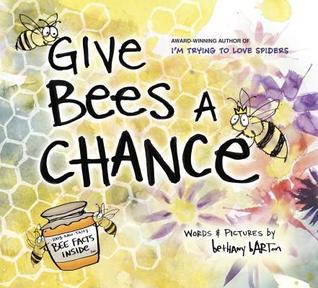 I rounded out my curiosity by checking into how the subject of danger to pollinators is being addressed in children’s books, by reading a charming one by Bethany Barton, called Give Bees A Chance. Although the book goes into much factual detail about kinds of bees, their physiognomy, the process of making honey, and their essential role in the food chain, one gets the feeling that the primary reason for writing and illustrating this book was to squash the first impulse of some children to, er, squash whatever they don’t understand! The book acknowledges children’s fear of and focus on a bee’s stinger, but tries to distract from and diminish that fear by presenting all its good qualities. Let us hope it succeeds!
All of this ultimately moved me to a search online for organizations that discuss the specifics of how to create a pollinator-friendly environment within your home landscape, and ways to enlist your neighbors in this campaign so that yours doesn’t prove to be a tiny island of safety in a perilous ocean of neonicotinoids. I noted down upcoming sales by local growers of native pollinator-friendly plants, bought a book on turning your lawn into a more natural, critter-friendly environment, and got ready to start digging, once the winter rains have (finally) subsided. Who knows, once the environment has been created, whether I will decide to add a hive or two?
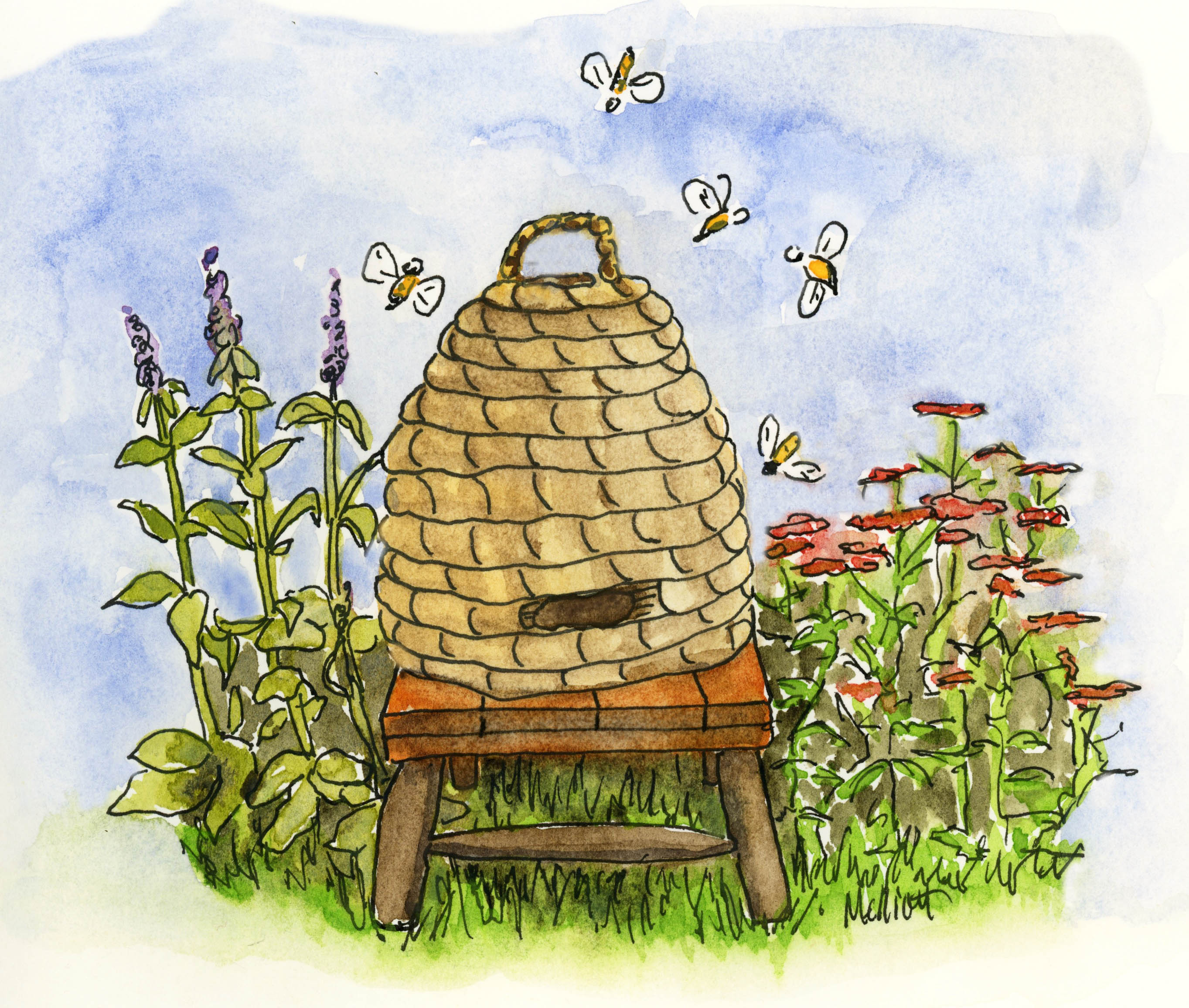
Back to the theory about which I began this post… By contrast with the relative randomness of a nonfiction reader seeking information, the fiction reader may be more driven by type, and by type I don’t necessarily mean by genre. Although there are fiction readers who stick by preference to just one genre, be it mystery, fantasy, or science fiction, there are others who read widely in many genres. My theory here, however, is that if you are a particular type of reader, you seek out, within those genres, books with a similar feel to the writing.
That is, despite the fact that you have switched from mystery to fantasy, the appeals of the fiction you enjoy may stay constant across genres. So if you like a mystery in which there is a plethora of descriptive language and a resultant leisurely pace, perhaps that is also the type of fantasy to which you will gravitate. Likewise, if you are fond of thrillers with lots of action, you may seek out science fiction in the form of space opera, rather than reading something more clinical or philosophical.
Based on my own experience, I would say that this idea may be only partly true and not completely consistent; I am a mood-driven reader, and sometimes enjoy leaving behind the torturous detail of a Tana French for the three-page, adrenaline-fueled chapters of a James Patterson. But for the most part, I am a consistent reader who seeks out the same type of appeals regardless of genre.
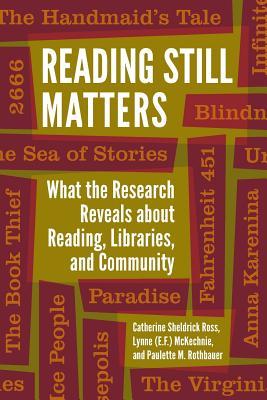 This is an interesting concept to test out, first with yourself as a reader, and then with those for whom you advise, to see if it is legitimate and common. In her book Reading Still Matters, Catherine Sheldrick Ross remarks that “the varieties of ways to experience reading seem to expand the longer we consider the question, as do the dimensions along which readers may vary in their reading practices.” On page 168, she provides what she calls a “model,” which is a series of questions she uses to capture the experience of avid readers. It’s a query well worth exploring in our quest to become better readers’ advisors.
 The Book Adept