Author vs. Genre

I picked up The Dream Daughter, by Diane Chamberlain, because it is a time travel book. But as I examined reviews on both Goodreads and in the Facebook group “What Should I Read Next?” I found that I was a member of a tiny minority when it came to motivations: Apparently Diane Chamberlain is a big deal with a certain kind of reader, and many/most of the reviewers confided that they read this book despite its science fiction content, because they read everything by Diane Chamberlain.
My first thought was, Who doesn’t love a good time travel story? Apparently a lot of people! But since this is the one and only Diane Chamberlain novel I have ever read, I am judging her and her writing by the contents of this book about time travel, so my review will be differently framed than most.
When you type “If you like Diane Chamberlain…” into Google, you come back with a whole slew of names, most of whom are listed as authors who write “feel-good fiction with a twist,” “romantic women’s fiction,” and “hometowns and heartstrings.” There is also an occasional mention of historical fiction. But my experience of The Dream Daughter didn’t fit so much into those categories, perhaps because I was so focused on the mechanics of the time travel—whether the author would make it believable, workable, and without unnecessary paradoxes. And although the discovery of the mechanics of it were a little fuzzy, the carrying-out of the process was quite satisfactory. I don’t know whether she borrowed it or came up with it on her own, but the methodology is similar to that in the movie Kate and Leopold, in which the traveler must find both an ideal moment in time and a height off which to step in order to reach the proper destination. The portal timing and location is essential to the plot, since it is the main source of tension in the book—will she/won’t she (or he or they) make it to the location in time, will they land where and when they planned, and what happens when they run out of return options?
The plot begins fairly simply: Carly is a physical therapist in her early twenties. She helps Hunter, a previously uncooperative patient, to regain his health, and introduces him to her sister; he subsequently becomes her beloved brother-in-law. A few years later, in 1970, Carly learns two heart-breaking pieces of news: Her young husband, Joe, won’t be returning from the Vietnam War; and her as-yet-unborn baby daughter has a heart defect that will almost certainly prove fatal once she is born. The baby is all she has left of Joe, and Carly is devastated. But Hunter, a physicist, tells Carly there may be a way the baby’s life can be saved. If she believes him (instead of urging her sister to have him committed to the psych ward), Carly can take a leap of faith that may lead to a healthy daughter.
I really enjoyed this book. It’s definitely more relationship fiction than it is sci fi, but even a “soft” sci-fi element can materially contribute to an otherwise regular story if it’s thought through and properly integrated, which this definitely was. There were a few unexplained plot points that remained puzzling to me (such as the impatience and coldness displayed by Hunter’s mother on several key occasions), but for the most part all the characters were well developed and understandable, as were the situations and narrative, and it has just the right level of suspense and complexity to keep you reading. It shares with books such as 11-22-63, by Stephen King, that dire warning about avoiding changes to history by minimizing interactions, but then (like that book) allows its characters to ignore that warning in certain circumstances, to the benefit of the plot (if not necessarily to history). And this was definitely a gentler read than that angst-filled tome, but no less enjoyable in its more personal focus, and with plenty of similarly entertaining historical details as well.
I feel like this book could appeal equally to fans of relationship fiction, time travel and, of course, to most Diane Chamberlain devotees! I don’t know if I would enjoy her other, “straight” fiction as much as I did this one, but I may give one a try after this.
The conundrum of re-reading
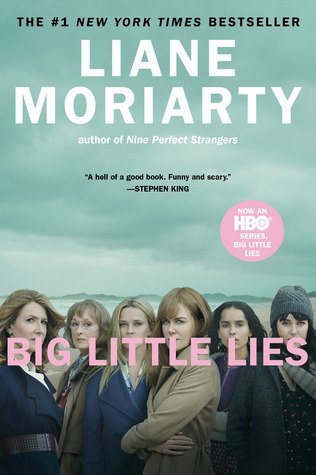
I gave in to an impulse this week to read something for a second time. I felt like I needed a break from all the new and an encounter with something familiar. I read Big Little Lies, by Liane Moriarty, two years ago when everyone was buzzing about it, and reviewed it favorably on this blog, but when it grabbed my attention again this week, I decided to have another go.
Given that this is a novel of suspense with an ultimate revelatory moment, you would think that re-reading it would fall flat…but it didn’t. It’s amazing to me how the mind will recall some things and (purposely?) shut others out. I remembered vaguely who died and when and why, but completely forgot the specific circumstances and immediate chain of events, so I got to be gobsmacked again, even though I knew it was coming! That scene is powerful—I read it a couple of times.
I know that there are people out there who never re-read, some because there are just too many new books coming down the pipeline to “waste your time” with one you have already consumed, and others because their reading consistently transfers into their long-term memory and they can’t imagine repeating an experience. I feel fortunate that although I do have a good memory for story, I am also able to be entertained by the nostalgic review of a narrative.
There are books that you will read once and, even if you liked them, never want to repeat. There are books that might stand up to one re-reading, both to confirm your liking for them and also to allow you to gather in the images and nuances you might have missed the first time when you were in a headlong rush to finish. And there are the books that become old friends, comfort zones, the recitation and repetition of a feeling you liked the first time and want to have again multiple times.
I will say that these criteria do shift and change over time. When I was in my teens, probably between ages 14 to 18, I was for some reason obsessed with Jane Eyre. I read the book conservative estimate about 15 times in that four-year period. About 10 years ago, prompted by helping a teen girl at the library find a classic off her Honors English list that she thought she could bear to read, I decided to make another visit to Thornfield Hall. I was dumfounded by my experience: What had I seen in this book that made me read it repeatedly and obsessively? I had to look back to the circumstances of my teen years to understand: I was a shy, quiet, romantic girl, with few friends and no dating experience, and my background as a fundamentalist Christian at that impressionable age guaranteed that the themes of sacrifice and self-denial (as represented both by Jane and by the sanctimonious St. John Rivers) would profoundly move me. Coming forward multiple decades to my current status as an agnostic self-supporting adult with a marriage and a tragic love story of my own behind me, I could clearly see that my obsession was uniquely tied to a particular iteration of my personality.
The criteria I use for whether a book remains in my personal collection is whether I think I might ever re-read it. If it’s a no, it goes. If it’s a yes—maybe once—I will keep it if it was a truly special experience (and if I have the shelf space) but otherwise rely on accessing it from the library when I want it. If it’s a yes, I can imagine enjoying this again and again, then it stays.
I’m happy to be the kind of reader who can appreciate all of these reading permutations.
Hits, misses, ?
This week has been a real mixed bag in the reading department. I started out with a book whose description was really exciting—A History of What Comes Next, by Sylvain Neuvel—only to end up with a did-not-finish (DNF) rating. I then started Beach Read, by Emily Henry, as some light relief, because my Kindle said I had read only 11 percent of it…only to realize partway through that everything was sounding quite familiar. And I finished up with a second book by an author where my first experience was excellent, only to realize that this was a different kind of story than I had expected.

The book by Sylvain Neuvel came highly hyped by many Goodreads folk. Having just finished 11-22-63 by Stephen King, it appealed to me as having a faintly similar premise: There were “people” (aliens) interfering with history to direct humankind to a particular path (in this case, leaving Earth for the stars). I am a big science fiction fan and, unlike some, don’t have a problem with hard science in my fiction. I am also a liker of alternate histories. This book includes science-heavy narrative, historical fiction, stuff about space exploration, a treatment of invisible minorities, mother-daughter relationships, and an intriguing take on aliens. It sounded perfect.
But…for me, at least, it was the most intriguing set-up with the most stultifyingly dull execution ever. The characters were one-dimensional, self-involved, and isolated amongst the true humans, so that you only got to know them through the conversations they had within their own minds. There was angst and personal insecurity (the protagonist is a teenager), a lot of violence, and not much in the way of story. The chain of mothers and daughters that culminates in this book with the 100th generation is relentless in pursuing their goal to send humans to the stars, but they have completely forgotten their origins, as have the other malevolent aliens who are sworn to stop them, so there is no interesting back story to be had, just the endless detailing of their day-to-day battle. Admittedly, I say all of this having read only 45 percent of the book, at which point I decided to cut my losses and give it a DNF. Goodreads people rave about some of the other books by this author, and maybe I will try one someday, but this one left me cold, tired, and impatient.

My experience with Beach Read was pretty funny; when I began it and started to get a feeling of déja vu, I chalked it up to having read books like it before. It wasn’t until a particular meet-cute scene that the light dawned and I realized I had read the book in its entirety about a year ago, and even reviewed it for the blog! I went ahead and finished the second read and enjoyed it this time around as well.
My third experience this week was The Mother-In-Law, by Sally Hepworth. I greatly enjoyed her book The Good Sister, particularly for the development of the character Fern, who really came to life on the page. That book, although billed as something of a thriller, turned out to be more of a family or domestic drama, although it had its tense moments at the resolution. With the description of this book, I was expecting more of a legitimate thriller, since the protagonist’s complicated relationship with her mother-in-law ends in murder…but that doesn’t end up being the case.
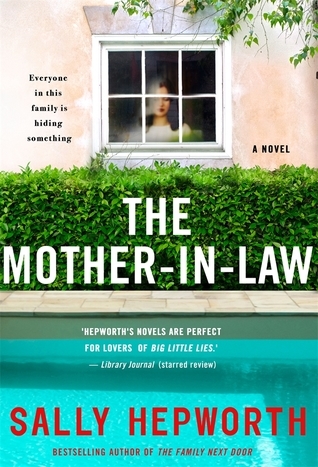
The book is presented (mostly) from two points of view—the wife, Lucy, and her husband’s mother, Diana. It is told by both characters in an equal division between “past” and “present,” the specific time periods sometimes not being noted but at other times being given as a particular year in the life. Because of the set-up, I was expecting a creeping sense of unease about the mother-in-law, culminating in her death and whatever would happen in the aftermath; instead, what is presented is two women with different goals and outlooks who are the victims, in their relationship with one another, of “unmeeting wishes.” Lucy lost her mother early in life and wants nothing more than to bond with a mother figure for a fulfilling relationship, while Diana is a rather aloof and self-contained person, due to her own background in which rejection played a large part, and doesn’t care to engage with Lucy in this way. Lucy sees Diana as cold and uncaring, while Diana regards Lucy (when she thinks of her at all) as self-indulgent and overly emotional.
The supposed central piece of the book—the murder—doesn’t factor much into the rest of the story, and the pool of potential suspects is small enough that I had a good guess fairly early on, though it wasn’t enough of a certainty for me to stop wondering until it happened. I frankly found that whole thread distracting—the book was trying to be too many things at once. There was domestic drama, there were specific agendas it seemed the author wanted to highlight through her characters—and adding the murder into the mix seemed like the author was trying to turn the path of this family saga in a direction it wouldn’t naturally go. (And presenting it as a fait accompli up front took any pizzazz out of its potential as a plot point!) The result, for me, was that I was alternately enthralled and bored, and in the end would have liked more back story and more relationship details and less of the somewhat forced nature of the “thriller” aspect.
I don’t feel strongly enough about it to wish I hadn’t read The Mother-in-Law, but it was definitely not the experience I was either expecting or craving, based on either the book’s description or because of my reaction to her other novel. She is a good enough writer that I will go on to try others of her books, but perhaps without reading the misleading blurb next time!
Happy endings

I suppose it’s slightly ironic, given that my last post was an enthusiastic recommendation for half a dozen Regency romances, that I don’t normally care for books with blatantly happy endings. Given that statement, it’s even more unlikely that I would bother to pick up a book actually titled The Keeper of Happy Endings. But Barbara Davis combined several elements that lured me in, including the presence of Paris as one backdrop for the story, an artist whose dream was to open a gallery, a seamstress who created couture wedding gowns (yet another form of art), and historical elements set in World War II.
The basic set-up for the story is that it takes place partly in the present day, which in this book is 1985 Boston, and partly (in flashback) during the middle years of World War II, in German-occupied France. It brings together two women who share a similar tragedy in their lives: Soline Roussel, whose fiancé drove an ambulance for the Red Cross in France, and went missing, presumed captured and killed by the Germans; and Rory Grant, whose fiancé is kidnapped, presumably for ransom, while working in the Sudan for Doctors Without Borders.
When the story opens in 1985, Rory’s fiancé, Hux, has been gone for about six months with no word of his fate. Her life has become a waiting game, and she has dropped all pretense of continuing without him; although she is supposed to be preparing for a return to college in the fall, followed by an internship in Paris, she sits at home and reads romance novels, for the distraction and also because she hopes for her own happy ending.
In flashback, Soline Roussel is a young woman working with her mother in their bridal salon. Generations of the women of her family have created “lucky” wedding gowns: a “wish” or charm is embroidered into the dress, and so many of the brides who marry in a Roussel gown end up with good relationships and generally lucky lives that the women (and gowns) have gained a reputation for magic. But the onset of World War II and the occupation of Paris by the Germans has put an end to the business and, after her mother dies of cancer, Soline is at loose ends. She ends up volunteering at a hospital, where she meets Anson Purcell, a Yale man from Boston who drives an ambulance, and he soon becomes the love of her life. Fearful that the Germans will capture Soline and use her against him so that he will reveal details of the Resistance work in which he is secretly involved, Anson sends her off to America
Back in the present day, the two women come together when Rory decides that she will revisit a dream (in which Hux encouraged her) to open an art gallery to exhibit previously unknown artists, and discovers the perfect location for it, the former bridal shop (in Boston) belonging to Soline Roussel. The building was decimated by a fire four years previously, and was partially rebuilt but remains empty. Rory persuades the reclusive Soline to lease it to her and, in the process, Soline recognizes a kinship between herself and the heartbroken girl, and a friendship is born.
This book has a lot going for it. There is a nice balance between the story in the past and the one in the present. There are complex relationships, notably Rory’s with her mother, Camilla, and Soline’s with her own mother and also with Anson. The historical details of the flashback portions of the book feel real and explore some uncommon details about World War II . I wished for more information about Soline’s career in couture as well as the methodology behind Rory’s chosen art form, but both were adequate to the story. The romance was satisfying. There were interesting twists and turns that kept me reading until far later than prudent into the early morning hours.
Are you sensing a “but”? Well…in many ways this was a beautiful and complex story that I wanted to love. But at a certain point, things became too predictable and certainly too coincidental to suspend disbelief, and I know, I know, I should have seen it coming from the title of the book, but the wrap-ups and happy endings for so many of the characters set my teeth on edge. Yes, there is a part of me that thrilled to the fulfillment of everyone’s dreams; but there is a reason I don’t read much romance, and it’s this: There is also a cynic in me that flat-out doesn’t believe it, and wants the complexity of a partial fail or, at least, a tiny bit of the unknown to remain.
I will, therefore, give a qualified recommendation for this book, which is, if you are fond of the perfect ending, especially after a lot of intervening suspense about what will happen, you will adore it. But if you are like me, with an inbred cynic who sits on the sidelines and scoffs, then you will like it, but not nearly as much.
Marchetta’s latest
I was first introduced to Melina Marchetta when I was a young adult librarian. Although she is probably best known in YA circles for her books Looking for Alibrandi and Saving Francesca, or perhaps her Printz-award-winning On the Jellicoe Road, all of which identify as realistic / contemporary fiction, I first encountered her in the guise of a fantasy writer, with her series the Lumatere Chronicles. We read the first book, Finnikin of the Rock, for high school book club in 2010, two years after it was published, and although I enjoyed it quite a bit, I didn’t really recognize the brilliance of her prose until she came out with the two other books in the trilogy—Froi of the Exiles, and Quintana of Charyn. I won’t go into the details of what the series is about (it’s kind of complicated), but these books are filled with heartache, pain, adventure, mystery, magic, and madness, and the characters, world-building and story-telling would be hard to surpass. It’s one of those series about which I tell people: “You have to read the first one in order to know what’s happening in the subsequent books, but those make it well worth the effort.”
After having read nearly all of Marchetta’s YA books, I was pleased to see, in 2016, that she had written her first for adults. And although Tell the Truth, Shame the Devil contains a bunch of teenagers as significant characters, it is from the adult viewpoint that the story unwinds, and the adults in the story have the typical hard time fathoming the teen mindset. The book was primarily a suspense novel (reviewed here), which proved to me that Marchetta can write pretty much anything successfully.

I was pleased, then, to pick up her latest offering, The Place on Dalhousie, published in 2019 but just discovered by me. It is contemporary fiction, focused on relationships (both romantic and familial), and is fully as compelling, if somewhat more low key, as anything else she has written.
The book is a little bit confusing at first, because there is a “time out of time” quality to the meeting of two of the protagonists. Rosie is living in a small town on the coast of Queensland, serving as caregiver to an elderly woman, and the two are caught up in a natural disaster when the town is flooded. Jimmy Hailler is also by chance in a kind of time-out there, and it is his work helping to save the stubborn villagers from the rising waters that brings he and Rosie together for a cautious two-week interlude fueled by the disaster. Then Rosie returns to Sydney to her childhood home, which is in dispute: Her father built the house for she and her mother, Loredana, but her mother died of cancer when Rosie was 15, and her father married Martha 11 months after Loredana died, sending Rosie off in a fury. A few years later her father also died, and now she is in a standoff with her hated stepmother over the ultimate ownership of the house.
The story picks up 15 months later, when Jimmy tracks down Rosie and arrives on the scene to discover Rosie living upstairs, Martha downstairs, and a battle raging about whether to sell the house. Rosie, a prickly, difficult young woman at the best of times, is suspicious of Jimmy’s motivations in finding her so long after she initially reached out to him, and the remainder of the book, centered on families both interconnected and divided, compromise, love, and identity, proceeds slowly and cautiously to explore not only their relationship but those of almost everyone involved. I don’t want to give away too much, because a huge part of the enjoyment of the book was in discovering the details as you went along. But there are great characters here (she writes women of all ages particularly vividly), and a lot of humor and pathos in the telling of their stories
I thought Jimmy’s name sounded familiar, and when I checked reviews I soon realized that he was one of the characters introduced in Marchetta’s book Saving Francesca, when he and the others were in high school, and the one character of the group notably missing from the sequel, The Piper’s Son. Many refer to him as the most sympathetic or compelling character, and are thrilled to see him turn up in a later incarnation. You don’t have to know any of that or have read the other two books to enjoy this one—it definitely stands on its own. But for those who loved the YA books, this is a culmination of those stories, and some also hold out hope for additional books with the others—Frankie, Tara, Tom, Justine, and Siobhan—as protagonists.
If you do feel moved to read the two YA novels as foundation, you won’t have wasted your time. Marchetta’s writing is severely underrated outside her native land, and it would be lovely to think that I have convinced more people to appreciate her fully.
The Good Sister
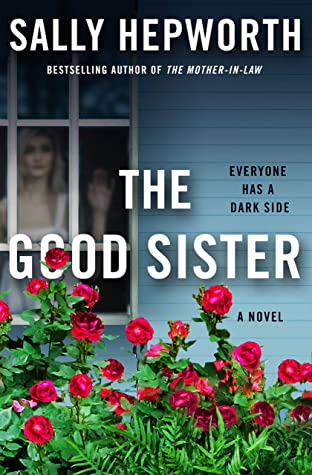
I read The Good Sister, by Sally Hepworth, on the recommen-dation of multiple people, although I held out for a while because it felt like one of those books about which excessive raving leads to inevitable disappointment. I am happy to say that wasn’t the case here.
In brief, there are two sisters (fraternal twins) in their late twenties: Rose, who is successful in her career as an interior designer and is happily married to Owen, but has recently endangered her relationship by becoming obsessed with having a baby; and Fern, a single librarian with a sensory processing disorder. The initial presentation is that Rose is the sister who has everything pretty much together, while Fern relies heavily upon Rose to guide her in life’s decisions and keep her on an even keel. Fern sticks to a rigid schedule of dining with Rose three nights a week, and otherwise carefully constructs her life to help her avoid all the many overwhelming situations with which she is unable to cope. This co-dependent relationship evolved from a difficult shared childhood with a narcissistic mother, and the sisters continue to fall naturally into the roles of protector and protected.
When Fern realizes that Rose is unable to have children, she reasons that this may be the one big thing she can do to pay Rose back for all her care and concern over the years. All she needs to do is find a father for the child. To anyone with traditional boundaries this would seem like a complicated issue, but to straightforward and literal Fern, it may be as easy as asking the first suitable male she encounters!
The point of view fluctuates between a direct narrative by Fern and the reading of entries of a daily journal that Rose is keeping at the suggestion of her therapist, whom she is seeing to help her with the tragedy of being unable to conceive. Through the agency of the journal, things are revealed about the two women’s past that will become particularly hazardous if a child is brought into the mix.
This book is billed as a thriller but, while it has aspects of mystery, suspense, and revelation to it that are definitely germane to the overall story and drive its action, the real reason to read this book is the co-protagonist sister, Fern, and her new friend, “Wally.” (I put his name in quotes because that’s what Fern calls him, due to his resemblance to the subject of the “Where’s Waldo” books.) Fern is a complex, nuanced character who interrogates the behavior of people around her and muses “out loud” about her own reactions to those behaviors. We are given the initial impression that Fern has been static in her routines, relationships, and accomplishments for a good long while; but as the story progresses so does Fern. Her forays into the unknown are a delight to witness, not the least of which is her relationship with Wally, who has issues of his own that may complement Fern better than she can believe.
I would categorize this as family or domestic drama more than suspense, although it is gripping in the end as issues resolve. But the best part of it is the wonderful characterization, the depiction of people who approach life differently, to be sure, but are in their own ways more together than the mundane “regular” folk can ever hope to be. I haven’t liked a character this well since Eleanor Oliphant.
Upbeat fiction
I have been enjoying an interlude of positive stories this week while I work hard on some paintings. It seems like I can’t read anything too taxing while I’m focused on making art, so I put aside the dystopian sequel, the historical fiction about a difficult period, and the literary masterpiece waiting my attention and instead checked out two Jenny Colgan books from the library. One (yay) was the third in her series about the village of Kirrinfeif, on the banks of Loch Ness in Scotland, and the other is (as far as I know) a stand-alone.
500 Miles From You takes us back to the site made famous by Nina, the former librarian from Birmingham who lost her job, impulsively bought a van from a couple of old codgers, and turned it into a traveling bookshop with a base in the Scottish countryside. The second book brought Londoner Zoe and her son, Hari, in answer to an advertisement for a nanny, to a grand baronial house on the lake, with a family of unruly children needing to be tamed.

Both Zoe and Nina make cameo appearances in this one, which is about Lissa, a nurse for the NHS in London who is suffering painfully from PTSD after witnessing a shocking crime. She is determined to keep on with her job, but her supervisor realizes she needs a complete break with everything familiar while she heals, and arranges for a swap. Cormac, a nurse practitioner in Kirrinfeif, is restless and up for a change, so he moves into Lissa’s nurse’s housing in London for a three-month upgrade on his skills, while Lissa retreats to the eerily quiet town on the loch and tries to get her feet back under her. As they trade files, write emails, and text one another for updates on the patients they have inherited, they develop an unexpectedly close rapport, each of them wondering if it will become something more, once they finally meet.
This was nicely told, and I enjoyed several aspects of it quite a lot. Although both her other books touched on this aspect, Lissa’s and Cormac’s experiences really point up the difference between living in an anonymous city where you avoid the glances of others, don’t speak on the subway or in the elevator, and bolt your doors at the first sound of trouble on the street, vs. in a small town where everyone knows you (and probably knows too much of your personal business), greets you, sees you, and expects you to run out your front door to help if you know someone is in need.
I also liked the gentle and sympathetic treatment of mental health, and the truths about how thoroughly and even devastatingly we are affected by our experiences, sometimes without even realizing the damage until someone helps us figure it out.
These are definitely “formula” books, but they are intelligent, quirky, and interesting. In Colgan’s case, the formula seems
to be:
- Move to Scotland;
- Fall in love with somebody there;
- Find some kind of work that expresses your best self;
- Never go “home” to [fill in the ugly depressing dirty dangerous big city here].
Every time I read one, I think, “I’m down with that!”
The stand-alone is Diamonds Are A Girl’s Best Friend. I worry a little when I read a Colgan “single” that I won’t like it; I read her first-ever novel, Amanda’s Wedding, which made me tell everyone to avoid all books before 2012 and stick to the warm-hearted series of series about finding your place in life and making good. This one violated my rule, having been published in 2009, but it had the recent re-release date on it and I was fooled into believing it was new!

It was better than Amanda’s Wedding, but not nearly as good as her later books. The reason I disliked her first book so much is that the “women” in it were billed as charming wisecrackers but were, in reality, just mean girls. I could find nothing to like about them for a good part of the book, and the fact that they were out to stop someone even meaner than themselves from marrying their friend for his money and title didn’t endear them to me until the absolute end, and not much then.
In Diamonds, the mean girls make a reappearance, and the protagonist, Sophie, starts out as one of them. They are all in a set of shallow, entitled rich people who don’t acknowledge anyone below a certain level of money, status, or fashion sense. Fortunately (for the reader, not for her), Sophie almost immediately loses her protected status and her allowance (via the 2008 crash) and has to fend for herself for the first time in her life. She rents a room in an apartment with four guys and, in lieu of a deposit, she agrees as her contribution to clean their truly disgusting habitat. The mishaps that ensue when this person whose morning latte used to arrive on her nightstand every morning courtesy of a housekeeper has to figure out how to scrub a toilet, clean an oven, and cook something are fairly entertaining, as is her pursuit of a paying job; and the romantic relationships on offer also spice up the narrative. I still didn’t care for the mean-girl setting or her continued interactions with her former so-called friends, but having this be about someone who conquers that, even if it’s not initially by choice, made it way more palatable.
I enjoyed my sojourn with Colgan so much that I have now moved on to another series by Phillipa Ashley, set in Cornwall. Those other books will have to wait yet a while longer.
Don’t ask…

I picked up Ask Again, Yes, by Mary Beth Keane, because it has been so hyped and apparently so beloved by so many; and it sounded like an interesting story.
I have to say I can’t understand why this book gets almost exclusively four- and five-star ratings and rave reviews from everyone on Goodreads. First of all, it was interminably long relative to the story that emerges, which is to say that it was slow. In fact, I’m looking at my Goodreads timetable in disbelief, because it seemed like my reading experience went on so much longer than two days!
There were certainly tumultuous events included in the story, but in between it was a rather mundane accounting, and several times in various characters’ segments I thought to myself, Do I really need to know that about you? Isn’t there something more important or personal you’d like to share? There is a certain degree of soul-searching amongst the many protagonists, but mostly we get the symptoms without the explanation of the root of the problems (or else we are expected to intuit them for ourselves), and several of the characters dwell so obsessively within the symptoms that it becomes wearing on the reader.
It’s hard to know, from chapter to chapter, what—or whom—the book is about. It begins with two young rookie cops, Brian Stanhope and Francis Gleeson, on the beat in the Bronx, but it only dwells on their work lives for a minute. Then it focuses on the fact that they both decide to move to a suburb known to be hospitable to those “on the job.” There is a lengthy description of the quiet, rather barren and empty vibe of Gillam by Francis’s wife, Lena, who would have preferred to stay in the lively and friendly heart of the city. Bill and his wife, Anne, then move in next door; but all Lena’s hopes for companionship and the raising of their children together is dashed by the cold aloofness of Anne despite all Lena’s friendly overtures. At this point in the book, I thought the story was going to be about this isolated and specialized town of cops, perhaps exploring the corruption or the bigotry that results from this false association of all one “kind” of people. But after Lena’s narration is done, not another mention is made of that aspect of the town, throughout the rest of the book. It felt to me like a complete false start, and I had to consciously reorient myself from that point in the story to see what the rest of it was about.
Despite Bill’s wife’s coldness and sense of superiority, their only son Peter ends up being best friends with Francis and Lena’s youngest daughter, Kate until, in the year they turn 14, everything goes off the rails in a volatile and ultimately tragic way. Then we get the years of estrangement from several points of view, detailing what happens to each of the characters, although this is quite uneven and gives vastly more attention to some than to others. It seems, despite everything that has happened between their families, that Peter and Kate are both adamant they are a match not to be broken, and they end up together. (This isn’t a spoiler, it’s in the book description.) And then we get the details of their joint life and how everything plays out, influenced by the tragedy and drama of the past.
Again, I felt like I was reading several separate books. There’s the parents’ story, together and separately, there’s Peter’s story and Kate’s, there’s Peter’s and Kate’s together…and at each turn I felt at a loss to say what this book was about. Is the point of the story that true love prevails no matter what? Is the point that a person’s upbringing has lasting effects that reverberate throughout his life, even if he thinks he is fine and the past is the past? Is the point that people can recover from anything, given time and space and an occasional helping hand? Is the point that you’re stuck with your family, no matter what? Is the point that living in the suburbs is the kiss of death to a fulfilling or exciting life?
Many other reviewers noted that the book was a masterful character study, and I guess I could admit to this; but when I think back on what I actually know about some of these characters, it’s hard to say, based on the dearth of personal feelings they reveal. Peter’s character, in particular, has upsetting feelings that he is completely unable either to express or explain. So…what’s the point of an outsider dwelling on them? If I, as the reader, have insight into Peter that he doesn’t share, what does that benefit the story?
There was a comment in the book about things being very different in the 1970s than they were 25 years later in terms of therapy, shame, avoidance, and all the other ways to deal with mental illness or addiction, and that this reticence to talk about or even bring up the subject had a profound effect on people who suffered from or were associated with it, but I didn’t understand this as the point of an entire book. There is a resolution of sorts in the end, but it felt so anticlimactic and like such a platitude that I turned the last page with resentment for having had to go through every step with these characters to get there.
One reviewer compared this book to Big Little Lies, by Liane Moriarty, a book I read with enthusiasm and reviewed positively, finding it smart, witty, and suspenseful. Perhaps the disconnect with Ask Again, Yes is that I failed to find a home with any of the characters, to identify with one sufficiently that I cared about what happened to them. All I can say is, if you enjoy a character-driven plot (and aren’t put off by a somewhat disjointed story arc), you might love this book.
I did not.
Wings

As with her book The Language of Flowers, Vanessa Diffenbaugh has found a nature-based analogy to support the story in We Never Asked for Wings. The theme of birds and their migratory habits is connected to more than just the immigration part of this tale in which people cross over the border between California and Mexico each for his or her own reasons, or in some cases try to avoid re-crossing that border at all costs. There is a fact about migration that sums up the actions of at least one of the protagonists:
“Migrating birds reorient themselves at
vanessa diffenbaugh
sunset. The exact reason is unknown,
but at twilight, just when the sun
drops beyond the horizon line,
birds flying in the wrong direction
correct their paths all at once.”
Although she has born two children—Alex, now 15, and Luna, just six—Letty has in many respects been an absent mother for most of their lives. Only 18 when she became pregnant with Alex, she chose not to tell the father, who had a bright future with which she didn’t want to interfere, instead essentially handing over the baby to her own parents, who raised first Alex and then Luna while Letty worked three jobs to support the family and send money back to relatives in Mexico. She spent the rest of her time partying like a perennial teenager (which is how she ended up with Luna).
Suddenly, everything changes: Letty’s father makes the decision to visit Mexico and, while he initially allows his family to believe he will return, he doesn’t. Once Letty’s mother realizes he’s not coming back—whether by choice or because the “coyote” they paid to bring him was no good—she leaves San Francisco, her grandchildren, and Letty, with a freezer full of pre-made meals, a bunch of notes on how to do all the parenting tasks so foreign to her daughter, and a belief constructed almost entirely from her own wishes that everything will be okay with them.
Everything is emphatically not okay—they get off to a rocky start and, as the story progresses partly through Letty’s eyes and partly narrated by Alex, their existence becomes increasingly complicated and precarious. But all of them are given the opportunity, like the migrating birds, to correct their paths, and it’s the chronicle of these struggles to do right that makes up the rest of this engaging story.
Diffenbaugh deals in this book with a lot of themes—immigration, parenting, bullying, responsibility, and love—seriously, but with a light touch. The book held my attention throughout, and I enjoyed the change of voice between Alex and his mother and their different perceptions of what was going on in their lives. I can’t say I enjoyed it quite as much as I did The Language of Flowers, but it’s definitely a worthy addition to the author’s oeuvre.
Appended note: The cover is sadly inappropriate. The child is too young to be Luna; they never (would never) have a bird in a cage; and I can only conclude that whoever designed it didn’t read the book. The cover on the Italian version, depicting a worried-looking young woman who could be the frantic Letty, is a better fit, but why not do something with the grandfather’s beautiful traditional feather art or include some migratory birds? A big miss.
Mermaids
I decided to read When We Believed in Mermaids, by Barbara O’Neal, because it has been so constantly hyped on the Facebook page “What should I read next?” and with consistently good reviews. The reviews on Goodreads are less conforming and more critical, with people falling into the two categories of love and hate more or less equally.
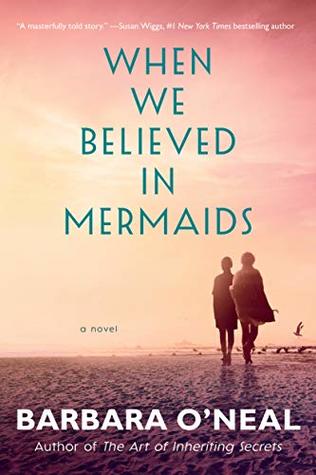
The plot: Kit, a workaholic Emergency Room doctor in Santa Cruz, California, the product of a tumultuous childhood, is watching the news one night as a club fire is being reported in Auckland, New Zealand. She is shocked when a woman walks out of the clouds of smoke towards the reporter’s camera and she sees the unmistakable face and form of her sister, Josie, who supposedly died on a train in a terrorist bombing in France more than 15 years previous. Kit’s mother also sees the broadcast, and encourages Kit to take some time off work to go to New Zealand and track down her sister. Kit is both baffled and angry at the possibility that her beloved sister has let the family believe she was dead all this time, but decides the best way to put these feelings to rest is to discover the truth, and gets on a plane.
The story is told from two points of view, and in two time periods: The narrative alternates between Kit and her sister, formerly Josie but now Mari, and details the present-day circumstances and the past history of both, nicely weaving them together.
There were things I really loved about this book—O’Neal’s lush language employed in the description of New Zealand (and surfing), which made me want to hop on a plane; the details of the sisters’ past history, told interestingly from the point of view of the elder—damaged, reckless, and doomed by her own addictions—and the younger, who experienced many of the same events but perceived them in a completely different way; and the ambivalence of both at the necessity of tearing down the walls and telling the truth, finally. I also enjoyed Kit’s unexpected and rather steamy connection with Javier, the Spanish musician whom she meets in a restaurant on her first night in New Zealand, and who pursues her despite her best efforts to remain indifferent.
There were also things I didn’t particularly care for, and some that were almost completely extraneous to the story and would have improved it had they been left out. There is a whole subplot about a famous and historically significant house acquired by “Mari” and her husband, Simon, that acted as a distraction: The mysterious unsolved murder of its movie star owner is brought up and dwelt upon at length, and it seems like it will be an integral part of the plot, but then it just fizzles out and is wrapped up in a “by the way” near the end that is infuriating after all the time and attention paid to it. At one point when Mari is exploring the house and making notes about its contents, a stash of books all on the subject of mermaids is discovered, and the reader logically expects that these will play a part later in the narrative, but they never do. There are other references to mermaids that pull together the reason for the book’s title, but this particular one is a baffling throwaway. And there is way too much attention paid to whether Kit’s mother, a former alcoholic, is capable of adequately caring for Kit’s cat, Hobo, while Kit is away.
Beyond these specifics, I feel like the book also took way too long to finally get the sisters together, and then attenuated the time and conversation necessary for a plausible reunion or a resumption of any kind of relationship. I read the book on my Kindle, which obligingly gives a “percent of story read” statistic, and it took until around 85 percent to arrive at the heart of the matter, with 15 percent left to resolve things. The story would have been better had these events taken place at, say, 75 percent, with a little more attention paid to the climax.
I still enjoyed the book, identified with the characters, and was particularly intrigued by their unusual and somewhat horrific upbringing that led to all the subsequent drama, and I wouldn’t hesitate to recommend the book to others. But just as on Goodreads, some may thank me for it while others may ask “Why?”
 The Book Adept