Post-mortem
I rarely read nonfiction any more. Life has been so fraught for the past few years (escalating to seriously effed up for the final nine months) that my goal for reading is escape from—not analysis of—current events. But I must admit I was a little excited when I heard Kamala Harris’s book 107 Days, the recap of her run for the presidency, was coming out. It was a combination of desires for me: I hoped that she could give a more definitive idea of what happened (i.e., how we ended up watching masked men in camo gear kidnapping citizens off the streets instead of celebrating healthcare for all), and I also, probably along with many others, hoped she would “dish the dirt” of all the behind-the-scenes machinations of the political campaign that was the shortest in history, with the most abrupt of beginnings, that so very nearly succeeded.
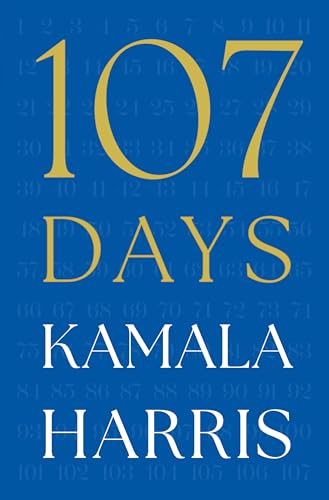
Some of what I was hoping for was there. She talked somewhat candidly about being a Vice President who was associated with an undeservedly unpopular administration and what it was like to try to remain loyal to Joe Biden for the remainder of her tenure while simultaneously attempting to differentiate herself for the voters. It was clear from this part of the narrative that her loyalty (despite how—in my perception—she was ignored and downplayed for her substantial contributions during Biden’s four years) ended up hurting her. She had limited control over his administration’s agenda, but was held accountable for all of it by many and, despite her team’s desire for her to speak out about that, her realization that she still had to work with him in her VP role for another three months inhibited her characteristic forthrightness.
I enjoyed the format of the book, which narrates the campaign day by day and gives a realistic look at the unbelievable schedule kept by a candidate for the highest office, particularly constrained as this one was by an impossible time-frame for making a good and lasting impression before the polls opened. In this respect it was engaging and felt like a quick read because of the short “chapters” encompassed by one day’s activities.
We did learn some things about the other actors—Biden, her list of candidates for vice president, people who campaigned for her, and some of her close friends and family—but a lot of that information was revealed in quick asides rather than being the subject for candid discussion.
She talks a little bit about how her lack of a definitive stance on Gaza affected the campaign, and also how frustrating she found it to bring up her multitude of talking points about what she was excited to accomplish once in office, only to be shunted back into her current role and criticized for a lack of distinct policy differences from Biden. And she talked, of course, about other barriers—racial bias, misogyny, a massive disinformation campaign on the part of her opponent’s campaign.
I’m glad I read the book, but I admit I had hoped for more. I was looking not only for reflection, but for a little more critical self-analysis. There were reasons she didn’t prevail, and although these included outward forces, they also involved her platform, which apparently failed to engage crucial segments of the population. I wanted to read about whether and how she accepted accountability for some of these things, but it just wasn’t there. The narrative was insightful, but not particularly revelatory of weaknesses alongside her admittedly many strengths.
Reading it also gave me a sick feeling in my stomach all over again to realize what we could have had versus where we ended up. No matter what you might have considered Harris’s flaws or disliked about her policy positions, I can’t imagine anyone (although they apparently exist) who doubts, after nine months of this new regime, that we would have been exponentially better off if our country was currently being shepherded by Madame President. No disappearing of people to prisons in El Salvador or the Florida swamps. No National Guard troops strolling our streets opposing our right to protest.
We’d have ongoing health care with an eye to improving it, paths to citizenship, student loan forgiveness, substantial infrastructure jobs, a strong economy unfettered by tariffs, and a good ongoing relationship with our allies. We’d still be exporting soybeans to China and supporting Ukraine in its war with Putin. And I like to think that there could have been a breath of fresh air as regards encouraging the younger, more outspoken generation of liberal politicians to begin, finally, to take their rightful place in the halls of government as the previous dominant power structure retires.
But I digress. I’m glad I gained what insight was available from reading 107 Days; I simply wished for more.
Discover more from The Book Adept
Subscribe to get the latest posts sent to your email.


I read about half the book and gave up. There just wasn’t enough to it to satisfy, but there was way too much that reminded me of how hopeful were, how excited to welcome President Harris and continue the work of a real New Deal and healing this fractured nation. I’m so fucking heartbroken and just plain broken by all that’s happened since.
I’m not giving up. I’m just really feeling it all right now.
LikeLike