Retrograde
The blurb for this book describes it as “funny and heartfelt.” It’s also supposed to be a romance about a woman who writes romances for a living and wants to open a romance-only bookstore with her two best friends, also authors. So you would think I would love it, or at least find it charming and/or germane to my interests. I’m beginning to think all the books I want to read have banded together to evade me on purpose, leaving me with a bunch of hopeful choices that don’t quite pan out.
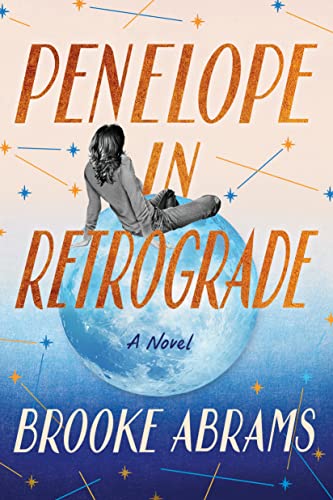
Penelope in Retrograde, by Brooke Abrams, isn’t a bad book, and I didn’t hate it; but it’s too slight to make much of an impression. It’s also annoying in some specific ways. I feel like the author is trying too hard to include all the romance memes, from the meet-cute to the friends-to-enemies-to-friends, and throwing in a conflicted familial situation to spice it all up—none of which turns out to be satisfying.
The main character, Penelope (Penny) has been, not exactly estranged from her family, but out of regular contact for about a decade. Her father is a workaholic businessman in finance; her twin, Phoebe, graduated with honors from college and works in his firm; and Penny has always been the odd one out. Phoebe is successful, Phoebe has a relationship, Phoebe lives close to her parents and sees them on a regular basis, while Penny lives more than half the state of California away from them, and writes romance novels. She is so insecure about her lack of acceptance from her family (her mother wants her to dress better and get a husband and maybe have some kids) that she hasn’t even told them the pen name she uses to write her books.
Once upon a time, Penny was briefly married to Smith, with whom she grew up. She had a better relationship with his family than she does with hers, and mourns the loss of them more than the marriage. The present-day setting of the book is the Thanksgiving holiday, for which Penny is finally returning home after 10 years of avoiding every family gathering. And why is she gracing them with her presence? She needs money to open her bookstore. This immediately made me think poorly of her, since the only reason she’s willing to connect again is to get the funding.
Karma trips her up when she phones for a rideshare from the airport and ends up sharing the Úber with her ex, Smith, who is also returning home to spend the holiday with his sister. Penny then discovers two things: Her parents have invited a young and handsome colleague from her father’s company to dinner, because they never give up matchmaking (even after 10 years of no contact?), and Smith is dating someone new. So Penny immediately decides it’s a good idea for Martin, the set-up guy, to pretend to be her boyfriend. The problem is, her whole family knows he’s not, so he has to convince Smith without revealing what he’s doing in front of her family. The whole thing is cloyingly cute. (Sorry, that was all a little spoiler-y.)
Basically, I agreed with one Goodreads reviewer who said that the story tries way too hard to be funny. Penny’s compulsive avoidance of any genuine conversational moment by turning everything into a joke is grating, while the ride-share scene stretches out forever and is patently silly. Penny’s narrative paints her as the victim of her family’s rigid expectations, but her own behavior shows her up as kind of selfish, and definitely as tone-deaf to their needs as she feels they are to hers. And everybody fights nonstop, which is likewise wearing.
The other thing about this story is that it’s so, so easy. Martin immediately falls in with her plans; Smith turns out not to be plotting what she thinks he is; her father has changed drastically in completely implausible ways while her mother has remained distressingly static; and Nana Rosie as the comic relief is too, too coy. And even though her sister is justifiably irate at how Penny is constantly stealing her thunder, forgiveness also comes easily. Despite Penny raging about how they are all hostile to her, everybody cooperates with hardly a whimper, and then when a stressful life event occurs, Penny transforms into someone else and we have a qualified HEA like all good romance novels. I was surprised when I discovered I had already turned the last page, because I kept expecting things to become, well, more. The desire for more seems to be the one bell I keep ringing lately.
Can anybody recommend something to me that will generate some genuine feelings of joy when I read it?
Giving up Cheetos
If you read only my last couple of posts, you would conclude that I am an overly critical nonreader rather than a lover of books who wants to share my experiences! I assure you that’s not the case, but…hmm.

Last year I read The Housemaid and The Housemaid’s Secret, by Freida McFadden, and likened them to Cheetos: Addictive and entertaining but not in any way subtle or nutritionally redemptive. At the conclusion of my review of the two books, I commented that I was looking forward to book #3 in the junk food franchise. The Housemaid is Watching released a couple of weeks ago, on June 11th, and somehow there was an E-book copy available from my library’s catalog (maybe that should have seemed more revelatory), so I checked it out and got ready to pick up Millie’s story the minute I was done with Veridian’s and with Walt’s (see last two blog posts).

I went to Goodreads and read the synopsis, which places us 11 years after the activities of book #2; Millie has married Enzo and they have a couple of kids, and after scraping and saving for years they have managed to buy a house in a somewhat snooty suburban neighborhood. Millie is thrilled to have finally achieved this pinnacle, but soon, inevitably, things begin to go wrong, starting with weird neighbors, children acting out, shady/skeezy behavior from her husband…in other words, typical Millie World.
I was all set to start indulging in a feast of salty orange puffery when I paused to read some reviews. The first one was a five, but the rest…well…some adjectives included “underwhelming,” “unbelievable,” “messy,” “predictable”…. As a result, what this turns out to be is not a review but a renunciation of a certain level of junk food. Some of the complaints served to remind me of the frankly unbelievable plot points from the previous book and my reaction to them, and I decided to follow my instincts with reading the way I have learned to with actual food: Seek out something that has both substance and the flavor factor—in other words, get the yummy potato chips that are kettle-cooked in the good oil and are doused in half the salt, and forego the fake cheesy stuff that will tantalize but not satisfy.
I guess I now have a new category: Instead of “DNF” for “Did Not Finish,” it’s “DNS” for “Did Not Start.” It won’t count for my Goodreads total for the year, unfortunately. Now to scope out my next book with high hopes for a good report….
Colonel Custard…
On the plains of Montana, with a Remington…
I couldn’t resist! One of the reviewers on Goodreads called it “Custard’s Last Stand” (without irony), and the vision of a Clue board swam through my mind….
I am, of course, talking about Craig Johnson’s 16th book in his Walt Longmire series, in which Walt is called in to explore a possible art heist of the famous painting Custer’s Last Fight, by Casilly Adams, which was supposedly lost in a fire in 1946, although a lithograph copy of that painting was the most reproduced print of the 19th and 20th centuries.

I was actually pleased by the prospect of a somewhat less fraught plot for a Longmire novel, given the bad reaction I had to #14 (Depth of Winter) and my so-so response to #15 (Land of Wolves). I felt like Johnson betrayed all the essential ideals of the character in #14, and that the following book was a confusing mess because of the fallout in Walt’s life from his previous experiences, so I was hoping this one would bring us back to “normal” Longmire life. I also, of course, love reading any book that’s about painting. I hadn’t realized, until a friend mentioned reading the latest in this series, that I am actually four books behind, Walt’s story having progressed to #20, which just came out last month, so I have some catching up to do. And whether I chose to do so hinged on this book, Next to Last Stand.
At this moment the book is looking like my last stand with this series. I opened it up and started reading, and the initial scene in which we meet the inhabitants of the Wyoming Home for Soldiers & Sailors was such a disaster that I closed the book again and put it in my “abandoned for now” category on Goodreads. I was astonished by this, because one thing Craig Johnson has always been good at is carefully crafting the voices of his characters so that they are distinctive and memorable. The extended exchange between the group of veterans sitting in their wheelchairs out by the highway was not only stilted and hard to believe as an actual conversation, but each person’s dialogue jumped back and forth between formal and informal English within the same sentence, with the effect of jerking the reader out of the flow of the story with every jarring transition. I know that to some, grammar issues will sound like a ridiculous reason for not reading a book, but I honestly couldn’t get past this scene into the story.
Has Johnson changed editors? Has he quit vetting his own books as extensively? Has he gotten bored and lost his motivation? I can’t say, but this is the third book of his I have found problematic. In writing circles, the Rule of Three is a storytelling principle that suggests people better understand concepts, situations, and ideas in groups of three. But for me, it works equally to say that if you are disappointed by a storyteller three times in a row, it’s time to move on. I’m sad to do so, but I’ll have to find out about the fate of this painting some other way.
(To my friends who also read this series, am I missing out? Should I change my mind? Speak up if you have a different perspective!)
Heists and capers
I am a big fan of heist plots, particularly if they are art-related. When I was a teen librarian I enjoyed the Ally Carter Heist Society books, and really liked the crew and their capers portrayed by Leigh Bardugo in the Six of Crows duology. One of my favorite fantasies is the Queen’s Thief series by Megan Whalen Turner, and I also thoroughly enjoy more mainstream heist books like The Great Train Robbery, by Michael Crichton, or The Lock Artist, by Steve Hamilton, which includes the ideal combination of safe-cracking and the creation of graphic novels. I also enjoy all the movies in this sub-genre, such as The Italian Job, The Thomas Crown Affair, Tower Heist, Baby Driver, and the Ocean franchise. And I just finished binge-watching the TV series White Collar, which follows a thief and forger who works with the FBI in order to achieve a limited amount of freedom (he’s not in jail, but wears an anklet that limits his radius to two square miles of New York City). So when I saw that one of last week’s Amazon Kindle First Reads was an art forgery mystery, I enthusiastically grabbed Veridian Sterling Fakes It, by Jennifer Gooch Hummer.
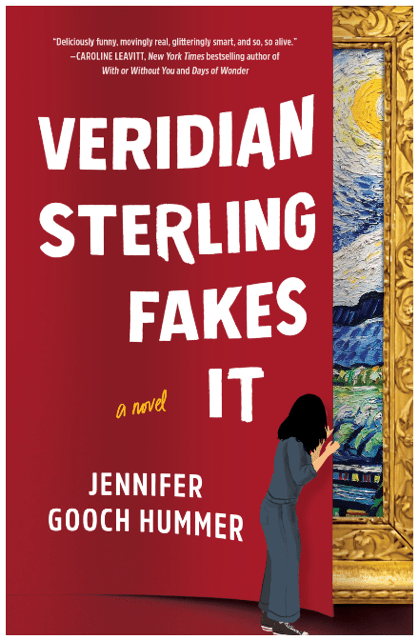
I won’t say that I was disappointed; it was sufficiently populated with interesting characters and situations and art-related historical facts that I read it with a certain amount of pleasure. But ultimately the book never really figured out what it wanted to be, and this lack of definitive direction made it a somewhat meandering and diffuse story with a lot of implausible elements and some clichés I could have done without. There are multiple different directions in which the author takes a few steps and then draws back instead of fully committing, which proves to be a frustrating narrative to read.
Veridian Sterling is a recent grad from the Rhode Island School of Design, with the typical hopes of everyone who excels in their art school classes and hopes that will translate into finding a gallery to display their work, interest (and sales) from the world of art aficionados, making a name for themselves…. And, like most art school grads, she quickly discovers that none of that is going to be forthcoming and that if she wants a place to live and food on her plate, she’d better find a “day job” to sustain her while she works on the rest of the dream. Veri has a job in the beginning at a laundromat/dry cleaners, but when she loses that she takes a position as an assistant at an art gallery that has rejected her paintings. The owner happens to be a former friend and roommate of Veri’s mother’s, when her mother was herself at RISD, and she is all too obviously modeled on Miranda Priestly from The Devil Wears Prada but without the icy demeanor and impeccable taste or, in fact, any redeeming qualities whatsoever. I found this character to be unnecessarily shrill and unlikeable and wished the author had chosen a different option.
We get a lot of stuff about working in the gallery and living her life, meeting an intriguing guy (the driver for a wealthy art dealer who visits the gallery regularly), discovering things she didn’t know about her mother, and various interactions with her best friend, all of which are overlaid with a level of stress that should be building up to something but takes an awfully long time to do so. By the time we finally get to the crux of the story (the mystery, the art crimes, the revelations), we’re just a teensy bit exhausted by the angst and the minutiae. Said plot point doesn’t even arrive until well past halfway through the book, and turns out not to be much of a mystery. While there was a build-up to what should have been the high drama, it felt like the stress level remained almost constant throughout, which did a big disservice to the revelatory bits.
In fact, while reading this book I was constantly reminded of one with a somewhat similar plot that I read and thoroughly enjoyed a few years back (in fact, I liked it enough to read it three times in six years!), so I’ll put in a plug for that one here. It’s The Art Forger, by Barbara A. Shapiro (see my review by clicking the title link), and that author achieved what I think this one was hoping to accomplish, by smoothly combining the multiple levels of mystery, art, and moral dilemma. One of the mistakes I think Hummer made was in attempting to include the slightly goofy humor and irony of such books as Finlay Donovan Is Killing It, by Elle Cosimano, but in trying to be all things to all readers, she couldn’t successfully pull together all the elements to make it work. So if you want a fairly lightweight version of the art forgery world, read this book; if you’d prefer an in-depth exploration of the same theme, go for Shapiro’s instead.
Finally, Christopher Booker famously made the case in 2004 for there being only seven basic narrative plots in all of storytelling and, having just finished watching White Collar, I do wonder whether part of this plot was a result of that coincidental symmetry or else this author did some binge-watching of her own….
Darlings
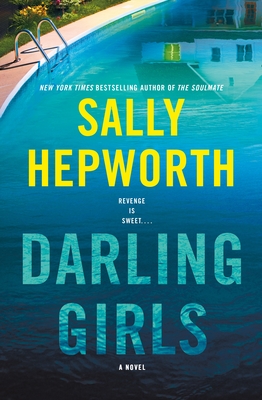
The title of this book is pretty good at pointing up the false affection shown to three foster children by a deeply narcissistic sociopath masquerading as a loving foster mother. I don’t have a lot to say about this book; I enjoyed it less than my favorite of Sally Hepworth’s (that would be The Good Sister) and more than my least favorite (The Mother-in-Law), so it falls somewhere in the middle with the others of hers I have read (three to date).
I did like the format Hepworth chose, in which we get the alternating point of view of each of the three foster sisters—Jessica, Alicia, and Norah—in adulthood and also in childhood (present and past). I didn’t care much for the psychiatrist session segments of the book, mostly because I was so uncomfortable with the way she wrote the therapist’s part (he was so repellent!), but it did render a little more intrigue as the story went on. I felt like the murder mystery was a bit generic—I mean, after we get an idea of who Miss Fairchild (the foster mother) is underneath her sugary sweet façade, it’s hard to believe any red herrings about who could have been responsible for the body buried under the house (that’s a minor spoiler, we find out about the body almost immediately). But the thought that the killer (if there is one) might get away with it definitely carried the suspense further, a good move on the author’s part.
I think part of the reason I didn’t love this book, apart from it feeling obvious in some respects, is that I didn’t feel a strong connection to at least one of the foster children (which turned out to have some basis in reality). I won’t say which one, because that would spoil things further. But it was a fairly engrossing read, and I think most people would find it a quite satisfying example of relationship fiction with a suspense twist. It also points up the ongoing problem of the way fostering is handled and the many opportunities for abuse of that system, which I appreciate.
Three stars out of five for me. But you might like it better.
Piglet
When they talk about reading this book, people have a lot to say about misogyny, about agency, about maintaining façades, but not so much about the thing that struck me, something pretty literal about the whole plot as it relates to the main character: People are failing her, life is failing her, and she is failing herself because she is trying to make and keep herself small.

A few people on Goodreads reacted negatively to this book as just another eating disorder saga. I didn’t read it like that at all. Yes, she has an intense relationship with food, but if everything else were copacetic, that would be considered normal—she’s a cookbook editor and a foodie, so what? But everything else isn’t right in Piglet’s life (imagine, for instance, going through life being called “Piglet” by all your loved ones!), and the common denominator is that she’s too big for the life she has been seeking.
She’s too big for the lower-middle-class background into which her parents and sister expect her to continue to fit herself; she’s too big for the upper-class environment to which she aspires—too flamboyant, too expressive, too filled with emotions. She’s too big to fit into the expectations of her fiancé, who wants her to act appropriately despite his own bad behavior. She’s too big physically—tall, awkward, a little overweight. And everyone faults her for this, and keeps encouraging her to cram herself into roles, relationships, corsets, dresses, mindsets, all of which goes against her nature. But it takes her just a little bit too long to figure out that none of the behavior she is forcing upon herself will fill up her hunger for love, for acceptance, for recognition. So she makes a series of disastrous decisions that feel inevitable in the moment, until they don’t and she rebels.
She has one voice of reason in all of this—her pregnant maid of honor, Margo, who ends up going into labor early and has to miss the wedding, but who persists in telling Piglet that she deserves more. Piglet doesn’t listen, but when she upends everything, Margo is the one she seeks out.

This is being touted as literary fiction, and I wouldn’t quite go there, but…the author is immensely skillful in the way she gets the reader to think about big-picture decisions by dwelling on seemingly incidental conversations and descriptions of food—choosing it, preparing it, eating it. She is also really good at creating essentially unlikeable characters and getting you to care about them. The book tells a story that is in one way small in scope, but in another is about a very big question: What’s the point? What do we want? In certain moments I felt an overwhelming impatience with Pippa’s choices (yes, that’s her real name)—or lack of them—but I have to confess that I mostly loved this book and found it as satisfying as one of the meals she makes during the course of the story.
Addendum: I found it fascinating that this novel was written by Lottie Hazell in conjunction with, and inspired by, getting her Ph.D. in Creative Writing, with a focus on food-writing in twenty-first-century fiction. I would definitely read another book by this author.
Books to TV (or movie)
I am usually quite critical of how a favorite book is translated to television or movie form, and in the past I would most likely have favored the book over the visual version almost every time. But in this day of bountiful offerings on a dozen pay channels, the properties are bought and transformed at such a rapid rate that I have found myself getting to know stories and characters on my television screen ahead of reading their origin stories, and in some cases I have to confess that I have enjoyed them far more than I later did the books.
Some for-instances: The writing is sharper and more clever in Shonda Rimes’s Bridgerton than in the books, so much so that I didn’t even finish reading the first book. The racial themes and the character motivations depicted in the Hulu production of Celeste Ng’s Little Fires Everywhere were less enigmatic and more relateable than in the written version. And although I read it first and gave five stars to Liane Moriarty’s suspenseful and engaging Big Little Lies, I equally loved the HBO version for the sheer star power represented and how well they pulled the whole thing off.
I also have to give exceedingly belated and somewhat awed credit to the team of Denis Villeneuve, John Spaihts, and Eric Roth (co-writers) and Villeneuve again as the director of the new version of Dune. After suffering through David Lynch’s 1984 version and Sci-Fi Channel’s three-part miniseries in 2000, I found myself devoutly hoping that no one else would try to take on the depiction of this classic on film or television, but the new one feels, finally, like the intentions of Frank Herbert have been realized.
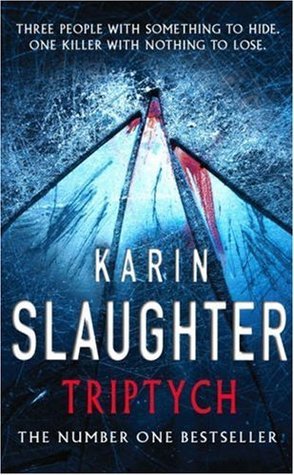
This all brings me to my latest book-vs.-television experience, which has been quite a bit bumpier and more jarring than anything I have yet mentioned.
I started watching the ABC TV show Will Trent with its premier episode, and immediately fell in love with the protagonist, his dog, and the rest of the excellent cast. I didn’t even realize, until near the end of Season Two, that the material came from a series of novels by author Karin Slaughter; the minute the season ended I decided I would spend the time until Season Three reading the original stories. And what a shock it was….
First of all, let me say what things are similar about the series. Will Trent and Angie Polaski grew up as lifelong friends in the foster child system. Will now works for the Georgia Bureau of Investigation (GBI), while Angie is a police officer (Vice) for Atlanta PD. Will’s boss is named Amanda, and she knows a lot about him. Her secretary’s name is Caroline. There is a police officer named Michael Ormewood. And there is a cheeky chihuahua named Betty, an adorable but somewhat ludicrous pet for Will. And…that’s pretty much it.
In the TV series, Will is short, compactly built, and Latino. In the books, Will is tall, blond, and blue-eyed, with significant facial scarring. In the TV series, Angie is tough on the surface but exceedingly vulnerable not too far beneath; she is struggling desperately to stay clean from a severe drug habit, and is involved with Will in a sexual relationship that occasionally verges on emotional. In the book, Angie is tough almost through and through, with a tiny bit of her left open to caring for her friend Will; they “broke up” almost two years ago, because Angie knows she’s not good for him and needs to leave him alone if he’s ever to achieve happiness with someone else. On TV, Will is almost immediately paired with Faith Mitchell as his new partner, while in the books she is still on the horizon by the end of book #1. On TV, Michael Ormewood is Angie’s partner on the police force and also works frequently with Will. He’s not entirely likeable, being reckless and kind of a chauvinist, but he’s basically not a bad guy. In the books, well, that would be a spoiler, but Ormewood isn’t who he seems. He’s also short, compact, and dark-complected in the books, while he’s tall, blond, and blue-eyed in the TV show—the exact opposite of the Will-to-Will transition! The only consistent character between the two mediums is Betty.

After having loved the TV show so much, I struggled for the first third of the book with the written versions of these characters. I came to terms most quickly with the character of Will, because despite the physical differences, the inside person is consistent, from the crippling guilt to the dyslexia to the brilliant insights, and the outside Wills both wear three-piece suits as armor. But I mourned the loss of the vulnerable friend/lover Angie, and when I read in the afterword that there is a “legitimate” love interest for Will starting with book #2, I wasn’t sure I wanted to continue. As for Ormewood…I don’t know how I can look at TV Michael the same after reading about Book Michael. By the end of Triptych I had subconsciously decided that it was worth continuing with Slaughter’s written version, but I honestly don’t think I’ll ever find these people either as likeable or as engrossing as the TV characters, and that’s a real departure for me!
Someone in my “Friends and Fiction” Facebook group told me that I should go back and read the series Slaughter wrote before she arrived at the first Will Trent book in order to thoroughly understand the back story; perhaps I will do that and see where it gets me.
Faint praise
The phrase “damning with faint praise” (from a poem by Alexander Pope) keeps coming to mind as I think about the book The 100 Years of Lenni and Margot, by Marianne Cronin. But I think what my reaction to this book really suffers from is damning from excessive praise!

It’s just another lesson to me to go my own way when I pick things to read instead of following the popularity contest of a narrow number of books that “everyone” on Facebook is reading and about which they are raving.
I did love the opening lines, in which Lenni hears the word “Terminal” (in reference to her condition, from her doctors and nurses in the hospital in which she now lives) but instead pictures an airline terminal, where she is awaiting imminent departure on a flight to…somewhere.
I also liked Lenni’s narrative about the life she was living in that hospital, with its boredom occasionally alleviated by an interesting person (like an old woman wearing a purple bathrobe and clinging to the side of a trash bin while trying to reach something within its depths, or a priest who doesn’t know what to make of Lenni and her questions). But once Lenni, the 17-year-old terminal patient, and Margo, her 83-year-old friend, met and became friends, I felt the focus moved so much more toward Margo that further character development of Lenni was suspended until near the end of the book, to its detriment.
As a painter, I loved the concept that the pair came up with as a project for their art class. Added together, their ages (17 + 83) made 100, a nice round number on which to base a goal, which they do:
So, we will paint a picture for every year we have been alive. One hundred paintings for one hundred years. And even if they all end up in the bin, the cleaner who has to put them there will think, Hey, that’s a lot of paintings. And we will have told our story, scratching out one hundred pictures intended to say: Lenni and Margot were here.
As an artist, I wish there had been more detail about the individual paintings. They were supposedly each based on an event from one year in the life of each person, but the stories themselves took precedence and there were mere glimpses of the art, not the full descriptions they deserved as the central theme! I also felt like the narrative kept pulling and pushing between the two characters while giving Margot the advantage, with the result that I never felt fully engaged and emotionally invested like all the other people who loved this book seemed to be. I felt like too much importance was given to Lenni’s interactions with Father Arthur, the hospital priest, and too little to her own personal story; and Margot’s tales were all over the map—as they would be covering an 83-year span—taking too much away from the present-day events.
The language was lovely, and there was a lot to like about the book, but it didn’t wow me the way I expected. On to the next….
Back to Ardnakelty

After weeks or months of reading nothing but formulaic genre fiction—some of it quite entertaining but none of it particularly special—I forgot what it’s like to suck up some genuine literary prose. While reading The Hunter, I was reminded that Tana French’s characters are so immediate and solid that they jump off the page at you—their physicality, their mannerisms, their patterns of speech, their inner thoughts, all draw such a finely tuned picture of who they are that you are right there inhabiting the story alongside them. And not just the characters, but the setting, the look and feel of the natural world she portrays, lets you perceive the particular texture of the dirt under your bare feet and the golden-green hills silhouetted against the horizon.
The Hunter is the second of her books set in the village of Ardnakelty in the west of Ireland and centered around the American transplant, Cal Hooper, and the local teenager, Trey Reddy, with whom he has bonded. And as with its predecessor (The Searcher), French is telling a story that, while it has a mystery of sorts at its heart, is more a tale of people, of community, of life-changing choices.
In the first book, Hooper, a former Chicago detective, had recently moved to this small community and started making it his home, although he will always be an outsider to its provincial inhabitants. But it’s now two years on, and Cal has settled more deeply into his role as a citizen of Ardnakelty, in a relationship with local woman Lena and still serving as a foster father of sorts to Trey Reddy. He and Trey have built up a nicely profitable woodworking business, repairing old and building new furniture for the locals, and their future seems like clear sailing until Trey’s wayward father Johnny shows up, bringing along an Englishman whose ostensible purpose is the exploration of his Irish roots. But Johnny Reddy is an opportunist bent on exploiting the easy advantage, and his scheme to find gold in the townland sets everyone at odds and leads Trey astray as she tries to cope with the fallout from her father’s return.
Johnny Reddy has always struck Cal as a type he’s encountered before: the guy who operates by sauntering into a new place, announcing himself as whatever seems likely to come in handy, and seeing how much he can get out of that costume before it wears too thin to cover him up any longer.
Trey, two years older, has neither forgiven nor forgotten the unidentified villagers’ role in the disappearance of her brother, Brendan, and thoughts of revenge smolder close under the surface of her thoughts. Johnny’s scheming and double-dealing with the tourist Englishman and the participation of the men of Ardnakelty give her what she sees as the perfect opportunity to get back at them, but there are events, intentions, and emotional currents she’s too young and too fixated on her goal to suss out for herself. It’s left to Cal and Lena to help her walk a perilously narrow path without falling off an unanticipated cliff.
In my review of the first book, I called it subtle, lovely, and special, and this continuation is no less nuanced and intriguing. But you have to be able to sufficiently immerse yourself in that subtlety in order to appreciate it. French’s books always get radically opposite reviews from readers, with some lauding their slow burn, intricate plots, and gorgeous prose while others liken reading them to watching paint dry! I am obviously of the former opinion, loving every small shift of expression and change of attitude and tone by each character and holding my breath to see which way the wind will blow next. You will have to decide for yourself where you land. But if you enjoy the work of such writers as Donna Tartt, Kate Morton, and Diane Setterfield, give this book (and its predecessor) a try. There are rumors of a third book to round this out into a trilogy, and I say, Bring it on!
Jakarta farce

I just finished reading The Good, the Bad, and the Aunties, the third book in the series by Jesse Q. Sutanto, and I have to say I am glad the trilogy ends here. Again, as in the second book, it wasn’t bad…but it didn’t make it to great either. The book suffers from the droning extended inner dialogue of its main character, Meddy, who is a mass of frets and worries about everything under the sun, with no real ideas of her own for how to combat them. She has been dominated her whole life by her Ma and her four aunties, and while one would hope to see some evolution from the first book to the third—particularly because during that timespan she has reconnected with her long-lost love, gotten married, and killed and disposed of at least two people—she’s essentially the same self-deprecating bundle of nerves we met on page one of the first book.
Similarly, the aunties are characterized each by their one or two distinguishing qualities, and never expand into fully fleshed-out human beings. Big Aunt is dictatorial and imposing, Second Aunt is sly and competitive, Ma is loud and bossy, and Fourth Aunt, the most cosmopolitan of the women, fancies herself as the coolest (she is a singer) and comes across as disdainful and dismissive. They have a few wee moments, here and there, of dropping out of character to become more humanized, but the overall picture hasn’t changed.
Nathan is a nice addition to the family, now that we are past the wedding, but his personality is mainly filtered to us through Meddy’s astonishment at how well he is getting along with her crazy family, and aside from some random observations by Meddy on the excellence of his abs, is likewise kind of faceless
The premise of this one is that Meddy and Nathan, after an extended honeymoon tour around Europe, have met up with the aunties in Jakarta to spend Chinese New Year with the Indonesian side of the family, which is vast and lively and shares many of the qualities we have come to expect from the aunties themselves—overly concerned with things like good manners, saving face, being extravagantly hospitable, and so on. I did enjoy the group scene of them all celebrating together, the cousins and children bonding over food and fun and much eye-rolling over the burden of dealing with the older generation. But this isn’t enough to carry the rather silly plot, and all too soon it’s back to the aunties doing the wrong thing in the clutch and Meddy having to figure out how to save the day despite her crippling anxiety and low self-esteem.
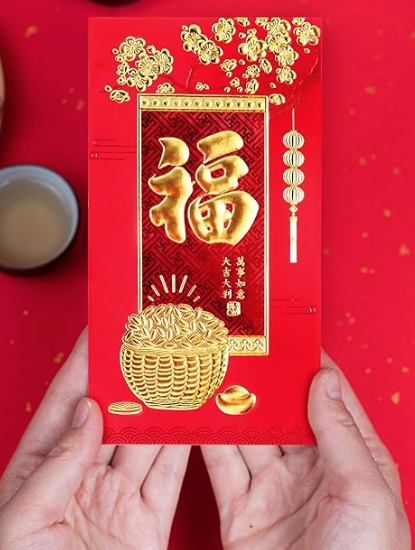
At the big celebration, an old beau of Second Aunt’s shows up to reclaim her affection, bearing extravagant gifts. “Red envelopes” are given out to the children—packets of cash that are traditional gifts for the new year—but there is one packet amongst them that was intended for someone else entirely (a business associate of the beau’s) but got mistakenly gifted to who knows who in the confusion of the celebration. Now those in the know (the beau, the aunties, and Meddy and Nathan) have to figure out who has it, get it back, and give it to the business rival to avoid dire consequences. But, as is usual with this cast of characters, things go typically awry and get ever more complicated.
Maybe I’m just in a weird mood—not the one to sufficiently appreciate this book—since many people gave it four and five stars. I found it more stressful than enjoyably chaotic, and was glad when it was over. I vastly preferred her stand-alone book that I read a few weeks ago, and hope she writes more like that one.

 The Book Adept