Authenticity rant
I just finished reading a book that’s popular on the Facebook page “What Should I Read Next?” (The Reading List, by Sara Nisha Adams), and although I quite enjoyed the concept of someone finding someone else’s reading list and following in their steps by reading all the books on it, and also sharing and discussing the list with others, some of the simplistic details of the book were so flat-out wrong that I feel the need to correct them here, at least.

For any other venue or atmosphere chosen as the backdrop to the action in a book, the author would probably take at least minimal pains to research the details of the world-building. But everyone in America apparently believes they all know how libraries work, and this presumption has perpetuated a lot of stereotypes that are highly inaccurate. Even those who profess to love the library, as both the author and the characters in this story do, are doing their local library and its staff a disservice when portraying them in this way. The flyers being passed out to “Save our library!” in this story become necessary when people fail to realize exactly what a library is or can be, depending on who staffs it.
One of the two main characters in this book, a teenager named Aleisha, gets a part-time job for the summer at the local branch library. Her brother, Aidan, has always loved the library, so when she can’t get the retail job she’s been trying for (clothing discounts being important to teenagers), he encourages her to take the position at the library. She designates it in at least one conversation as a “shit summer job,” and is no way invested in it, to the point where she sits at the information desk with headphones on and pointedly ignores a patron (the other protagonist, Mukesh, an elderly Indian man) who can’t figure out how to operate the automatic door opener. When this man then approaches her at the desk to ask for reading recommendations, she summarily dismisses him by saying she doesn’t read “stories,” she only reads true things, so she can’t help him, sorry.
Throughout the rest of the book, this person is referred to, by both the public and by her co-workers in the library, as a librarian.
It should be obvious, but I’m going to make it crystal clear: Not every person who works in a library is a librarian, just as not every person who works in a law firm is a lawyer. Just as with a lawyer, a librarian is a trained professional. Being a professional means that your work depends on special skills and qualifications you have acquired through study and practice, and involves holding that work to a specific standard.
In order to achieve the title of “librarian” in most related venues, you must have a bachelor’s degree in an unspecified area (English literature, art history, or science are helpful, depending on your future plans), followed by a two-year master’s degree in library information studies that will include acquiring such areas of expertise as cataloging, collection development, services specific to a particular demographic (for instance, children’s librarian or teen librarian), and readers’ advisory. There are also a variety of categories and kinds of librarian—archivist, information specialist, public librarian, college or university librarian, law librarian, and so on—that require further special training in that area of knowledge.
I have that master’s degree, plus at least half a dozen upgrades via individual classes in specific subjects, and I also teach in the masters program at the University of California in two areas of special knowledge—Young Adult Literature, and Readers’ Advisory. And the idea that the way librarians recommend books, as is presented in The Reading List—they read the books themselves so they have something to recommend—is inaccurate and misleading. Do I recommend books I have enjoyed to others looking for a good read? Sure. But I don’t do so without first performing an extensive deep dive into their personality, reading preferences, and previous reading experiences, because until you know with what kind of reader you are interacting, it is impossible—unless you’re exceedingly lucky—to hit on the perfect book for them. Further, if I relied only on the books I had actually read in order to satisfy the requests of my patrons, it would be severely limiting to what’s actually out there in the world. A trained librarian finds books for any and all purposes and tastes, regardless if she has read them or not.
This is one of the things that frustrates me about such interactions as “What Should I Read Next?” on Facebook. Someone puts out a reading request with minimal parameters, and 300 people immediately proffer their favorite book. No one stops to ask, What kind of experience are you looking for? What elements of a book are most important to you: characters? world-building? mood? Are there specific genres you like, and why? Do you read to gain knowledge or to experience emotion? and any of the dozens of other questions that make it possible for one person to recommend a book to another with any hope of success. What people without librarian training fail to realize is that the recommendation of a book must be preceded by knowledge about that reader.
Why is success so important? Well, what happens if this person hasn’t been much of a reader but is resolved to do more reading? They take multiple recommendations from people touting their own favorites and, one after another, find them disappointing because the books are not to their taste. Do you think that person will become discouraged and maybe believe that reading just isn’t for them? That’s what happens with many children or teenagers who get frustrated after the second or third book that doesn’t resonate. They give up on reading forever—or maybe, if luck plays a hand, they come around to the idea again in their 40s when some book grabs them by surprise.
Although I certainly wouldn’t put librarians’ level of professionalism on the same par with, say, a doctor or a lawyer (considering their many extra years of study and also the relative importance of their actions), it is every bit as offensive to us as a profession for others to assume that anyone could do our job. Furthermore, the misrepresentation of every library employee as a librarian would never happen in real life. If you work in a public library as a page (one of the people who shelves books and does auditorium set-ups) or a circulation clerk (one of the people who checks books in and out and maintains the integrity of the books), one of the first things you are trained to do, should a patron ask an information-related question, is to send them to the reference or information desk to speak with a librarian who is qualified to answer that question.
Non-librarian staff are sometimes even discouraged from providing simple directions, because they can’t know what informational needs back up that query. Someone might ask, Where is the history section? and you as a page know where it is, so you escort them there. But what they really wanted was guidance in finding a book about a particular battle that took place during World War II, and being escorted to the history section did exactly nothing for them on that quest besides narrow down their choice of books from millions to thousands or from thousands to hundreds. If they had been directed to a librarian, who would have drawn them out about the exact nature of what they were looking for, they would be standing in the history section with three books on that subject in their hands for further consideration.
So, Sara Nisha Adams, although there are parts of your book that are personally compelling, evocative, and engaging, you have done yet another disservice to the profession of librarian by perpetuating all the misinformation that puts our libraries in constant peril of being shut down. Yes, a library is (or can be) a dynamic community space. Yes, it can serve many functions for its neighborhood. But the reading-specific needs that it fulfills are best realized by the participation of real librarians, whose purpose in taking on this career is to find the right book for the right person by using training and experience, not random personal preference, as their methodology.
Secondary characters

Do you ever love a book not for its main protagonists but for its secondary characters? I think that was the case with me and JoJo Moyes’s new book, Someone Else’s Shoes. The two protagonists, Nisha and Samantha, certainly drive all the action with their stories, but it is when the secondary and peripheral people get involved that those stories really come to life.
Part of this is because neither of the protagonists is particularly likeable. Samantha’s okay, I guess, but she spends so much of her downtrodden existence reacting like a confused limp noodle that it’s easy to grow impatient with her and snap “Buck up!” every time you encounter her on the page. With Nisha, it’s the opposite problem—she’s so entitled that your constant response is to want to do anything to stymie her, and follow up by smacking her silly. So when you first start reading this book, it may make you wonder why you should keep going. The answer is the others.
The basic story: Sam and Nisha are at the same gym. After their respective workouts, somehow they end up accidentally switching gym bags. Nisha’s contains a Chanel jacket and a pair of custom red crocodile Christian Louboutin high heels, while Sam’s has a pair of practical black flats and the British equivalent of an outfit bought at Target.
The switch proves initially beneficial for Sam, because she’s teed up for a series of business meetings and, forced to don the Louboutins (or wear gym flip-flops), she gains some needed confidence and lands three deals in a row for the printing company for which she works.
Nisha, on the other hand, wouldn’t otherwise be caught dead in Sam’s flats, but when she steps outside the gym wearing those and a bathrobe only to discover that her car and driver are nowhere in sight and she can’t raise anyone on her phone, she’s stuck. Little does she know how stuck, however, until it becomes clear that her husband has taken this inopportune moment to shut her out—out of her penthouse suite at London’s poshest hotel, out of her custom wardrobe, out of her bank accounts and credit cards—she’s literally destitute in the space of a few minutes, and has no idea how to recover.
She’s such an unlikeable character that you almost revel in the desperate straits she finds herself; fortunately for her, surrounding folk aren’t as gleefully vindictive as you are! She meets Jasmine, one of the head housekeepers at the hotel where Nisha and her husband Carl are staying, and Jasmine, at least initially, pretty much saves the day. Sam is similarly blessed, by a co-worker, Joel, who buoys her up when her confidence is lagging in the face of abuse from their new supervisor, Simon, and also by her best friend, Andrea, who is undergoing cancer treatment but can still be counted on to give sage advice about Sam’s depressed, unemployed husband.
Both women make an initial attempt to return the bags to the gym and retrieve their own, only to discover that the gym has financial woes and is closed until further notice, cutting off their access to the possibility of identifying who is now holding their belongings. The rest of the book is a sometimes funny, sometimes grim French farce about the efforts each woman makes to get her life back on track and retrieve the things that are important to her, enabled by the aforementioned wonderful secondary characters.
As you can guess, there is a fair share of heartwarming personal transformation, but it’s not maudlin, nor is it cute, so it rings true. The contrast in status of each woman with the people surrounding her and how that matters (or doesn’t) in the scheme of things is a big theme, as is discovering what each truly wants as opposed to what they have been accustomed to receiving as their due or enduring as their punishment. There are hints of developing romantic relationships between various characters, which is always nice if done properly, and also some comeuppance results, which are gratifying. All in all, I really enjoyed this latest from Moyes.

Two added notes: First, I am bemused by the choice of artwork for the cover. With a book completely centered around those shoes, why aren’t they on display in all their wildly expensive glory? Second, after finishing this I scanned the next five books up on my Kindle, wondering which to read, and noticed that The Reading List, which will be due at the library in a week so should probably be first, was written by Sara NISHA Adams. Having never previously encountered the name Nisha only to read a book with one as the protagonist, it seems too serendipitous that the following novel should be written by someone of the same name, doesn’t it? That’s my reading life…
Standards, genres
I find I don’t often enjoy the books that mainstream book clubs are out there touting like mad; or sometimes I do enjoy them, but it’s more like an unhealthy sugar rush than a savored meal, something you may regret later. Part of the reason usually turns out to be the frantic push to define a book as something more than it is.

That was the case when I read The Last Thing He Told Me, by Laura Dave. It’s not without merit: The central decision of the main character to do something that will forever deprive her of the thing she has discovered she wants was, to me, a compelling plot twist and the best part of the book. But the efforts of the publisher, the book clubs, and now Apple TV+ to convince us that this is an explosive mystery/thriller do a disservice to what is basically a domestic drama.
Hannah, a woman with an established life and an involving and creative career, meets Owen, and finds for the first time in her life that she can put aside all her reservations and enter wholly into a relationship. They take it to the next step, Hannah leaving her base in New York City for life on a houseboat in Sausalito with Owen and his 15-year-old daughter, Bailey. Her stepdaughter doesn’t warm up to her, and Hannah is, quite frankly, somewhat pathetic in the ways she tries to win Bailey over. Then, one day, Owen disappears, leaving behind a cryptic note that says “Protect her.” Bailey is the most important person in his life and, finding himself unable to be there for her himself, he asks Hannah to step up. This is where the contrived plot started to lose me because, as we discover as the story proceeds, there are specific people from whom Bailey needs protecting, but since Owen fails to mention any of them (a simple addendum of “Don’t go to this city!” would have sufficed), that leaves Hannah and Bailey walking right into danger as they do their amateur sleuth routine trying to find out why Owen has disappeared. For a person with as much talent for deception as Owen turns out to be, you’d think he would have thought ahead a little?
There were some nice moments as Bailey and Hannah come to trust each other (or more likely realize that there is no one else) and their relationship starts to unfold, but other aspects of the story (such as the involvement of the FBI and the ineffectiveness of the Witness Protection Program) are dealt with summarily to the story’s disadvantage. I did enjoy the sleuthing parts as they research Owen’s (and Bailey’s) past (probably the librarian in me), but the detecting bits don’t make this a mystery any more than the drama makes this a thriller. Many of the reviewers I saw on Goodreads disliked the book not because of its own inherent merits or failings but because its genre was misrepresented by the hype.
If you do decide to read it, therefore, go into it as an example of relationship fiction with a little extra excitement provided by the circumstances surrounding the central theme, and put those other genre labels out of your head. As a “What if?” story, it’s quite engaging enough to provide a pleasant afternoon’s read, but if you pick it up expecting Jennifer Hillier or Sharon Bolton-level thrills, you will be disappointed.
The pinnacle of Schwab
There are a few authors whose books I pretty consistently love and will always read, and V. E. (Victoria) Schwab is one of them…with a caveat. She writes adult books and she writes for young adults, and I am passionate about most of the adult ones but not so much for the YA, which is too bad, considering YA is my “specialty” (having been a teen librarian for all those years). I can’t quite figure out how someone can be brilliant for one age group and less so for another, but there it is; although I like a few of her YA books quite a bit, there are others I found somewhat “meh.” For instance, although I enjoyed the Cassidy Blake series (meant for middle-schoolers), both the Archived and the Monsters of Verity novels left me wishing they had better world-building, less confusion, and more logic. I should say, though, that there are many teens who absolutely love her YA series, so perhaps Schwab is actually good at gauging how to write for teens, and I am just not that demographic and should quit talking!
For me, the two adult series where she really shines are Shades of Magic and this week’s re-reads, Villains, which begins with one of my all-time favorite books, Vicious.
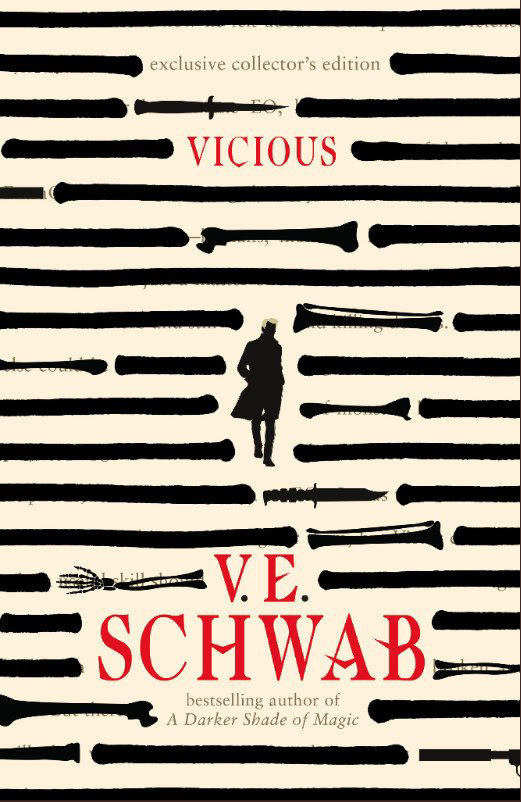
Vicious turns everything you think you believe on its head, in terms of likeable versus unlikeable protagonists (antagonists?), because it has one who is set up as a hero but who gives you the heebie-jeebies, and another, a supposed villain, who you root for even though in some ways he is a distinctly unpleasant person. Moral ambiguity is definitely the theme.
Vicious is elegant and spare, with just the right amount of detail and not an ounce more or less. It has an array of fantastic characters who come across fully fleshed out with only a few sentences of description. I can’t believe it was Schwab’s first book for adults—it’s masterful. I have read it at least three times (maybe four?), and its sequel, Vengeful, is equally as compelling. I wrote a review of the two books here, if you’d like to know more about them (before reading them yourself!). The other thing to know is that there is a third book coming. I don’t know when—Schwab has gone off in five different directions since she wrote this, from her massive The Invisible Life of Addie Larue to her ExtraOrdinary comics series (based on the Villains universe) and also the first book of a new YA series, Gallant—but we do know it will be called Victorious, and that there are already 25,000 people on Goodreads who have put it on their “TBR” list as soon as it hits the bookstores (no pressure, Vee!). I hope she doesn’t delay too much longer…
Endings
Does the ending of a book alter your perception of the entire story? This is what I’m pondering, a few minutes after turning the last page of The Moonlight Child, by Karen McQuestion. The book had a compelling premise and an engaging presentation, but the climax and aftermath of the story was too casually told for what had gone before. And that was the crux of the problem, I think—the author ceased showing us and instead starting telling, and the whole story suddenly lost its mojo.

Sharon Lemke is recently retired and reveling in the ability to call all her time her own. She had thought that she would be at loose ends and perhaps immerse herself in volunteer work, but instead she is simply enjoying each day. One night she stays up late to watch a lunar eclipse, and from an upstairs bedroom window she observes something that puzzles her. In the house behind hers, a little girl, perhaps five years old, is standing on a step-stool doing dishes while the lady of the house apparently berates her. First of all, why is a child of that age performing household chores at midnight? and second of all, Sharon knows a little bit about these neighbors, the Flemings, enough to know that they have one son, Jacob, who is 17. So who is the little girl?
Soon after this incident, Sharon’s daughter, Amy, an attorney, calls her to ask a rather large favor: She is a mentor for a teenager, Niki, a former foster child who at 18 has just aged out of the system. Niki hasn’t been able to find an appropriate place to live, and Amy wonders if Sharon would consider letting Niki stay with her for a while. Sharon somewhat reluctantly agrees, but after Niki arrives the two form a bond much like grandparent and grandchild, and both are pleased to go on with the situation.
Niki’s bedroom overlooks the Fleming family’s back yard, and after she, too, notices some odd occurrences surrounding the anonymous little girl who apparently lives with them, she and Sharon decide to call social services. But the wheels of bureaucracy turn slowly; the two become impatient and decide to do a little detective work on their own, to find out who this child is, and what relation she bears to the family. This sets some dramatic events in motion.
I really enjoyed about 85 percent of this book. The characters were interesting and memorable, their interactions dynamic, and the story moved along at an exciting pace, with numerous small surprises to keep things interesting. The psychological aspect of the antagonist—the sociopath, Suzette Fleming, whose selfish needs drive the story and motivate the actions of every member of the Fleming household—was fascinating to observe, and the differences between her perception of the world versus what other people were actually thinking were quite entertaining.
But…then a few things happened that turned me against it. First of all, although Sharon Lemke is initially set up as an important protagonist, she all of a sudden takes a back seat during the crucial action of the book, which was disappointing. I felt like the author decided to relegate her permanently to “grandma” status, rather than allowing her to keep her agency.
Second, the crucial scenes in the resolution of the child Mia’s situation were in some ways excitingly written, but we suddenly lost touch with the thoughts and emotions of Suzette, who was the driving force of all the internal action throughout, and the rest of the book becomes simply a series of narrated events without the context of her delusion. The whole ending resolved itself with comparative ease, but in the process it became truncated, leaving the reader (or, at least, this reader) feeling dissatisfied even though everything had been wrapped up.
So, my question: Does the ending ruin the rest? Not entirely, but sufficiently to change my opinion of this book from an enthusiastic five to a somewhat tepid three. All I could think, for the last 15 percent, was, Damn! and it was going so well!
How’s the weather?
I may have mentioned (once or twice or a dozen times) that I am not much of a romance reader. I’m not fond of the prevailing tropes of enemies-to-friends or city-folk-migrate-to-a-small-town-and-fall-in-love; I find the ways many romance authors choose to put their protagonists together to be manipulative in the extreme and not particularly clever; and a lot of the sex scenes turn out to be cringeworthy. But occasionally I come across one that feels genuine, despite itself, and worms its way into my affections, and that is the case with my most recent gamble on Kindle deals, Weather Girl, by Rachel Lynn Solomon.
Interestingly (to me, at least), many readers, both newbies and former fans of this author, did not like this book. But I guess I am usually the contrarian, so what the hey. I thought it was cute, poignant, more realistic than many, and included some elements not usually found in romance novels that made it appealing.
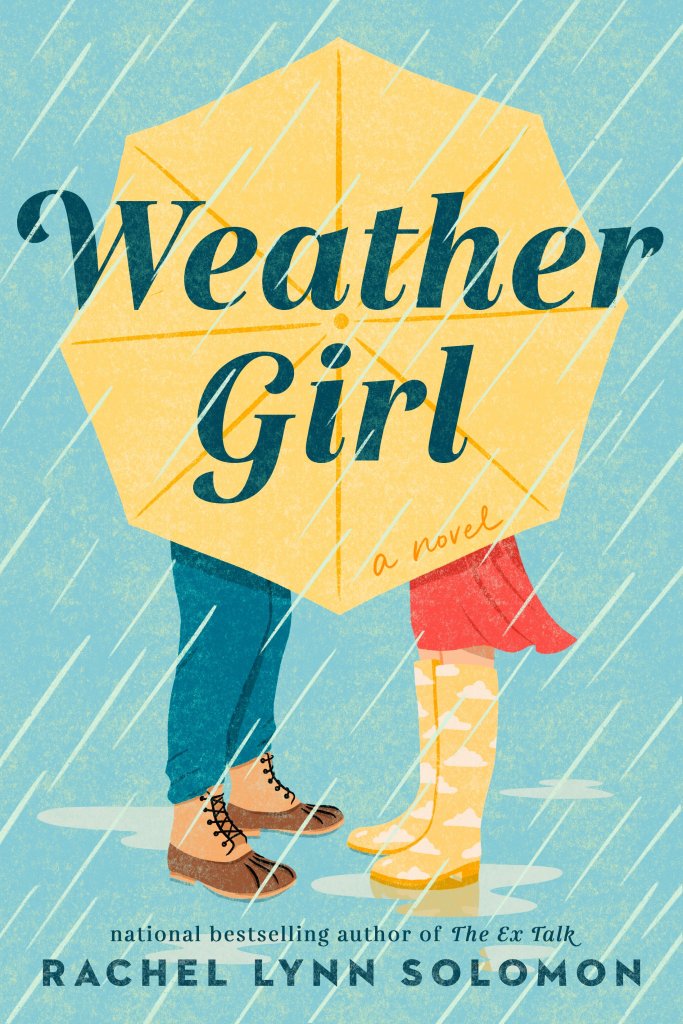
Ari Abrams is, first of all, a Jewish protagonist, which is rare; she is also a successful young TV meteorologist with a depression problem, who portrays herself as all sunshine and hides her dark side. Her love interest, Russell Barringer, also Jewish, is a sports reporter, a big teddy bear of a guy who is self-conscious about his weight. These two departures from the norm made me much more likely to enjoy this book.
Then there is the plot, which is silly enough to be light entertainment but plausible enough to carry the story: The two “bosses” of the TV station are a phenomenally popular meteorologist and her former husband, her producer, who make the station their daily battleground to the discomfort of all the other employees. But Ari and Russell see glimpses of former love and passion between these two and decide to “Parent Trap” them by trying to encourage them to renew/salvage their relationship; in the process, Ari and Russell also begin to find one another more appealing than their initial friendship would have indicated.
I enjoyed getting inside the head of someone who was fighting depression, mostly successfully, but who had deep doubts about her ability to be real with anyone and still be loved. I also liked finding out Russell’s secrets and wondering how they would fit into the mix. And finally, the sex scenes were steamy and appealing and not at all creepy, which is a big hurdle in most rom-coms.
So—a rare recommendation from me for a mostly cute, mostly light romance with some unexpectedly well handled serious subjects.
A World of Curiosities
I was late to the party reading Louise Penny’s most recent in her Chief Inspector Armand Gamache series—they reliably drop in the fall of each year (although this one, coming out in November, was later than the usual August or September denouement), and I have just gotten to it in April, five months later. But I am happy to say it was worth the wait, and harks back, in more ways than one, to the best books of the series.
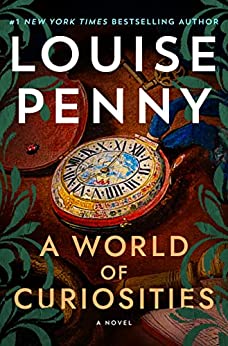
I always enjoy the books in which Penny explores origin stories for her characters, and A World of Curiosities went back to the original meeting and co-opting of Inspector Jean-Guy de Beauvoir into Gamache’s work circle and later, inevitably, into the family. And the case over which they met plays a central role in the current mystery, so that we are simultaneously intrigued by the past case and put into a major state of anticipation over the current one. This is a great ploy for keeping readers enthralled with the story line. It becomes even more engaging with the inclusion of Amelia Choquet, one of my favorite characters.
The creation of the siblings, Sam and Fiona, children of a murdered woman who managed to tragically damage them before she died, gives an entrée into the eternal question of nature vs. nurture, and also messes with the reader’s faith in the instincts of the detectives. Gamache cannot help but feel a frisson of fear and dread each time he encounters Sam, while Beauvoir believes he is completely off base and is being naive by trusting Fiona. When the two become a part of a bigger case, something Gamache believed to be shelved for good along with its perpetrator, John Fleming, lodged in the Special Handling Unit (SHU) of Montreal’s most notorious prison, the tension just keeps ratcheting higher. I loved this quote from one Goodreads reviewer:
“Despite the ravioli and eclairs,
this is no cozy mystery.”
I was also pleased that something lacking in the last book seemed much more present in this one: the Three Pines community. In the last story, interactions amongst the villagers seemed both subdued and incidental, while in this one the presence and significance of the residents came roaring back, with new connections being made and new characters introduced.
I like to scan the star ratings of books on Goodreads to see what other readers thought; I am somewhat puzzled by those for this book, since it was either the absolute favorite with five stars or the most disappointing with one or two! My vote is for the upper end of the spectrum, and I hope Penny will continue to tap into the richness of her characters’ back stories for future tales.
Manufactured mystery
I tried out a new mystery writer, D. D. Black, on the recommendation of someone on “What Should I Read Next?” and I’m feeling a little conflicted about whether to continue after the first two books. On the one hand, I liked the setting a lot (a small town on one of the many islands and peninsulas off Puget Sound, near Seattle), and I also liked the main character, Thomas Austin. He’s a former NYPD detective who, after a personal tragedy, retired on his pension to the Pacific Northwest and bought a combination mini-mart, café, and bait shop to keep him marginally occupied (not a lot of traffic). He’s smart and interesting and intuitive, and a little dark. I also liked the secondary characters, including Anna, a reporter/blogger destined to become a love interest in a future novel if Thomas can get out of his own way, and the three officers from the local police force—Ridley, Lucy, and Jimmy. I also like Austin’s corgi, Run.
What I didn’t particularly care for was the mysteries themselves. I know I have maintained in previous blog posts that mystery lovers read as much for the characters as they do for the mysteries, and that although the plots fade into one another, interest in the character’s ongoing storyline is what keeps the readers coming back. But the caveat to that is, the mysteries have to be at least marginally believable and present some sort of cohesive story arc to provide the background for a favorite detective, and…these didn’t, in my opinion.
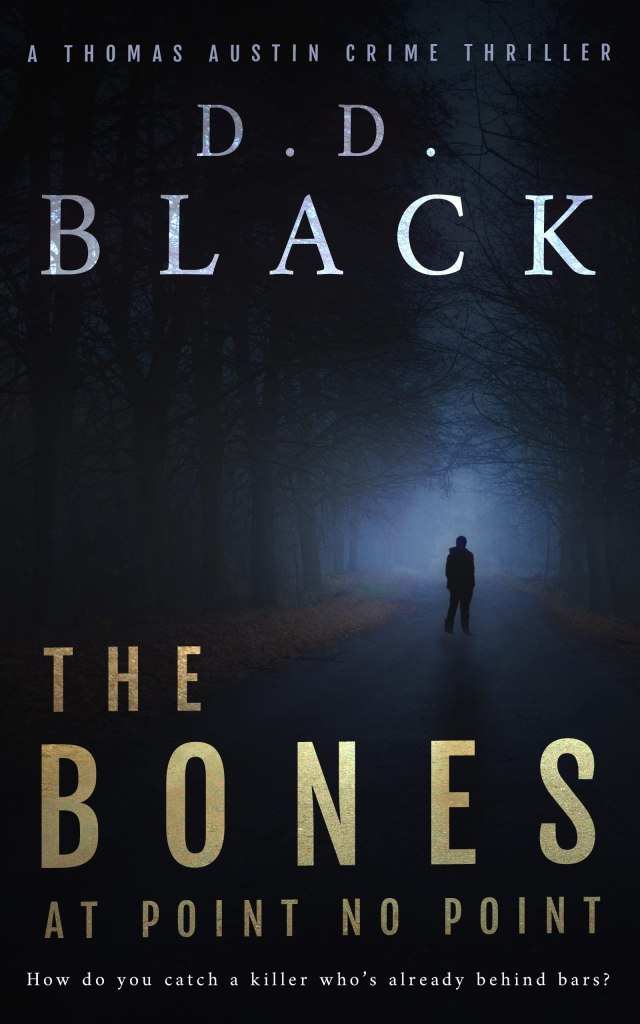
The debut volume, The Bones at Point No Point, did a nice job of introducing all the characters, and then harked back to a case in which Thomas Austin was the lead detective when he was in New York City. It seems there is now a copycat killer on the loose, but the details are so eerily similar that it has him (and everyone else) wondering if he locked up the wrong woman or, at least, missed that she had a partner. This sounds plausible as a bare-bones description, but the likelihood of any of it was highly suspect. Also, for his first novel D. D. Black chose to portray a particularly gruesome murder scenario, in shocking detail, and I didn’t want to read about it, especially because he described it several times in scenes from the past and circumstances in the present.
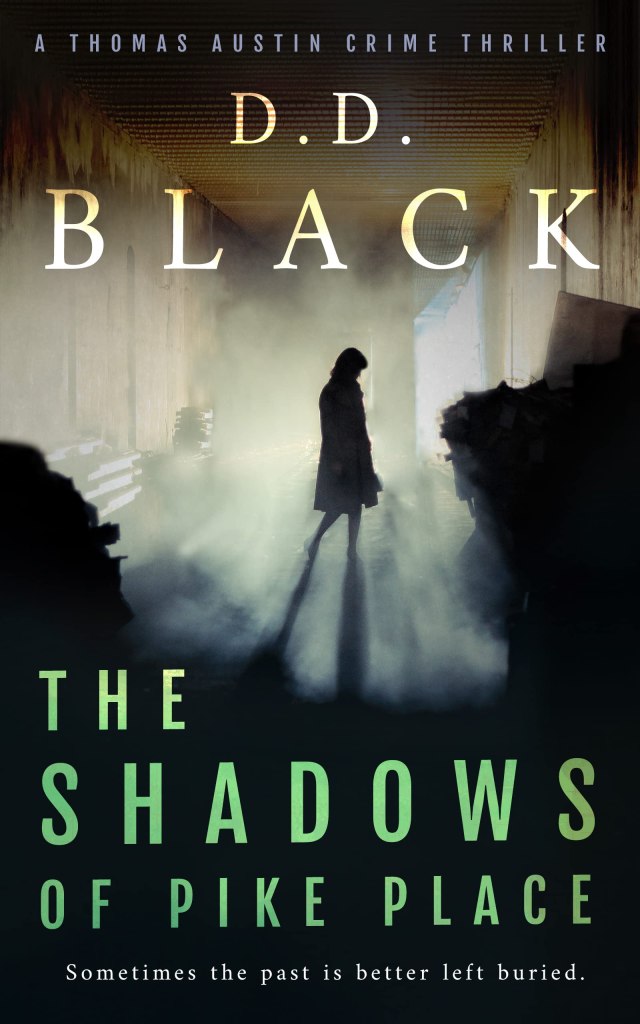
I thought about stopping with the first, but then read the description for the second, The Shadows of Pike Place, and was intrigued. This was more of a “locked-room” mystery, in that the protagonist was murdered during an evening when she was in the company of a limited number of people, and therefore the killer had to be one of those present. Again, I enjoyed the dynamic between Austin and Anna, the introduction of the Seattle police chief, and the colorful characters Black writes as members of the murdered woman’s family; but again, the mystery took off in various weird directions and the result was dependent on so many doubtful events that I found it somewhat absurd and also anticlimactic.
These are what I call “manufactured” mysteries, in that the scenario is so out of the box that it strains credulity. In both cases, I would have much preferred a tamer mystery less dependent on extraordinary events, one that showcased its detective’s abilities rather than dropping him in the midst of chaos and expecting sense to be made of it when it wasn’t plausible in the first place.
I may come back to this series someday, just for the characters and locales, but I think I’m done with the Thomas Austin Crime Thrillers for now—they’re just too frustrating.
Zig-zag
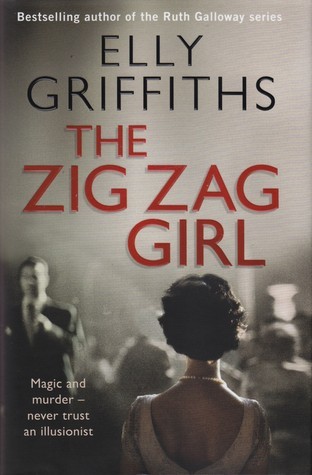
I recently discovered that Elly Griffiths, who writes the Ruth Galloway mysteries and has three volumes in a fairly recent story line starring Harbinder Kaur, has yet another series, called either The Brighton Mysteries or Stephens & Mephisto, new to me although not new. She wrote the first, The Zig Zag Girl, in 2014, and the sixth one came out in 2021, so presumably it is an ongoing effort. I was excited by the prospect of another series by this author, especially because this one is billed as more of a “cozy,” so I picked up the first when it was offered at a discount by Book Bub. I am disappointed to say that it will not be a new favorite.
The first book begins in the 1930s, moves through World War II, and ends up in a “present-day” 1950s mystery in England. The pre-war and war years are told in flashback as background for what is happening “now.” During the war there was a group of recruits called the Magic Men (mostly made up of magicians by trade) who were deployed undercover to Norway to deceive and distract the Germans by building decoy camps, tanks, and aircraft carriers to make the enemy think there was a base of operations about which they should worry. In the present day, one of those people—Edgar Stephens—has gone on to become a police detective; a person associated with the war group has been brutally murdered, and Stephens is assigned to the case. It’s an odd one, employing a magical trick called the Zig Zag Girl, in which the magician’s assistant is apparently sliced into three parts, only to emerge whole at the end of the trick. (In the case of the murder, she has actually been dismembered.)
After a second person, also associated with the undercover war effort, turns up dead, Stephens and his friend Max Mephisto, a magician who still headlines in variety shows around Brighton where the murders have taken place, conclude that not only are the murders related, but that the other members of the group (including themselves) may be in danger. An effort is made to track them down and warn them, simultaneously checking to see if it could be one of them committing the murders.
The premise and the historical time period appealed to me, but there were so many flaws in this initial book that I doubt I will continue on to read another. The historical aspect is sketchy, and the timeline of the war itself doesn’t correspond to reality; the Norway campaign was in 1940, and in the book the group’s efforts there last only two years and a few months before the war ends, leaving out three years of World War II!
The police procedural elements of the book were likewise hard to believe: These are gruesome and high-profile murders (each based on a magic trick, so they were bound to have the media all over them, not to mention capturing the public’s imagination), yet the only people investigating them are one policeman, his assistant at the station, and his magician friend? It’s just too casual—even in the 1950s, there would have been some sort of investigative team. Most of the activities that, in a regular police procedural, would be featured and discussed (for instance, forensics) were merely dropped into narrative between the sole policeman and his civilian buddy, so that they seemed incidental rather than central to the case. Despite its being a murder mystery, there was more attention paid to the lifestyle of the traveling magician than there was to the murders!
Other than the two protagonists, the characters were thinly developed; perhaps the intent was to have you figure them out for yourself, but they just weren’t that interestingly presented, and some members of the Magic Men (even central ones) remained cardboard cutouts to the end. There wasn’t much scene-setting in terms of details about the era. The witness observations were repetitive and clumsy, and although the descriptions frustrated both the detective and the supposedly canny magician, I figured out “whodunnit” from them pretty early on in the book, and from there I was just reading to get to the big reveal.
If this book were a debut novel by a novice writer I might have been a bit more forgiving; but this is a skilled storyteller who has published 29 books and counting. My advice: Stick with Ruth Galloway, or try one of her Harbinder Kaur books. Perhaps the rest of the Brighton Mysteries are better than the initial one, but I don’t intend to investigate. There wasn’t enough zig-zag in this one to draw me further in.
Re-wilding
Scottish-American conservationist John Muir, the “Father of the National Parks,” once wrote that
“…when we try to pick out anything by itself, we find it hitched to everything else.”
John Muir
This quote was specifically called into use when considering the failing ecosystem of Yellowstone National Park, where the purposeful removal of wolves, Yellowstone’s top predator, meant that the elk population overgrazed the plants and trees, leading to the demise of songbirds, beavers, and cold-water fish. Wolves were the missing link in the equation that would keep Yellowstone healthy and, 28 years after they were reintroduced (in 1995), the ripple effect is considered one of the most successful rewilding efforts ever undertaken. The culling of the elk herds by the 80+ wolves now living in Yellowstone benefitted ravens, eagles, magpies, coyotes, and bears. Wolves’ preying on coyotes increased the populations of rabbits and mice, providing a wider food source for hawks, weasels, foxes, and badgers. Muir’s quote was certainly prescient.
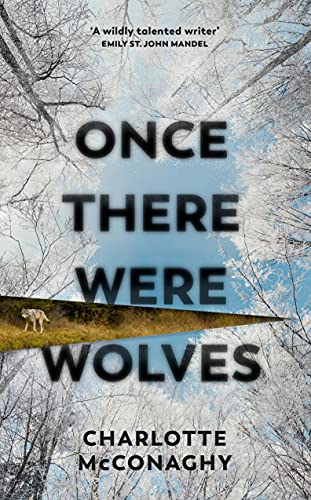
Charlotte McConaghy’s novel Once There Were Wolves posits a similar experiment to bring wolves back to the forests and Highlands of Scotland to rebalance biodiversity, depicting the difficulties inherent in convincing the resident human population (primarily sheep farmers) of the benefits to be had, and protecting the wolves against the farmers’ and ranchers’ conviction that humans and wolves can’t
co-exist on the land.
The protagonist is lead biologist Inti Flynn, a passionate young woman whose unusual upbringing by her father—living a subsistence life deep in the forests of Canada—has shaped both her beliefs and her career. She arrives in Scotland accompanied by her twin, Aggie, who is deeply damaged, mostly silent and passive, and spends all her time sequestered in their cabin. Inti has an extraordinary affinity for the wolves, heightened by an actual neurological condition called mirror-touch synesthesia:
“My brain re-creates the sensory experiences of living creatures, of all people and even sometimes animals; if I see it I feel it, and for just a moment I am them, we are one and their pain or pleasure is my own. It can seem like magic, but really it’s not so far removed from how other brains behave: the physiological response to witnessing someone’s pain is a cringe, a recoil, a wince. We are hardwired for empathy.”
Inti Flynn, Once There Were Wolves, by Charlotte McConaghy
The book is part literary fiction, part mystery, and engrossing in its narrative. Although the rewilding program is officially sanctioned by the government, there is massive resistance by the locals, some of whom are aggressive with their threats to kill wolves who set foot on “their” land. Inti struggles between her desire to protect her wolves and her need to engage with the locals as something other than a know-it-all outsider. She is assisted in making the human connections by the sheriff, local-boy Duncan MacTavish, but he remains something of an enigma throughout the story, and his passivity when it comes to enforcing Inti’s cause frustrates her. Then a local farmer goes missing, and speculation inevitably turns to assumptions about wolf culpability.
The best parts of the book are Inti’s detailed observations about the wolves—how they relate to one another and to their surroundings, and their habits, travels, and behaviors as they integrate into this foreign environment. The reader is transported to the hillside blind where Inti watches a new batch of pups scramble and play just outside the mouth of their den while the adults warily sniff the air, cognizant of the human close by, and the welfare of the small packs dispersed around the town becomes personal as each wolf becomes familiar.
Less effective, for me, was the rest of the narrative, especially that surrounding the sheriff, Duncan, and Inti’s sister, Aggie. I felt like we were too far into the story before we understood what happened to destroy Aggie’s confidence and turn her into the near-catatonic figure she now presents. Likewise, Duncan runs hot and cold, both with Inti and also with his commitment to doing his job (although his devotion to the individuals in his community is touching), and I was frustrated by the incitement to waffle over whether he was a good guy or a bad one. But McConaghy knows how to keep the action flowing throughout the narrative, and the mystery remains intriguing up to its final solution. Readers should be aware that this book presents scenes including violence and abuse, although much of that action takes place “off screen,” or is implied but not graphically described. But the few graphic depictions are powerful and potentially disturbing.
I enjoy a story with some meat on its bones—focusing on a particular iteration of a wider philosophy. As happens with my reading choices from time to time, there was a serendipity of theme between this book and The Crow Trap, by Ann Cleeves, which also detailed a biodiversity study in a rural area, but whereas I found that book almost completely lacking in appeal, Once There Were Wolves delivers all kinds of intellectual and empathetic content. Despite the few caveats above, I would definitely recommend this book to anyone interested in both a gripping story and a thorough education about how the biological world works.
For more information about the Yellowstone rewilding project:
https://www.muchbetteradventures.com/magazine/yellowstone-wolves-rewilding-1995-history-books/

 The Book Adept