Too dark
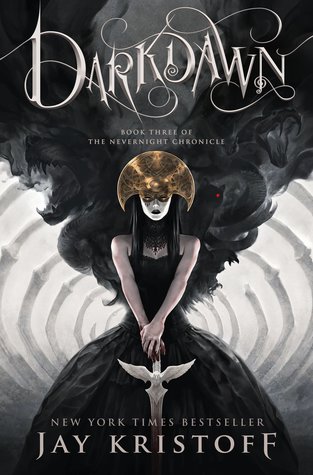
Well, I promised to come back once I had read Darkdawn, the third book in the Nevernight Chronicle by Jay Kristoff, with a final verdict. Sadly, my reaction was mostly one of disappointment.
The action is still tense, the main characters are still developing and doing unexpected things to move the story along, but for me, this was a much less successful book than the first two, for several reasons.
The main one was the love triangle. Having been a teen librarian (and runner of three teen book clubs for 10 years), I can’t tell you how many love triangles I have had to endure in the course of my YA reading. For a period of time they seemed to be an absolute requirement as one element of any book written for teens, and almost none of them improved a story line in any way. This book is not written for teens (I think I mentioned the brutality, language, and raw sexuality of the first two, and that continues here), but for some reason Kristoff just couldn’t resist putting one in, and it’s not pretty. A large part of the book was ruined for me by the callous mean-spiritedness of two of the three participants.
I also didn’t care for what happened to the story line. The first book dealt with origin stories for its characters; the second advanced the revenge plot with a truly horrifying and compelling twist; but in this third book it seemed like everyone involved was just flailing around trying to triumph over one another in a really disorganized way. There were a few saving graces in the early part of the book, such as the interval spent on board ship with the delightful pirate Cloud and his crew, and Mia’s attempt to put things right with her little brother, but by the end the whole thing felt like it had disintegrated into a mash-up of sarcasm and sex, alternating with interventions by various gods and monsters.
Part of what didn’t work for me (and I think this is probably the central issue) is how exactly Mia would manage to counteract her enemies’ moves and at the same time achieve the gods’ ends as she was apparently destined to do. Motives and objectives kept wandering randomly, and at some point it felt to me like Kristoff lost the plot.
You will find, if you look at ratings on Goodreads, that many people disagree with my analysis of this book. It seems like everyone gave it either five stars or one, with no one in between. For the sake of all those (admittedly in the majority) who went with the five and loved this book as unreservedly as the first two, I will say, If you like a sizzling fantasy story with nonstop action, fascinating characters, and big intentions, give the Nevernight trilogy a try. But don’t say I didn’t warn you if you end up on the same page with me by the end of #3.
It may end with this
After reading Verity, by Colleen Hoover, I wasn’t sure I wanted to read any of her other books; although there were certain aspects of that book that were enjoyable, parts of it also decidedly put me off a further experience. But, as with that book, so many people in the Facebook group “What should I read next?” lauded It Ends With Us that I decided it deserved a look-in.
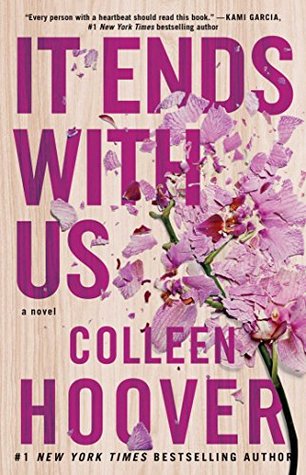
It took me three tries to get past the first 30 pages. Ordinarily I would give up after two, but a unique set of circumstances made me go there again: I was reading the third book in the turbulent and engrossing Nevernight series by Jay Kristoff on a night when my insomnia seemed like a last-all-night kind of thing, and my Kindle tragically ran out of juice; the only other book sitting on my night table was It Ends With Us, and it was so cold that night that I didn’t want to get out of bed to rummage around for something else to read! So I picked it back up and pushed through my initial reaction, which was that these characters—Ryle, and Lily Bloom, for godssakes—were so disingenuous, so superficial and coy, so self-consciously meet-cute that I simply couldn’t deal with the cheesiness.
I honestly didn’t become interested in anyone until the flashback part of the book, when Lily harks back to her teenage years by reviewing her journal entries about meeting and getting to know Atlas (the names in this book are truly ridiculous), the homeless boy hiding out in the vacant house behind hers. At that point, a spark of interest was fanned to a modest flame, so I kept going.
The book turned out to be a revelation of sorts; what seemed like it was going to be a somewhat frothy romance took a dark turn into interesting territory, as Lily confronts her past and has to question whether she will allow herself to be doomed to repeat it. I won’t say more than that, but the book shifted all in a moment from something that didn’t interest me much to a compelling story whose ending I really needed to know.
I can’t honestly say whether this will lead me to read any more Colleen Hoover books, though. The makeup of this one was initially so contradictory that the effort involved to get to the “good parts” required a denial of what I usually value in a story. The second half of the book proved to me that this author can deliver something compelling and genuine; but it evolved from such a ridiculously idealistic and unlikely set-up that it almost spoiled the rest. I ended up being mostly glad I read it, but also feeling manipulated and a little resentful. That doesn’t seem to be a recipe for becoming a fan.
State of ambivalence
I just finished reading State of Terror, by Hillary Rodham Clinton and Louise Penny, and am incredibly conflicted about it.
There are many pros and cons to this book (and this collaboration), and when I look back on it long-term I’m really not sure which will hold sway.
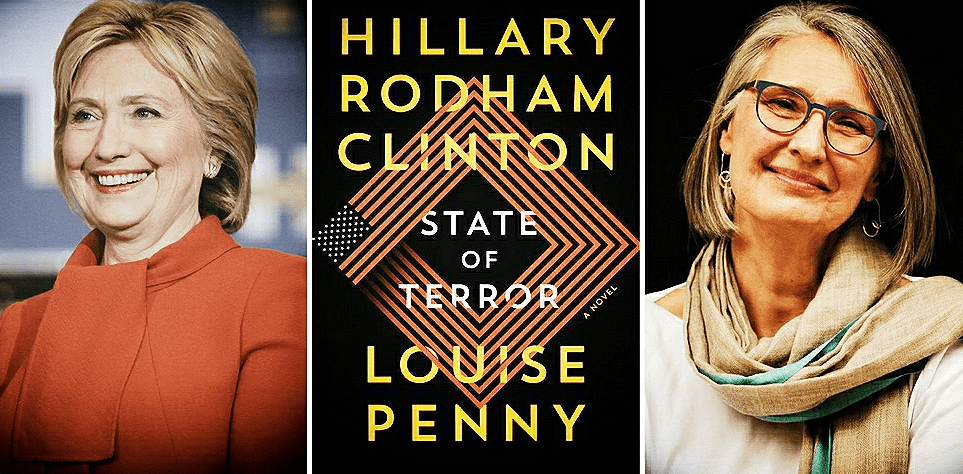
On the positive side, this was a viable thriller, with a believable set-up, a fast pace, and lots of plot twists, and presents a terrifying vision of where the extreme political divide in this country may lead us. It held my attention in the sense of hanging in there to find out what would happen next. The characters were interesting and mostly well developed, some better than others. I liked the concept that the heroine of a political thriller could be a slightly frumpy older woman using her wits and her life experience instead of a Daniel Craig type with rock-hard abs and karate skills. I enjoyed the bond between Secretary of State Ellen Adams and her best friend and counselor, Betsy. I thought the estrangement from her son was a smart plot point. And the story itself was, in light of the January 6th “insurrection” of last year, all too believable, particularly as more behind-the-scenes intel comes to light. I could definitely see things taking this radical turn in the upper echelons of government, and found myself hoping that Ms. Clinton was still in the realm of fiction and not writing from life!
Both the influence and the writing style of Louise Penny were definitely detectable; she was a good choice as collaborator. There’s a huge gap between writing nonfiction and memoir as Clinton has successfully done before and jumping to fiction, especially fiction with a complex plot, and I’m sure Penny’s contribution was massive. I also imagine that the two of them had a good time working on it together. But the thing I didn’t like was the Easter egg, as some are calling it, of the involvement of Penny’s Chief Inspector Armand Gamache of the Sûreté du Québec. It didn’t feel like a natural intrusion, but rather an unnecessary sop thrown to her fans to get them more interested in this book. Some people saw it as a courtesy to Penny’s participation, but I was, frankly, a little surprised that she agreed to it. That features is one of my cons, and here below are the rest of them. And I hasten to say that these are completely personal cons, not necessarily related to the book itself, but rather to my response to it.
First of all, I found it distracting in the extreme that it was written about a Secretary of State by a former Secretary of State. Yes, I know that the whole point was to give credibility to the story line and background by providing concrete details of the job that only someone who had done it could know; and that was, indeed, effective. But, knowing what I knew, I found myself dragged again and again out of the story itself by my brain speculating on what parts might be true—thinly veiled fact rather than made-up story-telling—and this was the case for a lot of the details of the book. My knowledge of who was writing it kept interfering with my simple enjoyment of what was, in fact, a pretty compelling narrative. Ellen Adams was working for a President with whom she was adversarial; was that Clinton’s experience with Obama? Not to my knowledge, but I kept getting jerked out of the story to wonder. Former President Dunn was a doppelganger of our most recent former Resident, but I kept waffling on whether she had made him heinous enough to be the Guy in Chief in question, and this conflicted with my belief that maybe she should have just left 45 out of it. And although I was intrigued by her depictions of most of the heads of state with whom she met, I felt that in the instance of the Russian she relied too much on a caricature of the real guy, slightly trivializing the story at a crucial juncture. (I should make the point here that has been “liberally” shared on Goodreads—that if you like HRC you will probably enjoy reading this book, while if you loathe her and/or are a Republican, you definitely won’t!)
All of this in-my-head stuff made this book compelling but not quite immersive. But as I said at the start, I can’t find too much fault with it as a legitimate political thriller with good characterizations, a believable (and frightening) plot, and an exciting pace. My best advice is to try to read it on its own merits without speculating about the back story, if you find that possible. I did not, but I’m hoping for the success of the book that I am in the minority, because it looks from the ending like there may be a successor.
Old age, friendship, rebellion
I didn’t know what I was getting into when I picked up The Great Unexpected, by Dan Mooney. It was billed as “charming” and “poignant,” and compared to such books as A Man Called Ove, The Storied Life of A. J. Fikry, and books by Mitch Alblom. There were definitely some of the same elements present; but it was also both depressing, and depressingly real, and I wasn’t in the greatest space to read about someone’s sad last years.

Joel Monroe, 76, is counting down his days in a nursing home. After independent life got to be a bit too much, he and his wife, Lucey, moved into the home together and, as long as he had her, everything was okay. But she quietly expired one morning while waiting for her cup of tea, and since then Joel’s experience has begun a downward spiral into thoughts of suicide. His entire life as a younger man had been centered on his work and his relationship, and he has no hobbies or pastimes to occupy him. He is plagued by the sense that no one at the home—nurses, aides—and no one in his family—his daughter, Eva, and grandchildren Lily and Chris—sees him as a vital human being who has earned respect for his long, productive life. He resents being treated like a child, from being required to passively take his medications to being refused access to the world outside the gates of Hilltop Nursing Home “for his own protection.” Everyone involved wishes Joel would just settle quietly into his role as elderly dependent, do as he’s told, and not make waves, but Joel feels angry, out of control, stifled, and grief-stricken.
After his roommate who followed Lucey also dies, Joel is made to share his room with Frank Adams, stage name de Selby, a former soap opera actor. Frank is genial, outgoing, quick-witted, and perceptive—everything that Joel is not—and he rapidly gets under Joel’s skin and provokes him into confiding his thoughts of suicide. Rather than acting shocked and horrified, Frank agrees with Joel that he should be allowed to exit his life if and when he pleases, even offering to help him plan his grand gesture, and this solidarity cements a preliminary friendship between the two. But although he is ever the listening ear for Joel, Frank has issues of his own with which he has never dealt, and soon the friendship grows in both directions. Frank encourages Joel to take back some of his dignity by exhibiting some “bad” behavior, source of much of the charming bits of this story.
On the up side, this book is much more than the sentimental, sweet story of yet another curmudgeon won over by life. It’s sincere, lovely, and touching, and tells a wonderful tale of friendship that acknowledges and supports. On the down side, if you are a person of a certain age, as I am, with the eventual prospect of being unable to care for yourself sufficiently to live alone, this is a slightly scary guidebook to what that experience could hold.
We all know that our society doesn’t treat the elderly well; once they exhibit the least infirmity, they are ignored, discounted, and shunted aside. We have all had the experience of visiting a nursing home and walking its halls lined with old people dressed in pajamas and robes sitting forlornly in their wheelchairs, of “rec rooms” featuring TV talk shows and board games to fend off boredom, with that indefinable commingled scent of piss, Lysol, and whatever is cooking for dinner. And we have also seen how the young and fit begin to talk down to the elderly and infirm as if they were irresponsible children or even beloved pets. Although Dan Mooney is never preachy in his approach, he paints a pretty clear picture of the emotions of an elderly man with few resources who doesn’t know how to fight against this encroaching, patronizing lifestyle.
Yes, I’m being just a tiny bit dramatic here; but I identified with Joel a lot more closely than was comfortable, and thought for the first time about what could be in my future if I don’t manage to fend off physical infirmity or mental laxness. So while I would recommend this book as both a worthwhile and an entertaining read, be aware that it may push some buttons for those of a certain age. On the other hand, if you are a young person reading it and are so motivated to take another look at your aging relatives as individuals of worth instead of as problems or burdens and to consider what they are due in their maturity, then all to the good!
Children for sale
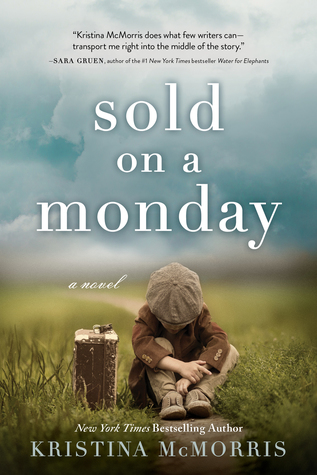
The book Sold on a Monday, by Kristina McMorris, starts with a picture: Reporter Ellis Reed is killing time along a country road while his overheated Model T cools down, by snapping photos. He has just attended a rural quilt show, where he has documented the display for a newspaper story, and he has a few frames left on his roll of film. He approaches a farmhouse and sees two young boys sitting on the porch. They are both red-headed, both blue-eyed, both dressed in nothing but overalls, and he remarks to himself that they look like the same child at different ages. But after he takes the picture, he sees something in the background that he didn’t note at first: A hand-lettered sign that says “2 children for sale.” Even though he is inured to the sight of heartbreaking poverty in this post-crash year of 1931 in America, he is horrified. He has heard tales of people farming out their children to relatives or dropping their kids off at orphanages and churches because they can no longer feed and clothe them; but the concept of a parent selling their own children to keep themselves afloat? That was a darker scenario.
His picture of the two boys was personal—not meant for publication—but when he leaves all the photos from his shoot to dry in the newspaper darkroom, Lillian Palmer, enigmatic young secretary to the publisher, sees the picture in question and shows it to her boss. The photo thus becomes an instrument in the advancement of Ellis’s career as a newspaperman, but the simple action of publishing the photo has devastating consequences.
This book was a page-turner. I liked the parallel development from Ellis’s and Lillian’s points of view; I also liked that, except for the prologue and epilogue, the story was told in third person, even though it was alternating viewpoints. It made it personal enough yet not too internal, if that makes sense. The storytelling was nuanced—the author knew when to set things up and when to reveal them, and was also good at end-of-chapter cliffhangers.
This is, in essence, an historical novel, in that it documents a particular time that was heavily influenced by events of the day; but it’s not one of those books that either pretentiously or self-consciously proclaims itself as an historical document. The small details of dress, morés and mannerisms, social class and financial status are seamlessly woven into the scene-setting and characterizations, making it simply a good story told within a particular context.
I read it with a certain degree of horror that poverty could so decimate the conscience and devastate the family construct, but also knowing that similar acts no doubt go on to this day, swept under the rug by the possibly more timely intervention of social services—still not an ideal solution, but at least evidence of a more robust social contract than was present in 1931. This book was the perfect marriage of thought piece and suspenseful tale, and I thoroughly enjoyed it.
The closest I can come to a read-alike would probably be This Tender Land, by William Kent Kreuger; if you enjoyed that, definitely try this one.
As usual, I have something to say about the cover: The scenario in the book is two children for sale, so why in the world would the publisher choose to portray only one in the cover photo? I throw up my hands.
Dark
My only previous experience of author Jay Kristoff is as the co-writer of the Illuminae books, with Amie Kaufman, which are clever and entertaining but don’t have a singular voice like his Nevernight Chronicles. Someone in a fantasy thread recommended the series; I don’t know how I had gone this long without hearing of it, and decided to give it a try. It didn’t hurt that my Kindle Unlimited was offering the first two for free this month!
I was going to wait until I had read all three books before writing my review, but the combination of how long it is taking me to get through them with the fact that I am still #7 on the wait-list for the library copy of the third book made me decide to review after two. I will come back and comment when I am done with the whole.
My verdict so far is that this series is terrific. I can see why I hadn’t heard of it in the context of young adult literature, because he’s definitely not an author of whom many teens’ parents will approve, since he slings around both traditional and unorthodox language like a dock worker, shockingly emerging from the mouth of his pale, petite, teenage assassin, Mia Corvere. The books are pretty edgy, with graphic descriptions of blood and violence and sex, but the language he uses to describe everything is powerful and sometimes lyrical—it made me happy to read individual passages. (I will say, though, that others have described it as too flowery, over the top, unnecessarily verbose. To each their own.)
This is a series, however, that could be thoroughly enjoyed by older teens (I’m talking 17 up, maybe?), as well as by anyone else who likes sterling world-building, a provocative protagonist, and a driving story line.
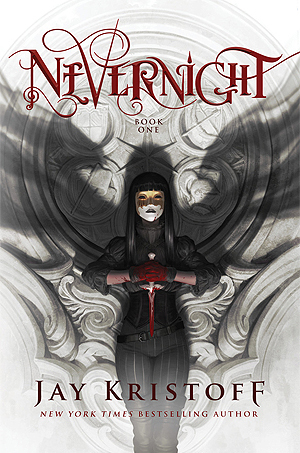
The prevailing theme is a battle between light and dark; but in this tale, the dark is represented by a wronged child who finds refuge in kindly shadows, while the light consists of a bunch of powerful, hypocritical politicians who use the gods of their three suns to reinforce their will as rulers.
Mia Corvere is 10 years old when her father, who has led an uprising to place someone else on the throne, is executed as a traitor in front of her horrified eyes. She is the only family member to escape capture, and hides in the city of Godsgrave, searching for a group of people who will help her with revenge—the Red Church. They are a deadly “school” of assassins, and Mia plans to advance through their ranks to gain the skills to claim the lives of the two powerful men who gloated on the sidelines as her father was hanged.
The first book, Nevernight, consists of Mia’s introduction to and progress amongst the acolytes of the Red Church. Life becomes a competition to the death between herself and her fellow students as they seek to survive while gaining knowledge of steel, poison, and the subtle arts, the eventual goal to be inducted as a Blade of the Lady of Blessed Murder. What she doesn’t know when she enters the dark halls of the school is that a plot is brewing that will, if it succeeds, disastrously counter all her plans for revenge.
In book #2, Godsgrave, Mia is now a Blade, although her induction was a matter of controversy. As the story opens, she is working out of a backwater station of the Red Church, taking assignments to assassinate victims designated by the Church on behalf of their clients. But she begins to suspect that the Church’s motives are far from pure and that their interdiction of her revenge on Consul Scaeva and his priestly cohort, Cardinal Duomo, is less about their need for her to follow orders and more about protecting her mortal enemies in favor of their own self-interest. So she hatches a plot that involves her adopting a desperate masquerade to achieve a confrontation with the men whose lives she seeks to end.
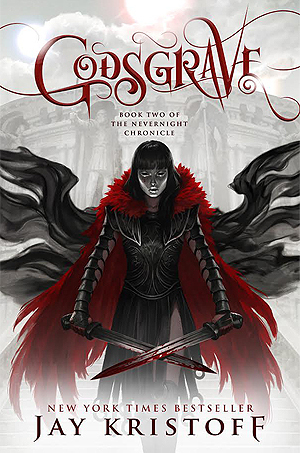
I enjoyed the first book more than the second for two reasons: 1. I always like the origin story the best, and gaining knowledge of the world and learning about where Mia came from and how she arrives at where she needs to be was thoroughly engrossing. 2. The second book is overwhelmingly brutal, bloody, and gory, depicting as it does a group of slaves who fight as gladiators in an attempt to gain their freedom (and some of whom who compete just for the “sanguis et gloria” of it). The second book was also long and involved, and the first half, consisting as it does of a present-and-past flashback/flash forward style, was a little taxing to keep straight. But the whole story bowls along towards the initial revenge plot in a satisfying arc, and after the breathless events of this book, I am greatly anticipating reading part three.
Although…I have to say I’m a little relieved that Darkdawn hasn’t arrived on my Kindle yet, because after two of these books, I need a short break before re-immersion! I finished Godsgrave by pulling a four-hour stint in the middle of the night (did I mention I have chronic insomnia these days?) and I’m kinda exhausted! I’ll be back when I have completed the series.
Two by Hepworth
One of the few benefits of not sleeping much is that you end up reading a lot! So I got through The Mother’s Promise, by Sally Hepworth, in less than 24 hours (my library loan was about to run out), and I’m happy to say that it restored my faith in her. I loved her book The Good Sister but disliked and was puzzled (and bored) by The Mother-in-Law. This one took me back to an excellently researched and well told story about interesting and dynamic characters. I then went on to read The Family Next Door, and was similarly pleased by that experience, although it was a bit different again.
The Mother’s Promise was a sort of psychological exploration of what happens to people who don’t have a social network—and by that I don’t mean Facebook friends or Instagram buddies, I mean an extended family of relatives, or a close group of friends on whom they can call when disaster strikes. Alice is a single mother of one daughter, Zoe. Zoe’s father is not in the picture—in fact, Alice refuses to either disclose his identity or give away any information about him. It’s always been just Alice and Zoe—there are no grandparents, no siblings on whom Alice can rely, and no close friends. Part of this isolation is because Zoe, 15, suffers from crippling social anxiety and being her parent, her advocate, and her protector has been a full-time job for Alice on top of her means of making a living. Although they have sometimes struggled, up until now they have managed to make it work on their own. But Alice has just received some disturbing news from her doctor that will immediately and significantly affect their lifestyle and, on top of worrying about her own health, Alice has to wonder: How will Zoe, who melts down at the least sign of a challenge, cope with this?
Alice ends up throwing herself on the mercy of two strangers—a nurse and a social worker—in her desperation to find some stability for her daughter. But the results are mixed, and bring up long-buried issues in all their lives that must be confronted alongside Alice’s emergency situation.
One thing I particularly liked about this book was the portrayal of Zoe—the examination of her problem and the creative ways in which she tries, despite her fears, to address it. This part of the book felt particularly real and valid to me, and provided a somewhat hopeful coming-of-age vibe to an otherwise rather grim story line.
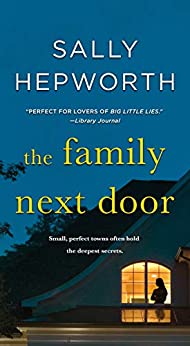
The Family Next Door, while also exploring family dynamics, has quite a different personality from either The Good Sister or The Mother’s Promise, but was likewise an enjoyable read. Of the four books of Hepworth’s I have read, the style and narrative of this one reminded me most of a Liane Moriarty book. Part of that is that it is centered in a small community and involves multiple families, with partnerships and parenting all under scrutiny, somewhat similar to Moriarty’s Big Little Lies.
The story takes place on a suburban street called Pleasant Court, with the obvious implications. Three families in the neighborhood know each other, but only from a distance, where everything seems perfect. They know their neighbors by their professions, by their number of children, by who is driving carpool—all the surface details that you gather when you live on the same street—but up to now, meaningful interactions have been rare. Then, Isabelle Heatherington moves to Pleasant Court, and her very presence stirs something up for each of these families, even though it’s not necessarily her intention to do so. Isabelle is single and childless, and shows an inordinate amount of interest in Fran, Essie, and Ange and their children and, in turn, the three moms become somewhat obsessed with Isabelle in various ways. Information begins to be exchanged, alliances are formed and dissolved, secrets are revealed, and marriages are perhaps in jeopardy, or at least in question. And then…things take an unexpected turn.
This is a mostly fascinating look behind the scenes of three suburban marriages and what happens when closely held secrets and ideas begin to erode those partnerships. When Isabelle moved to the neighborhood I halfway expected this to turn into the relationship cliché of husband(s) straying with the new woman, but the real reason for Isabelle’s presence is much more interesting and surprising. I said “mostly fascinating” because there are points at which the story bogs down as we get a little too much day-to-day detail about what characters are thinking and perceiving about their spouses, their children, their mothers, their friends…perhaps some of it was unnecessary. But it certainly does set things up for some entertaining scenes!
I enjoyed both of these books and would read another by Hepworth; but I’d like to somehow be able to ensure it was like the three I enjoyed and not similar to the one I did not! I guess I will have to switch from the reviewer to the petitioner and ask for recommendations for myself.
My year of reading: 2021
It’s New Year’s Day! Time to look back at all the books I read in the past 365 days, and reveal which were my favorites, which were the best books I read this year, and whether those are one and the same. Goodreads conveniently kept track of statistics related to my reading goals, so before I get specific, here are some of mine:
This year I read 132 books, which consisted of 50,676 pages.

The shortest was a Linwood Barclay novella of 81 pages, while the longest was one of the Robin Hobb Farseer fantasies at 914 pages. My average book length was 383 pages.
The most popular book I (re)read was Liane’ Moriarty’s Big Little Lies, shelved by almost 1.5 million people!
And now, here are some categories that highlight the year’s journey, from my memories of 2021 reads:
Most excited about:
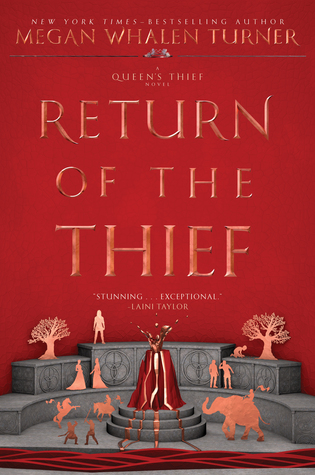
Return of the Thief, the conclusion to the Queen’s Thief series by Megan Whalen Turner, finally arrived, which gave me the perfect opportunity to enjoy re-reading this series for what, the fifth time? She published the first book, The Thief, in 1996! If you are looking for a nontypical fantasy immersion to start off your year of reading, pick up The Thief and savor the story through The Queen of Attolia, The King of Attolia, A Conspiracy of Kings, Thick as Thieves, and Return. It’s one of those series that gets exponentially better as it goes along.
Best discoveries (in any genre):
ROBIN HOBB. I got lost for a month or more in three of her Farseer high fantasy trilogies, and still have two more on my TBR list, which I hope to get to early in the year.
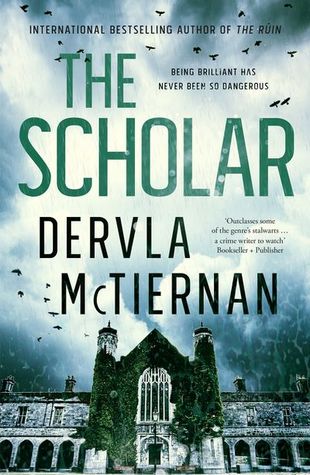
DERVLA McTIERNAN: A wonderful new mystery series writer with books set in Ireland
Best science fiction discoveries:
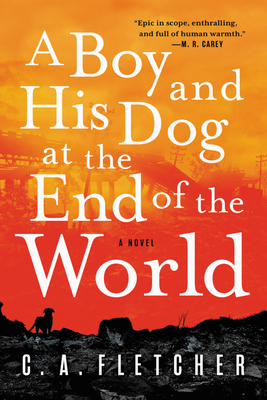
A Boy and His Dog at the End of the World, by C. A. Fletcher
A Psalm for the Wild-built, by Becky Chambers (first in a series still to come)
Both of these would fit best into the dystopian category.
New time travel:
The Jane Austen Project, and The Dream Daughter, both from unlikely authors…
New fantasy I loved:
The House in the Cerulean Sea, by T. J. Klune
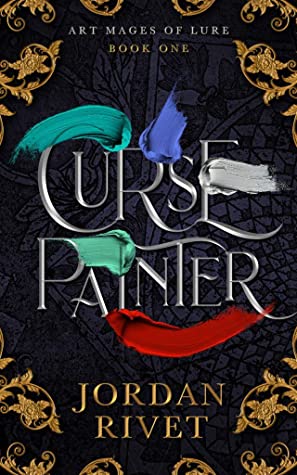
The Art Mages of Lure series, by Jordan Rivet (Curse Painter is the first book)
Most memorable read:
All the Ugly and Wonderful Things, by Brynn Greenwood
Most affecting mainstream fiction with an historical backdrop:
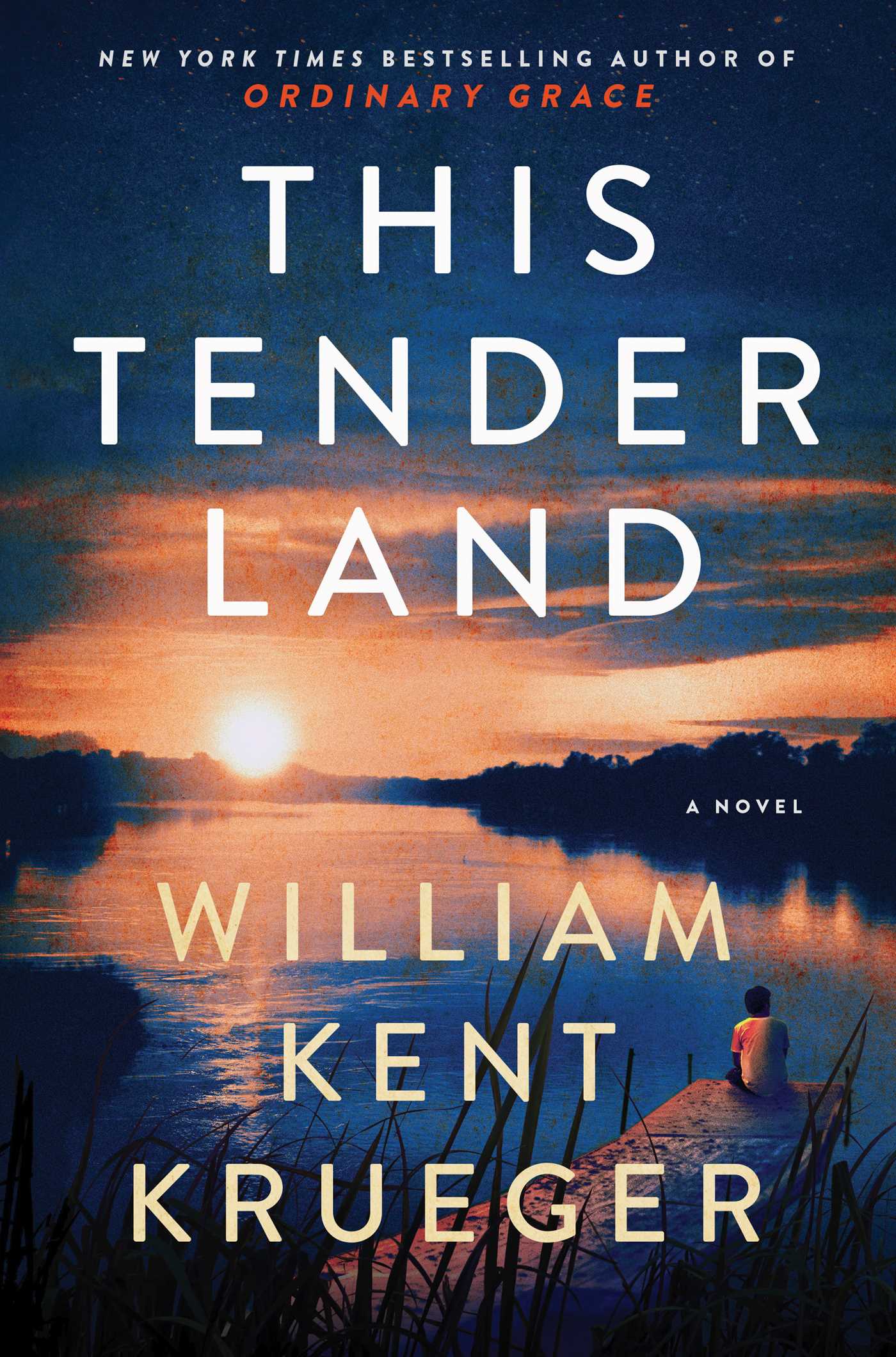
This Tender Land and Ordinary Grace, by William Kent Kreuger
Continuing fan of:
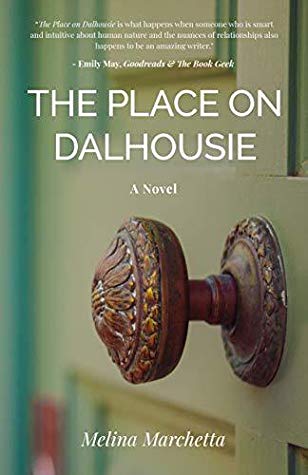
Melina Marchetta for The Place on Dalhousie
On board with the rest of the crowd:
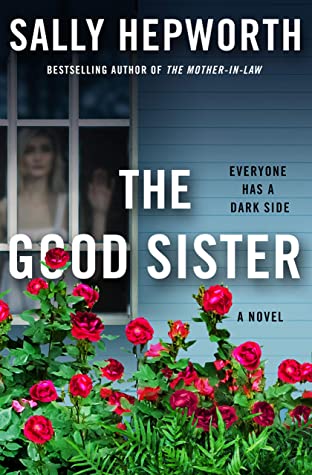
Author Sally Hepworth, with The Good Sister being at the top of the list.





And that about covers the highlights of my year in reading! I have written/published reviews of most of the books I mentioned here, so if anything piques your interest, go to the search box (“Search this site” at the top right under my logo and description), put in a title or an author, and find out why I called out these favorite books.
Land of Wolves
I have enjoyed Craig Johnson’s Walt Longmire series since the beginning, with few exceptions. There has been a book here and there that was a little too weird for me, but mostly I have invested in both the unsentimental policing of the wide open spaces of Wyoming and the slight mysticism brought into the books by Walt’s association with Henry Standing-Bear and the Native Americans living adjacent to Absaroka County. I have never been a big fan of westerns, but this series nicely marries a traditional western feel with interesting mysteries and native lore, which has, for the most part, suited my taste.
All of that changed with book #14 in the series, called Depth of Winter. I don’t know what Mr. Johnson was thinking but, judging from the responses of his fans on Goodreads, it surely wasn’t about them. He took Walt out of context, sending him out of his jurisdiction down to Mexico to fight what amounted to a war with a drug cartel. All the quirky and charming bits for which this series is known were notably absent, as were most of the personnel; and the narrative of the story fulfills the Hobbesian quote “nasty, brutish, and short” to a T. I was both disgusted by and dismayed at the amount of distance covered by Walt as he gave up all logic, pitting himself singlehandedly against this massive foe and then essentially abandoning all who offered to help him to pay the price in order to gain his own objectives. It was ugly.

I breathed a slightly attenuated sigh of relief, then, when I returned to the series with #15, his 2019 offering, to discover that Walt has been returned to Absaroka County and is dealing with a typical mystery for that area, the death of a Basque sheepherder. But this book was definitely a mixed bag. The mystery was weird, to begin with: We didn’t know for most of the book whether the shepherd had committed suicide or had been murdered, and we didn’t find out because the story kept haring off in multiple directions, from a kidnapped boy and a missing man to a lone wolf who has been sighted and blamed for sheep killing, working up the local populace. Usually the author takes all these disparate elements he introduces and weaves them into a coherent whole by the end, but in this case the explanations felt slight and unsatisfactory, and some went unresolved. And even the ones that ended with an explanation seemed tenuous where they should have been forthcoming.
Furthermore, Walt was less than present, due to both physical and mental recovery issues from his time in Mexico, making the narrative—primarily seen from his viewpoint—seem scattered. And although the regular people—Victoria, Saizorbitoria, Ruby, Henry—were once again present and accounted for, they didn’t seem fully realized, and Walt was so out of it that he didn’t pay them much mind, which meant the reader didn’t either. This book wasn’t the horrifying debacle of its predecessor, but it certainly wasn’t Craig Johnson’s best.
I hadn’t realized when I picked this up that I was so far behind with this series: Johnson has already written #s 16 and 17 (with 18 due out later next year), and the stars on Goodreads have been restored to a reassuringly consistent high number from most readers, making me think maybe it is safe to go on. There are also, since I last looked, half a dozen novellas that fall at various places between the full-length books that I could catch up on, for further experiences with Walt and the gang.
Something said towards the end of this book made me wonder if perhaps we will see the end of the series sooner rather than later, so I plan to keep reading, hoping that Johnson manages to avoid almost jumping the shark again, the way Lee Child emphatically did with Jack Reacher. I would hate to have to consign two of my favorite protagonists to the “do not read” pile….
The Venice Sketchbook
Between my inclination to read almost any book that’s about an artist and my steadfast desire to visit Venice someday, I could hardly resist a book with this title. I have read books by Rhys Bowen before (mostly from her Molly Murphy mysteries) and found them pleasant and entertaining without being particularly compelling; this one, while not written to a formula as is the mystery series, had a little more going for it, but its content didn’t quite meet its potential.
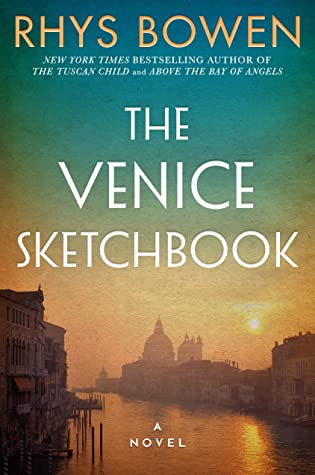
This is historical fiction, which is Ms. Bowen’s specialty, but the historical context suffered a bit by her putting the personal stories first and not sufficiently researching some of her background material, which surprised me. And while she tries to set a vibrant scene in Venice, some of her prose felt like generic descriptions from not very original guidebooks.
Part of the problem with the scene-setting may be that both of her characters are so melancholy most of the time that anything they describe carries a pall of personal gloom with it. The story is told from two perspectives—Juliet’s primarily from the war years (1938-45), and Caroline’s from 2001. Juliet Browning was an aspiring artist who attended art school for one year in her youth and then had to drop out and get a job to support the family when her father lost everything on the Stock Exchange in 1928. The story revolves around three separate trips that Juliet makes to Venice: One, when she is just out of school, a cultural pilgrimage chaperoned by her Aunt Hortensia; one, 10 years later, when she is chaperone herself to a group of girls from the school at which she is the art mistress; and a third a year after that, when she is granted a bursary through her school to spend a year in Venice studying at the Art Academie.
In the contemporary story, Caroline Grant is struggling to accept the end of her marriage when she receives an unexpected bequest. Her beloved great-aunt Lettie (Juliet) dies and leaves her a sketchbook, three keys, and a few final words that include a prompt to go to Venice. Caroline’s son is in New York City with his father, too traumatized (according to his dad, anyway) to fly back to England after the events of 9/11; Caroline decides to take her mind off her troubles by making a pilgrimage to Venice to scatter Juliet’s ashes in the city she loved. She also hopes to find out exactly what happened to Juliet there more than 60 years ago. Until Lettie passed away, Caroline assumed that she had been the same stolid, pleasant spinster her whole life, but perhaps there is a past there.
The plot line hinges on romance: On her first trip to Venice, Juliet meets Leonardo da Rossi, the attractive and charismatic son of one of the ruling families of Venice, and they have a “moment” that is repeated on her second visit. But Leo is destined to marry to suit his family’s business interests, and by the time Juliet returns in 1939, he has been married for some time to Bianca.
Connections that Caroline makes once in Venice lead (somewhat too fortuitously) to her own encounter with a descendent of Leo’s, and with some assistance from and discussion with him, Caroline begins to put together a timeline and a story of her aunt’s days in Venice. A lot of the revelations about Juliet come from a diary that she kept and Caroline discovers, although gaps in it lead to some confusion and false leads until additional clues are acquired. It’s all rather serendipitous.
As I said at the beginning, although this is supposedly a romance about an artist and a beautiful city that steals her heart, the melancholy nature of both the personal and global stories bogs it down. Juliet is first frustrated by the truncated nature of her visit to Venice with her strict aunt; then she is wistful as she conducts her young art school charges around the city, because they don’t seem to appreciate what she would have given anything to experience in their places; and when she finally arrives to stay for a year, living there and studying art, although she does make some friends and have some positive experiences, she is self-conscious about being so much older than the other art students, and she is depressed by the fact that Leo da Rossi is off limits.
Overlaid on Juliet’s story is, of course, the progress of World War II as it relates to Italy and specifically to Venice, and it begins as a constant menace that fails over and over to turn into something concrete, a hovering cloud that never actually rains (so the narrative seems like it contains a lot of false alarms); and then when things finally change for the worse, the story is so relentlessly focused on how it is affecting Juliet and her immediate circle that it’s hard to get an idea of the actual historical facts. I won’t go so far as to say it’s clichéd, but it’s a bit one-dimensional and shallow.
Meanwhile, Caroline is bitter that her husband has left her (after she has supported his career at the expense of hers) to hook up with a famous musician and make good with his fashion designs. She reluctantly agrees to joint custody with Josh of their son, Teddy, six, who stays with her in England during the school year and goes to his father in New York City for the summer and winter holidays. She complains a fair bit about all of it, but doesn’t take any action (like getting a lawyer), and then the outside world intrudes as the planes crash into the World Trade Center, separating her from her son for an extended period. Her impulse is to fly to New York as soon as that becomes possible and take Teddy back, but instead she embarks on this quest to Venice, with all of this hanging over her head.
It’s not all depression and despair—there are fun and funny moments here and there, and some genuine feelings are expressed—but it’s not a happy story, not a traditional romance with a HEA, but also not an achievement for historical fiction. I think that if the background events had been more compellingly and immediately presented, it would have been a better book. I’m not panning it, but it wasn’t a five-star read for me; maybe a three.

 The Book Adept