Mary Jane
For those of you who grew up, as I did, in the ’60s and ’70s, no, this isn’t a book about marijuana. But that recreational herb does figure into this book, in more ways than as a code name it shares with the protagonist.
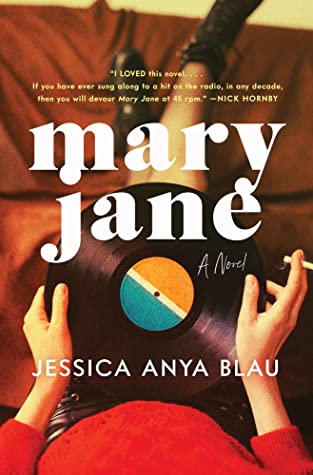
Mary Jane, by Jessica Anya Blau, is one of the most charming coming-of-age stories I have read in decades. It’s not a book with a driving plot, it’s more a slice-of-life story about a particular kind of girl from a specific era and community; but the trans-formation she experiences over the course of one summer of baby-sitting is such a pleasure to witness.
Mary Jane is 14 years old, and the epitome of a sheltered, white, upper-middle-class girl, raised by two correct but cold parents in a respectable lifestyle that includes all the necessities and some of the luxuries of life but lacks passion, humor, and spontaneity. Mary Jane’s daily life consists of an unbending routine in which her lawyer father goes out to work and comes home expecting dinner at six and a quiet atmosphere in which to read his paper and enjoy his drink, while her mother stays home, cleans obsessively, gardens fanatically, adheres to a weekly menu that Mary Jane is required to help prepare, and rigidly polices Mary Jane’s behavior, schoolwork, clothing, and contacts. Aside from a weekly outing after church to lunch at the (all-white) country club to which they belong, there is little deviation from schedule. Mary Jane is a quiet, well-behaved girl with few friends, who finds solace in music (although that is mostly limited to the show tunes her mother enjoys and the religious music she sings in church choir) and reading.
But this summer, the Cone family up the street has asked if Mary Jane will babysit their daughter, five-year-old Izzy, all day every day. They plan to have guests staying with them, and need someone to be a nanny for their daughter while they are busy entertaining. Impressed with this request from Dr. and Mrs. Cone, who seem respectable and well-to-do, Mary Jane’s parents allow her to say yes. Little do they know what awaits Mary Jane behind the doors and windows of a house that seems much like theirs.
Dr. Cone is a Jewish psychiatrist who works from his home office with clients who suffer from addiction. His project for the summer is to be a full-time counselor and presence to rock star Jimmy, a recovering heroin addict, and Jimmy and his glamorous actress wife Sheba will be living with the Cones to facilitate this. Given their celebrity status, their presence in the household is a secret that Mary Jane must keep. Since she has been sheltered from all contact with rock and roll, Jimmy isn’t so familiar to her, but Sheba has been a weekly highlight on TV, for which she hosts a variety show.
Life at the Cones’ house is nothing like anything Mary Jane has ever experienced. Although their daughter, Izzy, is a well-adjusted, loving child, Mary Jane is initially shocked to learn how neglectfully she is treated: There is no meal-planning and they all seem to subsist on junk food and takeout; Izzy wears what she wants, goes to bed when she wants, and bathes irregularly, while her mom avoids the housework in favor of hanging out with Sheba. Mary Jane is gradually integrated into the household as its most necessary member, as she takes over the marketing, meal-planning and cooking, establishes regular bath- and bedtimes for Izzy, and begins to organize the chaos in every room of the house. A quiet, tidy child, Mary Jane is happy to provide these services for the family, especially in return for experiencing a bohemian lifestyle the like of which she never imagined.
Gradually, Jimmy and Sheba introduce her to all the music she’s been missing, while the doctor and his wife show her what a relationship between two loving spouses who adore their child (even though they neglect her sometimes) can be. It’s a household where there is regular hugging, kissing, and verbal expressions of affection, all like water to a parched plant for Mary Jane. In order to keep enjoying this foreign but welcoming lifestyle, however, Mary Jane must begin, for the first time in her life, to tell lies to her parents, from the big one denying the presence of Jimmy and Sheba to little ones that keep her at the Cone house for longer hours every day. As things around her get ever more out of control with the passing weeks of summer, Mary Jane dreads a reckoning.
The character development in this book is delightful, with the naive but realistic Mary Jane as its charming centerpiece. The author knows how to write people—Mary Jane sounds 14, Izzy reads as five years old, and the adults are all individuals with unique yet believable personality quirks. Likewise, the setting of the 1970s is fleshed out accurately, from the pervasive musical theme to the avocado green kitchen appliances and the exclusion of Jews and people of color from the country club. Mary Jane’s father includes President Gerald Ford in his nightly grace before dinner, and the actress, Sheba, is reminiscent of no one so much as Cher in her glory days.
This book is a wonderful exploration of class, race, lifestyle, and gender stereotypes from the era. But it’s also fast-paced (sometimes), often funny or poignant, and a brilliantly rendered view of the transformation of one girl’s life as she witnesses and experiences new things. Some readers complain that nothing much happens, and on a purely event-based level that’s true; but so much happens in the evolution of the individual characters and their relationships with one another! The publishers are trying to hype it as something akin to Almost Famous, but honestly, it reminded me more of Betty Smith’s classic, A Tree Grows in Brooklyn. It’s definitely worth the read.
Nearly
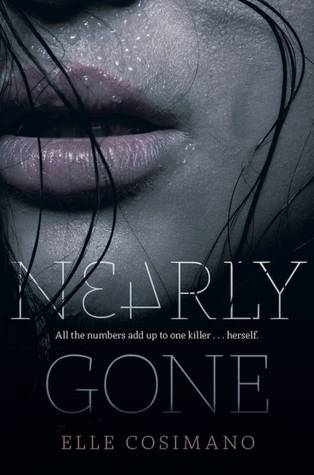
I followed through on my intention to read more young adult books by Elle Cosimano, by checking out her duology about Nearly Boswell. Yes, that’s her name, although she makes her friends call her Leigh, because she thinks a name like Nearly makes her stick out too much. Nearly is a girl who likes to operate below the radar for a variety of reasons, the primary one being that she has a special “gift” (or curse): If she touches someone, skin on skin, she can feel their emotions, and can usually tell whether they are lying or being truthful. Although this sounds useful, functionally it can be overwhelming, giving her a bunch of information she doesn’t really want to know. Other reasons include that she lives in a run-down trailer park with a mom who makes her living as an exotic dancer, and Nearly doesn’t want to give anyone more reasons for verbal target practice at her expense.
Nearly’s father left them five years ago, and (a pivotal plot point) Nearly reads the personal ads daily, searching for a message from him (since he communicated with her in that way once before). But what crops up instead are a bunch of weirdly worded clues that end up being the precursors to murder—all of people somehow associated with her life. Now she’s in a race to interpret or solve the clues to try to beat the murderer to the next victim, assisted by Reece, a new love interest who may not be someone she should trust.
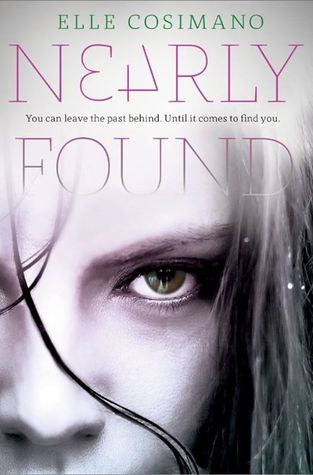
This mystery is solved in the first book, but events begin to repeat themselves in book #2, as Nearly navigates her way through an internship at the town crime lab (although the clues appear as chemistry formulas rather than as personal ads) in a weirdly familiar way that just can’t be happening, given that the person most likely to be tormenting her is now locked away in prison. It also doesn’t help that Reece is working as an informant for the police and is involved with another girl as part of his undercover personna. When a skeleton is exhumed from the local golf course, Nearly has to wonder: Could it be her con man father buried there? or is it someone he murdered?
These are suspenseful reads, a little dark, and rather brilliantly plotted. Teens who enjoy the Naturals series by Jennifer Lynn Barnes would probably love them. The books are Nearly Gone, and Nearly Found.
Accidental hit woman

I just read two delightful books in a planned series by young adult author Elle Cosimano, although these books are intended for adults. I checked out the first, Finlay Donovan is Killing It, based on a “best books” email from Goodreads; my brain kept nagging me that I should recognize the name of the author, but it wasn’t until I finished that book and the sequel and went looking for her on Goodreads that I realized she was the author of a wonderful YA book, part paranormal and part gritty realistic fiction, that I had read back in 2016. That book was Holding Smoke, and I had forgotten all about it but certainly remember it now, because it was one of my favorite books of that year, to the point where I raved about it and gave it five stars.
Her YA books seem to be similar in content (mystery/thrillers) but completely different in execution from these first two books for adults. The YA books are deadly serious, while the Finlay Donovan books are deadly but also funny, sort of a mashup of thriller, French farce, and relationship fiction. Those elements may sound incompatible, but Cosimano makes them work, and keeps you in both suspense and in stitches all the way through.
Finlay is a newly single mom; her husband, Stephen, left her and her two young children for his real estate agent, Theresa, and is now using his vastly greater income and resulting stability as a weapon to try to win custody of the kids. Meanwhile, Finlay, who is a novelist with a string of almost-successful romance/thrillers that have garnered small advances and insignificant royalties, is way behind with her latest manuscript, for which her agent and editor are both hounding her, and she has maxed-out credit cards and nothing coming in to cover the copious bills piling up on her porch. To top that off, her husband has just fired her nanny without telling her, and she’s late to a meeting with her agent due to a catastrophic incident with a pair of scissors that left her daughter, Delia, half bald with a bloody scratch on her head.
Absentmindedly stuffing the scissors and the bloody rag she used to stop the bleeding into her diaper bag, Finlay rushes the kids off to their father for a couple of hours so as to meet up with her agent for a late lunch at Panera, to discuss deadlines Finlay already knows she’s not going to be able to meet. A woman seated next to the two eavesdrops on their conversation about how to deal with a dastardly man and provide a safe haven for a nice woman (part of the plot of her latest book), catches a glimpse of the scissors and the blood-spotted diaper in Finlay’s bag, and jumps to a wrong conclusion. After taking a trip to the restroom, Finlay discovers a note left for her by the eavesdropper, offering $50K if Finlay the contract killer will “off” the woman’s husband.
In a book that promises mystery, intrigue, and laughs, we get everything we are promised as this crazy but nonetheless somewhat plausible story unfolds. The coincidences are epic, but I embraced them whole-heartedly as necessary to the continuation of the saga of Finlay, her errant nanny, Vero, and the love interest—a hot young bartender studying to be a lawyer who unwittingly gives Finlay a much-needed alibi when her bad decisions blow up on her.
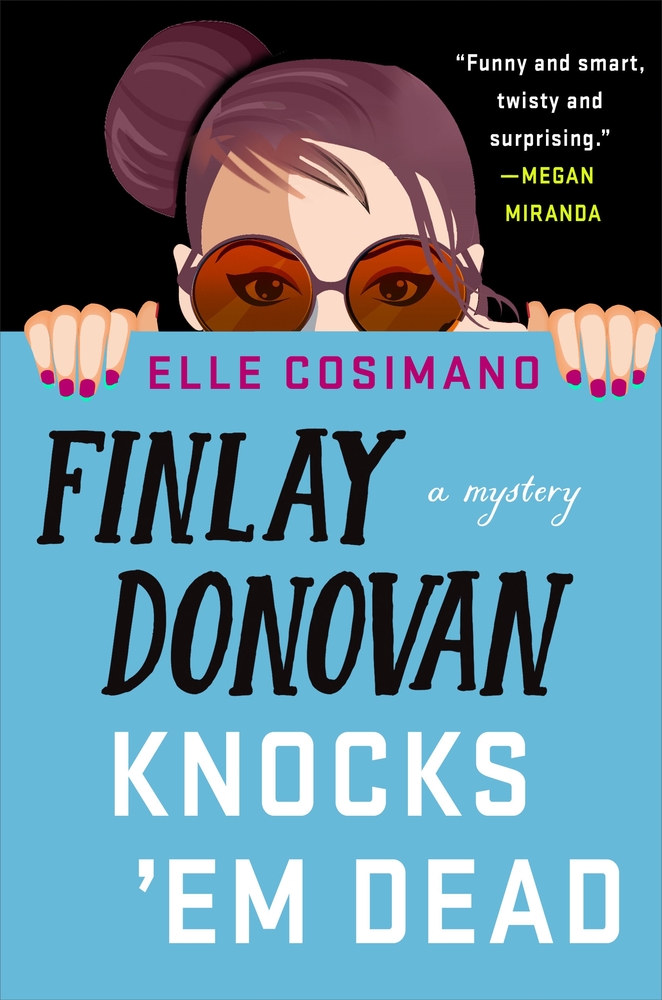
I finished the book in two days, and couldn’t wait to grab the sequel, Finlay Donovan Knocks ‘Em Dead, which was, if possible, even more fun, bringing a plot so convoluted that only Finlay and Vero could figure it out…eventually. The third book, Finlay Donovan Jumps the Gun, is due out in 2023, and I can hardly wait. In the meantime, though, I am going back to explore Cosimano’s young adult novels to see if the others measure up to Holding Smoke. If so, there will be more raving to come.
Missing the mark
I read two books this week about which I was kind of excited, both of which didn’t pay off in the way I was hoping they would.

The first was The Final Girl Support Group, by Grady Hendrix. I hadn’t read anything by Hendrix, but people rave, so since I’m not much of a horror reader but am trying to keep up with some new books in that genre that I could recommend, I decided to try this one, which didn’t sound as terrifying as some.
The premise was interesting: In slasher movies, the “final girl” is the one who’s left standing at the end, after having fought back and defeated the killer, cutting short his terrifying rampage. This book purported to explore what happens to real-life final girls after the trauma is ended. The answer is, the trauma never ends. There may be an actual threat offered by a surviving villain (one who, for instance, has gone to jail rather than dying, and could therefore escape or be released) or from a crazed fan; or the ongoing villain could simply be the PTSD that lingers long after the events are history.
This book focuses on six “final girls” (women) and their therapist, who have met for more than a decade to try to exorcise their demons, and the action in the book is triggered by one of the women going missing, followed by other events that indicate someone knows who they are and is stalking them, one by one. The premise goes on to promise that the “girls” will stick together and have each other’s backs.
I’m not going to waste a lot of time on this review. I struggled to find a description for the book: It was supposed to be horror…but the emotion of fright was never once evoked. The scenes were so disjointed and the red herring got passed to so many different people that in the end, I just didn’t care that much. Add to that a bunch of intensely unlikeable characters and a somewhat boring narrative and all I can say is, interesting idea, poorly executed, don’t bother.
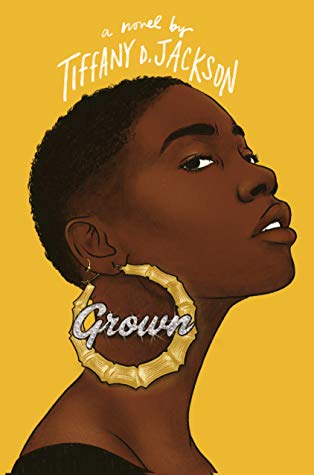
The second was the book Grown, by Tiffany D. Jackson. I had selected this book for my Young Adult Literature class in the mystery category without having read it, because it was a book that included diverse characters, written by a credible (and award-winning) author of color.
The blurb on Goodreads said: “Author Tiffany D. Jackson delivers another ripped-from-the-headlines mystery that exposes horrific secrets hiding behind the limelight and embraces the power of a young woman’s voice. When legendary R&B artist Korey Fields spots Enchanted Jones at an audition, her dreams of being a famous singer take flight. Until Enchanted wakes up with blood on her hands and zero memory of the previous night. Who killed Korey Fields? Before there was a dead body, Enchanted’s dreams had turned into a nightmare. Because behind Korey’s charm and star power was a controlling dark side. Now he’s dead, the police are at the door, and all signs point to Enchanted.”
First of all, whose idea was it—the publishers, the author’s?—to try to position this book as a murder mystery? That is specifically what the blurb on Goodreads promises: It makes it sound like the book is all about “Who killed Korey Fields?” In that blurb, Enchanted (the main character) almost serves as a set-up rather than as the whole point of the story. But (spoiler alert) the murder doesn’t happen until you are almost 80 percent through the book, and is, compared to the rest, a minor plot point. The author specifically says in her author’s note at the end, “This book is about the abuse of power. It’s about the pattern of excusing grown men for their behavior while faulting young girls for their missteps. It’s about the blatant criticism of girls who were victims of manipulation…. About the individuals who were meant to protect and serve never believing victims in their moments of bravery.” So why not position the story directly? Why promote what amounts to deceit? I am honestly surprised that more reviewers aren’t calling this out.
The book is a vivid and sometimes horrifying depiction of a teenage victim of “Me Too,” who is stalked, groomed, essentially held captive, and abused by a 28-year-old celebrity. Korey Fields prefers young girls, and uses his celebrity as a music star to draw them in by promising them assistance with their singing careers. Enchanted Jones has an amazing voice and dreams of stardom, and she is captured by the twin allures of that and the personal attention Korey begins to lavish on her. She ends up leaving school and her family behind at age 17 to go on tour with Korey, supposedly protected by a guardian (who is in Korey’s employ and is possibly one of his former victims), only to encounter the crazy, jealous behavior and punitive actions of an exploitative sociopath who must be the center of attention no matter what.
I can see all the reasons why so many people embraced this book and gave it high marks. It deals with issues that need to be shouted about—loudly. And its focus is about and from within the Black community, where these issues are even more perilous. But there were so many problems with it that I couldn’t give it the credit I wish it fully deserved.
I feel like the author punted in some ways. She starts out with a clear idea of where she wants to go, but then doesn’t follow through in areas that matter, and that’s too bad, because there was real potential. The story gets confusing when her characters don’t know, act, and do as the real people in this situation would. There’s way too much random here.
Some specifics:
The main character was all over the place. I can see her initial star-struck reaction when this man shows interest in her and supposedly wants to promote her career, but honestly, her ongoing level of naiveté, given her background and family dynamic, was flat-out ridiculous. Don’t get me wrong: I do believe that a teen girl could get herself into this situation—but not this teen girl, the way she is initially written. And the mistakes that she makes in attempting to defend herself, after the murder occurs…anyone who had ever watched five episodes of any police procedural TV show would understand such concepts as chain of evidence and illegal search and find another way to make sure that somebody paid attention to the things that would exonerate her.
And looking at that family dynamic: There are certainly hordes of teens out there with parents who aren’t paying attention and/or just don’t care, but that’s not how these parents were set up. Sure, their life was pictured as busy and full of worries (primarily financial), and they placed a lot of reliance on their eldest to help out and babysit the rest of their children, but this is painted as a household in which everyone acts responsibly, and even if their daughter insisted she leave school and go on tour with a male musician who is 11 years older than she is, there’s no way that these parents were going to allow that. These parents, the way they were drawn (and the father’s lay-off and financial woes are not sufficient distractions) would have been all up in her business to find out how she got to know him that well in the first place, and stuff would have come out that would have waved all kinds of red flags on the way to the big one, which is, Are we really letting our daughter, who we care enough about to send to an expensive private school and harangue about her homework and college prospects, be a dropout and go away with this man? No. Sorry. I just didn’t buy it. And if you are saying Yeah, but the girl was determined—again, not this girl. She wasn’t described as someone with the self-confidence, bull-headedness, or fortitude to demand and get her way, or to leave without permission. On the contrary, she is nervous, unsure of herself, all of the characteristics that would lead to the initial situation of his being able to groom her, but would not promote the action she then takes. It just happens, somehow, and that’s one of so many things that just happen, without enough back story to create believability.
There were a lot of things to appreciate about this book, but there were so many small details that jangled that the cumulative effect was an atmosphere of disbelief for the reader (or at least this reader), which is the complete opposite of what the author was trying to achieve with her thesis of “please believe the victims.” I admire her desire to write about girls being sexually coerced and exploited by adults who know better, and to focus specifically on black girls, who continue to be the most disregarded, but the way she went about it was simply inadequate. There were elements that rang true, but just as many that made me say “Oh, c’mon!” more times than I should have during a narrative such as this. I give her respect for her attempt, and her storytelling kept me reading to the end despite all the missteps…but it could have been so much more powerful.
(I do love the cover…)
Ash (aka Cinders)
Back in 2012, I read Malinda Lo‘s science fiction book, Adaptation, and gave it a four-star rating and a good review. It was good storytelling, had romance both gay and straight, and hey, aliens!
Ever since then, I have meant to go back to her and at least read Ash, her Cinderella retelling with a sapphic twist, and this week I finally did so, as part of my preparation for my “speculative fiction” unit at UCLA for my Young Adult Literature class.
I have to say I was underwhelmed. There are nice things to say about the book: The writing is sometimes lyrical, and the scene-setting imagery (descriptions of forests, countryside, hunting on horseback, etc.) is lovely. Some of the characters are attractive, at least in their physical descriptions. But it seemed like Lo didn’t quite know how to both present/exploit the original fairy tale and then deviate from it effectively (or provocatively, as most readers would be expecting).
The details of the original that were retained were clichéd, with the stepmother being almost a cartoon caricature and the daughters’ personalities left unformed beyond the usual, which is to say, the elder is egocentric, frivolous, and mean, while the younger (less attractive and therefore less valuable?) retains a smidgen of humanity. The father likewise becomes the bum who didn’t pay the bills and left everyone in the lurch. And the prince (central to the original tale) has barely a cameo appearance in this book. The character of Aisling’s absent (dead) mother was so much more fully formed than most of the people in this story who were alive—it was both disconcerting and not ultimately useful.
You would think, against this backdrop, that the main players—Aisling or “Ash” (Cinderella), the King’s Huntress, Kasia, and the mysterious Fae suitor, Sidhean, would shine. They don’t, and nor do their relationships. Although Ash regards Sidhean with awe and wonder and looks forward to his visits and his company, there is little emotional involvement visible from either side (except for one or two extremely brief repressed moments on Sidhean’s part), and the prospect of going away with him does not fill Ash with joy, despite her miserable lifestyle from which one would think she would be desperate to escape.
Likewise, the meetings with the Huntress only hint tentatively and subtly at there being any kind of fascination (on either side), let alone attraction, and are so quietly and decorously handled that you keep wondering if you imagined reading the synopsis of the book in which these two supposedly fall in love. There are moments…but they remain unarticulated until almost the very end, and there is little sense of who the Huntress is, with few glimpses into her past and present and almost no indication of her feelings. There is no love story here, except in the vague dim recesses of the two characters’ minds—no verbalization, no wooing, no physical manifestation.
In effect, this book has an almost totally flat affect. Although there are conflicts (as Ash learns from her rather obsessive reading of fairy tales, it’s a big deal to go away with a fae into his land, where time moves differently and people can become trapped forever), they are not ultimately dealt with as if they are that significant. I don’t want to be a spoiler here, but the resolution with Sidhean was puzzling, abrupt, and unsatisfying.
In this setting/world it also seems that a relationship with a fae prince is so much more scandalous than is a lesbian one—which seems almost completely taken for granted—that the reader is denied even the frisson of forbidden love, and when the two women eventually get together, it verges on mundane. And I mean, we all say we want books in which same-sex relationships are accepted and taken for granted, but…this is a fairy tale retelling in which “Ash” supposedly ends up a princess, married to a prince, so…shouldn’t there be some kind of fireworks when that doesn’t happen?
I was just puzzled by this book—especially all the ways the author chose not to go. It’s not exactly a pan—it’s a pleasant enough read, and has some interesting moments—but it was so much less than I hoped or expected.
Akata Witch
My UCLA class of masters students who are studying Young Adult Literature with me this quarter are a sharp bunch, and I have been thoroughly enjoying both discussing the books we are reading for class, and reading their synopses and review comments on Goodreads, where they post their conclusions for class credit.

One recent option for our unit on the paranormal was Akata Witch (The Nsibidi Scripts #1 of 3), by Nnedi Okorafor, and since it was the only assigned work I had not yet read, I picked it up last week along with a number of my students. I wasn’t sure I was going to enjoy it; I read Okorafor’s book Who Fears Death and had a decidedly mixed reaction, partly admiration for its ambition, partly frustration for its all-over-the-map plot that felt like it never settled to one coherent story line. But I had enjoyed her novella Binti, so I trusted that this one might have similar appeal.
I was not disappointed by Akata Witch. I found it fresh and original, immediately bonded with the outsider status of its protagonist, Sunny Nwazue, and enjoyed the juxtaposition of her real world’s clash with the new system of magic she discovers through an unusual personal experience and the intervention of a friend from school and a neighbor to whom he introduces her.
Two of my students mention in their reviews how the book harks back to Harry Potter for them, or that they saw this parallel that has been pointed out by some reviewers. I’m assuming this is because it’s a group of children being inducted into a magical world, with a main protagonist who previously knew nothing of this world or her heritage or place in it. While it’s true that previous to seeing the end of the world in a candle flame (and setting her hair on fire), Sunny had no idea of the extra dimensions to which she was soon to be welcomed, which I guess you could see as parallel to Harry’s experience in going from an orphan under the stairs to a student at Hogwarts through the agency of an admissions letter and the abrupt appearance of Hagrid at his door, that is where the similarity ended for me. In the Potter books, once the children are transported to Hogwarts they enter a closed world, and they rarely set foot outside it for their subsequent years of education, having no contact with Muggles (regular people) except for their summers at home (which are mostly not portrayed in the books in any detail). Conversely, in Sunny’s world the Leopard People (those who possess magical abilities) live in the midst of the Lambs (regular people), and must be diligent to both keep up appearances in that world and keep their juju, their extra dimension of skills, beliefs, and magics to themselves.
This brought up yet another interesting point, from one of my students, Natalie M., who advanced the theory that Akata Witch is magical realism. I initially balked at that idea—it’s paranormal fantasy, I said—but then, as we discussed and tried to pin down the various aspects of magical realism, I realized that the story did fall into the classic definition: A book that is essentially realistic, into which magical elements are introduced as matter-of-factly as the day-to-day. I liked this quote I found in an excellent article by Kelsey McKinney in Vox:
Unlike in fantasy novels, authors in the magical realism genre deliberately withhold information about the magic in their created world in order to present the magical events as ordinary occurrences, and to present the incredible as normal, everyday life.
Some of the things I liked about the book:
The outsider status of the protagonist. She is different from those around her in so many ways: She was born in the United States, but to two Nigerian parents, who later return with their family to Nigeria (when Sunny is nine), so she has been raised as some hybrid of the two and is ostracized for it; she is an albino, with yellow hair and skin “the color of spoiled cream,” so one difference is constantly on display; she is a girl who excels at soccer but isn’t allowed to play, for both misogynistic and physical reasons (she burns too easily in the sunlight).

The world-building: The story-telling felt so fresh to me, I think, because the world is so obviously not America-centric. The day-to-day events, the culture, the places they visit and the descriptions of those places, the clothing, felt distinctly like something I had never previously experienced, and I enjoyed that.
How the magic works: While the four main characters—Sunny, Orlu, Sasha, and Chichi—are expected to adhere to certain standards in their magical learning and practice and not trespass on forbidden areas, there is not the feeling that their teachers or mentors are attempting to impose conformity on them—rather, they are celebrated for their diverse aspects, and their talents actually follow from them. (For instance, Orlu’s dyslexia makes him an adept at unworking or undoing spells.) There are certain messages here that are often neglected in worlds in which people somehow attempt to master or dominate magical abilities; in this one, the pursuit of power for power’s sake is discouraged, as is perfectionism, particularly comparing one’s own mastery to the progress of others. While there is some system to the magic they practice (gaining knowledge through books, through personal instruction, and through experimentation), there is never any complacency about “how things work,” because the juju can go rogue at any moment, setting up both the magical world and the world as a whole as unpredictable and not to be taken for granted. And I loved some of the details, such as the “chittim” (currency) that rains down on someone for learning something new, having a valuable insight, or successfully performing in a challenging moment. It seemed just the right method of positive reinforcement.
Although some reviewing this book find disturbing the disregard the older Leopards, the mentors, seem to have for the safety of the four when it comes time for them to confront their Oha challenge by defeating Black Hat Otokoto, I actually found that an additional piece of evidence that this is a world based on realism: The mentors fully realize the danger into which the children go and, granted, seem a bit ruthless when considering their fates, but they also recognize that the unpredictability and serendipity of sending these mostly untried practitioners up against this powerful villain may have a good result where calculated measures have failed.
Based on this first book, I think this is a wonderful tale to add to the “canon” of magical systems in teen fiction, and look forward to what the other two books in the series will reveal (if I can ever access them from the library’s extensive holds list!).
Station Eleven
As a huge fan of post-apocalyptic and dystopian fiction, I can’t believe this book never came up on my radar until now! I think I might have heard of it before, but never clocked exactly what it was about, and its title doesn’t reveal much about the contents. Then when I read that it was about a traveling troupe of actors, I may also have discounted its appeal to me. But so many people mention it on “What Should I Read Next?” (a Facebook group) when asked for good end-of-the-world fiction that I put it on my “want to read” list and finally got around to it this week.
Although the seed of the book is a worldwide flu pandemic, we don’t really learn much about that flu, because it is so deadly that there is no time for doctors to ponder origin, discuss cases, analyze it to reveal symptoms, search for a cure, or produce a vaccine, as people have done during our own pandemic that is (hopefully) slowly winding down.

In this iteration, the flu arrives in New York City on a plane from Russia; within hours, everyone who was on the flight is dead, and within another day or so almost everyone who came into contact with those carriers is also dead or dying. Medical personnel inform their loved ones, who tell their friends, and there is a mass exodus out of the city, which ends as each exposed person is overcome and passes it in turn to the next. Other planes come into other cities from other countries, all of which were exposed to the flu prior to the United States, and soon, even for the immune or the lucky, there is nowhere to flee. The entire world has been infected and overwhelmed, and civilization rapidly comes to an end. Planes are grounded, trains and cars cease to run as fuel runs out or becomes stale, the failure of electricity takes down all forms of communication and creature comforts, and soon the one percent of the population left standing is isolated wherever they happened to end up, in a dark and silent world.
The story begins when an elderly actor experiences a heart attack while onstage playing King Lear, on the eve of the pandemic. Strange connections to this man—the paramedic-in-training who leaps to the stage to try to revive him, the little girl who plays one of Lear’s daughters, his first ex-wife, who is the author/artist of a strange set of apocalyptic graphic novels called Station Eleven, his best friend from boyhood, and his second ex-wife and son—are the characters who tell the story, which reaches from the actor’s distant past on an island off the coast of Canada to 15 years into the future in the territory surrounding the Great Lakes, after the pandemic has decimated the world. The vehicle for the story is a band of musicians and actors (including that child actor who played a daughter of Lear) who have teamed up to travel a small route from town to town around the shores of Lake Michigan, alternating musical concerts and productions of Shakespeare every other night to keep themselves fed and give them purpose. The thing that makes the story so involving is how all the initial characters, so tenuously connected by this one man, end up in associations of which they themselves are unaware, and in possession of artifacts of one another’s lives. What is nice about the story is that although a few of these connections are revealed, thus providing some closure between certain players, the story doesn’t wrap up with a bow, but ends leaving some ironies intact.
Survival is insufficient.
STAR TREK
I loved how the story jumped from person to person and told their part of the story without pointing out the obvious connections, instead allowing the reader an “Ahah!” moment every once in a while. I loved the scene-setting descriptions of how the world has devolved, and how people respond to it depending on who they were and how old they were when the pandemic hit, and therefore what they remember. It seemed so realistic when parents would argue about whether they should continue to teach their children about the past with its internet, cell phones, and moon launches (or hey, ice cream and air conditioning!), or if there was little point in trying to explain such foreign concepts to those who would probably never experience them in this world that has returned to travel on foot, sleep cycles governed by the sun, and lives that are focused almost solely on survival. I loved the portrayals of lawlessness and violence set against the kindnesses and native courtesies preserved against all likelihood.
I love that I have discovered yet another post-apocalyptic story worthy of adding to my collection! And I am also excited because this book made me think of one that I read a long time ago but never remembered to log into my Goodreads list, and when I finally dredged up the author’s name from my sometimes spotty memory and went in search of the book, I discovered that after I read it, she wrote two sequels! That book was The Plague Tales, by Ann Benson, and my intention is to read the sequels (Burning Road, and The Physician’s Tale) just as soon as my Young Adult Literature class at UCLA is over and I am no longer keeping up with my students’ reading schedules. June, here I come!
Romance and more…
My friend Judi commented that when she was at a loss for something to read or wanted to experience the comfort of a familiar story, she returned to the four-part Chesapeake Bay Saga by Nora Roberts. I had never read anything by Nora Roberts, but she is a prolific author and her books are ubiquitous, so I decided to check out this mini-series.
These books fall into what I would call the “relationship fiction” category, in that there is romance present that is a big feature of the story, but there is also some kind of content that reflects a family dynamic beyond just the true-love part. Roberts’s vehicle for these four novels was clever, in that she created a family of four “boys” who were turned into brothers by the charity of one couple who saved them from difficult beginnings, and then she wrote each book by focusing on the perspective and relationship of one of them.
Each of the boys, previously in an untenable situation, was discovered (in various ways) by Ray and Stella Quinn and adopted away from their pasts to be raised in a supportive and kind environment. As adults, the eldest three—Cameron, Ethan, and Phillip—have gone their own way, Cameron to a glamorous lifestyle mostly located in Europe, where he races fast boats and fast cars and lives on the prize money; and Phillip to a big-city career as an advertising executive with a generous income and an enviable lifestyle. Only Ethan has remained at home (although now in a house of his own) in the small fishing village of St. Christopher on the Chesapeake Bay, trapping crab for a living but investing time and hope into a boat-building business. Then, the acquisition by Ray of 10-year-old Seth, a fourth brother to join their family, is quickly eclipsed by the unexpected and tragic death of their father, who makes the brothers promise, before he dies, to rally around and raise Seth the way he, Ray, would have, given the chance. Although there are various levels of grudging reluctance to give up their chosen lifestyles to return home to take up this challenge, the three are all conscious of just what Ray and Stella (deceased some years before) did for them, and are resolved to honor their father’s memory and wishes by doing the same for young Seth.

The first, Sea Swept, is the story of Cameron, who was discovered as a runaway and car thief when he tried to boost Ray’s car at a young age; after realizing that his motivation was to get away from an abusive alcoholic father who beat him, Ray and Stella Quinn took him in. Now he has made a deathbed promise to his adoptive father to assist in the upbringing of new boy Seth, whose mother beat and neglected him, and Cameron is determined to bring the suspicious and untrusting Seth out of his shell and into the family the way Ray did for him. But an unexpected opponent is Anna, Seth’s social worker, who is playing by the rules of the child welfare system by assessing Seth’s living situation and determining whether it would be more appropriate to either place him in the foster system or reunite him with his real family. Despite his determination not to let this happen to Seth, whose psychological scars he recognizes as akin to his own, Cam is unbearably attracted to the spirited and determined Anna, as is she to him, and their involvement complicates an already fraught situation.
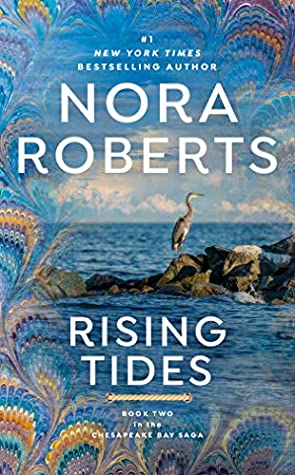
The second, Rising Tides, follows the story of Ethan, the quiet, reflective brother who has made a life for himself as a waterman on the Chesapeake Bay. Ethan’s mother, a drug addict, gave Ethan an unspeakable childhood that, despite his subsequent rescue by the Quinns, has made him determined never to marry or have children of his own, for fear of passing on some random evil gene. Local woman Grace, who despite her former marriage and the birth of her daughter has always cherished an unrequited love for Ethan, is determined not to let this be Ethan’s final word. Their romance plays out against the background of the campaign to keep Seth. In addition, the necessity for all the brothers to move back home in order to create a proper foster environment is the catalyst needed to involve Cam and Phillip in Ethan’s plans for a family boat-building business.
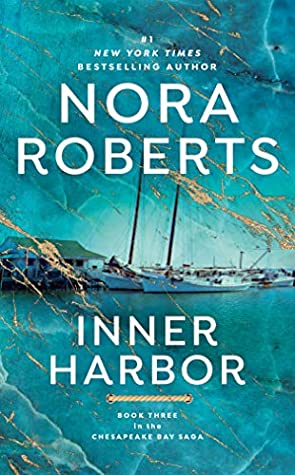
The third, Inner Harbor, is Phillip’s journey. Phillip is perhaps the most successful in terms of career, and also has separated himself the most thoroughly from his small-town origins. But after the Quinns gave him a life (almost literally—he was a gang member who was shot in a drive-by and was saved from death by Stella, the emergency-room doctor, before being adopted), he certainly can’t bring himself to turn down the opportunity for Seth to benefit from the same experience. Somewhat at loose ends after his move from his big-city lifestyle back to the tiny fishing village of his upbringing, Phillip notices Sybill, an intriguing writer who is making the town of St. Christopher the subject of her next book about the psychology of human interaction. But what he doesn’t know is that Sybill has a secret relationship to Seth that threatens everything the Quinns have tried to do for the boy.

The last book in the quartet, Chesapeake Blue, explores Seth’s own story in adulthood. Since it would reveal much about the way things went when Seth was 10, I won’t comment too much on this one, except to say that it, too, contains a romantic relationship, and the quartet is concluded with a happily ever after for many of its subjects.
There is much to like about this series. Yes, it contains multiple clichés or tropes—the macho, muscular, and ruggedly handsome brothers and their uniformly gorgeous love interests, the sex that is always incandescent for all parties involved, the meet-cute aspect of some of the relationships—but the thing that saves it is the back stories of the brothers and their sincere (and tender) determination to help a troubled 10-year-old boy the way that they themselves were aided by their adoptive parents. The thread that holds the book together is the development and transformation of the boy Seth and the creation of a welcoming family dynamic by all the other characters. The characters are nicely defined and feel, for the most part, like real people who express genuine emotions, and the small-town vibe is painted fairly realistically, with the charming offset by gossip and insularity. Wrapping it up as Roberts did with the story of Seth as an adult, showing the vulnerable cracks that remain in anyone who has survived a background such as those of these brothers, was the perfect way to end the story.
Although I don’t know that I would continue reading Nora Roberts as a favorite author (I am not a tropes and clichés fan, unless it’s Georgette Heyer!), I definitely enjoyed this foray into her genre and style.
Robert Crais
I’ve been busy these past couple of weeks, starting a new quarter teaching at UCLA and also doing some Zoom classes on contour drawing for LAPL, and the mood has dictated that I don’t need to be reading stuff that challenges me, so I’ve been revisiting some books from the past (as evidenced from my last review). This week I went for mystery writer Robert Crais.
Crais has a series starring Elvis Cole, a private investigator in Los Angeles, and his buddy and business partner Joe Pike. Elvis is a deceptively happy-go-lucky, casual guy in a Hawaiian shirt, with a smart-alecky manner and a keen sense of how to cut through the extraneous to solve a missing persons case or whatever else his clients bring to his door. Joe Pike epitomizes the strong silent type, has all kinds of commando training and slinky stealth operations in his past, and retains unexpected clearance levels with the Department of Defense, considering that he was hounded off the police force in Los Angeles once upon a time. Given his splendid physique, the arrows tattooed on his biceps, and the smoldering look in his eye, not many people are willing (or able) to mess with Pike.
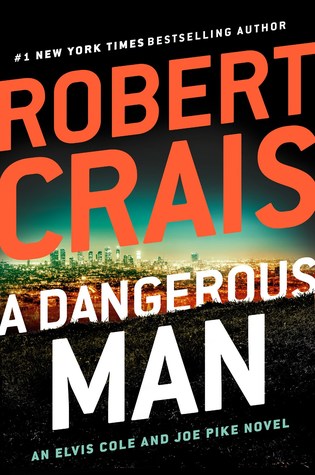
Crais has now written 19 books shared by these two partners (with the emphasis on Elvis Cole), plus a further seven featuring Pike as the lead. This series, like any other long-running one based on the same people in the same city, has had its ups and downs, but I generally enjoy anything Crais writes. An added bonus is the books’ Los Angeles setting, since I am familiar with most of the locales and landmarks, which is always fun.
A Dangerous Man is billed as an Elvis Cole/Joe Pike book, but it’s really mostly Pike, with Elvis in a supporting role. (Being #18 in the series, I imagine Crais was already migrating his thinking over to Joe as the new lead.) You can read an in-depth review of the book here, from when I originally read it.
Crais started a new series in 2013 featuring Scott James, a police officer, and his K-9 partner, Maggie, and wrote one follow-up book, but doesn’t seem to be pursuing it further than that.
He has also written several stand-alone books, and these are among my favorites. Hostage was made into a suspenseful and action-packed movie, starring Bruce Willis, and I keep hoping that someone in Hollywood will revisit his books and decide to make movies based on the other two, The Two-Minute Rule, and Demolition Angel, given their great story lines and compelling protagonists.

I re-read Demolition Angel this week, and it mostly held up to my initial enthusiastic reception (although the technology in the book has become increasingly dated, of course). This is the only book of Crais’s with a female lead (although he does feature strong female characters in other books), and Carol Starkey’s presence is palpable and painful. She is the survivor of a bomb detonation by which she lost her lover, who was also her partner on the bomb squad, and even three years later she is on the edge, constructed of equal parts gin, cigarettes, antacids, and insomnia. She is now working as a detective with the Los Angeles Police Department, and would like to get back to the bomb squad, but her therapist doesn’t hold out much hope of that, given her fragile and self-destructive state. Then the bomb squad rolls out on a report of a suspicious package at a strip mall and, after one of the bomb techs is blown up by its unexpected detonation, Carol Starkey is handed the case.
Starkey is terrified that either Homicide, ATF, or the FBI will take the case away from her, and determined to solve it herself before that can happen, which lends an urgency to the narrative. The components of the bomb itself suggest it was built by Mr. Red, an infamous shadowy character whose goal is to be on the FBI’s 10 Most Wanted list. An FBI agent named Pell does show up, but seems content to work with Carol, offering his long-running history with Mr. Red to support her case. Things escalate as Mr. Red himself engages with Starkey via a dark-web chat room, and Starkey begins to realize that this case may be much more complex than everyone else believes, and have less to do with Mr. Red than anyone imagined.
Carol Starkey is a truly great character, and the scene-setting all over Los Angeles is both accurate and entertaining. I was fascinated by the procedural parts of the book, and also enjoyed the interpersonal relations with her team, the ATF agent, and the bomber/serial killer. Reading this after revisiting one of the series books showed me how much Crais has to offer when he is building a story from scratch, rather than relying on the formula of the Cole/Pike team. I wish he would write more stand-alones like this one.
The Horse Dancer
 I decided on a re-read this week, and picked one of JoJo Moyes’s lesser known books, The Horse Dancer. I enjoyed it enough the second time around to want to revisit (for my newer readers) the review I wrote in 2019 when I first read it.
There are three intertwined stories in this book—one in the past, the other two present-day. The first involves Natasha and her soon-to-be-ex-husband Mac. Natasha is an up-and-coming attorney in the area of child protective services, and channels all her repressed feelings about the end of her marriage into her work and her tentative new relationship with a shiny partner at her firm. Mac is a freelance photographer, and appears to be fairly happy-go-lucky and irresponsible next to the upright and uptight Natasha, but seems to have major regrets about the end of the relationship. The two are in the process of sorting out their mutual possessions and financial issues on the way to divorce when their paths cross with Sarah.
Sarah is a 14-year-old girl who has two major loves in her life: her beloved grandfather, Henri, with whom she lives, and her horse, “Boo.” Her grandfather was, in his youth, a professional rider for the prestigious Cadre Noir, a French dressage academy, but he gave it all up to come to England to marry Florence, the love of his life, recently lost to cancer. Sarah’s dream is to follow in her grandfather’s footsteps and ride with Le Cadre Noir in Saumur, France. Meanwhile, she and her grandfather train the horse in the shadow of an old railway siding in the seedy part of London, where they stable the horse with Henri’s friend, Cowboy Joe. When something terrible happens to Henri, Sarah discovers the fragility of her situation as a child with too many adult responsibilities, and tries her best to deal alone with all the potentially terrible outcomes.
I found this book tremendously moving in several areas. The relationship between Sarah and her horse brought back memories of being that age and wanting that special partnership so badly. (My grandfather, an impulsive bidder at auctions, actually gave me a horse for my birthday when I was 12—an unbroken two-year-old palomino
stallion—and my parents, dismayed by the thought of dealing with the housing, feeding, and exercising of him from the comfort of our suburban lifestyle, made him take it back. I can hardly remember ever feeling more heartbroken.) The scenes that depict the tie between Sarah and Boo are so viscerally and immediately written as to be impossible to resist.
The interplay between Mac and Natasha was painful and confusing, and there were parts I flat-out had trouble believing, but ultimately the idea of the walls we build to protect ourselves that do us more damage than those we built them against resonated with me. The picture Moyes paints of a teen girl who depends on her grandfather and no one else, and of what happens to her when she is thrown on her own resources and believes she must cope all alone, is poignant, real, and frightening. The back story of the grandfather’s youthful experiences in Le Cadre Noir gave the book additional legs. All in all it was a satisfying and touching, albeit somewhat dark, read.
This is a book that is written for adults, but it explores the adult-child (or adult-teen) relationship from both sides, given that it shows both Natasha’s and Sarah’s views of the proper way to deal with the situation in which they find themselves; and I think that there are teens who would appreciate and even benefit from reading this book. Natasha has to transform her view of Sarah as a frustratingly opaque, surly compulsive liar and see that she is a child adrift in an adult’s world who is convinced she has to be as strong and resourceful as an adult; while Sarah has to get past her view of Natasha as a controlling authority figure and see that she is doing her best to be helpful even though Sarah is keeping the bulk of her life secret from everyone. The thing Moyes gets right is that final push through misunderstanding that is essential to a true and lasting love, whether it be between a couple, a parent and child, friends, or a girl and her horse.


