This is the future?
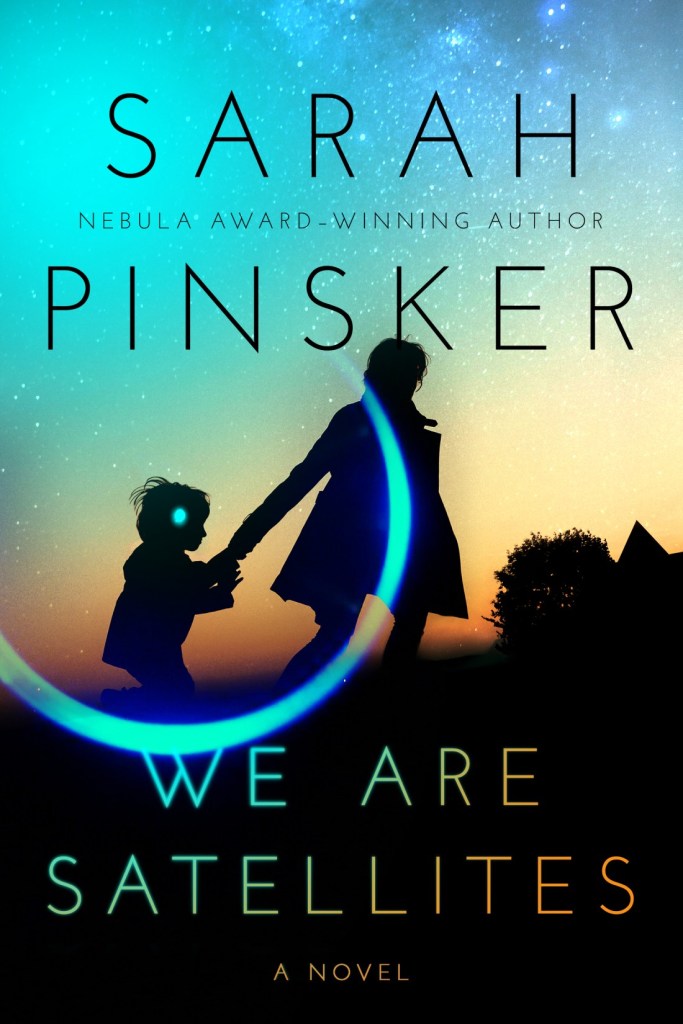
We Are Satellites, by Sarah Pinsker, seems like such a likely thing to happen in our lifetime (and keep in mind that I’m getting older!) that it hardly feels like science fiction. It also perfectly highlights the concept of privilege in a new arena.
Val and Julie are a middle-aged same-sex couple with two children: David, who is Julie’s child, and Sophie, who they adopted after the first pregnancy proved so perilous that it was unwise to consider a second. They are a solidly middle-class couple, Val working as a high school athletics teacher and coach while Julie is an assistant to a prominent senator. They are however, by no means well off, so when David comes home from his exclusive school (his attendance only made possible by the fact that Val teaches there) asking for a Pilot, the latest brain-enhancing technological marvel that all his wealthy classmates are getting, they at first treat it as just another fad whose importance will fade in a few weeks or months. But the brain implant instead becomes a fixture, first in schools as a way to enhance learning and performance, and then in the world at large to promote people’s abilities to multi-task, and soon the implications of being without one can’t be avoided.
Val and Julie reluctantly agree that David can get one, but it’s out of the question for Sophie, who has epileptic seizures and is therefore permanently incompatible. Julie secretly longs to adopt the technology to cope with the ever-expanding duties of her job in the political arena, and soon peer pressure makes it possible for her to claim the necessity. Val is suspicious of the technology and decides to hold out and be Pilotless. Thus the family ends up being the perfect microcosmic showcase for the issues caused by the Pilot in the larger society: Those who adopt the technology move ahead, while those without its supposed benefits are left behind. Soon such things as the dividing of students into classes of the enhanced vs. classes of those who are not begins to draw sharp lines that are also echoed in the adult world. Val, as an abstainer, soon finds herself teaching only classes in which the students don’t have the Pilot. Val and Julie begin to notice differences between them specifically brought up by the effects of the Pilot on Julie. Sophie is outraged by the overt classism and gets involved with a protest group. And David, who joins the military, has issues of his own…
The book is written in four voices—the two moms and the two kids—and gives the overall experience of this innovation from each of their viewpoints, as well as illustrating what can happen in the larger world when a technology is universally acclaimed, and the private sector unites with the government to promote it without truly considering all the ramifications. The technology becomes yet another point of contention, with the haves and the have-nots squared off against one another as the acquisition of the Pilot becomes the new normal.
This is not an action-packed book, although quite a bit happens in each of the four protagonists’ lives; it is, rather, a slow uneasy build towards the revelation of the consequences a hastily adopted innovation could have on a society unprepared for its effects. As the family navigate the changes the technology brings, they struggle with both interior and exterior conflicts, the author moving between points of view but always keeping the overall focus on the family as a unit so that the effects can really be seen as a whole. The technology and the secrets surrounding it (let’s face it, public relations and marketing people are hardly going to reveal negative effects of a positively received product!) are the main thread that moves the narrative, but the characters end up being the heart of the story.
As a science fiction fan, I would have liked a little more explication of the device itself—with what part of the brain it interacts, how specifically it was invented and tested, and so on—but this is, of course, where science fiction sometimes punts, particularly in the hands of a less experienced author. We are, ironically, asked to take the science on faith and focus rather on the outcome. But this scenario seemed like such a likely one that I didn’t really mind that much. And I loved the implications of the little blue LED light that indicated the Pilot’s presence or absence in an individual’s brain.
Although two of the characters in this book start out as teenagers and are still young by the end of the story, this book seems primarily geared towards adult readers. It has a certain dispassionate tone, even in moments of great emotion, that might put off some readers. But if you enjoy the adult titles in particular of Cory Doctorow, with their exploration of the sometimes abrupt and divisive effects of technology on the prevailing culture, you will probably equally enjoy We Are Satellites.
Note: I think the cover is so odd—the children are both in their teens at the start of this story, and I can’t figure out why they depicted an adult and child on the cover. I find the title less than descriptive as well.
Mostly ghostly
I promised ghostly goodies in honor of Hallowe’en, so let’s review some titles that will have you thinking of the mysterious barrier between this world and the next, and what happens when that barrier falters!
First off is a series that was written for middle school teens but that delights everyone who reads it: The Lockwood & Co. series by Jonathan Stroud. The first book is called The Screaming Staircase, and it lays out the scenario that prevails in the other four books:
For more than 50 years, England has been overrun by ghosts. They linger, they float around, they make horrifying noises, they haunt specific places and, in some cases, they reach out to touch the living, which “ghost-touch” is nearly always fatal. The most frightening aspect of this wholesale haunting is that while adults can experience some of the effects, they can’t actually see the ghosts and therefore can’t protect themselves. So a bevy of teens and children (who CAN seen them) are recruited and armed with silver chains, salt, lavender, swords, and holy water and sent out in teams to lay the souls to rest by measures merciful or stern.

Psychic Investigation Agencies, mostly run by adults, are in charge of these teams of teens; but one young man decides that the adults who can’t even see the threat shouldn’t be in charge of his fate, and starts his own agency, run by and employing only teenagers. Anthony Lockwood, George Cubbins, and Lucy Carlyle do their best to prove they can fight ghosts with the best of the prestigious and powerful organizations against which they are competing for business, but a series of hapless incidents puts their fate in question. Then they get the chance to spend the night in one of the most haunted houses in England…
I’m baffled as to why the reviewers insist that this series is “for a younger audience.” In fact, the recommendation for 4th through 7th grades is wholly inappropriate—the 4th-graders would be too frightened! I would say 6th grade and up…and up. I found the mysteries engaging, the haunted scenarios truly frightening, and the world-building completely believable. I think anyone would like these. The other books are: The Whispering Skull (pictured above), The Hollow Boy, The Creeping Shadow, and The Empty Grave. (Another bonus: The series is complete! No waiting around for sequels.)
Now for another book that is also YA, but doesn’t seem so in the reading: A Certain Slant of Light, by Laura Whitcomb. Helen and James are two spirits who are haunted by a few hazy, incomplete memories of their pasts (when they were alive), and need to remember who they are and how they died, and figure out why they are in this strange limbo between life and death. Helen, who is 130 years past her due date, has discovered that when you are “light,” in order to keep from plunging into some kind of horrific afterlife you need to cling closely to a human host. Her latest is an English teacher, Mr. Brown, and it is in his class that she encounters James, the first person who has been able to see her since she died. There’s a reason for that: James is also “light,” but has found an ingenious way to live again.

I don’t want to give away much more than that, but if you are thinking this sounds like a Stephenie Meyer plot, think again: It’s far more than a sappy teen romance. FIrst of all, Whitcomb’s writing is witty and sophisticated, and the story itself is surprisingly complex, exploring such themes as human existence, forgiveness, and the emotions of love, grief, and responsibility. The personas are carefully crafted to relate to their relative time periods, Helen’s formal speech contrasting beautifully with James’s more contemporary lingo. Whitcomb is also a master at describing the sensations the characters feel as they experience certain things for the first time. I found the story arc deeply satisfying when I read the book, and only recently discovered that there is a second book, called Under the Light. I was surprised, since a sequel didn’t seem necessary, but the description reveals that it’s more of a companion novel, telling the stories of two other deeply invested characters, and I intend to grab it just as soon as I reread this one so that I remember all the necessary details!
Note; Whitcomb has another book that sounds like it would be spooky, called The Fetch. My recommendation is, don’t bother. It’s more about the Russian Revolution than anything else.

Another young adult series that offers up some spooky situations is the Shades of London series, by Maureen Johnson. In the first book, The Name of the Star, Louisiana teen Rory Deveaux has arrived in London to start boarding school just as a series of murders directly mimicking the crime scenes of the notorious Jack the Ripper are taking place. Despite a number of potential witnesses, it seems that Rory is the only one who spotted the man responsible for these heinous crimes, for a surprising reason that puts Rory in imminent danger. In the other two books—The Madness Underneath, and The Shadow Cabinet—we move beyond the Ripper story to discover that there’s a lot more happening on the ghostly front in London than anyone without Rory’s extraordinary perspective would suspect.
Note: There was supposed to be a fourth book, but six years passed and the author seems to have moved on permanently. It’s not really necessary to continue—the story arc was satisfyingly contained within these three. People wished for new adventures for various characters, but there is no cliffhanger, the story ends.
Finally, let me mention a few stand-alone titles that provide a satisfying shiver for your backbone:
Try Graveminder, by Melissa Marr. Although she is primarily a teen author, this book was billed as her first for adults; but I think both teens and adults would enjoy it.
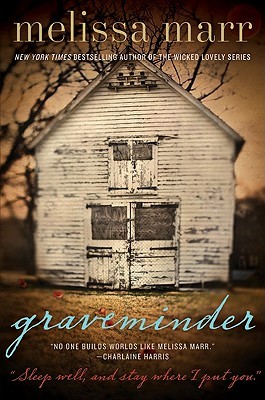
The story centers on the town of Claysville, home to Rebekkah Barlow and her grandmother, Maylene, and also a place where the worlds of the living and the dead are dangerously connected. Minding the dead has been Maylene’s career and, once she dies, Bek must return to her hometown and, in collaboration with the mysterious Undertaker, Byron, make sure that the dead don’t rise. The tagline of the book is “Sleep well, and stay where I put you.” Deliciously creepy!
Break My Heart 1,000 Times, by Daniel Waters: A suspenseful thriller in which a “Big Event” has happened in the nearby metropolis, and all the resulting dead are lingering instead of moving on. Veronica and her friend Kirk have recently noted that not only are the ghosts not moving on, but they seem to be gaining in power. But when the two decide to investigate, they draw the sinister attention of one of Veronica’s high school teachers, who has an agenda that may include Veronica’s demise…
Meet Me at the River, by Nina de Gramont, is told from two viewpoints, that of Tressa, trying to cope with the death of her boyfriend, and that of Luke, the boy who is dead but can’t leave. I don’t want to say too much about it, because I so much enjoyed discovering the facts of the story in exactly the way the author wanted, which was not immediately, not all in a paragraph of explanation, but gradually, through the interchanges, the thoughts, the scenes. I will say that this book is much more than a sad paranormal love story—it’s as deep and intense as the river in its title. I found myself humming while I was reading, and finally figured out that I was remembering the hymn “Shall We Gather At the River?”, a song they sang at funerals in my childhood, a song laden with images of crossing over, being with loved ones. So much of this book was about death, but so much about life, too.
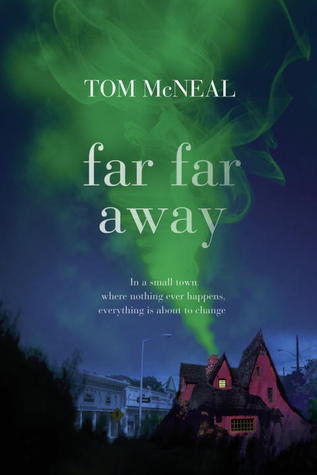
Far Far Away, by Tom McNeal: Jeremy can hear voices. Or, specifically, one voice, that of the ghost of Jacob Grimm, one half of the infamous writing duo, The Brothers Grimm. He made the mistake of admitting this once during childhood, and has been treated with doubt and suspicion by all the others in his village ever since. Jacob watches over Jeremy, protecting him from an unknown dark evil whispered about in the space between this world and the next. But when Ginger Boultinghouse takes an interest in Jeremy (and his unique abilities), a grim chain of events is set in motion. And as anyone familiar with the Grimm Brothers knows, not all fairy tales have happy endings…
For this list, I pretty much stuck to ghosts and steered clear of all the other beings that go bump in the night, but I’m going to mention one simply because it’s so much fun: Fang Girl, by Helen Keeble. Xanthe Jane Greene, a true fangirl of the fanged, wakes up one night in a coffin. Given her fantasies you’d think she’d be pleased, but no: What girl wants to preserve in eternal life such 15-year-old afflictions as acne and a puberty-born tendency to extreme clumsiness? Not to mention missing out on all the teen milestones, like getting a driver’s license and going to prom. So what does she do, upon emerging from her grave? What any 15-year-old from a loving environment would do—she goes home to her parents and little brother. Vampire lore has been done to death, but in this clever and winning parody Helen Keeble finds new territory, and it’s the perfect mix of paranormal with comedy. Don’t miss it.
I hope you will find something from this list to make your Hallowe’en reading sufficiently scary. Let me know what you think!

Instagram!
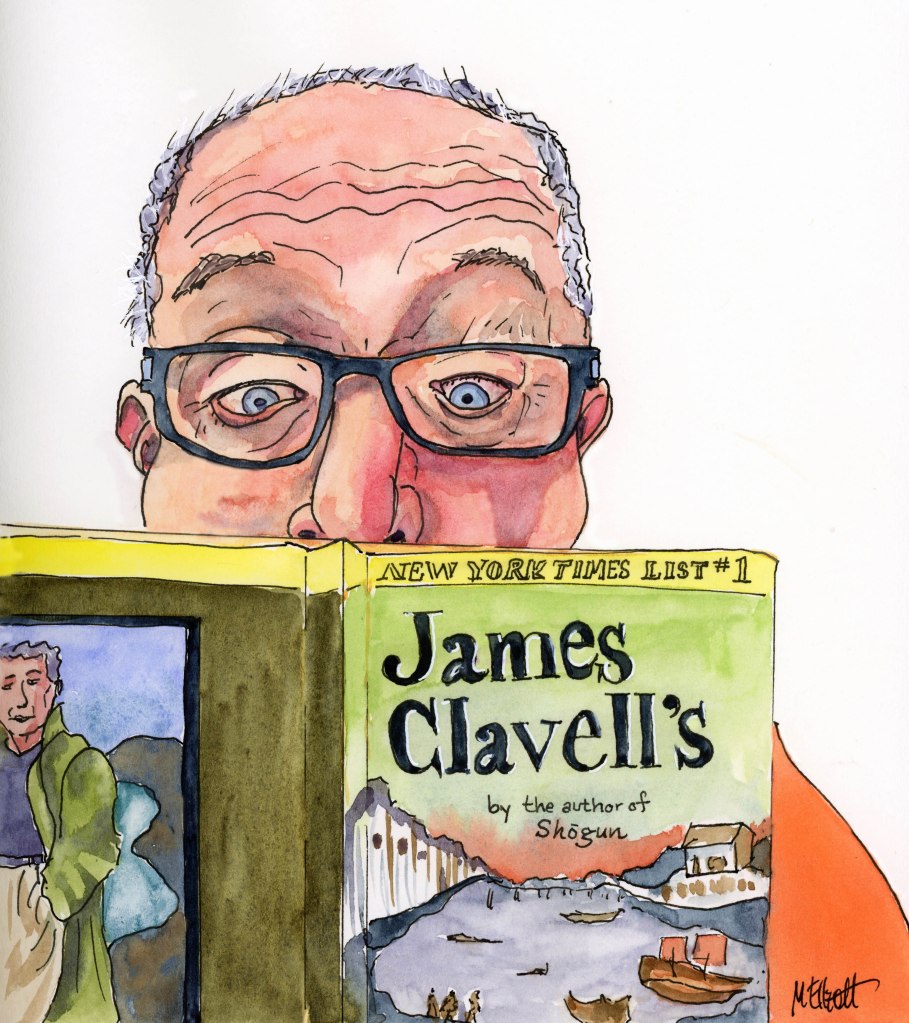
Please follow me on Instagram @thebookadept to see the artwork I make to accompany book reviews—including characters and scenes from books—and also pictures of people reading. Some few have appeared here, but I only feature a fraction of the things I paint (or have painted in the past), so check it out if you’re interested! Also, I do sell certain selected works…
The Good Sister
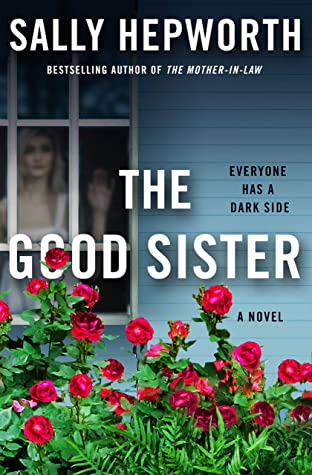
I read The Good Sister, by Sally Hepworth, on the recommen-dation of multiple people, although I held out for a while because it felt like one of those books about which excessive raving leads to inevitable disappointment. I am happy to say that wasn’t the case here.
In brief, there are two sisters (fraternal twins) in their late twenties: Rose, who is successful in her career as an interior designer and is happily married to Owen, but has recently endangered her relationship by becoming obsessed with having a baby; and Fern, a single librarian with a sensory processing disorder. The initial presentation is that Rose is the sister who has everything pretty much together, while Fern relies heavily upon Rose to guide her in life’s decisions and keep her on an even keel. Fern sticks to a rigid schedule of dining with Rose three nights a week, and otherwise carefully constructs her life to help her avoid all the many overwhelming situations with which she is unable to cope. This co-dependent relationship evolved from a difficult shared childhood with a narcissistic mother, and the sisters continue to fall naturally into the roles of protector and protected.
When Fern realizes that Rose is unable to have children, she reasons that this may be the one big thing she can do to pay Rose back for all her care and concern over the years. All she needs to do is find a father for the child. To anyone with traditional boundaries this would seem like a complicated issue, but to straightforward and literal Fern, it may be as easy as asking the first suitable male she encounters!
The point of view fluctuates between a direct narrative by Fern and the reading of entries of a daily journal that Rose is keeping at the suggestion of her therapist, whom she is seeing to help her with the tragedy of being unable to conceive. Through the agency of the journal, things are revealed about the two women’s past that will become particularly hazardous if a child is brought into the mix.
This book is billed as a thriller but, while it has aspects of mystery, suspense, and revelation to it that are definitely germane to the overall story and drive its action, the real reason to read this book is the co-protagonist sister, Fern, and her new friend, “Wally.” (I put his name in quotes because that’s what Fern calls him, due to his resemblance to the subject of the “Where’s Waldo” books.) Fern is a complex, nuanced character who interrogates the behavior of people around her and muses “out loud” about her own reactions to those behaviors. We are given the initial impression that Fern has been static in her routines, relationships, and accomplishments for a good long while; but as the story progresses so does Fern. Her forays into the unknown are a delight to witness, not the least of which is her relationship with Wally, who has issues of his own that may complement Fern better than she can believe.
I would categorize this as family or domestic drama more than suspense, although it is gripping in the end as issues resolve. But the best part of it is the wonderful characterization, the depiction of people who approach life differently, to be sure, but are in their own ways more together than the mundane “regular” folk can ever hope to be. I haven’t liked a character this well since Eleanor Oliphant.
Ghosts for Hallowe’en
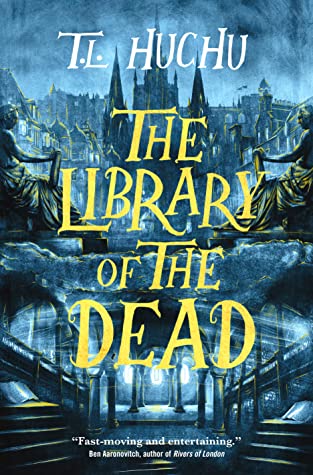
Now that we’re coming up on October, someone on “What Should I Read Next?” (Facebook page) just asked for good ghost stories or scary books for their teenager and, although I have a few favorites (more about those in a later post), I think that niche has been underfilled with good works. But T. L. Huchu is helping to change that, with his new book (published this summer), The Library of the Dead, listed as “Edinburgh Nights #1.”
The book’s protagonist is a fierce, brash, in-your-face 14-year-old girl with green dreadlocks named Ropa, a part-Zimbabwean, part-Scots “ghostalker”—I’m not sure whether this was Huchu’s (unattractive) way of spelling ghost-talker, or whether he purposely left it hazy as to whether she is a talker or a stalker!—who carries messages between the living and the dead in a vaguely post-apocalytpic Edinburgh. She, her little sister, and her beloved Gran live in an immobile caravan (trailer) parked on someone else’s land, and while Gran pays for her medicines with her knitting, Ropa haunts the streets looking for ethereal customers whose relatives will pony up a fee for a message from the dead, in order to pay the landlord for their parking space and buy their food and coal for heating. She draws on her Zimbabwean heritage by using an mbira, an ancient African musical instrument, as an aide to better communicate with the spirits, whose messages can be “tuned” into coherence by music.
Jomo, a friend of hers since childhood, has recently begun a job about which he is being extra secretive, but Ropa knows how to play to his ego, and she is soon being ushered (surreptitiously) by him into a library that operates as a secret society, available only to those with an interest in and talent for the occult. Although Ropa dropped out of school in order to support herself and her family, she is a lifelong reader and is thrilled with the opportunities offered by the library, once she gets past the daunting gatekeepers. Some of what she learns comes in handy when Ropa finds out from some ghosts on her turf that (live) children are being kidnapped and exploited in weird ways, and decides to track them down and return them to their families.
I was immediately drawn into this book—the narrative voice is fantastic. Ropa uses street lingo like a hansom cab driver from a Regency novel, but also throws in a lot of teen slang (presumably Scottish), so that while she is completely understandable, her turns of phrase are quite entertaining. The scene-setting is likewise amazing: History has taken the heart out of Edinburgh, and while there are only slanting references to wars and conflicts that leveled buildings and changed the financial dynamic of the city, a clear picture emerges that seems like London after the Blitz, if London had also suffered from climate change! It’s clearly a victory of some other country (England?) over the Scots, since everyone greets one another with the call-and-exchange of “God save the King!” and “Long may he reign!” with a nervous look over their shoulders to make sure people observe that they are following protocol. It’s little details like this that make the book so immersive and such fun.
The book is populated by quirky, fully fleshed-out side characters, both sinister and benign, and draws on Ropa’s two cultures—Zimbabwean and Scots—to make things even more interesting. There are truly scary scenes and also a lot of sarcasm and humor, and I predict a big hit with teens from about 13 up, although this is one of those young adult books that speaks to a wider audience. If you are an adult and enjoy a good ghost story, by all means recommend this to the teens in your circle, and then go read it yourself!
I’ll review an array of Hallowe’en-appropriate books for teens (and others) as soon as the month turns to October…
Grace
I have just finished reading William Kent Krueger’s Ordinary Grace. it’s so interesting to me how different is the voice between his two coming-of-age tales—this and This Tender Land—and his Cork O’Connor mysteries, of which I have read half a dozen now. The titles reveal all you need to know about the former, because his perspective and his writing are both tender and graceful as he looks back over life events big and small in the early 20th Century in which he sets them—This Tender Land in the depths of the Depression, and Ordinary Grace in the rapidly changing world of the 1960s. While I am not disparaging his mystery series—I enjoyed some books more than others, but none was either poorly conceived or written—I feel like his true gift lies with this obviously more personal look at boys of a certain age and how they meet the challenges they encounter as they move towards adulthood.
The main character in Ordinary Grace is Frank Drum, a 13-year-old boy growing up in a small town in Minnesota in 1961. He has an older sister, Ariel, who is aiming for a place at Juilliard (she is a musician as well as a composer), a younger brother, Jake, who stutters, and two parents who, while they love each other and their children, seem to be on different trajectories when it comes to finding satisfaction in life. As the book progresses, a series of tragedies are visited upon the town, some specifically on Frank’s family, and we see how each of these people, as well as other key characters in their orbit, reacts to the events of that year.
While I am always and forever a bit uncomfortable when someone chooses to explore the role of religion in these kinds of events, I have to say that Krueger doesn’t unduly intrude his own beliefs (whatever they are), but provides a nice array of contrasts when it comes to this subject. In Ordinary Grace, the protagonist’s father is a Methodist minister with a deep and all-encompassing faith partially born out of his experiences in World War II, while his mother—even though she does her wifely duty, attending services and leading the choir—feels somewhat betrayed that he didn’t become the lawyer he was planning to be when she met him, and is impatient with the constant expression of his beliefs. And the children are able to begin to come to their own conclusions, based on what they observe in their parents, in their friends, in the world, and in the events of their lives. Nathan, the preacher, comes across alternately as the hero and the fool for his consistent faith, while others in the book similarly go back and forth between seeming either pragmatic or shallow based on their own sentiments. I really liked that Krueger let his characters—and his readers—work things out for themselves.
I loved the easy, gentle pace of the book—at one point two of the characters discuss how a railroad track is like a river, because it’s there but it’s also constantly moving somewhere else—and I felt this to be a good analogy for the telling of this story. The characters are all well fleshed out and present themselves as individuals, and the language is beautifully lyrical in its descriptions of nature as experienced by the narrator. The only flaw I found is that someone (presumably not the author, since this was not the case in any of his other books) went through and excised a whole slew of necessary commas (maybe three-quarters of them?), including the ones that would have set off dependent clauses in their sentences. It was disconcerting to read, and I found my editor’s brain silently inserting each one as I went, sometimes making it hard to be present in the story.
I became impatient with the story line at one point, because I didn’t quite understand what the book was supposed to achieve. When one of the characters dies in mysterious circumstances, it seems like the purpose of the book is to figure out why, how, and by whose hand, but since I was pretty sure from about halfway through about both the issue of whose fault it was and which person acted to end things, I initially felt cheated that the author hadn’t made a better mystery out of it. Then, as I continued to read, I gradually realized that the book wasn’t about the mystery at all, but rather about how each character in his or her diversity would react to the truth of what happened.
This is a beautiful exploration of life, death, brotherhood, friendship, family, and community, and ultimately a commentary on the painful acquisition of wisdom and also on the nature of grace, whether it’s being considered as something granted by a supreme deity or given or withheld by the humans around us in times of crisis and loss. Even though it is framed in religious terms, for me the concept of grace in the novel was vastly wider, encompassing the ideas of tolerance, empathy, and respect. And I don’t want to give away the specifics, but when the moment finally comes when you find out where the title of the book came from, it’s different from what you expected, and delightful (or at least I found it so).
The final lines of the novel are both simple and profound enough that they deserve to be immortalized in the same way that we remember “Last night I dreamt I went to Manderley again” as the first line of Rebecca, or “Whether I shall turn out to be the hero of my own life, or whether that station will be held by anybody else, these pages must show” as the beginning of David Copperfield. I wouldn’t dream of revealing them here, but do read the book and discover them for yourself.
Inheritance
I just finished reading two new books in a series by Jennifer Lynn Barnes, author of the ever-popular The Naturals. These are so different from those books, though, that I didn’t know whether I would like them. But I think she pulls it off, and although I’m not sure it will be quite as popular with teens as The Naturals, it will still engage them with its mysteries and puzzles. I thought, after reading both, that this was going to remain a duology; but despite feeling like things were well enough wrapped up at the end of book #2, I discovered on Goodreads that there will be a book #3. Hmm. I’m not sure what’s left to discover, given that the mysteries are pretty much solved…unless she’s going heavily into the romantic aspect. I hope not.

The Inheritance Games and The Hawthorne Legacy reminded me of two other books, one for children and one for adults: The Westing Game, by Ellen Raskin, and The Lying Game, by Ruth Ware. I’m not a personal fan of The Westing Game—I find it convoluted and confusing, and feel like the characters are all made of cardboard—but I can’t deny its appeal to middle school kids, who will grow a few years older and like Barnes’s new series very much because of it. Both books are about people inheriting money and having to play games to do so, although it’s direct in The Westing Game, while in The Lying Game it’s a case of mistaken identity wherein the protagonist decides to keep her mouth shut and go along with it for the sake of the inheritance. The Inheritance Games books are a sort of mashup of those two, although the protagonist has no need to lie, since she is the clearly designated heir; she just needs to figure out why, and to do so before someone manages to kill her to get what they believe to be rightfully theirs.
Avery Grambs is a somewhat disadvantaged girl who grew up in a mostly one-parent household (Dad is kind of a deadbeat), then lost her mother a few years back and was raised the rest of the way by her older half-sister, Libby. Then one day she is summoned to the reading of a will—and it’s not just any will, but that of the fabulously wealthy billionaire, Tobias Hawthorne. She figures that for some random reason the man has decided to leave her some money; but she never in this world expects that he has left her his entire estate, minus some minor bequests, while disinheriting both his daughters and all four of his grandsons. Some would consider it a dream come true; but as Avery is uprooted from everything she knows and has to take a crash course in how to deal with all the repercussions and unexpected issues that come with great wealth, she isn’t so sure that it’s not a potential nightmare instead.
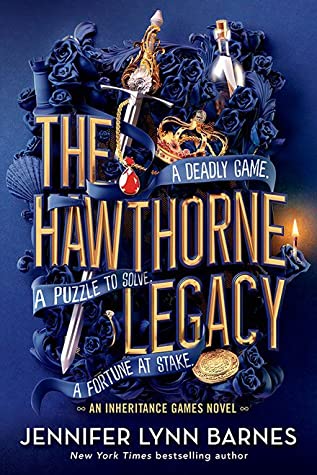
To receive her inheritance, Avery has to live at Hawthorne House, a sprawling estate where most of the rest of the family also resides, for an entire year. Dragging along her sister Libby and attempting in vain to evade the paparazzi, Avery moves into her new home, only to discover that Tobias Hawthorne was a wily old gent whose house is filled with secret passageways, hidden compartments, and a bunch of puzzles, riddles, and codes that may solve the mystery of: Why her?
Meanwhile, half of her new-found family is out to get her, while the other half is fascinated by the puzzle she represents, and all of them, whether hostile or friendly, are trying to use Avery to their own ends.
There is a nice story arc that carries you from the first book to the second, and the riddles and clues will delight most teenage readers as much as they stymie the teens in the book. There are a few confusing subplots that I think we could have done without, but they don’t distract too much from the main trajectory. Barnes is great at the slow build-up and the big reveal, and uses it to good advantage several times to promote further suspense and interest. There are also enough details about parties, clothes, and jet-setting to entertain those who enjoy the trappings of wealth, and a little incipient romance to satisfy that longing as well. This is a series that teens will enjoy, and perhaps some of their parents will too! I look forward with both anticipation and trepidation to see what becomes of everyone in book #3, which has a tentative title of The Final Gambit and is due out sometime in 2022.
Interludes
As I have previously mentioned here, sometimes I take a break between what I would consider more “significant” works (or at least the works of writers unknown to me) to read something lighthearted, whether that is a book written with juveniles as its audience, or a “bit of fluff” characterized by chick lit or Regency romance. This past week or so, I did both, with some surprising results.

The first book I picked up was The Extraordinaries, by T. J. Klune. Given that Vicious, by V. E. Schwab, is one of my favorite books ever, I had high expectations for a book in which ordinary people have the potential to become extraordinary, and the extraordinaries have complicated relationships with their ordinary contemporaries (and with one another). What can I say? First, I have to face that there is no comparing any book with the brilliance that is Vicious. It stands alone (well, except for its sequels). Second, I read Klune’s The House in the Cerulean Sea first, absolutely fell in love with that, and then read this. Who could not be a little disappointed?
The Extraordinaries is exactly as billed: A YA novel about a kid with ADHD who wants to be a superhero or, alternatively, wants to be beloved of a superhero. It’s cute, it’s inclusive, it’s frank and matter-of-fact about sexuality, it has some great characters, and teens will love it. Me? Not as much. I see its worth and its value without being able to immerse myself in its story. Also, I feel like the (ultra-serious) post-er who decried the glorification of the police (always the good guys, regardless of bad behavior) in this had a point. Not to the extent he carried it, but still…yeah. But for kids who like comics and graphic novels, this is a next step, and a fun one. I had planned to read the sequel, Flash Fire, but after the first couple of chapters I put it aside. It’s not that it’s not good, it’s just not for me. But like I said, teens (especially lgbtq etc. teens) will be enthused. (I do, however, look forward to the sequel to Cerulean Sea with unabated hope.)
I decided instead to move on to my reliable go-to author for light relief, the inimitable Georgette Heyer, writer of the quintessential Regency romance. But I ended up being surprised by a book that was not quite like most others she has written. A Civil Contract is surprisingly serious in tone compared to her light, frothy stories of witty, clever people, and owes much to Jane Austen’s book Sense and Sensibility.

It has a common theme of star-crossed lovers who may or may not prevail, and who probably appreciate the person with whom they end up more than the one they initially desired. But in this case there is no blinding realization that they have come to love that person, but rather a quiet acceptance that the relationship they have created will in the long run suit better, regardless of their feelings.
Adam Deveril, Viscount Lynton, an officer in the Peninsular War, is called home upon his father’s demise to discover that his family’s fortune has been decimated by his happy-go-lucky, completely improvident parent, and that he is on the verge of ruin. He has a mother and two sisters to support, and the youngest is not yet “out” (presented to society); without a dowry or indeed any basic support, her fate at least will be grim if he can’t figure out their financial situation in a hurry.
Before he left for the war, Adam had an understanding with Julia Oversley, for whom he has conceived what he believes to be a lasting passion, and which is returned by the beautiful Julia. But he knows that her father is not so unworldly as to agree to a marriage between his daughter and a man who can’t support her. While he is steeling himself to sell significant parts of the family’s estate, including the country seat, Julia’s father approaches him with the idea that he make a marriage of convenience with the daughter of a fabulously wealthy but admittedly vulgar merchant, Jonathan Chawleigh, to whom Mr. Oversley owes a favor. In exchange for his daughter Jenny achieving the social status that comes with marriage into an aristocratic family, Chawleigh will pay the myriad bills accrued to the estate and buy back all of Adam’s mortgages on the country home. Jenny, a school friend of Julia’s, goes into the marriage knowing that Adam still loves Julia. And the rest of the book details the emotions still held by the two parties in the doomed love match, as well as the new wife’s adaptation to being married to a man who not only doesn’t love her, but holds her father in revulsion, despite his own resolve, for being who he is and wielding power over Adam’s every decision.
This book, rather than a recounting of the making of a marriage, is an exploration of what constitutes a successful one once the deed is done. It incorporates the many sacrifices one has to make by tolerating the baggage of relatives and friends that come with a partner; it reveals the necessity of kindness, tolerance, patience and, above all, a sense of humor. It showcases, in fact, that the significant parts of married life are the ordinary, everyday events rather than the moments of exaltation or grand passion.
Julia Oversley is the Marianne Dashwood of the story—beautiful, impulsive, sensitive, willful, and somewhat selfish—while Jenny is Elinor—practical, somewhat shy and retiring, and more concerned for the feelings of others (specifically Adam’s) than for her own. Jenny’s father, Jonathan Chawleigh, is somewhat reminiscent of Sir John Middleton, in that he speaks his mind in an embarrassing manner without thought for what he is saying or how it will affect his listeners. But he goes far beyond that character in both coarseness and good-heartedness, and steals the show whenever he appears on the page.
There was rather too much historical narrative for my taste regarding the various engagements between Napoleon Bonaparte and the Duke of Wellington, but it’s well written and definitely pivotal to the plot. This is one of the few books of Heyer’s that has a quiet, satisfying ending rather than an “Ahah!” moment, but it doesn’t suffer for that. While it was an unexpected read in the midst of Heyer’s others, I still both enjoyed and appreciated it.
The Madness of Crowds
If it’s August, it must be time for the annual Inspector Gamache mystery by Louise Penny. It’s amazing to me that she can keep turning one out every year, no matter what. A few times I feel like the series has suffered, but mostly they are intricately plotted, with intelligent dialogue, in-depth philosophy, and compelling characters. This one was no exception, although there were a few moments while reading it that I wanted to say, Where is your editor in all of this?
The setting is once again the village of Three Pines, south of Montreal, Quebec (the previous book in the series occurred while the Gamaches and Beauvoirs were on a visit to Paris), and it is post-covid. I’m sure that when Penny wrote it, she anticipated a legitimate post-covid world in which everyone was going about their normal lives again instead of one plagued by variants that threaten to keep us in masks and in isolation for yet another season (or year). But at the heart of her plot is a moral issue that has sprung to life partially as a result of the medical shortages and triage of the worst days of the epidemic, and it’s dark.

Never assay a Penny mystery expecting it to be an ordinary police procedural. She incorporates not only philosophy and politics, but also art and poetry, and while the police work is meticulous, the feelings and intuitions of the officers involved (with Gamache at their head) are always as essential as are the bare facts of the case. One of the things I enjoy about Penny is that she inserts real poems and quotes and books into her fictional works; the title of this one is based on a book by Charles Mackay, called Extraordinary Popular Delusions and the Madness of Crowds. She immediately made me want to seek it out.
This book uses its characters and story to explore such social issues as disinformation and propaganda, xenophobia, and eugenics. I feel like her pivotal character, Professor Abigail Robinson, is consciously modeled on some of the charismatic but wildly morally skewed characters who have appeared as players in the recent American story, in the way that she divides the culture in two over the validity of her theories with the sheer strength of personality and certitude.
One Goodreads reviewer opines that this novel is “the most allegorical of Louise Penny’s work. The actual murder is incidental to the plot, serving only as a springboard to examine morality on both personal and societal levels.” I’m not sure I would go that far; but there is occasionally an arms-length feel to the crime they are supposed to be solving, as opposed to the debate they are constantly having.
Gamache is asked to provide security at a lecture being given by a professor of statistics. Given the presumably dry content of a speech on statistical analysis and the fact that it’s taking place at an obscure university auditorium in between Christmas and New Year’s Day, Gamache is puzzled as to why anyone would approach the Chief Inspector of the Sûreté du Québec to oversee this task; but then he does a little research on the likely content of the professor’s speech and immediately musters a far bigger response than anyone would expect at what should be an incidental, poorly attended event. More people show up than the venue can accommodate, and Gamache has a volatile and angry crowd on his hands as the professor steps up to speak.
One thing that bothered me about this book is how long it takes to reveal the specific contents of the professor’s government-solicited (but later repudiated) report on which her call for action is based. Another was how long it took to get to the actual murder, using some “foreplay” crime to keep the reader going until we arrive. And a third was the resolution of the mystery: There were multiple individuals who could have been the culprit, and none of them stands out for long, as facts are discovered that exonerate each one, only to raise more doubts about the others and then circle back around again. It felt like Gamache, Beauvoir, and Lacoste spent an aeon going over basically similar theories for why each person was or could be the murderer, and they all made sense! This is one of the few of her books that didn’t have that “Ahah!” moment in it when the unexpected solution arises and proves to be the truth. I think this is probably because Penny wanted the social commentary, rather than the murder, to be the star of the show…but it made the actual mystery a long, drawn-out process.
With all this caveating (is that a word?), I was still thoroughly engaged by and absorbed in the story. We are reunited with familiar villagers, get to know others who haven’t been prominent before, and are also introduced to a variety of strangers, each of whom brings their own twist to the plot. The physical details are, as usual, spot-on for a winter interlude in coldest Canada, and made me want to drink hot chocolate even in 100-degree Los Angeles! (I sometimes wish that her annual pub-date was in February, so I could be in accord with her characters as they snuggle up with comfort food and beverages around the fire.) And the moral dilemma around which the entire plot is wrapped is likewise riveting, albeit deeply disturbing.
I made a comment in my review of A Better Man (two books back) about a stylistic shift I saw taking place in Penny’s writing structure and, while I noticed that it mostly disappeared again in All the Devils Are Here, it’s back in this book. She does this short-phrase, incomplete-sentence thing that can occasionally work as a device to emphasize something, but is less pleasing when it constantly occurs. Perhaps she (or her editor) will see this comment, here or elsewhere and, taking it to heart, go back to the more fluid literary construct of yore. But even with that, I still give the book four stars out of five.
Jane in person
I am a sucker for time travel stories—although I really hate it when they are poorly conceived and/or realized. Likewise, I am a huge Jane Austen fan, but have learned to be wary of embracing the countless Austen spinoffs and glorified fan fiction spawned by authors who don’t have the chops to write anything close to canon. (I don’t know which is worse—the juxtaposition of Pride and Prejudice with zombies, or the creation of an Austen theme park in which young women can act out their Regency-born fantasies.) So imagine my delight when I discovered a book that sends a couple of intrepid explorers back to 1815 to see if they can retrieve additional Austen materials and bring them up to the present day to delight literary scholars everywhere?
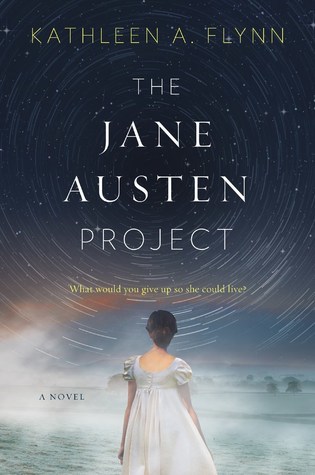
In The Jane Austen Project, by Kathleen A. Flynn, Rachel and Liam are sent from their rather sterile and unsatisfying present—they live in a world that has experienced “the Die-off” (no more trees), and eat food created by 3-D printers—back to 1815 England. They have been immersed in history for months, properly clothed (albeit with only one outfit apiece), and furnished with what will be an inordinate amount of money for the time period (although it’s mostly counterfeit), and the opening to the past has dropped them in a field near a town called Leatherhead. Most important to their mission, they have been cautioned that they must interact as little as possible so as not to effect change while trying to achieve their mission, which paradoxically will require a particularly close acquaintance with their subject! They are cast as the Ravenwoods, brother and sister, recently arrived in London from Jamaica after having manumitted their slaves on the coffee plantation and sold up to make the move. This back story ensures that they have a ready explanation for small awkwardnesses in local custom, as well as their lack of acquaintance with anyone who could expose them as impostors.
Their mission is to cultivate sufficient intimacy with Jane Austen and her family so as to gain access to letters she wrote to her sister Cassandra, as well as to an unpublished manuscript that was previously thought to be incomplete—only three chapters exist in their time—but, it has been learned through the recent discovery of a letter from Jane Austen to a friend, was rather held back from publication because Jane thought it too revealing of her own personal family situation.
Apart from staying in character, which is particularly difficult for Rachel, since she is an independent single woman and a medical doctor in the present day, the challenges are enormous. They have about a year to become established enough in London to curry an acquaintance with Henry Austen, Jane’s brother, and then to win an introduction by him to his reclusive sister, whose books are not even published under her own name. It would be hard for Jane to imagine the extent of her fame and the reverence for her work held by scholars and commoners alike, a couple of centuries hence; almost as hard as it is for Rachel and Liam to restrain their enthusiasm and wonder at being a part of her close circle.
All sorts of things go awry, as they are wont to do in time travel adventures, given the necessity for lying through your teeth, sticking to appropriate behavior for the times, and knowing your specific place in society—whether it’s how familiar to be with your kitchen staff, or how much flirting you can venture without compromising your reputation. There are many surprising turns in this book, and with a year to accomplish their mission, the author was able to space them out nicely and make everything feel logical and/or inevitable.
I really enjoyed reading this and, unlike some books where you wish an editor had stepped in to cut a couple of hundred pages, I could have asked for more. There was adequate detail about everything, but absolutely no excess. I would have liked to know more about Liam, in particular, before the adventure began (the book is told from Rachel’s viewpoint), and also welcome would have been just a little bit more detail about the specifics of daily life in both past and future, and some explanation of why particular interactions turned so awkward. But over all, I have to applaud the author for pulling this story off so well—it had enough history, enough romance, enough intrigue, and never went overboard. If you have enjoyed the Outlander books, or Connie Willis’s multiple forays into time travel, I venture to say you will also get a huge kick out of The Jane Austen Project.

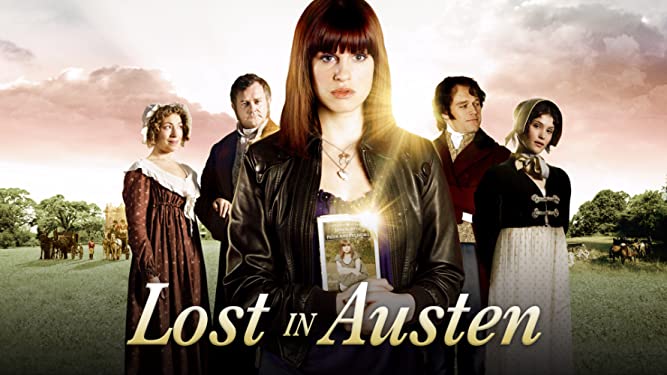
(One exception that I have to confess as a guilty pleasure in this oeuvre is Lost in Austen, a four-part British miniseries in which a P&P fan opens a hitherto unknown door from her bathroom into the Bennet household, trading places with Elizabeth, who steps into the present day, whereupon the door disappears and each is stuck in the other’s life. It’s hilariously well done. Jane Austen is spinning in her grave. Check it out.)

 The Book Adept