Why dystopian fiction?
 Why have dystopian and post-apocalyptic books become and remained so popular? As a teen librarian, this was one of the questions most frequently asked of me (mostly by bewildered parents and teachers), so I recently included my (extensive) answer in a speculative fiction lecture to my Young Adult Literature class.
Included in the dystopian and apocalyptic sub-genre are books addressing the degradation of the planet, painting societies that have run out of fossil fuels, societies that have run out of water, numerous scenarios of global warming, and societies in which the entire infrastructure has broken down and created a scavenger mentality. There are stories addressing the breakdown of civil society, with the rise of oppressive religions and philosophies and the persecution of “the others,” and experimenting with ideas about who those others of the future will be—will they still be gay people, Jewish people, Muslims, people of color? Or will the society shift and find different victims on which to avenge itself?
Some observers of the success of this publishing niche point to 9/11 and the many terrorist events before and after it as an existential catalyst to make people consider end-of-the-world scenarios. But dystopian fiction was around long before any of our current destruction scenarios, starting in 1932 with Brave New World, and featuring such classics between then and now as Fahrenheit 451, A Canticle for Leibowitz, The Handmaid’s Tale, The Road, and Parable of the Sower. And in addition to those considered classics, there are equally enduring stories (even though some of them are dated) such as Alas, Babylon, by Pat Frank; Logan’s Run, by William F. Nolan; War Day, by James Kunetka and Whitley Streiber; Lucifer’s Hammer, by Larry Niven and Jerry Pournelle; On the Beach, by Nevil Shute; and The Family Tree and The Gate to Women’s Country, by Sheri S. Tepper.

The question is, though: Why are these books so popular, especially with teens?
Before The Hunger Games ever spurred a glut of dystopian and post-apocalyptic books on the teen market, there were forays into this downbeat science fiction sub-genre of dark, diminished futures focused on survival: cautionary tales such as Feed, by M. T. Anderson and The House of the Scorpion, by Nancy Farmer; and future projections such as Obernewtyn, by Isobelle Carmody, the Uglies series by Scott Westerfeld, and the chilling Unwind (and sequels) by Neal Shusterman. After The Hunger Games, which is the all-time best-selling book series (surpassing even Harry Potter and Twilight!), the reading public went crazy for such books as Ready Player One and Epitaph Road, and overdosed on such series as The Maze Runner, Divergent and sequels, and The Young Elites.
 Some of these works are focused on the immediate hereafter, while others project centuries ahead to speculate on what a future world would look like after the immediate destructive effects have subsided. If adults are feeling anxious enough to write these books, it’s probable that their anxieties are being communicated to their teenagers through more than popular fiction and the movies made from it.
Reading about a society that is worse than yours, or a scenario in which the worst that could possibly happen has transpired—but people have survived and are using their ingenuity and determination to make things better—can be reassuring.
There is also the advantage of being able to talk about socially unacceptable topics in a fictional arena and work out how you feel about them or how you should feel about them. Calling a political regime into question, or rebelling against a religion or cultural restriction by reading about it can help a teen (or an adult) who can’t quite bring him- or herself to rebel in real life, by offering some relief, or possibly even guidance and encouragement. Authors can offer pointed commentary about societal trends (as did the authors of Brave New World and 1984) from within a fictional setting and gain an audience while not suffering the criticism or retribution they might receive if their comments were offered in plain speech.
Teens can use these books as metaphors to work out their own problems with the real world. Teen brains are not done maturing yet, and many teens are filled with rage and fear and longing, and have trouble articulating their thoughts and feelings; so fiction that provides a cathartic release and relief of these emotions is helpful. These books can also inspire us by the actions of their courageous, defiant protagonists who overcome barriers and limitations or come to the realization of their own shortcomings and seek to do better.
Ultimately, it is also fiction that, once again, provides the opportunity for the learning of empathy.
“Reading good literature can be a powerful way to develop empathy. Empathy could be one of the most important qualities to develop in young citizens who will go on to be successful actors in a complicated world.”
—Dr. Brené Brown
Fantasy fiction
What is the appeal of fantasy fiction? People who don’t read fantasy ask this question a lot. Here are some reasons why people might enjoy reading fantasy:
Escapism: travel into another WORLD, culture, history, set of natural laws
Heroism: the exploration of greater themes, unconscious hopes and aspirations, the experience of admiration and emotion
Specialness: a hidden talent for magic…
Wonder: the appeal of the unfamiliar
Romance: Not just “couples” romance, but the romance of the road, the charisma of the swashbuckler, etc.
Simplicity: the straightforward moral code of good and evil
“The more rational the world becomes,
the more we demand the irrational in our fiction.
The genre starts where science ends.”
—Mark Chadbourn

The Great Library
Periodically, I blog about young adult books or series that may have adult appeal, and the series that begins with Ink and Bone, by Rachel Caine, is one such.
To any bibliophile, the destruction of the Great Library at Alexandria, the first so-called universal library, was a tragedy of epic proportions. The loss of the ancient world’s single largest archive of knowledge, the idea that so many “great works of brilliant geniuses” (Orosius) was destroyed, causes anything from a wince to a fit of weeping by those lovers of antiquity who can only imagine what they might have missed by this loss. In this series, Caine rewrites literary history by allowing the Library at Alexandria to survive, and then postulates what might have happened next.
 By the present day (the series actually takes place a decade into our future, although it’s a weirdly old-fashioned and steam-punky rendition), the Library and its staff have gained immense political power and influence, akin to that of the Catholic Church and a world government rolled into one. The Great Library is a looming presence in every major city, and has complete power over the dissemination of information via its Serapeums (Serapea?), the equivalent of your local library branch. Through the use of alchemy and the highly developed mental powers of the Library’s servants called Obscurists, literally any literary work can be delivered to a “blank” book for any citizen to read…but at the same time, the individual ownership or possession of “real” (original, permanently printed) books is strictly forbidden. The Great Library wants to keep the power of the written word solely in its own hands. This begins as a noble goal to protect and preserve knowledge, but over the course of history has become a restrictive and smothering power play.
The primary protagonist of the book is Jess Brightwell, whose family has for centuries been involved in the black market trade for illegal books. Jess, however, is neither qualified for nor as interested in following the family trade as is his twin brother, Brendan, so his father decides that, since he’s a bright boy who likes to read, the best thing Jess can do for the family is to become a librarian! What better than to have a loyal family member strategically placed within the organization of your rival? This begins Jess’s association with a motley group of other teenagers, all vying for a role in the hierarchy of the most powerful organization on earth. But what they discover is that the Great Library isn’t as benign, high-minded, and well-intentioned as they’ve been brought up to believe….
I picked up the first book because of the little gold plate on the cover that said “THE GREAT LIBRARY.” I thought the book was brilliant. The alternate history, the scene-setting, the imagery, the concepts, the characters, the action, are all fully on. Every time I had to stop reading, I couldn’t wait to pick it up again. It’s a book that will definitely appeal to teenagers, what with the impulsive decisions, quickly embraced loyalties, and underlying romances among its cast, but the series is definitely worth a look by adults intrigued by the premise.
After discovering the first book, I have, over a period of years, read the sequels—Paper and Fire, Ash and Quill and, just this past week, Smoke and Iron. The subsequent books take Jess and his band of friends—including his teacher, Scholar Wolfe, and the teacher’s lover, Commander Santi of the High Garde, Thomas the brilliant inventor, Khalila the quiet diplomat, Morgan the Obscurist, Dario the haughty member of Spanish royalty, and Glain, stalwart soldier of Welsh origins—on multiple harrowing adventures as they fight the current corrupt leadership for the soul of the real Library they love and wish to save.
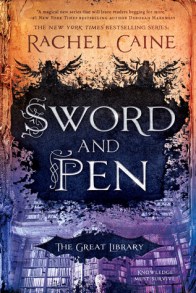 Although there is inevitably some variation in pacing when reading a series, Caine managed, by varying the scenery and also developing and changing the relationships among the characters, to keep the books pretty consistently at the same level of quality. I had read somewhere that this was originally intended as a trilogy, and somehow assumed that Smoke and Iron was the last in the series, only to get to the end and realize that there is one more book—Sword and Pen—still to come. This fifth book publishes in September, and I will be the first adult on the waiting list at the library to read it. Look out, teens, I’m coming through!
Wild thing
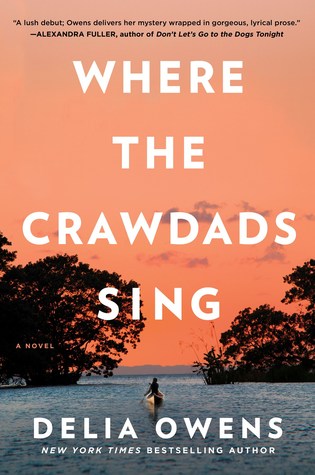
I just finished reading Where the Crawdads Sing, by Delia Owens. I didn’t initially realize that such a big “to-do” had been made about the book; one of my students had read and liked it, and passed it along to me. She doesn’t know much about my reading tastes, but this immersion in the life of a virtual orphan growing up alone in the marshes of North Carolina was just to my taste. It apparently struck a chord with many others as well, considering its 33 weeks on the New York Times bestseller list!
We had just read a book for YA Literature class (If You Find Me, my review here) in which a bipolar mother with a meth habit raises her kids out in the middle of a national forest until they are 14 and 6 years old, so to pick this up next, by sheer coincidence, and discover a protagonist who is deserted by her mother, all her brothers and sisters, and finally by her alcoholic and abusive father (the reason why everyone else left) to grow up alone in the wilderness was pretty weird.
This story also made me think of my mother, the youngest of nine children and the last left at home, whose own mother died when mine was 10 years old and who had to care for her father (a truck farmer with severe rheumatoid arthritis) alone for the next two years, when he died too and she was sent off to live with a serial array of sisters until she turned 20 and married. Her stories of struggling to cook on a wood stove after her mother was gone, and of being ashamed of her meager wardrobe of two skirts and
two sweaters when she was in high school made me tap right into similar accounts in this novel.
 The book revealed the sad truth about so many people, which is that they will hold your upbringing and circumstances against you even when no part of them is your fault or choice, and will treat people who are poor or different as pariahs rather than embracing them and turning them into “one of us.” Thankfully, this child had her points of connection to humanity, and as seems typical, it was the people with the least to give (the black couple with the dockside fueling station, the store proprietor who made the wrong change to give Kya more buying power) who gave and did the most.
I could see, in some areas of disconnect between one sentence and the next, or an occasional parochial description that took me out of the story, that this was a first-time writer; but all was made up for by the lyrical, celebratory, sometimes lush language used to bring the marsh and its environs to life on the page. There were certain moments, too, in the human interactions that were both beautiful and unique—such as Tate teaching Kya to read not by using an alphabet book or a traditional text but by urging her to read from the Southern Almanac, so that her understanding of words and their complexities is powerful from the very beginning, as well as tied into nature. Since nature was already her primary fascination, this choice could only expedite everything she was to become.
The story of her life alone in the marsh, her hardships and challenges, her gradual awakening first to friendship and then to first love followed by another desertion, and then the betrayal by the second person to whom she gave a chance was heartbreaking. The fact that she was then the prime suspect in a murder, almost exclusively the result of no other evidence but that of being the “Marsh Girl,” further illustrated the ignorance and small-mindedness that surrounds the unknown. But there are twists in this book you don’t see coming, and front to back (with some slow passages here and there), it was a mesmerizing read.
I would agree with the reviewers’ assessment that people who like Barbara Kingsolver (especially such books as Prodigal Summer and Animal Dreams) would also enjoy this book. Perhaps also the readers of Diane Ackerman or Annie Dillard. Like the worlds they “discover” for the reader, the marshes and swamps surrounding the Outer Banks are lovely places in which to immerse oneself.
Soft reads vs. edgy
My reading time is, of necessity, taken up right now with the novels I am assigning to my Young Adult Literature class at UCLA’s MLIS program. Most of them are a re-read for me, many with a specific goal of evoking some quality of YA lit that will give my class a context for where it came from, the ways in which it has been and continues to be effective for teenagers, and where it is now.
Last week we had a far-roving and engaging discussion about two “classics” of YA—The Outsiders, by S. E. Hinton, and The Chocolate War, by Robert Cormier—and two later books that continued the job of these seminal works—Speak, by Laurie Halse Anderson, and The Perks of Being A Wallflower, by Stephen Chbosky.
Previous to the 1960s, there were narrowly defined categories for this newly emerging fiction sector: adventure stories for boys, romance for girls. That was pretty much the extent of YA fiction. With the exception of some vocation-driven series like Sue Barton: Student Nurse and Nancy Drew, most of the books written for teenagers were, to quote historian and critic Michael Cart, “slick, patterned, rather inconsequential stories written to capitalize on a rapidly expanding market.”
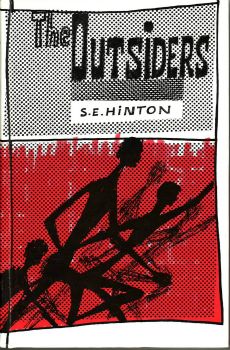 Hinton’s book was the start of the writing revolution in teen literature. Here was a teenager, writing from personal observation and with thematic relevance about class warfare, rejecting “the inane junk lining the teen-age shelf of the library” (to quote the young author Hinton herself), and echoing the rejection of the status quo for which the 1960s were known. The year 1967 kicked off a positive flurry of books about such formerly verboten topics as gangs, drug use, underage sex, homosexuality, teen pregnancy, and abortion. Teen fiction went from sweet stories tied up with a bow to exemplars of determinism and naturalism. Robert Cormier, who wrote The Chocolate War in 1974, commented that “Adolescence is such a lacerating time that most of us carry the baggage of our adolescence with us all our lives.” Judging from the discussion we had about these first two books and the two that followed, many YA authors and the teens who read them agreed with him.
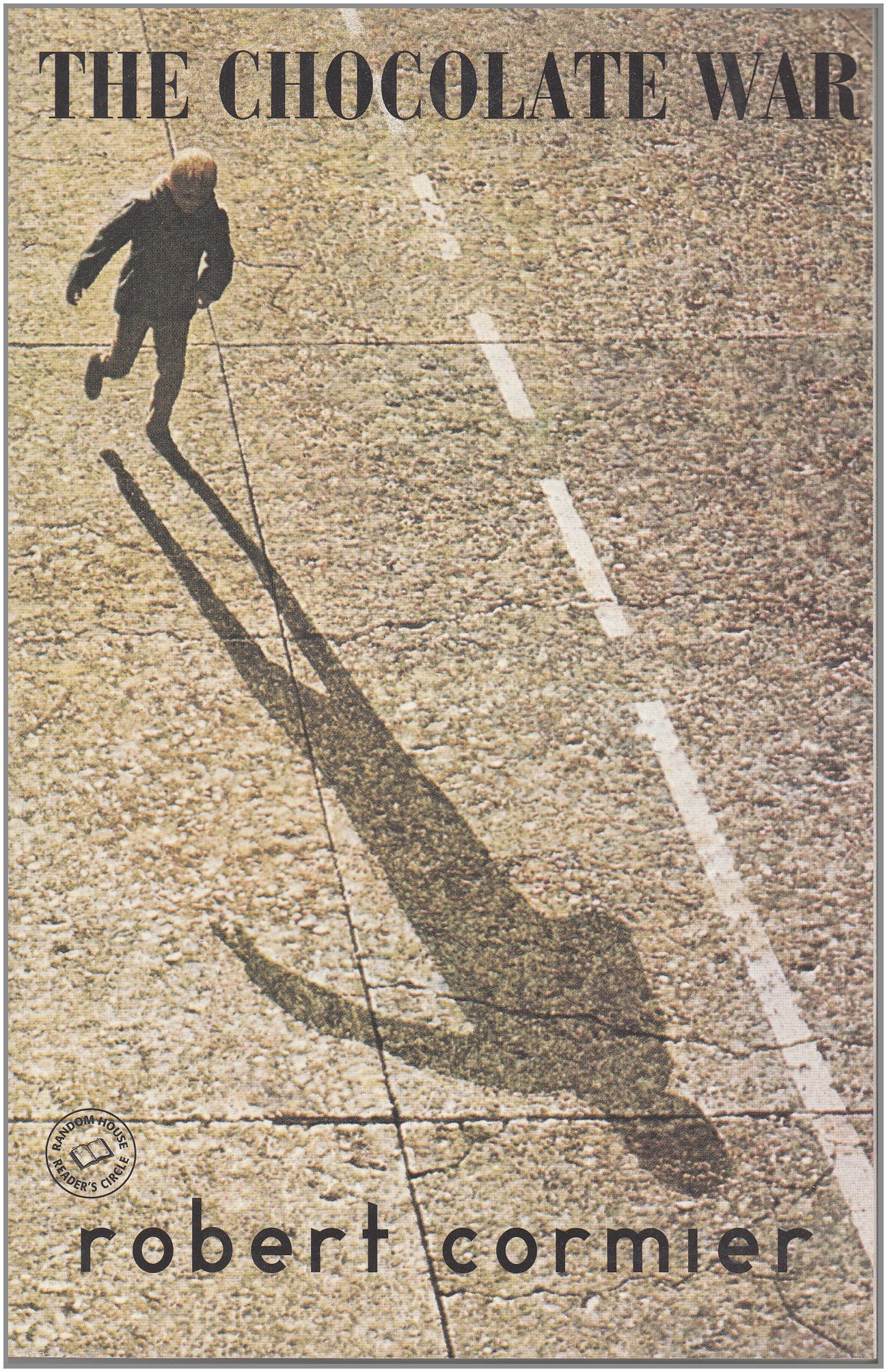 There are certainly issues with these books that make them problematic to recommend to today’s teens. The absence of a single non-white character, the blatant misogyny exhibited towards both the “bad” girls and the “good” in the society of the 1960s, and the rather blatant sentimentality with which the characters are treated in The Outsiders would seem to be stumbling blocks, and yet this book is still widely read and enjoyed. The dark atmosphere of The Chocolate War, depicting teens (and humans in general) as hapless victims of social and natural forces and holding out no happy ending, seems similarly discouraging, but the book continues to check out of the library.
Other popular books of that era, such as The Contender, by Robert Lipsyte, which took up the theme of becoming an individual and focused on self-transformation through the eyes of an African American protagonist, or Alice Childress’s A Hero Ain’t Nothin’ But A Sandwich, which explored heroin addiction in the first person of 12 distinct voices, continued and extended the reach of the admittedly rather gritty view of the teenage years. Author Richard Peck cited these works as books “about young people that parents thought their children didn’t know.” They fostered a writing revolution that has ebbed and flowed ever since, interrupted by the inane “problem novels” of the 1980s and revitalized in the 1990s, pushed off track by trendy fiction with the vampire craze and the fascination with all things paranormal and revitalized yet again in dystopian and post-apocalyptic fiction and the current return to realism.
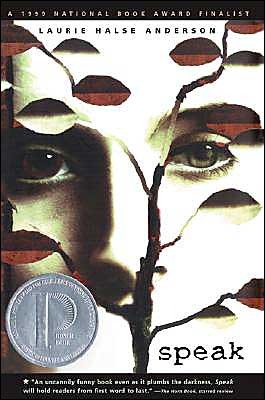 The two books we read from 1999, Speak and The Perks of Being A Wallflower, are also classic books about secrets, about guilt, and about the adolescent task of figuring out what responsibility you bear for your circumstances versus the degree to which you have been victimized by others and by life itself. The class discussion concluded that these books are necessary so that teens who are in similar situations can see themselves in their literature, realize that they’re not alone, and possibly find reason for hope.
This week we continued this theme in a way, but brought it up to date with our segment on “soft reads vs. edgy fiction.” There are obviously teens for whom the books full of personal human tragedy are not relevant or not desirable. Likewise, these teens’ parents are more comfortable with a literature that doesn’t expose their children to language, relationships, and frank talk beyond their level of emotional maturity. There is definitely a place in teen fiction for the equivalent in adult fiction of the “cozy,” the soft read, the book that tells an uplifting and nonthreatening tale with a positive message and a happy ending. Even those who appreciate gritty fiction sometimes enjoy taking a break from it!
This week’s exemplar of a soft read was Joan Bauer’s Hope Was Here, which would seem with its very title to express a different message than those other books we had been reading. Bauer is among the many authors who has written a baker’s dozen of books (between 1995 and 2016) about perky, approachable protagonists with a sprightly, can-do attitude and a feel-good mood. Authors for slightly older teens who want soft reads include Maureen Johnson, Melissa Kantor, Ally Carter, and Sarah Dessen.
While most of these books are aimed at a female audience, their equivalent in gentle reads for boys include adventure, science fiction, and fantasy genre fiction that the girls likewise appreciate. Some of the more popular series that serve this purpose of transitioning children from age 11 or so to about age 14 are the Pendragon series by D. J. MacHale; the Alex Rider series by Anthony Horowitz; the Artemis Fowl series by Eoin Colfer; and Michael Scott’s books beginning with The Alchemyst.
The flip side, the polar opposite of these books are those that place a high premium on being real—the realer the better—and if that means drinking and smoking, profanity, sex, and violence, then bring it on. This edgy fiction pushes all the boundaries beloved of teens and shocking to parents, and gives teens the ability to encounter those they may not ever know in real life, through the pages of books.
The ones we read this week included:
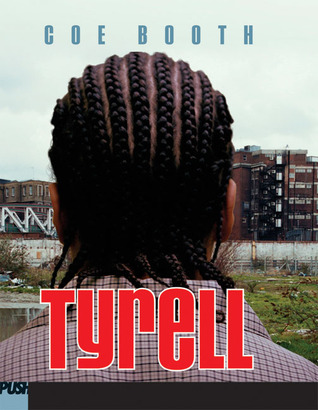 Tyrell, by Coe Booth: Tyrell is 14 years old. He’s grown up in the projects, with his dad, his moms, and his little bro Troy, but his dad’s just gone to prison, his moms is a hot mess incapable of caring for herself or her children, and the weight of it all is resting heavily on Tyrell’s shoulders. He loves his girlfriend but she won’t put out, he’s tempted by an overly friendly new girl he meets at the roach-filled motel where social services has parked them, and he’s angry and confused about the role into which his mother is trying to force him, which is as the wage earner in the absence of his father.
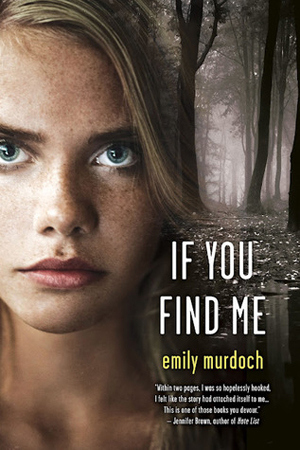 If You Find Me, by Emily Murdoch: When she was five years old, Carey’s mother stole her away from her father and took her to live in a trailer in the middle of a national forest. Her mother, bipolar and a meth addict, subsequently gave birth to a second daughter, whom Carey took care of during her mother’s frequent absences. Carey’s mother did whatever she had to do, including exploiting her daughter, in order to get a drug fix or a new winter coat, while the girls lived on cans of beans and Chef Boyardee and the squirrels and rabbits Carey shot in the forest. One day, after their mother has been missing long enough for the store of beans to be looking worryingly small, a man and a woman show up calling their names, and Carey and Jenessa are whisked off to the real world to live with Carey’s father, stepmother, and stepsister, with all the adjustments this involves. But Carey can’t help thinking about the crime she committed during a moment of desperation back in the forest, and worrying that its revelation will separate her from her sister, the only person in the world she really loves.
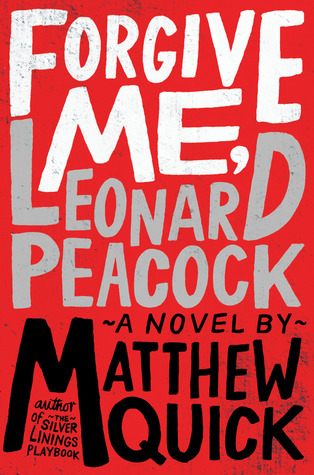 Forgive Me, Leonard Peacock, by Matthew Quick: Leonard is the epitome of the sad loner at every high school, and like that guy, he’s about to indulge in some stereotypical behavior: His plan is to take a gun to school, shoot his former best friend, and then off himself after. But first, he wants to make a final connection with the few people in his life who have been kind to him by giving them each a gift. The book is the story of the last couple of days of Leonard’s sorry life…although some letters to Leonard from the future hold out a ray of hope.
Parents, teachers, and random adults have asked me, during my tenure as a teen librarian, “Of what value are these books for teens? Why are all of your book lists so irredeemably bleak?” My answer has always been, it’s what the teens want, and in many cases it’s what the teens need. Protecting a privileged notion of what constitutes teen literature can easily deprive teens of reading books that let them identify and understand their sadness, their loneliness, and their anger, and also equip them to fight the real monsters in their lives, whether those are other teens, the adults who control them, the world at large, or simply their own thoughts, feelings and beliefs.
The paradox of much of edgy fiction is that although the circumstances in which the characters exist are ugly, the characters themselves are beautiful in their vulnerability, and the literature itself can be lyrical even in its truthfulness. And in my discussion with my class, some of whom were put off or even horrified by the selection of edgy fiction we read, we ironically came to the conclusion that the soft reads are often identical in their effect to the edgy ones, and the adults who laud them as more appropriate aren’t seeing the spectrum on which they appear.
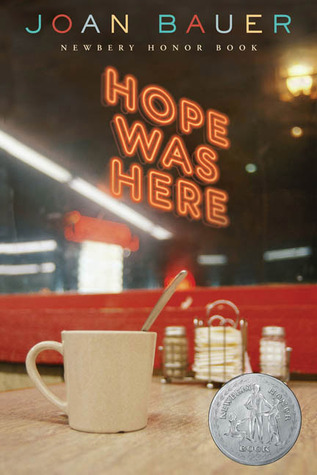 The book we read, Hope Was Here, has a protagonist whose mother deserted her, and she was raised by her aunt. She had to move repeatedly during her 16 years because of financial hardship. Her only constant is being a good waitress at the serial diners at which she has worked. Her new boss, of whom she has become fond, is dying of cancer. The town is run by a crooked politician who is exploiting the townsfolk. Reading that synopsis, would you guess it was a soft read? The fact that the heroine, Hope, takes a relentlessly positive attitude toward the obstacles in her life doesn’t negate the fact that she’s been dealt a tough hand.
The truth about young adult literature is, no matter what its guise—soft read, edgy fiction, paranormal or dystopia—the really good stuff is designed to invoke one important quality from the teens who read it: Empathy. The greatest gift we as librarians (or teachers or parents or friends) can give our teens is how to experience empathy; and one of the best ways to teach them that is through reading.
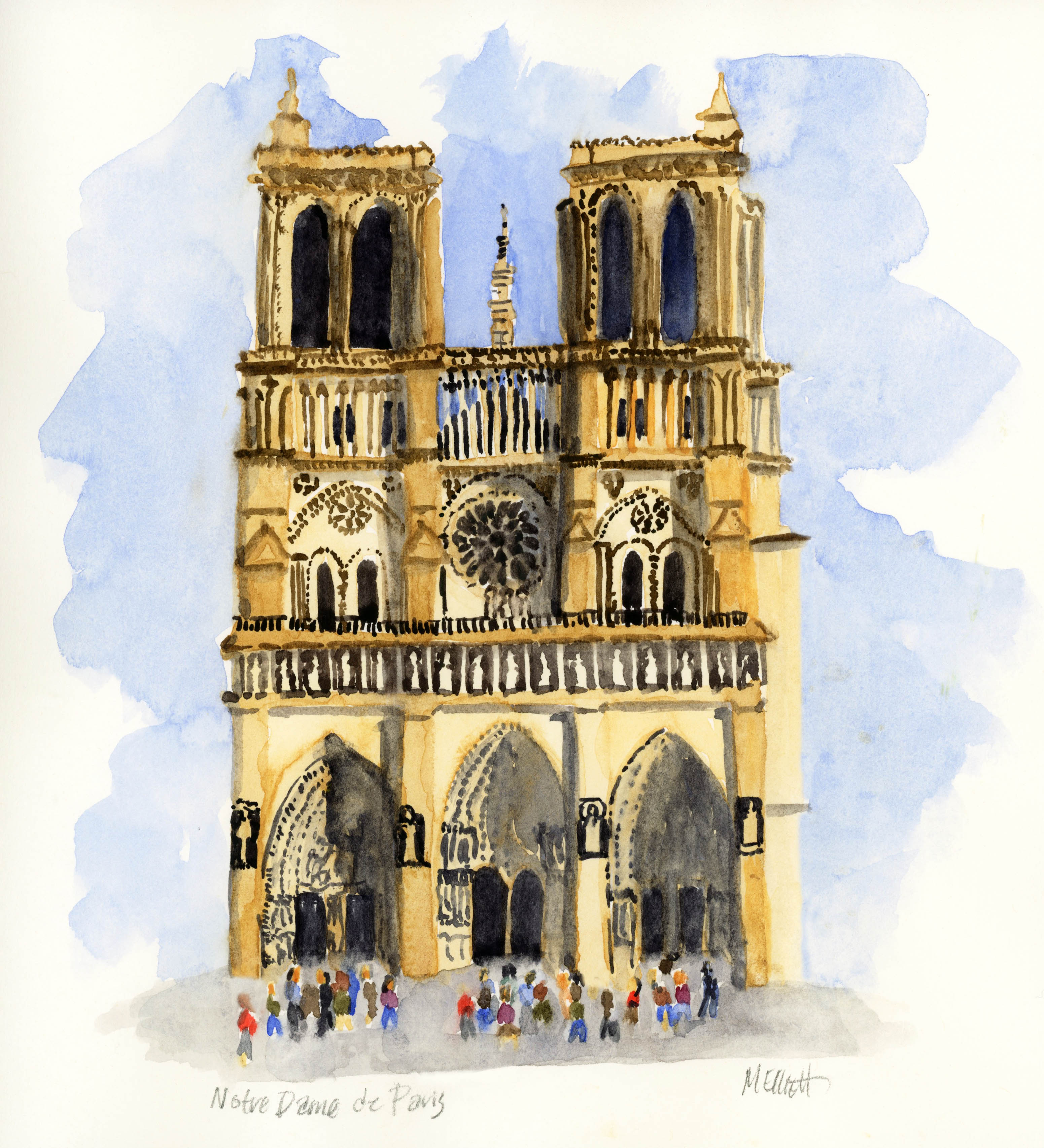
The heart of Paris, burning
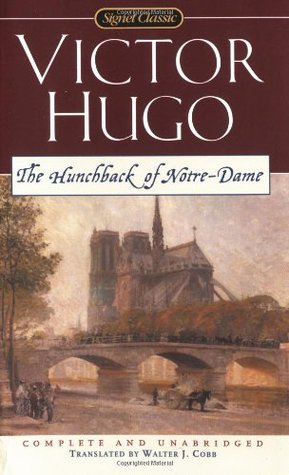 Literature lovers, along with historians, devotees of iconic architecture, the religious who revere its atmosphere and symbolism, and those who are simply moved by beauty, have all mourned this week at the devastation by fire of the cathedral of Notre Dame de Paris. The cathedral was inspirational to authors as diverse as Marcel Proust, Sigmund Freud, and Victor Hugo.
It is the story of Victor Hugo, author of The Hunchback of Notre Dame, that may console us the most in the midst of mourning; at the time of his book’s publication, reverence for and upkeep of the cathedral had fallen out of fashion, and his book, written to generate interest in its architectural glories, succeeded in its purpose: the cathedral was renovated. We will hope that it will rise from its ashes to inspire a new generation of writers, artists, poets, and reverent visitors.
The back list
There are those authors you discover by reading something they have just written and then, to your delight, you find out that they have been writing for years or even decades before you came across them. You eagerly anticipate exploring their “back list” to soak up every word this newly favorite writer penned, and as you proceed from first book to last, you are so happy to immerse yourself in their stories.
Then there are the authors you discover by reading their most popular work, but when you follow it up by seeking out the back list, yikes! you realize that some writers are on their game from the beginning, while others are definitely a work in progress.
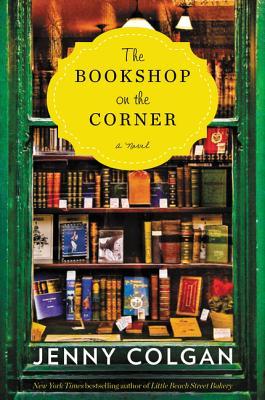 My recent experience with the books of Jenny Colgan was on the median between these two extremes. I began with her delightful wish-fulfillment story, The Little Shop of Happily Ever After, otherwise known in America as The Bookshop on the Corner, published in 2016, and was hooked. What unemployed librarian wouldn’t love a tale about a book-lover who buys a big van, fills it with remaindered books from her now-closed library, and hocks them to the locals all over the wilds of Scotland, all while experiencing a new lifestyle and possibly even falling in love?
I read The Café by the Sea and its two sequels, the books set in the Beach Street Bakery and the ones about the Cupcake Café, and followed those with The Loveliest Chocolate Shop in Paris. All similarly transformative (exchanging dull or stressful lifestyles for long-held dream jobs), all fun, all sweet, all entertaining, all good. Great characters, luminous settings, not-too-cloying love story elements.
Then, while waiting for her new book to come out this summer, I ventured further into the back list, and read her first, Amanda’s Wedding, published in 2000. The plot, when you read the synopsis, isn’t bad: Melanie and Fran, longtime friends who suffered at the hands of their frenemy Amanda throughout their school years, discover that Amanda is about to wed one of the nicest guys they’ve ever met, Fraser McConnell. Apart from such amiability being sacrificed to the nastiest piece of work in London, the friends discover that Amanda is marrying him not for his kindness and sweet nature but because he has just unexpectedly become a Scottish laird, and Amanda is social climbing for all she’s worth. So Fran and Mel decide to try a few acts of sabotage to get poor Fraser out of Amanda’s clutches.
The problem wasn’t with the plot, but with the execution. Colgan portrayed her protagonists in such a way as to make you wonder why anyone would find them either lovable or friend-worthy. Everyone in this book (except Fraser) is mean and snarky, not to mention frivolous, loose, and drunk most of the time. Amanda may have been the villain, but the contrast between her and everyone else in the book wasn’t great enough for anyone to buy it. My response upon finishing it was, “I’m so glad I read some of her later, truly delightful books before I got around to this first one, because I probably would have quit halfway through and never gone back.” It exhibited glimmers of the traits that make her other books winners, but not enough to notice if you weren’t already familiar with those.
After that, I decided to jump forward a few years and try again, with The Boy I Loved Before (2004). Flora, all grown up (she’s 32), in a long-term relationship with a “nice” man named Olly, and working for an accountancy firm, sees the writing on the wall when she attends her best friend Tashy’s wedding, and thinks to herself, Is this all there is? So as Tashy cuts the cake, Flora wishes she could just go back and be 16 again. Part of this has to do with a high school boyfriend who was a couple of years older than she was and walked off without a backward look after a year of being “in love,” but most of it has to do with not wanting the boring life she has chosen.
So she gets her wish; but no self-respecting fan of time travel or swapped bodies stories would put up with the convoluted (and ridiculous) way in which the change is made. The plotting is so inconsistent, inventing things to solve problems as they come up, that the only response you’re left with is “C’mon!” I enjoyed moments here and there, and some of the characterizations were fun, but for me this would be/would have been another “skip it.”
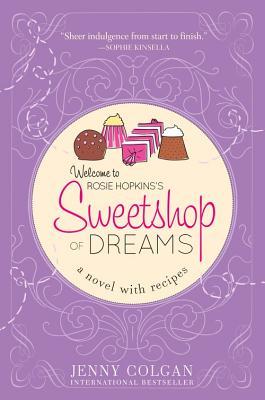 Finally, reminding myself sternly of how much I had enjoyed her later works, I moved up in time again to 2012, and assayed Welcome to Rosie Hopkins’s Sweet Shop of Dreams. It did, after all, have a title similar to those other books I had enjoyed; and I reasoned that Colgan had had eight years of writing other stories to improve, so I took another chance.
This one finally paid off. Rosie is living in London with her lazy and passive but pleasant and familiar boyfriend, Gerard. She’s a charge nurse, but has been laid off from full-time and is working short contracts at the moment. Her mother contacts her to say that Rosie’s great-aunt Lilian is in trouble. Lilian has been the purveyor of sweets from a charming little shop in a small country village for most of her life, and has always been fiercely independent, but now she has aged beyond the point where she can do it alone. Rosie’s mom wants Rosie to go there, sort out the shop, the house, and Lilian, and enact the hard decision to sell the properties and put Lilian in a retirement home. Rosie reluctantly acquiesces to this plan, partly because she feels like a change (and some time away from Gerard) would do her good; but of course, nothing ever works out the way it’s supposed to. Lilian isn’t as compliant about her future as Rosie’s mother had indicated, and the disheveled charm of the shop and its environs gradually work magic on the relationship between the great-aunt and the great-niece.
I thought this was one of Colgan’s best. I liked that it wasn’t the usual sudden life transformation (as happens in most of her books that I have enjoyed) but began as a result of Rosie’s reluctant good deed. I liked that possible love interests weren’t obvious. I really liked the flashbacks into the aunt’s history, and the relationship that evolved between the two women. The sweet shop produced a truly sweet and beguiling book.
So if you have tried the earlier works and decided they weren’t for you, take another look; there are at least a dozen definitely worthy of your time.
 I have never thought of myself as a romance reader (apart from Georgette Heyer Regency Romance novels, which stand alone!), but my friend Kim surprised me by referring to these as romances. When I debated her on that, her response was that she thought of these as “cozy reads,” like you find in the mystery genre. In cozy mysteries, the story is as much about the quirky characters (like Maisie Dobbs or the unexpected Mrs. Pollifax) and quaint settings as it is about the murder. I can definitely see what Kim means: The reason I like Colgan’s books is that most of them portray a woman who is in a rut, and who musters her courage to get out of it when she has to choose between safety and risk-taking. All of the books have a romantic element contained within them, but the happily-ever-after isn’t just about finding a mate, it’s about finding a life.
Poetry Month
There is a rare and particular pleasure that arrives each April in your email inbox, if you so desire: A poem a day, for 30 days. And if you wish, you can receive two!
April is National Poetry Month, and two entities will send you a poem every day if you subscribe. One is Knopf Poetry, and you can sign up here; the other comes from the American Academy of Poets, and although it’s highlighted in April, their Poem A Day service runs all year long. They also have a lot of other suggestions about how to celebrate National Poetry Month, so if you wish to immerse yourself in language, take some of their suggestions.
From one of my favorite poets, Mary Oliver, who just passed away in January:
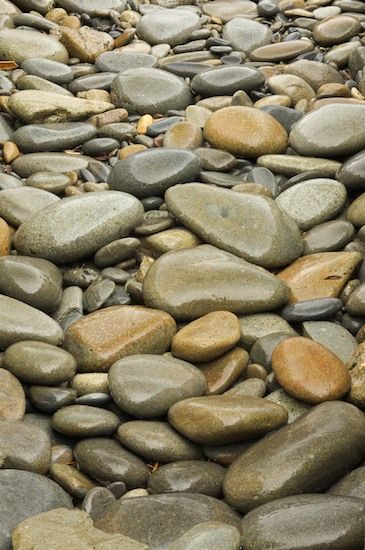
WATERING THE STONES
Every summer I gather a few stones from
the beach and keep them in a glass bowl.
Now and again I cover them with water,
and they drink. There’s no question about
this; I put tinfoil over the bowl, tightly,
yet the water disappears. This doesn’t
 mean we ever have a conversation, or that
they have the kind of feelings we do, yet
it might mean something. Whatever the
stones are, they don’t lie in the water
and do nothing.
Some of my friends refuse to believe it
happens, even though they’ve seen it. But
a few others—I’ve seen them walking down
the beach holding a few stones, and they
look at them rather more closely now.
Once in a while, I swear, I’ve even heard
one or two of them saying “Hello.”
Which, I think, does no harm to anyone or
anything, does it?

 The Book Adept