Constructive maundering
This week my breakfasts were beguiled by a book I have meant for some time to read: Three Men in a Boat (To Say Nothing of the Dog), by Jerome K. Jerome. You may or may not have heard of it; although it is considered a classic, it’s not the kind typically assigned as part of a high school curriculum. Nonetheless, as Wikipedia cites, “The book, published in 1889, became an instant success and has never been out of print. Its popularity was such that the number of registered Thames boats went up 50 percent in the year following its publication, and it contributed significantly to the Thames becoming a tourist attraction. In its first 20 years alone, the book sold over a million copies worldwide.”

I only know about it because I am a science fiction fan(atic), and a reader of the books of Robert Heinlein and Connie Willis. Three Men in a Boat is mentioned in Heinlein’s Have Spacesuit—Will Travel, wherein it inspired Willis to read it and then title one of her time travel series To Say Nothing of the Dog, the actions in that book being a loose tribute to the original.
I have mentioned Willis’s book here before, describing it as a sort of French farce featuring a hapless cast of misfits and, now having read the original inspiration, I can see even more clearly where the frenetic, chase-your-tail style in which Willis wrote her book originated. Three Men is chock full of the most hilarious minutiae of everyday life, not to mention the mental maunderings of its narrator, who wanders away from each topic to discuss the most useless and suspect bits of information, only to eventually work his way back again to the original subject, pulling himself up and getting on with the narrative.
It’s not exactly a story, per se; its main protagonist and first-person voice, “J.,” is more concerned with travelogue—commenting on points of interest as the boat advances up the Thames—coupled with self-indulgent flights of fancy about Man and Nature and the recounting of numerous ridiculous anecdotes about his fellow travelers, his dog, random bartenders and fishermen he has encountered during his life, and so on. He will ramble on about the next stop along the river—its history and monuments, what events transpired, who slept in what public house and which one now stocks the best ale, who is buried there, etc.—and then comment about the petty details of their day on the boat—who inadvertently dragged whose shirt through the water, what food they had to eat and its effect on their mood and/or bowels—interrupting all this once in a while to recount a close call with a launch or a ferry, a hang-up of their boat inside one of the river’s locks, and then switching to laudatory ravings about nature…and so it goes for about 185 pages.
An example of the flowery language he uses when making his observations about the natural world:
“Sunlight is the life-blood of Nature. Mother Earth looks at us with such dull, soulless eyes, when the sunlight has died away from out of her. It makes us sad to be with her then; she does not seem to know us or to care for us. She is as a widow who has lost the husband she loved, and her children touch her hand, and look up into her eyes, but gain no smile from her.“
One reviewer on Goodreads remarked that the book is abrupt and atonal, what with the author occasionally forgetting that he’s writing a comic novel to come out with these paeans and flights of fancy but, for me, that’s the fun of it, the whimsical British humor.
The account, once they have made their decision to go on holiday on the Thames for a fortnight, is completely driven by the sights they see and the stops they make up the river, so one can see why the book was popular when first published and how it generated so much interest in boating as a tourist activity; people would naturally want to observe all these things for themselves. But 135 years later, although some of the landmarks will retain their ruins and their burial grounds, all else will have changed enough to be unrecognizable, so the pleasure in reading Three Men in a Boat becomes more nostalgic than anything else.
I must say, however, that the humor with which Mr. Jerome tells his tale is so engaging that I actually saved bits to read out loud to my cousin when she came by the other day. He has a way of having his protagonist say something so that you don’t know whether it is meant for him to be serious or tongue in cheek; it’s hard to pull off being ironic and gently making fun of your characters but at the same time presenting them and some of their views in all seriousness. I laughed out loud a few times.
Here’s an example: They had just finished eating supper, which they really wanted after a long day of rowing.
“How good one feels when one is full—how satisfied with ourselves and with the world! People who have tried it, tell me that a clear conscience makes you very happy and contented; but a full stomach does the business quite as well, and is cheaper, and more easily obtained. One feels so forgiving and generous after a substantial and well-digested meal—so noble-minded, so kindly-hearted.
“It is very strange, this domination of our intellect by our digestive organs. We cannot work, we cannot think, unless our stomach wills so. It dictates to us our emotions, our passions. After eggs and bacon, it says, “Work!” After beefsteak and porter, it says, “Sleep!” After a cup of tea, it says to the brain, “Now, rise, and show your strength. Be eloquent, and deep, and tender; see, with a clear eye, into Nature and into life; spread your white wings of quivering thought, and soar, a god-like spirit, over the whirling world beneath you, up through long lanes of flaming stars to the gates of eternity!”
(I don’t know about you, but I don’t think I have ever been quite that inspired by a cup of tea!) He then goes on for another entire paragraph delineating the effects of muffins, brandy, and so on, and concludes with this thought:
“We are but the veriest, sorriest slaves of our stomach. Reach not after morality and righteousness, my friends; watch vigilantly your stomach, and diet it with care and judgment. Then virtue and contentment will come and reign within your heart, unsought by any effort of your own; and you will be a good citizen, a loving husband, and a tender father—a noble, pious man.”
And thus it goes, with the conversation moving from the positive effects of a good meal to the discussion of whether they would be happier away from the world living on a desert island, to fears about damp and drains, to the recounting of an anecdote about sleeping in the same bed with a stranger at a crowded inn…

This book is not one I would unreservedly recommend that everyone should read, but it has a certain reminiscent air for me of the beloved antics of Bertie Wooster, Jeeves and Co. in the tomes of P. G. Wodehouse and, if you like that kind of story where the characters are disingenuous and rather simple-minded while the writing itself is quite clever, then you might enjoy Three Men in a Boat. But even if you don’t read it, do have a go at To Say Nothing of the Dog, by Connie Willis.
Over the top is okay!
The latest installment of Elle Cosimano’s Finlay Donovan series dropped on January 31st, and I started reading it a few days later when I discovered it on my Kindle (I had prepaid for the e-book dump and then forgotten all about it).
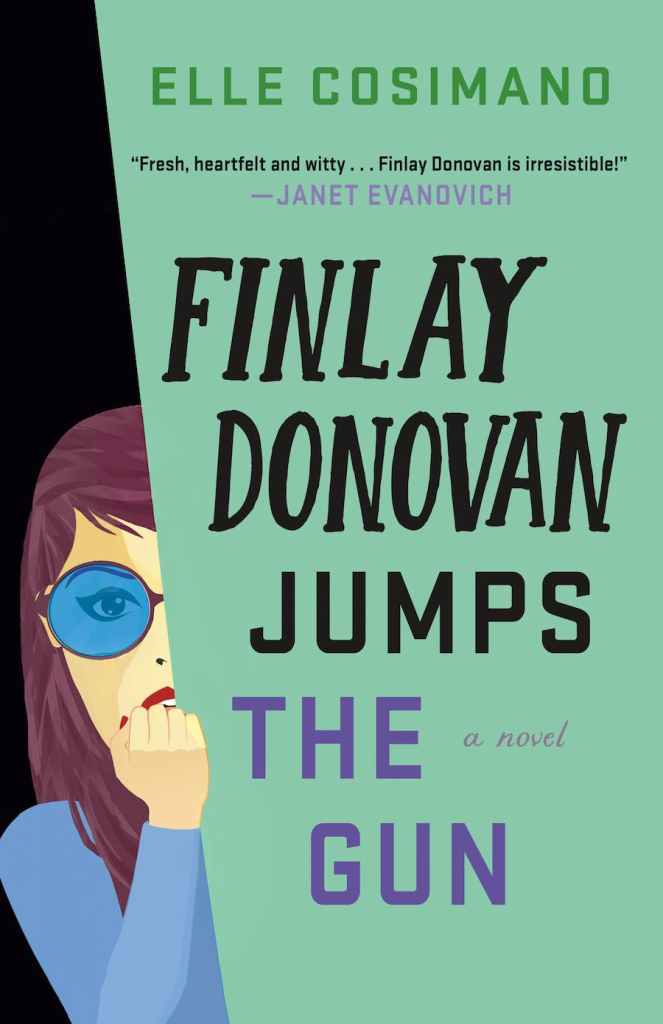
Finlay Donovan Jumps the Gun carries on fairly precisely where the last book left off: Finlay and her sidekick, nanny/ accountant Vero, are indebted to Feliks Zhirov (the local Russian mob boss) for saving them from an embarrassing and dangerous situation, and he (of course) wants something in return. There’s a person called “EasyClean” who is operating online as a paid assassin; Feliks wants to know this person’s identity, and believes that Finlay can deliver that to him. Being impatient (as mob bosses often are, don’t you know), he gives her a two-week deadline, which doesn’t make her one-week time limit with her agent for the final manuscript of her latest novel any easier to achieve, especially since the contents of the book are so close to the circumstances of her personal life that she has run head-on into writer’s block trying to resolve them.
Meanwhile, Vero has a deadline of her own—she’s delinquent on a gambling debt with a loan shark out of Atlantic City, and his enforcers are hot on her heels. What’s the solution? Finlay and Vero decide it’s to enroll in a one-week civilian police academy training. After all, they have come to believe that EasyClean may actually be a cop, so where better to figure it all out than from in amongst ’em? And where else could they be sure that pesky flunkies for the mob won’t be able to touch them? Finlay hands over the kids to Steven for a week, and the two move into the police academy dormitory to see what they can see. And, since it’s Finlay Donovan, chaos immediately ensues. Did I mention that Finlay’s crush, Detective Nick, is running the thing? and that both of his slightly suspicious partners and Finlay’s police officer sister are in attendance? And that the supposedly well-guarded barriers to the facility turn out to be as porous as swiss cheese when it comes to characters, suspicious or otherwise, making their way to the window of Finlay’s room?
In short, this is yet another frenetic flourish of Cosimano’s pen in pursuit of the author/single mom/accidental hit woman, and carries the franchise along nicely. I had been under the impression, for some reason, that this series would be a trilogy, but that’s not the case—this one ended on yet another cliff hanger, ensuring there are more books to come. (If all of this description has intrigued you, read the series in order from the beginning or you will be lost.)
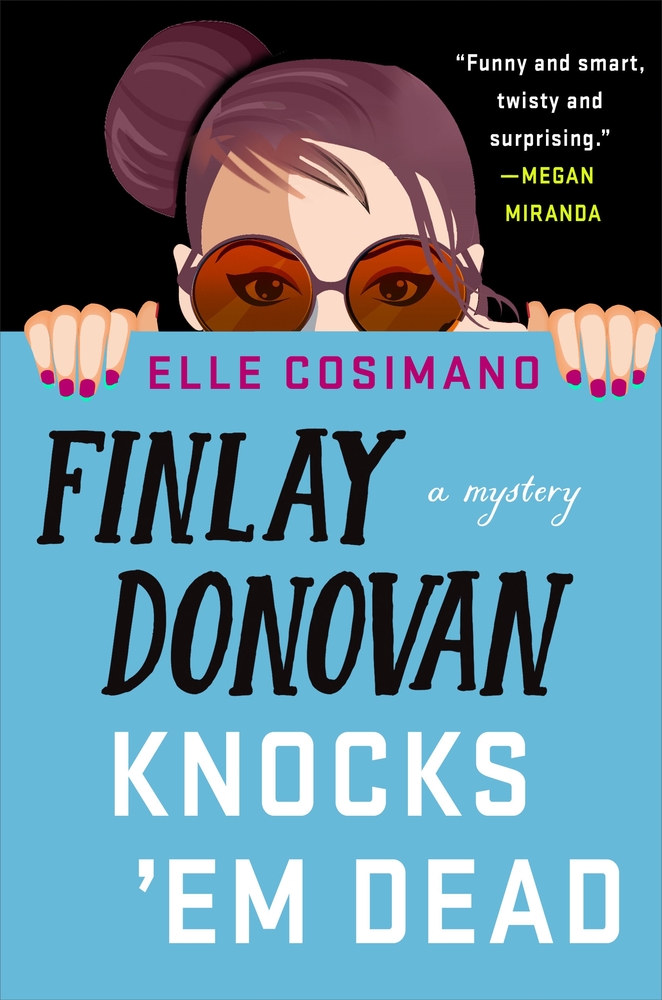
I’m a little torn on my rating for this book. I gave the first one five stars, and the second one got four; I’m tending towards four stars on this one as well. Although it had moments that were totally brilliant (the opening scene with toddler Zach comes to mind), it also had some repetitive stuff (the continued misunderstandings about poor Javi); and the restriction of the scene-setting to the police academy means we miss out on some of the fun interactions with unsuspecting civilians that were so important to the first two books. But I did enjoy the thought processes behind figuring out EasyClean, and Cosimano is an expert at writing the hapless, accidental escalation into total mayhem that feels like Lucy Ricardo has landed in the middle of a murder mystery! I will definitely look forward to the next installment in Finlay’s overwrought journey, particularly the resolution of so many relationships: Will she finally put Steven firmly in his place? Will they ever get Vero out of debt and able to show her face again? Will Finlay be able to have a relationship with Nick without revealing all her (mostly inadvertent) criminal activities? Will Georgia find a girlfriend? Will Zach complete potty training? For these and many other crucial details, we once again await you, Elle Cosimano!
Interdependency
The empire in John Scalzi’s series by that name takes interdependence to new heights (pardon the pun, it’s set in space). As Wil Wheaton, narrator of the audiobooks, comments, “The Collapsing Empire [first book in the trilogy] works as a wonderful SF tale…but it also has important allegory, metaphor, and commentary on some things that are going on right now, for readers who are open to that sort of thing. For those who aren’t, it doesn’t beat you over the head with it, which is a neat trick.”
The few planets and many human habitats of various construction that are flung across the universe are connected by something called the Flow, which confounds natural physics by providing a river-like network between all the settlements. To use it for travel, spaceships must have a field that creates a “bubble” around them, whereupon they can onramp into the Flow, which carries their ship until they pop out at their destination, days, weeks, or sometimes months later—it’s somewhat predictable, but not reliably so.
The Interdependency has a top-down, static structure of emperox (the non-gendered term for their emperor), noble houses, trade houses, and everybody else. To keep all these widely spaced settlements together and avoid interstellar war, both necessities and luxuries have been assigned to or co-opted by the “houses,” which have monopolies on certain goods and services, for which the other houses trade and bargain, to the extreme that there are built-in fail-safes to ensure no one impinges on the monopolies. For instance, if a particular kind of fruit is sold, one would imagine that the seeds from that fruit could be collected by the buyer and grown elsewhere, thus disrupting the monopoly; but in anticipation of this, the produce has been designed so that the seeds go sterile after a short period of time, preventing anyone else from benefitting. (Don’t ask me how, just go with it.) The monopolies are jealously guarded, and there is a certain amount of jockeying for dominance amongst the nobles, but the empire’s structure is mostly stable, and lends itself to centralized control.
This has all worked for millions of years, barring an occasional assassination of an emperox, or a change in fortune for one of the houses. But all of that is about to change, for the simple and terrifying reason that the Flow has become erratic and, in fact, is about to fail in spectacular fashion, according to one lone physicist on the planet End, the furthest planet in the universe from the Hub, the center of the empire. When it collapses, most of the human habitats will be isolated within their systems and, without the cooperative network of supplies and services set up and supplied by the Interdependency through the Flow, they will fail to support their populations in fairly short order, presenting a stark fate of death by starvation or faltering life support systems.
Compounding this, the emperox who commissioned the physicist to research and report on the Flow has just died and, contrary to his plans and those of one of the other predominant noble houses, his illegitimate daughter, Cardenia Wu, has succeeded to the throne. She is naive, inexperienced, and not a particularly willing heir; but when the physicist sends his son, Marce, from End to the Hub to report the problem with the Flow to the emperox, Cardenia realizes she must rise to the challenge of saving as many as possible of the billions of people dependent on her empire. The noble and trade houses, of course, have other ideas, including eliminating Cardenia and putting one of their own clever but venal people in her place, and saving themselves (and their money, goods, and dominance) first, while leaving the commoners to their fates.
This is the rather long set-up and partial story of The Collapsing Empire, The Consuming Fire, and The Last Emperox.


This has been deemed a “space opera” by many reviewers and readers; I tend to think of space operas as the wild west played out in space, with smuggling, chases, and shoot-em-ups being more prevalent than, say, the thoughtful dissection of an empire into its component parts and the contemplation of what will happen to it, should no one take responsibility. The books definitely have some aspects of space opera, as there is a lot of adventure, multiple coups and assassinations (both attempted and achieved), and various exploding ships (due to both battles and sabotage). But along with all that are some amazing characterizations of both heroic and nefarious figures, along with some truly labyrinthine plotting, so the trilogy is a pleasure to read for both adventure-seekers and philosopher-anthropologists. Along with the clever, sometimes laugh-out-loud triumphs of one character over another, there is also much to consider from both an intellectual and practical viewpoint, with parallels, as Wheaton noted, to many aspects of our own culture’s functionality and possible future.
Scalzi has pulled off a coup, himself, by managing to marry the level of detail contained within his Old Man’s War series with the humor and humanity of his more lighthearted works (such as my favorite, The Android’s Dream). The dialogue is witty, the descriptions are engaging, the world-building is thorough, and the group of main characters who tell the story—the Flow physicist, the new emperox, the trade representative of a major family, and the wannabe traitor—are quirky, endearing, and profane. (If crass language bothers you, this is not the series for you!) I thoroughly enjoyed this three-part story, and couldn’t wait to see what happened.
Accidental hit woman

I just read two delightful books in a planned series by young adult author Elle Cosimano, although these books are intended for adults. I checked out the first, Finlay Donovan is Killing It, based on a “best books” email from Goodreads; my brain kept nagging me that I should recognize the name of the author, but it wasn’t until I finished that book and the sequel and went looking for her on Goodreads that I realized she was the author of a wonderful YA book, part paranormal and part gritty realistic fiction, that I had read back in 2016. That book was Holding Smoke, and I had forgotten all about it but certainly remember it now, because it was one of my favorite books of that year, to the point where I raved about it and gave it five stars.
Her YA books seem to be similar in content (mystery/thrillers) but completely different in execution from these first two books for adults. The YA books are deadly serious, while the Finlay Donovan books are deadly but also funny, sort of a mashup of thriller, French farce, and relationship fiction. Those elements may sound incompatible, but Cosimano makes them work, and keeps you in both suspense and in stitches all the way through.
Finlay is a newly single mom; her husband, Stephen, left her and her two young children for his real estate agent, Theresa, and is now using his vastly greater income and resulting stability as a weapon to try to win custody of the kids. Meanwhile, Finlay, who is a novelist with a string of almost-successful romance/thrillers that have garnered small advances and insignificant royalties, is way behind with her latest manuscript, for which her agent and editor are both hounding her, and she has maxed-out credit cards and nothing coming in to cover the copious bills piling up on her porch. To top that off, her husband has just fired her nanny without telling her, and she’s late to a meeting with her agent due to a catastrophic incident with a pair of scissors that left her daughter, Delia, half bald with a bloody scratch on her head.
Absentmindedly stuffing the scissors and the bloody rag she used to stop the bleeding into her diaper bag, Finlay rushes the kids off to their father for a couple of hours so as to meet up with her agent for a late lunch at Panera, to discuss deadlines Finlay already knows she’s not going to be able to meet. A woman seated next to the two eavesdrops on their conversation about how to deal with a dastardly man and provide a safe haven for a nice woman (part of the plot of her latest book), catches a glimpse of the scissors and the blood-spotted diaper in Finlay’s bag, and jumps to a wrong conclusion. After taking a trip to the restroom, Finlay discovers a note left for her by the eavesdropper, offering $50K if Finlay the contract killer will “off” the woman’s husband.
In a book that promises mystery, intrigue, and laughs, we get everything we are promised as this crazy but nonetheless somewhat plausible story unfolds. The coincidences are epic, but I embraced them whole-heartedly as necessary to the continuation of the saga of Finlay, her errant nanny, Vero, and the love interest—a hot young bartender studying to be a lawyer who unwittingly gives Finlay a much-needed alibi when her bad decisions blow up on her.
I finished the book in two days, and couldn’t wait to grab the sequel, Finlay Donovan Knocks ‘Em Dead, which was, if possible, even more fun, bringing a plot so convoluted that only Finlay and Vero could figure it out…eventually. The third book, Finlay Donovan Jumps the Gun, is due out in 2023, and I can hardly wait. In the meantime, though, I am going back to explore Cosimano’s young adult novels to see if the others measure up to Holding Smoke. If so, there will be more raving to come.
 The Book Adept