What makes a mystery?
This is a question I have been pondering this week as I started reading Anthony Horowitz’s Magpie Murders, a book that has been recommended over and over again by readers on the various Facebook reading groups to which I belong. I am a big mystery fan—in fact, it’s probably my third most-read genre, maybe second, behind fantasy and possibly science fiction. I love a good mystery; but I specifically love one that has some quality of individuality and that arrests my attention and reawakens a somewhat jaded appetite. As I began reading, I discovered that Magpie Murders was not it.
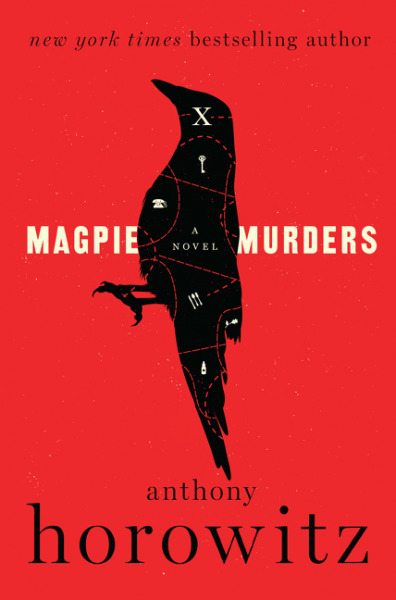
This book has been touted as the heir to Agatha Christie and Dorothy Sayers (and probably to Conan Doyle), and I can see the attempt, but to me it was a bland, by-the-numbers imitation (possibly attempting to be a parody?) rather than a “brilliant recreation of vintage English crime fiction.” When I was almost 50 percent into the book, I seriously considered posting it as a DNF. I honestly didn’t understand why there was any hoopla at all when it comes to this book.
It’s a typical cozy setting in a small town in the English countryside, with the requisite landowner, vicar, shop keepers, eccentric spinsters, surly handymen, and so forth. The detective’s only point of uniqueness in this setting is that he is German by origin; but given all his mannerisms, quirks, and habits, he might as well be Sherlock or Poirot or Jessica Fletcher. He has the slightly dense assistant, he asks seemingly unrelated questions and makes leading remarks that he won’t explain, and then he claims to know who the murderer is before anyone could possibly expect him to have solved the crime, given the vast number of suspects and the meager number of clues. The publisher described this book as “masterful, clever, and ruthlessly suspenseful,” and my response was, sadly, “none of the above.”
When I hit 50 percent, though, we stepped out of the book and into the office of the publisher of Alan Conway’s series about the detective Atticus Pünd, and I realized that the page I quickly skimmed past at the beginning of the book actually had something to do with the story and wasn’t just an introduction or something. So I went back and read it with attention this time, and realized that this was a book within a book and we were now getting to the real story.
I’m going to say here that although it was my fault that I wasn’t paying sufficient attention at the beginning, I’m also going to hold both the format and the author accountable for a little of my confusion. First, I’m reading it on my Kindle, and the way it was structured didn’t lead the reader to recognize that the start of the book was before the start of the book! As for the author, do you really tell the entire story within the story without its reader ever breaking away from it? I mean, Susan Ryeland sits down on a rainy afternoon with a bottle of wine and some chips and salsa to read a long manuscript; it’s more than plausible that she gets up at some point to replenish one of those (it says later that she had gone through more than the one bottle of wine), get something more substantial to eat (she would have needed it, to cushion the effects of all that alcohol), use the loo (I repeat, lots of wine!). A break halfway through that 48 percent of the book to remind the reader that this is a false construct, so to speak, of what the book is really about would have been helpful—and also both realistic and logical.
Anyway…
Once I hit the end of the manuscript and returned to the “real world” of Cloverleaf Books, a small publishing company whose owner and top editor were both reading the manuscript of Alan Conway’s ninth Atticus Pünd novel over a long weekend, I thought things would pick up and we would get the explosive and fascinating book we were promised by reviews and cover blurbs alike—but alas, that faith was misplaced. Others have commented how much more exciting they found the actual mystery that unpacks itself from the pages of Magpie Murders (the book within the book called Magpie Murders), but if so, I certainly wasn’t reading the same book.
Susan Ryeland was a dull and ambivalent character who constantly expressed her frustration that she couldn’t “do” the mystery thing the way all the great characters of literature were able to master it. When she wasn’t being tentative and indecisive about her attempts to solve the mystery, she was whining about her boyfriend, Andreas, who wants to whisk her away to Greece to run a small hotel with him. What an inconsiderate guy!
The other characters are likewise less than charismatic, and Alan Conway himself is written as a cold, devious, and thoroughly unlikeable person about whom it was hard to care. And there were too many instances of clues that were discovered to be clues, but then weren’t explained. Maybe Horowitz is saving something for the next novel? If so, it yielded an unfortunate sense of frustration while reading this one.

I hung in there and finished the book, but it was a near thing, and I regretted spending the time on it once I was done. I won’t be visiting the next in the series, which is 604 pages of the same, according to another Goodreads reviewer who characterized it as “ponderous, overly complicated, and too long.” I spent a decade recommending Horowitz’s Alex Rider series to many teen readers, but I can’t do the same for this one. There are so many better mysteries out there, and I’m going to go find one to expunge the irritation from my brain!
One fierce moggy
I forgot about my usual post of cat stories for International Cat Day (today), so I’m going to do an abbreviated one honoring a single cat from the book I’m currently reading.
Wyrd Sisters, by Terry Pratchett, is one amongst 40-odd books of his Discworld series, but is also second of the six “Witches” books contained within that larger saga. It features Granny Weatherwax, Nanny Ogg, and young Magret, who get themselves into some good trouble when they decide to meddle with politics in the kingdom of Lancre, in which they reside.
Playing an important role in bringing together the witches with the ghost of Lancre’s former ruler is the cat Greebo. He is a one-eyed, foul-tempered gray tomcat who has aggressively fathered about 30 generations, but Nanny Ogg still characterizes him fondly as her sweet kitten (although privately she has been known to refer to him as a fiend from hell).
He features in other books of the series as well—Witches Abroad, Lords and Ladies, and Maskerade. At one point he is transformed into human form, but maintains his scars and his retractable claws, and exudes the raw animal magnetism that allowed him to claim paternity to all those descendents; but he is still handicapped by a cat’s inability to work door handles, and has an unfortunate and disconcerting tendency to groom himself with his tongue.
There are some illustrations of Greebo online, but they are copyrighted so I don’t like to poach. So here, instead, is a photo of my old feral cat, Papi, who was likewise tough, one-eyed, and prolific. He and Greebo were, as the Brits would say, fierce moggies.

Happy International Cat Day!
California Bear
I posted on author Duane Swierczynski‘s Facebook page this week that I thought it highly suspect that this “Would you prefer to be lost in the woods with a man or a bear?” online meme took root just as his new book came out. In return, I only received a laughing emoji, so I’m not entirely convinced he didn’t plan the whole thing, LOL.

The male characters in this book would certainly make women tend to choose the real bear over any of them as a preferred companion. We have an opportunistic, venal ex-LAPD cop; another man convicted of murder who is out of prison after just a few years due to a technicality that overthrew his sentence; a dormant but still terrifying serial killer; at least one copycat; and a Hollywood producer; and it’s hard to say in the beginning which of them is the worst!
The book is a send-up of the true-crime franchise, particularly the television biopics that exploit the circumstances of people’s worst days ever by giving a voice to killers, rapists, and the like. The basic, initially somewhat confusing story is that Cato Hightower, a retired cop, has worked hard to get Jack “Killer” Queen out of prison because he wants a piece of the payoff Queen will receive for supposedly being wrongly convicted. But Hightower also has a vision of Jack helping him with ongoing “projects,” one of which is running down the serial killer known as the California Bear and blackmailing him to keep his name out of the spotlight. Ironically, however, the Bear (along with a few other people) is eager to get credit for his past reign of terror, over now for about 40 years, by working with a Hollywood producer named David Peterson to make a true crime feature with a big payoff.
The significant women “actors” are two: Hightower’s wife, Jeanie, who has turned her genealogy research into a business and in the process winkled out the identity of the California Bear; and Jack’s daughter, Mathilda Finnerty, who has just been diagnosed with a debilitating form of leukemia that keeps her hospital-bound but fails to dim her incisive mind as she seeks to prove her father’s innocence and also figure out the whole California Bear conundrum.
There’s plenty of exciting action in this book, although the switches from narrator to narrator prove occasionally confusing, especially when the story of the Bear takes an unexpected turn. But the charismatic characters of Mathilda and her anxious, guilt-ridden father carry the story and keep interest up to the end.
I promised a personal story to go along with this review, so here it is: Duane Swierczynski and his family were patrons at Burbank Public Library when I worked there as teen librarian from 2008 to 2019, and his two children participated in my teen programs. I was introduced to his books by one of my co-workers, who was a big fan, and we read his excellent book Canary in my high school book club. Later on, when I was teaching Readers’ Advisory and Young Adult Literature classes at UCLA in the masters program for librarians, I invited Duane to be a guest speaker, so I got to know him a little.
But the story involves the co-worker who was a major Swierczynski fan; when he was about to retire, I was racking my brain trying to think of a gift I could give him at his going-away party, and lit on the idea of contacting Duane to see if I could get an autographed book or poster or something to give him. Duane didn’t have anything lying around that would work, so instead he generously and surprisingly suggested that he could name a character after my friend in the book he was currently writing, and I enthusiastically accepted. Then I interviewed Duane about significant elements and settings in the book, and I made my co-worker a certificate to announce my gift to him, which was actually a gift from Duane! Here is the certificate:

And that is how the true-crime producer in California Bear was christened David Peterson! He’s a bit younger and better dressed, but talks almost as much as the real David, and it was really fun to read the book, knowing the back story.
There is another, sadder back story that involves Duane’s daughter, Evie, the model for the character of Mathilda, but I’ll let you discover that one for yourself by reading the book (and the afterword).
Weirdly, just a couple of weeks before I started reading this book I saw a notice on Facebook on the “Lost Angeles” page that Patrick’s Roadhouse, a major setting in the book, had closed; reopening is subject to the negotiation of a new lease, which depends on an initiative by a former customer to raise $250K through a GoFundMe to pay back rent (they got behind during Covid) and do some renovations. They have raised more than $70K so far; if you’d like to contribute to bring back this 50-year icon on the Santa Monica coast, here’s a link to the fundraiser:
https://www.gofundme.com/f/help-save-patricks-roadhouse-a-california-icon

Scalzi saves the day
So…I have a couple of rules that I rarely break here. One is that I don’t utterly pan a book, but rather try to say something nice even if it wasn’t a book I enjoyed, and if I can’t do that, I simply ignore it. The other is not to review books that I haven’t finished, because I spent so many years as a librarian having to argue with self-righteous people who wanted to get books pulled and banned from the library shelves simply on hearsay when they hadn’t personally read the book for themselves. But…sometimes I succumb to temptation. And I’m not trying to persuade anyone not to read a book, I’m just saying why I quit after five chapters.

After a lot of positive hype in two Facebook book groups, I decided to read Go As A River, by Shelley Read, as my first book of the year. The description was intriguing—a combination of historical small-town fiction and coming-of-age novel—and people had praised it for its literary language. Within a few chapters of beginning it, not only was my interest flagging, but I was becoming actively irritated; when I finally decided to quit reading, I skimmed some reviews on Goodreads (fives down to twos) and decided that this time I would leave one, even though I had categorized this book as “Changed my mind.” Here is that review:
I’m wondering why no one is focused at all on the thing that has stopped me reading Go As A River after five chapters?
The people who disliked the book mainly say it’s because of the too minimal dialogue and too florid description, or the theme of unrelenting heartbreak, or their lack of interest in nature or motherhood. And many who disliked the book still cite the writing as beautiful and lyrical. Not one seems to have been bothered by the thing I dislike the most in storytelling, which is foreshadowing. I don’t know if it continues throughout the book, but the first few chapters are rife with text dedicated to phrases (or sentences or paragraphs) of “if only she had known,” or “she was to learn this lesson from him one day, but not just yet” or “she came to wish that he had left town that day instead” or some such. It completely steals both the momentum and the element of delightful surprise that comes from reading a story from start to finish without all the ominous “da da da DUM” of foreknowledge.
Also, the so-called beautiful writing is so over the top! Just to use one example: The main character, Victoria, mentions that her uncle-in-law went away to fight in World War II just a few short months after he married her aunt. Then she seemingly cuts away to describe an event that took place in her town, in which a man stalls out his roadster on the railroad tracks and the car is hit and destroyed by the train. She mentions that it grew into an elaborate tale about the supposedly gruesome details of the death of the driver (decapitated, splatted on the windshield of the train engine, etc), despite the fact that he had actually jumped clear of the car before the train hit. But this detail has absolutely nothing to do with how the author is using this simile, because after going on for three full paragraphs about it, she then says that what that train did to that car (i.e., mangled it beyond recognition) was what World War II did to Victoria’s Uncle Og, changing him from a young, enthusiastic, engaging, funny guy into a bitter, mean, spiteful slob in a wheelchair who delights in provoking discord. And she keeps doing this kind of thing, but as far as I can tell it’s just an exercise in “look at me,” because few of these passages materially advance the narrative, or give any significant perspective to either the main thread or any side story. She could have just said “the war didn’t treat my uncle kindly” and his nastiness and lack of mobility would have revealed what she meant. My ultimate reaction to the part of this book that I did read is total exasperation. No thank you.

After this inauspicious beginning to my reading year, I was about to begin searching my TBRs for something else when Los Angeles Public Library let me know that a book on my holds list had become available—Starter Villain, by John Scalzi, a completely different genre of book, without either baggage or literary pretensions—so I checked it out to my Kindle and began to read. I’m so glad that this book popped up when it did, because it completely saved my mood and provided a delightfully fresh interlude.
Scalzi seems to write two kinds of books, the first being the fairly straightforward story of something-or-other happening in space and/or on other planets—colonization, exploitation, war, murder mysteries with a technological twist—the kind of thing that Heinlein wrote about, but considerably updated. These would be his Old Man’s War series, his Interdependency trilogy, the Locked In books. The second category is when he takes some premise based in more outlandish science fiction—environmentally challenged dinosaurs on an alternate-dimension Earth, aliens on a religious quest, sentient fuzzy monkey-like beings threatened by a planetary takeover—and goes to town with all the wry and unexpected humor he’s been storing up while writing the serious stuff. While I have enjoyed all his books, I think these are my favorites; The Android’s Dream is one of the funniest books I have ever read, in any genre. Starter Villain joins the ranks of this second group of books and, despite its fairly short length, gives full value to those looking for a clever, twisty, funny read.
Charlie had a career as a journalist, but when everything went digital he lost that gig, along with the majority of other newspaper writers on the planet. Around that same time, his dad got sick, so rather than find a new job, Charlie elected to do some substitute teaching to fill in the financial holes while living with his dad and caring for him. But after his dad died, he felt both stalled and trapped, and hasn’t really made a move since. He’s still living in his dad’s house, but he shares the inheritance with three half-siblings, all of whom want him to move out and sell up, and the subbing doesn’t really pay the bills.
His new dream is to buy the town’s most popular pub—both the business and the building it’s in are recently up for sale, and he’s trying to think of a way to finagle it, but the bank looks askance at a divorced part-time substitute teacher whose meager liquidity is dependent on three uncooperative siblings. Then his Uncle Jake dies, and he is distracted from his life plans when his uncle’s right-hand assistant shows up at his house with a request from his uncle to conduct the funeral. Despite the fact that Charlie’s father and uncle were estranged from the time Charlie was five years old, he feels some obligation, as Jake’s only remaining next of kin…not to mention that Jake was an extremely wealthy man and there may be something in it for Charlie.
Becoming involved with his uncle’s estate, however, also means he has come to the extremely unwelcome attention of the other wealthiest men in the world—rich, soulless, and very curious about what will happen if and when Charlie inherits. But Jake has left Charlie some unexpected advantages to help him with his new profession as a “starter” villain, and he finds himself carried along in his uncle’s wake, trying to make sense of what is happening and what will happen next if he fulfills his destiny as heir apparent.
This is one of Scalzi’s most entertaining ventures. Charlie is a wonderful character—innocent, sincere, and somewhat bumbling, but not unintelligent; and although part of him is reluctant to become ensnared in Jake’s labyrinthine business dealings, he is nonetheless fascinated by some of their more outlandish results. The supporting characters are intriguing, the villains are, well, villainous, and it doesn’t hurt that genetic engineering has provided some unlikely spies who are on Charlie’s side—at least for now. It has a decidedly contemporary vibe, what with its themes of income inequality, workers’ rights, animal liberation, unions, nepotism, and corruption in capitalism. It’s also whimsical, silly, irreverent, and occasionally laugh-out-loud funny. Grab this one with gusto. [Warning to those who care: Lots of strong language, and a fair bit of over-the-top violence.]

Fresh look: old books
A friend reminded me recently of the purportedly “best opening paragraph of all time,” which, according to LitHub author Emily Temple, is the one that opens We Have Always Lived in the Castle, by Shirley Jackson.
“My name is Mary Katherine Blackwood. I am eighteen years old, and I live with my sister Constance. I have often thought that with any luck at all I could have been born a werewolf, because the two middle fingers on both my hands are the same length, but I have had to be content with what I had. I dislike washing myself, and dogs, and noise. I like my sister Constance, and Richard Plantagenet, and Amanita phalloides, the death-cup mushroom. Everyone else in my family is dead.”
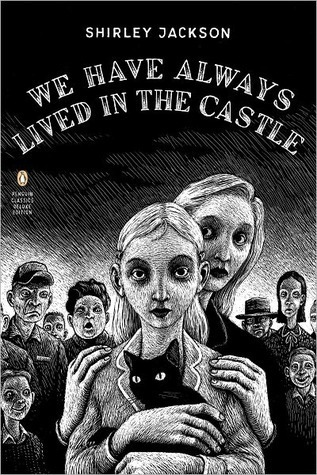
Whether or not you agree with Ms. Temple, you do have to acknowledge the brilliance of this book, in which two sisters live an exceedingly reclusive life sequestered in Blackwood House, caring for their ill and aged Uncle Julian. The narrative, which is carried by the younger sister, Mary Katherine (Merricat), gradually reveals that there is a sinister tragedy in their past, that the town holds a grudge against the family, and that in fact they are reclusive for good reason. All of Ms. Jackson’s trademark creepiness eventually prevails over the almost mundane initial tone.
Thinking about this book put me in mind of a different book with “castle” in its title. Dodie Smith wrote I Capture the Castle in the 1940s, and its opening paragraph is also beguiling, though with a completely different vibe:
“I write this sitting in the kitchen sink. That is, my feet are in it; the rest of me is on the draining board, which I have padded with our dog’s blanket and the tea cosy. I can’t say that I am really comfortable, and there is a depressing smell of carbolic soap, but this is the only part of the kitchen where there is any daylight left. And I have found that sitting in a place where you have never sat before can be inspiring. I wrote my very best poem while sitting on the hen house. Though even that isn’t a very good poem. I have decided my poetry
is so bad that I mustn’t write any more
of it.”
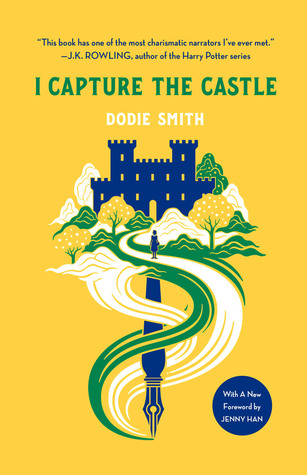 This book is also about two proud but poor girls who live a quiet life in a moldering castle, but that’s where the similarity ends. Rose and Cassandra Mortmain live in this ruin with their famously eccentric writer father, his statuesquely beautiful nature-worshipping second wife (who has the habit of wandering naked about the grounds), and their precocious little brother. The father has a massive case of writer’s block, and hasn’t published in years, and the family is all but destitute; the rundown property is all they can afford. When two handsome and wealthy young men move into the neighborhood, the entire household collaborates to change the family’s luck by ensnaring one of them as a spouse for the beautiful Rose. It’s obviously not a feminist tale on that account, but the younger, spunkier Cassandra has aspirations to be a writer, and the book is entertainingly narrated through her journals.
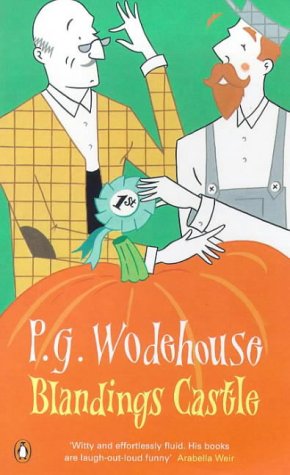 Another old book with “castle” in the title that everyone should experience is Blandings Castle, by P. G. Wodehouse, a set of 12 short stories about the dotty Lord Emsworth and his bone-headed younger son, the Hon. Freddie Threepwood; his long-suffering secretary, the Efficient Baxter; and Beach, the Blandings butler. The stories add to the main saga, which begins with Something Fresh and continues for 12 volumes. Although in my opinion they are not quite up to Wodehouse’s inimitable pairing of the clueless man-about-town Bertie Wooster with his enigmatic puppet master butler, Jeeves, they are similarly riotous in their mostly fond mockery of the British class system.
And there you have the results of poking about in my reader’s brain for books with little in common beyond a word in their title! Was this too thin a pretext for a book review?
 The Book Adept