Unhappy fans
I miraculously got a checkout from my library for Emily Henry‘s latest, Happy Place, in about a third of the time I expected to wait. Then I read the reviews on Goodreads, which may furnish some explanation. Don’t get me wrong, every second or third review awarded five stars, but there were also those critical reviews between them for three, or even two or one star, a phenomenon I believe has not previously been experienced by this popular author.
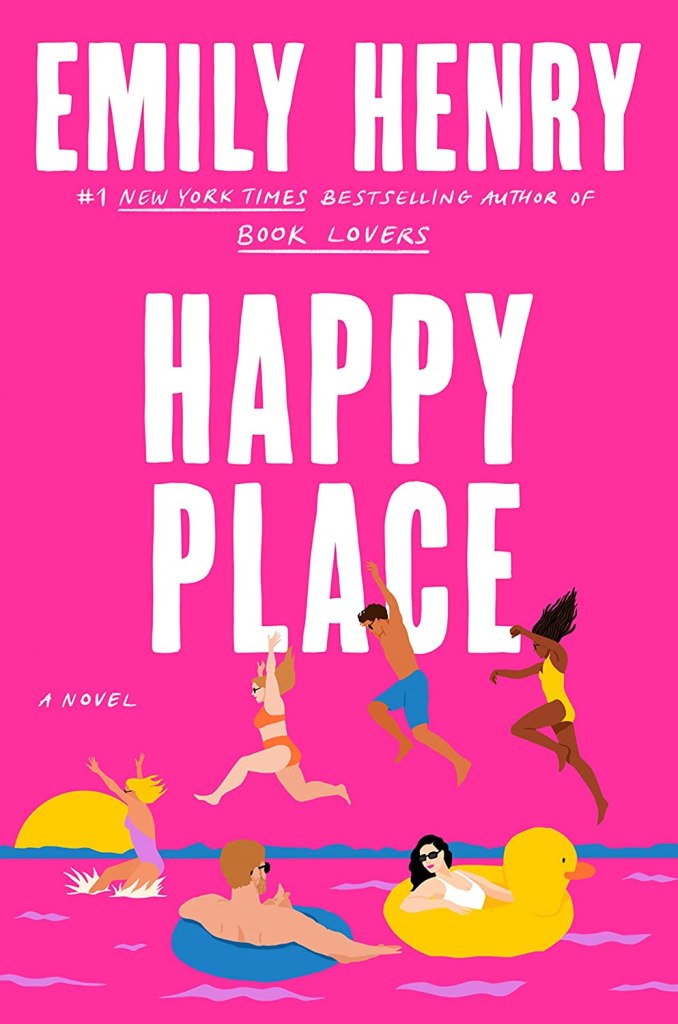
The story involves six friends, five of whom bonded in college and have remained uncommonly close, and one extra who was pulled into the group when she became part of a couple with one member. In fact, four of the original five have coupled up with one of the others, and this is the source of the current problem.
Their “leader,” Sabrina (I call her that because she’s the impetus behind keeping them all together), comes from wealth, and a tradition the group has had for their entire friendship has been to spend a summer week together at her father’s Maine “cottage.” But her dad’s most recent spouse doesn’t want to maintain the association of the cottage to his first wife and insists that he sell it, so this is the friend-group’s last gasp at a holiday together there, fraught with all of the traditions they have created over the years.
Sabrina and Parth have made the week into even more of an event by surprising their friends with their engagement, with a wedding planned for the end of the week on Saturday before they all pack up to leave the cottage forever on Sunday. Given this special occasion, none of the friends feels like they can refuse the invitation, let alone spoil it with bad news, so this makes it difficult for Harriet and Wyndham, who broke up four months ago but haven’t told anyone. Their plan was for Wyn to bow out of the week with some excuse while Harriet broke the news to the rest of them, but instead they are both on premises with nothing revealed, and have been awarded the best room together, a double en suite featuring a bathroom with no door. Awkward. And painful, and sensitive, and embarrassing and almost impossible to endure. But Harriet and Wyn don’t want to spoil the week for the others, and they do want to be at the wedding, so they are gritting their teeth and playing a part in public while taking turns sleeping on the floor in private. The third couple, Cleo and Kimmy, have secrets of their own, and there is building resentment between Cleo and Sabrina to cap off the basic tension in the air.
Harriet is a surgical resident in a prestigious program in San Francisco, and Wyn was living with her before going home to Montana to deal with family issues and never coming back. The two had been together for eight years, and happy for the first six, but once they relocated to San Francisco everything seemed to go wrong for them, as individuals and as a couple. But Harriet never dreamed the result would be a few devastating sentences on the phone that severed their connection permanently.
I personally enjoyed the book, both because I am apparently a hopeless romantic at heart and because I relished the vicarious experience of having a solid group of friends on whom I felt like I could depend forever. Who doesn’t want people in their lives who know you, are there for you, and will reliably show up for your highs and your lows? It threw me back to seeing the movie The Big Chill in 1983 and wondering, 10 years after high school graduation and five years after college, who of my friends I would still know 10, 15, or 20 years later (answer: one). So I liked being immersed in the group dynamic.
I also found Harriet’s and Wyn’s descriptions and chemistry with one another compelling, and cringed at what they had to go through as they maintained a façade for their friends. And I coveted everything about that vacay in Maine, from the weather to the food to the Lobster Festival to the opulent yet cozy cottage. Basically, I plopped myself down in the middle of the plot and went with it.
Others, however, were not pleased. One pointed out that “miscommunication” was the worst trope ever, and when I reflected on it, I had to agree; I realized that I myself didn’t identify that as a problem because I, like Harriet, tend to hang back, keep my mouth shut, and wait for someone else to make the important moves, so it seemed familiar and therefore not bad. But it was! They were both thinking one thing in their heads and allowing different information to come out of their mouths; they were both pretending to be happy while being oh so sad; they were lying a lot; and if, after eight years together, neither of them could bring themselves, through embarrassment or shame or fear, to fight for the other person or for the relationship, they probably deserved to be unhappy. Another reader actually said “The pacing of this book, the alternating timelines, the character development, the relationships were all beautifully and expertly written,” and then gave it three stars because of that trope. Finally, one of the one-star awarders said “Fake, awkward, contrived, and so, so dull. I simply cannot read another novel held together by the characters’ absolute refusal to communicate.” So there’s that…
Someone else said they felt the side characters had no personality, that they had been crafted as one-note cardboard characters whose most prominent feature was anxiety, and then left to function on their own. Another called them “unlikeable and underdeveloped…I just didn’t feel like I could root for them as I have others of Emily Henry’s characters.” I certainly didn’t feel this way about the characters during the flashback portions of the book, but in the present-day renderings I could kind of see it.
Finally, a surprising number of people found fault with the sex scenes, which I personally thought were both convincing and, well, sultry!
My conclusion is that with this story you will either identify with some/one of the characters and go with the flow, or you will get caught up in the frustration presented by the miscommunication trope and dislike it. I imagine that my review and thoughts will have absolutely no affect on those who are die-hard fans, while others may broach the book out of curiosity, taking a 50-50 chance on their reaction. Feel free to comment below on which person you ended up being!
Travel fiction
A “beach read” is defined as “a book, usually fiction, that one might enjoy during a vacation or a day at the beach because it is engaging, entertaining, and easy to read.” And without doubt a subgenre of the beach read is the vacation saga, the “let’s run away from our lives for a while and see what happens” theme, or what I like to call the sub-subgenre “travel fiction.”
The question you have to answer, with this subgenre, is how much bad writing you are willing to endure in order to have the escapist experience because, let’s face it, books that carry their British or American or Irish protagonists away from their various unfortunate events (break-up, lost job, eviction) and their inhospitable environments (damp, gloomy weather, or a small town where they can’t avoid their ex-whatever) are turned out without a lot of editing by a bunch of publishers on a quest to score the next Emily Henry or Elin Hilderbrand or Jenny Colgan novel.
Even with the bad writing contained by those novels not written by the top 10 authors in this field, it’s hard to stay immune to their charms. All of us have a fantasy of what we would do should we decide to abruptly leave our mundane lives behind and simply refuse to come home when our dream vacation is supposed to end.
I recently read two such novels, and have to say that I extended my tolerance for bad writing almost to the breaking point in order to go with the transporting experience of escaping to an unfamiliar and potentially beguiling part of Italy. The two books were One Italian Summer, and The Italian Escape, both by Catherine Mangan, and the constant balancing act was the repetitive language and clichéd sentiments expressed by and about the characters on the one hand, versus the heft of lyrical descriptions of the balmy atmosphere, delectable food, and romantic prospects.
I have never understood why writers make such heavy work of finding original language with which to tell their story—it’s sloppy. I, myself, when writing a book review, an essay, or a paper, simply read each sentence and paragraph aloud to discover if I have used the same word twice (or three times or half a dozen) within the given piece of writing, and then I go back and find another word or another way to express the sentiment, using a thesaurus to good purpose to give my writing the variation necessary to make it feel fresh. Furthermore, if the writer isn’t up to this task, the editor needs must.

I therefore laughed out loud, after reading the painfully repetitive prose of the first chapters of One Italian Summer, when I came to an exchange on pages 70-71. The main character, Lily, having escaped from a break-up in New York City to be maid of honor at a “destination” wedding, is breakfasting alone early on her first day at an Italian resort on the island of Ischia. At a nearby table is an American named Matt, who murmurs “Cranky person. Ten letters.” She asks if he is talking to her, and he replies that he’s two clues away from finishing the New York Times crossword puzzle. She supplies the word “Curmudgeon,” and he expresses doubt that that’s even a real word.
“It’s my job to know words,” she replied matter-of-factly.
“You’re a writer?”
“No, but I write for a living.”
“Okay, is that supposed to be cryptic? How can you write for a living but not be a writer?”
“I’m a copywriter. I write for a living, but it’s just blurb for adverts and products, so I honestly can’t call myself a writer, not in the true sense of the word.”
Then she goes on to provide his final word, which is “capricious.”
“You’re like some sort of crossword Olympic champion!”
“I just need to know a lot of words in my line of work because you can’t keep saying the same thing over and over.”
Lily, p. 71
I laughed because this came after pages of heavy-handed, somewhat pedantic scene-setting narrative and excessive use of the words “so,” “like,” and “really,” not to mention describing someone as a “hot sweaty mess,” then a “shiny mess,” then a “pathetic mess,” in the space of six consecutive paragraphs.
If you can get past such pet peeves, the basic story lines of both of these books are sufficiently escapist to entertain anyone seeking a light read about a fantasy trip; in addition, the location of said trips, slightly off the beaten path of the usual retreats (Ischia rather than Capri; and Liguria, rather than Milan), make for some entertaining speculation about exploring them for yourself someday.
Both books include a little romance for their protagonists, but that is refreshingly not the main theme; rather, it’s the discovery of unexpected depths that lead to life changes. The first book details a week-long itinerary surrounding a lesbian wedding celebration, all of it fraught with way too many drunken evenings described in excruciating detail, while the second is the transformation of a Dublin girl who’s been dating her boss at a business with which she has little affinity who decides, after she’s dumped, that a big change is in order, and refuses to go home when her week in paradise is up. There’s a bit too much interference of a deus ex machina in the form of a wealthy, powerful, and indulgent older woman who takes a liking to protagonist Niamh and smooths her way to a ridiculous degree for a chance-met stranger, but hey, who doesn’t dream of a fairy godmother and wish to immerse themselves in this kind of fantasy?
Bottom line: Not too demanding, pleasantly diverting and, if you’re a foodie, way too provocative!
Hits, misses, ?
This week has been a real mixed bag in the reading department. I started out with a book whose description was really exciting—A History of What Comes Next, by Sylvain Neuvel—only to end up with a did-not-finish (DNF) rating. I then started Beach Read, by Emily Henry, as some light relief, because my Kindle said I had read only 11 percent of it…only to realize partway through that everything was sounding quite familiar. And I finished up with a second book by an author where my first experience was excellent, only to realize that this was a different kind of story than I had expected.

The book by Sylvain Neuvel came highly hyped by many Goodreads folk. Having just finished 11-22-63 by Stephen King, it appealed to me as having a faintly similar premise: There were “people” (aliens) interfering with history to direct humankind to a particular path (in this case, leaving Earth for the stars). I am a big science fiction fan and, unlike some, don’t have a problem with hard science in my fiction. I am also a liker of alternate histories. This book includes science-heavy narrative, historical fiction, stuff about space exploration, a treatment of invisible minorities, mother-daughter relationships, and an intriguing take on aliens. It sounded perfect.
But…for me, at least, it was the most intriguing set-up with the most stultifyingly dull execution ever. The characters were one-dimensional, self-involved, and isolated amongst the true humans, so that you only got to know them through the conversations they had within their own minds. There was angst and personal insecurity (the protagonist is a teenager), a lot of violence, and not much in the way of story. The chain of mothers and daughters that culminates in this book with the 100th generation is relentless in pursuing their goal to send humans to the stars, but they have completely forgotten their origins, as have the other malevolent aliens who are sworn to stop them, so there is no interesting back story to be had, just the endless detailing of their day-to-day battle. Admittedly, I say all of this having read only 45 percent of the book, at which point I decided to cut my losses and give it a DNF. Goodreads people rave about some of the other books by this author, and maybe I will try one someday, but this one left me cold, tired, and impatient.

My experience with Beach Read was pretty funny; when I began it and started to get a feeling of déja vu, I chalked it up to having read books like it before. It wasn’t until a particular meet-cute scene that the light dawned and I realized I had read the book in its entirety about a year ago, and even reviewed it for the blog! I went ahead and finished the second read and enjoyed it this time around as well.
My third experience this week was The Mother-In-Law, by Sally Hepworth. I greatly enjoyed her book The Good Sister, particularly for the development of the character Fern, who really came to life on the page. That book, although billed as something of a thriller, turned out to be more of a family or domestic drama, although it had its tense moments at the resolution. With the description of this book, I was expecting more of a legitimate thriller, since the protagonist’s complicated relationship with her mother-in-law ends in murder…but that doesn’t end up being the case.
The book is presented (mostly) from two points of view—the wife, Lucy, and her husband’s mother, Diana. It is told by both characters in an equal division between “past” and “present,” the specific time periods sometimes not being noted but at other times being given as a particular year in the life. Because of the set-up, I was expecting a creeping sense of unease about the mother-in-law, culminating in her death and whatever would happen in the aftermath; instead, what is presented is two women with different goals and outlooks who are the victims, in their relationship with one another, of “unmeeting wishes.” Lucy lost her mother early in life and wants nothing more than to bond with a mother figure for a fulfilling relationship, while Diana is a rather aloof and self-contained person, due to her own background in which rejection played a large part, and doesn’t care to engage with Lucy in this way. Lucy sees Diana as cold and uncaring, while Diana regards Lucy (when she thinks of her at all) as self-indulgent and overly emotional.
The supposed central piece of the book—the murder—doesn’t factor much into the rest of the story, and the pool of potential suspects is small enough that I had a good guess fairly early on, though it wasn’t enough of a certainty for me to stop wondering until it happened. I frankly found that whole thread distracting—the book was trying to be too many things at once. There was domestic drama, there were specific agendas it seemed the author wanted to highlight through her characters—and adding the murder into the mix seemed like the author was trying to turn the path of this family saga in a direction it wouldn’t naturally go. (And presenting it as a fait accompli up front took any pizzazz out of its potential as a plot point!) The result, for me, was that I was alternately enthralled and bored, and in the end would have liked more back story and more relationship details and less of the somewhat forced nature of the “thriller” aspect.
I don’t feel strongly enough about it to wish I hadn’t read The Mother-in-Law, but it was definitely not the experience I was either expecting or craving, based on either the book’s description or because of my reaction to her other novel. She is a good enough writer that I will go on to try others of her books, but perhaps without reading the misleading blurb next time!
A book about books?
I really wanted to like The Last Book Party, by Karen Dukess, but honestly? I just didn’t, much.
There were elements of it that I anticipated liking. First of all, I think I gravitated to it because it was set during a summer at (in? on? never know the terminology here) Cape Cod, and after recently reading several enjoyable books set at such memorable places as Martha’s Vineyard and the Outer Banks of North Carolina, I wasn’t quite ready to let go of the summer/island settings.
Second, the protagonist works in book publishing in New York City, which I always thought of as the pinnacle of jobs, and she’s trying to write on the side, with which occupation I have sympathy, having tried to do that myself off and on for years in the middle of my life.
Third, there is a lot of talk of books and authors, which always delights me, either because they are familiar and I concur with the writer’s opinion of them, or because they are unfamiliar and give me new titles for my TBR list.
And lastly, I loved the cover!
But ultimately a book is only as good as its characters and story arc, and this one was, what word do I want to use? Slight.
Eve Rosen is an aspiring writer working as an assistant at a prestigious book publishing firm in New York City. She comes from a conventional suburban Jewish background, and thought New York would be the answer to her longings to be an artist, but so far it’s only been by proxy. One of her duties as an assistant is to correspond with some of the firm’s writers, and one of her favorites is the witty and urbane New Yorker writer, Henry Grey.
She is invited to a gathering at his Cape Cod home (her parents have a summer house there and she lets him know she will be around for the weekend) to meet a dazzling array of avant garde artists, including his wife, Tillie, a poet. Grey casually mentions that he could use a research assistant; when Eve returns to New York to discover that a new employee has been promoted over her head, she decides to leave the firm and reaches out to the writer to see if he was serious. Soon she is ensconced in Henry’s study, working on research materials for various of his projects and continuing in awe of him and his artistic circle. But some of the things she learns about this seemingly enviable literary world are not what she expected nor what she wants.
I can’t tell much more of the plot without revealing the whole thing, because there’s not a lot more TO it. The book is set up like a coming-of-age story in which Eve is figuring out who she wants to be; but the way she goes about it is shallow, self-deceptive, and clichéd. I spent most of the story wanting to hand her both a mirror and a backbone. There is a significant moment in the book where you expect major fireworks to happen; instead you get one outraged rant by Eve and then the matter is dropped as if it isn’t important. Considering what it was, I found this highly disturbing. And finally, the ending is one of those frustrating “two years later, here’s what I learned from my experience” epilogues that I loathe.
So although I will add this to my list of “books about books,” I won’t be touting it to anyone as a good read. It’s not horrible, either; I give it a resounding “meh.”
Summer reads
Before I departed the “beach reads” category for my usual fare of fantasy, science fiction, and mystery, I decided to read two more books by the one author in my experiment whose work I had actually enjoyed, Elin Hilderbrand.
As before, I checked reviews on Goodreads and tried to pick a couple that were popular and well thought of by a majority of readers. I ended up with The Perfect Couple and The Rumor.
The Rumor‘s story in brief:
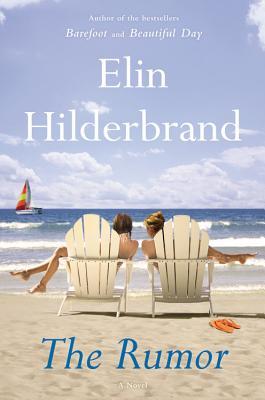 The book revolves around two women who live on Nantucket and who have been best friends. One, Grace, has a husband who is the king of the real estate deal, enabling her to live on a beautiful estate where she is transforming an extensive property into her dream garden. She has twin daughters, one predictably vanilla and the other just as predictably bad news, and her husband seems to adore her—when he’s paying attention, which is less and less these days. But her gorgeous and single landscape architect is making up for that with his attentive behavior.
If there’s one thing Grace envies Madeline for, it’s her devoted relationship with her husband, who acts as if the honeymoon never ended. They also have a wonderful son, Brick, who has never given them a moment’s worry…until he started dating Grace’s “bad twin,” Allegra. Madeline, however, is focused at the moment on her overwhelming case of writer’s block, which is preventing her from even starting the new book that is due at her publisher’s any minute. Bills are piling up, and if she can’t get a fix on her next novel, their precarious financial life will begin to fall apart. Even though she doesn’t have the money for it, Madeline decides to rent a small apartment in town to be her writing retreat, hoping it will facilitate a solution. And that’s where the rumors begin…
I liked this story. Yeah, it’s a little shallow, and a little typical, but Hilderbrand’s characters are real individuals, and I loved the distortion of gossip in a small town, as it morphs and changes from one person’s account to the next until it’s something monstrous instead of a perfectly easily explained anomaly. It’s like that old game of “Telephone” that we used to play at slumber parties—one person whispers a secret into the next one’s ear, and that person into the next one’s, and so on, until you get to the end of the circle and the last person tells what they heard, which never remotely resembles the opening statement. I also liked the atmosphere and character of Nantucket, and the descriptions of Grace’s lush garden and
Madeline’s tortuous writing process. Even the teenagers and husbands were real people.
The Perfect Couple:
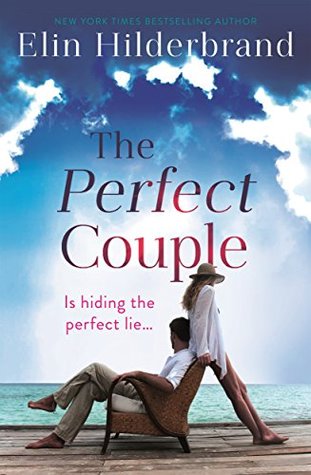 Greer Winbury, mother of the groom, is determined that the Otis-Winbury wedding will be the event of the season. Since the bride, Celeste, comes from modest means (her parents are middle class with a lot of hospital debt piled up from Karen’s cancer), the groom’s family, who are at the peak of wealth and own one of the premier estates on Nantucket, are hosting the event on the island. The wedding has been meticulously planned, but in a bit of a rush, because no one is sure how much longer the bride’s mother has before the end. This is not the tragedy, however, that prevents the wedding from taking place; the incident responsible is the discovery of a member of the wedding party floating dead in Nantucket Harbor the morning of the ceremony. Nearly everyone in the wedding party is suspect, particularly when Chief of Police Ed Kapenash starts discovering multiple acts of deceit and betrayal amongst the family, friends, and guests…
I find it odd that this book gets consistently high marks and The Rumor was not nearly so well liked; I thought that book had much more depth and completeness as a story than did this one. The Perfect Couple seemed like it was wallowing in clichéd characters, from the older wealthy married man having an affair with the young single woman to the flighty bride and her self-satisfied groom…and the worst was the groom’s mother, the mystery novelist who always gets her way. The way they talk, the way they dress, their attitudes, all scream caricature to me, with the familiar misogynist trope of virgin-slut-bitch applied to most of the women—either prizes to be won or else damningly responsible for the men’s inability to say no. I felt like the author simply made up the situations she needed to propel the plot as she went along, and yet some story lines directly detracted from the reader’s focus on that, furthering the effect that Hilderbrand didn’t know for sure whether she wanted to write a love story or a murder mystery. And I don’t want to provide any spoilers, but I simply don’t believe, knowing what they all knew about everyone involved, that the book would have ended as it did. Enough said. It was an okay read, it wasn’t glaringly boring or bad, it just wasn’t as special as some readers seemed to believe.
I will say that both books did fulfill that “setting” or “place” requirement, in that discussion of the surroundings—the stunning views, the warm breezes and starry nights, the ambience of the restaurants and shops (and the descriptions of the luscious seafood)—definitely heightened enjoyment when reading these books.
I can’t believe it’s been 10 days since I last posted a review. I have continued to read, but in between breakfast, lunch, and bedtime, which are my three reading slots of the day, I have been so busy making art or teaching art that I haven’t had the time to put down my thoughts about reading! I will play catch-up now; I have two more books completed and ready to discuss.
(Should you be curious, you can go look at my art blog: The address is https://theslipcover.blogspot.com.)
More results
I read one more book for my experiment regarding “place” and whether the setting of a book was sufficient to carry it: All the Single Ladies, by Dorothea Benton Frank.
My answer to that question for this book was “no.”
Although I did like the descriptions of the South Carolina low country where this book is set—its foliage, its beasties, its unique and delicious-sounding cuisine—and also enjoyed the southern lingo and expressions employed by the characters (reminded me of my own mama, a Virginian), the plot itself was muddled and a bit facile, not to mention improbable.
 It’s hard to summarize the story in brief: It starts with Kathryn, who is in the hospice section of a nursing home, dying of cancer. Lisa is one of her caregivers, and Suzanne and Carrie are her two best friends, who visit regularly. After Kathryn passes, Lisa is determined to keep up with the other two and make them her friends, which she does. Then various life upheavals result in them all living together in the same house with Suzanne’s grandmother, and the rest of the story can be summed up by “other stuff happens.”
The muddled part: There is an initial mystery posed when Kathryn’s landlady claims that some of her possessions actually belong/revert to the landlady, and though the other women are 99 percent sure this isn’t so, they haven’t yet found a way to prove it. So we have this set-up in the beginning and we think this will be a thread throughout the book (Suzanne is the executor), but instead it crops up once and then is subsumed in all the other life details until about the last 25 pages. Not good.
Second, the book is pretty insulting to women of a certain age and, being one of those, I took appropriate umbrage. All three of the main characters are hurting for cash—Carrie lost everything to her boyfriend’s kids (they were about to marry when he died, after living together for seven years), Lisa has brought up and schooled her daughter single-handedly without aid from her ex, leaving her living on the edge from paycheck to paycheck, and Suzanne had a traumatic experience that derailed her initial career and landed her as a dependent on her grandmother, whose house on the beach is the center of this piece. So, what is their solution? Do they start a side hustle, come up with a clever investment, think of some creative way to get them out of their fix? No. Carrie looks for a fourth (!) husband whose wealth will solve her problems. Lisa whines a lot about her daughter’s poor (to her) life choices, to the point where it becomes apparent that the author herself has created this soap box and placed her character carefully atop it to preach. And Suzanne sits helplessly in Grandma’s house waiting for the hammer to fall, because she assumes that upon the death of “Miss Trudie” she will have to move out, sell the house, and split the proceeds three ways with her two ungrateful and unhelpful sisters, all the while admitting that she charges her customers far too little in her florist business. Um, honey? Charge more.
Added to all of this is the unlikely (I said improbable but I would say verging on impossible) fact that all three women (these are women in their late 50s and 60s) manage to discover single, relatively undamaged, enthusiastic, attractive men who want to be with them, and all of them pair off tidily. Sorry, that’s a little bit of a spoiler, but since that goal is set by one of them in the beginning and is practically the theme of the whole book, I’m going to say a giant Who cares?
There are occasional moments when you fall into what should be the central spirit of the book (and would have been if the dating details had been dropped in favor of other solutions), which is the camaraderie between the friends. This shows more between Lisa and Suzanne than it does between either of them and Carrie (the one fixated on finding a hubby), and is mostly illustrated in fun times over food and drink. But it’s just not enough when weighed down by everything else. The best character in the whole book is the 99-year-old grandmother, Trudie. I would much rather have heard her story.
This book gets a giant “MEH” from me. Although it did make me want to travel to the low country sometime to experience its beautiful architecture, afternoon storms, magnificent sunsets, and delectable food, it certainly didn’t make me want to read another book by this author. So “setting” in this case was the only appeal and failed to carry the book.
Results
In my previous post, I posed the question, “Can the setting of a story (a particular place or atmosphere) be a sufficiently appealing element to carry a book?” (Or something like that.) To research the experiment,
I read books by three of the authors recommended to the woman on the “What Should I Read Next?” Facebook page who requested “books that take place at the beach.”
Author #1 was Karen White, and I read her book The Sound of Glass. The title comes from the wind chimes constructed from pieces of polished beach glass that the original owner of the house depicted in the novel made and hung from the rafters all around.
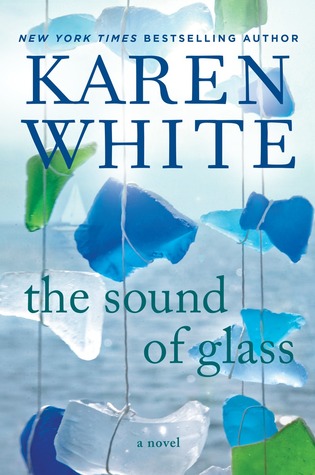 The book is set in Beaufort, South Carolina, which the author classifies as part of the “Outer Banks” (although Wikipedia says those are “a string of peninsulas and barrier islands separating the Atlantic Ocean from mainland North Carolina”). Suffice it to say, the setting is one of open beaches and also of protected swamplands characterized by flat-bottomed boats cruising above pluff mud, and trees covered in Spanish moss. Although there is a minor plot detail involving one of the protagonists’ fear of water, the setting doesn’t have a lot to do with the book, beyond providing evocative sound effects and scents unfamiliar to the one protagonist, who hails from Maine. Scene-setting mostly came down to that character, Merritt, complaining about the stifling heat. A lot.
The story in brief: Merritt’s husband died two years ago. She has recently discovered that his grandmother left him a house in South Carolina, and since he is dead, she inherits. She decides to upend her stagnant life in Maine to go live in it. Shortly after she arrives, so does her stepmother, who is a scant five years older than she is and has a 10-year-old son. The stepmother pleads poverty and asks to stay and Merritt reluctantly agrees, although her father’s marriage to this woman was the reason for her 12-year estrangement from him (he is also now deceased). The two begin to work out their relationship with one another, but it’s complicated by rather large secrets on both sides.
Someone on Goodreads described this book as “relationship melodrama,” and that about sums it up. The thing is, the bones of a good story are here: estranged family who find each other amidst personal crises. But Merritt (the buttoned-up Maine girl), and her counterpart, Loralee (the brash Southern blonde with the pancake makeup), are both such stereotypes that I found it hard to relate to them. Better than the two protagonists, I liked Loralee’s kid, Owen, and Merritt’s doctor/brother-in-law, Gibbes. They were less prone to both drama and cliché, and I think their characters show of what this author is capable if she would quit dropping into the easy channels dug by predecessors.
The secret Loralee is keeping is obvious to everyone but Merritt, but the way she goes about ingratiating herself and her son with her stepdaughter is pretty ingenious. If the story consisted solely of this plot, I think I would have liked it better. Instead, we had to do a whole convoluted study of Merritt’s damaged psyche and how it got that way, and although exposing some of the issues was a worthy goal, her protracted whinging was exhausting. And her ultimate secret, the one that connects grandmother with grandsons with widow, is patently ridiculous.
A comment on writing: When I am reading a book, I subconsciously give the reading the same tests that I give my own writing, one of which is not to use the same descriptive word twice on the same page (let alone in the same sentence), and yet that happens over and over again in this book. The author has the potential for good story-telling, with evocative images and powerful characters, but sloppy writing (uncorrected by her inattentive editors) and tendency to drop into cliché operated for me against enjoyment. I probably will not read any other books by Karen White.
The second author whose work I sought out was that of Elin Hilderbrand, a perennially popular name associated with “beach read” in the Facebook group. I scanned her list of offerings on Goodreads and selected a book that had uniformly higher marks, since some of the others swung wildly between two stars and five. The one I ended up reading was The Identicals.
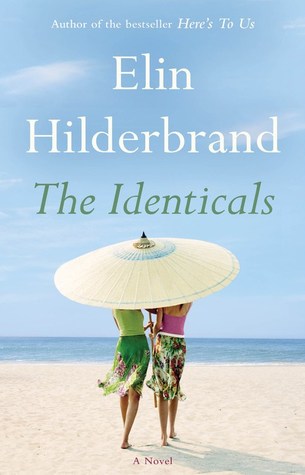 I was immediately captivated by the slightly tongue-in-cheek comparison between Nantucket and Martha’s Vineyard in the prologue, citing the benefits of each and the detriments of the other from the residents’ point of view. It was a great set-up for the story: While Nantucket and Martha’s Vineyard may look to the rest of the world like similar places, to the natives they are worlds apart, even though that distance is a scant 11 miles. Similarly, while twins Tabitha and Harper are identical enough to fool others even at age 39, they are completely different in their life choices and affects.
The story in brief: Twins Tabitha and Harper have been estranged for many years, for various reasons. Harper lives on Nantucket near their father, Billy, while Tabitha assists in their mother’s previously successful but now waning design business/dress shop. Things suddenly get stirred up: Billy dies; Harper’s affair with his doctor becomes a common topic of island gossip; and Eleanor (their mother) falls and breaks her hip. Add to that mix Tabitha’s precocious and trouble-making 16-year-old daughter, Ainsley. Harper needs to cultivate a low profile, Tabitha needs to care for their mother in her recuperation but is at her wits’ end with both her teenager and her dress shop, and something needs to be done about Billy’s ramshackle house on Nantucket. All these circumstances combine to make the twins grudgingly reach out to one another for assistance (facilitated by Ainsley, who is dying of curiosity about their lack of relationship) for the first time in decades.
Part of the reason why this plot line works is that the author herself (in the guise of her various narrators) initially sets it up for derision by comparing the separation of the twins at age 17—one going with “Mommy” and one with “Billy” when their parents divorced—to the Hayley Mills/Lindsay Lohan Parent Trap plot. She then uses their wholly different upbringings—Harper’s on Nantucket as a laid-back, casual evolution into an underachieving adulthood, and Tabitha’s on Martha’s Vineyard (and in Boston) as an uptight, socially restrictive one with high expectations of her performance—as a parallel for the respective towns. It was cunningly written.
I also liked that although there were important elements of mistaken identity “hijinks” and romance in the book, the story was by no means restricted to those plot lines and in fact was much more about the obstacles to familial love and how to overcome them. The back stories were also credible, and gave the story depth. Based on this book, I would read another by Hilderbrand.
As far as the influence of setting, in addition to paralleling elements of the story it also made me wish for sea wind in my hair and a big bowl of clam chowder in front of me on the table. The atmosphere definitely both contributed to and influenced the plot.
For my third book, I chose Sunset Beach, by Mary Kay Andrews, an author appearing on the Facebook page and also mentioned to me as one fitting into the category by my friend Patrice.
The story in brief: Drue Campbell has just gone through her mother’s protracted illness and death when her estranged father, who left them 20 years ago, turns up with a proposition: Drue has inherited her grandparents’ ocean-front cottage in the same town where Brice Campbell has his lucrative personal injury law practice, and Brice thinks she should move into the cottage and take a job at his firm. Complicating the issue is his new wife and office manager, Wendy, who also happens to be Drue’s 8th-grade frenemy. Drue is down on her luck and can’t afford to say no, but she agrees with an ill grace and initially resents both the job and her father and “stepmother.” Then, she is arrested by the plight of one of Brice’s former clients, whose lawsuit over a suspicious death didn’t receive the attention it deserved, and decides to investigate.
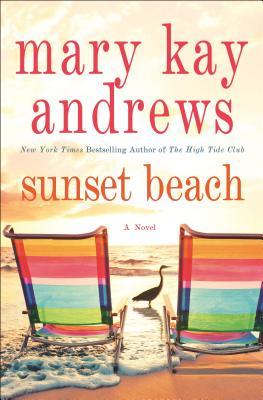 In this book, Drue’s former hobby (kite-boarding) and her nightly walks on the beach and swims in the ocean from the venue of her derelict cottage do give a beachy atmosphere to the book. But I would definitely not call this one “just” a beach read. Although the opening scenes paint this as “relationship fiction” with the reuniting of Drue with her absentee father, the scenes between them are sometimes shallow, with Drue coming across like a snarky teenager. Brice himself is a bit of a cardboard cutout—bland and not particularly compelling—while Wendy (the new wife) is a cliché of a shrew. But the rest of the book—in which Drue starts out working as an information-taker over the phone for her father’s legal practice and ends up (after taking an interest in an old case with an unsatisfactory resolution) as a bull-headed private investigator—is much more compelling. While there are bits of romance and reconciliation here, the main story is the mystery and this is how I would recommend the book if I were to suggest it to someone. Based on this book, I would read another of Andrews’s, although it could have done with a little more depth in the relationships before switching to the mystery.
Of the three books, I would say that only Hilderbrand’s reinforced the theory that setting can be powerful enough to carry a story. Although the beach hotel culture does become fairly important in Andrews’s tale of betrayal and murder, both the other books could probably have been set anywhere without it feeling like something essential was removed from the plot. In Hilderbrand’s, plot and setting were intertwined, which is the ideal when setting is an issue.
As for my other premise, that people who like a “slow build” in pacing in one genre will enjoy the same in others, that will have to wait for another day and some reporting back from other readers!
 The Book Adept