Over the top is okay!
The latest installment of Elle Cosimano’s Finlay Donovan series dropped on January 31st, and I started reading it a few days later when I discovered it on my Kindle (I had prepaid for the e-book dump and then forgotten all about it).
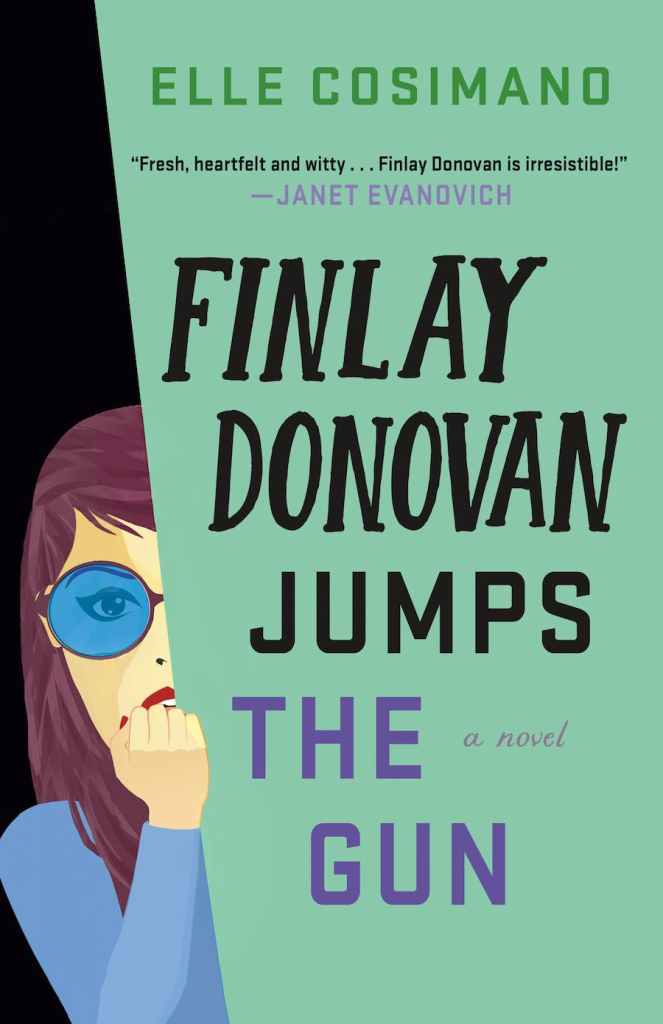
Finlay Donovan Jumps the Gun carries on fairly precisely where the last book left off: Finlay and her sidekick, nanny/ accountant Vero, are indebted to Feliks Zhirov (the local Russian mob boss) for saving them from an embarrassing and dangerous situation, and he (of course) wants something in return. There’s a person called “EasyClean” who is operating online as a paid assassin; Feliks wants to know this person’s identity, and believes that Finlay can deliver that to him. Being impatient (as mob bosses often are, don’t you know), he gives her a two-week deadline, which doesn’t make her one-week time limit with her agent for the final manuscript of her latest novel any easier to achieve, especially since the contents of the book are so close to the circumstances of her personal life that she has run head-on into writer’s block trying to resolve them.
Meanwhile, Vero has a deadline of her own—she’s delinquent on a gambling debt with a loan shark out of Atlantic City, and his enforcers are hot on her heels. What’s the solution? Finlay and Vero decide it’s to enroll in a one-week civilian police academy training. After all, they have come to believe that EasyClean may actually be a cop, so where better to figure it all out than from in amongst ’em? And where else could they be sure that pesky flunkies for the mob won’t be able to touch them? Finlay hands over the kids to Steven for a week, and the two move into the police academy dormitory to see what they can see. And, since it’s Finlay Donovan, chaos immediately ensues. Did I mention that Finlay’s crush, Detective Nick, is running the thing? and that both of his slightly suspicious partners and Finlay’s police officer sister are in attendance? And that the supposedly well-guarded barriers to the facility turn out to be as porous as swiss cheese when it comes to characters, suspicious or otherwise, making their way to the window of Finlay’s room?
In short, this is yet another frenetic flourish of Cosimano’s pen in pursuit of the author/single mom/accidental hit woman, and carries the franchise along nicely. I had been under the impression, for some reason, that this series would be a trilogy, but that’s not the case—this one ended on yet another cliff hanger, ensuring there are more books to come. (If all of this description has intrigued you, read the series in order from the beginning or you will be lost.)
I’m a little torn on my rating for this book. I gave the first one five stars, and the second one got four; I’m tending towards four stars on this one as well. Although it had moments that were totally brilliant (the opening scene with toddler Zach comes to mind), it also had some repetitive stuff (the continued misunderstandings about poor Javi); and the restriction of the scene-setting to the police academy means we miss out on some of the fun interactions with unsuspecting civilians that were so important to the first two books. But I did enjoy the thought processes behind figuring out EasyClean, and Cosimano is an expert at writing the hapless, accidental escalation into total mayhem that feels like Lucy Ricardo has landed in the middle of a murder mystery! I will definitely look forward to the next installment in Finlay’s overwrought journey, particularly the resolution of so many relationships: Will she finally put Steven firmly in his place? Will they ever get Vero out of debt and able to show her face again? Will Finlay be able to have a relationship with Nick without revealing all her (mostly inadvertent) criminal activities? Will Georgia find a girlfriend? Will Zach complete potty training? For these and many other crucial details, we once again await you, Elle Cosimano!
Masquerade
Having read others of Sally Hepworth’s books, I have now figured out that they are relationship fiction masquerading as mystery/thriller. That doesn’t make them bad; let’s face it, dysfunctional family drama is always engaging (particularly if it reminds you of your own!). But to market them as thrillers is a little over the top, regardless of the shocking ending on this one.
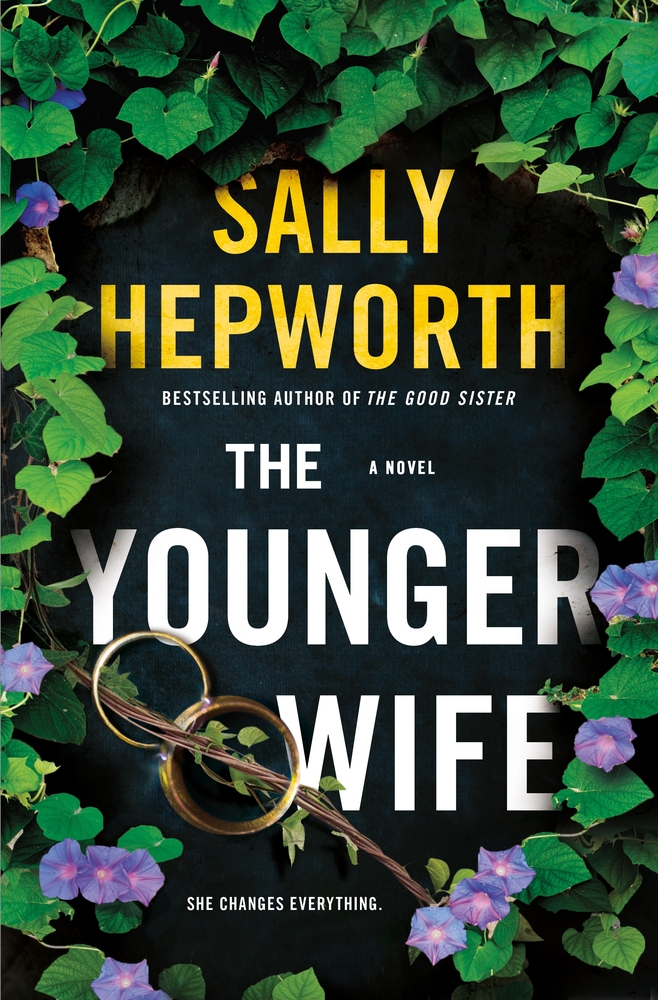
Stephen Aston is a prominent doctor in his 60s, with a wife (Pamela) who is suffering from fairly advanced Alzheimer’s, and has within the past year been moved into a care facility. Early in that same year, Stephen and Pamela had hired Heather (an interior designer) to re-imagine their home, but in light of the fact that Pam will now never enjoy it, the plans were changed midstream, and Heather has instead fitted the house out to Stephen’s specifications. In the process of working together, the two fell into a relationship (are they in love? hm), and have decided to marry—once Stephen divorces his wife.
The book opens on the events of that wedding, which promise some major drama—but we quickly cut away to flash back to the recent past.
The main opening scene is a luncheon at which Stephen announces his intentions to his two daughters, Tully and Rachel, who are both of them older than his new fiancée. Needless to say, neither is thrilled by the prospect of having a stepmother their own age, not to mention having this happen while their mom is still alive. At first, the story is focused on the daughters’ speculations about why this woman even wants to marry their dad, who is 30 years older than she is—his money? his social position? but then things take a turn as we learn about the personal issues Tully and Rachel are already dealing with in their own lives, and the picture expands to include all that extra angst.
Some characters were carefully developed—I thought the daughters and their issues were both unique and fascinating—while the author’s revelations about other people were more circumspect, which worked in some instances and not at all in others. (Fiona! don’t be a stranger!) The secrets were interesting, the hints of bigger doings along the way kept me reading, and the reveals and the ending…well, you’ll have to decide for yourself.
But…to call this a thriller seems a little over the top.
I have so far read five books by Sally Hepworth, and my reactions have been mixed. I loved one (The Good Sister), disliked one (The Mother-in-Law), and was a fan (with some reserves) of the other three (this being one). But just to be clear, regardless of how breathless you become at the revelation of the secrets, my contention is that these are relationship fiction, not thrillers or suspense; they just don’t meet the criteria. So read and enjoy them for what they are (except for The Mother-in-Law, which I thought was fairly dreadful, although I am in the minority), but don’t expect them to be more.
Time out for lighter fare
After reading that somewhat grisly dystopian, I have been in the mood for less intensity; I picked up and started reading two separate fantasy books—one a continuation of a series I loved last year, the other a stand-alone quirky one that’s been on my TBR list for a while—and couldn’t get into either one. So I went instead for a combination of relationship reads and light mysteries.

First up was An Island Wedding, #5 in the series of books Jenny Colgan set on the island of Mure, in Scotland. It was lovely to be back with a cast of familiar characters in a magical (not literally, just in terms of pristine scenery) place where I have enjoyed previous stories so much. In this one, Flora and Joel are finally to be wed; but Joel, product of a violent childhood followed by a long line of foster homes, doesn’t seem to “get” what it means to Flora, only daughter of a large and affectionate family and member of an extended community to which she has belonged since birth, to have a traditional wedding. Unmeeting wishes become exacerbated when another “daughter” of the island, a glamorous trend-setter, decides to hold her wedding on Midsummer’s Eve (the same day as Flora’s) at the grand hotel Flora manages, and Flora has to put up with Olivia’s overboard plans while being distinctly underwhelmed by her own. Since it’s Jenny Colgan, you know that it will all work out, but it’s fun to experience it along with your favorites. There is also movement in a side story involving the island’s immigrant doctor and its favorite schoolmistress.
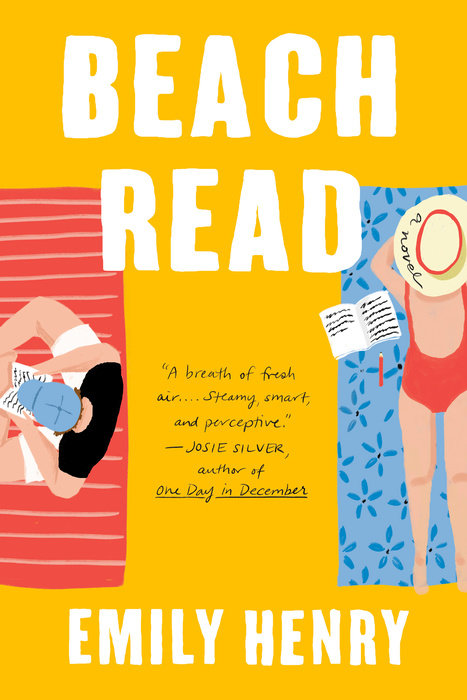
After listening to a student in my readers’ advisory seminar wax poetic about Beach Read, by Emily Henry, in last week’s book-talk for the class, I picked that up and read it one more time, and enjoyed it again by noticing different things this time through. I do have to agree with Taylor, though, that neither the title nor the book cover is appropriate, considering the beach in question is the shore of one of the Great Lakes in Michigan, and it’s mostly too cold to go there for more than 15 minutes! And if the title was meant to reference one of the books that the two author protagonists were writing, that was off base as well. Still a good read, though.
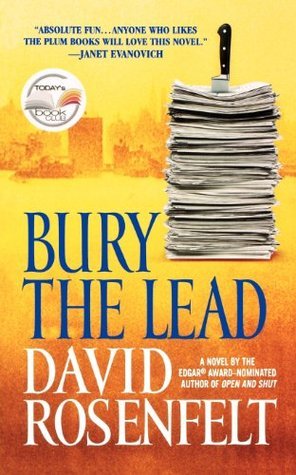
Then I jumped back to the mystery series I started at the recommendation of a librarian friend a few weeks back, and read the next two books in the Andy Carpenter legal thrillers by David Rosenfelt, First Degree and Bury the Lead. I am continuing to enjoy these, despite my initial reluctance to tackle a legal mystery series. As another person on Goodreads commented, Rosenfelt (i.e., his character, Andy) is “quick with a quip,” and I am enjoying the mix of humor, exasperation, frustration, bafflement, and creative thinking that seems to propel him towards the solution of these mysteries. I do wonder how many more books in this series Carpenter can sustain by presenting a defense of SODDIT (“some other dude did it,” acronym made famous by Dismas Hardy)—his clients can’t all be the victims of frame-ups…can they? But so far he has done it well…
Given my preoccupation with the last few weeks of my readers’ advisory class combined with some recent health challenges that make me tend to lose patience with long, intricate narratives, I may keep reading this kind of distracting, pleasurable fare for the rest of this year! We will see if the mood turns…but in the meantime Andy Carpenter #4 (Sudden Death—he’s fond of the sports metaphor) is next on my list.
Reverse the trope
We’ve all read the book or seen the (probably Hallmark) movie: The protagonist is a successful young executive of a major corporation; his assets include a tasteful wardrobe, a midtown rent-controlled loft, a sports car that screams big money with every rev of its engine, and the perfect girlfriend, from the top of her sleek chignon to the tips of her Louboutins. She shows up to work every day at the publishing house or the art gallery, dressed in a pencil skirt and crisp white blouse, manages her business with a firm hand while terrorizing her subordinates, and at the end of the day orders Thai take-out, because she never bothered to learn to cook. Everything in their mutual world seems well ordered and meant-to-be, if a bit regimented.
Then our man is sent by his employer to a picturesque small town, probably to either acquire or shut down some competing business, and while he’s there he meets her: The One. She is the antithesis of everything he thought he wanted—she has long, curly hair, wears sundresses and flip-flops, and is earnest about protecting her home and family from the rapacious big-city villain. Despite apparent incompatibilities, they fall in love, and the young executive suddenly decides that giving up the city for the country, the tense 60-hour work week for the laid-back life of a construction worker/baker/shepherd, is the way to go, if only he can be with his true love.
And of course he is also giving up the city girlfriend, the icily perfect career woman whose urges and drives he once wholeheartedly shared. He pretty much dumps her without compunction, and that’s the last we hear of her in this story, because it’s all about his renaissance as a man of the people living in a one-horse town and making babies with his soul mate.

In Book Lovers, by Emily Henry, Nora Stephens is that woman—a literary agent known as the Shark for her ruthless bargaining on behalf of her clients—and she has been summarily dumped for the country girl not one, not two, but three times. So when her beloved younger sister, Libby, comes up with the idea of a sisters’ vacation, a month’s retreat to Sunshine Falls, North Carolina, Nora acquiesces for the sake of spending time with her sister before Libby is subsumed, yet again, into motherhood with the birth of her third child, but has no illusions about the lure of the small town. She is a city girl, born, bred, and determined to remain.
Libby has other ideas: She has designed the trip as a transformation for Nora, and hopes to lure her away from her business-first attitude to become a more well-rounded person with an actual personal life. (It’s hard to love again after the multiple humiliations, so Nora puts it all into her job.) Libby has visions of Nora picnicking with a hunky country doctor, but instead, almost the first person Nora encounters is Charlie Lastra, a handsome but surly editor who rejected one of her clients’ books a couple of years back, thereby earning Nora’s abiding dislike. What he is doing there in Sunshine Falls is just one of the mysteries Nora finds herself confronting as she tries and fails to find any redeeming qualities about rural bliss. She misses the coziness of her apartment, the sound of car horns, and her Friday night Tom Yum Goong, and nothing is going to keep her from them, beyond this month-long time-out. But Libby (and maybe Charlie) have other ideas about Nora’s fate.
I have to say that I loved this book unreservedly. The clever ploy of turning the cliché upside down and telling the story of the city “girl” who was (repeatedly) left behind was brilliant, but only the first of the twists and turns this story takes as Nora explores the depths of her inner self and makes some surprising but not at all clichéd discoveries. And it certainly didn’t hurt that with protagonists who are a book editor and a literary agent, the story revolved around books. I loved the characters, the setting, and the emotional energy, and wanted to read it all over again the minute I rather hastily finished it (not being able to shut off my Kindle until 2:17 a.m. when I arrived at the last word).
I enjoyed two other books by Emily Henry, but when I reviewed them I used words like “meet-cute” and “feel-good,” and while I extolled the witty banter and the chemistry between the protagonists, I also saw the predictability inherent in those two wish-fulfillment stories. Book Lovers is different—I wouldn’t call it a parody, but it certainly has those moments, and the point isn’t the happily ever after but the acquisition of self knowledge. There is also both banter and romantic sizzle, but they aren’t exactly the point—or at least they are far from being the main or only one.
I don’t always have a lot of respect for either romance or relationship reads in terms of their originality or their ability to hold my attention, but this one was a five-star.
Choosing single

I was interested to read Flying Solo, the new book by Linda Holmes (author of Evvie Drake Starts Over), because of the character-related premise—a woman who has no wish to either get married or have children. Being one of those women (but 25 years further along in life than this protagonist), I thought it would be interesting to see if the author had the character stick to her guns or cave at the first sign of romance. I actually end up falling between two of those women on the age spectrum—the protagonist, Laurie, on the verge of her 40th birthday, and her beloved great-aunt, Dot, who persisted until she was 90 (although it didn’t stop her from having a lot of interesting relationships!).
Laurie Sassalyn has been living in Seattle for about 15 years, most recently with her boyfriend, Chris. They planned to wed, but as the date got closer, Laurie realized that a. she didn’t want to get married, and b. she didn’t want to marry Chris! So two weeks before the ceremony she called it off, and then spent the following months packing up and sending back the many wedding gifts. Just when she has worked through this laborious task, her great-aunt Dot dies, and Laurie ends up being the designated family member to go back to her home town of Calcasset, Maine, to sort through the massive amount of stuff Dot accumulated in her long and experience-filled life. Dot was an enthusiastic world traveler and a collector of both people and memorabilia, and her house is packed full of tchotchkes and Polaroids; Laurie has dedicated herself to putting eyes on each and every object before deciding whether to keep, sell, or discard. (Having had to do this when both my parents passed, I could viscerally relate to this part of the story as well!)
While in Maine, Laurie reconnects with both friends and former beaus from her childhood there—notably, her friend June, now married and a mother of two, and her old boyfriend Nick, who she has seen only once (an uncomfortable encounter at a mutual friend’s wedding) since she broke up with him in high school. He was married last time she saw him, but now he’s divorced, living and working back in their mutual home town, and they fall into a natural camaraderie that Laurie is determined won’t turn into something more, because she is resolute about not staying in Maine or disrupting her lovely single lifestyle.
While going through Dot’s things, Laurie comes across an unusual (for her aunt) artifact: a carved wooden duck decoy, hidden at the bottom of a cedar chest under some quilts. Laurie takes a liking to it and wants to find out more about it, so she turns to the estate-sale guy she has hired to help her dispose of such of her aunt’s belongings that she doesn’t want to keep. He investigates a little and tells her the duck has no financial value, but she is suspicious of his subsequent interest in taking it off her hands. All of a sudden the quest for the provenance of the duck decoy turns into a caper that ends up involving Nick (a librarian who does stellar research), June, and a few new friends as well. In the midst of this, Laurie has to decide: How does she stick to her resolve to remain independent and alone (and in Seattle) while being enticed by the sweet and caring (and hot) boyfriend from her past?
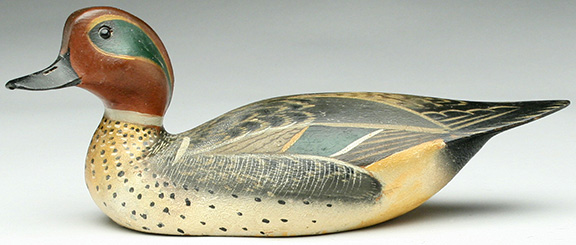
(1896-1984)—of Crisfield, Maryland
Some readers (and reviewers) have characterized this as a “second chance at romance” book, but I saw it as anything but that. At first I thought it was going to be one of those “she doth protest too much” books where the heroine ends up compromising everything she “thought” she wanted for a man but, refreshingly, it doesn’t turn out to be that book. The characters are witty, nice (all but one), and full of common sense, and the setting is likewise warm and homey without being clichéd. The plot device of tracking down the origins of the duck gives a fun twist to the more usual “went back to my hometown and had a revelation” style of book, providing a mystery for the characters to solve together. But we still get to see the resolution of Laurie’s feelings about relationship vs. independence, and it is both satisfying and skillfully written.
The author makes a comment in her acknowledgments about “navigating the complicated and very unnerving second book blues,” but I liked this book much better than her first, and would recommend it. It’s definitely not deathless prose, but as a (somewhat pithy) cozy “relationship” book it’s better than most—down to earth, comfortable, and with some unexpected outcomes.
Relationship fiction
This is my alternative title for the pejorative term “women’s fiction.” I was angry from the moment I first heard that term (from Joyce Saricks in Genreflecting, no less!); it segregates both the readers and the writers and makes the books seem “less than,” as if they don’t deserve to be included in the tide of mainstream fiction. Has anyone ever segregated books into “men’s fiction”? Even when they are filled with macho testosterone—Jack Reacher, Vince Flynn, Jason Bourne—no one ever suggested that only men would enjoy them. So why this?
Saricks defines women’s fiction as “books written primarily by women for women, that feature female characters, and that address the issues women face in their professional and domestic lives.” While acknowledging that this is a solid and definite trend, especially if you include the outliers of chick lit and erotica, I find the descriptor “women’s fiction” to be dismissive and ghettoizing. So I decided to insist on calling this “relationship fiction.” It still focuses on the most important aspect, which is the relationships between the characters, but it would include male writers who write about relationships, and would avoid the condescending terminology.

Having settled that, I read a prime example this past week in Our Italian Summer, by Jennifer Probst. The book features three generations: Grandmother Sophia, mother Francesca, and daughter Allegra, whose relationships could use some work.
Single mother Francesca is the work-obsessed owner of an advertising agency she is convinced will immediately fail without her constant attention. Except for constant exhortations to her daughter to be the best, and impatient dismissals of all of Allegra’s interests that don’t match with Francesca’s high expectations, she has handed over the day-to-day mothering of her daughter to her own mother, Sophia. She is, of course, perversely jealous of their close relationship, and finds herself feeling shut out even though she is the one who created the situation.
Sophia spent most of her life as a supportive wife and mother, and watched her daughter show disdain for Sophia’s life choices while following in the footsteps of her father, who was somewhat absent due to his own work ethic but who appeared to Francesca as a dazzling role model of everything she wanted to be. After his death (the implication is from over-work and stress), the only constant in their mother-daughter relationship seems to be a constant state of misunderstanding.
As for Allegra, as she prepares to enter her senior year in high school she is finding that she is no longer content with the society or conversation of her somewhat vapid girlfriends from her private school, and makes some new friends, who promptly get her arrested when illegal substances are found in the car in which they are riding around. This causes Francesca to start making plans for Allegra’s summer that don’t involve any of the fun Allegra was anticipating—a job, an internship, a camp. But Francesca’s own lifestyle intervenes first, as a breakdown in the midst of a presentation at work lets her know that she can no longer work at the same frantic pace.
Sophia, with a secret worry of her own, decides that the trip to Italy she and her husband always talked about but never took would be the perfect opportunity to get her daughter and granddaughter out of their respective comfort zones and make them confront their issues with one another. Francesca surprisingly agrees, more focused on the necessity to remove Allegra from the influence of her new friends than on her mother’s grand plans to visit the country of her heritage and use the trip to fix relationships—but Sophia doesn’t care about the reason, only that they will go.
There is a lot of interpersonal baggage to work through in this novel, but it’s not all emotional angst; the book is also a lovely travelogue of Italian towns, landmarks, art, and food, with a little romance thrown in along the way. It turned out to be a pretty good balance of these two sides of the story, and I ended up enjoying it quite a bit.
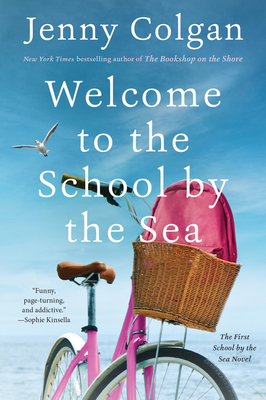
Another author whose books focus on both place and relationship in somewhat the same way is Jenny Colgan, whose stories I have previously extolled here. I made a discovery that she had written a “boarding school book” and a sequel, and released them a few years back under a pseudonym…and no one found them. So she has now republished the first two under her own name, and has plans to write two to four more for the series.
I have always had a soft spot for those, apparently in common with Colgan, who talks in her introduction about how she wistfully idealized boarding school life based on her readings of everyone from Enid Blyton to R. F. Delderfield, and decided to write her own series for adults. The first of these is called Welcome to the School by the Sea, set at a school called Downey House, which is situated in southwest England near the cliffs of Cornwall—another enticement for me, since I seek out fiction located in that idyllic county.
The book is subtitled Maggie Adair #1, Maggie being a new professor who has descended 400 long miles from chilly Scotland and a confrontational public school experience to be a live-in English professor at an all-girls’ school on the English Riviera. From the subtitle I’m assuming that Maggie will be the constant throughout the series, while the girls will come and go as students do, but in this first book we also follow the fortunes of two specific students: Fliss, a child of privilege who has been sent against her wishes, and Simone, a scholarship girl who isn’t quite sure that she should have worked so hard to achieve…this.
I enjoyed the book, although it won’t count as one of my top five favorites of Colgan’s. It follows the typical clichés of class warfare between the posh girls and the outsiders, Fliss being one of the former and both Maggie and Simone representing the two fish out of water. Maggie struggles to fit in amongst the somewhat aloof staff, sticking out as much for her youth and enthusiasm as for her Scottish accent and poor clothing sense; Simone, the Armenian child of a doting mother who overwhelms her with care packages full of sweets, retreats within herself to hide her vulnerability to the catty comments and sometimes nasty tricks perpetrated by her three roommates.
There are romantic complications—Maggie has a steady, live-in boyfriend at home who doesn’t think much of her accepting a “snob job” so far away from him, home, and family, which leaves her open to the attractions of a handsome professor from the boys’ school just a few miles distant. And the headmistress of the school, Dr. Veronica Deveral, has a secret from her past that’s about to blow up her present, should it become known.
I liked everything Colgan did with the story, and will read on in the series, but it isn’t a compulsive favorite the way some of her others have been, so I will take my time, first visiting some much-anticipated sequels to series by other authors that have just hit their publication dates.
Departure?

I have read many (most?) of Alice Hoffman’s books, and although there are major shifts in the tone of her writing at certain points in her career, she is consistently someone who is attentive both to detail and to character. Her book Faithful is no exception to that, but what is missing (despite erroneous labeling by Goodreads) is the element of magical realism that pops up in many of her books. There is one part of the story that I suppose, at a stretch, could qualify, but it’s such a low-level background piece of information that I don’t really count it, especially because the magic is cited but doesn’t exactly manifest. At first I was disappointed at its absence, but as the character and the story grew on me, I put that aside and just enjoyed the transformation of Shelby Richmond
I admired one Goodreads reviewer’s phrase when addressing what this novel is about: “Rather than coming of age, it’s coming to grips.” That is the plot in a nutshell. Shelby and Helene are best friends throughout most of their lives, until a treacherous, icy road under their wheels leaves Helene in a coma and Shelby trying to deal with the idea that she is walking away unharmed while her friend will never come back from this. The thought that she wasn’t damaged is, of course, not the truth at all: Shelby is overwhelmed by grief and guilt, and spends years cancelling herself out of life as a punishment for the one she believes she ruined.
The doctors and her parents can call her condition whatever they wish; Shelby knows what’s wrong with her. She is paying her penance. She is stopping her life, matching her breathing so that it has become a counterpart of the slow intake of air of a girl in a coma.
This is a somewhat dark tale, as some of Hoffman’s later writings have tended to be (for me, the turning point was her book Here on Earth, which forsook the lighthearted, sort of wacky heroines for a more serious tone and incorporated magic that was more portentous than incidental), but it is still enlivened by moments of comic relief. In this case, it’s Shelby’s impulsive nature, which slowly begins to rescue her from emotional trauma and depression and carry her forward into a new life. I love that it takes the form that it does, but I won’t specify what that is here, because it was such a delight to read.
The people and their relationships are the essential and most engaging part of this book; Hoffman paints a vivid picture when she develops a character, and it’s hard not to become emotionally involved with them, from Ben to Maravelle, Jasmine to James, to Shelby’s mom. This is a wonderful story of the effect persistent caring can have on someone, even when they don’t believe they deserve to be the recipient.
I never really figured out the significance of calling the book “Faithful.” While Shelby is faithful to her resolution to atone for the damage to Helene, and the two men in her life are both faithful to her redemption (as are her dogs), it just didn’t seem to fit. But I’m sure Hoffman knew what she meant.
Another chance
There are certainly authors to whom I have remained intensely loyal who have written one book I absolutely loved but have also written others that I didn’t. And because I read the book worth loving first, I kept them on my roster of excellent authors despite the downfalls and shortcomings of other works. So this week I decided that just because I had read two books by an author neither of which had particularly wowed me or stuck with me didn’t mean I should dismiss the author out of hand; that perhaps she was worth one more go.
The author to whom I refer is Diane Chamberlain. I first read her book The Dream Daughter, about which many people expressed doubts since time travel was not something they felt was appropriate to her oft-labeled “hometowns and heartstrings” style of writing. Since I love a good time travel book, however, this was prime motivation for me to read it, and I did enjoy it, although not as much in retrospect as my initial reaction might indicate. So I went on to choose another of her books, hoping to get the “traditional” Diane Chamberlain experience, and was vastly disappointed; I didn’t connect with (or even like) any of the characters, felt the narrative was lackadaisical and the plot deficient in sense, and decided, based on Cypress Point, that I wouldn’t read anything more written by her.
But, as sometimes happens, I had placed another of her titles for Kindle on hold at the library a while back, and it popped up as “available” just when I had finished something else and was at loose ends for the next, so I read it. I’m so glad I did, and can say that it may change my attitude about at least some of the rest of her inventory.

The book is Big Lies in a Small Town, and I must confess, first of all, that I was predisposed to like it, despite my previous experience, because this one was about art. As regular readers of this blog can attest, I have special collections on Goodreads of “books about art” and “books about reading,” and am always looking for another to add to those lists. I found one in this book, and also found it compelling for more reasons than just its theme.
First of all, this book also steps outside that “hometowns and heartstrings” narrative and into the realm of historical fiction, although I’m not sure how much of it is real and how much made up. The point is, it all could have happened, and its setting in a true-to-life context, especially including the financial situations and the state of race relations in a small southern town in the 1940s, made it particularly evocative.
The book has two main protagonists, one in 1940, the other in 2018, connected by a Work Progress Administration (WPA) mural painted after the Great Depression by one artist and restored almost 80 years later by another. Anna Dale is the artist from New Jersey who enters a WPA mural contest; she loses out to someone else for the mural she wished to paint in New Jersey, but is instead awarded a smaller project for the post office in Edenton, North Carolina. She takes a trip to scope out both the community and the placement of the mural, planning to stay only a few days to try to capture the flavor of the town and its people upon which she will base the mural but, being somewhat at loose ends in her life with no employment or attachments to prevent her, allows herself to be persuaded by the town’s “movers and shakers” to stay in town to execute the entire project. She soon realizes she is a fish out of water, a Yankee not used to dealing with the prejudices and ubiquitous racial undertones of a small Southern community. And to complicate matters, the town has its own artist who tried for the same assignment and lost out to Anna, so there are some people in town who are already predisposed to dislike her. Anna is determined to achieve her goal, but vastly underestimates the obstacles she faces.
Nearly 80 years later, in 2018, Morgan Christopher, who is in prison for three years for a crime she didn’t commit, is given an opportunity to curtail that sentence if she agrees to certain conditions: Jesse Jameson Williams, a prominent artist from Edenton, North Carolina, has died, and in his will he specifies that Morgan is to be offered the job of restoring a mural that will hang in the gallery containing his paintings and those of his protegés. Morgan is an artist but has no experience with the complex skills required for restoration, but she is desperate to leave prison, so she accepts and is paroled contingent upon her completing this project. In the process of working on the mural, she discovers disturbing design elements that pique her interest about the unknown fate of Anna Dale.
This story was masterfully plotted to keep the reader turning the pages. The perspective switches back and forth between past and present with a cliffhanger at the end of each chapter to make it irresistible, and Chamberlain is wonderfully cagey about how and when she reveals the plot points that connect all the players. I read it in two days, and when I say days I mean until 2:30 a.m. when I could no longer keep my eyes open. In addition to complex plots for both time periods, the narrative contains interesting technical information about the restoration process as well as fascinating personal details about life in the South after the Depression. It addresses such issues as mental illness, injustice, poverty, and racism, but incorporates those themes into its riveting and emotionally engaging story line without being preachy or didactic.
Can you tell that I liked the book?
Reading this made me immensely curious about the WPA mural program; here is a look at some of the artists who were defining American art “after the fall,” that is, after the Great Depression’s socioeconomic devastation, and here is an interesting contemporary speculation on whether anything similar to this project could ever again happen in the United States. Below is one mural, by artist Ben Shahn, entitled “The Meaning of Social Security.” It’s on a wall of the Wilbur J. Cohen Federal Building, in Washington, D.C.

A little “if-then” referral: If you read this and find that you enjoyed learning about the technical processes of restoration, another book you might enjoy is The Art Forger, by B. A. Shapiro, which also includes many fascinating technical details, although it is much less respectful of the original artist! My review is here.
Accidental hit woman

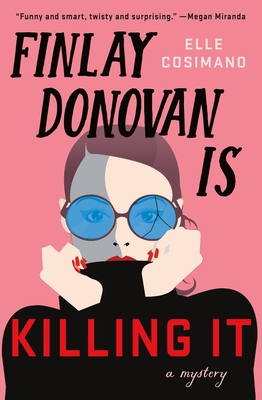
I just read two delightful books in a planned series by young adult author Elle Cosimano, although these books are intended for adults. I checked out the first, Finlay Donovan is Killing It, based on a “best books” email from Goodreads; my brain kept nagging me that I should recognize the name of the author, but it wasn’t until I finished that book and the sequel and went looking for her on Goodreads that I realized she was the author of a wonderful YA book, part paranormal and part gritty realistic fiction, that I had read back in 2016. That book was Holding Smoke, and I had forgotten all about it but certainly remember it now, because it was one of my favorite books of that year, to the point where I raved about it and gave it five stars.
Her YA books seem to be similar in content (mystery/thrillers) but completely different in execution from these first two books for adults. The YA books are deadly serious, while the Finlay Donovan books are deadly but also funny, sort of a mashup of thriller, French farce, and relationship fiction. Those elements may sound incompatible, but Cosimano makes them work, and keeps you in both suspense and in stitches all the way through.
Finlay is a newly single mom; her husband, Stephen, left her and her two young children for his real estate agent, Theresa, and is now using his vastly greater income and resulting stability as a weapon to try to win custody of the kids. Meanwhile, Finlay, who is a novelist with a string of almost-successful romance/thrillers that have garnered small advances and insignificant royalties, is way behind with her latest manuscript, for which her agent and editor are both hounding her, and she has maxed-out credit cards and nothing coming in to cover the copious bills piling up on her porch. To top that off, her husband has just fired her nanny without telling her, and she’s late to a meeting with her agent due to a catastrophic incident with a pair of scissors that left her daughter, Delia, half bald with a bloody scratch on her head.
Absentmindedly stuffing the scissors and the bloody rag she used to stop the bleeding into her diaper bag, Finlay rushes the kids off to their father for a couple of hours so as to meet up with her agent for a late lunch at Panera, to discuss deadlines Finlay already knows she’s not going to be able to meet. A woman seated next to the two eavesdrops on their conversation about how to deal with a dastardly man and provide a safe haven for a nice woman (part of the plot of her latest book), catches a glimpse of the scissors and the blood-spotted diaper in Finlay’s bag, and jumps to a wrong conclusion. After taking a trip to the restroom, Finlay discovers a note left for her by the eavesdropper, offering $50K if Finlay the contract killer will “off” the woman’s husband.
In a book that promises mystery, intrigue, and laughs, we get everything we are promised as this crazy but nonetheless somewhat plausible story unfolds. The coincidences are epic, but I embraced them whole-heartedly as necessary to the continuation of the saga of Finlay, her errant nanny, Vero, and the love interest—a hot young bartender studying to be a lawyer who unwittingly gives Finlay a much-needed alibi when her bad decisions blow up on her.
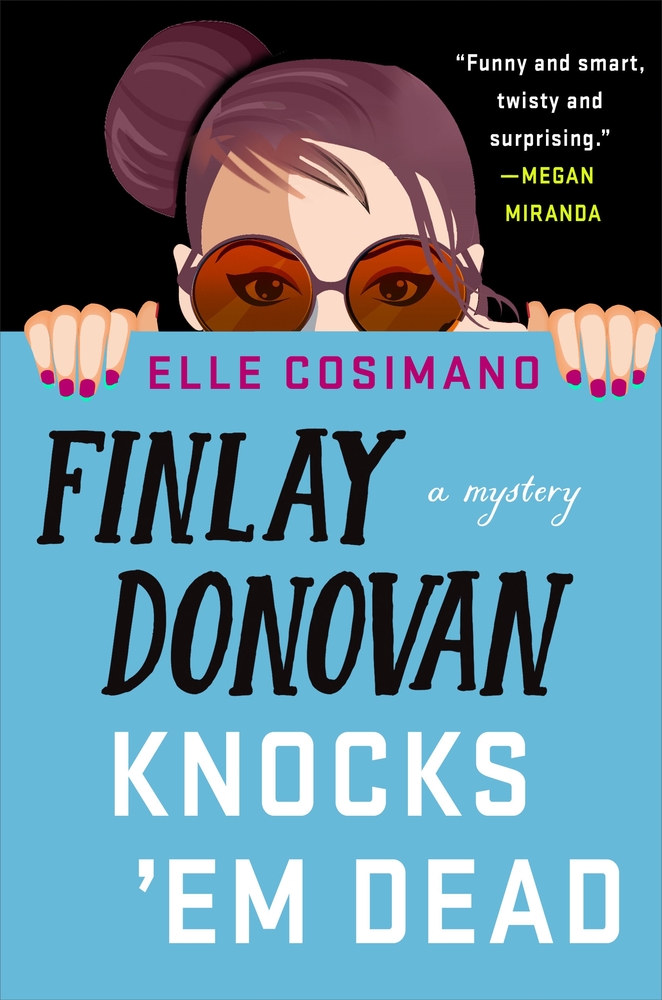
I finished the book in two days, and couldn’t wait to grab the sequel, Finlay Donovan Knocks ‘Em Dead, which was, if possible, even more fun, bringing a plot so convoluted that only Finlay and Vero could figure it out…eventually. The third book, Finlay Donovan Jumps the Gun, is due out in 2023, and I can hardly wait. In the meantime, though, I am going back to explore Cosimano’s young adult novels to see if the others measure up to Holding Smoke. If so, there will be more raving to come.
Romance and more…
My friend Judi commented that when she was at a loss for something to read or wanted to experience the comfort of a familiar story, she returned to the four-part Chesapeake Bay Saga by Nora Roberts. I had never read anything by Nora Roberts, but she is a prolific author and her books are ubiquitous, so I decided to check out this mini-series.
These books fall into what I would call the “relationship fiction” category, in that there is romance present that is a big feature of the story, but there is also some kind of content that reflects a family dynamic beyond just the true-love part. Roberts’s vehicle for these four novels was clever, in that she created a family of four “boys” who were turned into brothers by the charity of one couple who saved them from difficult beginnings, and then she wrote each book by focusing on the perspective and relationship of one of them.
Each of the boys, previously in an untenable situation, was discovered (in various ways) by Ray and Stella Quinn and adopted away from their pasts to be raised in a supportive and kind environment. As adults, the eldest three—Cameron, Ethan, and Phillip—have gone their own way, Cameron to a glamorous lifestyle mostly located in Europe, where he races fast boats and fast cars and lives on the prize money; and Phillip to a big-city career as an advertising executive with a generous income and an enviable lifestyle. Only Ethan has remained at home (although now in a house of his own) in the small fishing village of St. Christopher on the Chesapeake Bay, trapping crab for a living but investing time and hope into a boat-building business. Then, the acquisition by Ray of 10-year-old Seth, a fourth brother to join their family, is quickly eclipsed by the unexpected and tragic death of their father, who makes the brothers promise, before he dies, to rally around and raise Seth the way he, Ray, would have, given the chance. Although there are various levels of grudging reluctance to give up their chosen lifestyles to return home to take up this challenge, the three are all conscious of just what Ray and Stella (deceased some years before) did for them, and are resolved to honor their father’s memory and wishes by doing the same for young Seth.

The first, Sea Swept, is the story of Cameron, who was discovered as a runaway and car thief when he tried to boost Ray’s car at a young age; after realizing that his motivation was to get away from an abusive alcoholic father who beat him, Ray and Stella Quinn took him in. Now he has made a deathbed promise to his adoptive father to assist in the upbringing of new boy Seth, whose mother beat and neglected him, and Cameron is determined to bring the suspicious and untrusting Seth out of his shell and into the family the way Ray did for him. But an unexpected opponent is Anna, Seth’s social worker, who is playing by the rules of the child welfare system by assessing Seth’s living situation and determining whether it would be more appropriate to either place him in the foster system or reunite him with his real family. Despite his determination not to let this happen to Seth, whose psychological scars he recognizes as akin to his own, Cam is unbearably attracted to the spirited and determined Anna, as is she to him, and their involvement complicates an already fraught situation.
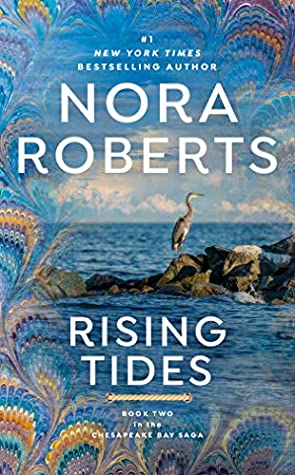
The second, Rising Tides, follows the story of Ethan, the quiet, reflective brother who has made a life for himself as a waterman on the Chesapeake Bay. Ethan’s mother, a drug addict, gave Ethan an unspeakable childhood that, despite his subsequent rescue by the Quinns, has made him determined never to marry or have children of his own, for fear of passing on some random evil gene. Local woman Grace, who despite her former marriage and the birth of her daughter has always cherished an unrequited love for Ethan, is determined not to let this be Ethan’s final word. Their romance plays out against the background of the campaign to keep Seth. In addition, the necessity for all the brothers to move back home in order to create a proper foster environment is the catalyst needed to involve Cam and Phillip in Ethan’s plans for a family boat-building business.
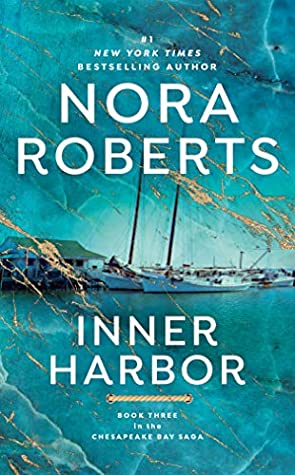
The third, Inner Harbor, is Phillip’s journey. Phillip is perhaps the most successful in terms of career, and also has separated himself the most thoroughly from his small-town origins. But after the Quinns gave him a life (almost literally—he was a gang member who was shot in a drive-by and was saved from death by Stella, the emergency-room doctor, before being adopted), he certainly can’t bring himself to turn down the opportunity for Seth to benefit from the same experience. Somewhat at loose ends after his move from his big-city lifestyle back to the tiny fishing village of his upbringing, Phillip notices Sybill, an intriguing writer who is making the town of St. Christopher the subject of her next book about the psychology of human interaction. But what he doesn’t know is that Sybill has a secret relationship to Seth that threatens everything the Quinns have tried to do for the boy.

The last book in the quartet, Chesapeake Blue, explores Seth’s own story in adulthood. Since it would reveal much about the way things went when Seth was 10, I won’t comment too much on this one, except to say that it, too, contains a romantic relationship, and the quartet is concluded with a happily ever after for many of its subjects.
There is much to like about this series. Yes, it contains multiple clichés or tropes—the macho, muscular, and ruggedly handsome brothers and their uniformly gorgeous love interests, the sex that is always incandescent for all parties involved, the meet-cute aspect of some of the relationships—but the thing that saves it is the back stories of the brothers and their sincere (and tender) determination to help a troubled 10-year-old boy the way that they themselves were aided by their adoptive parents. The thread that holds the book together is the development and transformation of the boy Seth and the creation of a welcoming family dynamic by all the other characters. The characters are nicely defined and feel, for the most part, like real people who express genuine emotions, and the small-town vibe is painted fairly realistically, with the charming offset by gossip and insularity. Wrapping it up as Roberts did with the story of Seth as an adult, showing the vulnerable cracks that remain in anyone who has survived a background such as those of these brothers, was the perfect way to end the story.
Although I don’t know that I would continue reading Nora Roberts as a favorite author (I am not a tropes and clichés fan, unless it’s Georgette Heyer!), I definitely enjoyed this foray into her genre and style.
 The Book Adept