How’s the weather?
I may have mentioned (once or twice or a dozen times) that I am not much of a romance reader. I’m not fond of the prevailing tropes of enemies-to-friends or city-folk-migrate-to-a-small-town-and-fall-in-love; I find the ways many romance authors choose to put their protagonists together to be manipulative in the extreme and not particularly clever; and a lot of the sex scenes turn out to be cringeworthy. But occasionally I come across one that feels genuine, despite itself, and worms its way into my affections, and that is the case with my most recent gamble on Kindle deals, Weather Girl, by Rachel Lynn Solomon.
Interestingly (to me, at least), many readers, both newbies and former fans of this author, did not like this book. But I guess I am usually the contrarian, so what the hey. I thought it was cute, poignant, more realistic than many, and included some elements not usually found in romance novels that made it appealing.
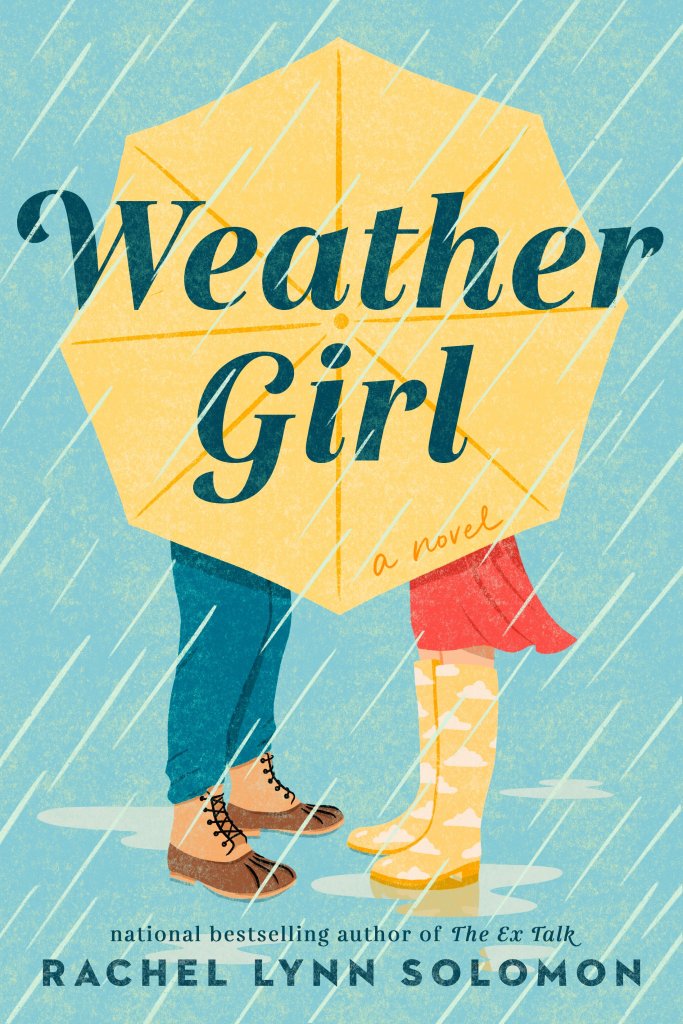
Ari Abrams is, first of all, a Jewish protagonist, which is rare; she is also a successful young TV meteorologist with a depression problem, who portrays herself as all sunshine and hides her dark side. Her love interest, Russell Barringer, also Jewish, is a sports reporter, a big teddy bear of a guy who is self-conscious about his weight. These two departures from the norm made me much more likely to enjoy this book.
Then there is the plot, which is silly enough to be light entertainment but plausible enough to carry the story: The two “bosses” of the TV station are a phenomenally popular meteorologist and her former husband, her producer, who make the station their daily battleground to the discomfort of all the other employees. But Ari and Russell see glimpses of former love and passion between these two and decide to “Parent Trap” them by trying to encourage them to renew/salvage their relationship; in the process, Ari and Russell also begin to find one another more appealing than their initial friendship would have indicated.
I enjoyed getting inside the head of someone who was fighting depression, mostly successfully, but who had deep doubts about her ability to be real with anyone and still be loved. I also liked finding out Russell’s secrets and wondering how they would fit into the mix. And finally, the sex scenes were steamy and appealing and not at all creepy, which is a big hurdle in most rom-coms.
So—a rare recommendation from me for a mostly cute, mostly light romance with some unexpectedly well handled serious subjects.
Plausibility
Do romance novels have to have a plausible premise?
I ask this because so many don’t, in my experience. Every once in a while I go outside my preferred reader zone and assay one of the genres for which I have little affinity (these would be romance, horror, westerns, and pretty much all nonfiction!), because as a readers’ advisor I need to keep up with what’s current and have some titles ready to suggest, no matter what my personal preferences. So, after finishing the mammoth undertaking that was Demon Copperhead (see previous post), I decided to go for something light and frivolous.

My chosen book was When A Scot Ties the Knot, by Tessa Dare, a part of the “Castles Ever After” trilogy (which isn’t a series but rather a rough grouping of similar stories). I actually looked up a different book on Goodreads, but one reviewer said that in her opinion that one was a rip-off of this novel, and cited Dare’s book as the better read, so I believed her and switched. Ironically, all through this book I kept thinking, Ripoff? Yeah, of Outlander. The Scot in question spent the whole book calling the object of his affection “Mo chridhe,” which is a Jamie-ism if ever I heard one. No, I know Jamie Fraser was not the first to use that expression, but you have to admit that has become a signature phrase for him, along with “Mo nighean donn.” Also, the whole forced marriage thing…whoops!
On to the implausible plot: Madeline Gracechurch is shy. In fact, her introversion goes far beyond that—she suffers panic attacks in crowds. So when her family plans to send her to London for the Season, where she has to mingle with hundreds of people at balls and actually talk to men with a view of marrying one, she panics. She makes up a suitor that she supposedly met while in Brighton on vacay, but not just any suitor: He’s Scottish, he’s a Captain in the army, and he’s away at war. So obviously she has no need to go to London, because once the war is over, her Captain MacKenzie will come for her.
This begins a years-long deception in which Maddie writes letters to Captain MacKenzie and sends them off to the front…and receives letters from him in return, because after all, it would be a bit suspicious if he didn’t write back! There is no explanation of how she manages to arrange for the return letters, especially in someone else’s handwriting other than her own, but this is just the first (although admittedly most egregious) of implausibilities. The next is a much bigger surprise: Captain MacKenzie, the remainder of his men in tow, shows up at her castle in Scotland (she inherited it from her godfather), letters in hand, and informs her that they will be wed forthwith so that his men will have a place to live, their lands having disappeared while they were away fighting for the Brits, and if she won’t marry him, he will expose her deception.
So…how did Logan MacKenzie receive the missives Maddie expected to end up in the dead-letter box? Well, apparently the British mail system within the armed forces is just that good! (Anyone surprised by that?) Even though he wasn’t a Captain but a lowly private when she first began her correspondence with him at the age of 16, the letters somehow found their way to him and yes, actually inspired him to work hard enough over the subsequent years to make the rank of Captain a reality.
All those letters, though, that Maddie received in return—not a one of them was from him. He collected all of hers…but never had the impulse to write back and say, Um, who exactly are you, why are you writing to me, what the hell, young lady? Nope. But he saved all of hers with the plan to confront her and demand her hand in marriage on his return.
Then, however, she makes him mad: She kills him off! Well, it had to come sooner or later, because what would happen should he never show up to claim his bride? So she pretends to have received news of his demise, wears mourning for a year or two, and blithely goes about creating a career for herself as a naturalist’s illustrator, drawing pictures of plants and bugs for prominent researchers and publishers.
Then the big surprise, in a blue and green kilt, shows up on her doorstep.
I suppose that romance is a genre in which you are expected to willingly suspend disbelief in a major way, but there was so much potential for holes in this one that I laughed out loud several times as this farce unfolded. It’s not a bad book, and she’s not a bad writer, especially as regards the steamy scenes when they are working up to consummating their hand-fasting. But Maddie’s subsequent frantic search for the letters—Logan’s tool of blackmail—and Logan’s maintenance of his mad-on because she killed him off became increasingly ridiculous, since it was patently obvious that she had fallen for all of his many charms, and he for hers, pretty early on. The book was basically an exercise in drawing out the anticipation for sex between the two.
One funny note that falls under reader serendipity: After I finished this silly story, I picked up a rather dark and convoluted mystery by Ann Cleeves, only to discover that its protagonist was also a naturalist’s illustrator. How weird is that?
Books about/with books, writers
I picked up a bargain e-book last week, a “relationship fiction” novel by author Susan Mallery. I hadn’t read Mallery before, but she’s quite popular, apparently. Most of her books seem to edge over the line into romance, but some are more story- or character-driven. She has quite a few short series and some stand-alones, one of which I chose from the BookBub E-book Deals that arrive in my inbox each day, because I was drawn in by the title: Boardwalk Bookshop. I am a sucker for any book that includes bookstores, libraries, readers, and writers in its title or content, so it was inevitable.
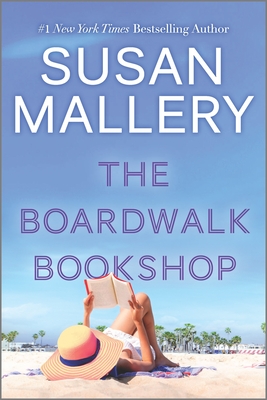
Although supposedly about a bookshop, the store in question is actually one large space divided up into three separate retail establishments (bookstore, bakery, and gift shop) shared by three women who wanted shops on the beachfront but neither needed the larger space nor could afford the price tag on their own. Despite not knowing one another, they impulsively team up to lease the place, installing their three enterprises side by side, each operating independently with their own employees and cash registers but benefitting greatly from the cross traffic of the other two businesses.
Mikki, the gift store owner, is a recently divorced 39-year-old who has two almost-grown children and a comfortable co-parenting arrangement with her ex-husband. Although they have been apart for three years, Mikki has not really moved on; right after the divorce she went on three separate but equally disastrous dates with various partners and gave up. A planned solo trip to Europe has suddenly awakened her to the fact that she could live another 40 or 50 years and doesn’t want to do so alone, but she’s not sure she has it in her to put herself forward again as a single, datable woman, with all the trial-and-error that involves.
Ashley, the baker, is swoonily in love with her live-in boyfriend Seth, who seems like the perfect man and mate except for one large flaw that, when it manifests, throws Ashley for a loop and has her doubting him, herself, and what will ultimately become of their relationship.
Bree, the book purveyor, raised by indifferent, self-involved author parents, met a man equally as brilliant as they were but who seemed to promise what they never gave her—love and a sense of belonging. Instead, he betrayed her rather spectacularly and then died, leaving her a young widow whose walls don’t come down for anyone—even Ashley’s persistently interested brother, Harding (who is also a writer).
The three women, initially bonded over their joint enterprise, slowly become friends and weigh in on each other’s options for romance, personal growth, and more. There is a dynamic, well-fleshed-out cast of secondary characters to interact with them, and the Los Angeles seaside setting is well utilized.
I liked this book, with some reservations: I thought both the narrative and the language could have been more nuanced. I found each of the women in turn to be dithery about her choices and actions. The three kept circling around to the same indecisiveness again and again, and while this may be how real life goes, in a novel it became repetitive and a little irritating. But the growth and change ultimately exhibited by each of them, while uneven, did move along to satisfying conclusions for all, and I mostly enjoyed the reading experience. I could be persuaded to try some other Mallery titles, probably when I am looking for a light, fast read as a palate cleanser between more serious novels.
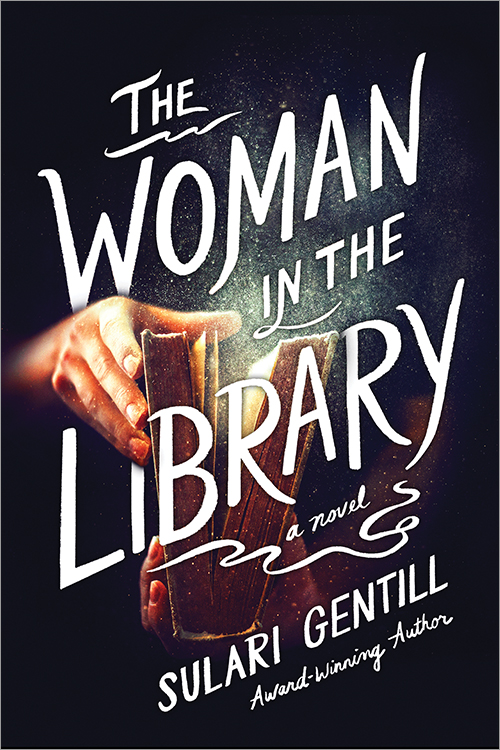
The second book-oriented story I read this week was The Woman in the Library, by Sulari Gentill, and it was a cat of a different color! I don’t remember where I came across this—it might have been on the readers’ Facebook group—but I’m so glad I picked it up, although others were not so happy with it. This is one of those books that (on Goodreads) either gets a five-star exclamation of “Yes!” from its reader, or a one-star “too weird for me.” I fell into the former group, with a few reservations—but mostly I was enthralled.
This book is the ultimate in meta, and the jump between reality and fiction is what kept me reading. The real-life set-up is that an Australian author of mysteries, Hannah Tigone, is writing a novel set in Boston, but she can’t travel from Sydney to do any on-site research due to Covid quarantine restrictions. Enter email pen pal Leo Johnson. Leo is initially introduced as an author trying to get his book published and reaching out to Ms. Tigone, a writer he admires, for suggestions or, preferably, actual assistance with finding an agent. But then Leo moves on to suggest that since he lives in Boston, he can easily assist with on-the-ground research, acting as a beta reader to give her information about locations and also vetting her language, since American slang differs markedly from Australian and it’s easy to slip up (calling a sweater a jumper, for instance) if you’re not paying attention.
After Leo’s initial email, the book moves into Hannah’s writing of her mystery. Her protagonist is Australian Winifred “Freddie” Kincaid, working on her own novel, living in Boston courtesy of the Marriott Scholarship, a writer’s grant that comes with a brownstone in Carrington Square. In the opening, Freddie has gone to the Boston Public Library for the day, planning to work on her book in its famous Reading Room, but is distracted by the three other people sitting at her table. She idly jots down notes on each of them as possible characters—she calls them Handsome Man, Heroic Chin, and Freud Girl—but then all four, along with the rest of the library users, are startled by a terrified scream coming from somewhere nearby. The library is locked down while security searches for the woman who cried out, and the four begin to chat about their immediate circumstance and a little about themselves; when they are released, they decide to go together to get something to eat, and this is the beginning of a four-way friendship.

It becomes harder as you go on to remember that Freddie is not the true protagonist, nor are these others real people—all are a part of Hannah’s story—but at the end of each chapter, the reader is yanked back to that reality by Leo’s comments on the last chapter Hannah has sent to him. Leo becomes increasingly invested in the contents of Hannah’s book, and…but that would be telling, and I have revealed enough. There are two stories here (or are there three?) and their juxtaposition and relation to one another kept me reading to finish this book in 48 hours.
The reservations I mentioned: The pacing wavers here and there, and sometimes the characters are a little flat—not well enough fleshed out. Also, insta-love rears its weary head. But these things didn’t bother me because they are, after all, part of a first draft of a manuscript! Remembering that as you go along makes everything completely believable, because Hannah still has the opportunity to come back and fix or change any of the details.
Hoping you pick this one up and are as delighted by it as I was, rather than falling into the group who considered it “weird.” The truth is, it IS weird and that’s what I liked!
Time out for lighter fare
After reading that somewhat grisly dystopian, I have been in the mood for less intensity; I picked up and started reading two separate fantasy books—one a continuation of a series I loved last year, the other a stand-alone quirky one that’s been on my TBR list for a while—and couldn’t get into either one. So I went instead for a combination of relationship reads and light mysteries.

First up was An Island Wedding, #5 in the series of books Jenny Colgan set on the island of Mure, in Scotland. It was lovely to be back with a cast of familiar characters in a magical (not literally, just in terms of pristine scenery) place where I have enjoyed previous stories so much. In this one, Flora and Joel are finally to be wed; but Joel, product of a violent childhood followed by a long line of foster homes, doesn’t seem to “get” what it means to Flora, only daughter of a large and affectionate family and member of an extended community to which she has belonged since birth, to have a traditional wedding. Unmeeting wishes become exacerbated when another “daughter” of the island, a glamorous trend-setter, decides to hold her wedding on Midsummer’s Eve (the same day as Flora’s) at the grand hotel Flora manages, and Flora has to put up with Olivia’s overboard plans while being distinctly underwhelmed by her own. Since it’s Jenny Colgan, you know that it will all work out, but it’s fun to experience it along with your favorites. There is also movement in a side story involving the island’s immigrant doctor and its favorite schoolmistress.
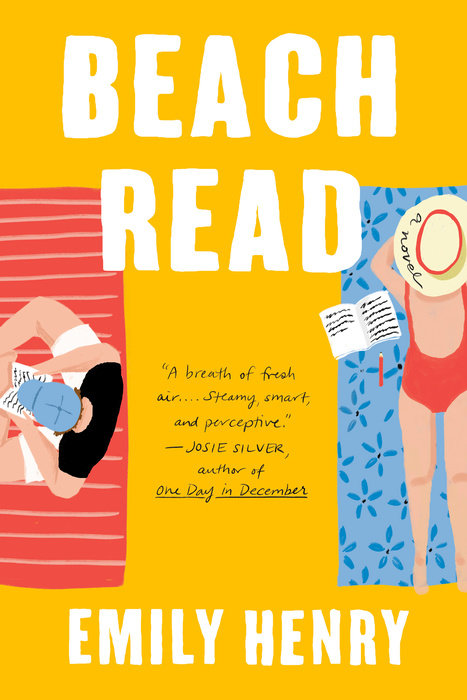
After listening to a student in my readers’ advisory seminar wax poetic about Beach Read, by Emily Henry, in last week’s book-talk for the class, I picked that up and read it one more time, and enjoyed it again by noticing different things this time through. I do have to agree with Taylor, though, that neither the title nor the book cover is appropriate, considering the beach in question is the shore of one of the Great Lakes in Michigan, and it’s mostly too cold to go there for more than 15 minutes! And if the title was meant to reference one of the books that the two author protagonists were writing, that was off base as well. Still a good read, though.
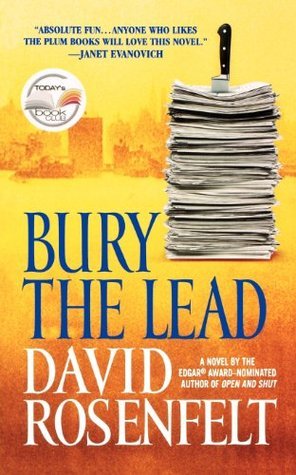
Then I jumped back to the mystery series I started at the recommendation of a librarian friend a few weeks back, and read the next two books in the Andy Carpenter legal thrillers by David Rosenfelt, First Degree and Bury the Lead. I am continuing to enjoy these, despite my initial reluctance to tackle a legal mystery series. As another person on Goodreads commented, Rosenfelt (i.e., his character, Andy) is “quick with a quip,” and I am enjoying the mix of humor, exasperation, frustration, bafflement, and creative thinking that seems to propel him towards the solution of these mysteries. I do wonder how many more books in this series Carpenter can sustain by presenting a defense of SODDIT (“some other dude did it,” acronym made famous by Dismas Hardy)—his clients can’t all be the victims of frame-ups…can they? But so far he has done it well…
Given my preoccupation with the last few weeks of my readers’ advisory class combined with some recent health challenges that make me tend to lose patience with long, intricate narratives, I may keep reading this kind of distracting, pleasurable fare for the rest of this year! We will see if the mood turns…but in the meantime Andy Carpenter #4 (Sudden Death—he’s fond of the sports metaphor) is next on my list.
Reverse the trope
We’ve all read the book or seen the (probably Hallmark) movie: The protagonist is a successful young executive of a major corporation; his assets include a tasteful wardrobe, a midtown rent-controlled loft, a sports car that screams big money with every rev of its engine, and the perfect girlfriend, from the top of her sleek chignon to the tips of her Louboutins. She shows up to work every day at the publishing house or the art gallery, dressed in a pencil skirt and crisp white blouse, manages her business with a firm hand while terrorizing her subordinates, and at the end of the day orders Thai take-out, because she never bothered to learn to cook. Everything in their mutual world seems well ordered and meant-to-be, if a bit regimented.
Then our man is sent by his employer to a picturesque small town, probably to either acquire or shut down some competing business, and while he’s there he meets her: The One. She is the antithesis of everything he thought he wanted—she has long, curly hair, wears sundresses and flip-flops, and is earnest about protecting her home and family from the rapacious big-city villain. Despite apparent incompatibilities, they fall in love, and the young executive suddenly decides that giving up the city for the country, the tense 60-hour work week for the laid-back life of a construction worker/baker/shepherd, is the way to go, if only he can be with his true love.
And of course he is also giving up the city girlfriend, the icily perfect career woman whose urges and drives he once wholeheartedly shared. He pretty much dumps her without compunction, and that’s the last we hear of her in this story, because it’s all about his renaissance as a man of the people living in a one-horse town and making babies with his soul mate.

In Book Lovers, by Emily Henry, Nora Stephens is that woman—a literary agent known as the Shark for her ruthless bargaining on behalf of her clients—and she has been summarily dumped for the country girl not one, not two, but three times. So when her beloved younger sister, Libby, comes up with the idea of a sisters’ vacation, a month’s retreat to Sunshine Falls, North Carolina, Nora acquiesces for the sake of spending time with her sister before Libby is subsumed, yet again, into motherhood with the birth of her third child, but has no illusions about the lure of the small town. She is a city girl, born, bred, and determined to remain.
Libby has other ideas: She has designed the trip as a transformation for Nora, and hopes to lure her away from her business-first attitude to become a more well-rounded person with an actual personal life. (It’s hard to love again after the multiple humiliations, so Nora puts it all into her job.) Libby has visions of Nora picnicking with a hunky country doctor, but instead, almost the first person Nora encounters is Charlie Lastra, a handsome but surly editor who rejected one of her clients’ books a couple of years back, thereby earning Nora’s abiding dislike. What he is doing there in Sunshine Falls is just one of the mysteries Nora finds herself confronting as she tries and fails to find any redeeming qualities about rural bliss. She misses the coziness of her apartment, the sound of car horns, and her Friday night Tom Yum Goong, and nothing is going to keep her from them, beyond this month-long time-out. But Libby (and maybe Charlie) have other ideas about Nora’s fate.
I have to say that I loved this book unreservedly. The clever ploy of turning the cliché upside down and telling the story of the city “girl” who was (repeatedly) left behind was brilliant, but only the first of the twists and turns this story takes as Nora explores the depths of her inner self and makes some surprising but not at all clichéd discoveries. And it certainly didn’t hurt that with protagonists who are a book editor and a literary agent, the story revolved around books. I loved the characters, the setting, and the emotional energy, and wanted to read it all over again the minute I rather hastily finished it (not being able to shut off my Kindle until 2:17 a.m. when I arrived at the last word).
I enjoyed two other books by Emily Henry, but when I reviewed them I used words like “meet-cute” and “feel-good,” and while I extolled the witty banter and the chemistry between the protagonists, I also saw the predictability inherent in those two wish-fulfillment stories. Book Lovers is different—I wouldn’t call it a parody, but it certainly has those moments, and the point isn’t the happily ever after but the acquisition of self knowledge. There is also both banter and romantic sizzle, but they aren’t exactly the point—or at least they are far from being the main or only one.
I don’t always have a lot of respect for either romance or relationship reads in terms of their originality or their ability to hold my attention, but this one was a five-star.
Hanging chads
In case you don’t get the reference: In the 2000 presidential election between Al Gore and George W. Bush, portions of the state of Florida used a punch-card type ballot that was easily misread; during the furor that followed the initially indeterminate election, the public soon became familiar with references to hanging, dimpled, and pregnant “chads,” which were the little pieces of the punch-card that were, in theory, supposed to be removed by the punch tool, but instead either hung by a corner or, worse, looked like they had been pressed on with intent, but not punched out. The recount in Florida resulted in a bunch of wrangling, with many lawsuits and counter suits between the parties, until ultimately Gore conceded, although he had won the popular vote. It’s a controversy to this day, and one wonders on what trajectory our country would be now had Gore, and not Bush, become President.
I reference it here because I just had a reading experience that reminded me of the bewilderment of the Florida election officials trying to discern the intent of the voters by interpreting the various states of chads.

You will recall that at the beginning of July I decided to go beyond her Bill Slider mystery series to explore the other genre of author Cynthia Harrod-Eagles, by reading the first book in a new series, The Secrets of Ashmore Castle, an enjoyable Upstairs / Downstairs, Downton Abbey read-alike. In that review, I mentioned that the ending was “somewhat abrupt,” and bemoaned the fact that the sequel wouldn’t be available for more than a month. Well, I have just completed the sequel—The Affairs of Ashmore Castle—and it is this that has given me the unsettling feeling provoked by hanging chads!
Lest you should think I am panning the book, I am emphatically not—I quite enjoyed it. In fact, the deepening stories of all the main and subsidiary characters provided an even richer and more involving experience than did the first book in the series. The various marriages and matches made in the first volume by the ruling classes were developed and took interesting turns, the world of the servants likewise became more transparent, and I followed all the story lines with anticipation. That anticipation carried on up to the very last page, when one character asks another, “What do you really come here for, Lady Alice?” and, swiping my finger impatiently across the face of my Kindle to turn the page and discover the answer, I was instead treated to Amazon’s “Before You Go…review this book” prompt! I was in such disbelief that that could possibly be the end of the book that I actually went back to the beginning, checked the number of chapters, and clicked on the last one to see if there had been some glitch with my Kindle that had caused the last third of the book to disappear!

Nope. She really did end it there. She used the last few chapters to set up some truly urgent situations with both the “upstairs” and “downstairs” protagonists, and then left them all hanging, or dimpled, or pregnant, and JUST. STOPPED. WRITING. I haven’t been this disconcerted since I read Connie Willis’s gargantuan time travel duology, Blackout and All Clear; at the end of Blackout—or I should say, where Blackout stopped—I looked up articles about the two books and discovered that Willis had originally intended it as one gigantic tome, but that the publisher convinced her she must split it in two (the first book being 491 pages, while the second is 656, published within nine months of one another). And split it in two she did, with no warning, no wrap-up, no transition whatsoever—book one simply stopped on a page, and book two took up on the next page. It made me nuts.
What makes me even more dissatisfied with the abrupt stoppage of the Ashmore story is that I read the second volume a mere day after it was published, and will presumably have to wait a year (or more, depending on what other series she has on the boil) to discover the fates of all involved! And by then I will have read so many books in the meantime that it will probably mean a reread. Sigh. You wound me, Ms. H-E.
Ambivalence…
After having rated TJ Klune’s book The House in the Cerulean Sea as one of my favorite discoveries last year, I was greatly anticipating reading this year’s Under the Whispering Door. I ended up mostly enjoying it, but it was a bit of a struggle to do so.

Although they have different themes, the books do share certain characteristics: an initially unlikeable protagonist (although I mostly felt sorry for Linus in Cerulean, while Wallace in Door was simply an asshole); a quirky gang of main and secondary characters to surround him and serve as foils for his transformation; equally fanciful world-building; and a gay romance. I was intrigued by the subject matter—death and transition—and couldn’t wait to see how this creative author would deal with it. Unfortunately, I had to wait…and wait…and wait some more.
I almost put this book down a couple of times during the first 60 percent of it, simply because nothing much happened. Don’t get me wrong—there are events taking place, they simply don’t appreciably move the plot along, and also can’t compete with the constant, repetitive introspection of the exceedingly annoying protagonist, who protests, whines, and throws tantrums as each of them transpires.
Wallace, a successful and rather egomaniacal big-city attorney, has a blackout moment in his office, and when he wakes up, he’s at a funeral, which turns out to be his own. There are distressingly few people in attendance, none of them kindly disposed towards him, and it’s almost with relief that he notices one well-dressed and intriguing person he’s never met. Mei turns out to be his Reaper, the person who has been sent to retrieve him, now that he’s dead, and to convey him to the Ferryman to make his transition to whatever’s next. This turns out to be Hugo, owner of a tea shop on the outskirts of a small, out-of-the-way town whose inhabitants enthusiastically line up for his and Mei’s croissants and scones, oblivious to the presence of both resident and guest ghosts on the premises.The living quarters are upstairs from the shop and, on the fourth floor, there is a mysterious door in the ceiling that leads, well, somewhere else.
Wallace, however, isn’t yet willing to admit that he’s dead and it’s all over, let alone passively float through that door. He’s angry, he’s resistant, he’s all the many stages of Elisabeth Kubler-Ross, and he’s going to fight with anyone who tries to pressure him into something for which he isn’t ready.
This is a book about what it means to be alive and how to come to terms with death. I appreciated the marked lack of religious symbology and the unique ways in which Klune imagines that all this happens, but was less a fan of the repetitive mantras surrounding the subject matter. There were definitely both ahah! and touching moments throughout the story, and I did invest fairly heavily in most of the characters by book’s end, but there were some things that didn’t feel organic (the romance wasn’t there and then it was, and it was hard at times to understand why) and others that felt extraneous. I ended up enjoying it quite a bit, but the irritation level at pushing through all of the preliminaries that seemed to last way too long brought the pleasure quotient down a bit.
My ultimate verdict would be to read it, but go into it knowing it’s a slow burn of a read and you will have to persist to find gratification.
Split personality

I am a mystery reader, and I specifically enjoy British mysteries, although I have read my share of others. So I am always looking out for a new Brit-based series, and somewhere along the way I discovered the Bill Slider detective novels by Cynthia Harrod-Eagles. They don’t seem to be terribly well known here in the States—I never see recommendations for them on any of the reading pages to which I belong—and the American version of the books is usually poorly designed and cheaply printed, with ugly art, crap paper, and inappropriate typefaces! But it’s such a fun series that I have persisted from the first—Orchestrated Death—to #21, Headlong, which I just completed, and I see that there are two more awaiting me, which happened while I wasn’t looking (i.e., teaching Young Adult Literature and reading for that).
They are police procedurals in the truest sense: Although Detective Chief Inspector Bill Slider is definitely the lead guy, he has under him a team of versatile and memorable officers, all working together to solve the homicides that come their way. From his main prop, Atherton, a literate, clever, fashionable ladies’ man, to the lowliest “plod” on the force, all have distinct personalities and specialties, and we are granted a multidimensional vision of the crime, the suspects, and the process through their eyes.
But lest the books be too concentrated on the whodunnit, Harrod-Eagles has also provided both Bill and many of his colleagues with lively and interesting partners, children, and private lives, which figure largely into each story in various ways.
She also has a wicked sense of humor and has created the higher-ups as wholly original versions of bureaucratic cliché; for instance, Slider’s direct superior, Porson, is the master of malapropism, and delivers twisted versions of every idiomatic proverb in the book, providing Slider and his minions with an ongoing challenge to keep a straight face while the reader is free to hoot with laughter.
This latest fulfilled its challenge of keeping the reader guessing. Ed Wiseman, a prominent literary agent, has apparently fallen to his death from the window of his study into the dug-out building site next door. Slider is assigned the case, but has been cautioned that Borough Commander Carpenter would like to see this quickly ruled an accident and quietly put to bed; it seems a young woman who was involved with the victim is also somehow related to the Commander’s wife, and he wants to keep any scandal out of the papers. But when the verdict is not accident but murder, Slider has to pursue a slippery group of clients, friends, ex-wives, romantic partners, and rejected authors in his quest to solve the crime, while assiduously avoiding involving the girl, who seems increasingly central to the case.
As with most of the rest of the series, this one is intricately plotted to realistically showcase the varieties of police work necessary. It’s also filled with red herrings, puns, wordplay, and humor, and continues to unfold the personal lives of the main characters with glimpses into their family dynamic. I’m glad to pick up this series again, and won’t delay long before moving on to the last two unread volumes.
The interesting thing about Cynthia Harrod-Eagles is that she is not specifically known for this series, and says that she wrote the first book as relaxation between other projects, with no intention of publishing it. Her “real” metier is historical fiction, and her reputation is tied to a massive effort called The Morland Dynasty, which began as 12 volumes that were to cover a 500-year period of British history, but evolved into 35 books as she discovered she wanted to spend more time (and pages) on the fictional characters embedded in the history. Outside of this mammoth family saga, she has also written other historical fiction, contemporary novels, a couple of fantasy books, and a dozen romances, with a total of more than 90 titles!

After enjoying the Slider mysteries, I wanted to read and experience something else she had written, but I didn’t want to embark on anything like a 35-book endurance test, so I chose the first book in a new series, The Secrets of Ashmore Castle, which seems to be a cross between historical fiction and romance with perhaps a whiff of the gothic (the description brought Victoria Holt to mind, although Harrod-Eagles’s prose is far more accomplished and the characters and plot more complex). (The publishing company compares it to both Downton Abbey and Bridgerton, but since I have only seen the TV shows for both of those, I can’t speak to their similarity.) I have come to regret this decision, because I enjoyed the book so much that I immediately wanted to continue on with its characters and plot line, but the second book in the series isn’t due out for another month!
The story begins in the year 1901. The Earl of Stainton and his family occupy Ashmore Castle, although at the opening of the tale several of the family members are widely dispersed. Eldest son Giles, who has always been at odds with his father despite his position as the heir apparent—not least for his choice of occupation—is in Egypt on an archaeological dig, while second son Richard is off fighting the Boer War in South Africa. Occupying the castle are the earl, his wife, and their two teenage daughters (plus a host of servants and, occasionally, their elder, married daughter and family plus Uncle Sebastian). But when the Earl breaks his neck in a hunting accident, Giles is called home from his beloved desert vistas to verdant but gloomy England to take up his duties as the new head of household.
What Giles is swiftly made to realize by his father’s men of business is that along with the estate and castle he has inherited a host of severe financial troubles that, if unchecked, will mean certain ruin for the entire family. He grimly digs into the details, hoping to find ways to alleviate the situation, but eventually comes to the dismal conclusion that his only real option is to marry for money. Having dedicated his adult life so far exclusively to his career, he doesn’t have a clue how to accomplish this, so he turns to his worldly Aunt Caroline for assistance.
Meanwhile, 17-year-old Kitty Bayfield, shy daughter of a wealthy but minor baronet and his social climber of a wife, has just graduated from her finishing school, along with her impoverished but vastly more socially skilled friend Nina, and is preparing to be presented to society during the Season. Kitty’s aunt comes up with a scheme to present Nina to society alongside Kitty to help Kitty overcome some of her reticence and feel more comfortable. Soon Giles, his brother Richard, Kitty, and Nina all meet, at teas, dances, and outings, and while Giles is powerfully attracted to Nina, he is soon made to realize that only Kitty can help him out of his financial predicament…
Harrod-Eagles is wonderful at both characterization and world-building, and all the protagonists come alive on the page; but equally compelling are the foibles of the servants behind the scenes, as well as the interventions in the plot made by secondary characters such as a cobbler turned industrialist, Giles’s French grandmother, and Nina’s Aunt Schofield. I spent several pleasurable hours getting to know both people and situations, and was dismayed to discover, when I arrived at the (somewhat abrupt) ending not knowing how certain significant acts in the evolution of the relationships would turn out, that the next book is not yet available. Now I am biding my time by filling in with other books, while anticipating the August 11th release date of The Affairs of Ashmore Castle.
Of course, I could embark on reading the Morland Dynasty books; but if I were to enjoy them as much as I did this, I would be dug in for a good long time, and I’m not sure I’m ready to commit a few months’ reading to the works of one author. Maybe I’ll just read the first one…
Romance and more…
My friend Judi commented that when she was at a loss for something to read or wanted to experience the comfort of a familiar story, she returned to the four-part Chesapeake Bay Saga by Nora Roberts. I had never read anything by Nora Roberts, but she is a prolific author and her books are ubiquitous, so I decided to check out this mini-series.
These books fall into what I would call the “relationship fiction” category, in that there is romance present that is a big feature of the story, but there is also some kind of content that reflects a family dynamic beyond just the true-love part. Roberts’s vehicle for these four novels was clever, in that she created a family of four “boys” who were turned into brothers by the charity of one couple who saved them from difficult beginnings, and then she wrote each book by focusing on the perspective and relationship of one of them.
Each of the boys, previously in an untenable situation, was discovered (in various ways) by Ray and Stella Quinn and adopted away from their pasts to be raised in a supportive and kind environment. As adults, the eldest three—Cameron, Ethan, and Phillip—have gone their own way, Cameron to a glamorous lifestyle mostly located in Europe, where he races fast boats and fast cars and lives on the prize money; and Phillip to a big-city career as an advertising executive with a generous income and an enviable lifestyle. Only Ethan has remained at home (although now in a house of his own) in the small fishing village of St. Christopher on the Chesapeake Bay, trapping crab for a living but investing time and hope into a boat-building business. Then, the acquisition by Ray of 10-year-old Seth, a fourth brother to join their family, is quickly eclipsed by the unexpected and tragic death of their father, who makes the brothers promise, before he dies, to rally around and raise Seth the way he, Ray, would have, given the chance. Although there are various levels of grudging reluctance to give up their chosen lifestyles to return home to take up this challenge, the three are all conscious of just what Ray and Stella (deceased some years before) did for them, and are resolved to honor their father’s memory and wishes by doing the same for young Seth.

The first, Sea Swept, is the story of Cameron, who was discovered as a runaway and car thief when he tried to boost Ray’s car at a young age; after realizing that his motivation was to get away from an abusive alcoholic father who beat him, Ray and Stella Quinn took him in. Now he has made a deathbed promise to his adoptive father to assist in the upbringing of new boy Seth, whose mother beat and neglected him, and Cameron is determined to bring the suspicious and untrusting Seth out of his shell and into the family the way Ray did for him. But an unexpected opponent is Anna, Seth’s social worker, who is playing by the rules of the child welfare system by assessing Seth’s living situation and determining whether it would be more appropriate to either place him in the foster system or reunite him with his real family. Despite his determination not to let this happen to Seth, whose psychological scars he recognizes as akin to his own, Cam is unbearably attracted to the spirited and determined Anna, as is she to him, and their involvement complicates an already fraught situation.
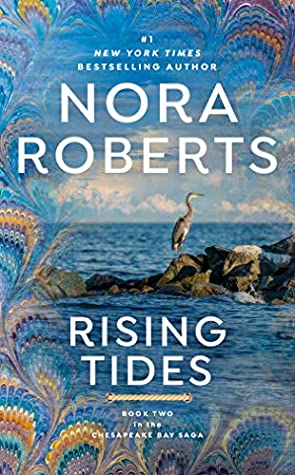
The second, Rising Tides, follows the story of Ethan, the quiet, reflective brother who has made a life for himself as a waterman on the Chesapeake Bay. Ethan’s mother, a drug addict, gave Ethan an unspeakable childhood that, despite his subsequent rescue by the Quinns, has made him determined never to marry or have children of his own, for fear of passing on some random evil gene. Local woman Grace, who despite her former marriage and the birth of her daughter has always cherished an unrequited love for Ethan, is determined not to let this be Ethan’s final word. Their romance plays out against the background of the campaign to keep Seth. In addition, the necessity for all the brothers to move back home in order to create a proper foster environment is the catalyst needed to involve Cam and Phillip in Ethan’s plans for a family boat-building business.
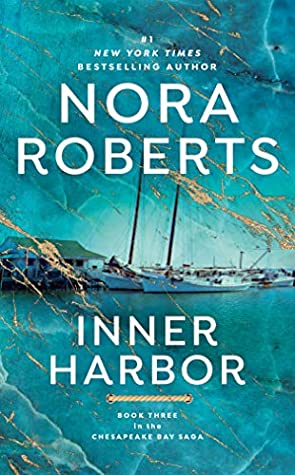
The third, Inner Harbor, is Phillip’s journey. Phillip is perhaps the most successful in terms of career, and also has separated himself the most thoroughly from his small-town origins. But after the Quinns gave him a life (almost literally—he was a gang member who was shot in a drive-by and was saved from death by Stella, the emergency-room doctor, before being adopted), he certainly can’t bring himself to turn down the opportunity for Seth to benefit from the same experience. Somewhat at loose ends after his move from his big-city lifestyle back to the tiny fishing village of his upbringing, Phillip notices Sybill, an intriguing writer who is making the town of St. Christopher the subject of her next book about the psychology of human interaction. But what he doesn’t know is that Sybill has a secret relationship to Seth that threatens everything the Quinns have tried to do for the boy.

The last book in the quartet, Chesapeake Blue, explores Seth’s own story in adulthood. Since it would reveal much about the way things went when Seth was 10, I won’t comment too much on this one, except to say that it, too, contains a romantic relationship, and the quartet is concluded with a happily ever after for many of its subjects.
There is much to like about this series. Yes, it contains multiple clichés or tropes—the macho, muscular, and ruggedly handsome brothers and their uniformly gorgeous love interests, the sex that is always incandescent for all parties involved, the meet-cute aspect of some of the relationships—but the thing that saves it is the back stories of the brothers and their sincere (and tender) determination to help a troubled 10-year-old boy the way that they themselves were aided by their adoptive parents. The thread that holds the book together is the development and transformation of the boy Seth and the creation of a welcoming family dynamic by all the other characters. The characters are nicely defined and feel, for the most part, like real people who express genuine emotions, and the small-town vibe is painted fairly realistically, with the charming offset by gossip and insularity. Wrapping it up as Roberts did with the story of Seth as an adult, showing the vulnerable cracks that remain in anyone who has survived a background such as those of these brothers, was the perfect way to end the story.
Although I don’t know that I would continue reading Nora Roberts as a favorite author (I am not a tropes and clichés fan, unless it’s Georgette Heyer!), I definitely enjoyed this foray into her genre and style.
Happy endings

I suppose it’s slightly ironic, given that my last post was an enthusiastic recommendation for half a dozen Regency romances, that I don’t normally care for books with blatantly happy endings. Given that statement, it’s even more unlikely that I would bother to pick up a book actually titled The Keeper of Happy Endings. But Barbara Davis combined several elements that lured me in, including the presence of Paris as one backdrop for the story, an artist whose dream was to open a gallery, a seamstress who created couture wedding gowns (yet another form of art), and historical elements set in World War II.
The basic set-up for the story is that it takes place partly in the present day, which in this book is 1985 Boston, and partly (in flashback) during the middle years of World War II, in German-occupied France. It brings together two women who share a similar tragedy in their lives: Soline Roussel, whose fiancé drove an ambulance for the Red Cross in France, and went missing, presumed captured and killed by the Germans; and Rory Grant, whose fiancé is kidnapped, presumably for ransom, while working in the Sudan for Doctors Without Borders.
When the story opens in 1985, Rory’s fiancé, Hux, has been gone for about six months with no word of his fate. Her life has become a waiting game, and she has dropped all pretense of continuing without him; although she is supposed to be preparing for a return to college in the fall, followed by an internship in Paris, she sits at home and reads romance novels, for the distraction and also because she hopes for her own happy ending.
In flashback, Soline Roussel is a young woman working with her mother in their bridal salon. Generations of the women of her family have created “lucky” wedding gowns: a “wish” or charm is embroidered into the dress, and so many of the brides who marry in a Roussel gown end up with good relationships and generally lucky lives that the women (and gowns) have gained a reputation for magic. But the onset of World War II and the occupation of Paris by the Germans has put an end to the business and, after her mother dies of cancer, Soline is at loose ends. She ends up volunteering at a hospital, where she meets Anson Purcell, a Yale man from Boston who drives an ambulance, and he soon becomes the love of her life. Fearful that the Germans will capture Soline and use her against him so that he will reveal details of the Resistance work in which he is secretly involved, Anson sends her off to America
Back in the present day, the two women come together when Rory decides that she will revisit a dream (in which Hux encouraged her) to open an art gallery to exhibit previously unknown artists, and discovers the perfect location for it, the former bridal shop (in Boston) belonging to Soline Roussel. The building was decimated by a fire four years previously, and was partially rebuilt but remains empty. Rory persuades the reclusive Soline to lease it to her and, in the process, Soline recognizes a kinship between herself and the heartbroken girl, and a friendship is born.
This book has a lot going for it. There is a nice balance between the story in the past and the one in the present. There are complex relationships, notably Rory’s with her mother, Camilla, and Soline’s with her own mother and also with Anson. The historical details of the flashback portions of the book feel real and explore some uncommon details about World War II . I wished for more information about Soline’s career in couture as well as the methodology behind Rory’s chosen art form, but both were adequate to the story. The romance was satisfying. There were interesting twists and turns that kept me reading until far later than prudent into the early morning hours.
Are you sensing a “but”? Well…in many ways this was a beautiful and complex story that I wanted to love. But at a certain point, things became too predictable and certainly too coincidental to suspend disbelief, and I know, I know, I should have seen it coming from the title of the book, but the wrap-ups and happy endings for so many of the characters set my teeth on edge. Yes, there is a part of me that thrilled to the fulfillment of everyone’s dreams; but there is a reason I don’t read much romance, and it’s this: There is also a cynic in me that flat-out doesn’t believe it, and wants the complexity of a partial fail or, at least, a tiny bit of the unknown to remain.
I will, therefore, give a qualified recommendation for this book, which is, if you are fond of the perfect ending, especially after a lot of intervening suspense about what will happen, you will adore it. But if you are like me, with an inbred cynic who sits on the sidelines and scoffs, then you will like it, but not nearly as much.
 The Book Adept