Life
Every once in a while I want a break from the drama of a murder mystery, a thriller, a fantasy of some kind. I want to read about and immerse myself in the personal and intimate details of one particular life, to match my emotions to the character’s and perhaps compare how we deal with the daily events that are, on the surface, mundane, and yet affect each of us dramatically when experienced. I suppose there are a lot of authors who write that kind of story, but I find there are few who keep things strictly to the believable without unnecessary embroidery, and without feeling the need to ameliorate discomfort. One of those, in his own small way, is Robin Pilcher, the author son of Rosamunde Pilcher, whose books I have mentioned here.
He sets his books in venues similar to those of his mother, having grown up, of course, in the same environment as she, in England and Scotland, partly in the city and partly in the countryside. He definitely has a formula, which is the triumph over personal adversity, many of his characters picking themselves up from some disaster and starting over, whether emotionally or financially (or both). Again, a familiar theme, but there’s something both sweet and intense about his characters that make his books rise above a simple statement of events to involve the reader more closely than perhaps other authors are able to achieve.
I had read and enjoyed his work before, and when I hit a lull in the parade of new books from favorite authors, I looked at my backlist of “want to read” and, seeing a couple of his titles, decided he was just the thing for me right now. I’m having a bit of a difficult time with my health and find myself wanting something immersive but not overly stimulating, if that makes sense. You could call it comfort reading, but it’s not the type like Jenny Colgan, which is more like wish fulfillment; it’s about real people who work things out, which is encouraging in itself.
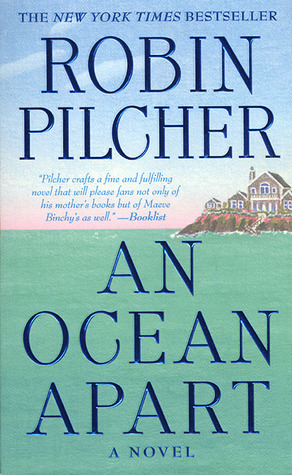
The first book I picked up happened to be the first one he wrote, called An Ocean Apart. It’s about a man in pain who can’t quite figure out how to get past it. He’s the father of three children, and his wife, who felt meant to be his life partner from the first time he met her, has died of cancer. The children are coping fairly well, mostly by going back to boarding school and immersing themselves in familiar routines with schoolwork and friends, but David can’t seem to deal with the reality of her absence, and has desperately pursued the hard physical labor of restoring the gardens at his family’s ancestral home where his parents live, as a distraction from his thoughts.
In his despair, he has shunned his place of work, leaving his father and a new employee to fill the gap left in his absence; the family owns a whiskey distillery, and David is meant to be the marketing manager. An emergency of sorts comes up that needs addressing, and the new operations officer persuades David’s father that they should send David to a series of meetings in New York to cope with it, hoping that a change of scenery will work a transformation. Instead, David comes straight up against his memories of Rachel when one of their new client’s administrators asks if his wife will be joining him, and has an emotional breakdown complicated by a bad bout of the flu.
He ends up deciding that he simply cannot go back to Scotland yet to face his regular life, and takes a job as gardener to a family living on Long Island. The interlude provides the respite he needs, until a threatened takeover of the distillery wakes him up to his responsibilities to save the family business for his father, his children, and his community.
This book has just the right balance in its story and was quietly involving from beginning to end. It’s a bit of a slow start, but by the end I couldn’t put it down. So when I was finished, I decided to move on to…
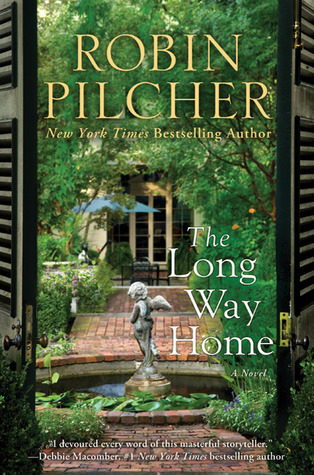
The Long Way Home. I think I liked this book even more, although I didn’t know if I would at the beginning of it. Claire’s father dies when she is young, and her mother remarries to a man named Leo, with two children of his own. Although neither her mother nor she get along with the new steps, they try their best for Leo to create a family, and the three of them, at least, are very happy with one another at Leo’s large estate in the Scottish countryside. Claire also has a best friend, Jonas, who lives at the neighboring farm tied to the property, and the two are inseparable until one day when Jonas rejects her and walks away from the friendship without explanation.
Claire, who has had a crush on Jonas for the last couple of years, is devastated, and goes traveling for her gap year between high school and college to try to forget. She ends up meeting Art, a young chef, in Australia; the two of them migrate to America, and she never goes back to her childhood home until her mother dies and she returns for the funeral and for Leo.
It gradually becomes clear that Leo’s memory isn’t what it once was, and that he will need some significant assistance to continue living at the estate. His two children prove both uninterested and unhelpful, so Claire and Art step up, as does Jonas, who has returned to the neighborhood and bought his father’s farm from Leo, and is high in Leo’s confidence.
Claire and Art have the idea to turn Leo’s house into a conference center—it’s in the middle of golf course territory in Scotland and everyone thinks it’s a wonderful idea—and build him his own adjacent apartment near his beloved greenhouses. But as their plans move forward long distance while they run their restaurant in New York City, they gradually realize that both Jonas and another consortium of buyers are scheming to take over the property, pushing Leo out into a retirement home. Claire is determined this won’t happen, but she and Art first have to figure out what’s going on, and (whether it’s for profit or for revenge) how to make it work for Leo.
I think the thing I enjoyed most about this book was that it didn’t end in what I call a “reconciliation romance.” You know, those stories where the woman returns to the town of her youth, runs meet-cute into the former love of her life, and ultimately abandons everything to fall into his arms. There was a point early in the book where I thought, “Oh no, he’s going to tank Claire’s relationship with Art somehow, so she can finally be with Jonas,” but Pilcher is a better author than that, and actually allowed for the possibility of a story being sufficiently engaging without total wish fulfillment being satisfied! And he did it cleverly and with much entertainment value.
These are not scintillating NYT bestsellers, and since they were mostly set in the 1980s you will have some issues with the technology (especially the prevalence of the fax machine!), but if you are looking for a quiet but satisfying read that will leave you with a happy feeling without going over the top, you might want to try a few books by Robin Pilcher.
Discover more from The Book Adept
Subscribe to get the latest posts sent to your email.


Thank you, it was good to hear your description of the stories. I get impatient with books that solve all issues by falling in love and giving up.
LikeLike