A relevant read
I have been filling in my reading list with some rather random stuff, because I have been transitioning from my old Kindle Fire (13 years and counting) to a new device. Nothing wrong with the old Kindle, but Amazon let me know that after May 20th they wouldn’t be supporting it any longer, which meant I could continue to read anything that was already on there but would no longer have access either to new purchases or to library books, because Amazon wouldn’t deliver them there. So, I had to be out of pocket for a couple hundred dollars to support capitalism and put more money in Bezos’s bottomless pockets. Gee, thanks.
Anyway, I did some research and decided to get the Kindle Paperwhite, because it’s specifically meant for reading (which is the only thing I did on my Kindle) with some anti-glare properties that would supposedly be easier on my eyes, yadda yadda. So I ordered it, received it, set it up, and immediately loathed it. First off, it has the dimensions of a postcard, and with the size of the type I need to use, it shows about two paragraphs before you have to turn a page. Second, it’s black and white. Nobody told me that (and I didn’t think to ask, because I assumed that anything newer than mine would be inherently equal or better), and I am all about the color. No, I don’t read the text in color, but I do consider books by their covers, among multiple other criteria, and who wants to see a pallid black and white version?
I immediately packed it up and sent it back, replacing it with a Kindle HD 10, which is the same size as my old Fire, is in color, and handles my library in essentially the same fashion, with a few variables. I can also use it as a tablet if I ever want to, although that is not my plan.
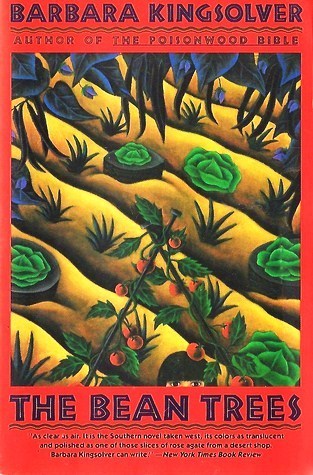
In the time it took to negotiate all of this, I was thrown back on books already on my old Kindle, and one that I reread was The Bean Trees, by Barbara Kingsolver. I was stunned to realize this book was written back in 1988, because the issues dealt with in the course of the story are so relevant to the present moment.
The basic story is entertaining. Marietta “Taylor” Greer is a stubborn and enterprising young woman who leaves rural Kentucky headed vaguely toward “the west” and a better or at least a different life; but an encounter with a Native American woman in a bar parking lot somewhere in Oklahoma changes her trajectory. The woman accosts her as she’s about to drive away, puts a bundle through the window into the passenger seat of her ancient Volkswagen, and says “Take this child.” Then she hurries over to a pickup truck with two men inside and drives away, leaving Taylor the new caretaker of a horrifically abused, underweight, mute, three-year-old Cherokee girl. Taylor and Turtle (named for her propensity to hang on to anything and anyone with the intensity and persistence of a snapping turtle) end up in Tucson, Arizona, living with single mom Lou Ann and her big-headed baby, Dwayne Ray. Taylor gets a job at a tire store called “Jesus is Lord,” working for Mattie, whose business and home serve as an underground railroad-type station for undocumented immigrants.
In other words, all the characters in this novel truly are characters, as quirky and individual as Taylor herself, and their stories are equally as engaging. But it’s the so-called politics of the story that stunned me with their in-the-moment relevance. Today, basic human kindness has turned into a partisan football, and the United States government is hell-bent on excising it.
The theme conveyed in the story is that natural human rights should be extended to everyone, not just to citizens, and views the people in question as displaced persons with an urgent need for asylum, not as “illegal immigrants” to be expelled. The Guatemalan refugees Estevan and Esperanza are portrayed as intensely individual rather than as clichés. The story also acknowledges that most of the characters in the book are, in fact, displaced from their own points of origin, and that the importance of recognizing that commonality leads to the formation of a support system as binding as a family. Kingsolver wrote this in the ’80s with amazing prescience. I recommend it as a good read all around, and plan to pick up the sequel as soon as it’s available from the library, to re-experience that part of the story.
Discover more from The Book Adept
Subscribe to get the latest posts sent to your email.

 The Book Adept