Calamities
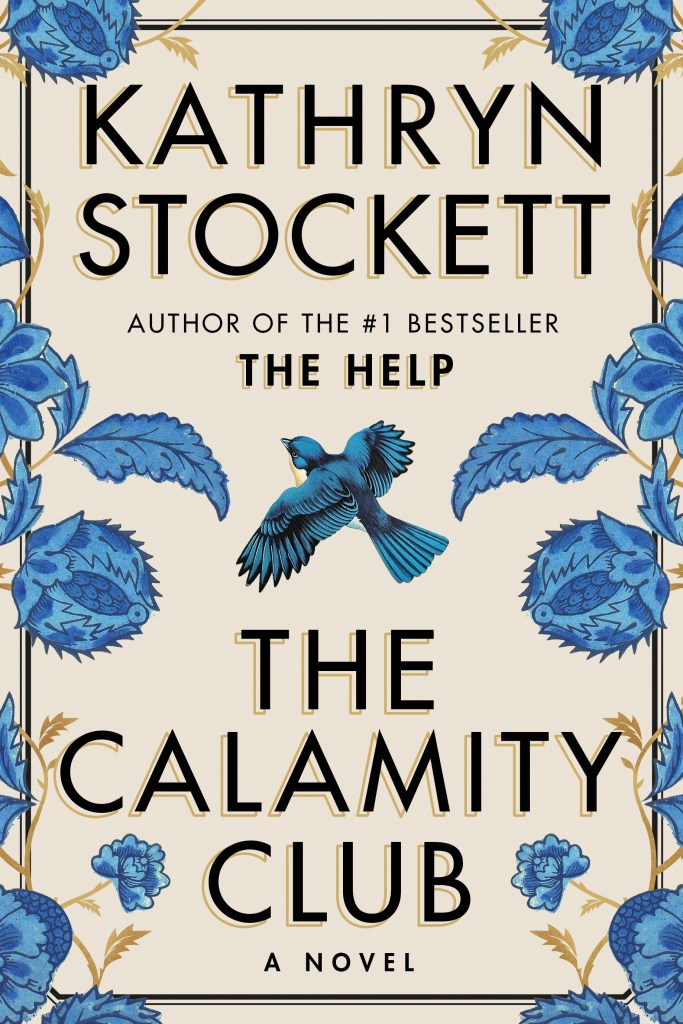
Calamity is somehow such an East Coast word, isn’t it? and specifically more of a Southern one. I mean yeah, its word origin traces back to Middle French and, before that, Latin, but it’s not a word that you hear frequently in conversation in, for instance, California or the Pacific Northwest. We’d be more likely to call it a disaster or a catastrophe or a tragedy, I think. But when I saw the title The Calamity Club on the cover of Kathryn Stockett’s new book, I immediately thought Deep South. And sure enough, the setting is Oxford, Mississippi, about as Deep South as you can get, and it takes place in 1933, in the depths of the Depression, too.
There are many forms of calamity to be found in this book, large and small: Eugenics, racial inequities, misogyny, abuse, abject poverty, alcoholism, suicide, infidelity, betrayal, crushing back taxes, and pure-dee meanness, as my Okie dad would have characterized it. But despite all that, the book somehow manages to convey both a hopeful tone and a sense of humor that lift it out of the dark despair of reading, say, Demon Copperhead, The Goldfinch, or The Poisonwood Bible. Out of that trio I finished the first two but not the third, and to make it through Demon Copperhead I had to read it in three chunks, interspersing it with lighter, more positive books in between. But I remained both engrossed in and entranced by The Calamity Club throughout, and looked forward to each day’s chapters.
Much of that is due to its passionate, intense, and brilliantly realized characters. Although one could argue that there is an ensemble cast many of whom hold equal weight, the two main protagonists who stand out are Meg, an 11-year-old girl abandoned at age nine and currently a resident at the Oxford orphan asylum, and Birdie, a young spinster recently come to Oxford to borrow money from her self-involved sister’s wealthy husband to save her mamma and meemaw (grandmother) from losing their home.
Although Meg is bright and engaging, her spirit is systematically being crushed by the inexplicable hostility expressed towards her by the director of the orphanage. After two years, she is slowly letting go of her initial hope that her mother will return for her and realizing that, as one of the “big girls,” she also has little hope of being adopted.
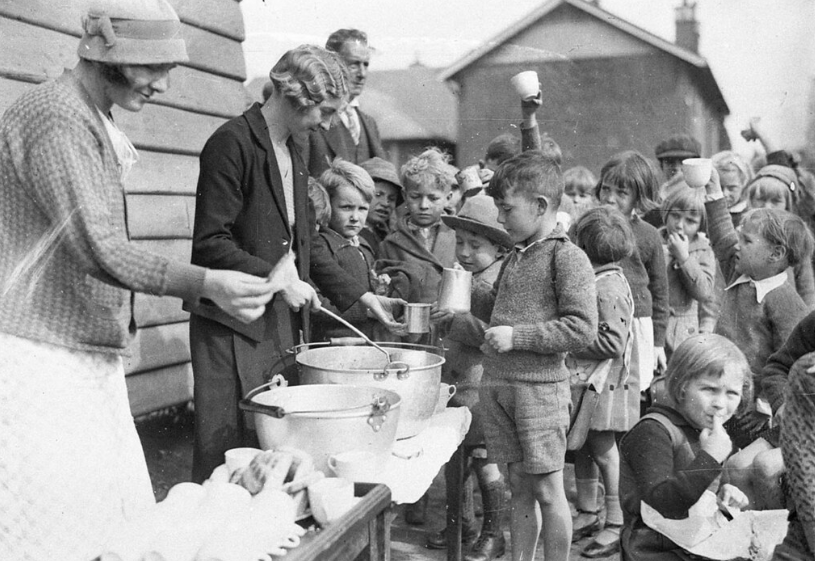
Birdie and Meg cross paths when Birdie accompanies her sister to the orphanage where Frances does volunteer work, and the director persuades her to put the books in order (she’s a bookkeeper) before the next inspection of the facility. Birdie is appalled and later haunted by Meg’s circumstances, while Meg finds a kindred soul and an unexpected source of support in Birdie. This short-term encounter is the scaffolding on which several of the later plot points are built.
The story has many turns and many themes, provided by the circumstances and issues of these and other characters in the context of the Great Depression. The story features both extraordinary acts of kindness and shocking inhumanity as it explores its various calamities, some inherent to the prejudices and inequities of the day and others rising from the empathy or callousness of the people involved.
There were a few moments when I felt like Stockett dwelt too long on a story thread while I grew impatient to find out what happened next but, apart from wishing for a tiny bit more editing, I found this book to be pretty flawless. There was never a moment when I grew weary of the story—I kept on wanting to know what happened to the very end, which in some ways came too soon. Although telescoping information in a kind of wrap-up allows the reader to extrapolate the likely fate of every one of the characters, there isn’t a detailed or tidy resolution for this cast. But perhaps leaving those to the imagination are part of the brilliance of this book.
Discover more from The Book Adept
Subscribe to get the latest posts sent to your email.

 The Book Adept