Road Out of Winter
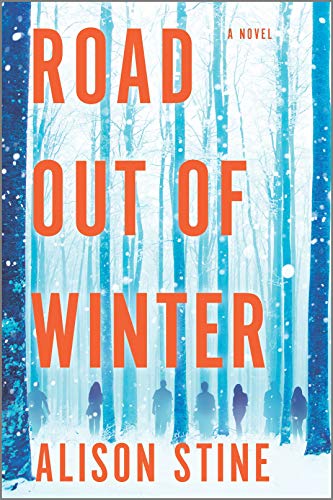
I found this book by Alison Stine on Kindle Unlimited, and I paradoxically love a good dystopian novel, so I decided to give it a chance. I found it both involving and compelling, but missing a few elements that rendered the story somewhat flawed for me.
It’s essentially a fraught road trip to leave behind the eternal winter that has descended on Appalachian Ohio in favor of the ephemeral promise of the west. The main character, Wylodine, is the child of a weak-willed, drug-addicted mother whose life has been dominated by men. Lobo, the latest of these, is a marijuana farmer who grows, processes, and sells the product from the basement beneath their house as well as utilizing the wilder parts of their farmland, and Wil’s childhood and teenage years have been both eclipsed and consumed by living alongside this activity without getting sucked too far in. Two years ago, however, Lobo decided to take Wil’s mom and go to California in pursuit of better chances, but he’s not interested in bringing along his stepdaughter. Also, someone has to stay to be in charge of the farm, to keep the product and the money coming.
Living out in the country as she does, without benefit of internet (Lobo doesn’t approve of it), radio, or even a working telephone, and totally immersed in her labor, Wil hasn’t been truly savvy to the changes happening to the society around her. What she has lately come to realize is that spring and summer have ceased to visit their part of the country. In a place that formerly had distinct seasons, there is now no warming of the ground or sky, no new growth, and even the birds and bugs have gone silent or missing in a seemingly unending winter.
When she finally heads into town, she is shocked to discover how far things have disintegrated: People are lining up for bottled water, propane, canned food, and gasoline, trying desperately to either keep going where they are or pack up to leave in search of warmer weather.
Wil eventually realizes that she, too, needs to go somewhere that her primary skill—the ability to grow things—is still an actual possibility. She inadvertently teams up with a few others in need of help and companionship, but it’s not a simple journey; it seems that each community with whom they come into contact is more desperate than the last.
It’s a powerful story of what happens when the world is suddenly on the brink of a collapse that everyone should have seen coming. People abruptly switch from dealing with the pinch of poverty and cold into full survival mode, and their internal natures come out—some nurturing, others ruthless, with that certain percentage who revert immediately to gleeful savagery and violence.
This is where the story lost the plot a little for me. I had many questions. Things happened too abruptly, and the differences were too extreme. Wil’s lack of information due to her isolation from the world in general and from the internet and social media in particular do work to create a bubble around her that is a stark contrast to what is actually happening; but there is no transition from “normal” to extreme, and it’s jarring. That lack of knowledge is essential to the construction of Wil’s timeline, but the bubble within which she has existed should not extend to the entire world! It seems like everyone in the novel is constantly trying to figure out what’s going on, but at least some of them should have had an awareness of the disintegration that is taking over. In this rapidly changing environment, it seems like information should be among the most valuable of commodities, and yet this author depicts all of her characters as oblivious of the big picture. The crossover from normal to not-normal is a big missing piece of the pie that makes this story less than it could be.
The vividness and immediacy of both the characters themselves and the situations in which they find themselves does partially make up for this plot hole, but too much was left out for there to be a feeling of continuity. The book is open-ended, and I did care enough about Wil and her companions to wish I could know more. There’s no clear indication that there will be a sequel, but perhaps that is in the offing? Anyway, if you like dystopian novels, you will probably enjoy this.
(For those who doubt that anyone would name their kid Wylodine, there was actually a woman who went to my parents’ church—and hailed from the same part of the South—with the same name, only she spelled it Willodean. There are certainly weirder names in the world….)
Discover more from The Book Adept
Subscribe to get the latest posts sent to your email.

 The Book Adept