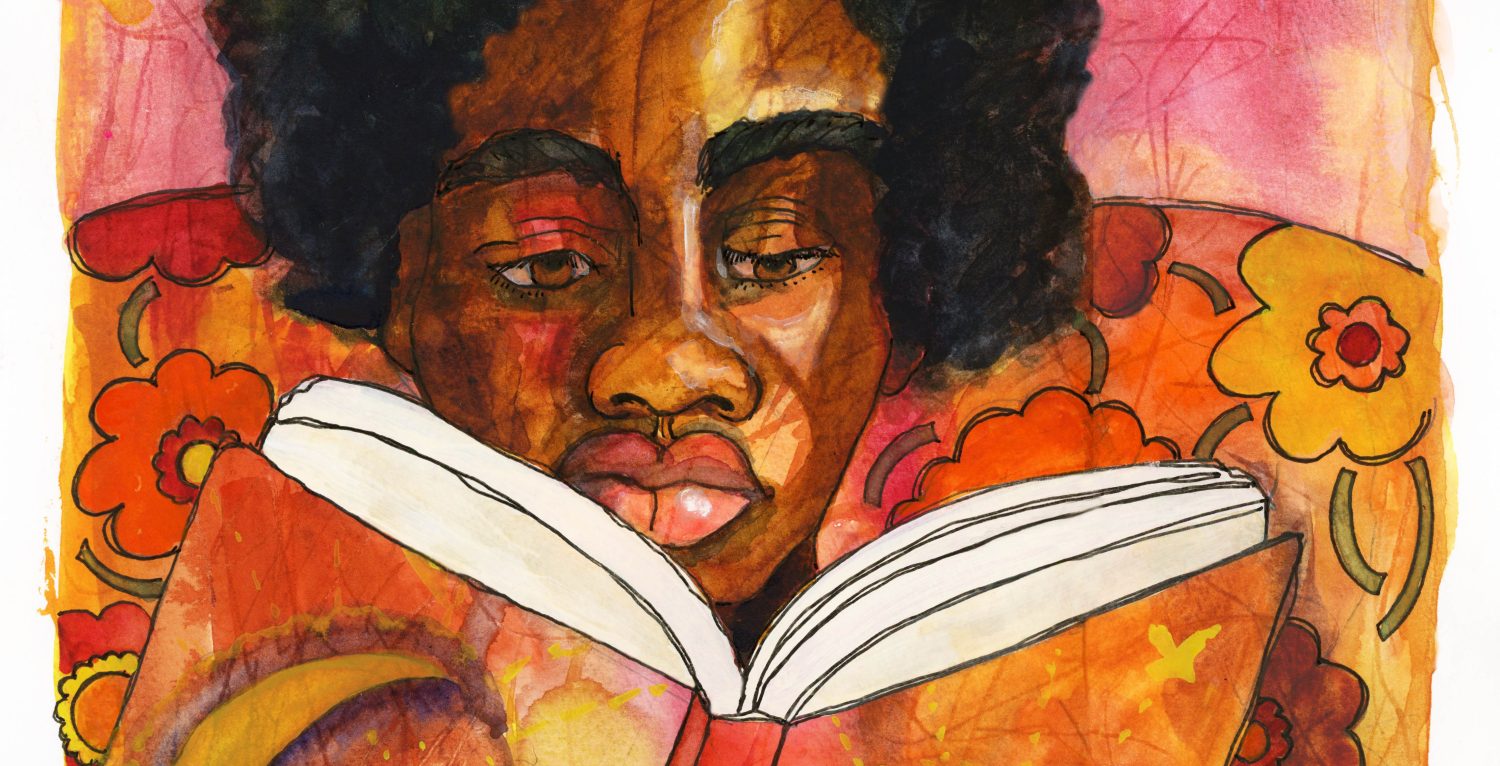
Ginny Moon

I picked up a Kindle copy of The Truth According to Ginny Moon, by Benjamin Ludwig, partly because it sounded like a good story and partly because it was discounted to $1.99 and I was looking for something realistic to bounce back from my prolonged immersion in fantasy.
This is not an easy story to read; I don’t mean that from the standpoint of time or vocabulary, but rather because the heroine, Ginny, is so overwhelmed by frustration at unmet expectations that her constant state of tension, confusion, anger, and sadness, all further accentuated by the characteristics of autism, is hard to bear in prolonged doses. But what kept me reading was knowing that what was hard for me to read must be impossible for Ginny to experience; I almost felt compelled to continue for her sake, as if she was a real person and needed me to advocate on her behalf!
The story opens when Ginny is 14 years old. She grew up in an untenable situation with a flighty, impulsive, irresponsible drug addict of a mother and her dysfunctional rager of a boyfriend. Ginny was removed from the household at the age of nine, when she showed a “failure to thrive” that included malnutrition, bruises, and evidence of broken bones and possibly worse violations in her past. She then went through several foster situations and finally ended up with Brian and Maura, who have adopted her. But the birth of their baby, Wendy, triggers profound and unsettling memories for Ginny, causing a drastic shift in her demeanor that baffles everyone who knows her. Ginny seems to revert to a younger age, obsessing over her Baby Doll that she left behind at her mother’s apartment; she ultimately finds a way to contact her birth mother (who is forbidden to see her) so that she can find out if they found the Baby Doll after she left, and if it is okay.
This initial innocent action on Ginny’s part turns her world upside down, as she tries in vain to communicate her fears to those around her—her new parents, her therapist—while they must deal with the intrusion of the birth mother, Gloria, and others from Ginny’s past, and become increasingly frustrated by Ginny’s continuing erratic and difficult behavior.
I can’t speak to the accuracy of the depiction of autism as expressed in Ginny. I tend to think that a lot of her situation, while exacerbated by the functional issues of the condition—emotional disconnection, apparent lack of empathy, inadequate socialization, extreme sensitivity to external stimuli, compulsive habits—could equally be blamed on PTSD from the unendingly stressful situation in which she was raised. But regardless, she is the fascinating narrator of her own story, and seeing everything from her perspective gives the reader a glimpse into what it must be like to try to navigate the world as such an unusual person. The literalism, the skewed but also sensible logic, the heartbreaking self-analysis as those she loves seem to reject her, all come together to create a truly heroic individual who is confronting her demons despite her despair. Bravo to Benjamin Ludwig for giving this child such a wonderful voice.
Gunnie Rose returns!
Lizbeth “Gunnie” Rose is back, in The Russian Cage, the third book in this quirky dystopian urban fantasy series by Charlaine Harris. I reviewed the first two books here. This one was published in late February, but I’m just getting to it now, mostly because I have been well and thoroughly distracted by about 6,000 pages of the Farseer saga by Robin Hobb! But I’m happy to check back in with this interesting world that could be our own with just a few divots gouged out of our history. Well, maybe minus the magic.

Lizbeth’s half-sister, Felicia, is now living in the Holy Russian Empire (HRE), which extends down the west coast of the former United States of America where Oregon and California used to be. The capitol city is San Diego, where she is going to school (and training as a grigori, a magician) while making herself available as a blood donor to the Tsar, Alexei, who suffers from Russian royalty’s fatal flaw of hemophilia and can only maintain his health by periodically receiving transfusions from the descendants of Rasputin, of whom Felicia is one.
Lizbeth, back home in Texoma (the former Texas and Oklahoma plus a few other territories) receives an exceedingly cryptic letter from her sister, and it takes her a little while to figure out that it’s a secret message telling her that her former lover and partner in magical shenanigans, Eli Savarov, is in prison; Felicia is hoping that Lizbeth can come up with an idea to break him out. Lizbeth immediately packs her bags and her weapons, borrows money from her stepfather, and hops on a train to California, er, Russia-in-exile.
The HRE is completely foreign territory to Gunnie Rose, and at first she is helpless to imagine how to help Eli. But with support and collusion from her sister, Eli’s family, and Felix, a grigori wizard she knows only slightly but has to trust as an ally, a plan comes together. She’s up against a lot—a seemingly impenetrable foreign system of bureaucracy with which she is unfamiliar; enemies masquerading as friends; the impulsive actions of Eli’s younger brother, Peter, who keeps making everything worse; and her own inability to carry weapons openly as she can at home in Texoma. But Gunnie Rose isn’t to be deterred, so she has to work all these things out, and it’s big fun to watch.
You definitely need to have read the first two books to understand at all what’s happening here and to whom, especially as regards the historical setting and background of this western urban fantasy. It’s a crazy hybrid, but once you get all the details down, it just works, somehow. And I love that at the center of it all is this 20-year-old gunslinger, tough and nearly humorless but with a tiny gooey center she shows to nearly no one. I have included a tag for (among a bunch of other things!) young adult fiction because, although it’s not written as such, high school-age teens would love this series.
The conclusion of this book could signal the end of the trilogy…but I’m hoping Harris has more adventures up her sleeve for Lizbeth and her Russian prince.
Trilogy the third
I have spent the past couple of weeks immersed again in the land of the Six Duchies, the cities of the Elderlings, the oceans sailed by the liveships, and the mysterious white island of the Servants, origin of the enigmatic character known variously as the Fool, Lord Golden, and Lady Amber. Yes, I am referring to the third and last trilogy by Robin Hobb that details the story of FitzChivalry Farseer and all his many friends, enemies, family members, and connections. The end of the tale was a fascinating, unexpected, breathless pleasure to read—at the same time as I dreaded its conclusion.
After having gone missing for many years without a word to “Tom Badgerlock,” the Fool makes an abrupt and unexpected re-entry into FitzChivalry’s life that spells disaster for all. Fitz’s little daughter, Bee, is kidnapped from her home in her father’s absence, and borne away to the white island of the Servants, who believe she is the “Unexpected Son” of their prophecies and wish to exploit her talents and control her dreams. Given the almost insurmountable challenge of retrieving her (not to mention the two men’s intention to slaughter every single Servant and raze their city to the ground), Fitz and the Fool seek out all the allies they can muster, including visiting the descendents of the fabled Elderlings, engaging with the Traders who sail the sentient vessels known as liveships, and even entreating the aid of dragons.
I didn’t think I could love anything more than the last trilogy, but with the intriguing introductions of new characters and the rediscovery of old ones in this, it just blew me away. I definitely haven’t been getting enough sleep, because I haven’t been able to put it down!
The adventure is convoluted, the personalities ever more compelling, the confrontations fizzing with action. I dare to say that this is the best extended fantasy tale I have ever read, with this trilogy being the perfect conclusion, and I know I will return to it someday to re-experience the pleasures of this exquisitely detailed saga.
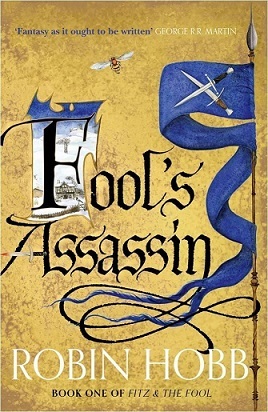
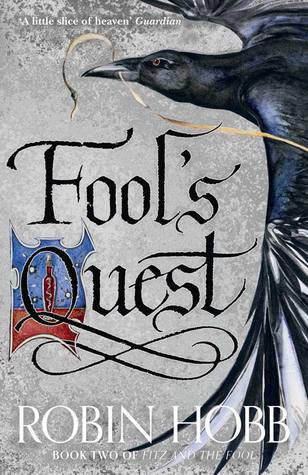
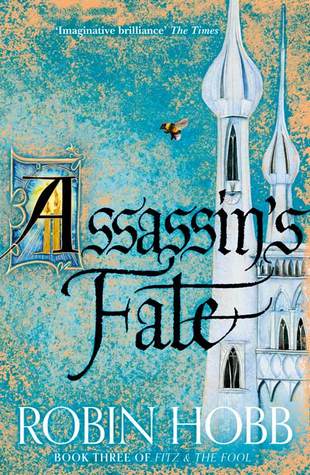
I am somewhat consoled for its ending by the fact that there are other books by Hobb set in this universe, including The Liveship Traders books and the Rain Wild Chronicles. I am reluctantly pulling away from it for a while, because I need to read and review more for this blog after having neglected it so shamelessly for weeks while I indulged my fantasy binge. But I will definitely go there sometime in the near future.
Next two Kruegers
After my fantasy binge, I went back to Cork O’Connor, since I had checked out the first three in one volume from the library and wanted to keep going before my time expired.
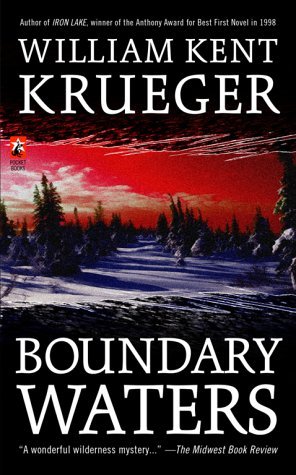
The second book is Boundary Waters, and it takes place about nine months after the conclusion of the first. Based on a promise to a friend, Cork has given up cigarettes and taken up running; his relationship with his ex-wife and children has improved; and his burger stand is doing a thriving business.
Then a man, a prominent music producer, comes to town looking for his daughter, a famous singer named Shiloh, who has been on retreat in a remote cabin in the area. The Anishinaabe man who has been bringing her supplies and carrying her letters out into the world has gone missing, and his family is likewise concerned that something is wrong. It turns out a bunch of people are looking for Shiloh, including the FBI, in connection with a murder she may have witnessed as a child. Cork, her father, some FBI agents, and a 10-year-old Ojibwe boy and his father head out into the wilderness to find her, but there are also some hired assassins on her trail, and they’re not going to let Cork and friends stand in their way. Lots of bloodshed and cruelty ensue amidst a high-tension story as various people end up running for their lives.
I liked this book better than the first one—the involvement of Cork was more logical, given his connections with various of the protagonists. Plus, he has the freedom to take independent action, unlike the sheriff, who has multiple responsibilities in various directions and can’t just flit off into the woods after the bad guys. I thought the red herrings were quite effective and kept the mystery going long after one usually guesses what’s up. And the details about nature and woodcraft, including the portage of canoes between bodies of water, were engaging.
The third book, Purgatory Ridge, was better written and plotted than either of its predecessors; I can see why people keep going with this series after the somewhat disappointing debut book. This one has two distinct story lines, the one in the present that directly involves Cork in its drama, and a tragedy from the past that is drawn together with the first as the action progresses.

The first involves a logging operation that is directly counter to the sacred traditions of the Anishinaabe tradition, which seeks to preserve the white pines known as Our Grandfathers. The owner of the lumber mill, Karl Lindstrom, is attempting to reach a compromise with the tribe over selective winnowing of the trees when some environmental activists cross the line and set off a bomb at the mill. The sheriff calls on Cork to investigate, since he is former law enforcement but also a distant member of the tribe, but having ties to both sides makes it a difficult proposition.
The second story is of the sole survivor of a shipwreck on Lake Superior in which he lost his beloved brother. It’s not clear at first how this story relates, but it’s an involving one that approaches ever nearer to the central theme as the book unfolds.
I was completely caught up in this narrative and didn’t see the twist in the story until moments before it was revealed. The involvement of Cork also finally began to make more sense; the current sheriff’s wife is descending ever farther into the fog of Alzheimer’s, and he has plans to retire that include encouraging Cork to re-up in the election for a new sheriff.
Not to harp on one note, but I really hope Krueger quits being such a fat shamer in future volumes. Sister-in-law Rose “lumbered,” short of breath, throughout this book, and as usual I wonder why it’s considered bigotry and prejudice to call people out for their race, their handicaps, and other elements over which they have no control, but completely acceptable to belittle a woman for the size and shape of her body. The days of believing that all it takes is will power to be perfectly svelte and beautiful are over, and I hope Krueger figures this out as this series progresses, because it’s getting really wearing to repeatedly encounter these slurs.
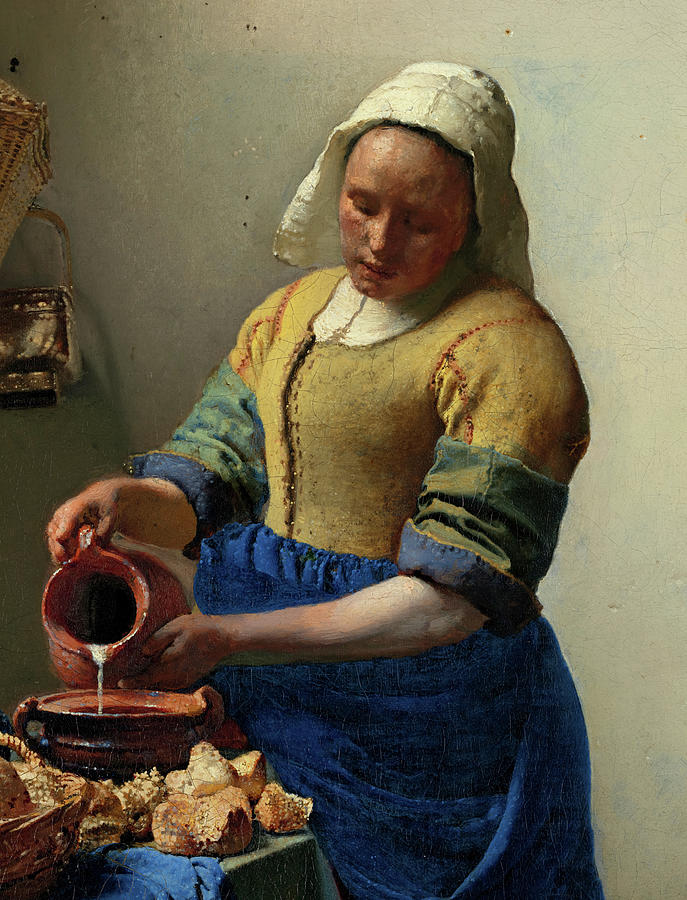
One might consider the beauty and strength of Vermeer’s milkmaid as an example of a woman to whom “the perfect body” is a foreign concept…
More Robin Hobb
In The Tawny Man trilogy, we pick up with FitzChivalry, royal bastard and secret assassin for the rulers of the 12 Duchies, 15 years after the events of the third book in the Farseer trilogy. Fitz and his witted partner, Nighteyes the wolf, have dropped off the grid, spending time traveling and living rough, then finally establishing themselves in a tiny cottage far from the activities of court at Buckkeep. Fitz, who goes by the name Tom Badgerlock since his widely rumored demise, has adopted Hap, a child brought to him by the minstrel Starling, and has raised him with many of the precepts taught Fitz by his mentor, Burrich. The two of them and Nighteyes are living the quiet, mundane existence that Fitz craved after the tumultuous events of the first part of his life were finally concluded successfully; so when Chade, the royal assassin who taught Fitz his trade, shows up at his cabin to ask him to return to Buckkeep and take up former responsibilities, Fitz isn’t interested. But following his visit, Fitz’s friend the Fool arrives and continues his argument by reminding Fitz that the Fool is the White Prophet and Fitz is his Catalyst, and their partnership is necessary to effect change.
I can’t describe the myriad details of the rest of the trilogy here for two reasons, one being that there are too many important and complex events to explain in a short format such as this, and the other being that I wouldn’t spoil this saga for anyone for the world. But it is the relationships that dominate these books and make it well worth investing your time in this lengthy (2,000+ pages) tale. The connections between Fitz and Nighteyes, Fitz and Prince Dutiful, impulsive heir to the Farseer throne and, most of all, Fitz and the (former) Fool are so rich and compelling that the pages fly by. The introduction of new elements to the story—the OutIslanders and the potential for a union with the Six Duchies through the marriage of Dutiful to their narcheska, Elliania; the “half-wit” serving boy, Thick with his tremendous Skill talent; the charismatic Witted leader, Web; and most of all the enigmatic Lord Golden are equally fascinating, as are the old and new locations in which all events transpire.
If you read and loved the first trilogy, this one will convince you that Robin Hobb is one of the greats when it comes to fantasy sagas. The books are Fool’s Errand, Golden Fool, and Fool’s Fate.
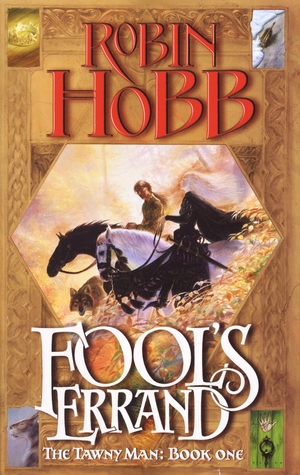
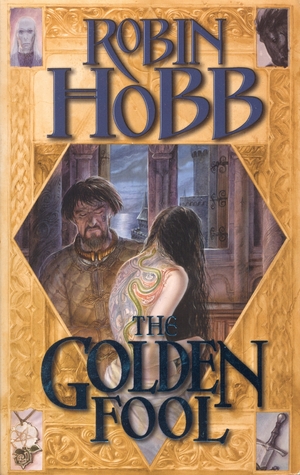
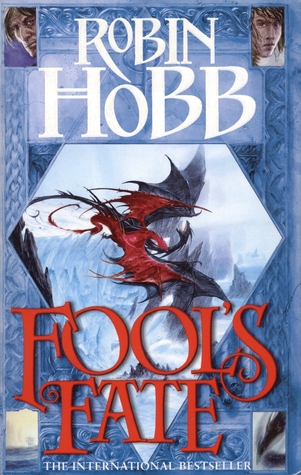
After reading this, I went back to the Cork O’Connor mysteries, by William Kent Krueger, about which I will report on soon; but no sooner had I finished the third of those than I sought out trilogy #3, The Fitz and the Fool, to complete my knowledge of FitzChivalry and his White Prophet. And there are more stories set in this universe, after these!
A guilty secret
Sharon Bolton’s latest, The Pact, capitalizes on a theme we have seen before, in everything from I Know What You Did Last Summer, the teen thriller by Lois Duncan, to Donna Tartt’s The Secret History. That doesn’t make it any less impactful, however—especially in the hands of a master of psychological fiction.

Five entitled young people and their one friend on a scholarship are spending their summer vacation (while awaiting their final A level marks that will determine their future at University) hanging out together, indulging themselves in drink, drugs, and indolence. The various effects of this provoke a dare game in which they all pile into a car in the wee hours of the morning and drive the wrong way between two ramps on a motorway (freeway). Each of them in turn has done it, with no real consequences but with some near misses, but when the final person’s nervous driving leads to tragedy, all the six can dwell on in that moment is how it will impact their futures should their wrongdoing come to light.
Amidst turmoil, hysteria, and guilt, accusations are made and fingers are pointed as they all seek a plan to protect themselves. Finally Megan, the scholarship girl, offers to take the fall—to claim she was driving by herself and that she alone was responsible. In return, she asks that when she is done serving her term in prison, each of the others will owe her a substantial favor. Caught up in the giddy relief that only one of them will suffer, the others all agree to her terms without questioning her motivation. They craft their story carefully, not realizing that outside circumstances will substantially affect the case against Megan; she ends up being sentenced to 20 years, instead of the three to five they expected.
Twenty years later, the others—Talitha, Felix, Xav, Amber, and Daniel—have all made significant achievements in their careers, as well as most of them accumulating spouses, children, and wealth. Meanwhile, Megan has served her full sentence and has suffered injuries while imprisoned that have left her physically and perhaps mentally damaged. Now comes the reckoning, the part where Megan gets to name her terms and the others must comply. As they each contemplate the guilt over having shunned and ignored her during her incarceration, the secret shame they feel at wishing she’d not been released, and the fear of the price she will exact, the tension builds.
Although the story is involving and well told—in both the present and the past—it is the character studies that make this book so compelling. Sharon Bolton is so good at creating unlikeable characters and then causing the reader to hope they get what they deserve while simultaneously pondering how he or she would have reacted in their place! As each of the five considers Megan’s admittedly outrageous requests and flails around crafting a response, you realize it’s just a matter of time until someone snaps. But that realization is far from the result of knowing who it will be, which is the trick that keeps you reading to the end.
Bolton has written another gem of a thriller that first defines and then shreds the concepts of friendship and loyalty in the face of unbearable tension. While it’s not my favorite of her books (because of the plot, less original than most), it’s definitely worth a fingernail-gnawing evening or three!
Immersed in fantasy
I don’t know how I have been a fantasy reader for so many years without discovering Robin Hobb. Someone mentioned her to me lately, and I went looking to find out more. I am now caught up in a prolonged pursuit of everything I have missed.
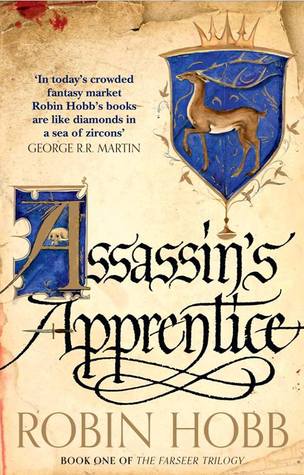
My first incursion was into the world of The Assassin’s Apprentice. Born on the wrong side of the blanket, the Bastard, as he was first called, was brought to the court of the Six Duchies by his maternal grandfather and dropped off to be raised by his father’s people. Turns out he was the illegitimate offspring of the King-in-Waiting, Chivalry, who was such an upright man that the humiliation felt by this revelation of his youthful misdeed caused him to abdicate his place in the succession for the throne. King Shrewd’s second son, Verity, became King-in-Waiting, while his third son (by a different mother) Regal fumed at the denial of what he saw as his rightful place.
But this story, while intimately tied up with all these royals, is about the Bastard, the Boy, finally and somewhat casually called FitzChivalry. Initially he plays no important role in the life of the kingdom; he is farmed out to the master of horse, Burrich, to raise, and Burrich thoroughly educates him in such skills as how to groom a horse and muck out a stall. During this sojourn as an invisible stable boy, Fitz discovers an affinity he accepts as a natural part of life, although others don’t seem to possess it—the Wit. He has the ability to bond with animals, to hear their thoughts and chime with their emotions. This is a talent that was once valued but at some point in history came to be regarded with abhorrence. But before Fitz becomes completely submerged in the life of the stables, it is suddenly decided that he will be called upon to take a more active part in the politics of the kingdom. He is summoned by King Shrewd and pledged to the royal family, and thus begins his training in scribing, weaponry, and the art of the assassin, the secret vocation for which he is apparently destined.
That is the trajectory established in book #1 of this trilogy. Book 2 shows Fitz completing difficult tasks in his new role, while acquiring a bonded partner in the abused wolf Nighteyes, and a potential life partner in the candlemaker, Molly, friend from his youthful forays down to the docks and now a serving girl to the new Queen-in-waiting. But the relentless decimation of the Six Duchies by the Red Raiders from the sea combined with the depredations of Regal on the kingdom while Verity is preoccupied with defending it by use of the Skill (a gift of mind communication and manipulation that is both seductive and draining of its user) put Fitz in a dangerous and exposed position that ultimately spells disaster for him. The third book sees him desperately seeking Verity, who has departed for the mountains on a quest to seek aid from legendary beings called Elderlings, leaving his court to be usurped by a triumphant Regal, who squanders its resources and leaves half the kingdom exposed and undefended. The success of Verity’s quest is highly doubtful, but Fitz, King Shrewd’s Fool, and the young queen, Kettricken, can see no alternative but to follow and aid him if it’s possible.

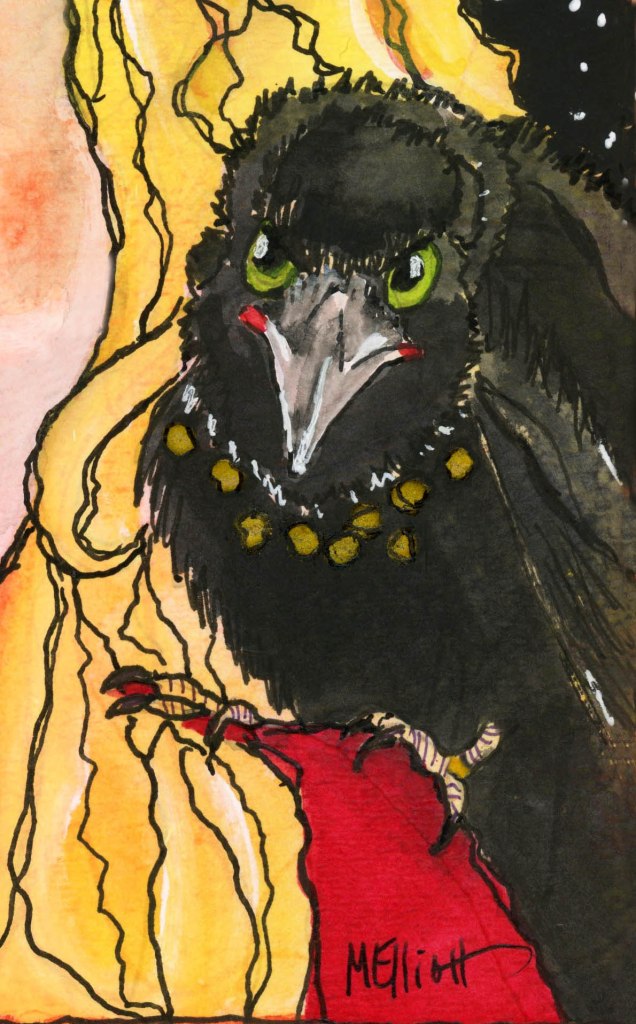
put me so in mind of the wolf Nighteyes that I begged her to let me feature it in my review of Hobb’s books.
This summary, though seeming fairly detailed, leaves out about 80 percent of the tale Hobb spins in this trilogy, and is completely inadequate to convey the complexity of the world-building, the delineation of the charismatic and fully formed characters, and the emotions invoked by this involved and mesmerizing story. The trilogy held me captive, and although I read two other (unrelated) books after it, I was constantly pulled back to wonder about what happened next to Fitz, the Fool, Kettricken, Chade, Molly and Burrich, and all the rest. So as soon as I had finished those books, I lined up the next two trilogies—The Tawny Man, and the Fitz and the Fool series—on my Kindle, and started in. Since each book is between 600-700 pages, this may take me a while! But immersing myself in this world is a great way to pass a month of summer!
Cork O’Connor
After reading and loving This Tender Land, by William Kent Krueger, I was excited to try out his mystery series featuring Cork O’Connor, since that book had met my expectations for good writing, good character development, and imagination. I wasn’t exactly disappointed by Iron Lake, the first in the series, but I wasn’t bowled over, either.

First of all, when I started reading I felt disoriented when I realized that we had come in halfway through O’Connor’s career, and at a low point. O’Connor had worked in Chicago as a cop while his wife, Jo, went through law school; after she was done, he moved her and the kids back to his home town of Aurora, Minnesota, where he had expectations of a better life for them all. His part-Irish, part-Anishinaabe heritage let him fit in as the town’s sheriff with both the whites and the tribe, whose reservation (and casino) border on the town; but when we enter the story, a catastrophe has resulted in a recall election that has kicked O’Connor out of office, and the aftermath of emotional mood swings (and drinking) has also caused his wife to push him out of the house. His wife is distant, his children live at home with her, and Cork is staying in the living quarters behind a drafty old hamburger stand willed to him by a native friend and mentor, who is also dead.
Despite his no longer being the sheriff, many of the townsfolk (especially those of Anishinaabe blood) still call on him when in need. Darla’s son Paul turns up missing after going out to do his paper route in the midst of a blizzard, and when, at her request, Cork goes to the last house on Paul’s route to see if he made it all the way through, he discovers one of the town’s prominent citizens shot through the head.
At this point, things started to go awry for me. The new sheriff isn’t painted as incompetent, exactly, but he plays by the book and isn’t really interested in above and beyond, so Cork takes it upon himself to keep investigating. While I liked the main character and enjoyed his initiative to a point, I felt that he didn’t have enough legitimate agency, even as the former sheriff, to get away with all that he subsequently does. And I found it decidedly weird how the sheriff kept reminding Cork that he was no longer sheriff…and then either directly solicited his help or let him get away with stuff that would be considered obstruction of justice, pollution of crime scenes, and rank interference. It didn’t seem like it would be consistent for even a lackadaisical sheriff to do this, and this one was not that bad.
I did like the tie-in to the Anishinaabe culture and the pervasive sense of place in Krueger’s writing, and hope that he keeps that up in future books. But I felt the mystery in this one was diffuse and kind of unsatisfying; by the time it gets pinned on the proper villain, so many lesser bad guys and red herrings had been trailed across my path that I almost didn’t care.
I also didn’t appreciate the double standard the author promotes in this book, although I realize it is somewhat a product of its time 20 years past: Cork is portrayed as paunchy and balding, but is still apparently hot stuff to the sexy local waitress, while his wife’s sister, Rose, who has lived with the family for 17 years and essentially kept the household afloat while both the parents worked, is dismissed as ineligible for a relationship because she is “heavy.” This despite being kind, sweet, helpful, and a great cook. C’mon, Krueger, cut it out with the fat-shaming of women. We’re not all perky blondes or voluptuous redheads, but we’re just as worthy of love as you paunchy balding men with hair growing out of your ears.
I didn’t love this book…but I liked it well enough (because of the writing and some of the characters) to try another in the series to see where it goes. Hopefully it will go there without quite so many clichés. I’ll keep you posted.
Fans of Craig Johnson’s Walt Longmire series would probably enjoy this one too; they share in common a maverick leading man, wide open spaces beautifully described, and First Peoples details.
Summer reading #2
The topic for this list is fantasy. I’m going to include both stand-alone and series, both old and new, and from different subgenres, so all is hopefully represented. I will note that some of my choices may be found in the Young Adult section of the library, but I include them here because I believe them to be works that probably should have been released as mainstream, rather than under the YA banner; they would appeal to anyone who likes the fantastical, the speculative, the magical, the offbeat and quirky. Adults who read fantasy should seek these out!
This is by no means a comprehensive list of all the best fantasies out there, merely my choices from among my extensive pursuit of the genre. I hope you find something new, or new to you, that satisfies your preference as well.
Alphabetical, by author’s last name:
ADAMS, RICHARD: The Beklan Empire. This is a duology—Shardik and Maya—and although some of the events of Maya predate those of Shardik, that book should be read first and Maya treated as a flashback, or there will be many things that are unclear. This is what I would term an epic fantasy, featuring in the starring roles a giant bear and a simple hunter, Kelderek, who believes the bear to be divine, a prophesied savior of his semi-barbaric people. Kelderek follows both his and the bear’s destiny, first as a humble devotee and ultimately as a priest-king of an empire. The story continues in Maya with a very specific viewpoint (from the perspective of a “bed girl”) on how the empire has evolved under the priest-king’s stewardship.
BARDUGO, LEIGH: The Six of Crows duology—Six of Crows, and Crooked Kingdom. Some are more familiar with Bardugo for her Shadow and Bone trilogy about the Grisha, but I much prefer this duology, written later, set in the same general universe, but without all the magic and (mostly unrequited) angsty teen love. This duology features a gang of characters—a thief, a sharpshooter, a spy, and more—fighting their way up from the underbelly of their society to get what’s theirs and wreak revenge on those who took it from them. There is attraction among the characters, but it’s subtle and doesn’t take over the story. The books are set in an alternate universe much like a slightly medieval Amsterdam, in its alley-ways, bordellos, warehouses, and other haunts of the city’s outcasts. The language is beautiful, the plotting is compelling, and the characters are unique.

CASHORE, KRISTIN: The Graceling Realm—Graceling, Fire, Bitterblue. I absolutely adore Graceling, but it’s not for everyone. But if you like a story with an underdog who triumphs, with magic but also encompassing real, tangible hardships and joys plus a love story, you may feel about it as I do. Graceling is set in the Five Kingdoms, where children who are born with eyes that are two different colors are recognized as possessing some exceptional skill or Grace. For some it’s as mundane as being able to curl your tongue, while for others it’s a power akin to magic. In one of the five kingdoms, the ruler requires that any child who has a gift revealed by the two-color eyes be given up by their parents and delivered to his service. This is how Katsa becomes the king’s assassin: Her Grace is killing. But the darkness of her gift casts a heavy shadow over Katsa, so when the opportunity comes to stop killing but nonetheless put her associated skills to good use, she takes it, embarking on an adventure that will require all her resources. This is an odd grouping of books: Fire, the second in the series, features another protagonist from a different one of the kingdoms and with a peripheral relationship to the first book, and Bitterblue, the third book, is the actual sequel to Graceling, but takes place some years later. I enjoyed them all, but the first the most. They remind me of the books of Robin McKinley.
FFORDE, JASPER: The Last Dragonslayer, The Song of the Quarkbeast, The Eye of Zoltar, and the upcoming Jennifer Strange: Humans v. Trolls. This series has been promoted (although I’m not sure the author had that intention) as reading for children. In fact, the content is filled with satire, parody, and sly, inside jokes about the British Empire that no child reading it will ever perceive. And while some teens like the series well enough, I have found it to be much more popular with adult readers who can appreciate its subtleties. The story is about a 15-year-old foundling named Jennifer Strange, who runs Kazam, an employment agency for magicians. The problem is, magic is fading, and where magicians used to take on major projects, now the guy with the magic carpet delivers pizza. The magicians who live at and work from Kazam (an old hotel) rely on faded glory rather than actual present talent, and it takes an ideal combination of tact and motivational speaking on Jennifer’s part to keep the agency going. But then a precognitive vision starts circulating the land, predicting the death of the world’s last dragon at the hands of an unnamed Dragonslayer. If the visions are true, Big Magic is on its way. There are currently three books in the series, with the fourth promised “sometime in 2021” (I have this direct from Fforde himself, in an email).
GODWIN, PARKE: Firelord, Beloved Exile. This is one of the best, most realistically depicted stories about the life, triumph, and death of Artorius Pendragon—the legendary King Arthur. The first tells his story, in the wake of the Roman abandonment of its British holdings, and the second is about what happens to Guinevere and his kingdom after his death. Gripping, gritty, and also lyrical.
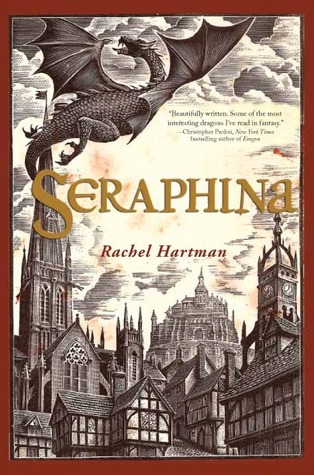
HARTMAN, RACHEL: Seraphina, Shadow Scale, Tess of the Road. If you are an aficionado of dragon books and dragon lore, you must read Hartman’s take on them. The story is set in the kingdom of Goredd, a medieval world where there has been an uneasy truce between dragons and humans for about 40 years. The dragons, shapeshifters who can take on human guise, bring their gift of rationality and mathematical expertise to humans as scholars and teachers at the university. Seraphina Dombegh, a gifted musician who plays in the court orchestra, has become aware of tensions between humans and dragons, and when a member of the royal family is murdered in a specifically draconian fashion, she is drawn into the investigation. But Seraphina herself has a secret, and she struggles to protect it as she teams up with the captain of the Queen’s guard to discover a sinister plot to destroy the interspecies treaty. Original, thought-provoking, with sly humor and dark moments. The third book is not a direct sequel, but takes place in the same “universe” with a few of the same characters appearing in minor roles.
HOBB, ROBIN: The Farseer Trilogy—Assassin’s Apprentice, Royal Assassin, Assassin’s Quest. I have only recently discovered Robin Hobb and am currently halfway through the third book in this trilogy. The world-building is absolutely riveting, and the depth and complexity of character development carries you away into the land of the Six Duchies with no desire to leave. The protagonist, FitzChivalry, is the bastard son of the King-In-Waiting to the throne of the Six Duchies, but his very existence causes his father to abdicate, leaving it to the second son, Verity. But son #3, Regal, is determined that he will be the one to rule, and he is willing to take any measures to make that happen, including eliminating all competition—his father, his brother, and the Bastard. This is a fascinating look at a kingdom and a dynasty from the perspective of one of its lowliest subjects, who is, despite his own wish for a simple, peaceful life, destined to be the Catalyst to resolve the kingdom’s problems or die trying—to which fate he comes perilously close on multiple occasions. There are magical abilities manifested by some of the characters, but these hinder as much as help, and it is the raw humanity that sticks with you from this story. Hobb has other series, which I will be seeking out soon!
KLUNE, T. J.: The House in the Cerulean Sea. An unalloyed delight from start to finish. Here is my recent review. Don’t miss this one.

LEGUIN, URSULA K.: The Earthsea cycle—A Wizard of Earthsea, The Tombs of Atuan, The Farthest Shore, Tehanu, Tales from Earthsea, The Other Wind. This started out many years ago as a self-contained trilogy, but then LeGuin came back to it and wrote three more books (one of them is short stories). LeGuin is a masterful storyteller, with a combination of simplicity and profundity that no one else can match. The boy known as Sparrowhawk, a herder of goats from a small outlying island, gets a taste of the power of magic and pursues it to the Isle of Wizards. But in his quest for skill and knowledge, he tampers with powers beyond his abilities and looses a terrible shadow upon the world. This is the tale of his testing: how he masters the mighty words of power, confronts an ancient dragon, rescues a girl from an unimaginable life, discovers a prince, and crosses death’s threshold to restore balance to the world.
de LINT, CHARLES: The Newford books—too many to list here. De Lint writes urban fantasy, set in the mythical city of Newford (compared to Montréal, Canada). They are wonderful in that they seem to be about a group of regular friends, but then magical elements seep in from across the veil to invade everyday life with whimsy and wonder. My favorites of his are Trader, about a musician who doesn’t appreciate his life until he has it forcibly taken away from him when a loser manages to use Inuit magic to swap bodies with him, and Memory and Dream, in which a young artist learns to physically paint her fantasy people into real life. But there are many other titles to be enjoyed.
MARCHETTA, MELINA: The Lumatere Chronicles—Finnikin of the Rock, Froi of the Exiles, Quintana of Charyn. This is a trilogy that is harder than it should be to promote because, although the first book is good, it’s not far beyond the ordinary. (I shouldn’t downplay it too much—it consistently receives five stars on Goodreads.) But the second and third books in the trilogy are so amazingly conceived of and written that I am on a constant quest to convince people to read the first so that they can benefit from the others! In Finnikin of the Rock, a false king has taken over a kingdom, slaying the entire royal family; he has also put to death the high priestess of one of the goddesses worshipped there. As she dies, she curses the kingdom so that all still in it are trapped inside, and all outside its borders are exiled. The story starts 10 years later, as Finnikin, best friend of the young prince of the true ruling family, meets Evanjelin, a strange novice from a religious retreat house who claims that they both have a role in restoring the kingdom. Froi of the Exiles and Quintana of Charyn pick up with characters we met in the first book, about three years after those incidents. The richness of the world, the depth and versatility of the characters, the emotion infusing everything make this a magnificent series worthy of much more attention by fantasy readers.
McGUIRE, SEANAN: The Wayward Children series—Every Heart A Doorway is the first, and there are five more so far. Among all the old tales are those of children who have disappeared, who have departed through the back of a wardrobe, jumped down a rabbit hole, walked through a mirror, and have arrived somewhere else. But nobody ever talks about what happens to those children who return from their alternate worlds. How do they adjust to being regular people in a mundane life? And what happens to those who just can’t? Eleanor West runs a home for those wayward children, whose parents believe Eleanor is attempting to bring the children back to a sense of their place in the real world. But Miss West’s actual intentions are to enable them to return to the worlds where they truly feel at home. These books are little jewels, more novella length than full novels, but fully realized, beautifully imagined, and skillfully written.
McGuire also writes urban fantasy; I love one of the series (The InCryptids), and dislike the other (October Daye), but you must decide for yourself.
McKINLEY, ROBIN: Almost all standalones, too many to list. McKinley’s success for me is uneven; I absolutely love some, and don’t care for others at all. Her Damar duology—The Hero and the Crown, and The Blue Sword—are wonderful classic fantasy. Of her others, I also love Deerskin, Chalice, Sunshine, and Shadows, all completely different one from another.
NOVIK, NAOMI: I reviewed her book Spinning Silver here; it’s the only one I have read as of yet, but I fully intend to follow up with her.
OWEN, MARGARET: Reviews of her duology are here for The Merciful Crow and here for The Faithless Hawk. I was blown away when I discovered these were first books for her; they are so full of nuance that I believed her to be a long-established writer.

PIERCE, TAMORA: The Beka Cooper trilogy—Terrier, Bloodhound, Mastiff. Most of Tamora Pierce’s books about the kingdom of Tortall, a semi-feudal land populated by knights and ladies, craftspeople and thieves, commoners, and some supernatural creatures, are written specifically for middle-school readers. But one trilogy from all the Tortall “cycles” stands out as something quite different. Beka Cooper is a young woman, but she is more woman than girl, and virtually everyone else in the books is an adult. The series fluidly combines medieval fantasy with mystery and police procedural, using a memoir format. The characters are engaging, the themes are sophisticated, and the mysteries are well paced and satisfying. Beka is a “Dog,” which is the nomenclature used to refer to police officers in the Provost’s Guard. In the first book, Terrier, she is in her trainee year, assigned to two veteran officers. In Bloodhound, the second book, she ends up with a canine partner, a scent hound she rescues from an abusive handler. She, the hound, and one of her former training partners are sent undercover to another city to research the spread of counterfeit silver destroying its economy. The third book, Mastiff, pairs Beka with the other of her training officers, on an assignment critical to the fate of the Tortallan royal family and government. The supernatural element is the hardest to accept for some readers—Beka gets messages from the recently dead by listening to their voices, which are carried by pigeons, and she also gathers clues by standing in the middle of dust devils, picking up conversation the dust devil has absorbed. But these details, plus the made-up dialect for the Tortallan lower city inhabitants, gives a more special cast to this already compelling series. One warning: The books start out with a flash-forward to the journal of one of Beka’s descendents, and this element is completely confusing (and somewhat off-putting) in reference to the rest of each book. I would skip these prologues and perhaps return to them after reading the rest.
PRATCHETT, TERRY: The Tiffany Aching books—The Wee Free Men, A Hat Full of Sky, Wintersmith, I Shall Wear Midnight, The Shepherd’s Crown. One of the most delightful fantasy series ever written, in my opinion—a wonderful combination of sincerity and message with tongue-in-cheek hilarity. It begins with young Tiffany, granddaughter of the Witch of the Chalk (although to Tiffany she’s just her granny), having to stave off an attack by an evil water sprite on her baby brother while armed only with a frying pan. When the Queen of the Faeries later kidnaps her brother, she seeks allies in the Nac Mac Feegle (the wee free men of the title), a clan of sheep-stealing, sword-wielding six-inch high blue men with Scottish kilts and the dialect to match. Subsequent books show Tiffany preparing to herself become the Witch of the Chalk, through various means and with a highly divergent cast of characters. By turns vastly entertaining and quite touching, with puns galore and lots of witchy wisdom, plus the Feegle for leavening.

SCHWAB, V. E. (VICTORIA): The Shades of Magic trilogy—
A Darker Shade of Magic, A Gathering of Shadows, A Conjuring of Light. In this world, there are four parallel Londons: Red, Grey, White, and (no longer accessible) Black. Kell is an Antari, a magician with the ability to travel between them. Kell was raised in Red London and serves the monarchy of that empire as an ambassador. He’s also a smuggler, not attuned enough to the dangerous consequences of his actions. When an exchange goes badly, he escapes to Grey London, where he encounters Delilah Bard, a pickpocket with aspirations (she wants to be a pirate), who first robs him, then saves him from a deadly enemy, ultimately convincing him to take her to a London with magic. The two end up being major players in events of consequence to all the Londons. Great characters and a gripping adventure.
Schwab is also the author of the books Vicious and Vengeful (more sci fi than fantasy), with a third book upcoming, and the recent bestseller The Invisible Life of Addie Larue. So different are all these one from another that they truly showcase Schwab’s masterful talent. Vicious is one of my favorite books of all time—don’t miss it.
STIEFVATER, MAGGIE: The Shiver trilogy, the Raven Cycle, the Dreamer trilogy, The Scorpio Races… Do NOT let the fact that these are all shelved in Young Adult deter you from reading an amazing fantasy writer. The Shiver books are more YA than the others, but if you like tales of werewolves and doomed love you will enjoy them. The Raven Cycle and the Dreamer trilogy take place in the same universe and are complex, interesting, and original. The Scorpio Races is another favorite of mine (I was a horsey girl at age 12). Check her out.
TAYLOR, LAINI: Strange the Dreamer, and Muse of Nightmares. At the center of these two books is Lazlo Strange, a foundling, a librarian’s assistant with his head full of stories. He never believed, while growing up as an orphan with the priests, that his adventures would extend beyond his current world. But humans, gods, and monsters all conspire to make Lazlo the protagonist of this fascinating tale, luring him across the great desert Elmuthaleth to the city now known as Weep, which cowers in the shadow of a giant metal seraph in the sky with nightmares at its heart. Lush language, complexities of emotion, and conflicts of conscience characterize this sophisticated fiction that simultaneously manages to deal with larger issues but still be a whale of a good story, with conflicts and twists and gripping love.
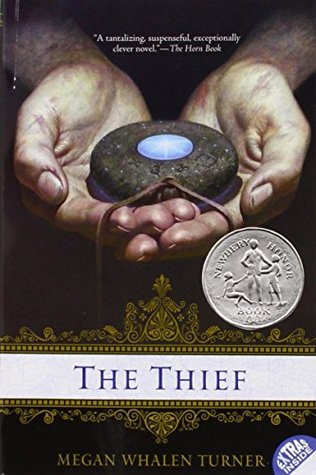
TURNER, MEGAN WHALEN: The Queen’s Thief series. This series has suffered from two unfortunate circumstances: It was billed for some reason as a series for children, which it emphatically is not; and because of this fact, the cover art on the original book was juvenile in appearance and served to sink the series into the realm of unread 5th-grade fiction. (The publisher also stubbornly maintains that the books in this series may be read as stand-alones, which is emphatically not the case. You must read them all, and in order!)
In reality, while the writing is deceptively simple, the story line is sophisticated, sly, and engaging to the most adult of readers. This is one of those series whose first book is good but maybe not great, but in which each subsequent book grows in interest, in style, in sophistication, until by the end there has been an exponential increase in enjoyment. The first book is The Thief, narrated by a rather mysterious young man named Gen, who has gotten himself into hot water through his daring thefts and now must serve as a guide to a hidden treasure for the king’s mage and his companions. The journey (and the story) seem fairly commonplace until the ending, when everything you know gets turned upside down and makes you immediately want to reread the book with this additional knowledge. The second book is narrated by the queen of an adjacent kingdom; the third by a soldier who serves that queen; the fourth by the heir to a perilous heritage he is being prevented from achieving; the fifth by a slave of a great power across the ocean, and the last brings us back full circle to Eugenides (Gen). The series is set, unlike most fantasy, in more of a Greek islands type theme, with the islands being ruled by various royal houses who are all threatened with conquest by the Medean Empire. This is my favorite fantasy series ever, hands down.

WHEW! that was a long post! But I hope it enables you to you spend a summer immersed in fantasy, if that is your wish!
Innocent vs. not guilty
I just finished reading Michael Connelly’s latest, The Law of Innocence. This was a “Lincoln Lawyer” book featuring Mickey Haller, and the case he was attempting to defend was his own. A traffic stop turns into a fishing expedition when the cop sees something leaking from under Haller’s car, and when he pops the trunk it contains a dead body.
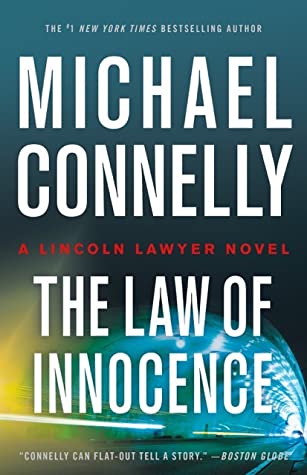
The body is that of a former client of Haller’s, and the evidence that he was killed in the trunk of the car while inside Mickey’s garage is pretty damning. Obviously (to the reader), Haller is being framed by someone, but by whom and for what purpose? Denied bail due to the machinations of a spiteful judge, Mickey has to muster his team and plan his defense while living in a cell inside Los Angeles’s Twin Towers Correctional Center, where he’s a potential target of inmates and jailers alike.
I enjoyed this mystery for a variety of reasons, including Connelly’s usual attention to detail as he presents the story from a Los Angeles resident’s viewpoint, including that of an inmate of Twin Towers. The distinction between a not-guilty verdict and proof of innocence was the quandary that drove the story, since Haller’s reputation and his future as a successful attorney is on the line if there is a shadow of a doubt about his culpability. He doesn’t just have to prove reasonable doubt—he needs everyone to know that someone else did this.
One reader commented that he liked the Haller novels better than the Bosch ones because the Haller ones were narrated in first person and therefore more compelling than the third-person Bosch. Weirdly, I usually have the opposite reaction to these. I don’t know whether it’s because I don’t identify with Haller as a person or if it’s just that I prefer police procedurals to legal drama, but I find the Bosch narratives much more involving. Also, whenever Bosch is featured as a character in the Haller books in his role as Mickey’s half-brother and an investigator on his behalf, it seems like Connelly suddenly doesn’t know how to write him—his presence is positively wooden. Maybe he’s attempting to show how Haller sees and reacts to him instead of putting him across with his usual personality? but it’s weird how unlike himself he is.
In general, this book is the usual entertaining crime thriller from Connelly. I have to say that I found it less than riveting until it gets to the trial, at which point the accelerating discoveries and the vituperative back-and-forth between prosecution and defense enliven things considerably. I wasn’t entirely happy with the ending, but I can see why Connelly went there. It will be interesting to read the next Lincoln Lawyer volume, whenever it comes along, to see how Mickey’s career is impacted, if at all, by the events of this one.
As for the “big controversy” over which people have declared they would never read Connelly again, I didn’t find it in the least unbelievable that someone who was trying to beat a murder rap would want to weed a Trump supporter from his jury. Since they seem unable to discern when he is lying to them, it seems logical that having someone on a jury who can’t distinguish lies from truth would be counter-productive. I didn’t view this as a huge political statement, but merely a way to point up the importance of honesty within our legal system. Of course, my politics apparently fall on the same side as Connelly’s….


