More Kemmerer!
After completing and thoroughly enjoying Brigid Kemmerer’s Call It What You Want earlier this week, I was positively compelled to read two of her other contemporary realistic teen fiction novels: Letters to the Lost, and More Than We Can Tell. Previous to 2015, Kemmerer was apparently known for her “Elementals” series about four brothers with paranormal powers, but when I read the descriptions, I wasn’t enticed to read one. I can’t say the same for her contemporary realistic novels, which I have practically inhaled one after another without stopping, becoming incensed when my Kindle ran out of juice at 2:30 in the morning about 40 pages from the end of the last one!
These books remind me of a few other authors—Dessen, Caletti, Rowell—because their books also contain that ideal combination of relationship and life events that propels the story. Even though there are elements of romance to each book, the primary motivation is understanding, empathy, and relationship. Although I have seen some young reviewers on Goodreads remark on the swoon-worthiness of various protagonists (as do some of the other characters!), most recognize that they are not reading these books for the romance but for the real-life transformations that occur as a result of the connections made by the people in Kemmerer’s books.
 Letters to the Lost is, as one might assume from its title, an epistolary tale. While working his community service gig at the local cemetery by clearing up the debris left by its visitors and then mowing the plots, Declan Murphy finds a letter left by one of the headstones. When he picks it up and reads it, he feels a surprising affinity with the feelings expressed by its author and, in an impulsive moment, he pulls a pencil out of his pocket, appends the words “Me, too” to the end of it, and lays it back on the grave, never dreaming that the original writer would come back to find his alteration of her letter.
Juliet Young, who has been heartbroken for four months since the death of her photojournalist mother in a hit-and-run, is outraged when she sees that someone has dared to appropriate her grief, and writes another, indignant letter addressing not her mom but the encroaching P.S. person. This is the beginning of both a correspondence and a friendship that grows faster than either could have dreamed, as they each feel free in their anonymity to express some of their deepest feelings and fears.
The truth is, Declan and Juliet are not complete strangers to one another; but the public personnas they wear at school have blinded each other and almost everyone else to who they are or have the potential to be. It takes some extraordinary events to bring them out of hiding, for one another and with all the other people in their lives with whom they need to clear the air.
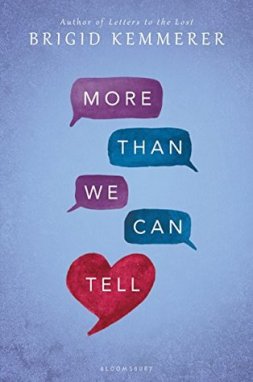 In More Than We Can Tell, one of the significant sidekicks from Letters to the Lost gets his own tale, which is a more than satisfying happenstance for those who loved the first book. He was an intriguing and important character in the first story, but although we gleaned bits and pieces of his history, there was so much more to tell. As in Letters, and also in the book I read earlier, Rev Fletcher gets a counterpart, Emma Blue, to help him reveal his story while dealing with the fallout from her own, and together the two are able to transition some difficult events with all the ambivalent feelings they stir up.
Rev has loving adoptive parents who took him in 10 years ago at age seven, and adopted him a few years later. He has for the most part put the effects of his troubled early childhood aside, but when he turns 18 and receives a letter from the father who abused him both mentally and physically, it sends him into a tailspin from which he is having a hard time recovering.
Emma has parents who love her, but her mother is hypercritical of Emma’s choice to follow in her father’s footsteps as a creator of video games. To escape the bickering between them, Emma focuses all her time and attention on the perfecting of a computer game she has created from scratch. But when an intrusive and insistent “troll” begins harassing her online, she is reluctant to reveal this problem to a mother who will order her to stop or a father who will be disappointed in her less-than-perfect design security.
Rev and Emma meet, and each serves as an outlet for the other’s private fears. But then issues arise that cause a lack of trust, and it’s not clear whether the budding relationship will survive them.
These books, while sounding formulaic (the alternating points of view, the pairing of two protagonists, the problems they must overcome) are in all honesty totally immersive, nuanced, and redemptive in tone. I can’t imagine a teenager who couldn’t relate to at least one, if not all, of these characters, and the “lessons” that are being taught are not heavy-handed. Some of the messages—that you can ask for what you want instead of passively waiting to be given it; that unkindness should always be resisted on your own behalf and that of others; that talking to people will mostly relieve all kinds of unfortunate misunderstandings; and that a moment is just a moment and a day is just a day, always making room for a different choice or change—are beautifully illustrated by these stories.
I do plan to read the sequel to the Beauty and the Beast fairy tale retelling Kemmerer has written, and I still maintain hers is one of the better and more original one of these out there, but I think her true strength lies in writing about real teenagers in the throes of their confusing, sometimes difficult lives.
I also have great admiration for her, in that she has written at least a dozen books between the years of 2012 and 2020, while simultaneously being married and having four sons!
Contemporary YA
While scrolling through books on bookoutlet.com in the search of a few more to round out my $35 minimum, I came across Call It What You Want, by Brigid Kemmerer. The name sounded familiar to me, so I looked her up on Goodreads and realized that she was the one who wrote the fairy tale retelling of Beauty and the Beast that I liked so much, so although it didn’t appear to be fantasy, I decided to try this one, which seems to have been written (or at least published) between that book and its sequel, A Heart So Fierce and Broken, which I also own but have not yet read.
 Having read both books, I can see that Kemmerer has created for herself something of a formula, although in this case that’s a good thing. One of the ways that her fairy tale book worked was to tell it from two perspectives—those of the enchanted prince and the commoner girl—and this book echoes that by also giving us two protagonists with story lines that intersect.
The male protagonist, Rob, is a victim of circumstance, although many of his peers think he is more than that. Rob’s father, Rob Sr., a financial advisor, was a mini Bernie Madoff who ran a Ponzi scheme on his clients that lost them all their money. To add insult to injury, when he was turned in Rob’s father tried and failed to commit suicide, and survived in a vegetative state, needing constant care from his now destitute wife and son. Rob had been working as an intern in his father’s company when all this transpired, and despite his protestations of ignorance, his classmates and their parents who were injured by his father’s actions refuse to believe that he wasn’t “in the know,” causing him to become a pariah at his high school. He’s basically putting his head down and trying to survive for the rest of his senior year until he can get out of town.
The female protagonist, Maegan, has her own issues: Despite being an honors student with high grades, Maegan questions her abilities and makes an impulsive decision to cheat during her SAT test. She is caught, resulting in 100 other kids’ tests being invalidated and discarded. So Maegan has her share of abuse to survive, and is likewise walking around school in a solitary bubble. Fun fact: Maegan’s dad is the cop who arrested Rob’s dad.
The two share a calculus class, and when their teacher pairs everyone up for a class project, Rob and Maegan are the two conspicuously left standing, ending up together. Neither of them is happy about this and both consider asking the teacher to change the assignments, but with the prospect of having to be third wheels on teams who don’t want them, they resign themselves and tentatively try for a way to work together.
Kemmerer does a brilliant job of first investing you in their situations and then illustrating how these two closed-off teens are gradually able to open up to one another and seek sustenance in an unlikely friendship. Prior to Rob’s family’s “fall,” he was one of the privileged, über-popular lacrosse stars, while Maegan’s family is from much humbler blue-collar origins, although Rob and Maegan’s sister, Samantha, share a love of lacrosse that bridges an initial gap. The sub-plots in the book, involving Rob’s former best friend, Connor, who is determined to constantly remind everyone of Rob’s supposed culpability, Rob’s new and unexpected friend, Owen, with whom Rob conceives of a “Robin Hood” plan to assist the have-nots, and Maegan’s sister Samantha’s secret pregnancy, further enliven the story.
The book explores such themes as right and wrong (doing right for the wrong reasons and wrong for the right ones), trust, responsibility, mistakes, and transparency, but does so in such a way that the reader never feels imposed upon by those themes. Kemmerer presents black and white and every shade of gray as they appear to all participants and makes the reader as eager as the characters to resolve the issues, find justice, and give the misunderstood some relief. There is romance, but it’s far from the dreaded insta-love; this is realistic young adult fiction at its best. If you are a teen who enjoys contemporary fiction, this is a writer who will give you what you want.
I have already lined up Kemmerer’s other two contemporary novels on my Kindle.
2nd chance romance
I have to admit that I don’t know how I ended up with this book. I ordered a bunch from bookoutlet.com (you have to spend $35 to get free shipping, and since the books are mostly between $3.50 and $6 apiece, that’s quite a few books), and this was in the box. I’m sure something about the description appealed to me (probably the “second chance” aspect of the love story), or I liked the beautifully painted gouache cover, or maybe I was subconsciously influenced by the fact that the word “girl” was in the title? Ha! No. Or maybe I decided I needed to read more romance, since that is a weak spot in my readers’ advisory repertoire.
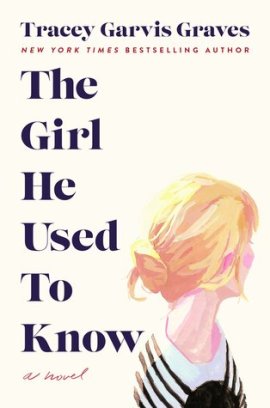 Anyway, I just finished The Girl He Used to Know, by Tracey Garvis Graves. I have never heard of her, but she is apparently a fairly popular romance writer, although her name does not percolate to the top of the heap in the same way as do those of some of the other authors with whom her writing has been compared. This is where labeling gets a little sticky, because I can’t decide whether this belongs properly in the full-on romance category or should be shunted over to what I call “relationship fiction,” which is where the feel-good romances with more substantive stories, such as some of those by JoJo Moyes or Liane Moriarty, end up.
The thing that made this book memorable is that the protagonist, Annika, is not neurotypical. She is on the autism spectrum, although that fact isn’t clearly dealt with until midway through the book. Rather, she is initially represented as “weird”—fragile, difficult, obsessional, a misfit.
Because the book takes place in two time frames, 10 years apart, and begins from the latter time frame, the Annika we meet up front is calm, poised, fairly self-aware, and well established in her life as a librarian in Chicago. We rapidly realize that she has had issues in her past because of her regular consultations with her therapist on how best to handle certain events in her life, but she doesn’t seem so different from a lot of people. My first reaction to her was that perhaps there were incidents of abuse in her past, and this is what has caused her social ineptitude.
Then we meet the Annika of 10 years ago, who panics after a week at college, refuses to leave her room, and calls her parents to come get her. The Annika who looks at people’s noses because she can’t look them in the eye, who wears baggy clothes because they are comfortable and also don’t draw attention, who spends all her time with books and animals and has no friends, and we start to get the idea that there is a real difference between this girl and a simple introvert or someone who has been scarred by just one past incident.
The book is told from two perspectives as well as from two time-frames—it’s co-narrated by Annika and by Jonathan, her first real boyfriend in college and the man whose heart she apparently broke. Near the beginning of the novel, the two run into each other in the grocery store and discover that Jonathan moved back to Chicago after his divorce a couple of years back, and that they don’t live too far apart. Annika makes it obvious that she is interested in rekindling things, but Jonathan is more cautious after how thoroughly she let him down 10 years before. And from this point, the chapters flash back and forth between narrators and between past and present to give us an idea of both the personalities and the relationship, and how they have changed and not changed.
I found that the best bits of the novel were the unintentional faux-pas moments caused by Annika’s skewed socio-emotional IQ. She is literal, she is blunt, she is confused by the necessity to do such things as read faces and moods, adapt to the “games” played by most people, or be social when she is feeling anything but. There were a few exchanges in the book that I loved: At the library she has a co-worker who has been on the job three months longer than she has, and uses that as an opportunity to patronize Annika and question her use of her time. When Jonathan arrives at the library to pick Annika up for a date, the colleague steps up and introduces herself as “Annika’s superior,” and without taking a beat, Annika says to Jonathan, “She is not my superior, I don’t report to her. Where are we going for dinner?”
Sadly, I didn’t feel like Annika’s true plight in life was sufficiently exposed. There were moments that showed what traps a beautiful girl with no social cues is likely to encounter, as when a boy who purported to like her has invited her to his dorm room to make out while three of his friends watch. Her roommate Janice rescues her from this situation (and from others), but it didn’t feel like the incident registered at all with Annika. Likewise, when Annika innocently details for Jonathan her blow-up with another boyfriend, who takes her to her favorite restaurant and ends up publicly berating her because she’s so beautiful but “then you have to open your mouth,” Jonathan immediately grasps the full import of the moment, but Annika is simply happy to be back at a restaurant she always liked. These were telling scenes, but there weren’t enough of them, or of the smaller moments in life when autism comes up against the ignorance and/or bad behavior of so-called “regular” people.
I also found the character and personality of Jonathan rather bland. It was refreshing how he found Annika’s directness and naiveté endearing rather than irritating or off-putting, but Graves perhaps paints him as too much of a saint, without some of the more natural reactions to circumstances that the majority of people would have. I thought back to Graeme Simsion’s book, The Rosie Project, and the much more down-to-earth interaction between the precise, literal Don Tillman and the woman who finds him completely frustrating and yet engaging in his innocence and bewilderment about the social norms that escape him.
Despite some character deficits, however, I was completely into the relationship between these two…until the final events of the story. I’m not going to reveal them here, but my reaction was horrified exasperation with the author for using an outside drama to give her a conclusion instead of finding her own. For about 90 percent of this book, I would have given it at least 3.5 stars, but the ending dropped it down to 2.5! So I don’t know whether to recommend it for its merits as a refreshing look at the differently abled, or pan it for its clichéd ending. You will have to decide for yourself.
Spooky YA
When placing a recent book order, I decided to catch up with some YA books that have been out for a few years, some so I could move further into the series, others just because I felt they were books I should have read in order to maintain “street cred” as an expert in young adult literature for my class at UCLA. One such book was City of Ghosts, by V. E. (Victoria) Schwab.
I was initially taken aback as I began to read, because all of Victoria’s other YA books are targeted more towards high school students, and
I had expected the same here. City of Ghosts is definitely a middle school offering—in fact, if a kid is a precocious reader, I think this could reach down into the upper levels of grade school—5th grade
for sure. But once I realized what I was reading, I settled in to enjoy this story.
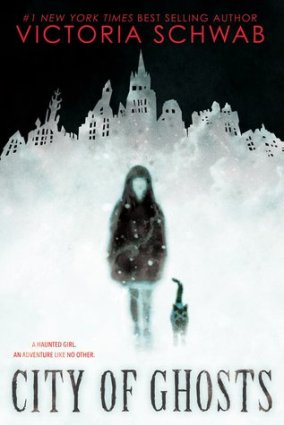 Cassidy Blake died by falling into a river. She was saved from permanent death, however, by a ghost named Jacob, who snapped her out of it and in the process became somehow attached to her. Now he is her faithful invisible sidekick in her world, and because of her NDE (near-death experience), she is a regular guest in his world, which she has nicknamed “the Veil,” because when she enters the world of ghosts, it’s like pulling back a curtain and stepping through a window.
Cassie’s parents are ghost-hunters, of a sort. Nothing so crass as the people on TV who stumble around in dark houses trying to film ghosts as proof they exist—her father is an historian, while her mother enjoys the story aspect and is enthralled by old folk tales of ghosts and specters. Now, however, the two have been invited to host a TV show about the world’s most haunted places. The first filming site is the ancient city of Edinburgh, Scotland, which teems with restless phantoms. Cassie has no idea what she will confront in a city so steeped in haunted history.
The descriptive language, particularly Cassidy’s sensations inside and outside of “the Veil,” lent a lot to the power of the story. I had a bit of a hard time believing that while her parents were “inspecters,” they didn’t believe in Cassidy’s sidekick, or see that there was something going on with her. I know her dad was fixated on the historical and didn’t endorse the supernatural aspect, but it seems like her mother, so involved with the legends, could have been a little more receptive—or perceptive. Maybe that changes in the next books in the series?
The introduction of the ghost hunter Lara and the mysterious Findley added a lot to the story, as did Cassie’s encounters with both personal and historical aspects of “ghosthood.” The “villain” was a convincing choice as an avatar from several cultures, and yielded a satisfyingly scary climax to the story.
Some of the material here is familiar from other writers and other series, particularly the concept of the near-death experience providing a heightened sensitivity to ghosts, and the idea of people sending ghosts trapped in the “in-between” to their final rest by releasing them from their rote repetition of a particular moment in their life/death. The first concept is dealt with in greater depth in Maureen Johnson’s three high school paranormal mysteries, Shades of London, in which a girl first discovers her own ability to see ghosts, and then finds out that there is a coterie of secret ghost-fighting police, called the Shades, who want her to join up with them. The second is covered in the delightful five-book Lockwood & Co. series by Jonathan Stroud, set in an alternate universe where “the Problem” (ghosts everywhere) is out of control, and only children are able to see and fight them. Schwab’s account is by no means derivative—I only mention these other series because they could be a natural progression as the younger middle schoolers who enjoy City of Ghosts want older fare.
Since Schwab has written three series for older teens (The Archived, Monsters of Verity, and The Near Witch), you might think I would refer young people to those; but honestly, I didn’t enjoy any of them beyond a point. This is odd, because her adult books (the Shades of Magic series, and the Vicious books) are among my all-time favorites—to the point that I have re-read all of them several times. My experience with teenagers from my librarian days is that they feel likewise—they are tepid about her YA books, but madly enthusiastic about the ones she has written with adults in mind. And especially with the Shades of Magic books, she has provided for the attraction of that audience by creating two protagonists young enough to appeal to teens while complex enough to attract adults.
I find it so odd when one writer writes for two audiences with such different results, but I have encountered it numerous times. I love the adult mysteries of Elizabeth George, but practically panned her young adult paranormal series. It’s also interesting when someone writes under two names, and you read both of them as separate authors, come to completely different judgments about their work, and then discover that they are the same person, as happened to me with mystery writer Barbara Vine, who is also Ruth Rendell. While I like Rendell’s books, I find them a little dry, a little cold, and sometimes frankly off-putting, whereas Vine’s books are much more to my taste—softer, more intimate, less clinical.
If you are a young adult, you should certainly not take my word for it that Victoria Schwab’s YA books won’t be to your liking. There are so many YA books that I have loved while teens said “take it or leave it,” and so many others that I couldn’t stand but about which teens gush over how good they are. But I can tell you that my recommendations of her adult books have met with universal approval, and I look forward to the new one arriving this year in October—The Invisible Life of Addie LaRue. That is one book for which I will put in an advance order.
There is currently another Cassidy Blake book to be read (Tunnel of Bones), shiveringly set this time in the catacombs of Paris, and a third book in the series is due out in 2021.
Circus!
I’m at the end of Week Six of self-quarantine, and feeling restless. That’s not to say that I agree with any of these initiatives to hurry to open things back up—we stay inside to lower the curve, to protect others and ourselves, and it isn’t time yet. But I can acknowledge my feelings and those of others who are going a little stir-crazy.
So, what could be better to read in a time of restriction than something completely escapist? And what could be a more familiar escape trope than running away to join the circus? It’s a notion secretly cherished by people young and old. Running away is one thing, but in this fantasy, destination is all.
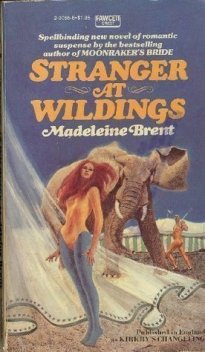 I have a few favorites in the run-away-to-the-circus panoply of titles. First on my list is A Stranger at Wildings, originally titled Kirkby’s Changeling, by Madeleine Brent (otherwise known as Peter O’Donnell). At age 13, Chantal discovers the devastating truth about her parentage, and is about to be sent to an orphanage; instead, she decides to disappear into the world of the circus that has just paused in her English town on its way to Hungary. We follow Chantal’s career as a trapeze artist until she turns 18, at which point events conspire to change her life and send her back to England. But she’s not sure she wants this change, especially if it means leaving her circus family. It’s pure gothic magic in the style of Mary Stewart.
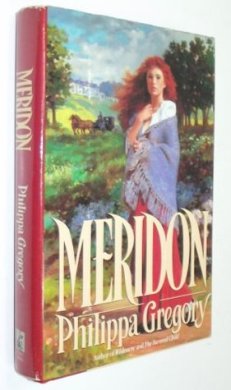 The book Meridon, by popular historical fiction writer Philippa Gregory, is one of my personal favorites, because the protagonist is both a gypsy and a bareback rider, so you get lots of horsey bits. But the book is the third in the Wideacre trilogy, and you really do need to have read the first two in order to understand particularly the second half of this book. All three books are engaging (although a bit scandalous here and there), so if you have the time…and you do…? The first two are Wideacre and The Favored Child (neither of which has any circus motif).
The following would most likely be found in the young adult section:
Wonder When You’ll Miss Me, by Amanda Davis, is a coming-of-age book, a triumph over adversity book, a story in which a seriously damaged and divided girl gets the chance to work through it all and pull herself together, with a backdrop of circus life that jumps off the page. The writing is beautiful, the characters are real and individual, and the story-telling is captivating. I wish the publisher had designed a cover to match.
 That Time I Joined the Circus, by J. J. Howard, tells of Lexi, a snarky New York City girl, who makes a huge mistake and faces a terrible tragedy. In the face of this, she decides she must track down her mother, who is rumored to be traveling with a circus somewhere in Florida. Lexi doesn’t find her mother there, but she does find a temporary home with the circus. In this story, what the protagonist is running from is equally as important as what she is running to, and she
has to resolve these issues, which are dealt with in jumps from past
to present.
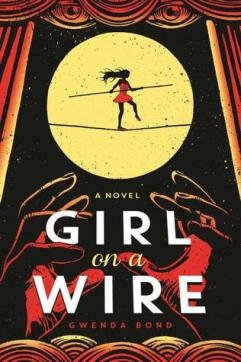 Even in the circus sub-genre, there are books with “girl” in the title!
Girl on a Wire, by Gwenda Bond, is a little different, in that most of these stories start with someone running away to the circus, but Julieta Maroni is already a circus performer who is fleeing her family to convince her father, the best wire walker in the world, to join the giant Cirque American despite his feud with their other stars, the Flying Garcias. It’s a rather obvious Romeo-and-Juliet set-up, but it’s also a mystery, a fantasy, and a great depiction of performances on the high wire and trapezes. It has a sequel,
Girl in the Shadows, with a different protagonist but taking place at the same circus.
Some more adult books in this sub-genre:

One title to which your mind will probably immediately go is The Night Circus, by Erin Morganstern, in which the circus is the magical, seductive background for both a battle of wills and a deeply romantic love story.
 Another is Johannes Cabal the Necromancer, by Jonathan L. Howard, a funny gothic tale about a man who sold his soul to the devil, but decides he wants it back. Satan agrees to a wager: Johannes has to persuade 100 other people to sign over their souls in exchange for his own. He can have one calendar year and a traveling carnival as the timeframe and setting to achieve his task. Johannes summons an unearthly crew and takes his show on the road.
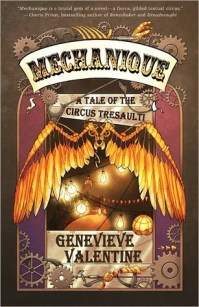 Mechanique: A Tale of the Circus Tresaulti, by Genevieve Valentine portrays a post-apocalyptic future in which a band of lost souls travels from one ruined city to the next, bringing their marvels to eager crowds of war-ravaged humans. It’s been described as steampunk, as a prose poem, and as a disjointed tapestry of image and text that will only appeal to a few—but those few rave about it.
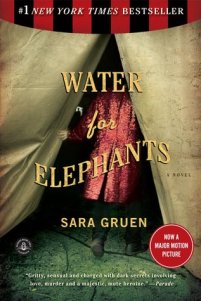 In Water for Elephants, by Sara Gruen, Jacob Janowski, 23 years old and only days away from his final exams to become a veterinarian, is devastated (and stricken by poverty) when his parents are killed in an auto accident. He hops a freight train that happens to be transporting a circus, and soon becomes an integral part, caring for the animals while yearning after a married woman and a difficult elephant. The story is told in flashback, from the viewpoint of an elderly nursing home resident reflecting on his past. (There is also a movie, though I haven’t seen it.)
 The Blue Moon Circus, by Michael Raleigh, is the highly rated story of ringmaster Lewis Tully, who gathers together an eclectic group of people to form an independent traveling show. It’s sweet and funny, with likeable characters both human and animal, and a lot of heart.
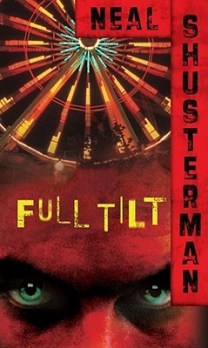 There are also those stories of circuses that occupy the dark end of the spectrum, the evil circus or carnival from which you wish to escape, such as the classic Something Wicked This Way Comes, by Ray Bradbury, Full Tilt, by Neal Shusterman, or The Carnivorous Carnival, by Lemony Snicket. (To this day, hearing the eerie carousel music soundtrack to the movie version of Something Wicked can really mess with my mood.)
Goodreads has quite a comprehensive list of “circus and carnival books” you might want to visit, if one of these books whets your appetite for more “escapist fiction”! One I have always wanted to try is Nights at the Circus, by Angela Carter.
New YA
I was excited to get and read The Midnight Lie, by Marie Rutkoski, just a month or so after it was published. I usually end up reviewing books quite a while after they come out, and find myself only adding to the reviews of others, rather than being among the first. Unfortunately, this book left me confused and a bit frustrated, and I don’t know for sure whether it’s the fault of the book itself or of my expectations going into it.
First of all, let me say that I admire the writing of Marie Rutkoski—it’s fluid, intelligent, lyrical, expressive. I greatly enjoyed her middle school fantasy series, The Kronos Chronicles. I also enjoyed The Winner’s Curse, first book of a trilogy for older teens, but somehow never got back to reading the other two books in the series—not for lack of interest, but simply because of the rapid progression of so many other young adult titles that stole my attention.
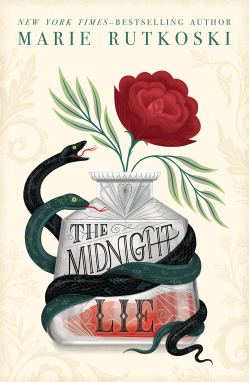 The cover notes to The Midnight Lie identify it as a book “set in the world of the Winner’s Trilogy,” and other readers on Goodreads note that it takes place between 10 to 20 years after the events portrayed in those books (although I don’t know where they came by this infor-mation). No one comments, however, on whether this story is closely identified with that one, and that is the source of my confusion.
On the surface, you could read this book as if it were the first in a brand-new series. I found the initial set-up of the three-tiered society in which it takes place—the High Kith, the Middlings, and the Half-Kith—to be less well defined or explained than I would have liked, but I kept reading, expecting it would become more clear. The mechanics of the three classes were disclosed—that there were things the Half-Kith, the people behind the Wall, were strictly forbidden from doing, using, eating, or wearing; that the Middlings had a few more privileges; and that the High-Kith were akin to the ruling class in The Hunger Games—frivolous, indulged, silly, extravagant, and without social conscience—and may possess a kind of magic unavailable to the other castes. But because of the plot device that no one in any of the three castes remembers their history, there is no explanation for how things came to be this way. The favorite expression of all castes in the face of questions is, “It is as it is,” and no one save the protagonist wonders about the why of anything.
When Sid, the “traveler,” is introduced to this island kingdom, it is obvious that this person must be the wild card element from the previous trilogy, present to shake things up. The romantic element certainly shakes up Nirrim, the protagonist, who has had a long-standing but reluctant relationship with one of her own caste but longs for something different. In Sid she definitely finds that, but has no idea what else will be opened up by her pursuit of novelty.
This is the point at which I became confused and frustrated. Is Sid actually a character that people who read the Winner’s Trilogy would recognize? Is there some nuance of which I am unaware but that would make more sense to those readers? I think a big part of my lack of enjoyment of parts of this book was that I kept wondering what I was missing by not having read those books. And there is the possibility that I was missing nothing, that this book “is what it is” and I thwarted my own pleasure by constantly second-guessing my knowledge instead of just going with what was actually on the page.
What was on the page was mostly fairly engaging. This is a coming-of-age story in the sense that the protagonist goes from being a rather downtrodden, even pathetically naive sort to finding her own agency, discovering her courage, and reaching for what she wants despite warnings to the contrary. The romantic entanglement is also satisfyingly real, although too short and too much interrupted by other concerns. But the part of the book that confounded my pleasure was the magical element. Although there is one dream or vision of Nirrim’s that telescopes later events, the explanation for the magic was for the majority of the book too vague, too diffuse, and left for way too long. The abrupt changes that took place within the last 25 pages were jarring in light of the previous narrative.
One could say that Rutkoski shouldn’t be penalized for that, because this is, after all, the first in a duology and will undoubtedly pick up and explain all of this in the second volume. But in terms of a story arc, I felt at first deprived and then rushed into the acceptance of something for which I didn’t feel properly prepared. As part of a series this book may well satisfy, but as a single book, I felt it had failings.
I did love the explanation for the title: The midnight lie is
“a kind of lie told for someone else’s sake, a lie that sits between goodness and wrong, just as midnight is the moment between night and morning.”
And the cover was a beautifully illustrated evocation of elements from the book.
I would probably recommend this book to older YA readers (high school and up), but I would really like for someone who has read both the preceding trilogy and this book to tell me what, if anything, I missed, so I could definitively say, Yes, you can read it without knowledge of The Winner’s Trilogy, or no, you absolutely have to have read those books.
Dogged persistence
It’s been a while between posts because instead of dropping the witchy mystery series by Shawn McGuire that I was reading, I kept going and am now on book #9. I’m not even going to bother to list the titles, because they are all a variation on the word “secrets” with another word plugged in front of it.
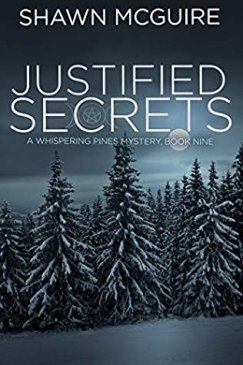 It’s not that it’s the best (or even close to the best) mystery series I have ever read, but there is a certain satisfaction to be had in pursuing a series from the first book to the last (if this is the last—there will probably be more), and also a certain inertia. Once you get going, the characters and setting are already familiar, and if you have invested in them at all, you just kinda want to know what happened. So I have been following the exploits of Sheriff Jayne O’Shea, her employee / boyfriend / business partner (in their bed & breakfast called Pine Time) Tripp, and her extended “family” that includes her mom, dad, and sister, her deputy, Reed, and the whole cast of characters from the part-Wiccan, part-circus folk, part-psychic, and altogether unusual town of Whispering Pines.
I will say that this town must hold a record for “small town in Wisconsin with the most murders in a 15-month period,” which is the time that is roughly spanned by the nine volumes. The series also gets credit for some of the most unusual ways to die, from ricin poisoning to hypothermia. And there is, of course, the entertainment value of the kitchen witches and green witches and psychics and ex-nuns in town who are either secretly counter-cursing one another or trying to hold the line with positive thoughts, milk baths, and herbal teas, or holding bake-offs of their deliciously described food. If it weren’t for the high murder quotient and the below-freezing temperatures for a large part of the year, a reader might actually want to go there!
I’m halfway through the last, and I promise to get back to reading and reviewing new material soon!
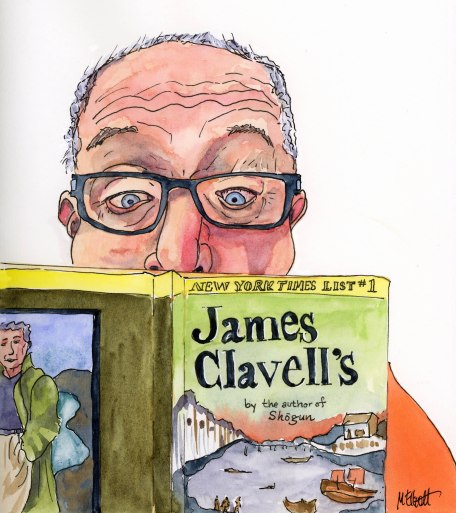
I’ve also been having some fun painting some of my reader friends. Here is Michael, who read Tai-Pan as I suggested, and is now on to the sequel, Gai-Jin.
Fresh look: old books
This is Mystery Week on Goodreads (or maybe it was last week, but the feature story is still up, so…), but the recommended mysteries featured there are some of them rather shallow and cookie-cutter-like. You know what I mean, that list of bestsellers that everybody is reading because everybody is reading them, books with the word “Girl” in their title. In the interest of giving you some more intriguing choices, here are mysteries (many of them series) to plunge you thoroughly into P-I or D-I (private investigator or Detective Inspector) mode. I have, according to my Goodreads notes, read 322 mysteries in the past decade, so let me share some of my favorites…
 SHARON J. BOLTON writes smart, sophisticated, complex, and more than slightly creepy stand-alones with unique protagonists in interesting and unusual settings, including Sacrifice, Blood Harvest, Awakening, Little Black Lies, and (my favorite, I think) Dead Woman Walking. She also penned a four-book series (so far) about Detective Constable Lacey Flint,
a young, reckless, and relentless policewoman risking her life in London law enforcement. Great plots, intriguing characters, “killer” mysteries to solve. If you like the series, don’t miss the short stories/novellas you can only get on Kindle.
 ROBERT CRAIS is best known for his long-running series about private investigator Elvis Cole, of the Hawaiian shirts and insouciant good cheer, and his dark, silent, and violent sometime partner Joe Pike. This is a great series, equal parts serious and fun just like its two protagonists, and it’s been going long enough that if you start at book #1 (The Monkey’s Raincoat), it will take up a lot of your time. But my preference is Crais’s several stand-alone books: Demolition Angel, about the toughest woman ever to work the Los Angeles bomb squad; The Two-Minute Rule, in which a former bank robber tries to solve the murder of his cop son; and Hostage, in which a group of teenagers on the run from robbing a convenience store hide out in the suburbs by holding a family for ransom (made into a pretty enthralling movie starring Bruce Willis, fyi).
 If your preference is for the quintessential British mystery, I have quite a few favorites in that area: DEBORAH CROMBIE writes a series starring two detectives who start out separate and end up together—Scotland Yard Superintendent Duncan Kincaid, and Sergeant Gemma James. One of the things I like about this series is that Crombie alternates the lead, so that Kincaid is the protagonist of one, and James is the protagonist of the next. The other thing I like is the complications of their personal lives as they intersect and mingle. Crombie is a slow writer, sometimes not coming out with a book for as much as three years, but the series is now 18 books long, so you can take your time to catch up.
 ELIZABETH GEORGE, while being herself an American, writes convincingly in the Brit genre with her greatly mismatched partners, the impeccable Scotland Yard Inspector Thomas Lynley (a lordship in his private life) and his “woman of the people” partner, Detective Sergeant Barbara Havers, solving crimes in sweat pants and clogs. Her first book is A Great Deliverance, and the series goes on well into double digits.
 CYNTHIA HARROD-EAGLES writes the Bill Slider series, and while Slider is also a Detective Inspector, it’s much more of a series about plodding police work enlivened by flashes of brilliance and accompanied by a cast of characters both engaging and amusing. It’s not quite like any other British detective series I’ve read, and I’ve loved most of it.
 If you are NOT a fan of stories from across the Pond, try something completely different by reading CRAIG JOHNSON‘s Walt Longmire series. Walt is a county sheriff in the vast windswept state of Wyoming, and has to deal with everything from cattle rustling to drug dealing to murder, as well as maintaining an uneasy interface with the law on the adjacent Cheyenne reservation. He has an ally in his childhood friend, Henry Standing Bear, and an ever-changing roster of deputies to get him into troubled waters. The series is currently up to 15 volumes; the past few have been a little uneven, but the first dozen are solid. I also enjoyed the TV series, Longmire, based on the character in the book but quickly diverging from the written series’ story lines.
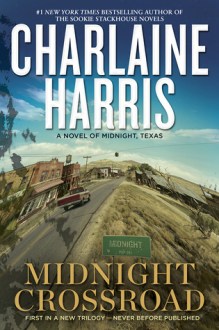 if you’re looking for something more than a little quirky (read that “paranormal”), with a mystery a part of but not necessarily the main theme of the story, read CHARLAINE HARRIS‘s “Midnight, Texas” books. They are a spin-off in some ways from a four-book series I have previously mentioned—the Harper Connelly books—in which their protagonist, Manfred Bernardo, was a major character. Bernardo, a psychic, is just looking for a home where he can find both mental and actual peace and quiet, and ends up gravitating to a “bump in the road” two-block almost ghost town in Texas, only to discover that its other inhabitants are, shall we say, as unusual as he is (or more so). There are currently three books.
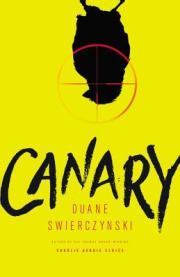 Finally, if your taste trends more towards dark and violent, check out DUANE SWIERCZYNSKI‘s noir fiction. I have read two of the three Charlie Hardie books, but a friend who is a big fan assures me that they are all equally immersive. My personal favorite of his is actually billed as a “new adult” (a step older than “young adult”) book, called Canary, with multiple points of view done well, lots of twisty turns in the plot, and a stellar ending. Some of his stuff is just too dark for me, but Canary was a winner.
I hope this gives you some ideas for reading to pursue during the next few weeks of solitude! Between this and my other three fresh looks at old books, you should be set. But if you have questions, please ask!
Witchy mysteries
Tying in with the witchy theme from my last post are a new set of mysteries that I decided to try. The first three books came up as a set for free for my Kindle (usually not a good sign), but I enjoyed the first enough to read the next two in the series.
 Family Secrets, by Shawn McGuire (not to be confused with Seanan), is the first in the Whispering Pines Mysteries. Jayne O’Shea has come to Whispering Pines in the wake of her grandmother’s death to box up or sell the contents of her house and then sell the house itself. Her father is the heir, but he wants nothing to do with the property, the town, or the inherent memories.
Jayne herself hasn’t been there since a family feud 16 years ago when she was 10 meant the end of summers spent at the lakeside cabin in Wisconsin with her grandmother. But taking care of this task is just what Jayne needs—she has recently left her job as a homicide detective after a traumatic event on the job made it clear she needed a change, not to mention that she just broke up with her long-time boyfriend and has no home. What she isn’t expecting is the fascination that the town of Whispering Pines almost immediately exerts over her.
It’s partly the fact that it’s a town for “outsiders,” those who don’t fit comfortably anywhere else—Wiccans, circus folk, psychics, the differently abled, all found a home here on Jayne’s family’s land, granted a place by the “Originals” (first settlers), and created a place like no other. But the primary initial hold it has on her is the murder she discovers on her first morning in her grandmother’s house (the body is on her property), and the fact that the local sheriff and his dysfunctional deputy appear to be not at all concerned with investigating it. Jayne just can’t help herself—and willy nilly, she immediately becomes embroiled in both the lure and the secrets of Whispering Pines.
I liked the main character and her new sidekick / potential love interest in this first book. I also liked the setting of the remote, exceedingly picturesque village that welcomes only those who don’t fit in elsewhere. And if McGuire temptingly describes any more of the food they are selling and eating in the village shops, I may have to break quarantine to go to the nearest bakery or ice cream place!
I did have some issues with the way the first mystery was structured—solved, yet not solved, with kind of an abrupt ending that was obviously designed to get you to go on to the next book. But since I am a sucker for not knowing what happened, I kept going. I’m halfway through the third book now, but I’m not sure how much longer I will keep reading, because I am also a stickler for grammar, and McGuire (and her obviously sloppy editor) keeps getting the “and I” vs. “and me” wrong. It grates on every nerve. Still, the author has nicely dragged out the potential romantic interest over the course of three books, keeping both the protagonist and the reader interested without getting frustrated, and the setting and decidedly quirky characters are a lot of fun, especially compared to some of the dourly “normal” folk in your average mystery. So I may overlook a few grammatical errors for the sake of story. (But I may also write a letter to the publisher.)
Fresh look: old books
Continuing our exploration of books published years ago—some many years ago—but not discovered by some of us until now, in our hour of need: Here are some bewitching fantasies sure to capture your imagination and attention, should you deign to read them…
The first is a series within a series, but then, the majority of Sir Terry Pratchett‘s books fall into that category, I think—Discworld is all-enveloping. But this series is specific to itself as well, and delightful in all ways. It’s the set of five Tiffany Aching books, beginning with The Wee Free Men and ending with The Shepherd’s Crown, which also happens to be Terry’s last book.
 In the beginning, it’s young Tiffany Aching, armed only with a frying pan and her enormous common sense, who stands between the monsters of Fairyland and the Chalk country that is her home. Her beloved grandmother, the Witch of the Chalk, has died, and now it’s up to Tiffany, young and unprepared as she is, to take over. When her brother is kidnapped by a fairy and Tiffany has to enter Fairyland to find him and get him back, Tiffany discovers some unusual allies, the Nac Mac Feegle, or Wee Free Men. They are a clan of sheep-stealing, sword-fighting, six-inch-high blue men with proper kilts and Scottish accents, who may be small but are definitely fierce enough to make up for it. Together Tiffany and the Feegle must confront the cruel Queen of the Elves.
In the second book, A Hat Full of Sky, Tiffany’s exploits in retrieving her brother have brought her to the notice of witches, under the leadership of Granny Weatherwax. They arrange for her to be apprenticed to Miss Level, from whom she learns that there’s little magic involved in witchcraft—it’s more a case of midwifery, hospice, herbal lore, and the settling of village disputes. Tiffany scorns much of this, acting like a typical angsty teenager…but this is unlike the usually practical girl. It seems that something more sinister is at work, a malign influence that took hold when Tiffany learned the trick of hopping out of her body for a bit and leaving an “open house.”
In the third book, Tiffany confronts the Wintersmith; in the fourth, I Shall Wear Midnight, she has completed her training and has returned home to become the Witch of the Chalk, only to encounter the seeds of great evil taking over the world; and in the final book, The Shepherd’s Crown, she stands with all the witches against the fairy hordes wanting to overrun her land. It’s a great series, enlivened by dark humor, profound pronouncements, a few bad puns, and of course by the little blue men with their equally blue vocabulary.

All you Miyazaki fans out there have probably long since discovered his animé of Howl’s Moving Castle, by Dianna Wynne Jones, but have you ever read the original source material? If not, you are in for a treat; the movie greatly abridged and “adjusted” the plot, which is so delightful that it deserves to be visited or revisited, depending.
It has one of those first lines that I love:
“In the land of Ingary, where such things as seven-league boots and cloaks of invisibility really exist, it is quite a misfortune to be born the eldest of three.”
 This misfortune falls to 18-year-old Sophie Hatter, who is turned by the Witch of the Waste into an old woman. In search of a cure, Sophie tracks down and confronts the local wizard, who travels about the countryside in a castle that moves of its own accord, courtesy of its resident fire demon. Sophie has to figure out how to outwit Howl, employ the fire demon, and overcome the Witch of the Waste to regain her youth. But along the way, what an adventure it will be!
Totally original and delightful, this book will appeal to all ages and genders. Don’t be fooled by its allocation into middle school book lists, this is a fantasy for everyone. Castle in the Air and House of Many Ways are the two sequels.
Another writer with a body of work that mostly connects between all books (like those of Ursula K. LeGuin’s from another recent post) is urban fantasy writer Charles de Lint. If you are a fan of books that seem to be set in the contemporary world but have another, parallel world connected through whose gates the faery folk and Native American archetypes slip from time to time, you must check out his Newford books. They number in excess of 20 by now, but although he has numbered them sequentially, you don’t necessarily have to read them in a particular order. While it is true that characters who reappear will be minor in one and the main protagonist of another, you don’t miss much by jumping in wherever you feel like it. Also, a fair number of the books consist of short stories that bring you up to date about individual people and story lines, should you wish to seek them out.
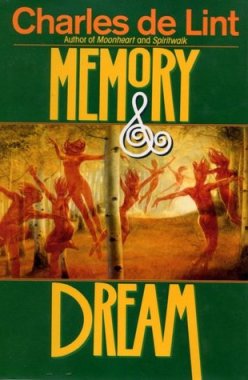 My favorite two books of his are Memory and Dream, and Trader, which are actually #2 and #4. The first book is written partly in the present, partly in the past, and I am reluctant to reveal too much, because the book is specifically designed for you to discover its surprises as you go along. It begins in 1992, with successful but reclusive abstract artist Isabelle Copley having two jarring experiences on the same day: She receives a letter from her best friend, who has been dead for five years, and is then contacted by another friend, a publisher who wants Isabelle to illustrate an anthology of her dead friend’s short stories. But Isabelle has sworn an oath to never again paint realistically…. Then the book jumps back to 1973, when Izzy is living a bohemian lifestyle with her two best friends (the writer and the publisher) in the city of Newford, studying art under the formidable Vincent Rushkin. One of the greatest living painters and know for his eccentricities, he agrees to take Isabelle on as an apprentice…but despite the miraculous painting techniques she is learning from him, Izzy doesn’t know how much longer she can put up with his controlling and abusive behavior….
The book explores a number of ideas, on a variety of levels, from the nature of art to the knowledge of the people in our lives, to what we are willing to put up with in order to learn the things we want to know. It’s dramatic, magical, and beautifully written.
 Trader is a somewhat familiar story—a body swap—that is nonetheless fresh and arresting in the hands of fantasist de Lint. Johnny, an unemployed, womanizing, hard-drinking wastrel, falls asleep wishing for a different life, one with money and advantages, in which people appreciate him. His dream, influenced by the Native American artifact he clutches in his hand as he sleeps, intersects with the discontented, weary spirit of Max, whose existence has become about little more than his work, and who has lost his initial joy in his trade as a musician and guitar maker. They wake up in each others’ bodies, and while Johnny gleefully adapts to Max’s comfortable lifestyle, Max is left penniless, homeless, and with enemies seeking him, and has to figure out what has become of the real Max Trader. Their journeys intersect in both worldly and other-worldly ways, abetted and hindered by friends and foes both human and, well, not.
Some other fantasy duos, trilogies, and series that might appeal to you as long and involving reads:
Strange the Dreamer and Muse of Nightmares, by Laini Taylor
The Shades of Magic books, by V. E. Schwab
Seraphina and Shadow Scale, by Rachel Hartman
The Lumatere Chronicles, by Melina Marchetta (three enormous volumes)
Mary Stewart’s Arthurian saga, beginning with The Crystal Cave
If you read any of the books discussed here, I’d love to hear what you thought of them—did you enjoy them, and did they meet your expectations based on these book-talks?

 The Book Adept