Internat’l Cat Day
 I woke up this morning and checked the calendar to discover that it’s International Cat Day! I must commemorate that, or Gidget and the spirits of all my house cats who have gone before will haunt me. Here, therefore is an eclectic and by no means complete list of some books that feature felines as protagonists and companions. The array of adult books seem to fall into one of two camps: The cats who solve mysteries with their human counterparts, and the cats of science fiction, who are sentient to various degrees. The children’s books celebrate cats in all ways possible from the realistic to the bizarre. These are in no particular order, except possibly by the age of the humans to which they may appeal. If you wish to find hundreds more books about cats, look here, under “lists” in Goodreads.
ADULT BOOKS
The Cat Who… mysteries, by Lilian Jackson Braun, in which a reporter and his cat solve mysteries. First book: The Cat Who Could Read Backwards.
The Mrs. Murphy mysteries, by Rita Mae Brown & Sneaky Pie Brown, in which Mrs. Murphy and her human companion solve mysteries. First book: Wish You Were Here.
The Joe Grey mysteries, by Shirley Rousseau Murphy, in which there are talking cats and also a human who discovers an ability to morph into a cat. First book: Cat on the Edge.
Catfantastic: Nine Lives and Fifteen Tales, by Andre Norton, editor, in which sci fi and fantasy writers tell tall tales about furry felines. (Short stories.)

The Dalai Lama’s Cat, by David Michie, in which the Tibetan Buddhist leader’s cat offers insights on happiness and meaning.
The Chanur novels, by C. J. Cherryh, in which a leonine species—the Chanur—take in a human refugee and by so doing threaten the interspecies Compact. First book: The Pride of Chanur.
The Cinder Spires books, by Jim Butcher, in which there are also cat clans and some naval airship action. First book: The Aeronaut’s Windlass.
The Cult of the Cat books, by Zoe Kalo, in which Trinity is left with a dead grandmother and a thousand grieving cats. A sort of Egyptian urban fantasy. First book: Daughter of the Sun.
Old Possum’s Book of Practical Cats, by T. S. Eliot, in which the author describes cats each by their distinct personality. (Poetry.) Someone should set this to music…
FOR CHILDREN:
Millions of Cats, by Wanda Gág, in which a lonely old couple acquires companions. This is known as the original picture book for children.
The Cat in the Hat, by Dr. Seuss, in which Sally and her brother receive a visit from a madcap cat.
 Socks, by Beverly Cleary, in which the cat has to learn to share his family with their new baby.
The Warriors books, by Erin Hunter, in which a house cat discovers clans of cats living in the wild in the forest…. First book: Into the Wild.
Varjak Paw books, by S. F. Said & Dave McKean (illustrator), in which a cat goes Outside and overcomes challenges.
The Wildings books, by Nilanjana Roy, in which a small band of cats lives in the alleys and ruins of Nizamuddin, an old neighborhood in Delhi, India.
The Feline Wizards series, by Diane Duane, in which feline wizards time travel to avert disasters. First book: The Book of Night with Moon.
The Cat Pack books, by Phyllis Reynolds Naylor, in which brothers Marco and Polo go adventuring. First book: The Grand Escape.
The Black Cat Chronicles, by Aileen Pettigrew, in which there are cats, zombies, and magic. First book: Soul Thief.
Stray, by A. N. Wilson, in which a cat without a home tells his own rather bleak story.
Tales of the Barque Cats, by Anne McCaffrey, in which cats are essential members of the crews of space vessels…until an epidemic threatens their extinction.
The Incredible Journey, by Sheila Burnford, in which a bull terrier named Bodger, a Labrador retriever called Luath, and Tao, a Siamese cat, travel 300 miles through the Canadian wilderness to reunite with their people.
Summer reads
Before I departed the “beach reads” category for my usual fare of fantasy, science fiction, and mystery, I decided to read two more books by the one author in my experiment whose work I had actually enjoyed, Elin Hilderbrand.
As before, I checked reviews on Goodreads and tried to pick a couple that were popular and well thought of by a majority of readers. I ended up with The Perfect Couple and The Rumor.
The Rumor‘s story in brief:
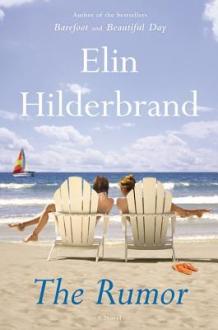 The book revolves around two women who live on Nantucket and who have been best friends. One, Grace, has a husband who is the king of the real estate deal, enabling her to live on a beautiful estate where she is transforming an extensive property into her dream garden. She has twin daughters, one predictably vanilla and the other just as predictably bad news, and her husband seems to adore her—when he’s paying attention, which is less and less these days. But her gorgeous and single landscape architect is making up for that with his attentive behavior.
If there’s one thing Grace envies Madeline for, it’s her devoted relationship with her husband, who acts as if the honeymoon never ended. They also have a wonderful son, Brick, who has never given them a moment’s worry…until he started dating Grace’s “bad twin,” Allegra. Madeline, however, is focused at the moment on her overwhelming case of writer’s block, which is preventing her from even starting the new book that is due at her publisher’s any minute. Bills are piling up, and if she can’t get a fix on her next novel, their precarious financial life will begin to fall apart. Even though she doesn’t have the money for it, Madeline decides to rent a small apartment in town to be her writing retreat, hoping it will facilitate a solution. And that’s where the rumors begin…
I liked this story. Yeah, it’s a little shallow, and a little typical, but Hilderbrand’s characters are real individuals, and I loved the distortion of gossip in a small town, as it morphs and changes from one person’s account to the next until it’s something monstrous instead of a perfectly easily explained anomaly. It’s like that old game of “Telephone” that we used to play at slumber parties—one person whispers a secret into the next one’s ear, and that person into the next one’s, and so on, until you get to the end of the circle and the last person tells what they heard, which never remotely resembles the opening statement. I also liked the atmosphere and character of Nantucket, and the descriptions of Grace’s lush garden and
Madeline’s tortuous writing process. Even the teenagers and husbands were real people.
The Perfect Couple:
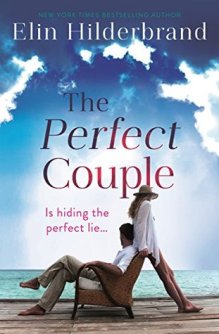 Greer Winbury, mother of the groom, is determined that the Otis-Winbury wedding will be the event of the season. Since the bride, Celeste, comes from modest means (her parents are middle class with a lot of hospital debt piled up from Karen’s cancer), the groom’s family, who are at the peak of wealth and own one of the premier estates on Nantucket, are hosting the event on the island. The wedding has been meticulously planned, but in a bit of a rush, because no one is sure how much longer the bride’s mother has before the end. This is not the tragedy, however, that prevents the wedding from taking place; the incident responsible is the discovery of a member of the wedding party floating dead in Nantucket Harbor the morning of the ceremony. Nearly everyone in the wedding party is suspect, particularly when Chief of Police Ed Kapenash starts discovering multiple acts of deceit and betrayal amongst the family, friends, and guests…
I find it odd that this book gets consistently high marks and The Rumor was not nearly so well liked; I thought that book had much more depth and completeness as a story than did this one. The Perfect Couple seemed like it was wallowing in clichéd characters, from the older wealthy married man having an affair with the young single woman to the flighty bride and her self-satisfied groom…and the worst was the groom’s mother, the mystery novelist who always gets her way. The way they talk, the way they dress, their attitudes, all scream caricature to me, with the familiar misogynist trope of virgin-slut-bitch applied to most of the women—either prizes to be won or else damningly responsible for the men’s inability to say no. I felt like the author simply made up the situations she needed to propel the plot as she went along, and yet some story lines directly detracted from the reader’s focus on that, furthering the effect that Hilderbrand didn’t know for sure whether she wanted to write a love story or a murder mystery. And I don’t want to provide any spoilers, but I simply don’t believe, knowing what they all knew about everyone involved, that the book would have ended as it did. Enough said. It was an okay read, it wasn’t glaringly boring or bad, it just wasn’t as special as some readers seemed to believe.
I will say that both books did fulfill that “setting” or “place” requirement, in that discussion of the surroundings—the stunning views, the warm breezes and starry nights, the ambience of the restaurants and shops (and the descriptions of the luscious seafood)—definitely heightened enjoyment when reading these books.
I can’t believe it’s been 10 days since I last posted a review. I have continued to read, but in between breakfast, lunch, and bedtime, which are my three reading slots of the day, I have been so busy making art or teaching art that I haven’t had the time to put down my thoughts about reading! I will play catch-up now; I have two more books completed and ready to discuss.
(Should you be curious, you can go look at my art blog: The address is https://theslipcover.blogspot.com.)
More results
I read one more book for my experiment regarding “place” and whether the setting of a book was sufficient to carry it: All the Single Ladies, by Dorothea Benton Frank.
My answer to that question for this book was “no.”
Although I did like the descriptions of the South Carolina low country where this book is set—its foliage, its beasties, its unique and delicious-sounding cuisine—and also enjoyed the southern lingo and expressions employed by the characters (reminded me of my own mama, a Virginian), the plot itself was muddled and a bit facile, not to mention improbable.
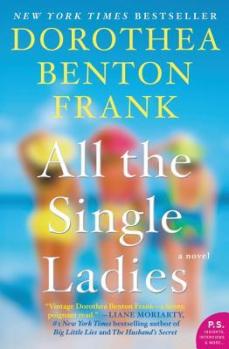 It’s hard to summarize the story in brief: It starts with Kathryn, who is in the hospice section of a nursing home, dying of cancer. Lisa is one of her caregivers, and Suzanne and Carrie are her two best friends, who visit regularly. After Kathryn passes, Lisa is determined to keep up with the other two and make them her friends, which she does. Then various life upheavals result in them all living together in the same house with Suzanne’s grandmother, and the rest of the story can be summed up by “other stuff happens.”
The muddled part: There is an initial mystery posed when Kathryn’s landlady claims that some of her possessions actually belong/revert to the landlady, and though the other women are 99 percent sure this isn’t so, they haven’t yet found a way to prove it. So we have this set-up in the beginning and we think this will be a thread throughout the book (Suzanne is the executor), but instead it crops up once and then is subsumed in all the other life details until about the last 25 pages. Not good.
Second, the book is pretty insulting to women of a certain age and, being one of those, I took appropriate umbrage. All three of the main characters are hurting for cash—Carrie lost everything to her boyfriend’s kids (they were about to marry when he died, after living together for seven years), Lisa has brought up and schooled her daughter single-handedly without aid from her ex, leaving her living on the edge from paycheck to paycheck, and Suzanne had a traumatic experience that derailed her initial career and landed her as a dependent on her grandmother, whose house on the beach is the center of this piece. So, what is their solution? Do they start a side hustle, come up with a clever investment, think of some creative way to get them out of their fix? No. Carrie looks for a fourth (!) husband whose wealth will solve her problems. Lisa whines a lot about her daughter’s poor (to her) life choices, to the point where it becomes apparent that the author herself has created this soap box and placed her character carefully atop it to preach. And Suzanne sits helplessly in Grandma’s house waiting for the hammer to fall, because she assumes that upon the death of “Miss Trudie” she will have to move out, sell the house, and split the proceeds three ways with her two ungrateful and unhelpful sisters, all the while admitting that she charges her customers far too little in her florist business. Um, honey? Charge more.
Added to all of this is the unlikely (I said improbable but I would say verging on impossible) fact that all three women (these are women in their late 50s and 60s) manage to discover single, relatively undamaged, enthusiastic, attractive men who want to be with them, and all of them pair off tidily. Sorry, that’s a little bit of a spoiler, but since that goal is set by one of them in the beginning and is practically the theme of the whole book, I’m going to say a giant Who cares?
There are occasional moments when you fall into what should be the central spirit of the book (and would have been if the dating details had been dropped in favor of other solutions), which is the camaraderie between the friends. This shows more between Lisa and Suzanne than it does between either of them and Carrie (the one fixated on finding a hubby), and is mostly illustrated in fun times over food and drink. But it’s just not enough when weighed down by everything else. The best character in the whole book is the 99-year-old grandmother, Trudie. I would much rather have heard her story.
This book gets a giant “MEH” from me. Although it did make me want to travel to the low country sometime to experience its beautiful architecture, afternoon storms, magnificent sunsets, and delectable food, it certainly didn’t make me want to read another book by this author. So “setting” in this case was the only appeal and failed to carry the book.
Results
In my previous post, I posed the question, “Can the setting of a story (a particular place or atmosphere) be a sufficiently appealing element to carry a book?” (Or something like that.) To research the experiment,
I read books by three of the authors recommended to the woman on the “What Should I Read Next?” Facebook page who requested “books that take place at the beach.”
Author #1 was Karen White, and I read her book The Sound of Glass. The title comes from the wind chimes constructed from pieces of polished beach glass that the original owner of the house depicted in the novel made and hung from the rafters all around.
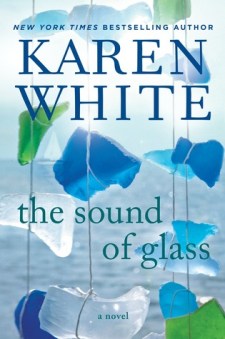 The book is set in Beaufort, South Carolina, which the author classifies as part of the “Outer Banks” (although Wikipedia says those are “a string of peninsulas and barrier islands separating the Atlantic Ocean from mainland North Carolina”). Suffice it to say, the setting is one of open beaches and also of protected swamplands characterized by flat-bottomed boats cruising above pluff mud, and trees covered in Spanish moss. Although there is a minor plot detail involving one of the protagonists’ fear of water, the setting doesn’t have a lot to do with the book, beyond providing evocative sound effects and scents unfamiliar to the one protagonist, who hails from Maine. Scene-setting mostly came down to that character, Merritt, complaining about the stifling heat. A lot.
The story in brief: Merritt’s husband died two years ago. She has recently discovered that his grandmother left him a house in South Carolina, and since he is dead, she inherits. She decides to upend her stagnant life in Maine to go live in it. Shortly after she arrives, so does her stepmother, who is a scant five years older than she is and has a 10-year-old son. The stepmother pleads poverty and asks to stay and Merritt reluctantly agrees, although her father’s marriage to this woman was the reason for her 12-year estrangement from him (he is also now deceased). The two begin to work out their relationship with one another, but it’s complicated by rather large secrets on both sides.
Someone on Goodreads described this book as “relationship melodrama,” and that about sums it up. The thing is, the bones of a good story are here: estranged family who find each other amidst personal crises. But Merritt (the buttoned-up Maine girl), and her counterpart, Loralee (the brash Southern blonde with the pancake makeup), are both such stereotypes that I found it hard to relate to them. Better than the two protagonists, I liked Loralee’s kid, Owen, and Merritt’s doctor/brother-in-law, Gibbes. They were less prone to both drama and cliché, and I think their characters show of what this author is capable if she would quit dropping into the easy channels dug by predecessors.
The secret Loralee is keeping is obvious to everyone but Merritt, but the way she goes about ingratiating herself and her son with her stepdaughter is pretty ingenious. If the story consisted solely of this plot, I think I would have liked it better. Instead, we had to do a whole convoluted study of Merritt’s damaged psyche and how it got that way, and although exposing some of the issues was a worthy goal, her protracted whinging was exhausting. And her ultimate secret, the one that connects grandmother with grandsons with widow, is patently ridiculous.
A comment on writing: When I am reading a book, I subconsciously give the reading the same tests that I give my own writing, one of which is not to use the same descriptive word twice on the same page (let alone in the same sentence), and yet that happens over and over again in this book. The author has the potential for good story-telling, with evocative images and powerful characters, but sloppy writing (uncorrected by her inattentive editors) and tendency to drop into cliché operated for me against enjoyment. I probably will not read any other books by Karen White.
The second author whose work I sought out was that of Elin Hilderbrand, a perennially popular name associated with “beach read” in the Facebook group. I scanned her list of offerings on Goodreads and selected a book that had uniformly higher marks, since some of the others swung wildly between two stars and five. The one I ended up reading was The Identicals.
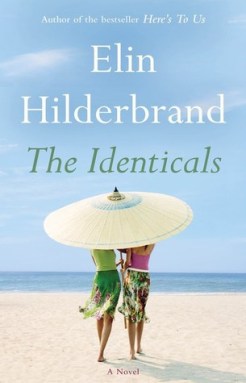 I was immediately captivated by the slightly tongue-in-cheek comparison between Nantucket and Martha’s Vineyard in the prologue, citing the benefits of each and the detriments of the other from the residents’ point of view. It was a great set-up for the story: While Nantucket and Martha’s Vineyard may look to the rest of the world like similar places, to the natives they are worlds apart, even though that distance is a scant 11 miles. Similarly, while twins Tabitha and Harper are identical enough to fool others even at age 39, they are completely different in their life choices and affects.
The story in brief: Twins Tabitha and Harper have been estranged for many years, for various reasons. Harper lives on Nantucket near their father, Billy, while Tabitha assists in their mother’s previously successful but now waning design business/dress shop. Things suddenly get stirred up: Billy dies; Harper’s affair with his doctor becomes a common topic of island gossip; and Eleanor (their mother) falls and breaks her hip. Add to that mix Tabitha’s precocious and trouble-making 16-year-old daughter, Ainsley. Harper needs to cultivate a low profile, Tabitha needs to care for their mother in her recuperation but is at her wits’ end with both her teenager and her dress shop, and something needs to be done about Billy’s ramshackle house on Nantucket. All these circumstances combine to make the twins grudgingly reach out to one another for assistance (facilitated by Ainsley, who is dying of curiosity about their lack of relationship) for the first time in decades.
Part of the reason why this plot line works is that the author herself (in the guise of her various narrators) initially sets it up for derision by comparing the separation of the twins at age 17—one going with “Mommy” and one with “Billy” when their parents divorced—to the Hayley Mills/Lindsay Lohan Parent Trap plot. She then uses their wholly different upbringings—Harper’s on Nantucket as a laid-back, casual evolution into an underachieving adulthood, and Tabitha’s on Martha’s Vineyard (and in Boston) as an uptight, socially restrictive one with high expectations of her performance—as a parallel for the respective towns. It was cunningly written.
I also liked that although there were important elements of mistaken identity “hijinks” and romance in the book, the story was by no means restricted to those plot lines and in fact was much more about the obstacles to familial love and how to overcome them. The back stories were also credible, and gave the story depth. Based on this book, I would read another by Hilderbrand.
As far as the influence of setting, in addition to paralleling elements of the story it also made me wish for sea wind in my hair and a big bowl of clam chowder in front of me on the table. The atmosphere definitely both contributed to and influenced the plot.
For my third book, I chose Sunset Beach, by Mary Kay Andrews, an author appearing on the Facebook page and also mentioned to me as one fitting into the category by my friend Patrice.
The story in brief: Drue Campbell has just gone through her mother’s protracted illness and death when her estranged father, who left them 20 years ago, turns up with a proposition: Drue has inherited her grandparents’ ocean-front cottage in the same town where Brice Campbell has his lucrative personal injury law practice, and Brice thinks she should move into the cottage and take a job at his firm. Complicating the issue is his new wife and office manager, Wendy, who also happens to be Drue’s 8th-grade frenemy. Drue is down on her luck and can’t afford to say no, but she agrees with an ill grace and initially resents both the job and her father and “stepmother.” Then, she is arrested by the plight of one of Brice’s former clients, whose lawsuit over a suspicious death didn’t receive the attention it deserved, and decides to investigate.
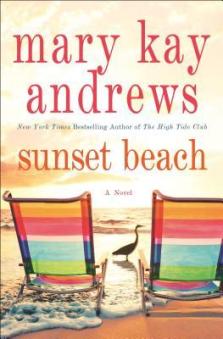 In this book, Drue’s former hobby (kite-boarding) and her nightly walks on the beach and swims in the ocean from the venue of her derelict cottage do give a beachy atmosphere to the book. But I would definitely not call this one “just” a beach read. Although the opening scenes paint this as “relationship fiction” with the reuniting of Drue with her absentee father, the scenes between them are sometimes shallow, with Drue coming across like a snarky teenager. Brice himself is a bit of a cardboard cutout—bland and not particularly compelling—while Wendy (the new wife) is a cliché of a shrew. But the rest of the book—in which Drue starts out working as an information-taker over the phone for her father’s legal practice and ends up (after taking an interest in an old case with an unsatisfactory resolution) as a bull-headed private investigator—is much more compelling. While there are bits of romance and reconciliation here, the main story is the mystery and this is how I would recommend the book if I were to suggest it to someone. Based on this book, I would read another of Andrews’s, although it could have done with a little more depth in the relationships before switching to the mystery.
Of the three books, I would say that only Hilderbrand’s reinforced the theory that setting can be powerful enough to carry a story. Although the beach hotel culture does become fairly important in Andrews’s tale of betrayal and murder, both the other books could probably have been set anywhere without it feeling like something essential was removed from the plot. In Hilderbrand’s, plot and setting were intertwined, which is the ideal when setting is an issue.
As for my other premise, that people who like a “slow build” in pacing in one genre will enjoy the same in others, that will have to wait for another day and some reporting back from other readers!
Setting as appeal
I belong to a group on Facebook called “What Should I Read Next?” It is mobbed by more than 53,000 eager readers who seem equally motivated to share what they like and learn what others have discovered. I joined the group for a few different reasons:
- I wanted to keep up with what was popular out there right now with regular readers (not librarians, reviewers, and other colleagues);
- I saw it as a chance to practice my own readers’ advisory skills in a social media format, to see what works best;
- I thought by sharing my reviews, I could find more followers for my obscure little blog!

It’s actually working quite well: I’m discovering that many readers fish in a shallow pond of popular titles and are therefore all reading a lot of the same books, which both gives me those titles and also allows me to make suggestions of others not as popular but perhaps as good or better reads. I am learning a lot about how to work as an advisor in a written online format; after I referred someone to a book by writing a short synopsis in the comments, three separate people wrote back to me and said some variation of, “I wish other people would give a little description with their recommendations so I would know whether I would even be interested in looking this book up on Amazon or Goodreads.” So now, every time I make a recommendation, I throw in either a short annotation or at the least some characteristic of the book that I think people would be interested to know (such as, “It develops slowly but the characters are so lifelike you expect to meet them on the street and invite them for coffee!”). And both my Facebook page and this blog have picked up a dozen new followers since I began this “relationship” with other online readers.
I am also discovering that, like many librarians who think they have good readers’ advisory skills, regular people also think it is sufficient to recommend a book based on what they like, rather than trying to find out what the person who is asking might prefer. I get a little impatient sometimes when a mom asks for realistic books for her 13-year-old son and someone posts “Harry Potter!” Harry Potter is not the answer to everyone’s reading needs, people!
Anyway, suffice to say that the interaction with the subscribers to this page is really highlighting and pinpointing their needs, along with how poorly they are being served when people concentrate too much on the books and not on the readers themselves.
Recently, someone wrote that her mother was about to have surgery and had asked her to stockpile some titles she would enjoy during recovery. The criteria was, “She likes books that take place at the beach. Her dream is to live in a lighthouse.”

People immediately started throwing out names of authors who write books that are set on the Outer Banks, the Jersey shore, or the beaches of Cornwall. Some of them fall into the category of actual “beach reads”—that is, lightweight and frothy, perfect for a summer vacay book. Others, though, had such a wide variety of styles and stories that I wondered, “Would anyone really read books just because they were set in a preferred location?”
Then I thought about myself and the many books I have read that were set on the streets of Paris, and how some of them, though
frankly mediocre, still pulled a decent rating from me because of their evocative development of “setting.” So, as an experiment (since I also like the ocean), I am reading a few of the books mentioned, to see if the right “environment” in a book can offset such things as poor writing, shallow character development, or the lack of a cohesive
story line.
I also proposed to one reader who was a big fan of Kate Morton that she might, if she likes mysteries, also enjoy the books of Tana French. She had never heard of French, and asked me why I thought so. My reply was, People who like Kate Morton are willing to accept extremely slow pacing while Morton sets up place and characters in what sometimes lasts hundreds of pages. Tana French, although writing in a different genre, subscribes to the same style.

My premise here is that people who are willing to read in multiple genres may still gravitate to the same type of book in terms of reading appeal, i.e., this slow pacing shared by these two authors, rather than picking something fast-paced in one and slow in another. I don’t know whether that reader will take me up on the Tana French challenge; she said “Thanks for the tip” rather than “I’ll rush right out and read one.” But I’m hoping that if she does, she will come back to me and confirm or deny my theory. (I realize that basing it on one person isn’t good data collection, but everything starts with a first step….)
I will report back on these ponderings!
Chosen
I’m struggling with how to convey my reaction to this book. It’s Chosen Ones, by Veronica Roth, her first “adult” novel (she’s famous for the Divergent YA series). It’s almost like there were three books contained within this one, and I really liked one of them, I mostly liked but was confused by the second one, and about the third one I was quite ambivalent. (Not in that order.)
 I like the concept, which is, What happens to heroes after their mission is complete? They have done their job and defeated the evil force, and now what will life look like? But the concept is also part of the problem: Because the book is being written 10 years after the central event—the defeat of the Dark One—that was the major turning point in the five Chosen Ones’ lives, we get a confusing and contradictory look at those events, depending on to whom we are listening. It’s obvious that the trial had a devastating effect on at least some of these people, but a couple of them—Matt and Esther—seem to have recovered just fine and are using their fame to good purpose. The others—Ines, Albie, and Sloane—seem permanently stuck. Albie and Sloane, who were held and tortured by the Dark One, suffer cruelly from PTSD and are awash in misery and guilt. When the book opens, Sloane has just requested some top secret documents from the government about the events in question because, even after all these years, she feels like she doesn’t know either the truth or the scope of what happened, and she needs to make sense of it so she can move on. The documents do add to the narrative (and it’s fun to have them inserted into the text), and they do explain some things, but they bring up as much as they explain.
Anyway, the Dark One has been vanquished, the five are trapped in their celebrity stereotypes, doing the rounds of public appearances for such things as anniversaries and dedications, and everyone is in a holding pattern. Then, a tragedy brings them together, and they are suddenly being challenged to do battle again, with a foe possibly even more powerful and terrifying than the first.
At this point in the book, right after a major transition, things kind of come to a halt. There’s a lot of talk-talk about the sitch, multiple training scenarios for new techniques to vanquish the enemy, and the narrative gets a bit turgid. Then Sloane, ever the curmudgeonly rebel and loner, decides to step outside the box, and in Part Three, things finally get lively.
I have read many books in which it is necessary to set up a past, to explain current scenarios, and then move into the present-day action. This book doesn’t do a great job at that. Part of it is that we are too much inside people’s heads (mostly Sloane’s) and it’s a mess in there. Part of it is that there is not much focus—no linear story-telling here, you’re supposed to pick it all up on the fly as events and people jump around, and sometimes that works and sometimes it doesn’t.
I did end up liking the book, mostly because of two characters (Sloane and another I won’t mention because it’s a spoiler, but he’s way cool). When they finally begin to figure things out, plan, and interact, the pace accelerates and we get not only some action but also some surprising information that causes the rest of the story to suddenly make more sense. But it seems to me it’s way too long in coming,
and a less motivated reader might give up before arriving at this point in the book.
There were also some inexplicable things: In mystery writing they always tell you, Don’t mention a gun unless it gets used in the next scene. The same goes for characters, and one person in this one who you rightfully expect to be major (or at least present!) simply disappears from the action, with no comment or explanation, despite her supposedly central role. There are also some “reasons” for various phenomena that are patently absurd, but…it is a sort of a comic book of a story, after all. Still, it’s nice when science fiction actually adheres to some consistent form of science, even if it’s invented.
Finally, this book is numbered “Chosen #1” in Goodreads, which would imply a sequel; but there is no cliffhanger or any sign at the end that a sequel will be forthcoming or even necessary. Perhaps that’s a good way to handle it—since there is no foreshadowing, the sequel could be literally anything the author pleases. It just seemed weird not to have at least a few ominous threads left dangling.
I would recommend the book, because the ideas are ingenious and at least two of the characters are compelling, ironic, and occasionally darkly humorous. And I will read the sequel, because this one engaged my curiosity sufficiently about where the story will go next. But it’s definitely a mixed bag.
Also, similar to Leigh Bardugo’s “adult” book Ninth House, this feels more like NA (new adult) than anything more mature.
Kate Racculia
In 2015, I picked up Bellweather Rhapsody, by Kate Racculia, to check it out for my high school book club. It had just won an Alex Award, which is given to 10 books each year that are written for adults but that have appeal for teens. My high school club had become sophisticated readers, and that year we were going almost exclusively for Alex Award books, since 18 out of our 23 members were seniors and the rest were juniors.
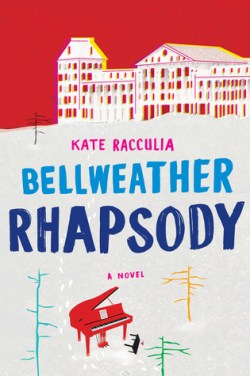 I never persuaded the club to choose the book; it always got high votes, but never made it to the final pick, and I always regretted that.
Recently, I was reminded of how much I liked it when I saw on the “What Should I Read Next?” Facebook page that Racculia had published a new book, Tuesday Mooney Talks to Ghosts, in 2019. I put it on reserve for my Kindle at the library and awaited its arrival.
While I waited, I went back to Goodreads to review what I had thought of that first book. A brief description: Every year the Bellweather Hotel in upstate New York hosts a high school musical competition called “Statewide,” where music and performance students gather to display their skills. In 1997, twin high school seniors Alice and Bertram “Rabbit” Hatmaker have both qualified to attend. Rabbit plays bassoon in the orchestra, while his sister, an aspiring actress and singer, is in the chorus. Meanwhile (unrelated to the competition), Minnie Graves, who was a child attending a wedding in 1982 when she discovered the groom shot dead and the bride hanging from the light fixture in room 712, has returned for the weekend with her support dog, Augie, to attempt to face down her demons.
Alice is paired as a roommate (in that same room, of course!) with flute prodigy Jill, who also happens to be the daughter of the hated and feared Viola Fabian, sarcastic head of Statewide. Alice discovers Jill’s hanging body in their room on the first evening, but while she runs to get help, the body disappears. Viola dismisses it as an attention-seeking prank, but…if so, where is Jill? All in attendance will have plenty of time to find out, as the Bellweather is enveloped by the biggest snowstorm of the season, and no one is able to leave.
This book started out feeling like a cliché, if an enjoyable one:
The set-up was like a combination of The Shining (Stephen King) and Christie’s And Then There Were None, and I had resigned myself to enjoying it for those familiarities, with perhaps a few modern twists. But there’s a whole lot more going on in this book than just a murder mystery. It’s a coming of age story, for both children and adults, compressed into a wild weekend in which the adults must re-examine what they’ve been told, what they’ve experienced, and what they remember longing for, and the children go through profound changes due to the catalysts provided by this weird music festival in a moldering old resort, while everyone (well, almost everyone—it is a murder mystery, after all!) comes out the other side changed. Parts are hilarious, parts are incredibly touching, and I loved the resolution for all the characters, who were sharp and quirky, and all of them unique.

Tuesday Mooney Talks to Ghosts has a lot of the same things going for it. Racculia’s real gift is for creating memorable characters and making you care what happens to them, and in this book it’s Tuesday, Dex, and Dorry (and well, maybe Archie).
Tuesday Mooney has an unconventional job: She is what’s called a prospect researcher, which means she profiles wealthy people (for a Boston hospital) to see who best for the office fundraisers to hit up for donations. She has the skills of a private detective, but goes beyond those to assess property, analyze gossip, and also rely on her finely honed instincts to find information and connections. She is uniquely suited to this work, being a loner who prefers to be on the outside, noticing what the insiders will miss. She is a guarded person, whose best friend of 10 years has never even been to her apartment. Her austere reserve rises from a genuine and justified fear of having her heart broken.
She is among a dozen employees who have volunteered to work at the hospital’s “Auction for Hope,” to staff the sign-in tables, keep track of auction bids, and make herself generally useful. Tuesday always volunteers, because after learning absolutely everything she can about her subjects, these events are her only opportunity to interact with them in person. But she’s no fan-girl: She simply wants to weigh her assessment of their facts and figures against the reality of a first impression.
At this particular event, Tuesday manages to finagle a place on the guest list for her best friend, Dex Howard, a gay financier who longed to be in musical theater but settled for a large paycheck. Dex looks around for someone interesting to sit with, and meets eccentric billionaire Vincent Pryce, a collector of Edgar Allan Poe memorabilia, and his much younger wife, Lila. In the course of the evening, Pryce is outbid, stands up dramatically as if to challenge the person doing the bidding, and drops dead of a stroke. The Boston Herald headline the next day read PRYCE BIDS FAREWELL.
But his death is not the big news: Pryce has created an epic treasure hunt throughout Boston—clues inspired by Edgar Allan Poe—whose winner will inherit a share of Pryce’s wealth. Tuesday’s curiosity combined with her skills lead her and her oddball crew—Dex, her teenage neighbor Dorry, and the handsome heir to the Arches fortune she met at the benefit—into a complicated game that will make them face past tragedies, present shortcomings, and future hopes.
As I initially underestimated Bellweather Rhapsody, so did I have lesser expectations for this book. First of all, both the title and the cover art strongly suggested a middle-school novel, especially since many reviewers were comparing it to that old chestnut The Westing Game, by Ellen Raskin. Although it was reminiscent, in some ways, of that book, the one it reminded me of more was The Extraordinary Education of Nicholas Benedict, the prequel to the Benedict Society series by Trenton Lee Stewart. I immediately thought of Tuesday as a more mature version of Nicholas—clever, introverted, and innovative. Her selection of her friends was likewise unexpected but key.

The supernatural element doesn’t actually merit the implications of the name of the book: Tuesday talks to only one ghost, that of her dead teenage friend Abby, and it’s a toss-up whether this is a real spirit contact or just a trauma reaction to her loss. (Her young friend Dorry longs to talk to ghosts, notably that of her deceased mother, and covets Pryce’s possession of Edgar Allan Poe’s goggles, said to allow one to see them.) But the plot is engaging, not just because of the mystery or the potential for ghosts but also as a result of what pursuing the treasure hunt reveals in each of the four main characters. The book shows what it’s like to be haunted, not by a spirit but by longings to express the person you have squashed down inside of you in the interests of practicality. It deals with the ethics, pleasures, and responsibilities of money, and what it’s like to have it/not have it. It enters in depth into the theme of friendship. It’s a great mix of mystery, introspection, campy humor, and cultural references that shouldn’t work but does. I couldn’t put it down.
I see from Goodreads that Racculia wrote another book, her debut, back before Bellweather. It’s on my list.
Appeals: Eccentric, captivating, substantial characters; evocative world-building with some attention to detail (in both cases); a nice genre mix of mystery, ghosts, and human drama; and an engaging writing style.
Nnedi Okorafor
 For some time now, I have meant to catch up with other readers, reviewers, and critics who have sung the praises of Nnedi Okorafor and bestowed multiple science fiction awards on her various writings. I was initially only aware (because of my profession) of her young adult books, Akata Witch and Binti, so I decided to start with Binti.
I was immediately fascinated. Binti is a marvelous protagonist, a 16-year-old of the Himba tribe of Namibia, whose traditional and isolationist family and culture nonetheless prepare her, through a magical gift for mathematics, for defiance of her family’s wishes. She receives a mathematics scholarship from the prestigious Oomza University, and bravely and optimistically chooses to attend this cosmopolitan and multiracial (as in, alien races) galactic institution despite the many fears with which she has been imbued by her family. The details of how she insistently brings her cultural identity along with her, despite the judgment and sometimes shock of the reactions around her, and her quiet persistence in finding a way to fit in are an arresting narrative. On the transport ship, she meets a diverse group of young people headed for the university and begins to find her footing and make friends.
Then, five days before the ship reaches its destination, a cultural conflict confronts the entire university as the Meduse, a fantastical race of beings bent on revenge over a thoughtless cultural appropriation, turn Binti’s transport into a nightmare of death, and Binti must act as the representative for the human race, despite her marginalized placement within it.
I was completely fascinated by this tale and thus completely outraged when it ended a few pages later! I had no idea it was a novella of 90 pages, and frankly wonder why it was published in that form. There is a huge story here, with so many intriguing ideas and influences to be unpacked, and rather than developing it into the full-length book that those details demanded, Okorafor instead wrote three novellas to cover the same material, and sacrificed continuity, in my opinion.
 I decided, based on her facility for character creation and world-building, to give one of her full-length adult novels a try, so I picked up Who Fears Death from the library for my Kindle and began making my way through
that one.
For sheer scope and number of ideas and themes, I’ve never read anything comparable; but one could wish that Okorafor would slim down her vision to tell just the story she’s in at the moment, instead of including every conflict, controversy, and social injustice of which she can conceive.
This is at once a post-apocalyptic tale of the Sudan, centuries older than our own but still plagued by savage internecine war between the Okeke and Nuru; a coming-of-age story; and a “savior” quest. The initial focus of the book’s protagonist, Onyesonwu, is on her own story and how it highlights all the problems of her society. She is a child of rape who faces persecution based on her mixed-race status as an Ewu, and is also discriminated against because of her gender. It is a severely misogynist landscape in which such horrors as female genital mutilation are still practiced. The early parts of the book relate her struggles in these areas, as well as her frustrated pursuit of a magical mentor to help her come to terms with her emerging powers.
I had trouble at first understanding that this was supposed to be post-apocalyptic. The problems with the society seemed both contempo-rary and timeless, and it wasn’t until well into the book, when some comments were made about the sins of the Okeke as regards technology, that I realized that was part of the history. It was hard to distinguish between the Okeke and the Nuru when all was said and done, since the Okeke were the victims while having previously been the people with the upper hand in society, while the Nuru, despite their single-minded persecution of the Okeke, seemed in some ways more advanced, or at least more benign. (Don’t misunderstand—both tribes were repellent in their treatment of anyone not “one of us.”)
After the growing-up phase of Onyesonwu’s life, the story takes a turn towards the necessity for her to learn and control her powers, and the reluctance or outright refusal of most of the (male) wizards to take her on as an apprentice or, in fact, teach her at all. She does manage to get her training, but it’s a rather interminable part of the book as you watch what she goes through to achieve it, and grew wearying before the end.
Then, the story turns again as Onyesonwu realizes that she has a pivotal role to play in the salvation of her people. She and her lover and friends set out on a quest across the desert to stop the genocide happening in the Seven Rivers region, and their squabbles and travels are at some points interesting and at others aggravating in their repetitiveness.
My favorite part of the book is in this third section, when the travelers meet up and stay with the Red People, nomads protected by a dust storm who, unlike the other tribes of the country, embrace their social pleasures without being proprietary about them, and to whom the concept of misogyny seems largely foreign. Being open to all things, they find that life is sweet, which is a strange concept to Onyesonwu and her companions.
At the point where the travelers, number reduced, depart the desert and head into their destiny as saviors of the Okeke and Nuru is where the book completely lost me. Onyesonwu has various ideas about how she is to accomplish this mission: One is destroying her father, the powerful magician whose act of rape created her; another crops up out of nowhere near the end of the book, which is to physically rewrite the “Good Book” followed by various sects of each tribe (but with no explanation of specifically how it would be rewritten and what that would achieve in terms of the genocide); and yet another seems like simply a fatalistic meeting of her ordained death, which will somehow transform the world. And that’s what we are left with—a confusing exploration of all of these things, with no real resolution or sense of a goal met. I have absolutely no clue what actually happens at the end.
I found this book so ambitious and at the same time so frustrating. Okorafor unflinchingly explores such issues as rape, child abuse, female genital mutilation, adolescent sexuality, and genocide, all subjects that need to be faced. But she does so by creating some frankly unlikable characters whose flaws are so great that it’s hard to have patience with them, let alone read nearly 400 pages about their journey. I still could have gone with it, however, if not for the utterly confusing ending, which takes the entire slow, minutely examined quest of Onyesonwu to “solve” genocide, sums it up in a few pages, and then rewrites itself in three separate epilogues! (I think I have mentioned before how little I enjoy 99 percent of epilogues in fiction.)
Perhaps I am just not sufficiently tuned into this book or its author to get the point of this saga; but from my perspective, a story with meticulous world-building and an interesting premise simply went off the rails and failed to fulfill its promise despite its author’s obvious brilliance.
Paris and books
I’m always on the search for a good book set in Paris, and if it features a bookstore, so much the better. Before I review the latest find, however, I have a complaint for the authors and/or publishers out there about their misleading titles.
Jenny Colgan wrote a book called (here in the United States) The Bookshop on the Corner. On the cover is the window display of a typical bookshop on the corner of a street. The bookshop in question (the one in the book) is packed inside a giant van that travels around the countryside in rural Scotland like a bookmobile. They should have stuck with the U.K. title, The Little Shop of Happy Ever After (although I would still argue that a van is not a shop, it is a van). Nina George wrote a book called The Little Paris Bookshop, and while the story starts in Paris, the bookshop itself is on a barge floating on the Seine, and the owner and his friend subsequently sail away to Provence in it, down the canals of France. So, also not really a shop, per se, but a book barge, and not, ultimately, in Paris.
The book I am reviewing today is Rebecca Raisin’s effort, The Little Bookshop on the Seine. It could have swapped titles with George’s book, where the shop was physically on the Seine, whereas this shop is only able to boast a river-facing address.

There is a scene in the book in which the protagonist and her boyfriend walk past and discuss the small green stalls of the Bouquinistes, sellers of used and antiquarian books who ply their trade along large sections of the banks of the Seine. These stalls could equally qualify as “on” (i.e., directly adjacent to) the Seine, but Once Upon A Time, the bookshop in Raisin’s story, while initially described as facing the bank, doesn’t seem to take much of its identity from its address, since it’s mentioned at the beginning and never again. Although the shop attracts a large tourist component as part of its clientele, there is no specific tie-in with the life of the river.
This is, sadly, not the only part of the book with which I had issues. First, I took a look at Raisin’s list of published books and experienced a whopping dollop of dejá vu: It seemed like both the titles and the book covers had been lifted from the booklist of writer Jenny Colgan!
There is one featuring a book van (her publisher did manage to get
the word “traveling” into the title!), one with a Gingerbread Café (Colgan’s is a Cupcake Café), and then there’s the Paris series, which includes a perfume shop and an antique store, whereas Colgan has a chocolate shop. The five-star ratings, however, from the bulk of Raisin’s readers show that, regardless of repetitive plots and similar locales, there seems to be an infinite market for this type of feel-good romantic “cozy.”
Having read this one of Raisin’s after having gone through Jenny Colgan’s entire list, I have to say that Colgan is a better writer, and has a better editor to boot. My biggest issue with The Little Bookshop on the Seine is how over-written it is: One adjective will simply not do when five can be better employed, and one telling of a character’s feelings and emotions can apparently only be improved upon by continuing to focus on them in multiple chapters but without expansion. There is simultaneously too much telling instead of showing, and too little exposition on what has been revealed. Also, there is an occasional misuse of a word (“they plied me full of sweets,” “I loved having a place for customers to languish” and “you could eke your way around searching for the right novel” being some of the most egregious) that sets my teeth on edge.
Raisin’s books are much more about the romance genre than are Colgan’s—there’s a fair amount of commentary about such things as rippling abs, tight pants, and bulky biceps—but the romance in this one is truly lackluster, with the protagonist dwelling obsessively on the details and prospects of her relationship with a man who neither she nor anyone else (after she relentlessly runs herself down) can believe would actually choose her.
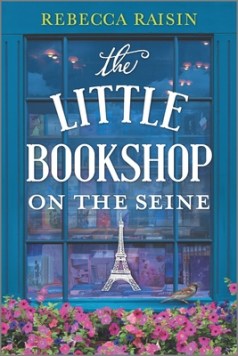 Aside from all that, however (Mr. Lincoln, how did you enjoy the play?), I greatly appreciated some aspects of this book, and it was all to do with the setting. The premise is a good one (and has been used before many times, from Maeve Binchy’s Tara Road to the film The Holiday, with Kate Winslet and Cameron Diaz): Two women temporarily unhappy with the way their lives are going decide to swap places. In this case, it’s Sarah, with her used bookshop in a quiet town in Connecticut, who is invited by Sophie, whose busy store in Paris couldn’t be a bigger contrast, to switch lives for a while, after Sophie has been humiliated in a love affair, the young lover in question now engaged to (and flaunting) a woman who works in the shop next door to hers. Sarah, who has been feeling frustrated at the stagnation of her life, tired of sitting around waiting for her boyfriend to make an appearance—he is a freelance journalist who follows stories around the world—decides this is a good chance to get out of her rut, quit being so timid, and experience Life (yes, that capital letter is on purpose).
The endless (and repetitive) relating of the conversations between Sarah and absent boyfriend Ridge, between Sarah and everyone else who wonders how it’s going with Ridge, and between Sarah and her own insecure self really drag down the narrative; likewise, Sarah’s lack of confidence in her ability to work with Sophie’s staff and run the bookshop to Sophie’s standards is exhibited over and over again to the point where the reader would like to give everyone involved a firm shaking until their heads swim. The difference in the two situations is understandable—a quiet backwater store with one employee vs. a busy tourist attraction with a rotating staff and multiple challenges—but the time it takes for Sarah to finally get some gumption is tiresome.
Then there is the rest of the book, which consists of a rather eloquent and beautiful love letter to Paris at Christmas and to books. Each time Sarah manages to step outside the front door of the shop and also out of her head, we are treated to some lyrically worded descriptions of the luminous city and what it evokes; similarly, when Sarah is concentrating on helping people to find the perfect book for every occasion, the narrative shines. I got to the point where I was skimming over the parts detailing the central relationship in favor of the scenes with the quirky people Sarah met on her walks and the friends she made as she expanded her lifestyle to include the quintessential Paris experience.
If I hadn’t been so seduced by all this French atmosphere, I would have been truly disappointed by the flatness of the romance. At one point in the book, a man Sarah has befriended shows signs of interest, which immediately piqued mine as I wondered if perhaps the whole point of the absent boyfriend was to send her along to the guy with whom she was meant to be. Sadly, that plot point didn’t pan out, and the story continued on its clichéd path to the end.
People read books for all kinds of reasons, and what I would say about this one is, if your priority is to swoon over the romance, this is not the book (or author?) for you; but if you want to read a book so evocative in its setting that you can imagine yourself present in the protagonist’s footsteps, then you may achieve satisfaction from this book by Rebecca Raisin.

Laudable series
As I mentioned in my previous post, I recently spent some time re-reading the four books and two novellas Sharon Bolton wrote about Detective Constable Lacey Flint, who works for the London police, sometimes with a murder team, other times undercover and, in one book, as part of the River Police who patrol the Thames.
Lacey is an iconoclast, part of that subgenre of mystery characters known as loners. She attempts to be colorless and matter-of-fact, to keep her head down and fit into the team; but she has so many secrets of her own to keep that it’s a relief to be able to focus instead on the secrets of others, on the methods and madnesses of the serial killers she hunts. As a young, new, and inexperienced detective, Lacey is extraordinarily unlucky about attracting the attention of these criminals to herself. There is some sort of affinity between Lacey and her prey that causes some among her fellow officers to be over-whelmed by the suspicion that she herself is the criminal they are seeking.
 In the first book, Now You See Me, Lacey serves as a source for “her” team on the history of the Jack the Ripper killer, whose scenarios, methods, and exploits the murderer they are now seeking seems to be mimicking. What becomes clear as the team follows this killer further into the labyrinthine twists and turns of serial murder, however, is that the Ripper similarities are camouflage for something much more sinister, and that Lacey is at the center of the story. The rarity of this and the other books in the Lacey Flint series is that the mystery keeps unfolding in each, all the way to the last page.
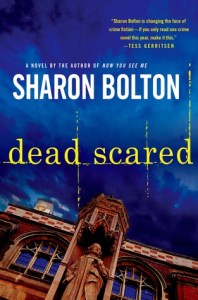 In Dead Scared, Lacey’s sometime mentor and reluctant crush, Detective Inspector Mark Joesbury, asks her to go undercover as a student at Cambridge University to explore the inexplicable uptick of bizarre suicides on that campus. Given her fragility since the recent end of their last case, her boss, Dana Tulloch, and other members of the team are concerned that Lacey will be overwhelmed by the necessity of playing this vulnerable part. But Joesbury thinks she’s up to it, and she’s the obvious choice, given her youthful appearance, so she immerses herself in campus life and tries to discover more about the raft of lonely and insecure students who chose such unconventional methods of death. It’s an insane plot, fascinating (and misleading) to the last page, and full of peril for more than just Lacey.
 In Like This, For Ever, titled Lost in the United States, Lacey is on leave from her job, and considering not returning to it. She hasn’t been able to process the jumble in her head created by her last case, and is spending most of her time obsessively working out and taking long late-night walks to exhaust her enough for sleep. I can’t say too much about the plot of this one, because it takes an unusual twist at about 85 percent that I don’t want to reveal, but it’s written with Bolton’s usual skill and panache. Because Lacey is on leave, she is not directly involved in most of the police investigation of a serial killer who is targeting young boys. But the usual crowd (Stenning, Anderson, Mizon, Tulloch, Joesbury) are all on hand, and Lacey inevitably gets drawn in by an unexpected personal involvement with a seemingly peripheral character, the boy next door. There’s lots of suspense, with multiple red herrings and a great resolution.
 A Dark and Twisted Tide once again involves Lacey Flint in spite of herself. After her leave of absence, instead of working as a detective she has gone back to uniform as part of the river police, hoping to return gradually to the force, but quiet time is not in the cards. Only Lacey could be out swimming at high tide in the Thames River (a hobby she has taken up since moving onto a houseboat) and discover a body floating in the river wrapped carefully in white burial cloths. Soon it becomes obvious that she didn’t find it by accident, that once again someone is focused on her, trying to draw her in. Being Lacey, she lets herself be drawn. This one, I have to say, was a little weird in spots even for me—but I enjoyed it. I had two problems: First, I think it’s time for Bolton to take up a new story line with regard to Lacey—not every case can relate specifically to her! Second, the long-drawn-out non-courtship of Lacey and Detective Mark Joesbury can’t be prolonged beyond a point, and I think we just hit that barrier as readers. To quote my British friends, at least give us a little snogging!
The two novellas that Bolton wrote for this series exclusively as
e-books are equally compelling and mysterious. In the first, If Snow Hadn’t Fallen, something happens in Lacey’s neighborhood that weighs on her mind, because none of the explanations for it add up to what the killers attempted to convey. The second, Here Be Dragons, which falls at the end of the series, is a long-needed exposition of Mark Joesbury, detailing one of his undercover cases and leaving us, finally, with a cliffhanger regarding his relationship with Lacy. There have been two stand-alone books written and published since the #4.5 novella with the tease at the end; when, oh when, will we discover the outcome?
One of the things I like about this series is that Bolton has nicely combined two separate mystery subgenres. Her protagonist is a lone-wolf type, and we get all the fun that goes along with that; but the books are also pretty comprehensive police procedurals, detailing all the myriad ways in which the police go about solving a murder. This gives the lone-wolf concept a nice, solid background on which to rest.
These books are beautifully written, with a wealth of detailed description of the characters, the neighborhoods of London, and the beauties of the natural world that make themselves known even
along the dreariest parts of the river Thames. Both the characters
and the mysteries are sufficiently unique and well developed that
I would venture to say if you are a Tana French fan you would love these books.
They also remind me of Carol O’Connell’s series featuring Kathleen Mallory: Lacey Flint is likewise a damaged, somewhat amoral police detective who does everything according to her own instincts regardless of policy and logic, and gets “up people’s noses” even though she has no desire or intention to do so. I think Bolton has been wise, however, to vary her oeuvre with completely unrelated stand-alones; O’Connell’s Mallory has a distressing sameness from book to book as her series unfolds, and Bolton could fall into that trap with Lacey if she focused solely on her as a protagonist. That’s not to say I don’t want more of Lacy, because I do! But I will wait at the pleasure of Ms. Bolton and meanwhile enjoy everything else she has written, which is considerable.


