A Heller of a book, until…
Peter Heller has written a couple of books that are favorites. The top one is (predictably) The Painter, and I loved The Dog Stars. I can also say that I tremendously enjoyed The River, The Guide, and Celine. So choosing to read his latest was predictable for me. It started strong, and parts of it remained strong, but…
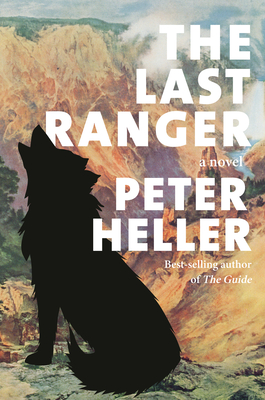
Yeah, there’s that dot-dot-dot. Heller’s writing about nature in The Last Ranger was as beautiful and lyrical as ever. He creates a sense of awe and wonder that is contagious—even if it is his protagonist who is expressing these feelings, they gradually seep into your own consciousness as if you are experiencing that environment and the engendered response firsthand. I could never find fault with that aspect of his writing.
I also liked the characters he created for this book, and enjoyed absorbing knowledge from them about how the various people in and around Yellowstone spend their days. The protagonist, Ren, is a park ranger for whom the reward of living a solitary, blissed-out life in the midst of nature must be balanced by preventing parents from taking photos of their adorable three-year-old cozying up to a baby moose while its mama is ready to kill everyone within charging distance. He breaks up traffic jams caused by too many tourists trying to photograph something-or-other by the side of the road, he prevents the wildlife from being shot by “individualists” with no respect for the boundaries of the park or the laws of the land, and everything in between those extremes. His life is sort of predictable and sometimes irritating, but ever-changing and therefore not boring.
Ren’s best friend is Hilly, a biologist who finds herself up against both man and nature when advocating to protect the wolves of Yellowstone. There are a host of other characters, both local and transient, whose descriptions and actions are meaningful and/or entertaining even when the scene or description is fleeting. That is the power of Heller’s writing.
This time, however, the big lack is in the plotting and especially the resolution of the “mystery.” As the story develops, the focus centers on the brazen actions of a local poacher and then transitions towards the end to the discovery of a large semi-secret group of wealthy men who are at odds with the goals of a national park and are inciting rebellion amongst suggestible locals. But there are so many segues from these threads into a sort of “day in the life of” narrative about both Ren and Hilly, so many outtakes about fistfights between tourists, and ignorant sightseers putting themselves and others in jeopardy, and an unexpected and exceedingly awkward romance that the story line gets lost. And just when you think it’s going to resolve itself in the last 100 pages, you get some directional hints, you get a few minor questions answered, but everything else is simply left hanging.
I’d say there’s a sequel coming, but Heller hardly ever writes sequels, let alone initiates a series, and has not indicated one here. Given that, I feel like as readers we are owed the resolution to at least three plot threads, and no amount of euphonious language has made up for that in The Last Ranger. Disappointing.
Diana Wynne Jones
I have spent a lot of quality reading time with the novels of Diana Wynne Jones. Although she writes mostly for middle-schoolers, there are also a handful of books that, while ostensibly for the younger set, have content possibly more suited to the adult fantasy reader. My favorite of hers is Howl’s Moving Castle, which is definitely one of those that appeals to a wide range of ages; I also enjoyed its two sequels, which are not up to the first one but are nonetheless good. And I will argue with devotees of Miyazaki that if you have only seen the animated movie made about Howl, you have not experienced Wynne Jones’s version; while the film is a truly delightful visual expression, it doesn’t begin to offer the nuance of the book itself. The other series of hers I have read and enjoyed is the Chrestomanci Chronicles, which are near-perfect fantasies for middle-schoolers. I have not read Dark Lord of Derkholm, but will no doubt get to it one of these days, as I will the Dalemark Quartet.
Her stories often combine magic with science fiction, bringing in fairy tales, heroic legends, parallel universes, and a sharp sense of humor that sometimes verges on satire or parody. There are levels to her books that are the key to making them enjoyable to a wide age range; young children can read them for surface enjoyment while older teens and adults get the jokes.
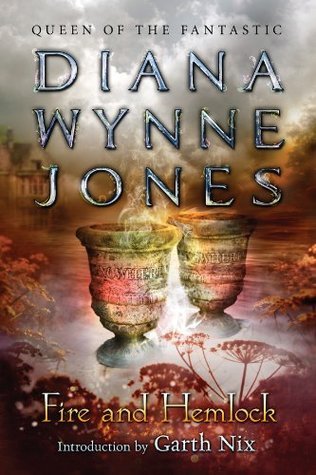
This past week I discovered that she also has some free-standing novels, and picked up Fire and Hemlock, which had an intriguing story line for which, in hindsight, I should have been better prepared.
The book owes its structure and character line-up to the ballad of Tam Lin, which dates from 1500s Scotland, and also to the story of Thomas the Rhymer, an actual Scots laird who lived from 1220 to 1298 whose story is confusingly similar to that of Tam Lin (both of them were kidnapped by the Queen of Elfland, although their destinies diverge after that initial act). I was embarrassingly unfamiliar with either of those legends going into reading this novel, and should have stopped the minute things got complicated and consulted Wikipedia for the synopses I finally ended up reading after I was done! Take heed of my experience and do that before you read this book if you want it to make sense. There are also echoes of both Hero and Leander and Cupid and Psyche, with echoes of T. S. Eliot. Diana Wynne Jones has written an explanation of her thoughts about the heroic that was included with my Kindle copy of the book, though it doesn’t appear except in later printed editions.
In the book, Polly Whittaker, 19, suddenly realizes that she has a set of double memories that began at the age of 10, which some entity is trying to make her forget. In the mundane set, she has been living an ordinary life: school, books, athletics, friends, irresponsible and uncaring parents, a loving but acerbic grandmother, and a boyfriend she’s not sure she wants. In the fantastical one, many of her actions are dictated by her sporadic but compelling friendship with a man she meets at a funeral, with whom she has an odd affinity. They experience some strange, inexplicable adventures together—are they truly magical?—but their friendship is threatened by menacing characters and events from which Tom Lynn attempts to shield Polly. She finally figures out what’s happening when it’s almost too late, and takes drastic action to secure both the memories and the relationship.
The book is such an odd mix of juvenile and adult that it was hard to read at some points, because it fluctuates between the mind of a young, naive girl and the definitely adult legend of a man in thrall to a wicked force that wishes to control his life. The narrative is carried by Polly, so we see everything through her clever and imaginative but innocent eyes, and if you are reading the book without knowledge of the backstory, it can be both frustrating and confusing, as well as long. I ended up liking it pretty well, and it’s probably Wynn Jones’s most ambitious plot in terms of the multiplicity of strands she introduces, but I was definitely happier with the straightforward, more mature, and somewhat humorous world of Howl’s Moving Castle.
Egypt by another name
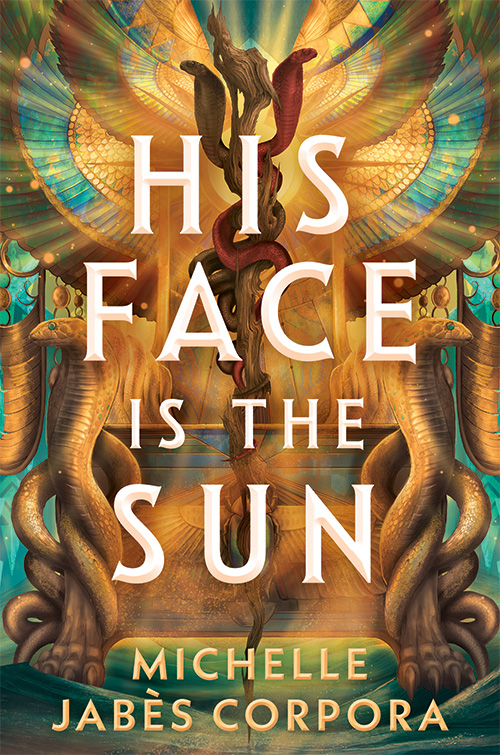
I picked up a Kindle deal for a new YA fantasy a few weeks back, and finally got around to reading it. The book is His Face is the Sun (Throne of Khetara #1), by Michelle Jabès Corpora, and it’s being billed as something that the readers of several other teen fantasy writers (Bardugo, Mafi, Tahir) would enjoy. And although I believe that is true, I’m not sure they should have focused it so relentlessly at the Young Adult market. In fact, I often feel that way when it comes to fantasy and science fiction.
In other genres (realistic stories, romance, coming of age), the audience can be clearly demarcated as teens, ages 13-18 or whatever—many adults aren’t interested in teen angst-ridden 15-yo first love stories. But with fantasy, if the world-building is thorough and convincing and the protagonists are engaging, I often feel these books are done a disservice not to be marketed widely. This one, for instance, ended up pretty quickly in the bargain Kindle bin (I think I paid $1.99), and it shouldn’t have, because it’s a really beguiling read. So adult fantasy lovers, pay attention and check it out, because if you enjoy it, there are two more books to come. (Also, this series is directed at more mature teens, due to some frank content, just fyi.)
The kingdom of Khetara is a faintly disguised Egypt, with some of the same gods under the same names and also under different ones, and similar dynasties of rulers and conquered peoples. It could almost be historical fantasy, but the author chose to create her own stage within the auspices of Egyptian history. There are priests and oracles, there are competitors vying for the pharoah’s throne, there are rebellious mistreated commoners, all set against a background of desert, river, village, palace, and temple, brought to life in beautifully detailed descriptions (that don’t slow the story at all). There is a mythology-based magic system that winds through the entire story in an organic manner and, although there is a little romance, this is primarily an epic fantasy focused on history, politics, magic, and destiny.
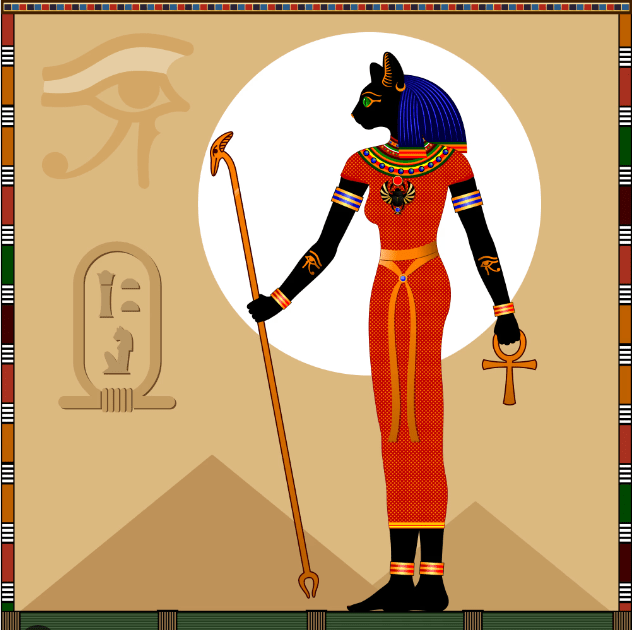
The main characters are four people who couldn’t be more different: Princess Sita, one of the triplets to whom the current Pharoah is father; Nefermaat, a bewildered young village girl who, after a spontaneous vision brought on by the annual parade for the goddess Bastet, has been whisked from her home to the capitol to train as a priestess; Raetawy, leader of a rebel group of farmers oppressed by the pharoah’s punitive taxes; and Karim, a young grave robber who unearths more than he bargained for and sets in motion some of the events envisioned by Neff and anticipated by Sita’s brother Mery, who is determined to rule Khetara sooner rather than later.
Although four protagonists is a lot, Corpora does a wonderful job of developing each of them with clear personalities and motives, and separates their subplots (politics, magic, rebellion, and fortune-seeking) while intersecting them at the appropriate moments to keep us intrigued. (Oh, and there’s a delightful fifth narrator—only encountered a few times—who further draws things together.)
I was completely involved in this story from beginning to end and, when I encountered that cliffhanger and realized that this book had just been published in May and I would have to wait at least a year for the next one, was sorry that I had read it so quickly. I will do a reread when the sequel comes out, to catch all the delightful detail that I may have skimmed over while trying to absorb the book as a whole. If you ever thrilled to the stories of adventures down the Nile, hotly contested dynasties and mysterious portents, you will want to read His Face is the Sun.

Reimagining
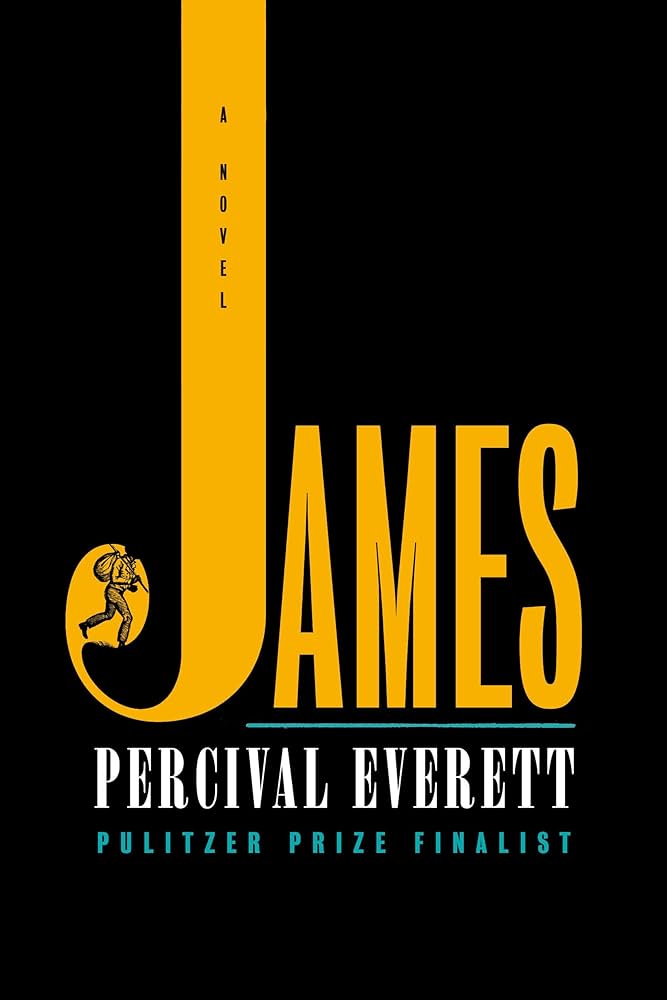
I just read James, by Percival Everett. Despite being 300 pages, it was a quick read, unlike the story from which it was taken, which took me twice as long to reread. I think there were two reasons for this one going so quickly: One was that it leaned on the presumption that you already knew the original tale and therefore the author gave himself permission to shorthand much of the action and description from that book; the other was that almost the whole story took place in either internal or external dialogue, without a lot of world-building, scene-setting, or exposition.
These things led to an interesting experience if you were hoping to confront this old story from a completely new perspective. I wanted to embrace this book, but I struggled a bit.
The premise that the slaves spoke patois in front of the white “massas” but used the common language when alone seemed a natural outgrowth of their situation; they had to communicate important information with one another without the white people catching on to what was being said, and they had to hide their real personalities behind a façade of ignorance, foolishness, and passivity, so they learned code-switching from childhood. Everett completely enthralled me with this; but then he took it a little too far. I expected the character James to be a bit more than ordinary, given his interactions with Huck and others in the original, but did his life experience really allow him the latitude to become as extraordinary as Everett has written him?
He is painted as an educated man—not just a slave who has learned to read and to speak with a careful use of diction. Would the surreptitious reading sessions in Judge Thatcher’s study in the wee hours really lead to a thorough understanding of the works of Voltaire, Rousseau, and John Locke? Even southern college-educated men of that day were not necessarily cognizant of the intricacies of philosophical thought, so the requirement that we believe it of a man who has had to gain all his education on the sly in stolen moments is a little hard to meet.
This was, to my mind, a central flaw of this book, for the simple reason that we went from perceiving the disguise the original “Jim” presented to the world—the stereotypical shuffle-footed, awkward, ignorant, well-behaved and possibly well-intentioned slave—to yet another disguise for “James”—the cynical, perceptive, erudite man who is playing that character for half his world while laughing about it with the other half. I actually liked that for its dark irony; what I’m trying to say is that there was an opportunity here for us to get to know the real person, but except for some tantalizing and admittedly affecting glimpses here and there, we went from one façade to another. With as much internal dialogue as there was from James, there was nonetheless too little understanding of the man himself. While being able to recognize that he is quick-witted, thoughtful, and compassionate, I didn’t feel that I really understood how he acquired all those positive character traits, because he doesn’t let us in.
The other thing the book thoroughly exhibits is the two-faced nature of slave owners who wish to be regarded as benevolent protectors of their “childlike servants,” but turn on a dime, when challenged, to become brutalists who exult in wielding a belt or raping a child. And again, I found myself applauding the exposure of the stereotypes but wincing at the one-dimensional portrayals—not so much of the slave-owners, but of the slaves! Several other reviewers have noted that the women in this book seem to be present on the page merely to highlight their own ill treatment; they have no agency and almost no personality but are merely offered up as horrifying examples of the results of human ownership. Again, I have no quarrel with exposing the heinousness of the practice, but how much more affecting would the book have been had readers been able to better identify with these women as individuals with personality?
I don’t want to come across as hyper-critical of this book. I admired what he tried to do and was caught up in it while reading it. I am also a fan of his writing style and language, which can be beguilingly beautiful. It actually troubles me to go against the reviewers who gave it unreserved praise (not to mention the National Book Award!). But afterwards, while reflecting on what I had read, I also wished there had been more—more story, more depth of character, more nuance, more exploration. I am curious, now, to read others of his books to see what my reaction to him as a writer might be when not influenced by the rewriting-of-a-classic aspect of this one. I’m sure you’ll hear more about it from me eventually.
Water, water everywhere
I love dystopian and post-apocalyptic novels. I have a fairly long list on Goodreads of those I have already read, and I continue to look out for others amidst all the book recommendations I see online. Included in my favorites are A Boy and HIs Dog at the End of the World, by C. A. Fletcher; Starhawk’s Maya Greenwood trilogy set in San Francisco about the division of California into the good, bad, and ugly that includes The Fifth Sacred Thing (the best of the three); the seemingly neverending post-nuclear-war saga detailed in Obernewtyn and sequels by Australian writer Isobelle Carmody (that has taken her decades to complete); the weird and horrifying Unwind series by Neal Shusterman; and a few oddball stand-alones such as The Gate to Women’s Country and The Family Tree, by Sheri S. Tepper; Lucifer’s Hammer, by Larry Niven and Jerry Pournelle; and War Day, by James Kunetka and Whitley Streiber. I have about two dozen more on my list, and probably that many again that I still want to read. But Kassandra Montag’s After the Flood crossed paths with me purely by accident.
In December, I found a vendor on Etsy who put together cute “blind date with a book” packages including bookmarks, teabags, and a book, and thought this would be the perfect Christmas gift for a friend who seemed to be in an emotional slump; so I purchased the package and told the seller what book I would like her to include. Her response was to say that she didn’t take specific requests, but would try to accommodate if I gave her a list of preferred genres and some example titles. I felt that her advertising had been misleading, but ultimately went along with the program by giving her my friend’s favorite genres (romance and science fiction), with my sole request being that she send an upbeat story, since the whole idea was to cheer up my friend. Her choice was this dystopian novel by Montag, whose description alone should have warned her off.
After apologizing to my friend for this weird choice, I decided that I would read it myself to see just what she was in for; and after having finished it, I can say that it’s wholeheartedly depressing and that I’m really wishing I could get my money back. Not so much for me, but it definitely won’t be lifting my friend’s mood!
It’s set about 100 years in the future, when global warming has (presumably) done its worst…
We still called oceans by their former names, but it was really one giant ocean now, littered with pieces of land like crumbs fallen from the sky.
The ice caps melted and the water rose, first engulfing the coastlines and then, with the Six-Year Flood, the flatlands were likewise covered by water, and the remaining land consisted of mountaintops sticking up above the watery horizon. People fought to cling to the small settlements carved out of those elevated spaces, or they took to the water, living their lives on the sea and only docking to trade fish for vegetables, flour, fabric, and materials to repair their boats.
Myra and her daughter Pearl are eking out a precarious existence on their boat Bird, built by Myra’s grandfather when the water began to overwhelm their Nebraska farm. Myra’s husband Jason was so terrified of the encroaching floods that he decamped in a friend’s boat, kidnapping their five-year-old daughter, Row, while Myra was in her last month of pregnancy. Her grandfather and her mother didn’t survive the floods, and Myra was forced to set sail when Pearl was an infant still carried swaddled on her mother’s chest.
Now it’s seven years later, and Myra and her daughter are living day-to-day, keeping their heads down, avoiding other people for fear of their intentions. But one day Myra encounters a raider who inadvertently gives her news she never expected to hear; her older daughter, Row, is still alive, in a settlement up in Greenland. This hopeful news is offset by his comment that she’s nearly old enough (13) to be sent to a “breeder” ship, which is exactly what it sounds like; and Myra becomes determined to go and get Row, whatever it takes, to protect her from this fate.
Unfortunately, luck and nature are against her, and she has to team up with others to pursue her goals. But how many people is she willing (or right) to endanger to get what she wants?
The world-building in this book is excellent: visceral, realistic, and detailed. The disintegration of the moral integrity of desperate people also rings true, and many of her characters are compelling. But…there were a few things that work against elevating this to among my favorite dystopian novels. I found myself disliking the main character quite a bit for her ever-shifting moral compass and especially for all her justifications; so living inside her head in order to follow the story proved both exhausting and occasionally distasteful. And while the synopsis given by the publisher promises to serve up hope along with the angst, it seems like there is pitifully little room for that amidst all the catastrophe, and I didn’t feel like the end of the story justified the means.
Still, it was fairly engrossing, especially in the action-packed parts, and it also painted a poignant picture of the joys, the pains, the requirements of motherhood. So I would recommend it as a solid dystopian tale, but I wouldn’t rank it in my top ten.
Revisiting a classic
I believe that I have only read The Adventures of Huckleberry Finn once, somewhere around 6th grade, but I might have read it in high school as well. Certainly, though, it was all before I was 20 years old, so it’s been decades. I revisited it now because I decided I wanted to read James, by Percival Everett, but didn’t feel like I sufficiently remembered the events of the original to move directly to reading this updated story.

Although there are parts that drag (the lengthy saga involving the king and the duke) and parts that are actively irritating (the Tom Sawyer segment), I was surprised at how much I enjoyed the book as a whole. Hemingway famously labeled it as seminal to American fiction, and although I’m not sure I would agree as regards American fiction as a whole, it certainly is both masterly and intermittently brilliant as regards its own era. The breadth of subjects Mark Twain addresses in this book, supposedly a sequel to The Adventures of Tom Sawyer but in reality light-years beyond that “boys’ story,” is amazing: racism, of course, but also friendship, war, religion, and freedom, in some truly profound passages. The genius of it is that he refrains almost completely from proselytizing or moralizing, but conveys his message through the thoughts, actions, and dialogues of the people of the time.
The profundity of the story rests almost entirely in who Twain casts as his protagonists—first, an adolescent boy at the very bottom of white society, the uneducated, shiftless, indigent son of the town drunk, one whose morals should have been most suspect, given his upbringing in an atmosphere of alternating brutality and neglect. And of course, the second main character, because of the historical setting, is rated by other characters as even lower than Huck, because he is a man of color and therefore considered no more than a piece of property, in some instances valued less than a piece of land, a gun, or even a hunting dog. These two adventurers turn out to be the most honorable characters of the story, in contrast to the so-called “good people,” the supposed salt of the earth who are (with a few exceptions) seen to be primitive, ignorant, bigoted, and cruel.
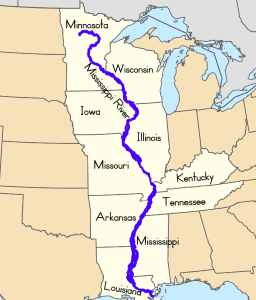
But it’s not just a story that was progressive for its day, shining a spotlight on the upside-down morals of the slavery-era South and poking at a society based on exploitation. It’s also a collection of frequently lyrical descriptions of the beauty of the world (Twain’s enduring love for the Mississippi River shines through), combined with sometimes hilarious tongue-in-cheek humor and poignant moments of reflection and self-realization that contrast beautifully with the specific historical context. The ultimate significance of the story is the moment when Huck decides that although the “right” thing for him to do, according to societal mores, would be to report the runaway slave Jim to his white mistress, he is willing to take “sin” upon himself by breaking the law, ignoring the common view, and refusing to turn in his friend. He firmly believes he is in the wrong, but is willing to embrace those consequences because the empathy he has developed by his daily existence living on a raft with this sweet man who has treated him with nothing but kindness is stronger than the “norms” to which he has been conditioned.
This book is frequently banned from schools and libraries, for one of two reasons: Either that segment of our society wishes to bury the shameful history of this era under a rug and refuse to acknowledge it, or (ironically) it wishes to make an example of it by citing the lack of political correctness inherent in the book’s language and attitudes. Both reasons, it should be obvious, miss the point of keeping this book in the classics lexicon. It takes place at a specific moment in time, and is voiced by a narrator with a perspective, an ideology, and a language consistent with that moment. We should rather be illuminating it for its honesty and using its characters as examples.
People are fond of saying we’ve come a long way from those times, but in many aspects that progress can be seen to be exceedingly superficial (particularly in the current political climate that is an excuse for misogyny and racism), and the perusal of this novel should point that out to us in a powerful manner. I am hoping that the book James that I plan to read after this will make best use of Mark Twain’s look at the hypocrisy of the America of his day, contrasted with Huck Finn’s astonishing moral evolution.
One Goodreads reviewer made the point that a classic is “a book that can still inspire discussions in a classroom some 135 years after its initial publication.” Another added that we are living in an era wherein this discussion would get a teacher fired in any number of states. All we can hope is that there are teachers still brave enough to bring the message of this book to their students, while pointing up the continuing diminishment of people of color in much of current American history and literature.
The long way
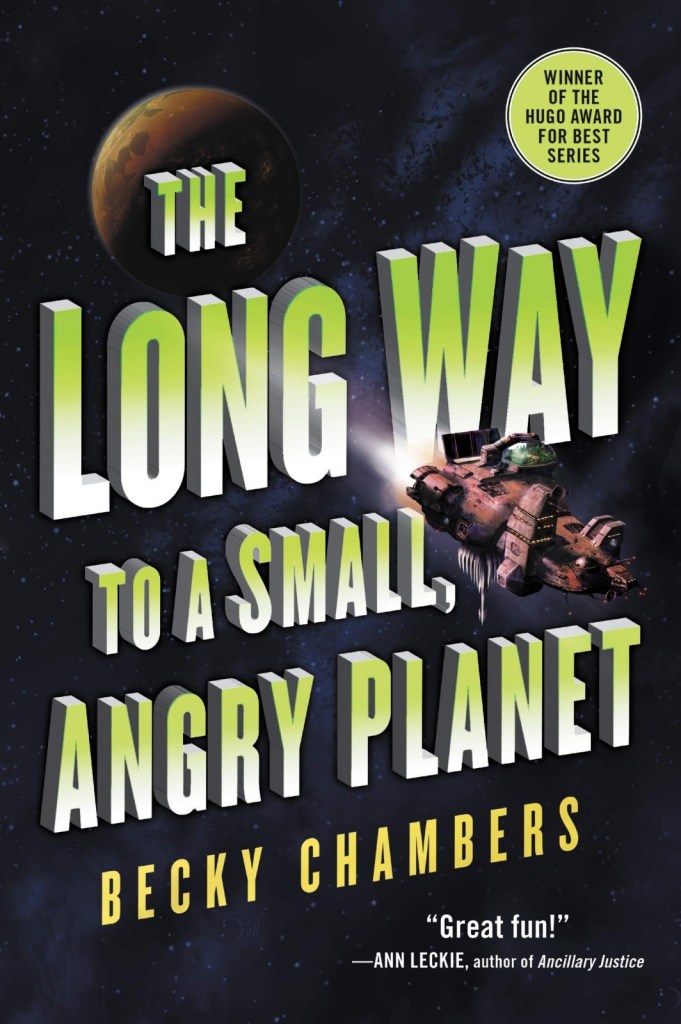
I just finished reading The Long Way to a Small, Angry Planet, by Becky Chambers, author of the Wayfarers and the Monk & Robot books. This one is the first of four in the Wayfarers series, but it’s not obvious at all while reading it that it’s the start to a longer story. The only reason I might have surmised that is the overwhelmingly character-driven nature of this book, in which many things happen and lots of people/races are introduced but there is not a truly cohesive story line. That’s not to say that there isn’t a kind of evolution from the beginning to the end, but…is it a story? It feels more like a bunch of separate people’s narratives coming together simply because they are co-located in the enclosed space of a ship and a voyage, but while they do have an impact on one another, there isn’t the same kind of resolution that there is to a typical beginning-middle-end kind of tale with a sole protagonist.
The event for which the book is named takes up not very much space in the overall timeline, which is kind of odd. Can you tell that I’m finding it a bit hard to review this book? I think it’s because, while I liked many of its diverse elements (including its diversity!), they didn’t gel for me in a way that would have made me love it. And although I liked and had empathy for its characters, I’m not sure any of them made the kind of impression that will make me want to read more about them in subsequent volumes. I finished the book with a certain degree of satisfaction, but it was more the feeling of “I’m good” than a compelling desire to keep going.
That is both the strength and the weakness of this book; because the story is about half a dozen (okay, maybe eight or nine) individuals who alternate in carrying the narrative, you learn a surprisingly extensive amount about the various kinds of “people” populating the universe without thoroughly investing in any of them. There are a few characters that have more page time and are therefore more engaging and involving than the others, but it’s a bit didactic in the way it goes about portraying everyone, and some of them end up being more cliché than person.

On the other hand, the number of issues and the depth and breadth with which they are explored is impressive, and not too heavy-handed. The involvement between species readily lends itself to discussions about topical and complicated subjects, from identity, sexuality, and violence to safety and defense, the implications of sentient artificial intelligence, and what constitutes “community.” I enjoyed the many variations of people (both their inner natures and outer appearances) that Chambers created, and the fact that none of them was stereotypical or relied excessively on science fiction that has gone before.
I guess I should give a brief synopsis, to be thorough, in case someone finds this blah blah intrigues them! It begins with Rosemary Harper, a human who is fleeing some personal issues and answers an ad for a position as clerk on the Wayfarer. It’s a tunneling ship, a kind of spaceship that creates wormholes to connect distant points in the universe so travel and trade can more easily take place between species. The story is set in a galaxy of aliens, with the humans being a sort of on-tolerance, minor group. There are a couple of older races with a history of expansion, cooperation, and development who have created the Galactic Confederation and brought in other member species at various points in their own maturity. There is a fair representation of these different species amongst the crew of the Wayfarer, and the philosophical bits of this “space opera” vehicle are about how they learn to cooperate and to appreciate one another. The ship is offered a contract to create a tunnel near the galaxy core that connects to a previously interdicted warlike species, and the build-up to and resolution of this contract is what drives the action, although this takes place late in the story (maybe at the 75 percent mark?).
The book isn’t for everyone; if you enjoy character-driven stories and envisioning complex alien cultures, you will like it, and the adventures of the Wayfarer gang do somewhat satisfy that yen for more stuff like Firefly. Despite its slow pacing, it was a fairly quick read, interesting and thoughtful but not taxing. Even though I’m not feeling it in this moment, I wouldn’t rule out continuing to follow the adventures of the Wayfarer crew in subsequent volumes, sometime later in my reading life.
Constructive maundering
This week my breakfasts were beguiled by a book I have meant for some time to read: Three Men in a Boat (To Say Nothing of the Dog), by Jerome K. Jerome. You may or may not have heard of it; although it is considered a classic, it’s not the kind typically assigned as part of a high school curriculum. Nonetheless, as Wikipedia cites, “The book, published in 1889, became an instant success and has never been out of print. Its popularity was such that the number of registered Thames boats went up 50 percent in the year following its publication, and it contributed significantly to the Thames becoming a tourist attraction. In its first 20 years alone, the book sold over a million copies worldwide.”

I only know about it because I am a science fiction fan(atic), and a reader of the books of Robert Heinlein and Connie Willis. Three Men in a Boat is mentioned in Heinlein’s Have Spacesuit—Will Travel, wherein it inspired Willis to read it and then title one of her time travel series To Say Nothing of the Dog, the actions in that book being a loose tribute to the original.
I have mentioned Willis’s book here before, describing it as a sort of French farce featuring a hapless cast of misfits and, now having read the original inspiration, I can see even more clearly where the frenetic, chase-your-tail style in which Willis wrote her book originated. Three Men is chock full of the most hilarious minutiae of everyday life, not to mention the mental maunderings of its narrator, who wanders away from each topic to discuss the most useless and suspect bits of information, only to eventually work his way back again to the original subject, pulling himself up and getting on with the narrative.
It’s not exactly a story, per se; its main protagonist and first-person voice, “J.,” is more concerned with travelogue—commenting on points of interest as the boat advances up the Thames—coupled with self-indulgent flights of fancy about Man and Nature and the recounting of numerous ridiculous anecdotes about his fellow travelers, his dog, random bartenders and fishermen he has encountered during his life, and so on. He will ramble on about the next stop along the river—its history and monuments, what events transpired, who slept in what public house and which one now stocks the best ale, who is buried there, etc.—and then comment about the petty details of their day on the boat—who inadvertently dragged whose shirt through the water, what food they had to eat and its effect on their mood and/or bowels—interrupting all this once in a while to recount a close call with a launch or a ferry, a hang-up of their boat inside one of the river’s locks, and then switching to laudatory ravings about nature…and so it goes for about 185 pages.
An example of the flowery language he uses when making his observations about the natural world:
“Sunlight is the life-blood of Nature. Mother Earth looks at us with such dull, soulless eyes, when the sunlight has died away from out of her. It makes us sad to be with her then; she does not seem to know us or to care for us. She is as a widow who has lost the husband she loved, and her children touch her hand, and look up into her eyes, but gain no smile from her.“
One reviewer on Goodreads remarked that the book is abrupt and atonal, what with the author occasionally forgetting that he’s writing a comic novel to come out with these paeans and flights of fancy but, for me, that’s the fun of it, the whimsical British humor.
The account, once they have made their decision to go on holiday on the Thames for a fortnight, is completely driven by the sights they see and the stops they make up the river, so one can see why the book was popular when first published and how it generated so much interest in boating as a tourist activity; people would naturally want to observe all these things for themselves. But 135 years later, although some of the landmarks will retain their ruins and their burial grounds, all else will have changed enough to be unrecognizable, so the pleasure in reading Three Men in a Boat becomes more nostalgic than anything else.
I must say, however, that the humor with which Mr. Jerome tells his tale is so engaging that I actually saved bits to read out loud to my cousin when she came by the other day. He has a way of having his protagonist say something so that you don’t know whether it is meant for him to be serious or tongue in cheek; it’s hard to pull off being ironic and gently making fun of your characters but at the same time presenting them and some of their views in all seriousness. I laughed out loud a few times.
Here’s an example: They had just finished eating supper, which they really wanted after a long day of rowing.
“How good one feels when one is full—how satisfied with ourselves and with the world! People who have tried it, tell me that a clear conscience makes you very happy and contented; but a full stomach does the business quite as well, and is cheaper, and more easily obtained. One feels so forgiving and generous after a substantial and well-digested meal—so noble-minded, so kindly-hearted.
“It is very strange, this domination of our intellect by our digestive organs. We cannot work, we cannot think, unless our stomach wills so. It dictates to us our emotions, our passions. After eggs and bacon, it says, “Work!” After beefsteak and porter, it says, “Sleep!” After a cup of tea, it says to the brain, “Now, rise, and show your strength. Be eloquent, and deep, and tender; see, with a clear eye, into Nature and into life; spread your white wings of quivering thought, and soar, a god-like spirit, over the whirling world beneath you, up through long lanes of flaming stars to the gates of eternity!”
(I don’t know about you, but I don’t think I have ever been quite that inspired by a cup of tea!) He then goes on for another entire paragraph delineating the effects of muffins, brandy, and so on, and concludes with this thought:
“We are but the veriest, sorriest slaves of our stomach. Reach not after morality and righteousness, my friends; watch vigilantly your stomach, and diet it with care and judgment. Then virtue and contentment will come and reign within your heart, unsought by any effort of your own; and you will be a good citizen, a loving husband, and a tender father—a noble, pious man.”
And thus it goes, with the conversation moving from the positive effects of a good meal to the discussion of whether they would be happier away from the world living on a desert island, to fears about damp and drains, to the recounting of an anecdote about sleeping in the same bed with a stranger at a crowded inn…

This book is not one I would unreservedly recommend that everyone should read, but it has a certain reminiscent air for me of the beloved antics of Bertie Wooster, Jeeves and Co. in the tomes of P. G. Wodehouse and, if you like that kind of story where the characters are disingenuous and rather simple-minded while the writing itself is quite clever, then you might enjoy Three Men in a Boat. But even if you don’t read it, do have a go at To Say Nothing of the Dog, by Connie Willis.
Quirky?
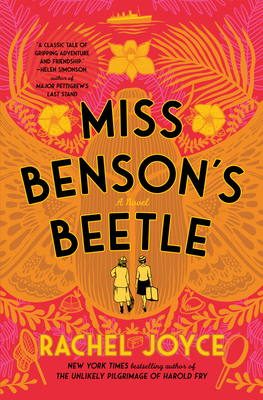
On the strength of enthusiastic comments on What Should I Read Next?, I picked up Miss Benson’s Beetle, by Rachel Joyce. I haven’t read anything by her before, but saw some raves for two of her previous books, and I’m usually a fan of quirky characters—Eleanor Oliphant, Fern Castle, Don Tillman, Leonard Peacock, A. J. Fikry, have all figured on the list of characters’ stories I have enjoyed.
While there were parts of this book in which the characters rose to the level of those, some of the events of the story, paired with uneven character development, made it not quite my cup of tea.
Margery Benson owns a certain level of eccentricity (for instance, in the seminal moment when she steals a pair of lacrosse boots from a fellow teacher), but she is largely too dour and sad to be considered quirky. The assistant she ultimately hires to go with her to New Caledonia in search of the golden beetle is obviously written to up the quirkiness factor exponentially, but Enid Pretty is so frenetically over the top for about 90 percent of the book that rather than being engaging, she just makes you tired. And the story line takes the serendipity one would expect in an offbeat novel and turns it into caricature or farce, with aspects that are simply unbelievable, not to mention contradictory. I know I’m sounding like a curmudgeon here, and perhaps it just wasn’t my week to read this book, but honestly it was all too much.
The story isn’t without its merits; there are some genuinely amusing situations, and also some truly touching moments. The best part about it is the evolution of the friendship between the unlikely adventurers (Margery and Enid), and I would have enjoyed learning more about the two of them, as well as about Gloria, and even Dolly. But there was also a subplot involving a former prisoner of war who became obsessed with and was stalking Miss Benson that I found both unpleasant and unnecessary, and I ended up highly resentful of how this ultimately affected the plot. So while I appreciated the beautiful language Ms. Joyce uses to describe Margery’s experience of the natural world, and really liked the evolution of Margery from a passive, uptight, somewhat frightened person into the take-charge, open individual she becomes, my reaction to the novel as a whole was a little sad with a touch of frustration. Over all, not a particularly pleasant experience.

Hiatus, nostalgia, TV
I haven’t published anything here for a while because I started reading Demon Copperhead, the new book from fave author Barbara Kingsolver, and it has been taking forever. I am enjoying the voice of the protagonist and the high quality of her descriptive writing and somewhat quirky scene-setting, but the combination of the length of the book and the depressing quality of the narrative finally got to me at about 83 percent, and I set it aside to take a quick refreshment break.
I re-read two books by Jenny Colgan—Meet Me at the Cupcake Café, and The Loveliest Chocolate Shop in Paris—for their winning combination of positivity, romance, and recipes, and enjoyed them both. My plan was to go back to Kingsolver today, but instead I found myself picking up Dying Fall, the latest Bill Slider mystery by Cynthia Harrod-Eagles, which has been in my pile for months. I will get back to Demon Copperhead at some point, but the mood isn’t yet right.

Meanwhile, Netflix made me happy this weekend, having come out with season one of Lockwood & Co., adapted, partially written, and directed by Joe Cornish, and based on the young adult paranormal mystery series by author Jonathan Stroud. This has been a favorite series of mine since I read book #1 with my middle school book club and eagerly perused all the rest as they emerged from his brain onto the page (there are five books and a short story in it).
The series is set in a parallel world where Britain has been ruled for 50 years by “the Problem”—evil ghosts that roam freely, but can only be dealt with by children and teenagers young enough to be in touch with their perceptive gifts. Adults can be harmed by them but can’t see or even sense them, while the youth still see, hear, and sense their presence and fight them by discovering their “source” (the place or object to which they are attached) and either securing or destroying it.
The mythology seems to have evolved at least partially from faerie, vampire, and werewolf lore: The main weapons are iron chains, silver containers, running water, salt bombs, lavender, and longswords! The ghost-hunting teens are most of them employees operating under the supervision of corporate, adult-run agencies, but Lockwood & Co. is independent of adult supervision. It’s a startup existing on the fringes, run by two teenage boys—Anthony Lockwood, the putative boss and mastermind, skilled sword fighter and ingenious planner, and George Karim, the brainy researcher who provides background for their cases from the city’s archives. The two have advertised for and just recently acquired a girl colleague, Lucy Carlyle, who is new to London and technically unlicensed, but more psychically gifted than anyone they have ever met. This renegade trio is determined not just to operate on their own but to outdo the agency blokes in all their endeavors, so they take risks no adult at the corporations (or at DEPRAC, the Department of Psychical Research and Control) would sanction, in order to gain both notoriety and clients.

Cornish and his colleagues have nicely captured both the flavor of the overwrought atmosphere of beleaguered London and the perilous camaraderie of the principal characters—Lockwood, George, and Lucy—in their series. Season one covers the events from books #1 (The Screaming Staircase) and #2 (The Whispering Skull), so one assumes there will be at least one and perhaps two more seasons, if viewers make it popular enough for renewal. I certainly hope they do! But in case that doesn’t happen (or even if it does), the books are out there, and well worth your attention (and I don’t just mean middle-schoolers!).
 The Book Adept