Why dystopian fiction?
 Why have dystopian and post-apocalyptic books become and remained so popular? As a teen librarian, this was one of the questions most frequently asked of me (mostly by bewildered parents and teachers), so I recently included my (extensive) answer in a speculative fiction lecture to my Young Adult Literature class.
Included in the dystopian and apocalyptic sub-genre are books addressing the degradation of the planet, painting societies that have run out of fossil fuels, societies that have run out of water, numerous scenarios of global warming, and societies in which the entire infrastructure has broken down and created a scavenger mentality. There are stories addressing the breakdown of civil society, with the rise of oppressive religions and philosophies and the persecution of “the others,” and experimenting with ideas about who those others of the future will be—will they still be gay people, Jewish people, Muslims, people of color? Or will the society shift and find different victims on which to avenge itself?
Some observers of the success of this publishing niche point to 9/11 and the many terrorist events before and after it as an existential catalyst to make people consider end-of-the-world scenarios. But dystopian fiction was around long before any of our current destruction scenarios, starting in 1932 with Brave New World, and featuring such classics between then and now as Fahrenheit 451, A Canticle for Leibowitz, The Handmaid’s Tale, The Road, and Parable of the Sower. And in addition to those considered classics, there are equally enduring stories (even though some of them are dated) such as Alas, Babylon, by Pat Frank; Logan’s Run, by William F. Nolan; War Day, by James Kunetka and Whitley Streiber; Lucifer’s Hammer, by Larry Niven and Jerry Pournelle; On the Beach, by Nevil Shute; and The Family Tree and The Gate to Women’s Country, by Sheri S. Tepper.

The question is, though: Why are these books so popular, especially with teens?
Before The Hunger Games ever spurred a glut of dystopian and post-apocalyptic books on the teen market, there were forays into this downbeat science fiction sub-genre of dark, diminished futures focused on survival: cautionary tales such as Feed, by M. T. Anderson and The House of the Scorpion, by Nancy Farmer; and future projections such as Obernewtyn, by Isobelle Carmody, the Uglies series by Scott Westerfeld, and the chilling Unwind (and sequels) by Neal Shusterman. After The Hunger Games, which is the all-time best-selling book series (surpassing even Harry Potter and Twilight!), the reading public went crazy for such books as Ready Player One and Epitaph Road, and overdosed on such series as The Maze Runner, Divergent and sequels, and The Young Elites.
 Some of these works are focused on the immediate hereafter, while others project centuries ahead to speculate on what a future world would look like after the immediate destructive effects have subsided. If adults are feeling anxious enough to write these books, it’s probable that their anxieties are being communicated to their teenagers through more than popular fiction and the movies made from it.
Reading about a society that is worse than yours, or a scenario in which the worst that could possibly happen has transpired—but people have survived and are using their ingenuity and determination to make things better—can be reassuring.
There is also the advantage of being able to talk about socially unacceptable topics in a fictional arena and work out how you feel about them or how you should feel about them. Calling a political regime into question, or rebelling against a religion or cultural restriction by reading about it can help a teen (or an adult) who can’t quite bring him- or herself to rebel in real life, by offering some relief, or possibly even guidance and encouragement. Authors can offer pointed commentary about societal trends (as did the authors of Brave New World and 1984) from within a fictional setting and gain an audience while not suffering the criticism or retribution they might receive if their comments were offered in plain speech.
Teens can use these books as metaphors to work out their own problems with the real world. Teen brains are not done maturing yet, and many teens are filled with rage and fear and longing, and have trouble articulating their thoughts and feelings; so fiction that provides a cathartic release and relief of these emotions is helpful. These books can also inspire us by the actions of their courageous, defiant protagonists who overcome barriers and limitations or come to the realization of their own shortcomings and seek to do better.
Ultimately, it is also fiction that, once again, provides the opportunity for the learning of empathy.
“Reading good literature can be a powerful way to develop empathy. Empathy could be one of the most important qualities to develop in young citizens who will go on to be successful actors in a complicated world.”
—Dr. Brené Brown
Fantasy fiction
What is the appeal of fantasy fiction? People who don’t read fantasy ask this question a lot. Here are some reasons why people might enjoy reading fantasy:
Escapism: travel into another WORLD, culture, history, set of natural laws
Heroism: the exploration of greater themes, unconscious hopes and aspirations, the experience of admiration and emotion
Specialness: a hidden talent for magic…
Wonder: the appeal of the unfamiliar
Romance: Not just “couples” romance, but the romance of the road, the charisma of the swashbuckler, etc.
Simplicity: the straightforward moral code of good and evil
“The more rational the world becomes,
the more we demand the irrational in our fiction.
The genre starts where science ends.”
—Mark Chadbourn

Wild thing
I just finished reading Where the Crawdads Sing, by Delia Owens. I didn’t initially realize that such a big “to-do” had been made about the book; one of my students had read and liked it, and passed it along to me. She doesn’t know much about my reading tastes, but this immersion in the life of a virtual orphan growing up alone in the marshes of North Carolina was just to my taste. It apparently struck a chord with many others as well, considering its 33 weeks on the New York Times bestseller list!
We had just read a book for YA Literature class (If You Find Me, my review here) in which a bipolar mother with a meth habit raises her kids out in the middle of a national forest until they are 14 and 6 years old, so to pick this up next, by sheer coincidence, and discover a protagonist who is deserted by her mother, all her brothers and sisters, and finally by her alcoholic and abusive father (the reason why everyone else left) to grow up alone in the wilderness was pretty weird.
This story also made me think of my mother, the youngest of nine children and the last left at home, whose own mother died when mine was 10 years old and who had to care for her father (a truck farmer with severe rheumatoid arthritis) alone for the next two years, when he died too and she was sent off to live with a serial array of sisters until she turned 20 and married. Her stories of struggling to cook on a wood stove after her mother was gone, and of being ashamed of her meager wardrobe of two skirts and
two sweaters when she was in high school made me tap right into similar accounts in this novel.
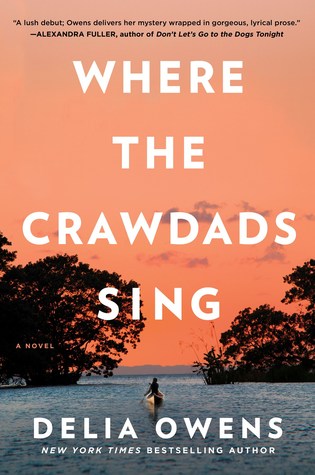 The book revealed the sad truth about so many people, which is that they will hold your upbringing and circumstances against you even when no part of them is your fault or choice, and will treat people who are poor or different as pariahs rather than embracing them and turning them into “one of us.” Thankfully, this child had her points of connection to humanity, and as seems typical, it was the people with the least to give (the black couple with the dockside fueling station, the store proprietor who made the wrong change to give Kya more buying power) who gave and did the most.
I could see, in some areas of disconnect between one sentence and the next, or an occasional parochial description that took me out of the story, that this was a first-time writer; but all was made up for by the lyrical, celebratory, sometimes lush language used to bring the marsh and its environs to life on the page. There were certain moments, too, in the human interactions that were both beautiful and unique—such as Tate teaching Kya to read not by using an alphabet book or a traditional text but by urging her to read from the Southern Almanac, so that her understanding of words and their complexities is powerful from the very beginning, as well as tied into nature. Since nature was already her primary fascination, this choice could only expedite everything she was to become.
The story of her life alone in the marsh, her hardships and challenges, her gradual awakening first to friendship and then to first love followed by another desertion, and then the betrayal by the second person to whom she gave a chance was heartbreaking. The fact that she was then the prime suspect in a murder, almost exclusively the result of no other evidence but that of being the “Marsh Girl,” further illustrated the ignorance and small-mindedness that surrounds the unknown. But there are twists in this book you don’t see coming, and front to back (with some slow passages here and there), it was a mesmerizing read.
I would agree with the reviewers’ assessment that people who like Barbara Kingsolver (especially such books as Prodigal Summer and Animal Dreams) would also enjoy this book. Perhaps also the readers of Diane Ackerman or Annie Dillard. Like the worlds they “discover” for the reader, the marshes and swamps surrounding the Outer Banks are lovely places in which to immerse oneself.
The heart of Paris, burning
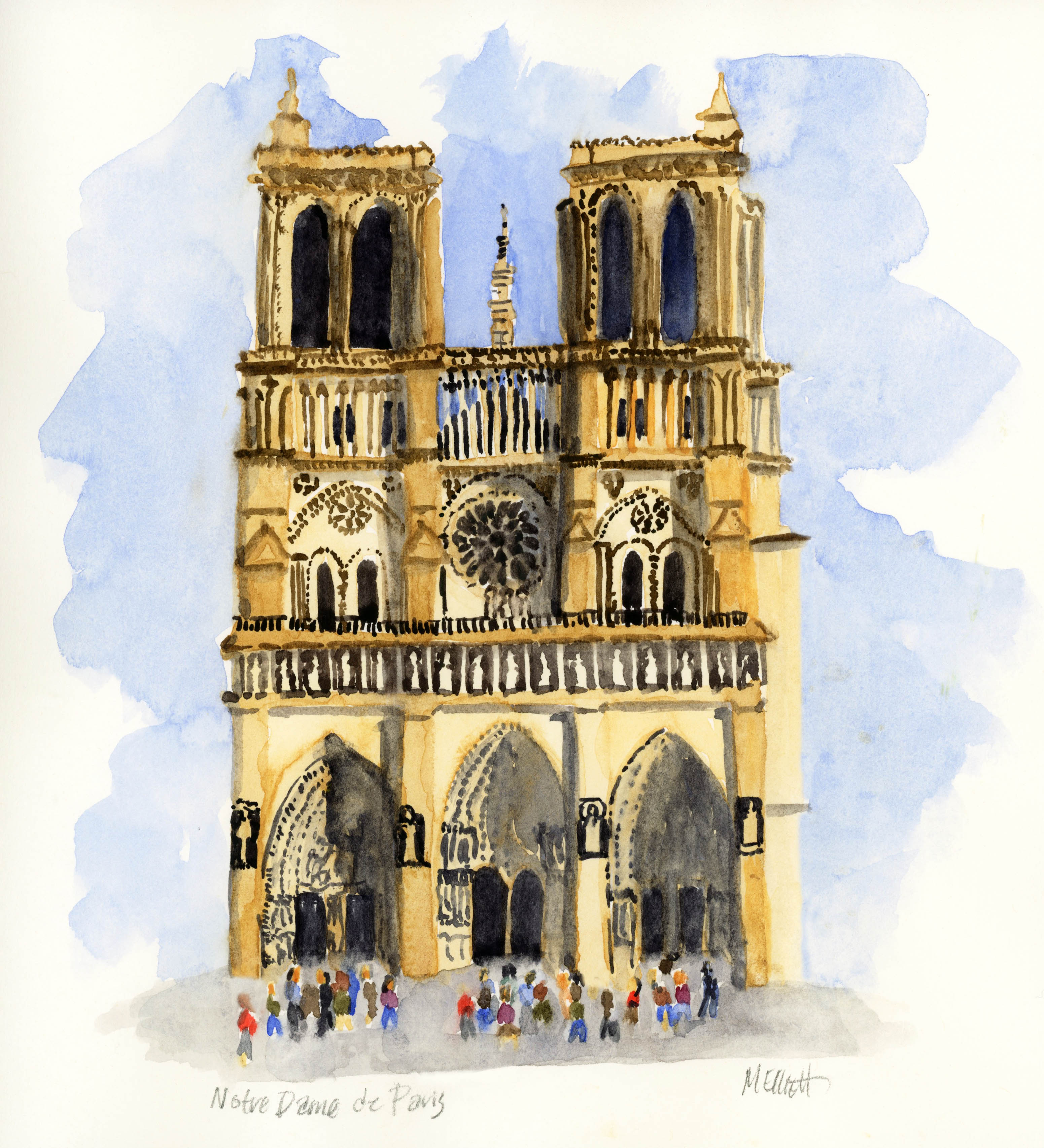
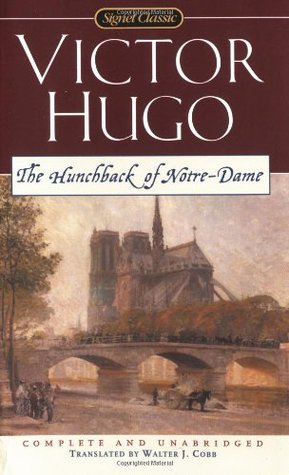 Literature lovers, along with historians, devotees of iconic architecture, the religious who revere its atmosphere and symbolism, and those who are simply moved by beauty, have all mourned this week at the devastation by fire of the cathedral of Notre Dame de Paris. The cathedral was inspirational to authors as diverse as Marcel Proust, Sigmund Freud, and Victor Hugo.
It is the story of Victor Hugo, author of The Hunchback of Notre Dame, that may console us the most in the midst of mourning; at the time of his book’s publication, reverence for and upkeep of the cathedral had fallen out of fashion, and his book, written to generate interest in its architectural glories, succeeded in its purpose: the cathedral was renovated. We will hope that it will rise from its ashes to inspire a new generation of writers, artists, poets, and reverent visitors.
The back list
There are those authors you discover by reading something they have just written and then, to your delight, you find out that they have been writing for years or even decades before you came across them. You eagerly anticipate exploring their “back list” to soak up every word this newly favorite writer penned, and as you proceed from first book to last, you are so happy to immerse yourself in their stories.
Then there are the authors you discover by reading their most popular work, but when you follow it up by seeking out the back list, yikes! you realize that some writers are on their game from the beginning, while others are definitely a work in progress.
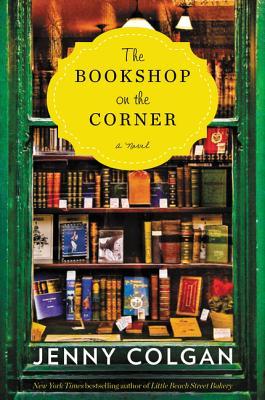 My recent experience with the books of Jenny Colgan was on the median between these two extremes. I began with her delightful wish-fulfillment story, The Little Shop of Happily Ever After, otherwise known in America as The Bookshop on the Corner, published in 2016, and was hooked. What unemployed librarian wouldn’t love a tale about a book-lover who buys a big van, fills it with remaindered books from her now-closed library, and hocks them to the locals all over the wilds of Scotland, all while experiencing a new lifestyle and possibly even falling in love?
I read The Café by the Sea and its two sequels, the books set in the Beach Street Bakery and the ones about the Cupcake Café, and followed those with The Loveliest Chocolate Shop in Paris. All similarly transformative (exchanging dull or stressful lifestyles for long-held dream jobs), all fun, all sweet, all entertaining, all good. Great characters, luminous settings, not-too-cloying love story elements.
Then, while waiting for her new book to come out this summer, I ventured further into the back list, and read her first, Amanda’s Wedding, published in 2000. The plot, when you read the synopsis, isn’t bad: Melanie and Fran, longtime friends who suffered at the hands of their frenemy Amanda throughout their school years, discover that Amanda is about to wed one of the nicest guys they’ve ever met, Fraser McConnell. Apart from such amiability being sacrificed to the nastiest piece of work in London, the friends discover that Amanda is marrying him not for his kindness and sweet nature but because he has just unexpectedly become a Scottish laird, and Amanda is social climbing for all she’s worth. So Fran and Mel decide to try a few acts of sabotage to get poor Fraser out of Amanda’s clutches.
The problem wasn’t with the plot, but with the execution. Colgan portrayed her protagonists in such a way as to make you wonder why anyone would find them either lovable or friend-worthy. Everyone in this book (except Fraser) is mean and snarky, not to mention frivolous, loose, and drunk most of the time. Amanda may have been the villain, but the contrast between her and everyone else in the book wasn’t great enough for anyone to buy it. My response upon finishing it was, “I’m so glad I read some of her later, truly delightful books before I got around to this first one, because I probably would have quit halfway through and never gone back.” It exhibited glimmers of the traits that make her other books winners, but not enough to notice if you weren’t already familiar with those.
After that, I decided to jump forward a few years and try again, with The Boy I Loved Before (2004). Flora, all grown up (she’s 32), in a long-term relationship with a “nice” man named Olly, and working for an accountancy firm, sees the writing on the wall when she attends her best friend Tashy’s wedding, and thinks to herself, Is this all there is? So as Tashy cuts the cake, Flora wishes she could just go back and be 16 again. Part of this has to do with a high school boyfriend who was a couple of years older than she was and walked off without a backward look after a year of being “in love,” but most of it has to do with not wanting the boring life she has chosen.
So she gets her wish; but no self-respecting fan of time travel or swapped bodies stories would put up with the convoluted (and ridiculous) way in which the change is made. The plotting is so inconsistent, inventing things to solve problems as they come up, that the only response you’re left with is “C’mon!” I enjoyed moments here and there, and some of the characterizations were fun, but for me this would be/would have been another “skip it.”
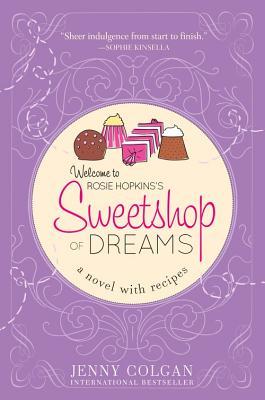 Finally, reminding myself sternly of how much I had enjoyed her later works, I moved up in time again to 2012, and assayed Welcome to Rosie Hopkins’s Sweet Shop of Dreams. It did, after all, have a title similar to those other books I had enjoyed; and I reasoned that Colgan had had eight years of writing other stories to improve, so I took another chance.
This one finally paid off. Rosie is living in London with her lazy and passive but pleasant and familiar boyfriend, Gerard. She’s a charge nurse, but has been laid off from full-time and is working short contracts at the moment. Her mother contacts her to say that Rosie’s great-aunt Lilian is in trouble. Lilian has been the purveyor of sweets from a charming little shop in a small country village for most of her life, and has always been fiercely independent, but now she has aged beyond the point where she can do it alone. Rosie’s mom wants Rosie to go there, sort out the shop, the house, and Lilian, and enact the hard decision to sell the properties and put Lilian in a retirement home. Rosie reluctantly acquiesces to this plan, partly because she feels like a change (and some time away from Gerard) would do her good; but of course, nothing ever works out the way it’s supposed to. Lilian isn’t as compliant about her future as Rosie’s mother had indicated, and the disheveled charm of the shop and its environs gradually work magic on the relationship between the great-aunt and the great-niece.
I thought this was one of Colgan’s best. I liked that it wasn’t the usual sudden life transformation (as happens in most of her books that I have enjoyed) but began as a result of Rosie’s reluctant good deed. I liked that possible love interests weren’t obvious. I really liked the flashbacks into the aunt’s history, and the relationship that evolved between the two women. The sweet shop produced a truly sweet and beguiling book.
So if you have tried the earlier works and decided they weren’t for you, take another look; there are at least a dozen definitely worthy of your time.
 I have never thought of myself as a romance reader (apart from Georgette Heyer Regency Romance novels, which stand alone!), but my friend Kim surprised me by referring to these as romances. When I debated her on that, her response was that she thought of these as “cozy reads,” like you find in the mystery genre. In cozy mysteries, the story is as much about the quirky characters (like Maisie Dobbs or the unexpected Mrs. Pollifax) and quaint settings as it is about the murder. I can definitely see what Kim means: The reason I like Colgan’s books is that most of them portray a woman who is in a rut, and who musters her courage to get out of it when she has to choose between safety and risk-taking. All of the books have a romantic element contained within them, but the happily-ever-after isn’t just about finding a mate, it’s about finding a life.
More books about books
I blogged some months ago about books written about books and readers, a category of book beloved by avid readers, and promised more titles for those “afflicted” by bibliophilia. Here, then, is another batch to add to my previous post.
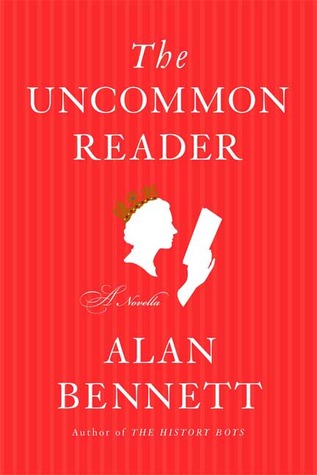 The Uncommon Reader, by Alan Bennett
Queen Elizabeth, in search of her beloved corgis, stumbles upon a bookmobile near the palace. She feels compelled by good manners to check out a book, which she struggles through, returns, and again feels compelled to take out another. But this one she enjoys! This behavior is out of character for the Queen, who has previously allowed herself few hobbies or interests that express a preference for anything, and now here she is, preferring books, which habit begins to influence the person she is and how she reigns and interacts with her subjects. Not everyone approves, however; politicians and staff collaborate to steer her away from this selfish, isolating, alienating addiction! A charming and clever novella that contains some astringent commentary within its simple story.
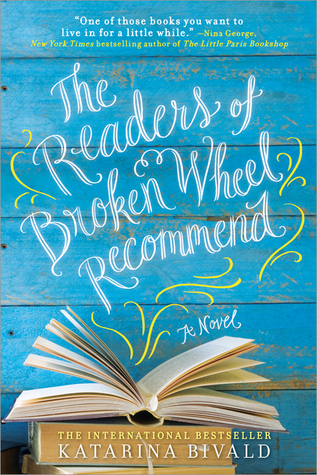 The Readers of Broken Wheel Recommend,
by Katarina Bivald
Sara travels all the way from Sweden to small-town Iowa to meet her penpal, Amy, only to discover that it’s the day of Amy’s funeral. The town’s residents rally around to make her feel better, and she ends up staying in Amy’s home, surrounded by Amy’s wide-ranging collection of books. She doesn’t want to return to Sweden, so she decides to open up one of the depressed town’s abandoned storefronts and sell Amy’s books. But she’s in the United States on a tourist visa…. I enjoyed the quirkiness of this virtual ghost town and its offbeat inhabitants who are finding revitalization through the presence of this strange and unassuming book-loving young woman from Sweden.
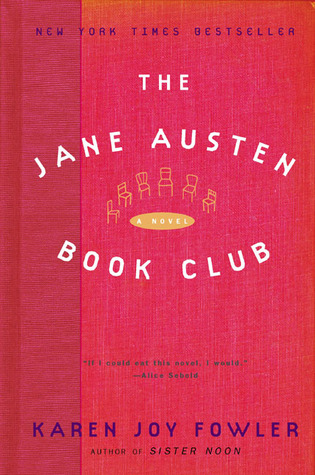 The Jane Austen Book Club, by Karen Joy Fowler
Set in California’s Central Valley, this book follows the stories of five women and one man who start a book club to read and discuss the novels of Jane Austen. The action takes place over a six-month period, during which many interpersonal issues (some of which reflect what’s happening within the novels of Austen) take place among and between these fans. This is a book about people who love reading and love talking about reading. It’s a little satirical, and apparently not for everyone—there are some passionate expressions both for and against in the reviews on Goodreads! One reader wrote: “I’m convinced the first thing Jane Austen is going to do on the Day of Resurrection is to hire a lawyer and sue the philistines who have commandeered her name and characters.” Try it for yourself (or chicken out and watch the movie, which some say was better).
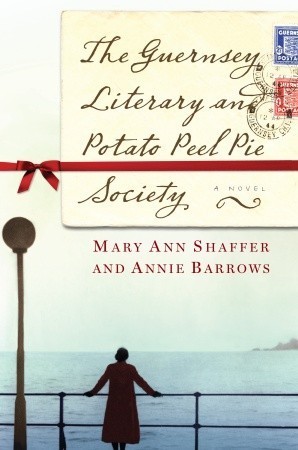 The Guernsey Literary and Potato Peel Pie Society,
by Mary Ann Shaffer & Annie Barrows
A book based on letters between a London writer and a man on the island of Guernsey immediately after World War II. He finds her name and address in a used book, and writes to her about the literary club he and his friends formed to evade the curfew imposed by the German occupying force of their island. Some felt the epistolary style left out too much of the inner thoughts and feelings of the characters, while others were inspired to find more letter-based books, so consider to which kind of reader you are speaking, before recommending
this one.
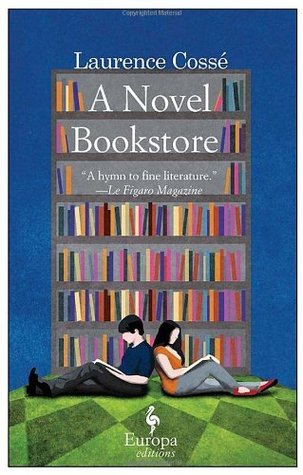 A Novel Bookstore,
by Laurence Cossé
Francesca, the lonely but wealthy Italian wife of a Parisian captain of industry, and Ivan, an indigent seller of comic books and classic novels, combine forces to open a bookstore in the heart of Paris that has one simple goal: to sell only “good” novels. They form a secret committee of eight celebrated writers, asking each to submit a list of six hundred titles. These dictate the inventory that fills the shelves of The Good Novel Bookstore. Imagine what happens when the publishing industry and the “literati” get wind of this pair who are daring to narrowly define what constitutes a good novel—especially when their enterprise is successful!
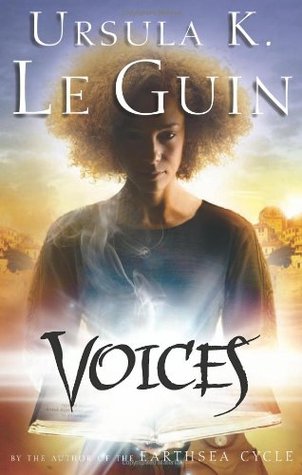 Voices, by Ursula K. LeGuin
Ansul was a peaceful town filled with libraries and books before the Alds came. The conquerors didn’t just pillage the town and rape its occupants, they burned all the books and set up an oppressive regime under which the people of Ansul suffer. Memer, an orphan who is a product of the rape of an Ansul woman by an Ald, has a secret bond with the Waylord, who hides and preserves books for his people. LeGuin explores the role of the occupier and the occupied, the double-edged sword of religion as a force of peace and war, and the value of storytelling to transform the lives of individuals and their culture. This is the second book of The Annals of the Western Shore series, but can be read as a stand-alone. (Young Adult Fiction)
Having re-explored all of these makes me want to seek out and read even more books about books! Stay tuned…
Theories, bees
It strikes me that the difference between a nonfiction vs. a fiction reader is subject vs. type. That is to say, a nonfiction reader may be intrigued by a particular subject and then read widely and eclectically on that topic for information, whereas a fiction reader is more driven by the type of fiction that she likes.
For instance, in my most recent rare burst of serendipitous nonfiction reading, the subject was bees. The peril to pollinators has figured prominently in the news recently, and I have been distressed to find more than one dead bee in my driveway. While I haven’t used a pesticide in my garden in 38 years, I am confident that my neighbors and their gardeners are not so nice in their gardening behavior. Now that this is becoming a worldwide problem, with colony collapse disorder threatening not just the bee population but also the pollination of essential crops, I wanted to know more.
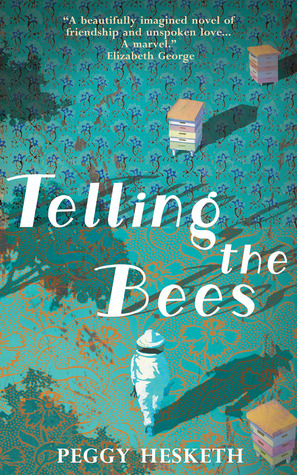 Being primarily a fiction reader, I first instinctively gravitated to a recent novel on the subject. The author’s mentor is Elizabeth Gilbert, and it was blurbed by Elizabeth George and heralded as a national bestseller. But I found Telling the Bees, by Peggy Hesketh, a disappointing read, not so much because it didn’t contain some information that I wanted, but because of the fictional aspects. The details about bee-keeping were surprisingly well detailed and quite informative, but the way the main character was written seemed so far from reality that I was dumfounded when I realized, more than halfway through the book, that he couldn’t have been more than 50 when the flashback part of the story began, while I had assumed he was in his late old age based on his affect. The book took more than 170 pages out of its 300 to get going (a murder takes place early in the book and then isn’t addressed again except tangentially for more than halfway through), and even then the progress of the story was glacier-like. There is a “secret” that is revealed to the clueless protagonist at the very end, but I guessed it less than halfway through, making the time spent waiting for this guy to “get it” an excruciating exercise. The story was also rather depressing, being a tale of missed chances, miscommunication, and a life not lived to the full.
The reason I had picked up this book was the recollection of a memoir I had liked almost 20 years ago. I was hoping for a similar experience to reading A Country Year: Living the Questions, by Sue Hubbell, but alas. The only thing I took away from Telling the Bees was some rather riveting folklore about communicating with bees, which I did enjoy.
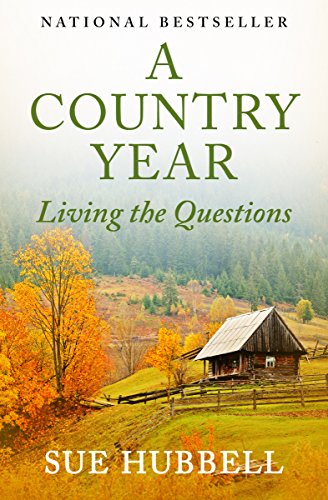 I then decided to go back and reread the Hubbell book, and received nearly as much pleasure from it that I did the first time. The seasonally dictated round of farm, field, barn, and house, as she cares for her bees and harvests their honey, accompanied by her minute, delighted and delightful observations of the wildlife surrounding her acreage in the Ozarks of Missouri, was simultaneously soothing and inspirational. It led me to consider moving to the country to pursue bee-keeping, or at the very least made me want to drive immediately to my local nursery and get busy planting some bee-friendly foliage.
After this, having had a lengthy discussion with my cousin about a book she had recently, coincidentally, read, I addressed myself to a polemical debate that claims to reveal the inner lives of bees and calls for their better, more sensitive treatment. I found Song of Increase, by Jacqueline Freeman, a bit of a tough sell, even though my cousin asked me to keep an open mind to the end. I was quite impressed with Freeman’s observations and understanding of bees, and liked and appreciated her “bee-centric” approach to beekeeping, putting the welfare of the bees ahead of their “product.” She shows a lot of insight and makes intelligent observations, and her writing is pleasant and evocative.
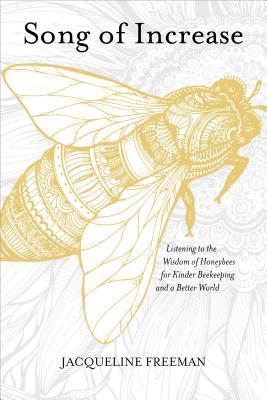 What I had trouble with was her interpretation of the spiritual aspect of her relationship with them. I understood that she believed she was “channeling” messages from the bees, and I think I could have swallowed that content more easily if it had been presented as such—the bees as communicators with her as interpreter. But when she divided the book into parts and implied that the bees had literally and directly communicated certain parts in human words (in one case she uses phrases such as “the bees call themselves” this, and the bees “use the word” that), it put me off. The information about the bees was sufficiently fascinating that I didn’t believe there was a need to embellish by giving them human language or feelings. It’s not hard to believe that humans can be attuned with bees; I have read enough anecdotal evidence from other beekeepers who can translate the sounds the bees make into specific moods and intentions and who can figure out from pitch and intonation when, for instance, a new queen is about to start a swarm. But the way Freeman writes about it will set off some people’s BS meters, which is a shame.
Looking at the differences between these three books was instructive. The first, although fiction, was obviously written by someone who had a fair knowledge of bees and bee-keeping, and was filled with rather clinical descriptions of procedures accompanied by the aforementioned folklore. Sue Hubbell’s book was an interesting contrast to Jacqueline Freeman’s, in that both authors spent extensive time living with and trying to understand bees, but Hubbell’s conclusions were more along the line of “the longer I keep bees, the less I understand them,” while Freeman’s were to claim specific knowledge communicated to her directly by the bees themselves, which was seductive and in some cases completely plausible, but ultimately somewhat suspect. Also, Hubbell’s humility in disclaiming knowledge was contradicted by her humane practices, which agreed with Freeman’s conclusions, such as refusing to kill an old queen once a swarm was rehived, despite common commercial wisdom that to do so was the only way to promote an efficient honey yield. Hubbell was willing to do without that yield for a year, in order to accommodate the bees’ natural processes, which was precisely the kind of behavior being advocated by Freeman. I imagine if you could put the two authors in a room together, they would have much to share and agree on.
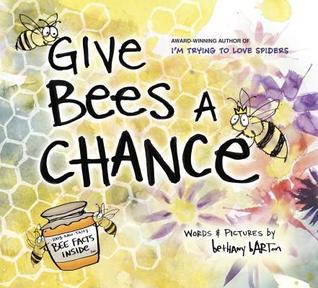 I rounded out my curiosity by checking into how the subject of danger to pollinators is being addressed in children’s books, by reading a charming one by Bethany Barton, called Give Bees A Chance. Although the book goes into much factual detail about kinds of bees, their physiognomy, the process of making honey, and their essential role in the food chain, one gets the feeling that the primary reason for writing and illustrating this book was to squash the first impulse of some children to, er, squash whatever they don’t understand! The book acknowledges children’s fear of and focus on a bee’s stinger, but tries to distract from and diminish that fear by presenting all its good qualities. Let us hope it succeeds!
All of this ultimately moved me to a search online for organizations that discuss the specifics of how to create a pollinator-friendly environment within your home landscape, and ways to enlist your neighbors in this campaign so that yours doesn’t prove to be a tiny island of safety in a perilous ocean of neonicotinoids. I noted down upcoming sales by local growers of native pollinator-friendly plants, bought a book on turning your lawn into a more natural, critter-friendly environment, and got ready to start digging, once the winter rains have (finally) subsided. Who knows, once the environment has been created, whether I will decide to add a hive or two?
Back to the theory about which I began this post… By contrast with the relative randomness of a nonfiction reader seeking information, the fiction reader may be more driven by type, and by type I don’t necessarily mean by genre. Although there are fiction readers who stick by preference to just one genre, be it mystery, fantasy, or science fiction, there are others who read widely in many genres. My theory here, however, is that if you are a particular type of reader, you seek out, within those genres, books with a similar feel to the writing.
That is, despite the fact that you have switched from mystery to fantasy, the appeals of the fiction you enjoy may stay constant across genres. So if you like a mystery in which there is a plethora of descriptive language and a resultant leisurely pace, perhaps that is also the type of fantasy to which you will gravitate. Likewise, if you are fond of thrillers with lots of action, you may seek out science fiction in the form of space opera, rather than reading something more clinical or philosophical.
Based on my own experience, I would say that this idea may be only partly true and not completely consistent; I am a mood-driven reader, and sometimes enjoy leaving behind the torturous detail of a Tana French for the three-page, adrenaline-fueled chapters of a James Patterson. But for the most part, I am a consistent reader who seeks out the same type of appeals regardless of genre.
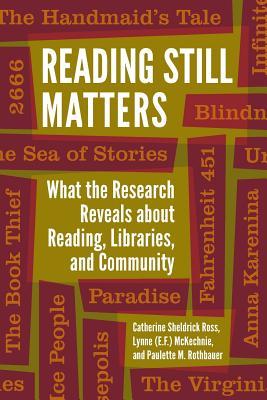 This is an interesting concept to test out, first with yourself as a reader, and then with those for whom you advise, to see if it is legitimate and common. In her book Reading Still Matters, Catherine Sheldrick Ross remarks that “the varieties of ways to experience reading seem to expand the longer we consider the question, as do the dimensions along which readers may vary in their reading practices.” On page 168, she provides what she calls a “model,” which is a series of questions she uses to capture the experience of avid readers. It’s a query well worth exploring in our quest to become better readers’ advisors.
 The Book Adept