In celebration of dogs
The phrase “the dog days of summer” comes from the ancient Latin phrase diēs caniculārēs, meaning “days of the dog star.” The ancient Greeks and Romans thought that the brilliant light and proximity of Sirius (the brightest star in the night sky and part of the constellation of Canis Major) combined with the Sun’s heat to create stifling weather, droughts, bad luck, and fevers. Modern-day science has proven that Sirius does not radiate extra heat to Earth; the extreme temperatures are, rather, a result of the Earth’s tilt during mid-summer. But I think I’m sticking with the conclusions of the elders, because “dog days” are now eternally identified with the torturous, unbearable heat of August. Whenever anyone uses that phrase, I picture the dusty main street of a town in the Old West, with strays lying in whatever patches of shade they can find, panting from the heat.

All of this is to say, today is NATIONAL DOG DAY! For which that was a rambling and not especially pertinent intro, except for the fact that it’s 100 degrees in MY western town today, and my tongue is also hanging out.
For all of us staying in the shade for the next week who need something to pass the time, here are some titles of books either specifically about a dog or with a prominent canine character.
F I C T I O N

Blue Dog, by Louis De Bernieres
After the death of his father, Mick is sent to live with his Grandpa on a cattle station in the Australian outback, a tough place to grow up. But when Mick discovers a lost puppy in the wreckage of a cyclone, he finds a companion who will share that journey with him. By the author of Corelli’s Mandolin.
Lessons in Chemistry, by Bonnie Garmus
A stray taken in by the scientist-turned-television star, Six-Thirty is a dog who proves two hypotheses: One, dogs have the capability to learn human vocabulary, even if they cannot voice it themselves, and two, humans defy logic. For it is through Six-Thirty’s inquisitive and deeply logical brain that we are offered an insight into what life is like as a Very Good Boy.
Frederica, by Georgette Heyer
Frederica, the protagonist of one of Heyer’s popular Regency romances, ends up in the middle of an unexpected adventure when she takes the family dog out for a walk around Green Park. Lufra, a large, boisterous mongrel, charges the cows grazing there and draws the wrath of several park attendants. Afraid the dog might be impounded, Frederica blurts out that the dog is a pure-bred “Barcelona collie” and belongs to a Marquis who will be extremely angry if his costly canine companion comes to any harm. Unconvinced, the mob traipses over to the Marquis’s residence to sort things out and, luckily, he clocks what’s happening, goes along with the lie, and saves the day.
Seven Perfect Things, by Catherine Ryan Hyde
Thirteen-year-old Abby Hubble rescues a litter of seven puppies dumped in a nearby river in the Sierra Nevada. She can’t bring them home to her volatile father, so she hides them in an abandoned cabin, where she and the puppies are discovered by grieving widower Elliot Colvin. A friendship develops between the two, but it’s threatened when her father wants to move the family hundreds of miles away.

The Friend, by Sigrid Nuñez
A woman unexpectedly loses her lifelong best friend, only to find herself burdened with the dog he has left behind. Her own battle against grief is exacerbated by the suffering of the dog, a Great Dane traumatized by the unexplainable disappearance of its master. The woman refuses to be parted from the dog, even though dogs are forbidden in her apartment building, and the book uses this pairing to explore the themes of death, writing, and relationships. The National Book Award winner for 2018.
Dog On It (Chet & Bernie Mystery #1), by Spencer Quinn
A series told from the POV of the dog, Chet. If Chet doesn’t see/hear/smell it, neither do we. And Chet gets distracted easily (Squirrel!), which parenthetically saves us from a lot of unnecessary tedious details. Chet is intensely loyal to down-on-his-luck private investigator Bernie, and puts his extraordinary nose to good use in helping Bernie solve mysteries. This first book led to 15 more, plus some interim short stories.
Dog Days, by Ericka Waller
Three strangers’ lives unravel and intersect as they discover what fate has in store for them with their dogs by their sides.
The Dog I Loved, by Susan Wilson (who has written several other dog-themed books)
Two women—a former criminal and a disabled war veteran—navigate paths towards independence aided by two dogs.
“The average dog is
ANDY ROONEY
a nicer person than the average person.”
N O N F I C T I O N / M E M O I R

Off the Leash: A Year at the Dog Park, by Matthew Gilbert
A group portrait of dog people, specifically the strange, wonderful, neurotic, and eccentric dog people who gather at Amory Park, near Boston’s Fenway Park.
Oogy: The Dog Only A Family Could Love, by Larry Levin
At the animal hospital to have their beloved but terminally ill cat put to sleep, Levin and his twin sons, Dan and Noah (themselves adopted), discover the ugliest dog they had ever seen (he had been used as bait for fighting dogs when only a puppy). The dog seemed determined to belong to them, so they took him home and called him Oogy (an affectionate version of “ugly”).
E. B. White On Dogs, edited by Martha White
The best and funniest of the Charlotte’s Web author’s essays, poems, letters, and sketches depicting over a dozen of White’s various canine companions.
F O R C H I L D R E N

Pig the Pug, by Aaron Blabey (picture book series)
Pig is the greediest Pug in the world. He is ill-tempered, rude and unreasonable, and does not want to share his toys!
Good Dog, Carl, by Alexandra Day (picture book for young children)
The first in a series about the babysitting Rottweiler. The first has notably sparse text, but sequels such as Carl’s Summer Vacation and Carl’s Snowy Afternoon are more elaborate.
Chester and Gus, by Cammie McGovern (middle school)
Chester flunks out of service dog school (he is not calm when there are loud noises), but then he is adopted by a family for their son Gus, a nonverbal autistic boy. Told from the dog’s viewpoint, who struggles to figure out how best to help his person.

If this list doesn’t offer what you seek, I have featured a similar column for several years, and you can still access those, as well as some individual longer reviews about dog-related fiction:
https://bookadept.com/2025/08/26/best-in-show/
https://bookadept.com/2020/08/26/the-dog-days-of-summer
https://bookadept.com/2024/08/26/dog-day-afternoon/
https://bookadept.com/2021/10/14/a-boy-and-his-dog/
https://bookadept.com/2021/09/05/coming-of-age-w-dogs/
Learning through fiction
Someone on one of the readers’ pages I frequent on Facebook posted something recently about only wanting to read nonfiction because she “likes to learn while I read.” And it made me think about the fact that I never read nonfiction (since I left school, I can count the number of nonfiction books I have read on two hands), but that I learn many things, nonetheless, from my reading.
One example that I use when people raise an eyebrow in disbelief: A few years ago, one of my friends told me she was suffering greatly from Ménière’s disease, which is “a disorder of the inner ear that can cause vertigo (spinning sensation), tinnitus (ringing or buzzing in the ear), hearing loss, and a feeling of fulness or pressure in the affected ear. It is a chronic condition, meaning it’s long-lasting and can have recurrent episodes of symptoms.” She told me there was no sure-fire treatment and that she simply had to live with it, but that it meant multiple days of lying immobile waiting for the symptoms to go away.
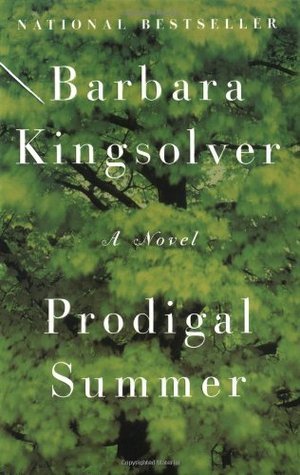
I immediately remembered a scene in Barbara Kingsolver’s novel Prodigal Summer. There is a character in that book, a woman who has a little girl who suffers from extreme vertigo, called BPPV. BPPV is “Benign Paroxysmal Positional Vertigo.” It is a common cause of “a feeling of spinning or dizziness. It’s triggered by changes in head position, especially when rolling over in bed, getting out of bed, or tilting the head. BPPV is caused by loose crystals in the inner ear that move into the wrong part of the balance system.” When the wave of dizziness hits, the book describes how the woman lays the little girl down with her head hanging over the edge of her bed (or, if they are out in public, over her mother’s arm), and then has her do a slow, timed series of movements that alleviate the condition. The action is called the Epley Maneuver. Loose crystals (called otoliths) have become displaced into the posterior canal of the inner ear, which makes the brain think that fluid is moving due to a head turn when it is, in fact, caused by the crystals. Since the fluid is moving even though the head is stationary, it brings on extreme dizziness. The Epley Maneuver attempts to reroute the crystals, moving them out of the canal so that the cause of the dizziness goes away. (Here is a YouTube video that explains the maneuver—if you search it on YouTube, you will find multiple demonstrations. https://youtu.be/o4GV-EbnMfI?si=1lzrDemwCgLayCR-)
In the book, the woman has a neighbor, a curmudgeonly old man with whom she has been feuding over various things for many years. But when he himself has an onset of BPPV, she kindly teaches him the Epley Maneuver.
When my friend told me about her distress and how severely this condition was impacting her day-to-day living, I remembered the scene from Prodigal Summer and shared the technique with her. She tried it and, after repeating it a few times over the next 24 hours, her BPPV subsided. From then on, when she felt it coming on, she would use the maneuver to avoid the onset of the attack.
It should be noted that if you google Ménière’s disease, it will tell you that treatments include diuretics (bad for you) and surgery, and that it’s incurable. I would never have discovered the Epley Maneuver if it hadn’t been for this novel by Kingsolver.
I reflected on this today when I was coming to the end of The Grey Wolf, the latest Armand Gamache mystery by Louise Penny. Armand muses on a quote he heard somewhere that, for me, perfectly epitomized the world we here in the States are living through under our current insane and oligarchic regime. It said,
Do not attribute to malice that which can be explained by stupidity.
It went on to note that there was plenty of malice to go around (yes, there is!), but that it was far outweighed by sheer stupidity. I am constantly reminding myself of this as political events unfold around us, and trying to hold onto the hope that the readers among us will prevail and both malice and stupidity will eventually subside.
Dog Day Afternoon
No, this isn’t a post about a 1975 bank robbery movie. But the title seemed appropriate, given that it’s National Dog Day and also that I am getting such a late start that my post won’t be available until after noon, one of those hot, sleepy afternoons when dogs (and people) prefer to lie around and languish (i.e., read!) during the summer heat. I did some pre-planning for this post by making a list of some pertinent dog-oriented books, but then my distracted brain failed to follow up, so a list is pretty much all you’re going to get this time. But don’t discount it just because it’s not elaborated upon; these are some great reads, encompassing fantasy, mystery, dystopian fiction, science fiction, some true stories, and a short list for children.
NOVELS FOR ADULTS (AND TEENS)
The Beka Cooper trilogy (Terrier, Bloodhound, Mastiff),
by Tamora Pierce
A Boy and His Dog at the End of the World, by C. A. Fletcher
Iron Mike, by Patricia Rose
A Dog’s Purpose, by W. Bruce Cameron
First Dog on Earth, by Irv Weinberg
The Companions, by Sheri S. Tepper
The Andy Carpenter mysteries, by David Rosenfelt
The Dog Stars, by Peter Heller

DOGGIE NONFICTION
Marley and Me: Life and Love with the World’s Worst Dog,
by John Grogan
Best Friends: The True Story of the World’s Most Beloved
Animal Sanctuary, by Samantha Glen
James Herriot’s Dog Stories, by James Herriot
A Three Dog Life, by Abigail Thomas
Inside of a Dog: What Dogs See, Smell, and Know,
by Alexandra Horowitz

CHILDREN’S BOOKS WITH DOGS
Sounder, by William H. Armstrong
No More Dead Dogs, by Gordon Korman
Harry the Dirty Dog books, by Gene Zion
(illustrator Margaret Bloy Graham)
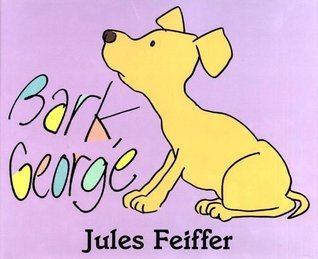
Bark, George, by Jules Feiffer (one of the best for reading aloud!)
And for those who wanted more, here is an annotated list of more dog days books from a previous year, along with some suggestions for dog lovers that go beyond reading about them.
National Book Lovers’ Day
Here are some of the books I love. You are welcome to respond to this by listing some of the books you love, in the comments. These are not in any particular order, and it is by no means a complete list, just a random assortment—a combination of books that occur to me when “books you love” comes at me in a Facebook post, and a scan of my Goodreads files for five stars.)

The Terrorists of Irustan, by Louise Marley
Green Dolphin Street, by Elizabeth Goudge
The Wee Free Men (and sequels), by Terry Pratchett
To Say Nothing of the Dog, by Connie Willis
The Beka Cooper trilogy (Terrier, Bloodhound, Mastiff), by Tamora Pierce
The Queen’s Thief series, by Megan Whalen Turner
Found in a Bookshop, by Stephanie Butland
The Uncommon Reader, by Alan Bennett
The Obernewtyn Chronicles, by Isobelle Carmody
The Farseer books, by Robin Hobb
Strange the Dreamer, by Laini Taylor
Vicious, by V. E. Schwab
The Last Dragonslayer series, by Jasper Fforde
The Scorpio Races, by Maggie Stiefvater
Memory and Dream, by Charles de Lint
The Earthsea books, by Ursula K. LeGuin
Dispossessed, by Ursula K. LeGuin
The Blue Sword, by Robin McKinley
Mary Stewart’s Arthurian saga
The Snow Queen, by Joan D. Vinge
The Convenient Marriage, by Georgette Heyer
Tai-Pan, by James Clavell
The Persian Boy, by Mary Renault
The Rich Are Different, by Susan Howatch
In This House of Brede, by Rumer Godden
Random Harvest, by James Hilton
Holding Smoke, by Elle Cosimano
Lacey Flint mysteries, by Sharon Bolton
We Begin at the End, by Chris Whitaker
Harper Connelly mysteries, by Charlaine Harris
What Came Before He Shot Her, by Elizabeth George
Dublin Murder Squad books, by Tana French
The Fifth Sacred Thing, by Starhawk
Zen and the Art of Motorcycle Maintenance, by Robert Pirsig
The Lock Artist, by Steve Hamilton
The Language of Flowers, by Vanessa Diffenbaugh
Demolition Angel, by Robert Crais
Kill the Messenger, by Tami Hoag
Hold Me Closer, Necromancer, by Lish McBride
Scarlet Feather, by Maeve Binchy
Coming Home, by Rosamunde Pilcher
The Far Pavilions, by M. M. Kaye
The Feast of All Saints, by Anne Rice
The Just City, by Jo Walton
The Family Tree, by Sheri S. Tepper
Dune, by Frank Herbert
Doomsday Book, by Connie Willis
Just to put these in a little further context: These are books with longevity (for me). That is to say, I didn’t just recognize their merit and give them five stars in the moment, I returned to them at least once and, in some cases, again and again to reread and re-experience the story-telling that is always the foremost in importance to me; and they are also books I tend to think of when someone else asks for a recommendation. So while some of them may be “significant” books while others may seem like trivial choices, for me they resonated somehow, enough that I wanted to revisit them myself and share them with others. And again, partial list! I’m sure there are some absolute gems I left out and will later think, Oops! how could I forget THAT one?



The books we keep
I live in a pretty small house, and I have a LOT of stuff, including books. I have always hung onto most of my books, but as I am looking to clear out some space, I’m drastically revising what I keep and what I release.
I have:
One bookcase in my studio, which has writing and art books, both how-to and inspirational, plus the books I use to research and teach my UCLA courses. I also have an entire packed shelf of Dover clip-art books from back in the day when you needed to paste down some vector art (or a photostat of same) in order to insert art into your newsletter, flyer, or whatever. Those could go, although I’d probably sit down and scan art from a large number of them, to save on my computer for future projects. Four shelves.
One bookcase in my living room, containing all my gardening and home arts books—architecture, building techniques (such as straw bale construction), interior design, quilting, and some art books that are also garden-related. Four shelves.
One china cabinet/hutch in my bedroom, that contains all my Young Adult Fiction books in the top half. Three shelves.
Three floor-to-almost-ceiling bookshelves, also in the bedroom, that contain all my other books, separated out into science fiction/fantasy, regular fiction, and nonfiction. Six shelves per bookcase = 18 shelves.
And then there are the piles of books—on the kitchen table, the dining room table, two side tables in the living room, the floor of the studio…
I keep accumulating them, but haven’t significantly cleared them out for several decades. Every once in a while I will put together about a box worth of those I didn’t enjoy or simply decided not to read, and give them to the library or to Vietnam Veterans to sell. But since I accumulate at almost the same speed, it hasn’t helped much.
Since the beginning of the pandemic, I have been either checking out or buying many e-books to read on my Kindle, so that has saved some shelf space. But it’s finally time to confront the overflow, eliminate the extraneous, and reorganize the rest tidily on (hopefully fewer) shelves.
My new deciding factor for whether to keep a book is going to be whether I realistically and sincerely believe that I will ever read it again. I have books that I have read multiple times and anticipate going back to a few more; I have books that I have read once and might enjoy reading again; and then there are the books I know I will never revisit.
It’s difficult, sometimes, because of things like sets. I have a complete set of similarly bound books by Elizabeth Goudge that I remember being so thrilled to discover at The Last Bookstore in downtown Los Angeles about three decades ago; but although they look pretty on the shelf, I expect I may reread one at most—I have outgrown my regard for them. So should I let the entire set go? I’m thinking yes, but it gives me a pang. I also have a few gifts from people looking to appeal to my hobby, but…my mom, for instance, never understood the difference between a reader and a collector, so she would go find me some beautiful old first edition of, say, the poems of Longfellow that I admire esthetically for its beautiful cover and ancient pages but will never read. And then there are a few beloved children’s books from my youth that I remember fondly but will probably never read again, and since I don’t have children with whom to share them…what to do?
When I embraced science fiction in my 20s, I collected every single title of such authors as Robert Heinlein, Frank Herbert, and Isaac Asimov, and it’s difficult (and nostalgic) to pick and choose the ones I really like vs. the ones I have just kept because it’s nice to feel like you have the entire oeuvre. But again, if I examine them in terms of what may be a re-read, then I can let go of most.
My hope is that when I box up everything I no longer need and the dust clears, I can actually get rid of one of the three big bookcases in the bedroom, to give me a little more room for other pursuits, like setting up my free-standing painter’s easel in the empty space.
One problem I foresee: When I really examine what’s on the shelves, there are also a number of missing volumes I’d selfishly love to fill in, especially in my young adult fiction collection. Since I worked in a library in the YA section for 11 years, I would mostly check out the books I wanted to read, with the result that I have numerous series for which I only own, say, #1 and #3 out of four books, or the first book but not its sequel. So—do I get rid of all, and simply pick them up from the library should I get the yen to read them? or do I fill in the set? Filling in could have a large impact!
This does seem like a proper task to ponder, initiate, and accomplish at the beginning of a new year. I’ll let you know how it goes…and if you have advice or a fresh perspective for me, feel free to comment!
 The Book Adept