Segue
If you are a Tana French fan, as I am, there is no question that you will read whatever book she has written next; you just put a check in the “want to read” box on Goodreads and wait for its publication. And if you don’t want to buy your own personal copy so as to read it the instant it is released (I do, but I’m trying to come to terms with a new, slimmer budget, now that I am semi-retired), you resignedly log onto your local library catalogue, place a hold, and wait.
That’s what I did about six weeks ago, opting for the e-book with the idea that it would take less time to get than it would a hardcover copy. Then I promptly forgot about it and went about my business, until my email notification popped up to tell me that the e-book was awaiting me on my Kindle.
If you are a Tana French fan, then you know that all her books to date (six previous to this one) are part of a loose series called the Dublin Murder Squad, and each deals with a murder mystery to be solved by a Dublin detective. Each book has a different protagonist, although the others crop up in big, small, or completely incidental ways in the background of the books in which they don’t play lead. So while there is a familiarity about each book (a murder to be solved, a member of Dublin’s finest to do so), there is also a certain variety. You don’t know exactly what to expect, as you do with series in which the lead detective is always the same person. It’s kind of a genius way to write, if you can pull it off. Although I am a fan, for instance, of John Lescroart’s Dismas Hardy series, I have been vocal about my disappointment in those books in which he chooses one of his other characters as the lead. But so far, in her six books, French’s choices have never disappointed me, and I haven’t wavered in my slavering desire for the next one.
 So, as I mentioned, The Witch Elm popped up on my Kindle a couple of days ago, and when I finished Michael Koryta’s book, I started to read. Imagine my confusion when, not having looked at a physical copy of the book for a flap synopsis or author blurb, I slowly realized that the Dublin Murder Squad was nowhere to be found? I kept reading as Toby, the average guy with a good job, friends, and a lovely girlfriend, went about his life, until one night he was mugged by burglars in his own home, and lay in the hospital recovering. Finally, two detectives showed up to take his statement, and I thought “Ah! here we go.”
Nope. The detectives came and went, and we stuck with Toby.
For her fans, this is a huge departure for French, and reactions will be mixed. Mystery readers and procedural fans may be disappointed. As with many procedurals, the crimes in French’s books, while clever, are the incidental vehicle, but the detectives’ engaging personal histories are what draw readers in and tempt them to return.
There is, eventually, a murder in this book, and there are some Dublin detectives taking an active part in its investigation; but the story continues to be told by the victims and, later, the perpetrators. Rather than featuring as the leads, the detectives maintain the persona that they represent to most people in real life: initially friendly and helpful, but also a looming source of panic and dread as their attention falls on you and you wonder, Do they really think I did this?
The book is a slow and intricate read, and takes almost 100 pages to build up to the discovery of the murder. Although some may believe that French’s editors were simply too afraid at this point to curtail the prose of such a successful writer, I don’t believe that’s the case here. Yes, I was initially somewhat frustrated to sit through the transformation of Toby from a basically happy-go-lucky guy to a man who didn’t know how or when he would ever recover from what’s been done to him. He’s pathetic, but he’s not the most sympathetic of characters, and my impatience grew with the narrative. But when the story transitions to the search for a murderer among Toby’s family, and so many questions are raised, you begin to realize that this book isn’t a whodunnit, it’s a psychological character study that, because of the unreliable nature of the characters, ramps up the tension exponentially with every page. In hindsight you see that all (okay, most) of that angst and drama you sat through with Toby was in service of everything that comes after, and you grow to appreciate your insider’s view as things continue to swing out of control. Although I had to make a little effort to get through the first part of this novel, I whipped through the last 30 percent of it between midnight and 3:00 a.m., and I don’t regret staying up one bit.
It’s hard, when you love unreservedly the kind of book that an author has reliably delivered as many times as has Tana French, and then she changes her focus. But I would call The Witch Elm a successful step in her career. If I’m honest, I still hope she returns to the Dublin Murder Squad, but I won’t be sad if, as well, we get a few one-offs like this one along the way.
Books for artists
Don’t you think that everyone likes to read a book with a protagonist or supporting character who shares something in common with them? As mentioned earlier in my review of The Art Forger, my particular extracurricular interest is painting, and I love books with art as a theme. So in the same train of thought as the books about books that readers love, here are some books about or containing art that artists may enjoy. Some are big family sagas or historical fiction, a few are coming-of-age stories, and the rest are all about the painting. There are both adult and young adult fiction titles included, but don’t let a label deter you: Read them all!
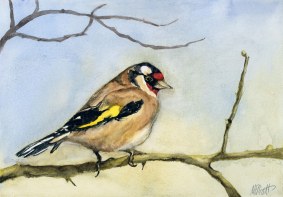 The Goldfinch, by Donna Tartt
Theo Decker survives a brutal bombing at an art museum that takes the life of his beloved mother. In the confusion during the explosion, Theo rescues (but then decides to keep for himself) a priceless painting, which comes to symbolize for him his idyllic lost youth. Powerful, moody, poetic (and lengthy) literary fiction. Winner of the Pulitzer Prize. Adult fiction.
The Very Picture of You, by Isabel Wolff
Elsa is a portrait painter who elicits the stories of those she paints while they pose for her, and discovers some truths about herself in the process, especially while painting her sister’s fiancé. Adult fiction.
The Shell Seekers, by Rosamunde Pilcher
Set partly in the past, partly in the present, this is the story of Penelope Keeling, whose father was a famous Cornish painter. Now in her declining years, her prize possession is a portrait by him called “The Shell Seekers.” Her three children all become aware of its value, and each has an opinion about what she should do with both the portrait and with herself. Penelope has different ideas. This is a wonderfully drawn family saga, and if you like books set in World War II, half of this book takes place during that time period, in Penelope’s youth. Adult fiction.
 The Truth Commission, by Susan Juby
Dawn, Neil, and Normandy go to the Green Pastures School of Art and Applied Design. Each is artistic in a different way, as are all their crazy classmates, but Normandy has always felt overshadowed by her older sister, Keira, who preceded her at the school and went on to become a famous graphic artist. She is also discomfited by the fact that in her graphic novels, Keira has drawn her family—mother, father, and Normandy—as characters, and in a particularly unflattering (verging on vicious) way. Her response to this is to begin a project at school destined to bring the truth, however difficult and dangerous, into the open. YA fiction.
I Am Having So Much Fun Here Without You, by Courtney Maum
Not my favorite, but some people may like it. It’s about a guy who tries to bring some pizzazz into his life by having an affair. After having alienated both the mistress and the wife, he then tries to revive his ailing art career by exploring new media and methods. I liked it for the setting and the discussions about the art world. I never did figure out the title, because no one, anywhere in this book, is having any fun! Adult fiction.
A Paris Apartment, by Michelle Gable
Another one where the premise is better than the result, but again, the setting (Paris) and the convoluted process of holding a Sotheby’s auction for the art discovered in an untouched 70-year-old apartment was intriguing. Adult fiction.
 Tell the Wolves I’m Home,
by Carol Rifka Brunt
This book isn’t specifically about art, but uses it as a vehicle. June Elbus’s uncle, Finn Weiss, is dying of a mysterious disease (AIDS), and he chooses to spend his final days painting a portrait of his nieces, June and her older sister. Although the bulk of the book is June’s coming of age through the process of discovering and coming to terms with the secret parts of her uncle’s life that were kept from her by her parents, the painting plays an ongoing role throughout the book that ties it all together. An Alex Award winner. Adult fiction.
 I’ll Give You the Sun, by Jandy Nelson
Twins Jude and Noah are both artistic, but Noah’s art just burgeons out of him. At 13, he is being coached by his mother to apply for an arts high school, while Jude is busy acting out as a typical teenage girl. Jumping to three years later, Noah has ceased to make any art, while Jude is struggling as a student at the school Noah was supposedly destined to attend. What happened in those intervening three years? And who will help the twins to regain their balance and express their art and themselves? Beautifully written and characterized, with a touch of magical realism that enhances the story. YA fiction (but should be for everyone).
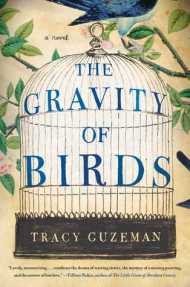 The Gravity of Birds, by Tracy Guzman
An art historian and an art authenticator are hired by a famously reclusive artist to sell a portrait that had a devastating effect on the two sisters who sat for it. But is the sale of the portrait the artist’s real motive? This is a fairly simple story, and simply written, yet the complexity of human emotions and betrayals involved made it intricate and nuanced, and the imagery is compelling. Adult fiction.
 Heist Society (and sequels), by Ally Carter
An art caper book. The protagonist, Katarina Bishop, is the youngest generation in a family of international art thieves. A big robbery has taken place, and the mafia guy who owned the paintings thinks her father did the robbery, but he didn’t. She’s been given a deadline to give them back, so she and her cousins/friends have to figure out who DID take the paintings, and steal them back! Completely implausible, of course, but big fun. YA fiction.
 The Painter, by Peter Heller
This book pairs thoughtful, in-depth musing about life’s tragedies and how we react to them with breathless scenes of action worthy of the latest blockbuster thriller. The protagonist paints Expressionist masterpieces, while acting like a character gone astray from a Hemingway novel. I love all three of Peter Heller’s novels. Adult fiction.
The Improbability of Love, by Hannah Mary Rothschild
Annie is a hapless aspiring chef who happens upon a tiny Watteau painting in a junk shop, buys it for a new boyfriend who stands her up for their date, and then is intrigued enough by it to start looking into its history, which includes stories of Nazi Germany and the hidden and circuitous route the painting takes through centuries of diverse ownership. (The title of the book is the title of the painting.) Adult fiction.
 The Girl You Left Behind, by JoJo Moyes
In 1916, French artist Edouard Lefevre is forced to leave his wife, Sophie, and the portrait of her he has painted, to fight at the Front in World War I. A century later, Liv is given the painting as a wedding present by her new husband, shortly before his unexpected death. The past and present of the painting tie these two stories together and make for an engaging history. Adult fiction.
 Spending, by Mary Gordon
Monica Szabo is a painter in her 50s who has struggled her whole life with the dichotomy between making a living and expressing her art. Then a man comes along who wants to be her patron, in the sense of classical artists who were sponsored by the Medici so they were free to make art. Monica struggles with the concept of being a “kept woman” even as she delights in the freedom to begin her most powerful and controversial work. Then their roles abruptly change, and new philosophical questions are up for review. An engaging story that addresses gender stereotypes, religion, and artistic integrity, without losing the immediacy of the relationship. One of those that merits a re-read. Adult fiction.
I’m sure there are many more books about painting to be discovered. When I do, I will share those, too!
Circe
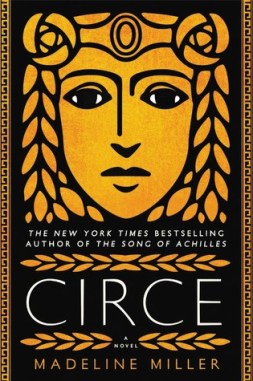 For those who have never read Greek mythology, or who have hit just the basics but not all the extras, here is the story of the half-goddess Circe in a nutshell: She was the daughter of sun god and top Titan Helios, and Perse, an ocean nymph. She was a sorceress who was exiled by Zeus to an island, to which she lured Odysseus on his way home from the Trojan War, seducing him and turning his sailors into pigs.
In Madeline Miller’s book Circe, we get the back story, the forward story, and pretty much the entire kitchen sink of Greek mythology, with mixed results.
We discover that the reason she was exiled by Zeus was that she was either A. clever enough to realize that certain flowers that had been bled upon by gods still contained powers and make use of them, or B. powerful enough within herself (despite no previous knowledge of this) to catastrophically transform both her love (a fisherman) and his subsequent flirt (a nymph) into, respectively, a god and a monster (in the nymph’s case, the monster Scylla).
This book feels like a saga; but is it an epic saga? Certainly it is a long story with many events, much colorful detail, and some extraordinary insight into the natures of both gods and mortals, but…
The main issue I had with the book was that it was a retelling rather than a reimagining. Although Miller certainly did some impressive research and tied things together beautifully, I could wish that she hadn’t tied in quite so much, and had instead focused more on a personal story for Circe. So many Greek myths and personages are crammed into this book’s pages that I felt like the objective of the book ceased at some point to be about Circe and instead focused on giving a slightly more personal feel to a panoply of stories about everybody from Daedalus to the Minotaur to Odysseus. The stories that were told from a first-hand point of view were most of them compelling; but the stories that were related about and to other characters in the book second- or third-hand were, dare I say, a bit tedious?
The book was also both accurate and depressing about the depth of disdain in which women (in which I include goddesses, nymphs and other supernaturals, and human females) were held by both gods and men in these legends and these times. Not that it should have surprised any of us, but the portrayal of the almost offhandedly vicious disregard for women’s feelings, their priorities, and life itself was constant and disheartening.
The parts of the book I loved unreservedly were Circe’s personal experiences and, paradoxically, the most mundane details of the story. After her exile to Aeaea, she must come to terms with being alone and isolated on this island and turn it into her own place. The passages about her immersion in nature and the delight she took in it, and also the narration of the everyday tasks of feeding the livestock, tending her garden, and gathering herbs, learning to weave, and all the daily routine, were beautifully showcased. They made me think of poetry such as William Butler Yeats’s “The Lake Isle of Innisfree,” with its mesmerizing tone of joy.
I also rooted for her as she began to come into her powers, trying them out and honing her knowledge and practice of witchcraft. The paradox at which she finally arrives—that despite her embrace of herself and her powers as good, she is also subject to fate and the whims and brutality of those more powerful than she—finally made the book into something more than just a serial retelling of the deeds of heroes.
I also have to say that the language of the book was beautifully simple but evocative and musical, and while there were a few overwrought passages, there were also many phrases that I enjoyed reading over several times as I passed them in the narrative.
 I would by all means recommend assaying Circe to anyone with even a faint interest in the subject matter (and by all means pick up her earlier book, The Song of Achilles); but for a story that deals in a much more original manner with the whims of the gods, you could also try The Just City, by Jo Walton. Walton takes the basic natures and legends of a few of the gods and applies a walloping serving of “what if?” to them with amazing results. On the other hand, if you want other personalized treatments of Greek legends and philosophy that are classic, beautifully written and timeless, read the works of Mary Renault: The King Must Die, The Bull from the Sea, The Mask of Apollo, The Last of the Wine. I have enjoyed all her books several times over.
In search of Paris
As I have mentioned before on this blog, I am a sucker for any book set in Paris. I keep reading any and every book that boasts that city as its backdrop, and more often than not, I am disappointed; Paris, wonderful as it is, just can’t carry a whole book. But occasionally I am not disappointed; here are two books with the Parisian flavor that also delivered as good stories.
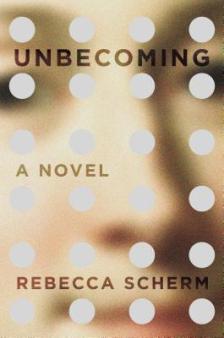
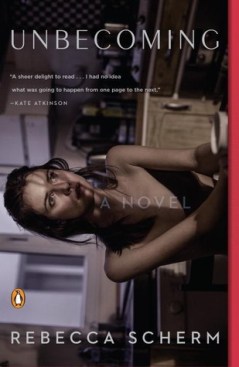 The first book is Unbecoming, a debut novel by Rebecca Scherm. I’m happy that I read it before looking at Goodreads to see what people had to say, because everyone there was comparing it to The Goldfinch, by Donna Tartt, to The Talented Mr. Ripley, by Patricia Highsmith, and (inevitably and inanely) to Gone Girl, by Gillian Flynn. Because I did not see all the comparisons to other authors and styles, I was able to approach it “fresh”; and without all those judgments to hinder me, I was delighted by it.
The book takes place partially in the present day and partially in flashback. A girl named Grace is living in Paris, and although she is from Tennessee, she tells people her name is Julie and that she hails from California, because she is in hiding. She is living a quiet life, working for a small shop that specializes in restorations, and spends her days mending teapots and re-setting gems. But there is a mystery in her past, to do with the boy she married and the boy she loved (two different boys); she has just learned that the two have recently been paroled from prison sentences they served after an art heist gone bad that was planned by Grace but from which she escaped unscathed, and now she’s afraid they’ll be after her.
The evolution of the main character and the degrees of denial and self-knowledge, combined with the plots and plans, the failed heist, and the anticipation of revenge, all kept me intrigued throughout this novel. Ironically, the only thing that disappointed me a tiny bit was that the Paris setting wasn’t all that distinct—she worked in a shop with a girl from Poland via Amsterdam; she lived in a suburb outside the city with a German landlady; and there was almost no Parisian “feel” to it, not even in the street market scenes, which were more grim than they were picturesque. Also, more of it actually took place in Garland, Tennessee than in Paris. But that’s a small caveat—this was a skilled debut from an author I will revisit should she write more.
 The second book, A Week in Paris, by Rachel Hore, fulfilled every expectation I had for a book that would evoke the feel and ambiance of Paris—the streets, markets, music, cafés, churches, schools, everything. That by itself sets the bar pretty low for a reason to like a novel, but after having read a slew of books that promised me Paris and didn’t deliver, this one was completely satisfying—not only for that reason, however!
Although the two protagonists, mother and daughter, are both English by birth, both of their stories—one beginning in 1937 and the other in 1961—take place in the City of Light. Fay Knox, the daughter, knows little of Kitty Knox’s story, or in fact her own; her childhood before the age of six is a complete blank to her, and her mother doesn’t talk about it, with the excuse that it’s too painful to revisit the time directly after she lost her beloved husband, Eugene.
Two things happen nearly simultaneously that lead Fay to that past: Kitty has what amounts to a nervous breakdown and is hospitalized in an asylum to recuperate; and Fay is hired by an orchestra (she is an accomplished violinist) to play three dates in Paris over the course of a week’s time. When Kitty’s doctor convinces Fay that in these early stages of her depression her mother won’t even notice that she’s gone, Fay takes the job and, while in Paris, connects with an old friend of her mother’s who reveals a surprising and disturbing version of the past that Fay has never heard before.
Both the story and the style of writing reminded me of Kate Morton, particularly evoking her book The Distant Hours. I’m tempted to describe it as Kate Morton “lite,” although I don’t mean that in a negative way; simply that, as detailed as Hore’s book is, it’s simplicity itself when compared to the microscopic descriptiveness of Morton’s works. But the pattern of a mystery from the past intruding itself on the present, and a daughter attempting to solve the puzzle of her mother’s life, are quite similar, and equally well done. I haven’t read anything else of Hore’s, but will definitely seek something out soon.
Either of these books, in fact, would appeal to someone who appreciates a mystery but doesn’t wish to read about murder, victims, police, or the other trappings of a straight-up mystery novel. I guess you could call them “puzzle” books rather than mysteries, but the solution to a secret from the past is integral to their plot lines.
An extra comment: I am always intrigued by what publishers do to sell their books once they make the move from hardcover to paperback. Unbecoming went from a cover that did express its contents, though weirdly turned on its side, to something that looks like a rather obvious young adult novel about a girl who disappears, while the cover of A Week in Paris morphed from a photo that evoked the somewhat somber mood of the story to one that might more accurately portray its contents, but with a typeface choice that gives it a slightly upbeat chick lit feel. Do book art directors ever actually read the books, one wonders?

My year in books
This is the time of year when I look back at all the books I read in the past 365 days, and ponder which were my favorites, which were the best books I read this year, and whether those are one and the same. Goodreads, where I record my reading, conveniently keeps track of statistics for those who set a reading goal, so before I get to the specifics, here are some of mine:
I read 41,346 pages across 113 books.

My shortest book was an e-book-only novella (71 pages) by Sharon Bolton, while my longest was a reread of a Diana Gabaldon book (928 pages) in preparation for the next season of Outlander on TV. The average length of book I read was 365 pages.
The most popular book I read this year was (surprisingly) The Princess Bride, by William Goldman (which I read for high school book club), while the least popular (though one of the most useful to me) was the “textbook” (Reading Still Matters, by Catherine Sheldrick Ross) that I assigned to my readers’ advisory students in the masters program at UCLA. And the highest rated book that I read, according to Goodreads, was The Empty Grave, a young adult horror novel that is the final chapter of the Lockwood & Co. books by Jonathan Stroud, a wonderfully entertaining series for 8th grade and up.
 One of my favorite books of the year, but not one I would consider a “best book,” would be Thick as Thieves, by Megan Whalen Turner. It was a favorite for a couple of reasons: It was a long-anticipated fifth in her beloved Queen’s Thief series (beloved by me, though apparently unknown to far too many people); and it had her typical intricate yet understated plotting and humor that made me appreciate it throughout and also at the end. But for most people, it would probably be far too subtle to consider as a “best book,” and it needs to be viewed within its setting as part of a series to give the full effect. If you are, however, looking for a good and also untypical fantasy immersion to start off your year of reading, pick up The Thief (the first book) and savor the story through The Queen of Attolia, The King of Attolia, A Conspiracy of Kings, and finally, Thick as Thieves. It’s one of those series that gets exponentially better as it goes along.
A couple of young adult books that particularly caught my attention in 2018 were the fantasy Tess of the Road, by Rachel Hartman, and the start of a sci fi series, Defy the Stars, by Claudia Gray.
 Tess is a slow, compelling, character-driven fantasy, so if you are impatient for breathless action, it may not be for you. But I found the writing, the characters, and the story all to be completely gripping. Tess’s transformation throughout the book was a fabulous coming-of-age story for resentful and impetuous young women everywhere. I identified with her repression by a rigid, religious mother, was dismayed by the ways she tried to disengage from her life, and was delighted by her choices, though some of them seemed idiotic in the moment.
 Defy the Stars was entertaining from start to finish. I loved the characters—Noemi is so idealistic, stern, determined, and committed, but with a squishy interior that occasionally surfaces. Abel is, well, a ROBOT—this is my favorite robot book since the Lije Bailey/Daneel Olivaw pair-up in Isaac Asimov’s old mystery series. As with Daneel, Abel turns out to be so much more, mostly because his creator, Burton Mansfield, gave him enough agency to continue developing on his own. But Noemi is really the catalyst who brings him to his ultimate personhood. What I especially liked about this book is that it gave you a glimpse into possible worlds that could have been colonized from Earth, and how they evolved differently depending on the expectations and ideals of their colonizers. This isn’t just space opera; it also goes into religion, environmentalism, and politics, and is thought-provoking in all areas.
 One of my faves that I would also consider a “best book” was Eleanor Oliphant is Completely Fine, by Gail Honeyman. Her quirky character Eleanor is, in many ways, profoundly broken, and Eleanor’s metamorphosis depends on courage that she wouldn’t have found without making some human connections, but it is not a romantic book, for which I was grateful. Her story is told in a tender, sweet, and humorous way that isn’t manipulative and never descends into mawkishness, that pulls both Eleanor and the reader out of melancholy into hopefulness. I was impressed that this was the author’s debut novel: The language, the characters, and the world in which she places them are smart and engaging, and she writes with confidence. I have always believed re-reading potential is the true test of a good book, and as soon as I finished this one, I wanted to go back and read it again to feel the emotions brought forth in me by the story.
 In the mystery category, I thoroughly enjoyed the reliable offerings from among my list of favorites: Louise Penny, Elly Griffiths, Robert Crais, Cynthia Harrod-Eagles, Sharon Bolton, and Craig Johnson; but the most anticipated and most enjoyed one had to be Lethal White, by Robert Galbraith, aka J. K. Rowling. I was completely enthralled by everything about the book: The initial mystery, of the mentally ill homeless man who has fastened onto the fame of detective Cormoran Strike and touchingly believes that only he can ferret out the truth about something the man witnessed as a child, is just the kind of thing that Cormoran latches onto like a dog with a chew toy and won’t let go until he’s thoroughly decimated it. But then, to have not one but two more cases to solve, both of which go somewhat against the usual principles that Strike and his partner Robin Ellacott consult before taking on a client, boosted up the energy exponentially. I was thrilled that the book picked up right where book #3 (Career of Evil) left off, which was immediately after the wedding ceremony in which Robin married the detestable Matthew Cunliffe. When she returns to work as Cormoran’s partner, he labors to keep their private lives carefully separate, giving the reader a delicious simultaneous sensation of frustration and anticipation as we find out where their personal choices will lead them.
 I have already mentioned, in a recent post, my favorite fantasy of this year, Muse of Nightmares, by Laini Taylor; if you have, in your past, been prejudiced against books because they were given a “young adult” categorization, please let go of that long enough to pick up and read Strange the Dreamer and Muse of Nightmares. You won’t be sorry. I will add to the best fantasy category another, completely different offering: Vengeful, the long-awaited sequel to Vicious by V. E. Schwab.
As usual, being the bibliophile that I am, I managed to find a few new novels based on reading and bookstores to add to my list, including The Bookshop of Yesterdays, by Amy Meyerson, Paris by the Book, by Liam Callanan, and The Lost for Words Bookshop, by Stephanie Butland. I think the last would be my favorite of these.
Please feel free to respond with your comments on any of my favorites, and share your own—if I receive enough responses, I will publish an end-of-the-year book bonanza from readers, full of ideas for January catch-up!
Books beloved by readers
Are you a person who enjoys reading about reading? Who loves it when a book has an author as its character, is set in a bookstore or a library, or involves you in some magical aspect of story? If so, here is an eclectic annotated list for you. Some are written for teens, some appear in sci fi or mystery, and some in general adult fiction, but all are great reads for readers:
 The Telling, by Ursula K. LeGuin
The planet Aka used to be a backward, rural, but culturally rich world. But once it came into contact with the Hainish civilization, abrupt changes were made by its ruling faction to transform it into a technologically advanced model society. Sutty, an official observer from Earth, has been dispatched to see if the disconnect has been too great. She learns of a group of outcasts living in the back country who still believe in the old ways and practice a lost religion called the Telling, and seeks them out, at some personal risk to both herself and them, to discover what this society is missing. (Science Fiction)
 The Book Thief, by Markus Zusak
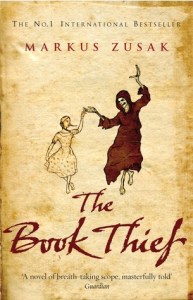
This is the story of foster child Liesel Meminger, who is living just outside of Munich during World War II. Liesel steals books (thus the name) and–once she learns to read–shares them with her stepfather and also with the Jewish man hiding in their basement. The novel is narrated by Death. The language, the imagery, the story, the unusual point of view are all stellar. I’m not sure why this was pigeon-holed as a teen book, because it’s a universally appealing story. (Young Adult Fiction)
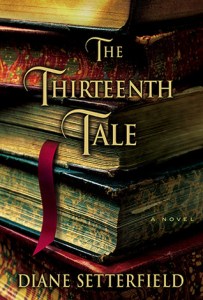
The Thirteenth Tale,
by Diane Satterfield
Biographer Margaret Lea lives above her father’s antiquarian bookshop. One day she receives a letter from one of Britain’s premier novelists. Vida Winter is gravely ill, and wants to tell her life story before it’s too late, and she has selected Margaret to do so. Margaret is puzzled and intrigued (she has never met the author, nor has she read her novels), and agrees to meet with her. Winter finally shares the dark family secrets she has long kept hidden, and Margaret becomes immersed in her story, which is a true gothic tale complete with a madwoman hidden in the attic, illegitimate children, and some ghosts. (Adult Fiction)
 The Book of Lost Things, by John Connelly
David’s mother has died, and the 12-year-old has only the books on his shelf for company. But those books have begun to whisper to him, leading him through a magical gateway to a series of familiar, yet slightly skewed versions of classic fairy tales and aiding him to come to terms with his loss and his new life. (Adult Fiction or sometimes shelved as Young Adult)
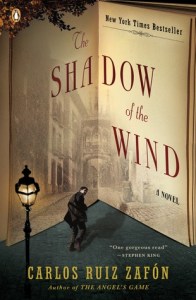
The Shadow of the Wind, by Carlos Ruiz Zafon
Daniel, an antiquarian book dealer’s son in post-Spanish Civil War Barcelona, falls in love with a book, only to discover that someone is systematically destroying all other works by this author. A combination of detective story, fantasy, and gothic horror. (Adult Fiction)

The Eyre Affair,
by Jasper Fforde
In an alternate-history version of London in 1985, Special Operative Thursday Next is tasked by the Special Operations Network with preventing the kidnapping of literary characters from books. When Jane Eyre disappears from the pages of the book by that name, Thursday is determined to prevent the trauma experienced by its fond readers. (If you like this one, there are many more in the series.) (Adult Mystery)

Inkheart (plus sequels Inkspell, Inkdeath),
by Cornelia Funke
Meggie’s father, who repairs and binds books for a living, has an unusual gift that became a curse in their lives: He can “read” characters out of books. But when he is reading a book to young Meggie, some characters escape into their world and her mother gets sucked into the story! Now it’s time for Mo and Meggie to change the course of that story, send the book’s evil ruler back into his book and maybe retrieve the person dear to them both…. (Children’s Fiction)
 Not as directly reader-related, but with twisted versions of fairy tales interspersed throughout its exciting contents is Cornelia Funke’s “Mirrorworld” series that starts with the book Reckless. Again, this series was billed and sold as a series for children and teens, but it’s really a powerful and sophisticated fantasy about an alternate world that will appeal to all ages. There are three books, and more to come, according to Cornelia! (usually shelved as Young Adult Fiction, but…)
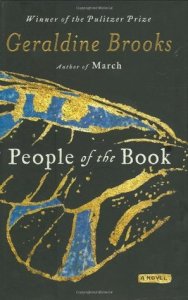
People of the Book, by Geraldine Brooks
The historical saga of how a book–the Sarajevo Haggadah–came to be, and its storied history down through five centuries, written from the point of view of a curmudgeonly rare book conservator. Inspired by a true story, and beautifully written. (Adult Fiction)
Mr. Penumbra’s 24-hour Bookstore, by Robin Sloan
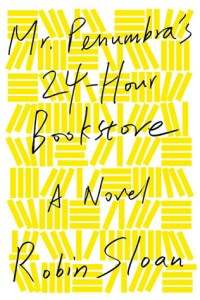
Clay Jannon, a website designer who has lost his job as a result of the dot-com disaster, finds part-time employment on the night shift at Mr. Penumbra’s Bookstore. But soon the strange goings-on at the store have Clay and his friends speculating about how the place stays in business; there are plenty of customers, but none of them ever seems to buy anything, and Clay is forbidden from opening any of the dusty manuscripts they periodically arrive to peruse. But when he gets bored and curious… (Adult Fiction)
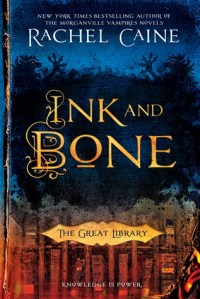
Ink and Bone,
by Rachel Caine
This series is set in an alternate world, in which the Great Library at Alexandria never burned down. Centuries later, having achieved a status not unlike the Vatican in contemporary life, the Great Library and its rulers control the flow of knowledge to the masses. Paradoxically, although anyone can order up any of the greatest works of history from the library (via alchemy), personal ownership of books is forbidden. Jess Brightwell’s family are black market book dealers, but Jess decides he wants to play it straight by entering the service of the Library. Or does he? The sequels are Paper and Fire, and Ash and Quill. (Young Adult Fiction)
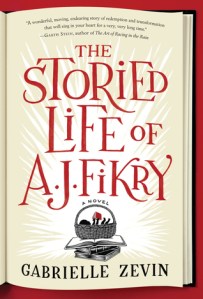
The Storied Life of A. J. Fikry, by Gabrielle Zevin
Fikry, the owner of Island Books on Alice Island (think Martha’s Vineyard) is in a bad way: His beloved wife has just died, sales are dismal, and someone has just stolen his rare edition of an Edgar Allen Poe poem. But then an unexpected discovery—an important “package” abandoned in his bookstore—changes his perspective on everything. (Adult Fiction)
There are probably dozens more books about books, reading, and writing; when I discover them, I’ll share!
 The Book Adept