Calamities
Calamity is somehow such an East Coast word, isn’t it? and specifically more of a Southern one. I mean yeah, its word origin traces back to Middle French and, before that, Latin, but it’s not a word that you hear frequently in conversation in, for instance, California or the Pacific Northwest. We’d be more likely to call it a disaster or a catastrophe or a tragedy, I think. But when I saw the title The Calamity Club on the cover of Kathryn Stockett’s new book, I immediately thought Deep South. And sure enough, the setting is Oxford, Mississippi, about as Deep South as you can get, and it takes place in 1933, in the depths of the Depression, too.
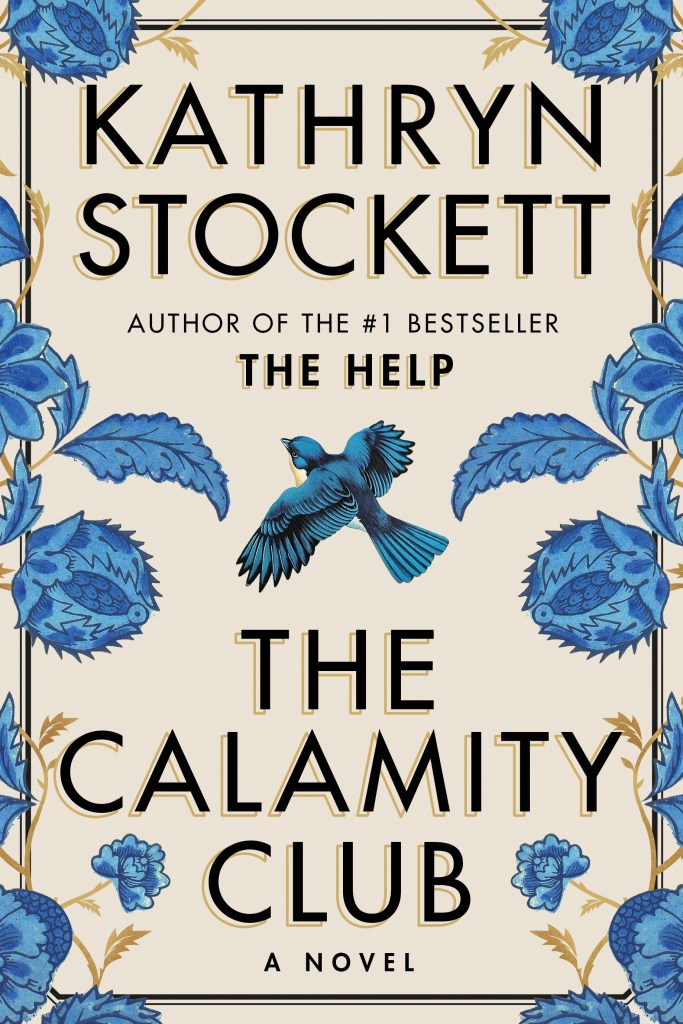
There are many forms of calamity to be found in this book, large and small: Eugenics, racial inequities, misogyny, abuse, abject poverty, alcoholism, suicide, infidelity, betrayal, crushing back taxes, and pure-dee meanness, as my Okie dad would have characterized it. But despite all that, the book somehow manages to convey both a hopeful tone and a sense of humor that lift it out of the dark despair of reading, say, Demon Copperhead, The Goldfinch, or The Poisonwood Bible. Out of that trio I finished the first two but not the third, and to make it through Demon Copperhead I had to read it in three chunks, interspersing it with lighter, more positive books in between. But I remained both engrossed in and entranced by The Calamity Club throughout, and looked forward to each day’s chapters.
Much of that is due to its passionate, intense, and brilliantly realized characters. Although one could argue that there is an ensemble cast many of whom hold equal weight, the two main protagonists who stand out are Meg, an 11-year-old girl abandoned at age nine and currently a resident at the Oxford orphan asylum, and Birdie, a young spinster recently come to Oxford to borrow money from her self-involved sister’s wealthy husband to save her mamma and meemaw (grandmother) from losing their home.
Although Meg is bright and engaging, her spirit is systematically being crushed by the inexplicable hostility expressed towards her by the director of the orphanage. After two years, she is slowly letting go of her initial hope that her mother will return for her and realizing that, as one of the “big girls,” she also has little hope of being adopted.
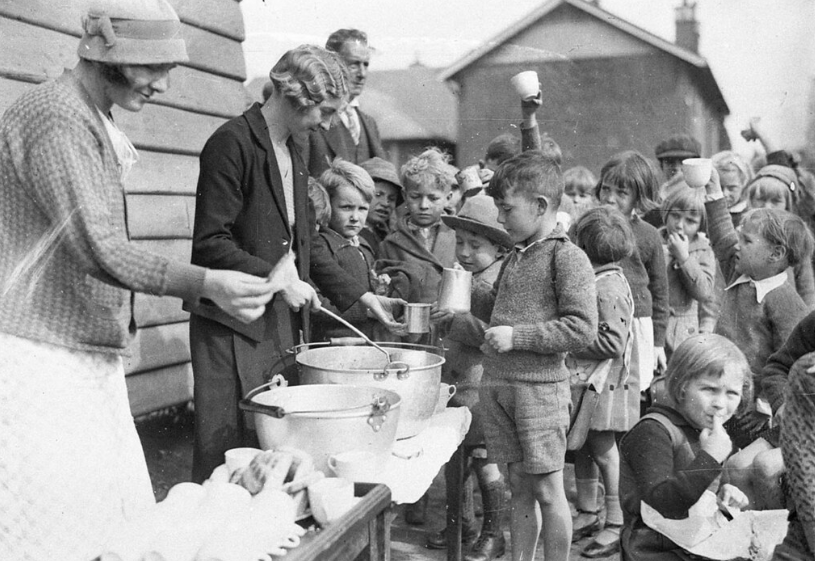
Birdie and Meg cross paths when Birdie accompanies her sister to the orphanage where Frances does volunteer work, and the director persuades her to put the books in order (she’s a bookkeeper) before the next inspection of the facility. Birdie is appalled and later haunted by Meg’s circumstances, while Meg finds a kindred soul and an unexpected source of support in Birdie. This short-term encounter is the scaffolding on which several of the later plot points are built.
The story has many turns and many themes, provided by the circumstances and issues of these and other characters in the context of the Great Depression. The story features both extraordinary acts of kindness and shocking inhumanity as it explores its various calamities, some inherent to the prejudices and inequities of the day and others rising from the empathy or callousness of the people involved.
There were a few moments when I felt like Stockett dwelt too long on a story thread while I grew impatient to find out what happened next but, apart from wishing for a tiny bit more editing, I found this book to be pretty flawless. There was never a moment when I grew weary of the story—I kept on wanting to know what happened to the very end, which in some ways came too soon. Although telescoping information in a kind of wrap-up allows the reader to extrapolate the likely fate of every one of the characters, there isn’t a detailed or tidy resolution for this cast. But perhaps leaving those to the imagination are part of the brilliance of this book.
The Orchard
I have been quite baffled by the last few books I have read by Peter Heller. His earlier books had a plot, an arc, and a conclusion, if not the perfect resolution, and then I ran up against two or three that just seemed to…stop. They felt unfinished—they seemed confusing as to his intentions in writing them, and I was disappointed, because he is so gifted in his ability to capture the beauty of the natural world through his characters’ eyes that I will read nearly anything he writes, but…finally, in The Orchard, there is a cohesive story with a beginning, a middle, and an ending, even if they are slight and still take second place to his descriptive passages.
The book is a coming-of-age story told from the viewpoint of Frith, now in her 30s but looking back on her life from about age 12 onward. Her mother, Hayley, a renowed translator of the work of poets from the Tang Dynasty, walks away from her heroin-addicted husband and her career at a Denver university to set up house in a rustic cabin in the quiet hills of the Green Mountains of Vermont to raise her child. She and Frith move there when Frith is seven, and live a life that is both idyllic and hand-to-mouth, making a perilous living from selling the apples from their orchard and the syrup made from the maple trees they tap each year while thoroughly immersing themselves in the pleasure of vanishing into the pines.
The book is a combination of in-the-moment narrative with reminiscence, and is punctuated by some of the simple but transcendentally beautiful poems of Li Xue, translated by Hayley, as well as some poems that may have been Hayley’s own.
Hayley and Frith’s story starts out slowly, but builds to a deeply emotional climax. It’s all about the love of family, the joy of friendship, the experience of doing work that is fulfilling, and the quiet and perceptive appreciation of the natural world. This is not a book like some of Heller’s that are action-packed adventures with a bucolic setting; rather, it is a heartfelt exploration of humanity.
There were many slightly disappointed reviews of this book on Goodreads as being too simple, too slow-paced, not based in reality. It’s hard, sometimes, when you have come to expect a certain thing from an author, to receive something else; but Heller is almost always surprising, and I felt this one accomplished what was intended in a way that was both relatable and evocative.
Burn(ed)
Once again I have to ask: Peter Heller, where are you going with this?
I picked up his book Burn from the library early in the week and once I started reading it I couldn’t put it down. I’m having some trouble right now with excessive edema in my legs, so sitting up for periods longer than the half hour I usually dedicate to eating a meal can be problematic in terms of extra swell and knee pain. I kept turning the pages on this one for another half hour or more in every instance, because I so wanted to know what came next. But I never found out…despite finishing the book.
Jess and Storey have been friends since childhood, growing up as close-by neighbors in rural Vermont. They still meet up every year (Jess having moved to Colorado) for a few weeks of hiking, camping, and hunting in various wilderness areas of the upper northern states; this year, they chose moose hunting in the middle of Maine. Jess is particularly glad of this year’s trip; his wife left him and he needs the distraction and the away time with his friend.
There has been a lot of rash talk on the news from secessionist groups in Maine and a few surrounding states about leaving the union, but the guys figure this is something that will work itself out in the courts. That’s until they emerge from their vacation off the grid to replenish their provisions and buy a tank of gas, only to discover that the town they chose to visit has been decimated. Unlike when a wildfire passes through, leaving some houses partially or wholly standing amongst the devastation, the force behind this act was concentrated and deliberate; although a few outhouses and sheds remain, every single house in the town is burnt down to its foundations. The implied savagery is bewildering and disturbing.
The strangest part of it is there are few bodies—they have discovered just four out of a population of more than 2700—and no live people left in the town, but for some reason all the boats docked by the nearby lake are pristine and untouched. There is no cell phone reception, no radio reception, nothing to tell them what happened here, but it’s plain that the talk of secession has escalated into a real and frightening battle. They have no idea who is “winning”—secessionists or U.S. military (or could Canada be involved?)—or how far the devastation stretches, so they decide to figure out a route to get back home (Storey has a wife and two daughters in Vermont), scavenging food from the lockers in the boats, camping under cover in the woods, and dodging human contact after they discover that the new world order is to shoot first and ask no questions. Then something happens that interferes with this plan and changes their whole trajectory.
Up to this point, I was breathless with the need to keep reading. But then the book goes off into a lot of flashbacks into Jess’s teen years and, while interesting, it didn’t further the story at all. It also seemed strangely inappropriate that he would be sitting around reminiscing about this in the midst of the disconnect the two friends are experiencing from the present-day world.
I should also add that the book, as is usual with Heller’s writing, is a poetic and passionate ode to both nature and human emotion, which I always appreciate. I was enthralled by both the possibilities and the story-telling; I kept waiting for progress, for some kind of reveal, but we just kept circling around the same information—we don’t know what’s happening or who we can trust, we don’t know what to do about it, we need to go home. After the event that changes their focus, the story was still compelling until I turned a page after a particularly dramatic scene to discover that it was the last page. What?!
I honestly don’t know what Heller is doing. I do understand some of the statements he was attempting to make—the pondering over human nature and friendship, the disbelief and dismay at the violent divisions over things that seem small but accumulate into a reason for war, but…I want to know how it ends! This is the second of his books that has simply stopped in what I would consider mid-story with no resolution. It is a beautifully written story, but…what happens? Will there be a sequel? Or is that it? As someone similarly frustrated said on Goodreads, Gripping? yes. Satisfying? no.
I don’t know whether to say to read it anyway for what it does offer, or to be outraged by what has been omitted. It was too good to call it a waste of time, but…I’d love to know other reactions to its abrupt full stop.
A Heller of a book, until…
Peter Heller has written a couple of books that are favorites. The top one is (predictably) The Painter, and I loved The Dog Stars. I can also say that I tremendously enjoyed The River, The Guide, and Celine. So choosing to read his latest was predictable for me. It started strong, and parts of it remained strong, but…
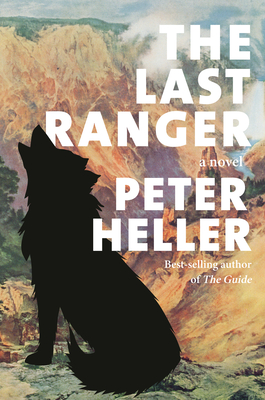
Yeah, there’s that dot-dot-dot. Heller’s writing about nature in The Last Ranger was as beautiful and lyrical as ever. He creates a sense of awe and wonder that is contagious—even if it is his protagonist who is expressing these feelings, they gradually seep into your own consciousness as if you are experiencing that environment and the engendered response firsthand. I could never find fault with that aspect of his writing.
I also liked the characters he created for this book, and enjoyed absorbing knowledge from them about how the various people in and around Yellowstone spend their days. The protagonist, Ren, is a park ranger for whom the reward of living a solitary, blissed-out life in the midst of nature must be balanced by preventing parents from taking photos of their adorable three-year-old cozying up to a baby moose while its mama is ready to kill everyone within charging distance. He breaks up traffic jams caused by too many tourists trying to photograph something-or-other by the side of the road, he prevents the wildlife from being shot by “individualists” with no respect for the boundaries of the park or the laws of the land, and everything in between those extremes. His life is sort of predictable and sometimes irritating, but ever-changing and therefore not boring.
Ren’s best friend is Hilly, a biologist who finds herself up against both man and nature when advocating to protect the wolves of Yellowstone. There are a host of other characters, both local and transient, whose descriptions and actions are meaningful and/or entertaining even when the scene or description is fleeting. That is the power of Heller’s writing.
This time, however, the big lack is in the plotting and especially the resolution of the “mystery.” As the story develops, the focus centers on the brazen actions of a local poacher and then transitions towards the end to the discovery of a large semi-secret group of wealthy men who are at odds with the goals of a national park and are inciting rebellion amongst suggestible locals. But there are so many segues from these threads into a sort of “day in the life of” narrative about both Ren and Hilly, so many outtakes about fistfights between tourists, and ignorant sightseers putting themselves and others in jeopardy, and an unexpected and exceedingly awkward romance that the story line gets lost. And just when you think it’s going to resolve itself in the last 100 pages, you get some directional hints, you get a few minor questions answered, but everything else is simply left hanging.
I’d say there’s a sequel coming, but Heller hardly ever writes sequels, let alone initiates a series, and has not indicated one here. Given that, I feel like as readers we are owed the resolution to at least three plot threads, and no amount of euphonious language has made up for that in The Last Ranger. Disappointing.
A pirate and a serial killer
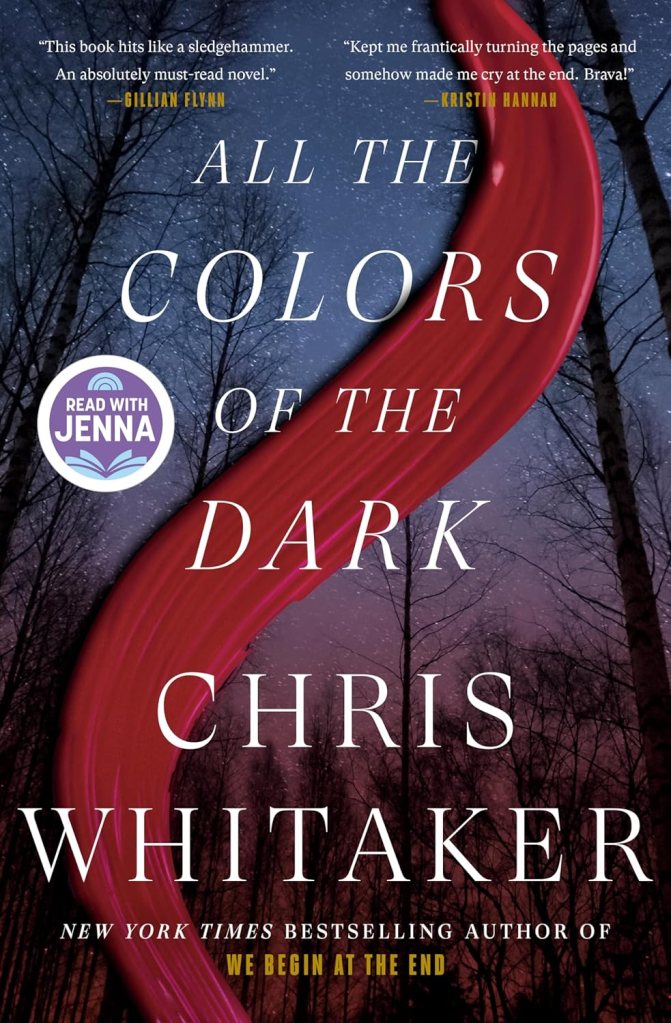
All the Colors of the Dark has been widely touted on all the Facebook readers’ pages I frequent, yet never really explained. The title alone made me curious, so I put it on the holds list at the library and waited a very long time for it.
When I started it, I was immediately filled with a sense of dejá vu; it reminded me forcefully of another dark, complex book I had read a few years back, but I couldn’t remember the name. I looked on Goodreads because I knew I had listed that book in my “coming of age” section, and then laughed; it was by the same author, Chris Whitaker, whose novel We Begin at the End bowled me over when I read it four years back.
I looked up my review of that book, and was not surprised to see that my description would pretty much do for both books:
“It is the saga of multiple people caught up despite themselves in various forms of tragedy they are mostly unable to avert.”
There are other similarities: The main characters begin as young teens with absent or derelict parents; they live in a small town and are outliers in their peer group; and they have an odd array of adults who try to look out for them but are mostly no match for what’s coming to them.
There are two characters around which the story revolves. The first is Joseph “Patch” Macauley, a boy born with one eye. His mother tried, in his younger years, to ameliorate this by sewing him a series of eye patches and buccaneer vests to let him play the pirate, but that may have made him even more of an outcast. The second is his best friend, Saint, a girl raised by her grandmother to be uniquely herself. In a small Missouri town where 13-year-old girls are mostly yearning to dress up, wear makeup, and start going on dates, Saint is more inclined to wearing overalls and keeping bees. The two are pretty much inseparable, each for their own reasons. Saint loves Patch and also wants to help him; Patch believes that Saint’s primary emotion for him is pity, because she invites him to dinner as often as she can, knowing that his mother can’t seem to hold down a job or keep the electricity on and the refrigerator stocked.
There is a girl at their school named Misty, a girl so far out of Patch’s league that even to speak to her might be considered sacrilege by her crowd of friends, a rich girl, a beautiful girl, a girl who takes life lightly—until the day she is kidnapped. Patch becomes her unexpected rescuer, and this act is like the butterfly that causes the tornado, enveloping everyone in his vicinity in chaos.
This book, like the other, is a complex interweaving of mystery, thriller, love story, and coming of age—or perhaps not that, but coming into one’s own. It’s about friendship, love, obsession, degradation, inspiration, hope. As with the first book of Whitaker’s, I don’t want to say too much more about the plot, partly because it’s too complicated to describe, but mostly because when you read it you need to do so without knowing what’s going to happen.
The thing that makes me know this is a great book is that it has some flaws that I would normally have been critical (or even scathing) about in a review. It’s far too long; at one point I thought I must be at least three quarters done, but looked at my Kindle gauge and discovered I was only 52 percent in. It has vastly unbelievable details and plot twists that, again, in another book I might have scoffed at. And he does what I dismissed in my review of the book Things You Save in a Fire as unforgiveable: He writes what feels like the end, but there are five more chapters, each of which also feels like the end until you finally get to the end. I usually hate that, but here I wanted so much to know what happened in every circumstance that I was grateful to turn a page and find more book behind it.
It’s not an easy book to read, for many reasons. There is a lot of tragedy and, just when you feel like you have encountered the worst, there’s more. But it’s also a book full of unexpected lightness and even humor, and if you are a fan of beautiful language and imagery, you will be captivated.
I won’t say it’s not a challenging read; but for me it was all-enveloping and, in the end, vastly satisfying. I will think about it for a long time.
My Year in Books 2025
I managed to read quite a few more books this year than last (95 to 2024’s 66), but I don’t know that I realized much advantage from doing so, beyond just clocking the reading time. My stats, according to Goodreads, were:
95 books
28,425 pages read
Average book length: 346 pages (longest book 908 pages!)

Although I discovered some enjoyable reads, there wasn’t one single book that truly bowled me over or made me immediately check out another book by that author or settle in to read a lengthy series. And most of the books I did like were the lightweight ones that I ended up reading as a sort of relief between the tougher titles. Here’s a list:
The Lost Ticket, by Freya Sampson
The Busybody Book Club, also by Freya Sampson
Vera Wong’s Guide to Snooping (On a Dead Man),
by Jesse Q. Sutanto
Finlay Donovan Digs Her Own Grave, by Elle Cosimano
My favorite science fiction book was The Road to Roswell, by Connie Willis.
My new discovery in YA fantasy, with an intriguing Egyptian-like setting, was His Face is the Sun, by Michelle Jabes Corpora. I look forward to the sequel(s).
I read a few books that were award-winners, or by well-known literary authors, or touted by other readers as amazing reads, but found most of them problematic in some way, and therefore didn’t feel wholeheartedly pleased to have read them. They were:
James, by Percival Everett
The Seven Husbands of Evelyn Hugo, by Taylor Jenkins Reid
Horse, by Geraldine Brooks
The Mare, by Mary Gaitskill
Horse Heaven, by Jane Smiley
Three Days in June, by Anne Tyler
Gentlemen and Players, by Joanne Harris
These have all been reviewed on this blog, so do a search for the title or the author if you want the specifics. None of them received a thumbs-down, but none of them lit up my imagination either.
The most disappointing part of the reading year was the letdown I felt each time I finished the next book in a bestselling series I had previously enjoyed. I read two books by Michael Connelly—The Waiting, and Nightshade—and had a “meh” reaction to both. The Grey Wolf, by Louise Penny, didn’t deliver the characteristic Gamache love, and was filled with tangents and extraneous story lines. Perhaps the least successful (for me, at least) was The Hallmarked Man, by “Robert Gabraith,” aka J. K. Rowling, which was so endlessly convoluted that I felt the need to reread it—but so long, wordy, and unsatisfying that I didn’t! I’m really hoping these authors rally in the new year, but it’s more of a “fingers crossed” than an actual expectation.
Honestly, my best and most sustained reading took place when I got fed up enough to revisit beloved books from decades past by such authors as Rumer Godden, Georgette Heyer, and Charlaine Harris.
Today I am starting on 2026, two days ahead of schedule! Onward, readers!
Through-story
I ran out of time and out of steam before completing Jane Smiley’s Horse Heaven this week, and didn’t make it to the finish line. To tell the truth, I lost impetus before the library due date arrived, and switched to another book.

It’s not that I disliked Horse Heaven; in fact, the stories, characters, and language are actually quite wonderful. But that’s what it seems like—not a novel, but a series of short stories, strung together because they are all about the same subject—horses and all the people who surround them (owners, trainers, jockeys, etc.) in the racing business. And while I love horses and stories about them, I have never been a short story person. Short stories are, to me, like all the worst parts of starting to read a new book, with none of the payoff of getting to enjoy it once I’m invested.
As I kept going, the anecdotes and vignettes were beginning to add up, and I had hopes they would eventually converge into something, but it was taking a long time. I liked the picture she was painting, but a “through story” never developed, so the book didn’t drag me along in the way a novel would, making me want to know what would happen next.
While “through-story” isn’t a concept commonly used in readers’ advisory when we talk about appeals, maybe it should be. Without it, a compelling quality of story—momentum—is missing, and without momentum some readers have trouble getting to the end of a book. Even those of us who revel in language, character development, and world-building can have trouble with a book essentially lacking a plot—that ordered sequence of events that includes exposition, conflict, rising action, climax, falling action, and resolution. While a plot may exist in Horse Heaven, its presence is so diffuse as to be indiscernible (at least to me).
After reading it for at least an hour a day for about a week, I received an email notice from the library that my book would be due in three days. I felt sure I was getting close to the end, or at least the three-quarter mark, and could beat my deadline, but when I checked the page count on my Kindle I discovered that I was at page 267 out of 543! At that point I decided to go read something (shorter) with a beginning, middle, and end that is all of a piece. I’ll come back to Horse Heaven someday when I’m in a different mood.
Harking back
After I finished the latest Vera Wong, I decided to reread yet another of Rumer Godden’s books. I recently described the plot of In This House of Brede to my cousin, and it made me want to experience it again for myself after so long. It was kind of a masterpiece of its day, although it’s a weird book for an atheist/agnostic like me to enjoy so much, considering that it’s about the life of a cloistered nun and her abbey; but I have a soft spot for it because it was my introduction to her writing.

I remembered finding it on my parents’ bookshelves, which is equally strange, because as fundamentalists, they didn’t even consider Catholics to be Christian. But I finally figured it out: My parents loved to read but weren’t good about going to the library and also didn’t frequent the bookstore. My mom did, however, have a subscription (de rigueur back in the 1960s and ’70s) to Reader’s Digest Condensed Books. During the long, sometimes boring summers of my youth (I was an only child in a neighborhood with no other kids my age), I would lie on the floor of my dad’s study and devour all the stories contained therein, and that was how I happened upon this book. (I was amazed, in later years, to pick up and read the uncut versions of some of those books and realize all that I had missed!)
The book begins with the protagonist’s life-changing decision to give up her exceedingly busy and successful life to try to become a cloistered Benedictine nun. Philippa Talbot is 42, a widow who has made a great success in a government position in finance in the days after World War II when she would have been the only woman in the room who was not taking dictation. The story begins with her leaving her job on her last day—handing out her treasured possessions to some of the people who worked for her, entrusting her cat to her beloved housekeeper of many years, and getting on a train, with one small carry-on bag, to travel to the 120-year-old abbey in Sussex in the south of England. Should she successfully stick out her years there as a postulant and a novice, receive her preliminary clothing, and take her final orders, she would become a permanent fixture for life at Brede Abbey.
The humanity of each of the characters strikes you from the first page. The interaction between Mrs. Talbot and the young secretary from the typing pool; her detour, once she gets off the train, to the nearest pub for a last whiskey (or three) and a farewell cigarette; and her admission through the door into the enclosure, surrounded by the entire community (90-some nuns) in their wimples and habits, is vivid and engaging.
The story remains so throughout. It is a neat balance; it depicts life within the walls of the abbey—the structure of ceremony and ritual, the customs, the traditions, the pageantry—but it also focuses in on each of the characters, describing the tests, the deprivations, the stumbling blocks, and also the joys as they struggle to live with purpose, outside of the mundane world of competition and financial success. The nuns and other characters are beautifully drawn, both individually and in their complex interactions with one another. The back stories are not dictated in a straightforward way, but are instead dropped here and there between the recounting of the current day-to-day life of the cloister, giving the entire book a freshness and cohesion despite the rapid switches in time and perspective.

It is an earnest look at the examined life of a community formed by diverse personalities who share a world view, but it is also a gorgeous, colorful kaleidoscope in its descriptions of the minute details of living in this world with its sights, sounds, thoughts, and feelings. The sacred and the mundane are present in equal measure, as are Godden’s luminous observations of the natural world and the beauty to be found in a cherry tree against the sky, a soaring lark, a stone statue, or the transcendent face of a soloist whose voice rises to the rafters in devotion.
It may not sound like your cup of tea, but you never know; it certainly gave me a few totally absorbed afternoons, and this was for the third time!
The Mare (the girl)
Having read Horse, by Geraldine Brooks, a few months back, when someone recommended the book The Mare, by Mary Gaitskill, I was primed to read it, especially because the teenage main character was named Velvet, immediately transporting me back to the joy of reading National Velvet in my childhood. And, similar to that book, this story was about a disadvantaged child whose encounter with horses changes things for her, although the child in this one is a much more extreme example. I didn’t grow up in a financial or social environment that would indicate the need for escape, but I was an introverted, solitary child who longed for the connection with horses in lieu of any relationship with people, so books like this spoke to me, and still do.
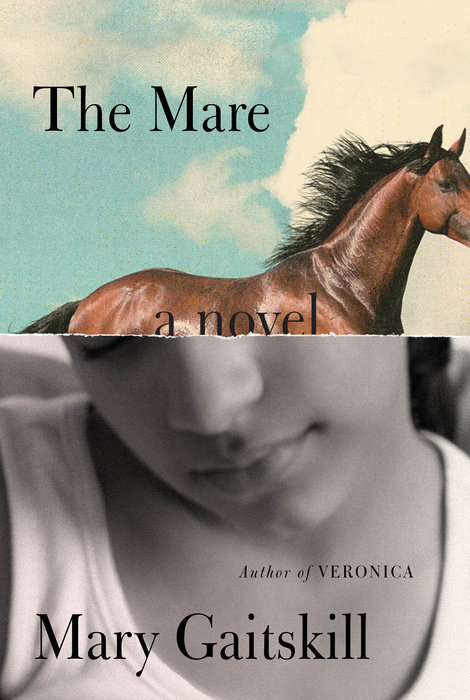
Velvet (short for Velveteen) Vargas is the daughter of a single mother, Sylvia, an immigrant from the Dominican Republic. They, along with Velvet’s little brother, Dante, live in Crown Heights (an inner city section of Brooklyn), and it is a limited, hand-to-mouth existence. Sylvia is hard and bad-tempered, shaped by the fearful responsi-bilities she has been forced to take on from a young age, and she is alternately loving, manipulative, and abusive with her children. The effect on Velvet’s sense of self, in particular, is both negative and confusing, and Velvet is a troubled, conflicted child.
Through Velvet’s school, they find out about the Fresh Air Fund; although the actual organization apparently sends children to six-week summer camps so they can have outdoor experiences and take leadership workshops, the program in this book pairs up inner-city children with more well-to-do host families from the country, with whom they spend a couple of weeks’ holiday. Both Dante and Velvet participate, although we never hear any more about Dante’s experience after he is put on a bus at Penn Station that first summer.
Velvet, age 11, is matched with Ginger and Paul, from rural upstate New York. Ginger is a painter, although she has been blocked for a long time; she is also a recovering alcoholic. Paul is a teacher, and met Ginger at an AA meeting. They have been together for some time without having children, and Ginger longs for some kind of connection; they initially sign up to host because Ginger wants to experience what it might be like to adopt an older child. (Paul has a daughter from a former marriage and is lukewarm, at best, about this.)
Ginger and Paul live near a horse stable, and it is the incentive of being able to ride horses that most appeals to Velvet about the experience. The book carries its characters through several years, as Velvet transitions from child to teenager while paying sporadic weekend and holiday visits to the couple’s home, and is told through the primary viewpoints of Velvet and Ginger, with a few scattered chapters giving added perspective from Paul and Sylvia.
The surface story is a coming-of-age saga, but the underlying context is the stark contrasts inherent in race and socioeconomic class. The switch between Velvet’s world and Ginger’s holds up the realities of inequality in our country by showcasing minority poverty and its relationship to white liberal guilt and its accompanying savior complex.
My reaction to the first part of the book was positive; it’s written in a rather quirky style that appealed to me because it was so internal. Conversations are had, but they don’t exist as present-tense dialogue; rather, each person is narrating from her sole point of view, and relating the conversations second-hand as she perceives them. It makes for an experience that is simultaneously cerebral and intimate.
The path of the story is choppy; sometimes we get to see the same scene and actions as experienced by Velvet and then again by Ginger, but at others we see things only from the one point of view and then the timeline is continued by the other, as when Velvet narrates her day at the barn and Ginger takes up the story when Velvet returns to the house and Ginger tries to get an account of the day’s events out of a recalcitrant and somewhat inarticulate teenager. Everything about the story is filtered through one or the other psyche (with the exception of the few short chapters related by Paul or Silvia), so there isn’t really a factual feel about it, since both viewpoints are opinion colored by personality and emotion.
Where the book started to break down for me was when Velvet (at home in Brooklyn) started paying attention to boys, and one boy, Dominic, in particular, and her attention is riveted on him to the exclusion of her own family, her host family, and the horses. Although it was probably a natural development in the life of a young girl from this neighborhood and, more widely, that of a pubescent girl from any neighborhood, it was a disappointing distraction from Velvet’s previous one-track focus on her almost mystical relationship with the horses and with one mare in particular.
The mare was a problem horse from whom everyone was warned off, as she was both unpredictable and occasionally vicious, but Velvet felt a kinship with the horse that developed, over the course of several years, into something so compelling that to draw the attention away from that to a helpless crush on an older boy who doesn’t really want her was disappointing. (Some of the best writing in the book is when Velvet is trying to articulate the feelings and internal dialogue between herself and the horses and how those translate into action.)
I also have to say that although I don’t mind stories that are more character- than plot-driven, I truly loathe ones that are open-ended, and when I got to the last page of this book I had a momentary flare of irritation that I had spent so much time persevering to finish reading it. In retrospect I don’t exactly regret it, but I really wish there had been a more definitive story arc with an end as engaging as its beginning.
Malbrey #2
I had no real intention, after finishing Gentlemen and Players, of continuing to read the Malbrey series (or at least not now), but the sequel was available at the library while everything else in which I was interested was wait-listed, and I did kinda want to know what happened next and to whom, so…I checked it out.
I almost quit reading Different Class about 30 percent in because, in the flashback portion of the story, one of the little sociopathic boarding school boys tortures a mouse, and I really don’t need to be reading about that right now.

But…I kept going. And it was for one specific reason, which was that I haven’t recently encountered another author whose use of metaphor and language spoke to me like Joanne Harris’s does.
One example was when a new teacher joins the staff and the protagonist (Classics Master Roy Straitley, still) notes that he’s a “Suit,” and basically falls into line in every respect with Dr. Devine, his mentor on the staff. Straitley remarks that the new teacher is “a bonsai version of himself,” the most vividly literary way ever to say that Dr. Devine has a “mini-me.” I love a literary phrase that also makes me laugh out loud and picture Mike Myers in a bald cap and a white suit.
Another is when Straitley is reflecting about the new school Head, who has turned out to be one of Roy’s troubled students from 20-some years ago, and ruminates, “”He’s the one releasing the ghosts, like a child with a magic lamp that, instead of casting light, releases nothing but darkness…”
Then I hit the 50 percent mark and decided that, after all, literary language could only make up for so much. The animal torturer moved on to multiple and then increasingly more horrifying subjects to satisfy his “condition,” as he calls it, and yeah, it turns out that I’m one of those bleeding hearts who can cheerfully regard the murder of a fellow human being when it furthers the mystery, but draws the line at killing off the dog (or pulling the wings off of flies, for that matter). Basically, the balance shifted and I cared less about literary expression and more about not putting any more nightmarish visions into my long-term memory. So Joanne Harris will have to find another reader, because although this guy will probably get his in the end, I can’t bear to read through all the things he did to deserve it. On to less disturbing material…
 The Book Adept