Nearly
I followed through on my intention to read more young adult books by Elle Cosimano, by checking out her duology about Nearly Boswell. Yes, that’s her name, although she makes her friends call her Leigh, because she thinks a name like Nearly makes her stick out too much. Nearly is a girl who likes to operate below the radar for a variety of reasons, the primary one being that she has a special “gift” (or curse): If she touches someone, skin on skin, she can feel their emotions, and can usually tell whether they are lying or being truthful. Although this sounds useful, functionally it can be overwhelming, giving her a bunch of information she doesn’t really want to know. Other reasons include that she lives in a run-down trailer park with a mom who makes her living as an exotic dancer, and Nearly doesn’t want to give anyone more reasons for verbal target practice at her expense.
Nearly’s father left them five years ago, and (a pivotal plot point) Nearly reads the personal ads daily, searching for a message from him (since he communicated with her in that way once before). But what crops up instead are a bunch of weirdly worded clues that end up being the precursors to murder—all of people somehow associated with her life. Now she’s in a race to interpret or solve the clues to try to beat the murderer to the next victim, assisted by Reece, a new love interest who may not be someone she should trust.
This mystery is solved in the first book, but events begin to repeat themselves in book #2, as Nearly navigates her way through an internship at the town crime lab (although the clues appear as chemistry formulas rather than as personal ads) in a weirdly familiar way that just can’t be happening, given that the person most likely to be tormenting her is now locked away in prison. It also doesn’t help that Reece is working as an informant for the police and is involved with another girl as part of his undercover personna. When a skeleton is exhumed from the local golf course, Nearly has to wonder: Could it be her con man father buried there? or is it someone he murdered?
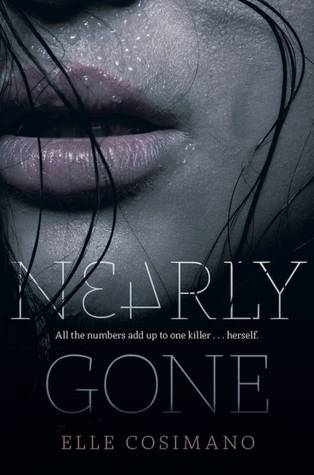
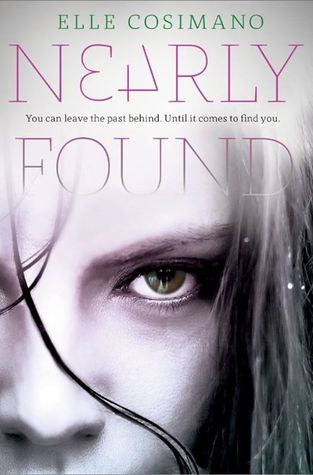
These are suspenseful reads, a little dark, and rather brilliantly plotted. Teens who enjoy the Naturals series by Jennifer Lynn Barnes would probably love them. The books are Nearly Gone, and Nearly Found.
Robert Crais
I’ve been busy these past couple of weeks, starting a new quarter teaching at UCLA and also doing some Zoom classes on contour drawing for LAPL, and the mood has dictated that I don’t need to be reading stuff that challenges me, so I’ve been revisiting some books from the past (as evidenced from my last review). This week I went for mystery writer Robert Crais.
Crais has a series starring Elvis Cole, a private investigator in Los Angeles, and his buddy and business partner Joe Pike. Elvis is a deceptively happy-go-lucky, casual guy in a Hawaiian shirt, with a smart-alecky manner and a keen sense of how to cut through the extraneous to solve a missing persons case or whatever else his clients bring to his door. Joe Pike epitomizes the strong silent type, has all kinds of commando training and slinky stealth operations in his past, and retains unexpected clearance levels with the Department of Defense, considering that he was hounded off the police force in Los Angeles once upon a time. Given his splendid physique, the arrows tattooed on his biceps, and the smoldering look in his eye, not many people are willing (or able) to mess with Pike.
Crais has now written 19 books shared by these two partners (with the emphasis on Elvis Cole), plus a further seven featuring Pike as the lead. This series, like any other long-running one based on the same people in the same city, has had its ups and downs, but I generally enjoy anything Crais writes. An added bonus is the books’ Los Angeles setting, since I am familiar with most of the locales and landmarks, which is always fun.
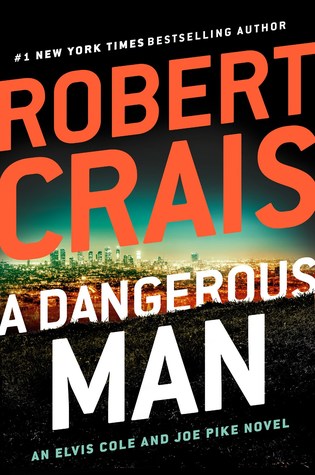
A Dangerous Man is billed as an Elvis Cole/Joe Pike book, but it’s really mostly Pike, with Elvis in a supporting role. (Being #18 in the series, I imagine Crais was already migrating his thinking over to Joe as the new lead.) You can read an in-depth review of the book here, from when I originally read it.
Crais started a new series in 2013 featuring Scott James, a police officer, and his K-9 partner, Maggie, and wrote one follow-up book, but doesn’t seem to be pursuing it further than that.
He has also written several stand-alone books, and these are among my favorites. Hostage was made into a suspenseful and action-packed movie, starring Bruce Willis, and I keep hoping that someone in Hollywood will revisit his books and decide to make movies based on the other two, The Two-Minute Rule, and Demolition Angel, given their great story lines and compelling protagonists.

I re-read Demolition Angel this week, and it mostly held up to my initial enthusiastic reception (although the technology in the book has become increasingly dated, of course). This is the only book of Crais’s with a female lead (although he does feature strong female characters in other books), and Carol Starkey’s presence is palpable and painful. She is the survivor of a bomb detonation by which she lost her lover, who was also her partner on the bomb squad, and even three years later she is on the edge, constructed of equal parts gin, cigarettes, antacids, and insomnia. She is now working as a detective with the Los Angeles Police Department, and would like to get back to the bomb squad, but her therapist doesn’t hold out much hope of that, given her fragile and self-destructive state. Then the bomb squad rolls out on a report of a suspicious package at a strip mall and, after one of the bomb techs is blown up by its unexpected detonation, Carol Starkey is handed the case.
Starkey is terrified that either Homicide, ATF, or the FBI will take the case away from her, and determined to solve it herself before that can happen, which lends an urgency to the narrative. The components of the bomb itself suggest it was built by Mr. Red, an infamous shadowy character whose goal is to be on the FBI’s 10 Most Wanted list. An FBI agent named Pell does show up, but seems content to work with Carol, offering his long-running history with Mr. Red to support her case. Things escalate as Mr. Red himself engages with Starkey via a dark-web chat room, and Starkey begins to realize that this case may be much more complex than everyone else believes, and have less to do with Mr. Red than anyone imagined.
Carol Starkey is a truly great character, and the scene-setting all over Los Angeles is both accurate and entertaining. I was fascinated by the procedural parts of the book, and also enjoyed the interpersonal relations with her team, the ATF agent, and the bomber/serial killer. Reading this after revisiting one of the series books showed me how much Crais has to offer when he is building a story from scratch, rather than relying on the formula of the Cole/Pike team. I wish he would write more stand-alones like this one.
What kind of mystery are you?
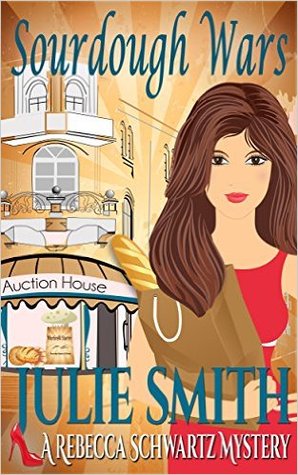
I just finished reading a series of five mysteries by Julie Smith featuring Jewish feminist attorney Rebecca Schwartz as the protagonist and set in San Francisco and surrounding counties, and I’m trying to decide where to slot them in the mystery panoply. They weren’t exactly cozy mysteries, by my definition: A cozy typically takes place in a small town, with a quirky set of local characters (some of whom are up to no good), and an amateur sleuth (frequently a gray-haired grandma) serving as detective. At the same time, I wouldn’t put them up against what I think of as “legitimate” mysteries, such series as the deadly serious Inspector Lynley books or the Harry Bosch saga. But in their way they do for San Francisco what Connelly’s Bosch books have done for Los Angeles—make the neighborhoods and idiosyncrasies of the City by the Bay a familiar and compelling backdrop to crime.
I have to say that I didn’t care much for the first book in the Rebecca Schwartz titles—Death Turns A Trick originates in a modern-day bordello, and the subsequent action and situations are just too ridiculous to be believable, as well as the mystery not being particularly compelling. I probably wouldn’t have revisited the series except for two factors: I had just finished reading a couple of uber-intense, rather lengthy items, and was in the mood for something light and not particularly challenging; and the second book is called The Sourdough Wars, which reminded me fondly of Robin Sloan’s book Sourdough. So I read that one, and was by then caught up in the momentum of Rebecca’s adventures and beguiled by the San Francisco milieu.
The books varied a bit in readability, my favorites turning out to be the latter three: Tourist Trap, Dead in the Water, and Other People’s Skeletons. So I guess you could extrapolate that Smith’s story-telling abilities improve over the course of the series, and I wouldn’t argue with that. I still felt that they were light and kind of silly, but on the other hand the characterizations are solid, the scene-setting is creative (one takes place at the Monterey Bay Aquarium, or should I say IN it?), and the story lines, while not truly riveting, definitely render the reader curious enough to finish them.
The website StopYou’reKillingMe.com ranks these not as cozies but as “humorous mysteries.” There is an element of humor to them; but there are also rather graphic murder scenes, and serious pondering on relationships, feminism, child welfare, and liberal causes. The covers on the re-released paperbacks seem to suggest more of a chick lit vibe, further confusing the issue. The jacket copy cites Janet Evanovich, Joan Hess, and Elizabeth Peters as read-alike authors, so if they are authors you enjoy, then Julie Smith might be for you.
Note that the Rebecca Schwartz books were Smith’s very first series (written in the ’80s); she has since completed two series set in New Orleans, one with Talba Wallis, a female black poet and computer expert as protagonist, the other starring Skip Langdon, a policewoman. Since she is consistent about featuring a female protagonist (and also presumably with the feminism standard set by Schwartz), if a female lead is your preference it’s another reason to seek out her books.
Land of Wolves
I have enjoyed Craig Johnson’s Walt Longmire series since the beginning, with few exceptions. There has been a book here and there that was a little too weird for me, but mostly I have invested in both the unsentimental policing of the wide open spaces of Wyoming and the slight mysticism brought into the books by Walt’s association with Henry Standing-Bear and the Native Americans living adjacent to Absaroka County. I have never been a big fan of westerns, but this series nicely marries a traditional western feel with interesting mysteries and native lore, which has, for the most part, suited my taste.
All of that changed with book #14 in the series, called Depth of Winter. I don’t know what Mr. Johnson was thinking but, judging from the responses of his fans on Goodreads, it surely wasn’t about them. He took Walt out of context, sending him out of his jurisdiction down to Mexico to fight what amounted to a war with a drug cartel. All the quirky and charming bits for which this series is known were notably absent, as were most of the personnel; and the narrative of the story fulfills the Hobbesian quote “nasty, brutish, and short” to a T. I was both disgusted by and dismayed at the amount of distance covered by Walt as he gave up all logic, pitting himself singlehandedly against this massive foe and then essentially abandoning all who offered to help him to pay the price in order to gain his own objectives. It was ugly.

I breathed a slightly attenuated sigh of relief, then, when I returned to the series with #15, his 2019 offering, to discover that Walt has been returned to Absaroka County and is dealing with a typical mystery for that area, the death of a Basque sheepherder. But this book was definitely a mixed bag. The mystery was weird, to begin with: We didn’t know for most of the book whether the shepherd had committed suicide or had been murdered, and we didn’t find out because the story kept haring off in multiple directions, from a kidnapped boy and a missing man to a lone wolf who has been sighted and blamed for sheep killing, working up the local populace. Usually the author takes all these disparate elements he introduces and weaves them into a coherent whole by the end, but in this case the explanations felt slight and unsatisfactory, and some went unresolved. And even the ones that ended with an explanation seemed tenuous where they should have been forthcoming.
Furthermore, Walt was less than present, due to both physical and mental recovery issues from his time in Mexico, making the narrative—primarily seen from his viewpoint—seem scattered. And although the regular people—Victoria, Saizorbitoria, Ruby, Henry—were once again present and accounted for, they didn’t seem fully realized, and Walt was so out of it that he didn’t pay them much mind, which meant the reader didn’t either. This book wasn’t the horrifying debacle of its predecessor, but it certainly wasn’t Craig Johnson’s best.
I hadn’t realized when I picked this up that I was so far behind with this series: Johnson has already written #s 16 and 17 (with 18 due out later next year), and the stars on Goodreads have been restored to a reassuringly consistent high number from most readers, making me think maybe it is safe to go on. There are also, since I last looked, half a dozen novellas that fall at various places between the full-length books that I could catch up on, for further experiences with Walt and the gang.
Something said towards the end of this book made me wonder if perhaps we will see the end of the series sooner rather than later, so I plan to keep reading, hoping that Johnson manages to avoid almost jumping the shark again, the way Lee Child emphatically did with Jack Reacher. I would hate to have to consign two of my favorite protagonists to the “do not read” pile….
Ruth, Ruth, Ruth
Every time Elly Griffiths comes out with another Ruth Galloway forensic archaeology mystery, I read it, I throw a fit, I swear off all future books in the series, and then…I read the next one. There is something charismatic about the awkward archaeologist that I apparently find hard to resist. So I’m loathe to say again that I’m fed up, but…well…
This is #13 in the series, and the personal angst has gone into overtime long since. In the first book, Ruth was called in to help out at a crime scene, met Detective Inspector Harry Nelson, and fell hard for him despite his abrupt manner. By book #3 she’s returning to work from maternity leave, but DI Nelson is still with his wife. In #13, Ruth’s daughter, Kate, is just about to enter secondary school, and yet the mooning goes on. There have been ultimatums, there have been selfless renunciations, Ruth has moved away and moved back again…but their relationship remains distressingly the same—tauntingly unattainable. And for at least the second time in the series, this book ends on a relationship cliffhanger that will definitely lure me to pick up the next, scheduled for summer of 2022, but I will once again do so with a (justified!) sense of outrage that we’re.still.waiting.

The Night Hawks continues the theme of murder entwined with archaeological finds on the marshy north Norfolk coast. Ruth has moved back, after her brief sojourn with Frank in Oxford, and is now head of the archaeology department at the college. This time a body is found lying in close conjunction to a Bronze Age stash of weapons and other doodads. It’s discovered by some “metal detectorists,” a nocturnal bunch of guys who go out as a club looking for artifacts on the beach. Ruth finds this hobby super sketchy, since it impinges on her real work and threatens to disturb legitimate archaeological finds, but she can’t be too vocal about it, considering her replacement lecturer at the college is a member.
After this initial discovery, the bodies start to pile up; one wonders what it is about north Norfolk that apparently causes it to be the new murder capitol of England! There’s what looks like a murder-suicide plus three other deaths, all centered around the ominous Black Dog Farm, named for the Black Shuck, a gigantic hound with red eyes who appears to people when they’re about to meet their fate, according to Norfolk legend. The usual participants all make an appearance—Judy, Tanya, Cathbad—alongside some new characters who lend themselves ably to Nelson’s suspect list. And there is, of course, the endless continuation of Ruth’s wistful longing for Nelson, and Nelson’s conflicted loyalty to his wife and original family up against his attachment to Ruth and Kate. But I have said enough about that!
All in all, it’s a pretty good mystery—much more satisfying in both development and content than a few of the series’ more recent ones—so I’m going to forgive Griffiths for the rest, lean hard on that cliffhanger, and foolishly and optimistically hope for the best for Ruth and Nelson in 2022.
Note regarding the cover: Why the publishers didn’t take advantage of the Black Shuck legend to put a big ole black Rottweiler or Dobie on the cover, instead of this innocuous picture of a life ring hanging on a post (which has no bearing on the story) is beyond me! Hound of the Baskervilles, guys! Why?!
Another McTiernan

I just finished The Good Turn (Cormac Reilly #3), the third offering from Irish writer (although she now lives in Australia) Dervla McTiernan. I’m not going to have a lot to say in this review, except to note that McTiernan continues this excellent series with no momentum lost, and this third book is exponentially better than the previous, as I had both hoped and predicted.
This one has multiple threads running through it, with stories for both Cormac Reilly and Peter Fisher, and she braids them together seamlessly into one enthralling police procedural. There’s a potentially career-ending disaster for Fisher, followed by exile to his home village and a stint working under his small-town Garda father (whom he loathes); Reilly is caught up in this and scapegoated as a ploy to get him out of Galway for good; and there are story lines with missing girls, drugs, police corruption, villains masquerading as saviors…I love how all the characters are evolving, growing, becoming more clear as people and as officers, and the extra background development she has given to this one makes the story that much richer. Looking forward to the next one!
More Irish mystery
I was thrilled this week, just when I encountered a lull after the problematic vampire book, to be notified that the next Dervla McTiernan mystery featuring Cormac Reilly had arrived from the library on my Kindle.

The Scholar features Cormac’s girlfriend, Dr. Emma Sweeney, and finally reveals her back story, which I mentioned as a somewhat frustrating absence in McTiernan’s first book, The Ruin. We get more of the details of Emma’s new job, which is as a researcher on an exciting project for Darcy Therapeutics, Ireland’s most successful pharmaceutical company. Unfortunately for Emma, the way we go about getting those details is by her being the first person to come upon the aftermath of a deliberate hit-and-run murder just outside her lab, only to realize that the victim may be one of her colleagues—and not just any co-worker, but the granddaughter of the company’s founder and CEO.
Instead of calling in to the garda station to report her discovery, Emma calls Cormac to the scene of the crime, and Cormac goes against policy to keep the case in order to minimize Emma’s exposure. It’s not that he believes she has any involvement; he is simply trying to protect her from stress. It seems that this isn’t the first time Emma has been involved with a murder, and the move to Galway, the new job, and their burgeoning relationship have had a positive effect on her recovery from that experience. He doesn’t want this new trauma to re-ignite her anxiety, and believes that he can protect her. But the high-profile nature of the case works against him, and soon, as the murder is more closely linked first to the lab and then to Emma herself, Cormac must consider the worst…
This book, like the first, is strong in characterization: We get to discover the nuances of the relationships between Cormac and his equals, his boss, and those he supervises, and certain of them—Carrie O’Halloran and Peter Finch—are becoming strong secondary characters in support of Cormac’s lead, just as his supervisor, McCarthy, and the sour and venomous officer Moira Hanley seek to undermine and discredit him, for reasons both political and personal.
The story line is likewise complex and beautifully structured, with lots of twists and turns and multiple diversions. McTiernan really knows how to craft a story to lead you in the expected direction only to surprise you on the next page, maintaining interest throughout. I like that the mystery is realistic and believable yet not predictable. I feel like my confidence that she would grow more assured with subsequent books is well justified by this one, and can’t wait to read #3, which I just discovered is available (today, anyway) from Amazon for the Kindle for 99 cents! Don’t ask me why it’s discounted, given how good it is, but I snapped that right up. I’ll report back.
New Irish
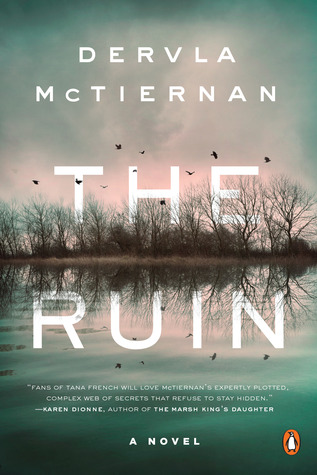
I discovered Dervla McTiernan through a picky fellow reader on the Facebook page “What Should I Read Next?” She had asked for recommendations for mystery series, but then dismissed about a third of them as not what she was looking for. When I recommended a few to her, we discovered we were both fans of Tana French, and she then mentioned McTiernan to me.
I don’t want to damn with faint praise here: I don’t feel like the comparison with French is justified, but I feel like it could be, with a few more books under her belt. Having said that, I thoroughly enjoyed this debut novel, and will read whatever else is available, which I believe to be only one or two other books.
The lead, Cormac Reilly, is in the midst of a career transition: He has apparently made something of a name for himself in Dublin, but now his partner, Emma, has received a substantial research grant tied to an exciting new job in Galway, and he has agreed to a transfer to their police department so he can go with her. This is a bit of a demotion for him, but he didn’t perceive it as a serious one until he was in place in the Galway station and discovered he was being relegated to working by himself on cold cases. There is only one person on the force he thinks of as a friend, and that officer, too, is currently being ostracized by the rest of the squad. His new colleagues are not welcoming, and it goes beyond the usual hazing of the new guy. There are undercurrents of unease, and some of the officers seem to spend as much time disrupting investigations as they do pursuing them. The total lack of support and cooperation are beginning to get to Cormac, and at a couple of points he feels like he is being deliberately set up, without a clue as to why that would be.
The mystery unites a case from his past with one in the present day: A man has died, presumably by jumping off a bridge in an act of suicide, but his sister and, latterly, his girlfriend don’t believe he would have done it and wish the police to look into the possibility of foul play. The officer in charge of the investigation proves strangely reluctant to do so, and the man’s relatives amp up their protests as a result. Then Cormac is roped in with a cold case that causes him to be in the position of looking at the sister as the possible murderer of her own mother. Cormac is familiar with the case because as a rookie he was sent out on a supposed domestic violence call, only to discover a mother dead of a heroin overdose and two children—Maude, 15, and Jack, 5—on the premises. The boy Jack is the man who is the apparent suicide in the present day.
I really enjoyed McTiernan’s style of writing, and the way she leads the reader through the (admittedly convoluted) story lines. I did feel like there were a few problems with the scene-setting: Reilly is made out to be a big success in Dublin, and yet you see few signs of this when he’s on the ground in Galway. There is never sense made out of the hostility of some of his co-workers. There is virtually no development of Emma—she is an occasional presence, but I couldn’t tell you what she looks like, or anything much about either her job or her life with Cormac except that she works late a lot, leaving him on his own at the pub. But the rest of the characters, the ones directly involved with the mystery, are charismatic, and the sympathy with which she portrays the tragedies that result from the total inadequacy of the children’s social services in Ireland is compelling. I liked what McTiernan did with her material, and look forward to another outing with Cormac Reilly.
Inheritance
I just finished reading two new books in a series by Jennifer Lynn Barnes, author of the ever-popular The Naturals. These are so different from those books, though, that I didn’t know whether I would like them. But I think she pulls it off, and although I’m not sure it will be quite as popular with teens as The Naturals, it will still engage them with its mysteries and puzzles. I thought, after reading both, that this was going to remain a duology; but despite feeling like things were well enough wrapped up at the end of book #2, I discovered on Goodreads that there will be a book #3. Hmm. I’m not sure what’s left to discover, given that the mysteries are pretty much solved…unless she’s going heavily into the romantic aspect. I hope not.

The Inheritance Games and The Hawthorne Legacy reminded me of two other books, one for children and one for adults: The Westing Game, by Ellen Raskin, and The Lying Game, by Ruth Ware. I’m not a personal fan of The Westing Game—I find it convoluted and confusing, and feel like the characters are all made of cardboard—but I can’t deny its appeal to middle school kids, who will grow a few years older and like Barnes’s new series very much because of it. Both books are about people inheriting money and having to play games to do so, although it’s direct in The Westing Game, while in The Lying Game it’s a case of mistaken identity wherein the protagonist decides to keep her mouth shut and go along with it for the sake of the inheritance. The Inheritance Games books are a sort of mashup of those two, although the protagonist has no need to lie, since she is the clearly designated heir; she just needs to figure out why, and to do so before someone manages to kill her to get what they believe to be rightfully theirs.
Avery Grambs is a somewhat disadvantaged girl who grew up in a mostly one-parent household (Dad is kind of a deadbeat), then lost her mother a few years back and was raised the rest of the way by her older half-sister, Libby. Then one day she is summoned to the reading of a will—and it’s not just any will, but that of the fabulously wealthy billionaire, Tobias Hawthorne. She figures that for some random reason the man has decided to leave her some money; but she never in this world expects that he has left her his entire estate, minus some minor bequests, while disinheriting both his daughters and all four of his grandsons. Some would consider it a dream come true; but as Avery is uprooted from everything she knows and has to take a crash course in how to deal with all the repercussions and unexpected issues that come with great wealth, she isn’t so sure that it’s not a potential nightmare instead.
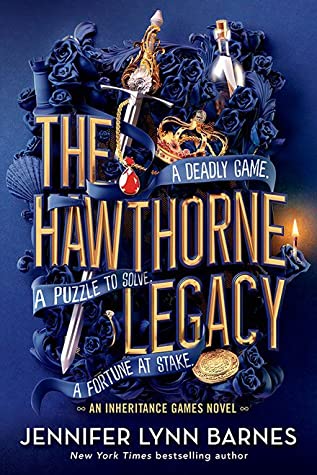
To receive her inheritance, Avery has to live at Hawthorne House, a sprawling estate where most of the rest of the family also resides, for an entire year. Dragging along her sister Libby and attempting in vain to evade the paparazzi, Avery moves into her new home, only to discover that Tobias Hawthorne was a wily old gent whose house is filled with secret passageways, hidden compartments, and a bunch of puzzles, riddles, and codes that may solve the mystery of: Why her?
Meanwhile, half of her new-found family is out to get her, while the other half is fascinated by the puzzle she represents, and all of them, whether hostile or friendly, are trying to use Avery to their own ends.
There is a nice story arc that carries you from the first book to the second, and the riddles and clues will delight most teenage readers as much as they stymie the teens in the book. There are a few confusing subplots that I think we could have done without, but they don’t distract too much from the main trajectory. Barnes is great at the slow build-up and the big reveal, and uses it to good advantage several times to promote further suspense and interest. There are also enough details about parties, clothes, and jet-setting to entertain those who enjoy the trappings of wealth, and a little incipient romance to satisfy that longing as well. This is a series that teens will enjoy, and perhaps some of their parents will too! I look forward with both anticipation and trepidation to see what becomes of everyone in book #3, which has a tentative title of The Final Gambit and is due out sometime in 2022.
The Madness of Crowds
If it’s August, it must be time for the annual Inspector Gamache mystery by Louise Penny. It’s amazing to me that she can keep turning one out every year, no matter what. A few times I feel like the series has suffered, but mostly they are intricately plotted, with intelligent dialogue, in-depth philosophy, and compelling characters. This one was no exception, although there were a few moments while reading it that I wanted to say, Where is your editor in all of this?
The setting is once again the village of Three Pines, south of Montreal, Quebec (the previous book in the series occurred while the Gamaches and Beauvoirs were on a visit to Paris), and it is post-covid. I’m sure that when Penny wrote it, she anticipated a legitimate post-covid world in which everyone was going about their normal lives again instead of one plagued by variants that threaten to keep us in masks and in isolation for yet another season (or year). But at the heart of her plot is a moral issue that has sprung to life partially as a result of the medical shortages and triage of the worst days of the epidemic, and it’s dark.

Never assay a Penny mystery expecting it to be an ordinary police procedural. She incorporates not only philosophy and politics, but also art and poetry, and while the police work is meticulous, the feelings and intuitions of the officers involved (with Gamache at their head) are always as essential as are the bare facts of the case. One of the things I enjoy about Penny is that she inserts real poems and quotes and books into her fictional works; the title of this one is based on a book by Charles Mackay, called Extraordinary Popular Delusions and the Madness of Crowds. She immediately made me want to seek it out.
This book uses its characters and story to explore such social issues as disinformation and propaganda, xenophobia, and eugenics. I feel like her pivotal character, Professor Abigail Robinson, is consciously modeled on some of the charismatic but wildly morally skewed characters who have appeared as players in the recent American story, in the way that she divides the culture in two over the validity of her theories with the sheer strength of personality and certitude.
One Goodreads reviewer opines that this novel is “the most allegorical of Louise Penny’s work. The actual murder is incidental to the plot, serving only as a springboard to examine morality on both personal and societal levels.” I’m not sure I would go that far; but there is occasionally an arms-length feel to the crime they are supposed to be solving, as opposed to the debate they are constantly having.
Gamache is asked to provide security at a lecture being given by a professor of statistics. Given the presumably dry content of a speech on statistical analysis and the fact that it’s taking place at an obscure university auditorium in between Christmas and New Year’s Day, Gamache is puzzled as to why anyone would approach the Chief Inspector of the Sûreté du Québec to oversee this task; but then he does a little research on the likely content of the professor’s speech and immediately musters a far bigger response than anyone would expect at what should be an incidental, poorly attended event. More people show up than the venue can accommodate, and Gamache has a volatile and angry crowd on his hands as the professor steps up to speak.
One thing that bothered me about this book is how long it takes to reveal the specific contents of the professor’s government-solicited (but later repudiated) report on which her call for action is based. Another was how long it took to get to the actual murder, using some “foreplay” crime to keep the reader going until we arrive. And a third was the resolution of the mystery: There were multiple individuals who could have been the culprit, and none of them stands out for long, as facts are discovered that exonerate each one, only to raise more doubts about the others and then circle back around again. It felt like Gamache, Beauvoir, and Lacoste spent an aeon going over basically similar theories for why each person was or could be the murderer, and they all made sense! This is one of the few of her books that didn’t have that “Ahah!” moment in it when the unexpected solution arises and proves to be the truth. I think this is probably because Penny wanted the social commentary, rather than the murder, to be the star of the show…but it made the actual mystery a long, drawn-out process.
With all this caveating (is that a word?), I was still thoroughly engaged by and absorbed in the story. We are reunited with familiar villagers, get to know others who haven’t been prominent before, and are also introduced to a variety of strangers, each of whom brings their own twist to the plot. The physical details are, as usual, spot-on for a winter interlude in coldest Canada, and made me want to drink hot chocolate even in 100-degree Los Angeles! (I sometimes wish that her annual pub-date was in February, so I could be in accord with her characters as they snuggle up with comfort food and beverages around the fire.) And the moral dilemma around which the entire plot is wrapped is likewise riveting, albeit deeply disturbing.
I made a comment in my review of A Better Man (two books back) about a stylistic shift I saw taking place in Penny’s writing structure and, while I noticed that it mostly disappeared again in All the Devils Are Here, it’s back in this book. She does this short-phrase, incomplete-sentence thing that can occasionally work as a device to emphasize something, but is less pleasing when it constantly occurs. Perhaps she (or her editor) will see this comment, here or elsewhere and, taking it to heart, go back to the more fluid literary construct of yore. But even with that, I still give the book four stars out of five.
 The Book Adept