Continued enjoyment
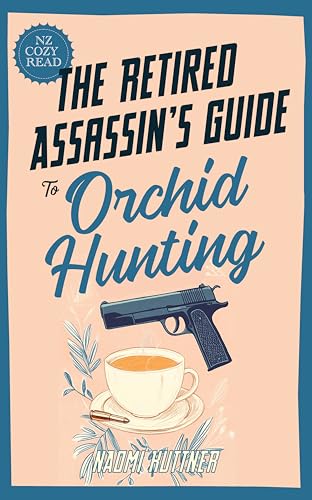
I read two books this week. One was the sequel to the cozy mystery I reviewed in my last post. The Retired Assassin’s Guide to Orchid Hunting, by Naomi Kuttner, would seem to follow one theme from the previous book—gardens. But orchids are less about gardening and more about collecting, especially because people mostly grow them either in pots (if they have a few) or in a greenhouse (if they have a bunch), and the word “hunting” in the title is no coincidence; orchid aficionados are all about seeking the rare, the storied, the unattainable bloom. A symposium on the subject is sure to draw a large group of rabid fans, and that is the set-up for this second story about Dante the retired assassin and his friends—Eleanor the (former?) con artist, and Charlie, the gardener who sees and talks to ghosts. Just your ordinary paranormal cozy mystery!
Dante has been working hard to acclimatize to “civilian” life with the assistance of regular AA (Assassins Anonymous) meetings on Zoom. He is learning to love the cat who insisted on moving in with him, and is easing up on his isolationist habits by actually contemplating a first date with the local veterinarian. But when the orchid symposium comes to town and Te Kohe’s resident expert on orchids dies under suspicious circumstances, Dante and his new friends team up to try to figure out which of the three other prominent figures at the gathering might be responsible, and why—and they only have the length of the convention to solve the mystery, so they’re on a tight timetable.
There are a couple of subplots; one involves Inspector Avery, who is actually back in town on vacation, choosing to spend his days off at the orchid symposium, and the other features a beautiful but weirdly attentive woman Dante is convinced has appeared at a suspicious moment and may be a threat to his retirement (and continued existence).
I enjoyed the inclusion of the paranormal elements, weaving together Charlie’s talent for perceiving the dearly departed with New Zealand’s flora and fauna and cultural/spiritual beliefs. The Pūriri or Ghost Moth was the perfect guide to help solve the mystery of the elusive Ghost Orchid all the collectors were pursuing, as well as an additional vehicle to expose the murderer. Another entertaining read from this series.
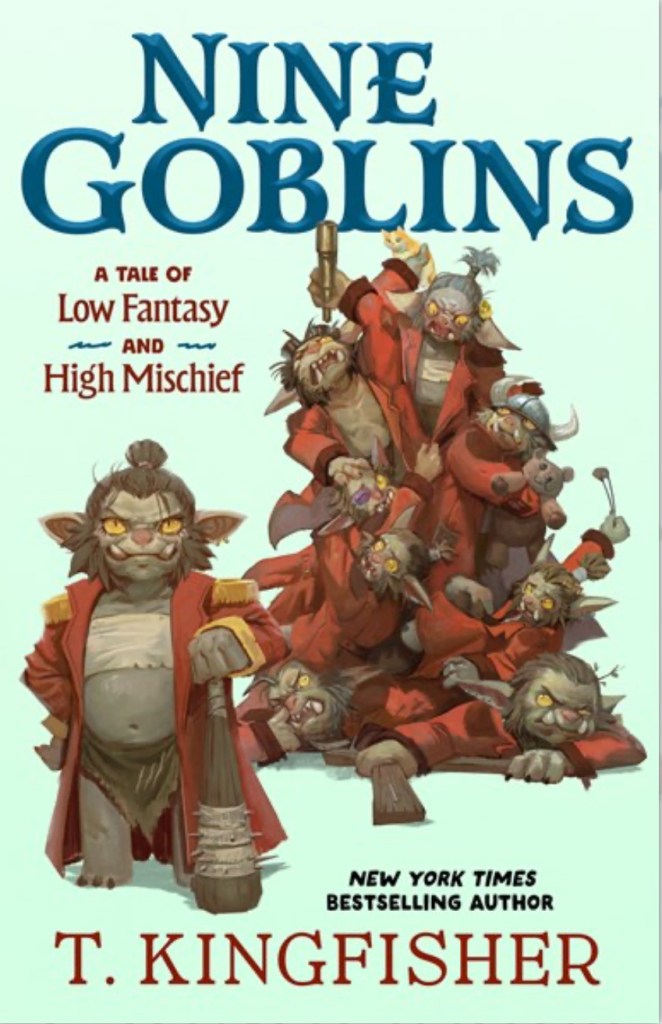
The other book harks back a few months to my discovery of the fantasy author T. Kingfisher and her weirdly wonderful stories. Kingfisher started out as a children’s book author called Ursula Vernon, but she began to feel confined by the inability to include certain elements in her storytelling (murder and mayhem) and decided to branch out into adult fantasy and horror fiction, as well as what she describes as her “occasional oddities.” The latter are the books with which I enthusiastically connected, including Nettle and Bone, A Sorceress Comes to Call, Hemlock & Silver, and a few others. I’m not much of a horror reader (too suggestible), so I will probably give some of her books a miss, but I am completely on board for her fantasy, so I put Nine Goblins on my waiting list at the library and finally snared it this past week.
The story had a bit of a slow start, because there was a lot of scene-setting background to get through before the action began, and it also turned out to be on the short side, a novella of only 160 pages. But once I got past the descriptive information-dump about goblins, orcs, elves, and other competitors for real estate with the ever-expanding human race, it turned into a typical whimsical Kingfisher tale with underlying Terry Pratchett vibes about more serious themes, and I thoroughly enjoyed it.
I discovered in the acknowledgments that Nine Goblins was actually the first of her “occasional oddities,” self-published in 2013, and that its success (though modest) led to all the vastly better-known others. So I’m glad to have come across it as Kingfisher’s “origin story,” so to speak.
Next up: The Calamity Club, by Kathryn Stockett, and The Orchard, by Peter Heller. Stay tuned.
A cozy assassin
I am a long-time mystery reader, but not in general a particular fan of the “cozy”—I tend to like my mysteries on the darker side. But I just read a charming and unexpectedly funny one that made me laugh out loud while keeping me guessing.
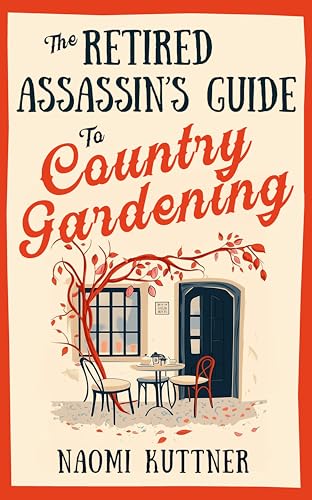
The book is The Retired Assassin’s Guide to Gardening, by Naomi Kuttner. There is a sequel I already have queued up on my Kindle, and a third book comes out later this year, which I will most certainly pursue when
it lands.
Although I did enjoy the novelty (for me) of a story set in New Zealand, with its unique flora and fauna and different sensibilities to the more common British cozy, the real attraction of the book was its characters and their difficulty fitting in with the small-town vibe.
The title character is Dante, a former MI6 assassin who has lived a life so focused on one thing that he has no idea, in retirement, what appeals to him. He has chosen to settle in the town of Te Kohe but, despite its friendly and outgoing atmosphere, Dante is maintaining the lifestyle he learned when he was trying to fade into the background and make no impression. He is socially inept, wishes to avoid the inevitable outreach from what he perceives as intrusively nosy neighbors, and hides in his sparsely furnished house subsisting on protein shakes.
The first person to breach his privacy is Charlie Wilson, a 20-year-old gardener who is determined to continue the botanical services he provided to the former occupant (now deceased) of Dante’s house. Dante considers that he might enjoy learning something about gardening while allowing Charlie to do the heavy lifting, so he acquiesces to Charlie’s employment.
Next is an invasion by local landowner Ted Andrews, who has done his research and has decided that Dante can assist him by providing bodyguard services at an upcoming big event. Dante is less than thrilled to be called upon for this, but Ted makes a forceful case that convinces Dante the easiest route to his peaceful existence is to go along with it.
The most significant and also the most mysterious character is Eleanor Graham, who presents as a typical social manager of her small town, with a finger in every pie and extensive knowledge of all the town’s inhabitants and their foibles, but who drops hints about a past life that was vastly more exciting and certainly in some cases illegal. She fills the role of prime sleuth, although the others contribute and there is also a police presence.
The crime and ensuing mystery here are clever and not obvious; there are some unexpected twists as regards the character and abilities of the three incipient friends (and those of the villain), and the best part of the book is what I call “deadpan” humor. I was also charmed by Dante’s inadvertent acquisition of a cat whose attentions advance him towards a more human and humane outlook.
My sole complaint is that the gardening promised in the title turned out not to play much of a role in the story and, since that is what attracted me to the book in the first place, I felt this as a lack. But otherwise, a greatly entertaining lighthearted read!
The comforts of formula
Many writers of series (especially the ones with recurring themes, such as mysteries) fall into a pattern with their books—what one would call a formula. Depending on how well they perform within the confines of that formula, it can be either immensely satisfying to discover a story with all new characters and situations that is nonetheless comfortingly familiar, or it can quickly become tediously repetitive and cause you to seek out fresher fare. The books of Dick Francis, in my opinion, mostly fall into the former, positive category, and I have been re-reading some of my favorites lately when there seemed to be a dearth of new books to enjoy. (I’m sure they were out there, I just wasn’t finding them, and the frustration at my lack of success sent me back to some old familiars.)
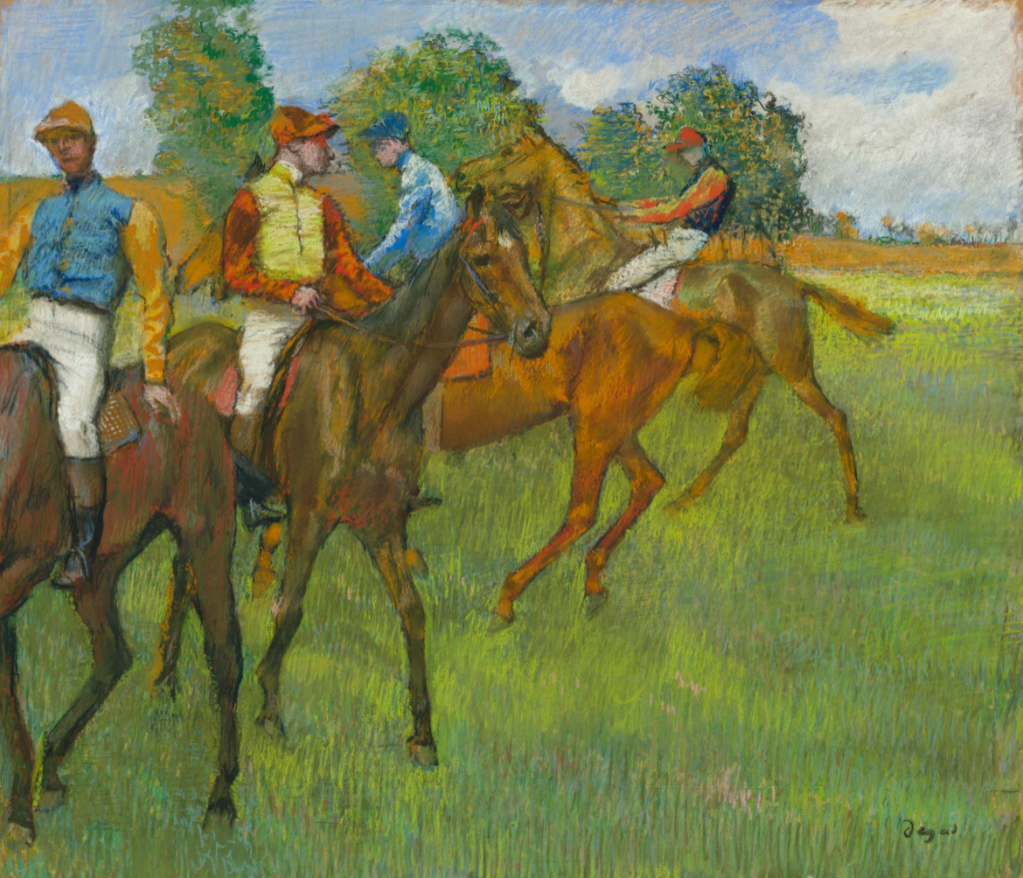
The genius, if you want to call it that, of Francis’s books is that they all revolve around horse-racing, but within that broad context he explores many different aspects and occupations contained within or sometimes just adjacent to that world. So while many of his protagonists are jockeys or former jockeys, there are also books in which the main character is a horse trainer, an owner, a groom who escorts horses when they must fly overseas to far-flung racing meets, a sports photographer, a wine merchant, a banker, a jeweler…and he manages nonetheless to set all the stories in the world of horse-racing.
You do need to know that, based on the time period in which most were written (he began in 1962) and adding that to the upbringing, work ethic, and societal circumstances of the author, there are some features that may grate on a contemporary reader—chauvinistic or stereotypical assumptions about men’s and women’s roles being the most prominent. But if you can put those into the timeframe and mindset in which they were written, you can still gain much enjoyment from his tales about the world of horses. Also, because his female characters do have definite personalities and quirks, the macho nature of his stories is much less problematical than those contained within, for instance, the Mitch Rapp books of Vince Flynn (wherein all women wear pencil skirts and “high” ponytails!).
Whatever his profession, the protagonist is usually a competent (and more than usually clever) man connected somehow to the world of British horse-racing who becomes involved in some kind of quandary: a crime, a conspiracy, an act of violence. He is often reluctant to become involved, but is propelled by his ethics and innate sense of fairness to put things right. The villains are typically people who are outwardly respectable or even admired, but in truth are ruthlessly involved in some type of corruption—fraud, kidnapping, sabotage, murder. Despite not being a professional detective, the protagonist rather methodically uncovers the truth about these people and their misdeeds using a combination of intelligence, expertise, and resilience. He never makes it through entirely unscathed, usually coming up against the villains and their flunkies at least once or twice, when he is either physically or psychologically punished for his “nosiness,” surviving beatings, torture, financial ruin, or some form of betrayal. He ultimately manages to expose the criminals while surviving whatever retribution they have to offer.
Francis almost always manages to add in at least one romance for his amateur sleuths, and there is a fair amount of humor of the dryer Brit variety involved as well. He is also good with his descriptions of specialized professions or hobbies, bypassing the temptation to information-dump by placing the reader right in the moment in which the action occurs.
I have written about Francis and his books before, but felt the need to mention them once more because periodically re-exploring them gives me pleasure and perhaps, should you choose to read a few, might give some to you as well. The majority of the books are stand-alone one-offs as regards the personnel, but he does have a series of four about a former jockey named Sid Halley, and a duo involving trainer/rider Kit Fielding. So look out for those and read them in order if you come across those first.
Feel free to add a comment about series or authors whose books you find lend themselves to reading more than once or twice!
The art is “Before the Race,” by Edgar Degas, charcoal and pastels on paper.
Re-read break
I have three books on the holds list at Los Angeles Public Library for which I am #1 in line, so while I was waiting i decided to do some rereading, because every time I have books on hold and start something else new, all of them become available at once and then I can’t finish them all! Apparently whoever has them now is taking their own sweet time, however, because I have now been rereading for two weeks! I’m not going to review the books I have completed in that time period; some I have already reviewed, and others are serial genre series that are easy and enjoyable and need no promotion; if you know them, you probably like them too. These are pretty fast reads, but thoroughly enjoyable. Here’s what I read:
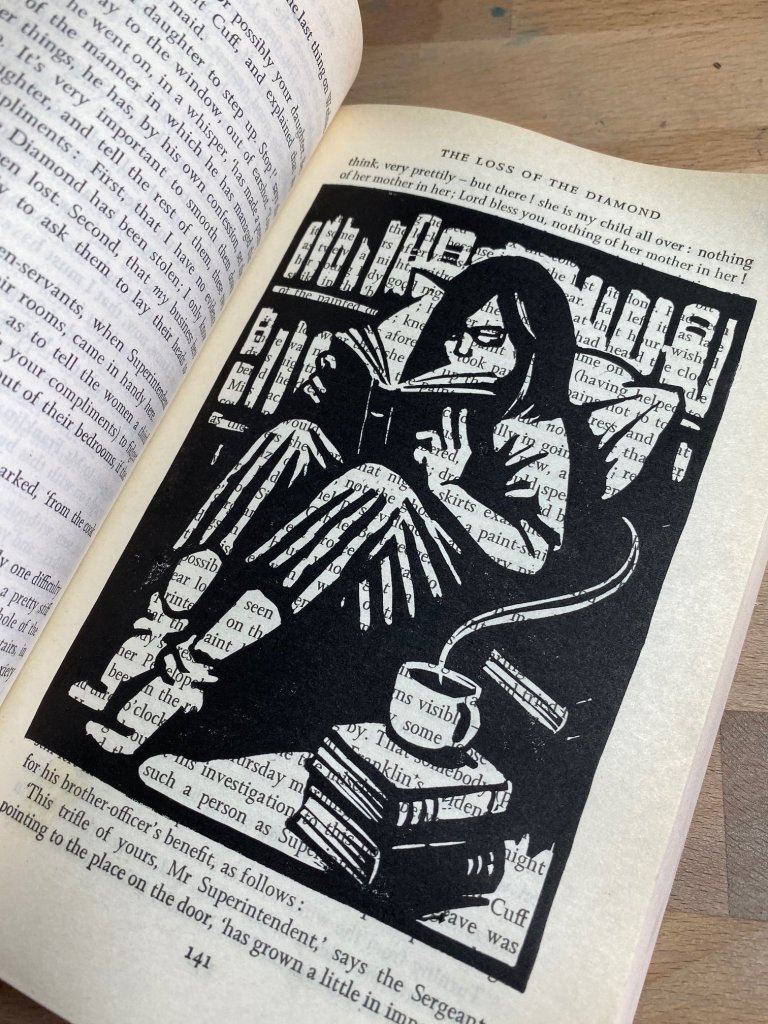
Two Georgette Heyer Regency novels
Two Sid Halley books (out of four) and one Kit Fielding book (out of two) by Dick Francis
One Charlaine Harris book I had missed (it was written in 1984)
The Harris book was something I had wanted to read because it was her second book ever and emerged from a personal experience of Ms. Harris’s, but it would probably be triggering for many people, and was also extremely dated. The others are by authors I have always enjoyed binging.
I’ll probably keep going with this until one of those three books becomes available, and then I’ll be back to reviewing.
Grainger, cont’d
I have to date read two more of Peter Grainger’s mystery novels featuring DC Smith. Although the second in the series felt a little lackluster to me, being exceedingly low-key and petering out into a “solve” that everyone knew was coming, the third one picked things up again and my attention was retained for the rest of the series. I am currently in queue for the next two from the library.
New-to-me mystery
I’m always looking for a mystery writer previously unknown to me who will keep me interested the way dozens of others have in the past. I have devoured all the books of Penny, Morton, Johnson, Hill, Harrod-Eagles, the Harrises (Charlaine, C. S., and Joanne), Hamilton, Griffiths, George, Galbraith, French, Frear, Francis (pere, not fils), Crombie, Crais, Connelly, Bolton, and Atkinson, and that’s only a partial list, some of whom take up two to four pages of book listings in my Goodreads account. In addition to all of these, I have read three to six books by countless other authors, either because that’s all they have written to date, or because I liked the first few but didn’t continue for various reasons. These books include all categories of mystery, from cozy to procedural.
This week I started a new series, and the first book gives me the hope that its promise will lead to another series favorite.

The book is An Accidental Death, by Peter Grainger, and I came across it by chance on Kindle Unlimited. The synopsis made the protagonist, DC Smith, sound likeable, and the book turns out to be something of a hybrid between straight mystery and police procedural, with a controversial lead detective and the rookie newly under his direction poking at a death deemed accidental to see if there is something more to discover. I read it in four sittings, and now have the next three on hold at the public library, which will hopefully cough them up sooner rather than later.
There were parts of it that both intrigued and frustrated me; it seems like the book begins in the middle of a previous story, but it is plainly listed as the first of the series, and no other stand-alone books or other series precede it, so I must assume that the mystery and intrigue of how DC Smith became involved in a police investigation that went “tits up,” as the Brits say, and then came back from leave to continue working despite some fairly heavy pressure on him to retire will be revealed eventually. A few details surface in this book, including the naming of an adversary on the force named Wilson, who was apparently culpable for the mess made of the previous case and is now under a cloud, which he blames on Smith.
The plot involves a young man on a river bank, getting boisterous and drunk with his friends, who jumps into the water in pursuit of a man in a canoe to prank him, and ends up dead. It’s assumed, from where he was found and in what condition, that the death was accidental and attributable to the combination of inebriation and poor judgment, but something sticks out to DC Smith’s superior officer, Reeve, and she asks him to take a look. When he does, his examination reveals a bigger picture that no one in the police was, perhaps, meant to know about, and he gets into fairly deep water himself before it’s resolved.
The storytelling reminds me in some ways of Cynthia Harrod-Eagles’ Bill Slider series, in that the protagonist is a focused and determined detective who resists both bureaucracy and promotion in his determination to keep solving crimes. Both detectives (Bill and DC—his initials as well as his rank) are thoughtful, smart, and also witty. I enjoyed the first book and am anticipating reading the next and having it turn out just as engaging.
A Heller of a book, until…
Peter Heller has written a couple of books that are favorites. The top one is (predictably) The Painter, and I loved The Dog Stars. I can also say that I tremendously enjoyed The River, The Guide, and Celine. So choosing to read his latest was predictable for me. It started strong, and parts of it remained strong, but…
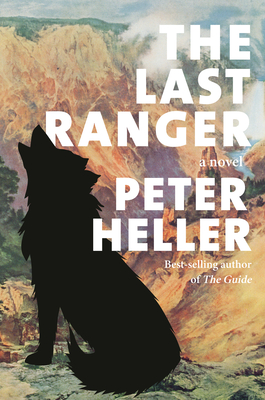
Yeah, there’s that dot-dot-dot. Heller’s writing about nature in The Last Ranger was as beautiful and lyrical as ever. He creates a sense of awe and wonder that is contagious—even if it is his protagonist who is expressing these feelings, they gradually seep into your own consciousness as if you are experiencing that environment and the engendered response firsthand. I could never find fault with that aspect of his writing.
I also liked the characters he created for this book, and enjoyed absorbing knowledge from them about how the various people in and around Yellowstone spend their days. The protagonist, Ren, is a park ranger for whom the reward of living a solitary, blissed-out life in the midst of nature must be balanced by preventing parents from taking photos of their adorable three-year-old cozying up to a baby moose while its mama is ready to kill everyone within charging distance. He breaks up traffic jams caused by too many tourists trying to photograph something-or-other by the side of the road, he prevents the wildlife from being shot by “individualists” with no respect for the boundaries of the park or the laws of the land, and everything in between those extremes. His life is sort of predictable and sometimes irritating, but ever-changing and therefore not boring.
Ren’s best friend is Hilly, a biologist who finds herself up against both man and nature when advocating to protect the wolves of Yellowstone. There are a host of other characters, both local and transient, whose descriptions and actions are meaningful and/or entertaining even when the scene or description is fleeting. That is the power of Heller’s writing.
This time, however, the big lack is in the plotting and especially the resolution of the “mystery.” As the story develops, the focus centers on the brazen actions of a local poacher and then transitions towards the end to the discovery of a large semi-secret group of wealthy men who are at odds with the goals of a national park and are inciting rebellion amongst suggestible locals. But there are so many segues from these threads into a sort of “day in the life of” narrative about both Ren and Hilly, so many outtakes about fistfights between tourists, and ignorant sightseers putting themselves and others in jeopardy, and an unexpected and exceedingly awkward romance that the story line gets lost. And just when you think it’s going to resolve itself in the last 100 pages, you get some directional hints, you get a few minor questions answered, but everything else is simply left hanging.
I’d say there’s a sequel coming, but Heller hardly ever writes sequels, let alone initiates a series, and has not indicated one here. Given that, I feel like as readers we are owed the resolution to at least three plot threads, and no amount of euphonious language has made up for that in The Last Ranger. Disappointing.
A pirate and a serial killer
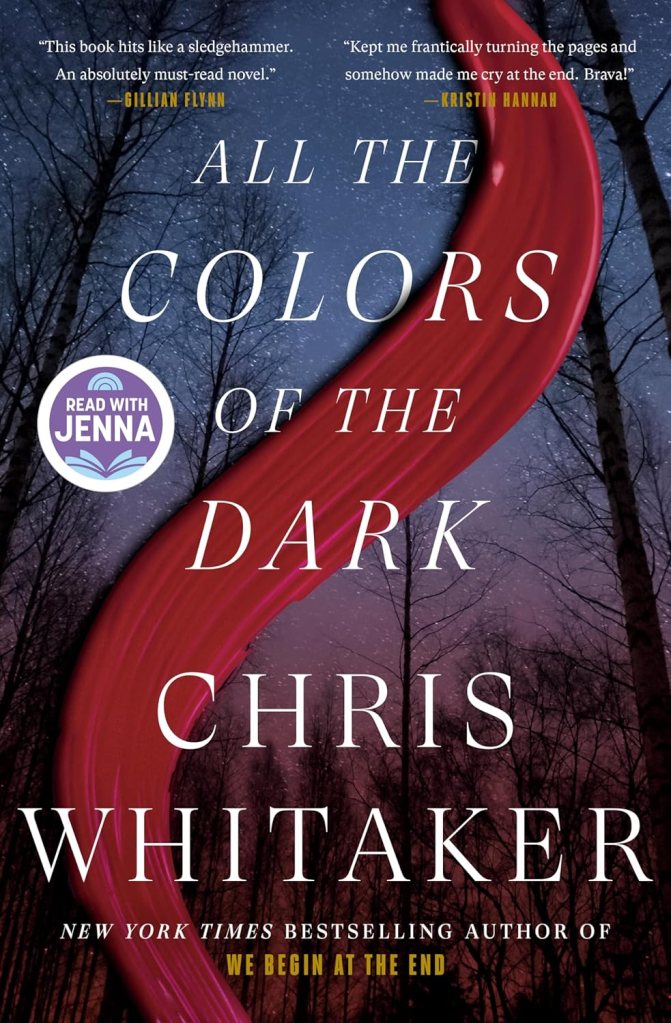
All the Colors of the Dark has been widely touted on all the Facebook readers’ pages I frequent, yet never really explained. The title alone made me curious, so I put it on the holds list at the library and waited a very long time for it.
When I started it, I was immediately filled with a sense of dejá vu; it reminded me forcefully of another dark, complex book I had read a few years back, but I couldn’t remember the name. I looked on Goodreads because I knew I had listed that book in my “coming of age” section, and then laughed; it was by the same author, Chris Whitaker, whose novel We Begin at the End bowled me over when I read it four years back.
I looked up my review of that book, and was not surprised to see that my description would pretty much do for both books:
“It is the saga of multiple people caught up despite themselves in various forms of tragedy they are mostly unable to avert.”
There are other similarities: The main characters begin as young teens with absent or derelict parents; they live in a small town and are outliers in their peer group; and they have an odd array of adults who try to look out for them but are mostly no match for what’s coming to them.
There are two characters around which the story revolves. The first is Joseph “Patch” Macauley, a boy born with one eye. His mother tried, in his younger years, to ameliorate this by sewing him a series of eye patches and buccaneer vests to let him play the pirate, but that may have made him even more of an outcast. The second is his best friend, Saint, a girl raised by her grandmother to be uniquely herself. In a small Missouri town where 13-year-old girls are mostly yearning to dress up, wear makeup, and start going on dates, Saint is more inclined to wearing overalls and keeping bees. The two are pretty much inseparable, each for their own reasons. Saint loves Patch and also wants to help him; Patch believes that Saint’s primary emotion for him is pity, because she invites him to dinner as often as she can, knowing that his mother can’t seem to hold down a job or keep the electricity on and the refrigerator stocked.
There is a girl at their school named Misty, a girl so far out of Patch’s league that even to speak to her might be considered sacrilege by her crowd of friends, a rich girl, a beautiful girl, a girl who takes life lightly—until the day she is kidnapped. Patch becomes her unexpected rescuer, and this act is like the butterfly that causes the tornado, enveloping everyone in his vicinity in chaos.
This book, like the other, is a complex interweaving of mystery, thriller, love story, and coming of age—or perhaps not that, but coming into one’s own. It’s about friendship, love, obsession, degradation, inspiration, hope. As with the first book of Whitaker’s, I don’t want to say too much more about the plot, partly because it’s too complicated to describe, but mostly because when you read it you need to do so without knowing what’s going to happen.
The thing that makes me know this is a great book is that it has some flaws that I would normally have been critical (or even scathing) about in a review. It’s far too long; at one point I thought I must be at least three quarters done, but looked at my Kindle gauge and discovered I was only 52 percent in. It has vastly unbelievable details and plot twists that, again, in another book I might have scoffed at. And he does what I dismissed in my review of the book Things You Save in a Fire as unforgiveable: He writes what feels like the end, but there are five more chapters, each of which also feels like the end until you finally get to the end. I usually hate that, but here I wanted so much to know what happened in every circumstance that I was grateful to turn a page and find more book behind it.
It’s not an easy book to read, for many reasons. There is a lot of tragedy and, just when you feel like you have encountered the worst, there’s more. But it’s also a book full of unexpected lightness and even humor, and if you are a fan of beautiful language and imagery, you will be captivated.
I won’t say it’s not a challenging read; but for me it was all-enveloping and, in the end, vastly satisfying. I will think about it for a long time.
Re-reads
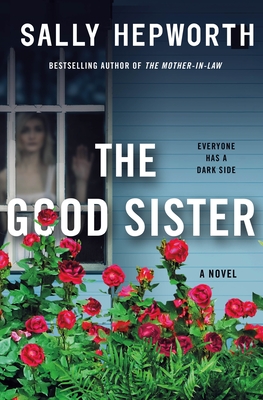
I got frustrated by the length of time I was having to wait for new library books and decided to do some rereading this week, since older books are easily obtainable. I chose the first book, The Good Sister by Sally Hepworth, because I had just reread Eleanor Oliphant and their protagonists share some things in common.
Although I remembered the story pretty well, there are always things that you don’t pick up on the first time through. One of the ones I enjoyed this time was protagonist Fern’s description of her mode of dress. She starts out by saying she is a librarian, and at 28 years old she is much younger than the average librarian (apparently the average is 45!). She comments that many librarians tend to be stodgy dressers, but Fern likes to express herself, so her typical outfit is a rainbow T-shirt topping a long, swirly skirt in some bright color (that day’s was sunshine yellow) with a pair of rainbow- and glitter-covered “trainers” (Brit for sneakers or tennis shoes) to match. She tops off all of this by putting her long strawberry blonde hair into two braids and then rolling them up above each ear for a Princess Leia look-alike effect, although she asserts that she is not copying that style; it is merely a handy way to keep her hair out of her face while working.

As a person who went to library school at 48, I was definitely up in that core demographic, but I did share some characteristics with Fern. I liked wearing colorful, full, knee-length skirts (flowered, striped) with matching solid-color leggings, black boots, and a T-shirt or sweater on top, depending on the season, and although I never did the Princess Leia ‘do, I did wholeheartedly embrace braiding during my 11-year career as a teen librarian.
I enjoyed this book as much this time around—it definitely held up. The characters are either delightfully quirky or deliciously sinister, and the action and narrative are nicely balanced to hold your interest. If you would like to read my initial full review, you can find it here.
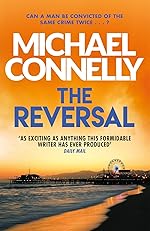
The second book I picked up was one I hadn’t read since 2015 when it first came out, and I didn’t remember a lot about the story. It’s The Reversal, by Michael Connelly, and it was the book where he shook things up in several ways: Mickey Haller (the Lincoln Lawyer) crosses the aisle to become a prosecutor for one case; he partners up with his (first) ex-wife, Maggie McPherson, an assistant district attorney for Los Angeles; and instead of his usual investigator, he hires his half-brother, LAPD detective Harry Bosch, to help put a child-killer behind bars for the second time.
I looked forward to reading it again because I liked that all my favorite characters were in one place. But in the end, I didn’t find this to be one of his better stories. I did enjoy having Haller, Bosch, and McPherson all working together on a case that Mickey was prosecuting, but there was a bit too much courtroom (without enough drama). The man they are prosecuting has spent 24 years in jail for the crime and everyone is still convinced he is guilty. But some new DNA evidence proves compelling enough for the courts to grant him a retrial, and in the meantime he’s out in the world while the trio tries to find enough evidence to put him back in prison.
I felt like not enough happened “in the field” in this book, and I also didn’t enjoy the guy in the role of defense attorney; he was whiny and not sufficiently developed in comparison to his opponents. There is also a huge foreshadowing element with the murderer that never comes to fruition, which was both disappointing and annoying, and the ending is both rushed and anticlimactic, after a big build-up. I actually dropped my rating on this one from four stars to three after rereading it. I’m still a loyal Connelly fan, but in certain books he seems off his game, and this was one for me.
Two of my “new” (to me) books just came in and got transferred to my Kindle, so there will be fresher reviews coming soon.
The Proving Ground
I picked up the latest from Michael Connelly with a teensy bit of trepidation, because I haven’t really enjoyed the last three novels he has put out into the world, whether about Bosch, Ballard, or the new guy Stillwell. They felt forced, they felt a little stale, they felt like his heart wasn’t really in it when he wrote them. But I adore the Lincoln Lawyer, so I got this one from the library and embarked on it as my first read of 2026.
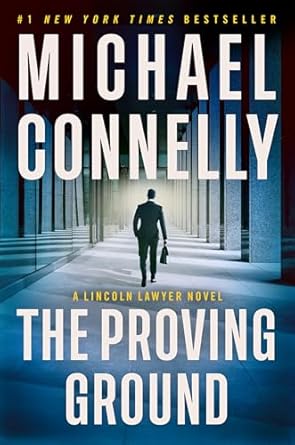
Although the title references the area in front of the jury’s box where the lawyer stands to make his opening and closing arguments, it was also prophetic for me, because with this novel I felt like Connelly proved he could still write a compelling book involving one of his regular characters. But if you are expecting the self-same iteration of Mickey Haller that we have seen in past novels, you might be disappointed.
Mickey had an epiphany that led him out of criminal defense and into civil court practice, this being his first case to actually go to trial. And it’s a big one: A mother is suing a billion-dollar Artificial Intelligence company because the boyfriend of her teenage daughter, under the influence of the company’s chatbot they claim was designed as a companion for teenagers, shot and killed the girl when she broke up with him, after the chatbot told him he should “get rid of her.” So although both gun control and murder are issues, they are not the center of this lawsuit, which is focused on the bigger picture of who should be held responsible. The premise is that the chatbot had faulty input and insufficient guardrails in place, especially when it was ostensibly designed to deal with impressionable young teens who haven’t, themselves, developed a moral compass; tragedy was the result.
I like that Connelly is addressing a current and urgent area of concern by showcasing this courtroom battle that isn’t just about guilt or innocence but about accountability. In so many aspects of our culture now, technology seems to be outpacing ethics in alarming ways, and Connelly has poured extra fuel on the battle over gun control in the United States by taking it to another level. A gun was, once again, too readily available to a teenager (his father kept the gun in the house), and his fantasies of revenge on a girl who “hurt him” (she was alarmed by his internet-driven attitudes and broke up with him) flowered into violence with support from a machine created to interact like a human
support system.
The court persona of Mickey Haller is still front and center: He manages to insert some of his trademark theatrics, although the civil court judge is quicker to reign him in than was normal in criminal court; but underlying the flamboyant drama is dogged research, a constantly evolving strategy, and then ultimately his willingness to gamble everything in the courtroom to get that lynchpin response from a witness that will make his case.
There is a fair amount of both legal-speak and technical discussions about artificial intelligence that might deter some readers. But despite some of those intricacies, this is still courtroom drama, with everything that can ensue—witness intimidation, manipulation of voir dire, attempted bribery, and plenty of dirty tricks from a corporation desperate to be held blameless and to retain control of one of its most lucrative products. Civil court is something of a misnomer here.
There is participation in preparation for the case from another character in the Connelly oeuvre not recently heard from, which was fun. There is also a personal, events-driven aspect to this book, when ex-wife Maggie’s house burns in the Eaton Fire and she moves in with him while waiting on insurance and trying to decide what to do next. Since Mickey made the move from criminal to civil court he has fewer direct clashes with Maggie “McFierce,” now the Los Angeles District Attorney, and obviously hopes that they can reconcile permanently—but that’s left for another day. Some Goodreads reviewers took issue with Connelly setting this at the time of a particular landmark event, since it dates the narrative, but as a Los Angeles resident I liked the local context he always provides.
Although I wasn’t completely in love with the way the book ended, for me this was a satisfying return to Michael Connelly showing what he can do when he’s on his game.
 The Book Adept