Innocent vs. not guilty
I just finished reading Michael Connelly’s latest, The Law of Innocence. This was a “Lincoln Lawyer” book featuring Mickey Haller, and the case he was attempting to defend was his own. A traffic stop turns into a fishing expedition when the cop sees something leaking from under Haller’s car, and when he pops the trunk it contains a dead body.
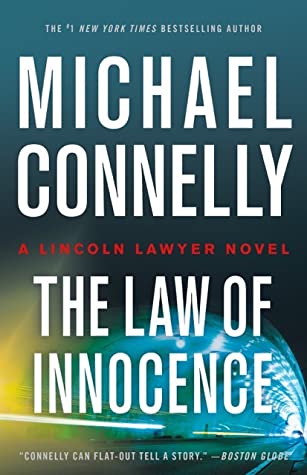
The body is that of a former client of Haller’s, and the evidence that he was killed in the trunk of the car while inside Mickey’s garage is pretty damning. Obviously (to the reader), Haller is being framed by someone, but by whom and for what purpose? Denied bail due to the machinations of a spiteful judge, Mickey has to muster his team and plan his defense while living in a cell inside Los Angeles’s Twin Towers Correctional Center, where he’s a potential target of inmates and jailers alike.
I enjoyed this mystery for a variety of reasons, including Connelly’s usual attention to detail as he presents the story from a Los Angeles resident’s viewpoint, including that of an inmate of Twin Towers. The distinction between a not-guilty verdict and proof of innocence was the quandary that drove the story, since Haller’s reputation and his future as a successful attorney is on the line if there is a shadow of a doubt about his culpability. He doesn’t just have to prove reasonable doubt—he needs everyone to know that someone else did this.
One reader commented that he liked the Haller novels better than the Bosch ones because the Haller ones were narrated in first person and therefore more compelling than the third-person Bosch. Weirdly, I usually have the opposite reaction to these. I don’t know whether it’s because I don’t identify with Haller as a person or if it’s just that I prefer police procedurals to legal drama, but I find the Bosch narratives much more involving. Also, whenever Bosch is featured as a character in the Haller books in his role as Mickey’s half-brother and an investigator on his behalf, it seems like Connelly suddenly doesn’t know how to write him—his presence is positively wooden. Maybe he’s attempting to show how Haller sees and reacts to him instead of putting him across with his usual personality? but it’s weird how unlike himself he is.
In general, this book is the usual entertaining crime thriller from Connelly. I have to say that I found it less than riveting until it gets to the trial, at which point the accelerating discoveries and the vituperative back-and-forth between prosecution and defense enliven things considerably. I wasn’t entirely happy with the ending, but I can see why Connelly went there. It will be interesting to read the next Lincoln Lawyer volume, whenever it comes along, to see how Mickey’s career is impacted, if at all, by the events of this one.
As for the “big controversy” over which people have declared they would never read Connelly again, I didn’t find it in the least unbelievable that someone who was trying to beat a murder rap would want to weed a Trump supporter from his jury. Since they seem unable to discern when he is lying to them, it seems logical that having someone on a jury who can’t distinguish lies from truth would be counter-productive. I didn’t view this as a huge political statement, but merely a way to point up the importance of honesty within our legal system. Of course, my politics apparently fall on the same side as Connelly’s….
Summer reading #1
I noticed this week that several teachers and students who are members of the “What should I read next?” page on Facebook have posted that school is already or is about to be finished for the year, and wanting suggestions for things to read over the summer. While lots of suggestions of popular bestsellers were made in return by all the readers there, some of these requestors are more specific in their wants. One said, “I like mysteries and thrillers, and would love to get socked into a good series, but there are so many out there, I don’t know where to start. Any suggestions?”
Since my mystery list is the longest amongst my genres, only given a contest for first place by fantasy, I put my Goodreads list of “mysteries read” into order by author so I could see those series I have faithfully pursued and make some suggestions, and since I was doing it there, I thought I’d do the same here, with a little bit of summary attached to each.
I will note that I tend to favor procedurals, lone detectives, and partnerships (many of them British), and none of these are light, cosy reads. Perhaps I’ll do a separate blog post including some of those, because everybody likes to read them once in a while; but for a steady diet of mystery, here are the ones I go back to with each new release, in alphabetical order by author:
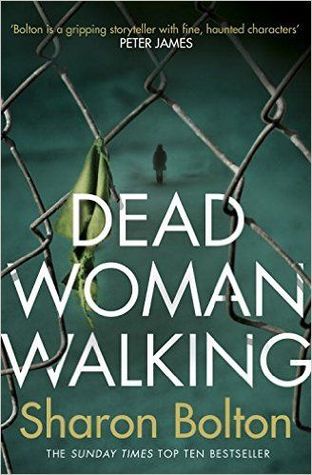
SHARON J. BOLTON: A host of stand-alones, plus a short series with Detective Constable Lacey Flint, all good. Her stand-alones are more thriller than mystery, and are set in intriguing locations and have unusual plots. The series stars a young iconoclast risk-taker who gets too closely involved with her cases.
MICHAEL CONNELLY: The mystery master. If you haven’t read them, the Harry Bosch series starts with The Black Echo. Harry is a combination of dogged and intuitive that gets the job done, a loner with a commitment that goes above and beyond. If you like them, you can spend the entire summer…
ROBERT CRAIS: He has about five stand-alones and a series. The stand-alones are great, particularly The Two-Minute Rule and Demolition Angel. The series features a smart-aleck private detective named Elvis and his dead-serious and deadly war vet partner, Joe.
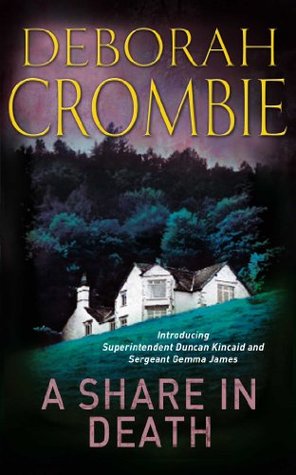
DEBORAH CROMBIE: A British duo, Gemma James and Duncan Kincaid. Gemma starts out working for Duncan, and then roles shift and change as the series progresses. Good writing, intricate plotting, and she makes each the lead in alternating books to keep it fresh. I really like these.
DICK FRANCIS: An oldie but goodie. Each book has some peripheral relation to horse-racing. They are a little “formula” and a little old-fashioned in terms of man-woman relationships, but they are some of the greatest escapist reading ever. (Don’t bother with his son’s continuation of the series. They’re not bad; but they’re not good.)
CAZ FREAR: A relatively new series starring a British rookie cop, Cat Kinsella, whose background keeps getting in the way of the job. There are three so far, and quite gripping.

The amazing TANA FRENCH: She has a loosely related Dublin Murder series, with a different protagonist starring in each one (my favorite is Faithful Place), and also several stand-alones. You have to like LOTS of detail and literary language. Quite immersive.
ROBERT GALBRAITH (shhh, it’s J. K. Rowling): The Cormoran Strike series is wonderfully weird, and Cormoran himself is a tough nut with a gooey center, especially when it comes to his new assistant, Robin Ellacott.
ELIZABETH GEORGE: The Inspector Lynley mysteries. He’s a British lord who some say is “slumming” as a cop, while his partner, Barbara Havers, is fiercely proletariat and dresses in clogs and sweatpants. The mysteries are intriguing.
ALEX GRECIAN: The Scotland Yard mysteries, detailing the beginning of forensics. Quite engaging, but sometimes dark.

JANE HARPER: Only a few books, but all solid. A couple of stand-alones, and a series featuring Federal Police Investigator Aaron Falk, set in the wilds of Australia.
CHARLAINE HARRIS: The Harper Connelly quartet. After being hit by lightning at age 16, Harper can tell you how your loved one died by standing on their grave. Yeah, I know…but they’re GOOD.
CYNTHIA HARROD-EAGLES: The Bill Slider mysteries. You have to like procedurals, and it’s a bonus if you “get” British humor. There’s also a lot about Bill’s personal life, which rounds out all the mystery stories. I like them a lot and laugh aloud frequently while sitting alone reading these.

CRAIG JOHNSON: Walt Longmire, Wyoming sheriff. They are like the show, if you have seen it, but the plots on the show went off-script fairly early, so the books are a different experience.
KATE MORTON: I love her books, but consider them more “puzzle” books than mysteries. They are not populated by detectives or police—they center around somebody on a quest to solve a weird thing in their past history. Quite detailed, and character-driven.
LOUISE PENNY: The inimitable Chief Inspector Armand Gamache of Three Pines and the Sûreté du Québec. Start at the beginning with Still Life, and keep going! She releases one every August, and I pre-order them all. Have French pastries on hand, you will need them.
This is by no means a comprehensive list of every mystery series I read—I follow several other historical series, as well as some featuring legal eagles in place of the detectives and private eyes, and some starring people with weird murder-related professions—but these are the most accessible, most immediately engaging, and hopefully with enough variety in their composition to give everyone an idea about an author they’d like to try. Please let me know what you think if you end up assaying one of these.
But IS it a PP?
As I remarked in my previous review (Sam Hell), I wanted to read one of Robert Dugoni’s series to benefit from the skill of his writing without dealing with the religious overtones I found offputting in his latest bestseller. After too many disappointments in that subgenre, I tend to avoid the courtroom drama series now; apart from a few standouts, I have found them to be too cerebral, as well as inevitably repetitive. So when given a choice between his courtroom series and the one described as a “police procedural,” I chose the latter without hesitation.
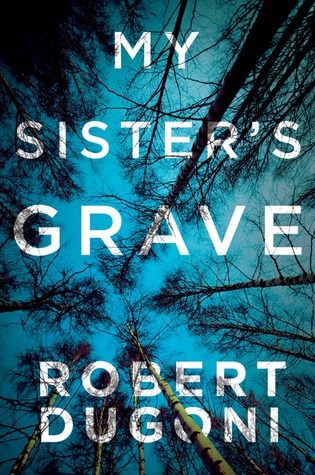
My Sister’s Grave is the first in the Tracy Crosswhite series. Tracy is a Seattle-based homicide detective, but in her former life she was a schoolteacher (science) living in a small (fictional) town called Cedar Grove. Then her sister Sarah disappeared and was presumed murdered, although her body never came to light, and that shifted Tracy’s trajectory towards police work. She quit teaching, went to the police academy, and became a detective, all the time focusing her skills and attention on solving her sister’s disappearance.
The twist in the story is that a man was convicted of her murder; but it was on purely circumstantial evidence that Tracy has always found highly suspect. Then Sarah’s body is finally discovered, 20 years later, and Tracy is drawn back to Cedar Grove and into the storm of lies and betrayals that are keeping her from learning the truth about what happened to Sarah.
Sounds good, yes? Hm. I set out with high expectations: In Sam Hell, Robert Dugoni painted such a vivid picture of his characters and their lives that I assumed I would be equally drawn to those in this story. But everyone in it had a strangely lackluster quality, with insufficient physical descriptions, clichéd reactions, and such a low-key affect that I just couldn’t get a handle on the book’s atmosphere or bond with anybody.
Also, and this was a bigger problem, about 85 percent of this book isn’t a police procedural at all, it’s a courtroom drama! Although Tracy is assiduous in pursuing certain clues, no one else is interested in helping her and, of those few who do, they keep their results from everyone but Tracy (including the reader), so we are left with nonsense along the lines of “Ah hah! I thought as much,” but with no answers. When the answers finally come out, it is within the context of an appeal by Sarah’s convicted killer, and all plays out through courtroom testimony.
It isn’t until the last 15 percent of the book that it actually turns into an action-oriented, exciting narrative, and then it’s pretty straightforward, because you already have nearly everything you need to solve the mystery, it’s just a matter of waiting for it to be confirmed and clearing up the mess. And after a slow, almost sleepy three-quarters, the author provides a whole lot of mess, in graphic detail not telegraphed by the rest of the book. It was kind of disturbing, not because I haven’t read anything like it before but because of the juxtaposition.
I may give Dugoni the benefit of the doubt and try another before I give up, because so many people have raved about the two prequels and the rest of the series; but if the next is as monotone as I found this one, that will be it. At the moment, I’m disappointed.
The new French
The Searcher is a departure for Tana French; and yet it possesses all the attributes that make me want to read her books—a leisurely pace with plenty of detail, a compelling protagonist, a mystery to be solved, ethical questions to ponder…just not in the context or, should I say, formula of
her others. She already left the self-created fold of the Dublin Murder Squad with her last, The Witch Elm, and was chastised for that by many readers; in this book, too, she has ignored many of her reliable “go-to”s, and yet it still reads like
one of hers.
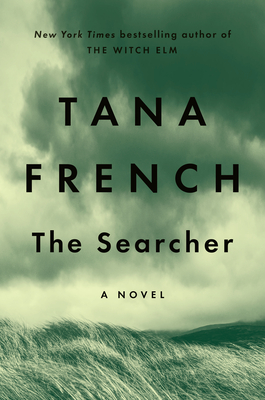
I personally enjoyed this book more than I did The Witch Elm, simply because I found that book needlessly convoluted and complex, and with essentially unlikable characters. This one is, by contrast, rather simple in plot and, though furnished with some moral quandaries, still much more straightforward than almost anything else she has written.
Her other books are all told from a first-person perspective; this is the first in which we get to observe her protagonist from the distance of third person. It is still an intimate portrait, in that Cal’s thoughts and processes are revealed for us through both his shared thoughts and his actions, but it’s a little more observational, less self-involved. Cal is also the first protagonist who isn’t Irish, with the result that we get to see life in Ireland from an outsider’s perspective, without the peculiar insights of a native but with great attention to aspects not previously examined. (Her American voice is relatively flawless, and contrasts nicely with those of the Emerald Isle.) In her other books, the protagonist is strongly tied to whatever mystery there is to be solved; in this case, the mystery revolves almost completely around others, with Cal as a rather helpless observer in some instances.
Cal Hooper is 48 years old, retired after a 25-year career as a police officer in Chicago. His daughter is grown, graduated, and in both a career and a relationship; his wife has divorced him, and although he can see individual reasons why she might do so, he can’t quite put together the big picture, and is floundering a bit without her. The divorce, in combination with some troubling realizations about his identity as a policeman in a time when that role is being reviled for racism and corruption, threw Cal’s sense of self out of whack sufficiently that he decided to leave the force and make a big change. He has bought a run-down property in rural Ireland, a house that hasn’t been occupied for perhaps decades, and has moved there with the intention of putting his energies into fixing it up and creating for himself a quiet life away from the stress of the big city. His daily routine will consist of removing wallpaper, pondering how to make friends with the rooks inhabiting the oak tree in his front yard, making a trip to the local general store for a gossip with its proprietor, or getting a drink in the bar with the fellas.
“One of the things that had caught his attention, when he first started looking into Ireland, was the lack of dangers: no handguns, no snakes, no bears or coyotes, no black widows, not even a mosquito. Cal feels like he’s spent most of his life dealing with feral creatures, one way or another, and he liked the thought of passing his retirement without having to take any of them into account. It seemed to him that Irish people were likely to be at ease with the world in ways they didn’t even notice.”
Cal is making notable progress on this plan when the back of his neck starts to itch in the way it did back in his police days; he feels observed. After a period of wondering if someone has it in for the outsider in their midst, he manages to identify his stalker as a young teenager, Trey Reddy, and after some wariness on the kid’s part, finds out that Trey has sought Cal out because his older brother is missing and neither his mother nor the police seem to care that something may have happened to Brendan. Trey wants Cal to look for Brendan, but Cal realizes he is handicapped by the lack of everything to which he would have had access as a police officer in Chicago: files, databases, records, and material assistance from other officers on the job. But the kid tugs at his feelings for all those who slip through the cracks of the system, and there is also a residual excitement at the thought of being back in the investigation game, so Cal decides to help him.
This simple agreement shifts everything in Cal’s fragile idyll. His sleepy retreat, the small village of Ardnakelty where nothing ever happens and everyone has, so far, been “hail fellow well met,” becomes a slightly sinister place where Cal can’t tell if people are looking out for him with their warnings or subtly herding him towards his own destruction. Resistance to his efforts to help Trey discover Brendan’s fate makes him wary but doesn’t deter him, and from this point in Cal’s story things begin to head towards a showdown.
The thing about this book is, it’s not really a crime thriller. It’s more of a literary novel by a writer who chooses to use a mystery as a vehicle to study a character, a community, a locale. It’s atmospheric, well written, and well plotted, but if you go into it expecting French’s usual, you will be disappointed. If you approach it with an open mind, however, you will be gratified by a story that is subtle, lovely, and special.
For BHM
While my belief is that black history is history and should be taught as such, calling it out for a month a year at least gets some attention, since our school curriculum is still not what it should be. Likewise, calling out some black authors, and some non-black authors who have written effectively about black history and culture, is always a good idea, but the prompt is helpful to remind one. So…
Science fiction is one genre that can definitely usher you through time. Octavia Butler‘s Kindred, which some say is the first science fiction written by an African American woman, is a combination of memoir and time travel that transports 26-year-old Dana from 1976 California to antebellum Maryland, where she arrives just in time to save a white boy from drowning, then jumps back just before the shotgun staring her in the face can go off. Like Henry in The Time Traveler’s Wife, Dana’s jumps are inadvertent, but they serve a purpose in her life history. Butler manages to provide both a conversation about serious issues—slavery, human rights, and racial prejudice—and an exciting and complex story about human nature, love, and loss.
For a glimpse into the future instead of the past, try Parable of the Sower, set in that familiar dystopia known as Los Angeles in the year 2025 (not so far off!), and following the fortunes of Lauren Olamina, an 18-year-old pioneer of a new philosophy known as Earthseed. Parable of the Talents is the sequel.
Since Butler died tragically young (in 2006, at age 58), there will be no more of her seminal works featuring female black heroines, but her contributions to the science fiction world won her both the Hugo and Nebula awards multiple times, and she was the first science fiction writer ever to win the MacArthur Foundation “Genius” Grant.
Like a little mystery with your history? Try Barbara Hambly’s mystery series that begins with A Free Man of Color. Set in New Orleans in the 1830s (right after the Louisiana Territory was acquired by America), the characters are a rich mix of French, Spanish, and American, Creole, African slave, and “free people of color.” Benjamin January (or Janvier, depending on the language you’re speaking) is one of the latter, a Paris-trained surgeon who must earn his living in New Orleans as a piano player. Between his two professions he mingles with all levels of society, and inevitably someone turns to him for his appealing mix of compassion and good sense to help them solve a dilemma, a puzzle, or even a murder. There are 18 books, so if you’re hooked by the first one, you can relish Ben January’s world for a sumptuous long time.
Another book set in the same time period and also on the subject of the gens de couleur libre is Anne Rice’s second novel, The Feast of All Saints. If you thought Rice was only about vampires, think again: She researched this while in New Orleans planning out Interview with the Vampire, and in my opinion it’s the best thing she ever wrote (and I’m a fan of the vamps, and the witches too). Rich with the history of pre-Civil War New Orleans, with truly compelling characters, it is beautifully written, poignant, and emotionally overwhelming.
Some other books to which I’d like to draw your attention, that encompass the history of the present and the recent past:
The Rock and the River (about the Black Panther movement), by Kekla Magoon
How It Went Down (an account of a shooting, from 17 different viewpoints), also by Kekla Magoon
Flygirl, by Sherri L. Smith, about a black girl pilot trying to participate in World War II
Tyrell, by Coe Booth, a young adult novel representative of all too many young black men with few alternatives. A compelling voice and an engaging story.
March, by John Lewis, a series of three graphic novels about the Civil Rights Movement, by the senator who was by the side of Martin Luther King
Please note that this is a short, random, partial list of books that in no way represent the richness of writing available out there, but simply reflects some books I read, enjoyed, and appreciated for their topic and their tone. I hope you find something to enjoy.

Halt!
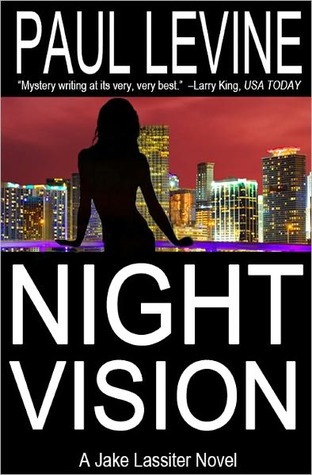
Well, I said I would try one more Jake Lassiter mystery by Paul Levine before calling a halt, and now is the time for that call. I read Night Vision, the second book in the series, and my overall reaction was that it was a hot mess. I still enjoyed the main character, although he seemed much subdued in this book compared to how he was last time, but the author’s bizarre concept of how women think and behave put me off even more in this book than in the first. I know that at least one of them was supposed to behave strangely to cue you in to the fact that she had more to do with the mystery than anyone realized, but the rest of the women in the piece were likewise unbelievable and, frankly, offensive. They were completely confused or confusing, in that they alternated between coming on to Jake like a ten-dollar hooker on a slow night and rejecting his advances with a vehemence totally unjustified by his casual flirtatious approach. And what I’m describing is the same women in subsequent scenes!
Plausibility was another problem. The appointment of Jake as some kind of investigative attorney was thin, the trip to London with the lady psychologist for a meeting with a therapy group of serial killers was completely unrealistic, and the courtroom scenes were odd.
The thing I disliked most about this book, however, was how completely repellent were most of the characters. With the exception of Charlie Riggs (whose role was much smaller in this book), no one except Jake was either likable or engaging, and the contradictory ways in which they behaved made them unbelievable as well. It worked to allow Levine to keep shifting the focus of the story from one red herring to the next, to keep the reader guessing about the ultimate resolution, but in terms of character development it was a big fat fail. They were either mean, psychotic, hysterical (as in over the top emotional, not as in funny), or simply boring. And the ultimate fate of one of the characters was too gruesome to put on paper (this from someone who likes Dexter!).
The winning personality of Jake Lassiter is just not sufficient to carry a book, and Paul Levine will have to do without me as a reader from here on out. A few reviewers commented that this was their least favorite and the least plausible of the series and to take a chance on a later book, but I think I’ll pass.
Back to urban fantasy with another dose of Harry Dresden, who arrived from the library on my Kindle with less than two weeks to be read. And then, I swear I’m going to try something literary!
Series, new to me

I tried a “new” series this week, whose first book came out in 1990. To Speak for the Dead is the first in Paul Levine’s Jake Lassiter novels and there are apparently 11 or 12 more. It was a free Kindle download a few weeks ago, so I added it and let it sit until I was between books and feeling restless for something different.
After trying and failing to read The 7.5 Deaths of Evelyn Hardcastle for book club (I may return to it later) and also striking out with three of the four books that preceded that, I was in the mood for a straightforward protagonist with a simple agenda. Jake Lassiter, attorney and former linebacker, seemed stable enough to qualify. I have been burned by courtroom dramas often enough that I tend to avoid them now in favor of more direct interactions with the case (i.e., police procedurals, detectives), but this one sounded intriguing.
I liked it pretty well. The main character is well developed and fun, with a bit of a rogue attitude but holding, at heart, a basically sound philosophy; and some of the side character “regulars” are likewise engaging (notably Granny Lassiter and the now-retired medical examiner, Dr. Charles Riggs). And there is quite a bit of leavening humor, which always helps. In this one, at least, the women were a bit one-dimensional (although I got a big kick out of Cindy, Lassiter’s receptionist), but I forgave that to a certain extent, because A. it’s the first book in the series, so we are meant to be focused on Jake Lassiter, and B. Levine wrote this in 1990, so the standards weren’t quite as high (although it would have been much more forgiveable had it been, say, the ’70s!).
There were some things that would flat-out never happen in a legal/court case, but Levine writes his Miami setting as if it is a place like no other, where rules are lax and meant to be stretched, and it’s easy to go along. The plot is a weird one, in that the man Lassiter represents, Dr. Robert Stanton, seems to be innocent of the crime of which he is accused in the civil case being tried when the book opens, but appears to be guilty of much worse as events unfold. It’s hard to be sure, though, with so much conflicting information and so many other dastardly people in the mix, and the whole book is an extended game of what John Lescroart, in his Dismas Hardy series which I have lately abandoned, calls “SODDIT,” or “Some Other Dude Did It.” But who? is the question we are meant to answer.
The book wraps up with an open-ended scene that is among the weirdest I’ve ever experienced in a so-called mystery, but it was just bizarre enough to work. I’m at least going to try the second book in the series before calling a halt.
Surprise heir

Ruth Ware’s novel The Death of Mrs. Westaway incorporates several things I love, and I was drawn to it from the first page. The protagonist, Hal (Harriet) Westaway, is such a vibrant character and her precarious existence is so appealing that it’s hard not to buy in.
Hal has been raised by a single mother in a small but unusual and fulfilling life; her mother was a tarot card reader in a booth on the pier in Brighton Beach and, partly through instruction and partly through absorbing the daily atmosphere of her mother’s tradecraft, Hal has acquired all the skills to follow after her when she is tragically killed by a hit-and-run driver right outside their front door.
Hal stays in their small but known and comforting bed-sit after her mother is gone, and takes up the mantle of tarot card reader, although she always hearkens to her mother’s voice in her ear that tells her not to believe the patter that makes her so successful with her clients. Hal enjoys the combination of the beauty of the tarot and the skillful use of psychological clues to direct the faith of the tourists and drunken hen parties in her “fortunes”; she doesn’t care for those few fanatics who return again and again trying to come at truths that Hal knows better than to promise them.
Hal has made one foolish decision in the aftermath of her mother’s death; between the halting start-up of her takeover of the tarot booth and the slow months of winter that don’t contain the huge number of customers present during the tourist season, Harriet got behind on her bills and resorted to visiting a moneylender. She is stunned to realize how quickly and disastrously the interest on this loan has compounded, and is in imminent danger from the loan shark’s enforcers if she doesn’t come up with the money soon.
Just at the crux of this fraught situation, Hal receives a letter from a law firm, telling her that her grandmother, Hester Westaway, has died and that her presence is required at the funeral and subsequent reading of the will. She knows just enough about her mother’s family to realize that someone has made a mistake; but there are sufficient similarities in her background that cause her to grasp at the idea that she can pull off a deception and perhaps come into some funds that will help her out of her desperate straits. She scrapes together the last of her funds, buys a ticket to Porthleven, and sets out to collect “her” inheritance.

Haven’t we all imagined at some point that a long-lost legacy will arrive in the mail or via a phone call? That we will be pulled back at the last second from the brink of ruin by the generosity of a remote relative who turns out to have doted on us as a precocious three-year-old and has been generous in their bequest? I loved the entire set-up for this story, and Hal’s tentative but determined foray into a strange house filled with family that may or may not be hers.
The tale owes a lot to both Agatha Christie and Daphne du Maurier: First of all, it takes place in Cornwall, scene of the bulk of du Maurier’s storytelling, and the creepy housekeeper definitely gives off an obsessive Mrs. Danvers vibe. The house itself is a gothic nightmare straight out of Christie, of cold, dark, dust-filled rooms reverberating with an unhappy past, and the Westaway family, though cordial on the surface, has obviously been greatly affected (and not in a good way) by their upbringing. It’s no coincidence that Hal feels the greatest affinity for the sole in-law in the bunch!
I have to say that the strong-willed, smart, and likeable character of Hal largely carried this book for me. I loved her back story, her personality, her profession, and her daring. The rest of the characters were, by comparison, made of cardboard, and some were outright cliché. They were okay as a backdrop for Hal, but it would have been nice if the only glimpses into their story had gone farther than a few incomplete and unsatisfying diary entries. None of them is overtly friendly, no one voluntarily supplies family history, and despite being surrounded by all these people, Hal has to solve her mystery through a not always compelling combination of research and subterfuge.
The thing is, The Death of Mrs. Westaway is not exactly a mystery, although there are mysterious elements to solve; it’s not entirely suspense, although it’s suspenseful; and the resolution is a bit telegraphed and not as exciting as it could have been. At several points in the story, it seems like the book doesn’t know whether it’s trying to be gothic horror, an Agatha Christie-style whodunnit, or a psychological thriller. But if you focus on the story as being Hal’s alone, and simply let yourself enjoy the atmospheric vibes, it ends up being a satisfying read. The integration of the tarot into the story made it special for me, as I have always had a fascination with both the artwork and the infused meaning of those cards. This is the second Ruth Ware book I have read, and although the other one was better conceived and executed, I believe I prefer this one based simply on the appeal of character.
Cold cases abound
My first read of 2021 is Shed No Tears, by Caz Frear, third book in a series of police procedurals starring Detective Constable Cat Kinsella. Coincidental to my third-to-last read for 2020, Troubled Blood, it’s also a cold case previously related to a serial killer. I don’t project anything sinister here—they were released at almost the same time, so I doubt there’s any copycat behavior going on—but it’s interesting to me when people come up with virtually the same idea, especially when they are treated and resolved so differently.

The case in Shed No Tears had seemed open-and-shut: A missing woman had been seen by a witness entering the home of a man who later turned out to be the serial killer of several other women, so even though her body wasn’t recovered with the rest, the police and everyone else presumed (largely on the word of this witness) that Holly Kemp was his last—though unclaimed—victim. Christopher Masters never came out and said that he had killed Holly, but he tantalized the public and the police with that possibility for years, until his death in prison.
Six years after her disappearance, however, Holly’s body has turned up, and it’s nowhere near the location where the other bodies were found—in fact, it’s on the other side of London. It’s not buried like they were; the cause of death is different; and if it weren’t for a couple of facts—the rock-solid word of the witness and the fact that Masters had indeed spent some time in a location near the ditch in the abandoned field where Holly was found—one would almost think it was a different killer altogether.
And after exploring and exhausting everything known to them about Masters and his victims, Cat and the team begin to suspect that’s exactly what they have. But the witness still holds to her story, some of the principles in the case have since died or disappeared, and all they really have to go on are a few anomalies and some gut feelings. Since this is a police procedural, these hunches lead after much mind-numbing work to some actual facts that refuse to jibe with their initial view of the crime, and the ultimate solution is far from anyone’s assumptions.
As with previous volumes in this series, Cat is still juggling her public life as a dedicated and honorable police officer with her private life that is peripherally connected, through her father, to organized crime, and is still hiding from her boyfriend, Aiden, the connection between his family and hers that has the potential, should it become known, to utterly ruin their relationship. There’s not a big furtherance of that relationship in this book, although there is some movement in the stalemate between Cat and her dad; but there’s a big surprise at the end (besides the solution to the case) that may lead to a different direction in subsequent books.
Frear has created a great procedural team in DCI Kate Steele, DS Luigi Parnell, and all the minor characters in the “situation room” with them. Their personalities are highly developed, their interactions interesting and fresh, and their results always arrived at by a combination of teamwork and of helping one another share their most outrageous theories as they brainstorm their way to a solution. Although I don’t find it quite on a par with Cormoran Strike, I’m really enjoying this series, and greatly look forward to more.
2020 Faves
I don’t know if anyone is dying for a reprise of my favorite books of 2020. Since I am such an eclectic reader, I don’t always read the new stuff, or the popular stuff. Sometimes I discover something popular three years after everyone else already read it, as I did The Hate U Give this past January (it was released in 2017). Sometimes I find things that no one else has read that are unbelievably good, and I feel vindicated by my weird reading patterns when I am able to share it on my blog. But mostly I just read whatever takes my fancy, whenever it comes up and from whatever source, and readers of the blog have to put up with it.
Anyway, I thought I would do a short summary here of my favorite reads for the year, and since they are somewhat evenly populated between Young Adult and Adult books, I will divvy them up
that way.
YOUNG ADULT DISCOVERIES
Fantasy dominated here, as it commonly does, both because fantasy is big in YA and because I am a big fantasy fan. I discovered a stand-alone and two duologies this year, which was a nice break from the usual trilogy and I think worked better for the authors as well (so often the middle book is weak and the last book is rushed in those cases).
The first was The Hazel Wood and The Night Country, by Melissa Albert, and although I characterized them as fantasy, they are truthfully much closer to fairy tale. I say that advisedly with the caveat that this is not the determinedly nice Disney fairy tale, but a real, slightly horrifying portal story to a place that you may not, in the end, wish to visit! Both the story and the language are fantastic, in all senses of the word.
The stand-alone was Spinning Silver, by Naomi Novik. The book borrows a couple of basic concepts from “Rumpelstiltskin,” turns them completely on their heads, and goes on with a story nothing like that mean little tale. There are actual faerie in this book, but they have more to do with the fey creatures of Celtic lore than with any prosaic fairy godmother. It is a beautifully complex, character-driven story about agency, empathy, self-determination, and family that held my attention from beginning to end.
The second duology was The Merciful Crow and The Faithless Hawk, by Margaret Owen, and these were true fantasy, with complex world-building (formal castes in society, each of which has its own magical properties), and a protagonist from the bottom-most caste. It’s a compelling adventure featuring good against evil, hunters and hunted, choices, chance, and character. Don’t let the fact that it’s billed as YA stop you from reading it—anyone who likes a good saga should do so!
I also discovered a bunch of YA mainstream/realistic fiction written by an author I previously knew only for her fantasy. Brigid Kemmerer has published three books based on the fairy tale “Beauty and the Beast” (and they are well done), but the books of hers I fell for this year were about typical teenagers with problems that needed to be solved and love lives that needed to be resolved. My favorite of the four was Letters to the Lost, but I also greatly enjoyed More Than We Can Tell, Thicker Than Water, and Call it What You Want.
These were my five-star Young Adult books for 2020.
ADULT FICTION
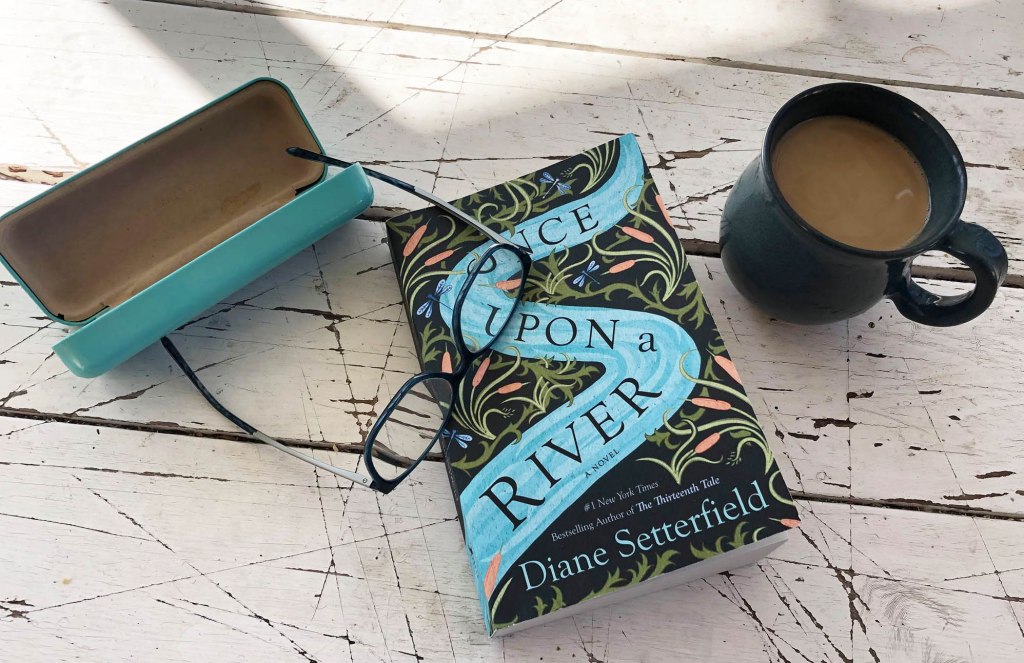
As YA selections were dominated by a particular genre, so were my books in Adult fiction, almost all of them falling in the mystery section. But before I give you that list, I will finish up with fairy tale by lauding an original adult story that engaged me from the first page and has stuck with me all year: Once Upon A River, by Diane Setterfield. The fairy tale quality is palpable but the archetypal nature of fairy tales doesn’t dominate the story, which is individual and unique. It is the story of three children and the impact of their disappearances (and possible reappearance) on the people close to them, as well as on the inhabitants of one small town beside the river Thames who are caught up by chance in the events that restore a child to life. But the story encompasses more than her fate: It gives extraordinary insight into the issues of life and death—how much they are worth, how they arrive, how they depart, and what is the best way to pursue them.
Another book I encountered in 2020 that didn’t fall into the mystery genre or belong to a series was the fascinating She Rides Shotgun, by Jordan Harper. This was a short, powerful book by a first-time author, a coming of age story set down in the middle of a dark thriller that bowled me over with its contradictory combination of evil deeds and poignant moments.
And the last stand-alone mainstream fiction novel I enjoyed enough to bestow five stars was Just Life, by Neil Abramson. The story showcases the eternal battle between fear and compassion, and involves a deadly virus and a dog shelter in a fast-paced, gripping narrative that takes over the lives of four people. It made me cry, three times.

Most of the mysteries I enjoyed this year came from a “stable” of staple authors I have developed over the decades and upon whom I rely for at least one good read per year. The first is Louise Penny, whose offering All the Devils Are Here in the ongoing Armand Gamache series is nuanced, perplexing, and utterly enjoyable, all the more so for being extracted from the usual Three Pines venue and transported to the magical city of Paris.
Sharon J. Bolton is a reliable source of both mystery and suspense, and she didn’t disappoint with The Split, a quirky story that takes place over the course of six weeks, in stuffy Cambridge, England, and remote Antarctica. Its main character, a glaciologist (she studies glaciers, and yes, it’s a thing) is in peril, and will go to the ends of the earth to escape it…but so, too, will her stalker, it seems. The Split is a twisty thriller abounding in misdirection, and definitely lives up to Bolton’s previous offerings.
Troubled Blood, by “Robert Galbraith,” aka J. K. Rowling, is my most recent favorite read, and is #5 in that author’s series about London private detective Cormoran Strike and his business partner, Robin Ellacott. It’s a police procedural with a lot of detail in service of both the mystery and the protagonists’ private lives, it’s 944 pages long, and I enjoyed every page.
Finally, this year i discovered two series that are new to me, completely different from one another but equally enjoyable.
The first is the Detective Constable Cat Kinsella series by Caz Frear, which currently encompasses three books. I read the first two earlier in the year and promptly put in a reserve at the library on the third (which had yet to be published at the time), and Shed No Tears just hit my Kindle a couple of days ago. They remind me a bit of Tana French, although not with the plethora of detail, and a bit of the abovementioned Sharon Bolton’s mystery series starring Lacey Flint. Cat is a nicely conflicted police officer who comes from a dodgy background and has to work hard to keep her personal and professional lives from impinging one upon the other, particularly when details of a case threaten to overlap the two. I anticipate continuing with this series of novels as quickly as Frear can turn them out.
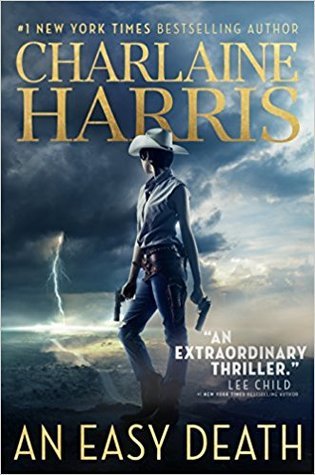
The second, which is a mash-up of several genres, is Charlaine Harris’s new offering starring the body-guard/assassin Gunnie Rose. I read the first two books—An Easy Death and A Longer Fall—this year, and am eagerly anticipating #3, coming sometime in 2021 but not soon enough. The best description I can make of this series is a dystopian alternate history mystery with magic. If this leads you to want to know more, read my review, here.
These are the adult books I awarded five stars during 2020.
I hope you have enjoyed this survey of my year’s worth of best books. I am always happy to hear from any of you, and would love to know what you found most compelling this year. I think we all did a little extra reading as a result of more isolation than usual, and what better than to share our bounty with others?
Please comment, here or on Facebook, at https://www.facebook.com/thebookadept. Thanks for following my blog this year.
 The Book Adept